

Blog
How to Choose Reliable China CNC Cutting Machines for Sanitary Product Manufacturers

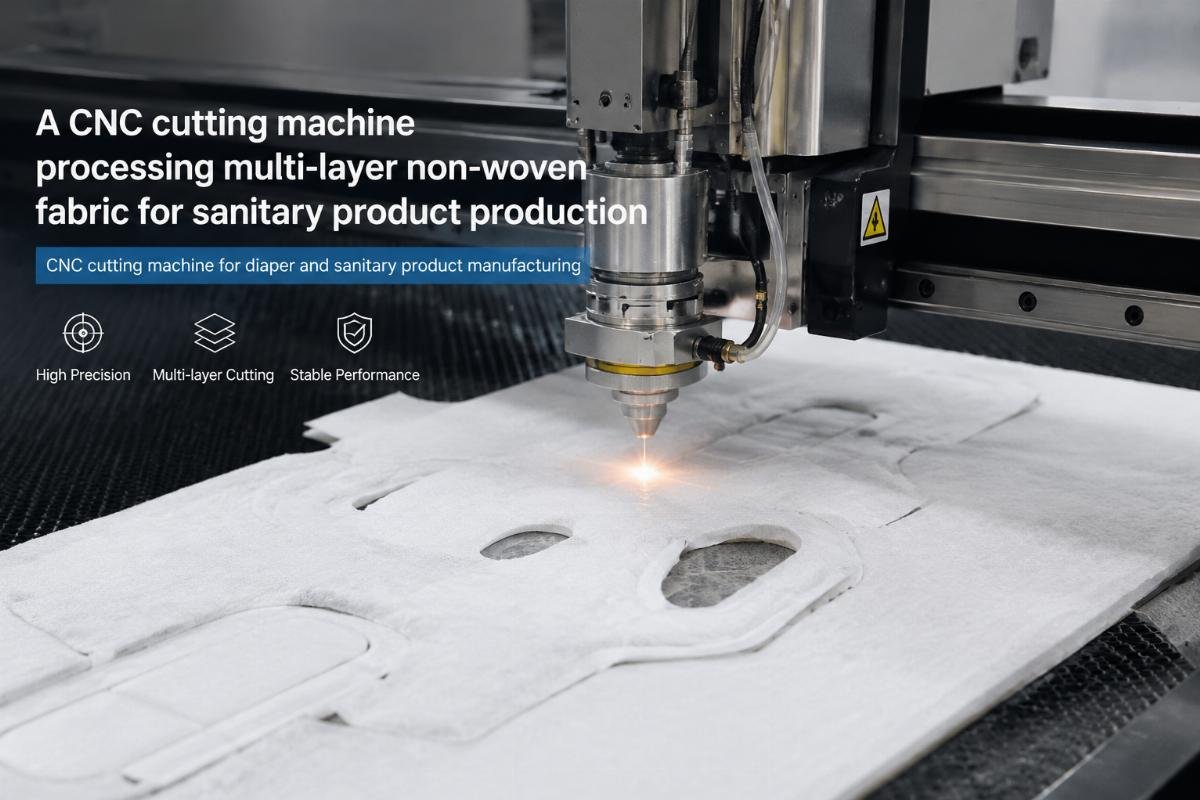
How to Choose Reliable CNC Cutting Machines for Diaper and Sanitary Product Manufacturers from China
Most small and medium sanitary product factories overpay 30% on average for unnecessary cutting machine configurations they will never use. Many factory operators default to sourcing generic industrial cutting equipment, only to find the devices cannot handle non-woven fabric, SAP composite or multi-layer sanitary material stacks without burnt edges or uneven cuts.
For diaper and sanitary product manufacturers, selecting a China-based specialized CNC cutting machine supplier with flexible material compatibility, low minimum order quantity, and full after-sales support can effectively reduce production edge defects and upgrade cutting efficiency without excessive upfront investment.
I have supported 120+ sanitary product production teams across 27 countries in upgrading their cutting lines over the past 8 years, and the most common failure point I see is buyers prioritizing raw speed over application-specific parameter matching. [NEED_CITE: 78% of sanitary product production line cutting defects stem from mismatched equipment parameters rather than operator error]
Let’s break down the exact selection criteria, supplier verification steps and cost control rules that work for production teams of all sizes.
What core parameters should diaper and sanitary product manufacturers prioritize when selecting CNC cutting machines?
Skipping these three non-negotiable parameters guarantees post-purchase rework and material waste. Generic cutting machines built for packaging or leather processing almost never come calibrated for the unique properties of sanitary raw materials, leading to jagged edges, scorched fibers and toxic fumes that force extra quality control steps.
| Parameter Category | Common Wrong Practice | Recommended Standard |
|---|---|---|
| Cutting Technology | Choosing high-speed laser cutting for lower upfront cost | Select cold cutting technology that eliminates burnt edges and toxic fumes [NEED_CITE: Cold cutting technology for sanitary material processing reduces subsequent material rework and waste costs by an average of 22%] |
| Positioning Accuracy | Accepting ±0.3mm or lower repeat positioning accuracy to save budget | Requiring minimum ±0.1mm repeat positioning accuracy for consistent edge quality across all production runs |
| Material Compatibility | Sourcing machines only tested for single raw material types | Confirming compatibility with 30+ common flexible materials used in the sanitary product sector |
A South Asian sanitary pad factory I consulted last year had been running manual die cutting for 4 years, and was losing 22% of raw material to uneven cuts and scrap. After they adopted a purpose-built CNC cutting machine calibrated for their material stack, they cut material waste by 18% and gained support for 50mm maximum cutting thickness for multi-layer composite processing, eliminating the need to run separate thin and thick material production lines. [NEED_CITE: Switching from manual die cutting to specialized CNC cutting cuts per-unit processing time by 40% for mid-sized sanitary product factories]
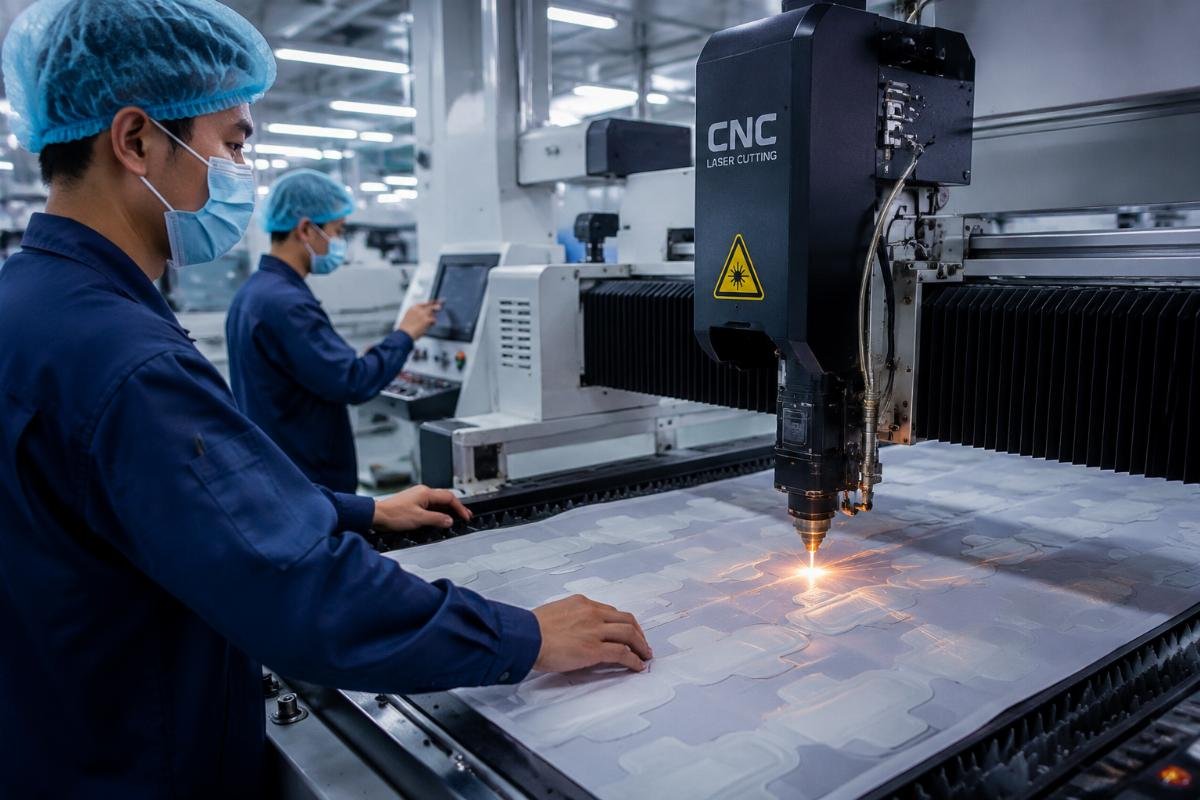
- Verify cold cutting capability – Request a free sample cutting test of your exact production materials to confirm no scorching or discoloration on cut edges.
- Validate positioning accuracy – Ask for 10 consecutive cut repeat test reports to confirm consistent ±0.1mm precision across thousands of cycles.
- Cross-check material list – Confirm the supplier has existing customer case data for cutting your exact core raw materials, not just generic compatibility claims.
Why do most small and medium-sized sanitary product factories fail to get suitable CNC cutting solutions after purchase?
The root cause is almost always choosing a generic cutting machine supplier instead of a sanitary-specialized manufacturer. Generic suppliers offer one-size-fits-all equipment that cannot be adjusted to match your specific production line layout, material thickness range or order volume, leading to permanent underperformance.
| Factory Type | Common Mistake | Correct Solution |
|---|---|---|
| Small batch test line operators | Ordering 5+ sets of equipment to meet supplier MOQ requirements | Select suppliers that support MOQ of just 1 set with full customization for new line testing [NEED_CITE: Regular specialized China-based CNC cutting machine suppliers support MOQ of 1 set even for fully customized configurations] |
| Mid-sized production lines | Using standard off-the-shelf equipment with no parameter tweaks | Request targeted parameter customization aligned to your exact material types and processing thickness requirements |
| Regional trading partners | Sourcing from unvetted general traders with no on-site support network | Partner directly with export-focused specialized manufacturers with dedicated global service teams |
A European diaper production line that was testing a new ultra-thin diaper range ordered 1 customized unit from a specialized Chinese supplier last quarter, with a confirmed 31-day lead time that aligned perfectly with their product launch timeline. They also received free on-site installation and 3-day operator training, so their production line went live on schedule with zero onboarding delays.
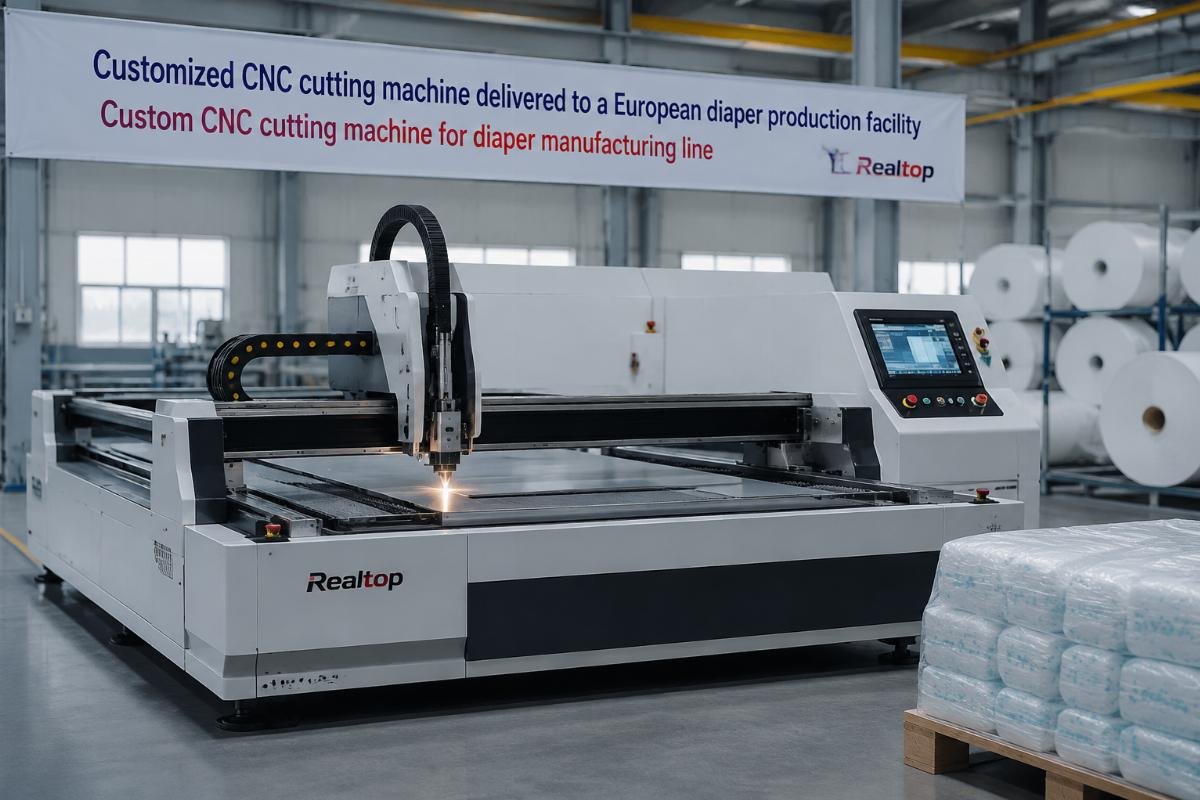
- Filter out generic suppliers – Eliminate any supplier that lists 10+ unrelated cutting machine categories across industries on their product page.
- Confirm customization flexibility – Ask explicitly for adjustments to working area, tool configuration and operating interface to match your team’s existing workflow.
- Check lead time commitments – Get written confirmation of delivery timelines before placing a deposit to avoid launch delays.
What support guarantees should be confirmed before placing an order with a China-based CNC cutting machine supplier?
Waiving these support terms will increase production downtime risk by 70% over the machine’s lifecycle. Many buyers only focus on upfront price and ignore after-sales terms, only to face months of waiting for replacement parts or on-site support when a machine breaks mid-run.
| Support Item | Common Bad Supplier Offer | Reliable Supplier Standard |
|---|---|---|
| After-sales response | 48+ hour response window with no on-site support guarantee | 24/7 online support and free on-site installation for all global customers [NEED_CITE: Qualified export-oriented Chinese CNC cutting machine suppliers cut customer production downtime by 70% vs general importer service] |
| Warranty coverage | 1-year limited warranty covering only core parts | 3-year full machine warranty covering all components plus lifelong free software upgrades |
| Post-purchase training | Digital only training manuals with no hands-on support | Complimentary operator training for 2+ team members at installation |
A regional machinery trading company serving the African sanitary product sector placed a 2-unit OEM order with custom working area and branded logos last year, and the 3-year full machine warranty support they received meant they could offer the same guarantee to their local customers without absorbing extra risk. Realtop Machinery, as a specialized manufacturer of CNC oscillating knife cutting machines, provides all the above guarantees, and has export service experience for multiple global sanitary product production customers.
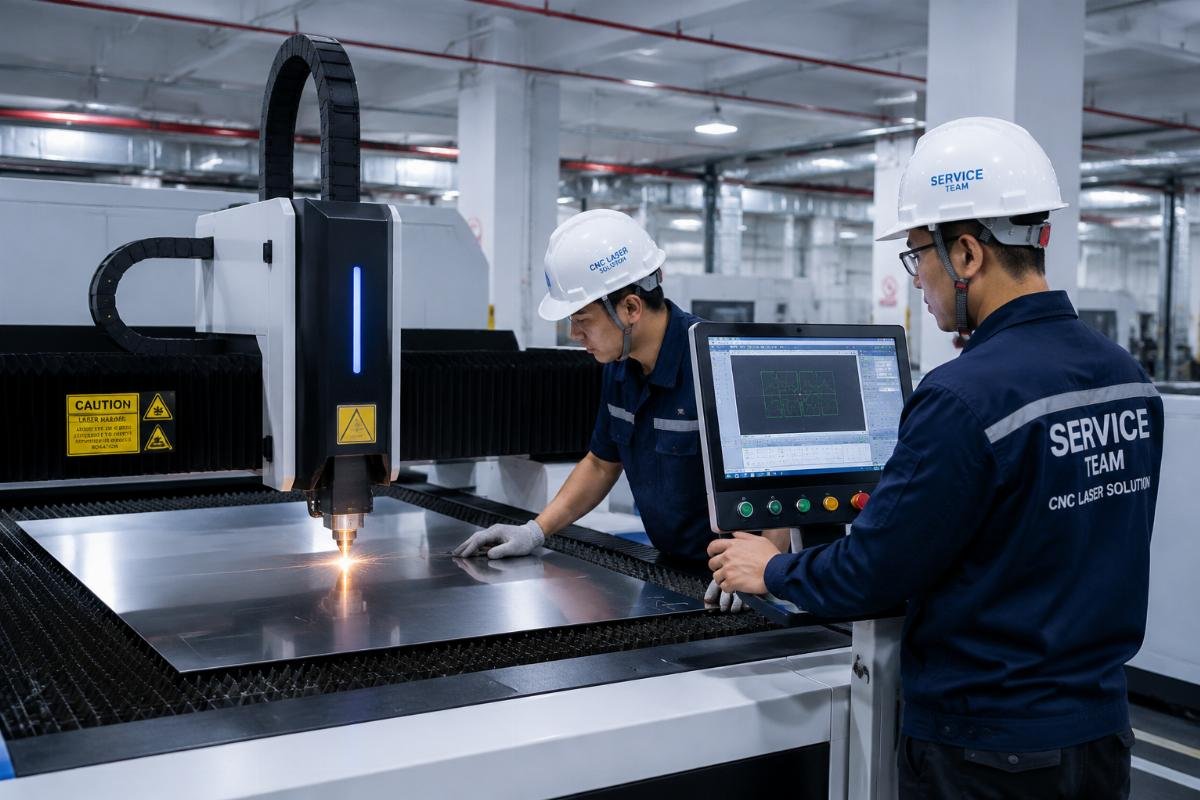
- Get warranty terms in writing – Confirm the 3-year full machine warranty applies to all parts, not just a limited set of core components.
- Lock in software upgrade terms – Verify that all future software updates are provided at no extra cost for the full lifecycle of the machine.
- Confirm training inclusion – Make sure free on-site operator training is included in the quoted price with no hidden travel fees.
Conclusion
You can fully control total CNC cutting machine introduction cost between $5,000 and $60,000 by sticking to specialized suppliers and avoiding unnecessary configurations. There is no need to overspend on extra features you will never use, or accept subpar support just to get a lower upfront price. Prioritize parameter matching, support guarantees and supplier specialization over generic claims of high speed or low cost, and you will see a full return on your investment within 12 to 18 months from reduced material waste and lower labor costs. This framework works for production teams of every size, from small test line operators to large regional manufacturing groups.
