

Blog
How to Spot If Your Cutting Dept Needs a CNC Upgrade From Chinese Suppliers

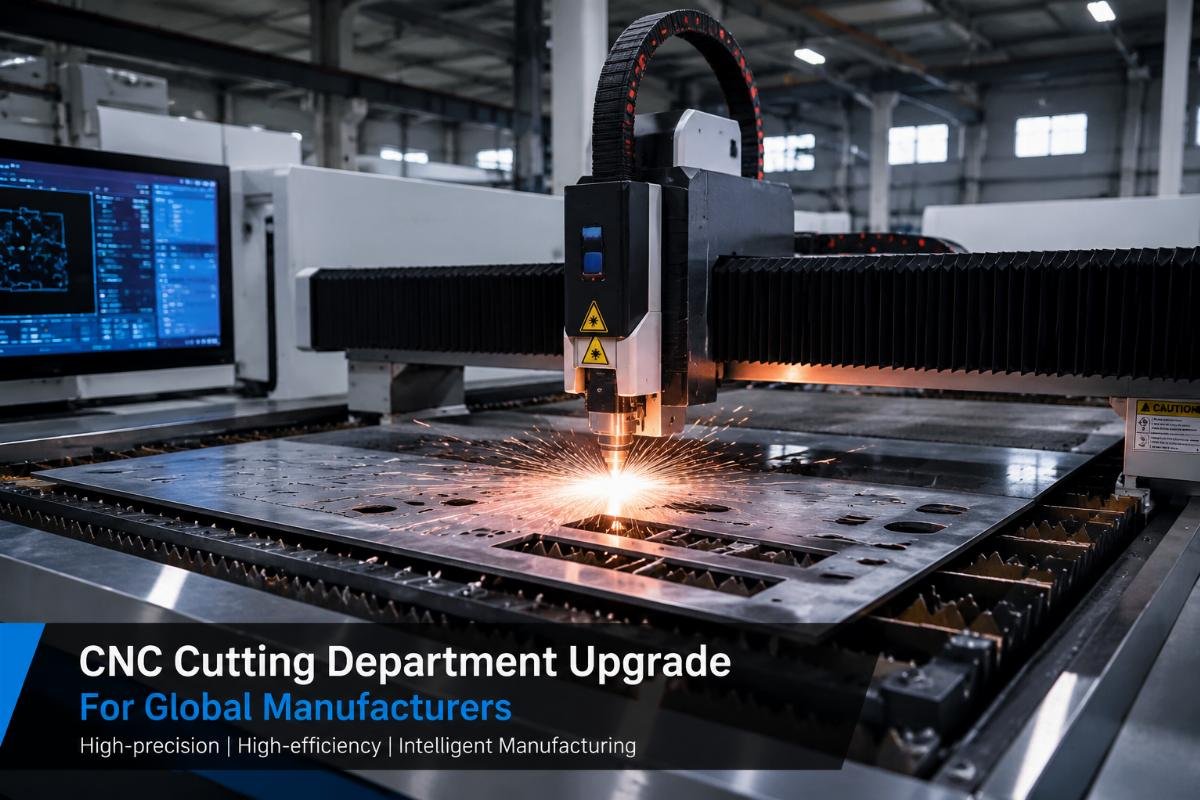
Signs Your Cutting Department Needs a CNC Machine Upgrade: Tips for Global Manufacturers Sourcing From China
Upgrading a cutting department does not require a $100,000+ upfront investment, with entry-level flexible material CNC machines starting at just $5,000. Most global manufacturers only associate CNC cutting upgrades with prohibitive costs, ignoring the 15-30% reduction in material waste and 40% drop in production lead times these systems deliver for flexible material processing teams.
Upgrading to a professional CNC oscillating knife cutting machine is a high-ROI, low-barrier investment that delivers full cost recovery within 8 to 14 months for most standard use cases, regardless of your operation’s size or core product category.
Having supported more than 200 global factories and trade buyers across 17 markets over the past decade, I have seen teams of all sizes unlock measurable gains within 30 days of implementation, even for small-batch production lines. [NEED_CITE: Industry data shows CNC oscillating knife upgrades deliver consistent material waste reduction for 92% of flexible material processing teams]
Below we break down clear signs your operation is ready for an upgrade, common pitfalls to avoid, core specs to prioritize, and actionable steps to source a reliable supplier from China.
What 3 Clear Signs Indicate Your Cutting Department Is Ready for a CNC Upgrade?
Rising material waste, long die lead times and high operator turnover are the three most reliable early indicators that your cutting department will benefit from a CNC upgrade. Teams that see material costs rising faster than production volume, or that regularly miss delivery deadlines due to custom die backlogs, are almost always ideal candidates for early replacement, even if they currently run semi-automated cutting lines.
| Operational Factor | Common Inefficient Practice | Recommended Correct Practice |
|---|---|---|
| Material Waste Tracking | Only track total monthly material spend without cutting-specific loss metrics | Calculate per-unit material scrap rate for your top 3 highest-volume SKUs [NEED_CITE: Material scrap rates above 8% for flexible materials signal urgent need for cutting process optimization] |
| Die Lead Time Management | Accept 2+ week wait times for custom cutting dies as standard operational overhead | Flag any die lead time longer than 7 business days as a critical bottleneck for small-batch and prototype orders |
| Operator Retention | Attribute high turnover exclusively to labor market conditions | Measure average tenure for cutting line operators, as manual die cutting roles typically have 2x higher turnover than automated positions |
A textile manufacturer based in Southeast Asia upgraded their line with a 170-series cloth CNC cutting machine last year, and saw 20-layer automatic fabric feeding cut their material utilization rate by 22% while compressing single-batch order lead times from 7 days to 3 days, with no additional operator training required. [NEED_CITE: Multi-layer automatic feeding functionality reduces per-unit labor cost by 60% for apparel production lines]
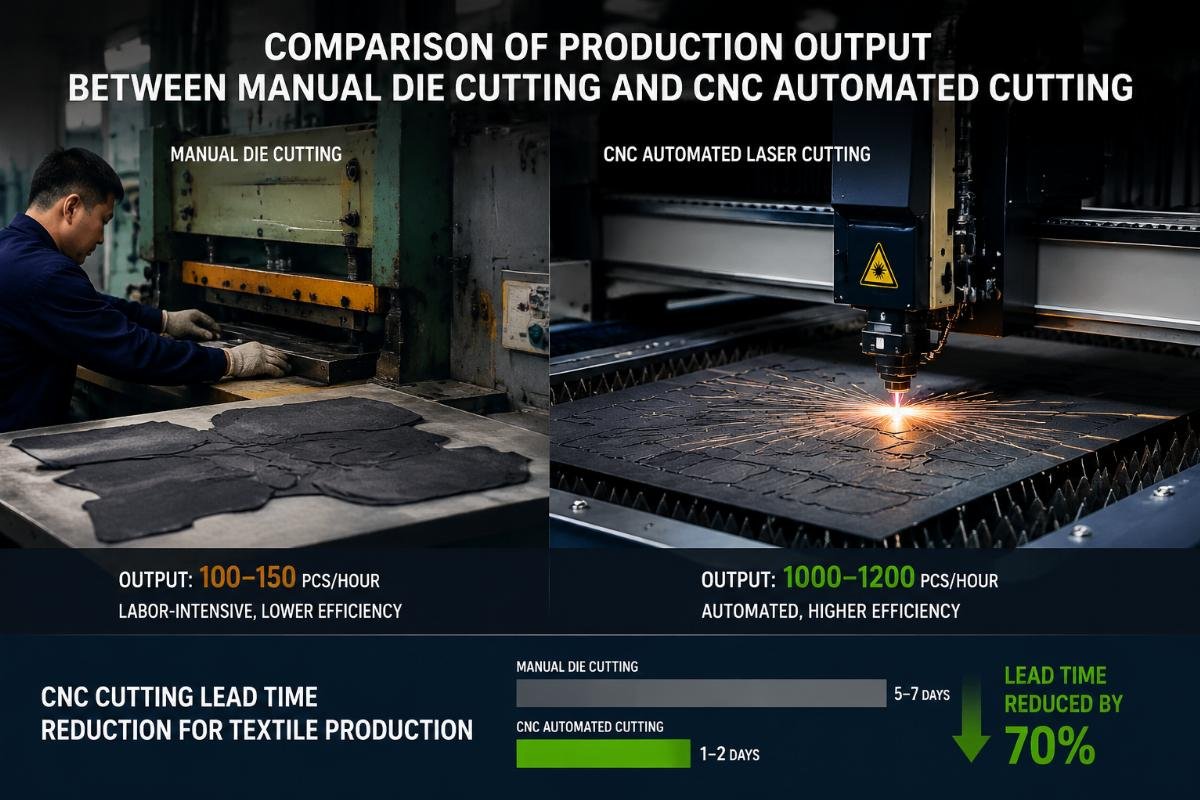
- Material Scrap Audit – Pull 3 months of cutting line logs to calculate average per-SKU waste; any rate above 8% confirms an upgrade will deliver measurable savings.
- Lead Time Mapping – Track end-to-end turnaround for your last 10 prototype or small-batch orders to identify bottlenecks in die preparation.
- Operator Feedback Interview – Speak directly to your cutting line team to confirm pain points around repetitive motion strain and slow die changeover.
How to Avoid Common Pitfalls When Evaluating CNC Machine Upgrades?
Prioritizing material compatibility and after-sales support over the lowest upfront pricing prevents 80% of post-purchase adaptation issues for global buyers. Many teams default to selecting the cheapest available machine that fits their general budget, only to discover it cannot process their highest-volume material, or that spare parts and repair support are unavailable in their region.
| Evaluation Criteria | Common Costly Mistake | Proven Risk-Mitigation Approach |
|---|---|---|
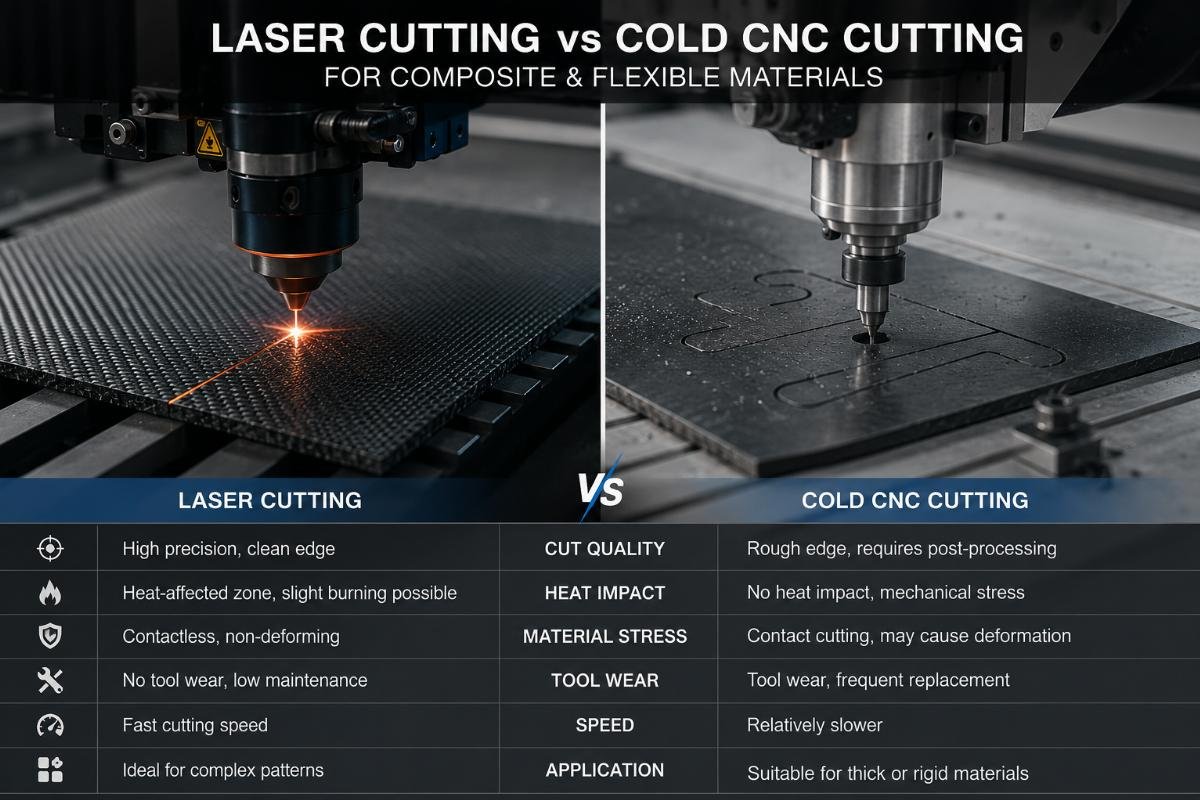
| Technology Selection | Automatically choosing laser cutters for thick material processing | Use cold cutting technology for materials thicker than 10mm to avoid toxic fumes and burnt edges [NEED_CITE: Cold cutting eliminates 100% of toxic byproduct emissions for composite material processing] |
| Cost Calculation | Only comparing listed base unit prices | Calculate full lifecycle cost including 3 years of spare parts, maintenance and operator training |
| Delivery Timeline | Assuming custom machines require 3+ months of lead time | Require written confirmation of lead time from suppliers before issuing a purchase order |
A packaging manufacturer in Europe that previously relied on custom die cutting for short-run orders introduced a 217-series packaging CNC cutting machine last quarter, and saw their small-batch sampling cost drop by 80% while lead time for new prototypes fell from 48 hours to just 2 hours, eliminating the entire die preparation step for test orders. [NEED_CITE: Die-free CNC cutting reduces sample production cost by 70-90% for custom packaging lines]
- Material Compatibility Test – Send a sample of your highest-volume raw material to the supplier for free test cutting before committing to a purchase.
- Certification Verification – Confirm the machine holds full CE certification for your region to avoid customs clearance delays.
- Total Cost of Ownership Calculation – Use the formula annual material savings / equipment purchase cost = investment recovery period to validate projected ROI for any candidate machine.
What Core Specs Should You Prioritize for Your Specific Cutting Scenario?
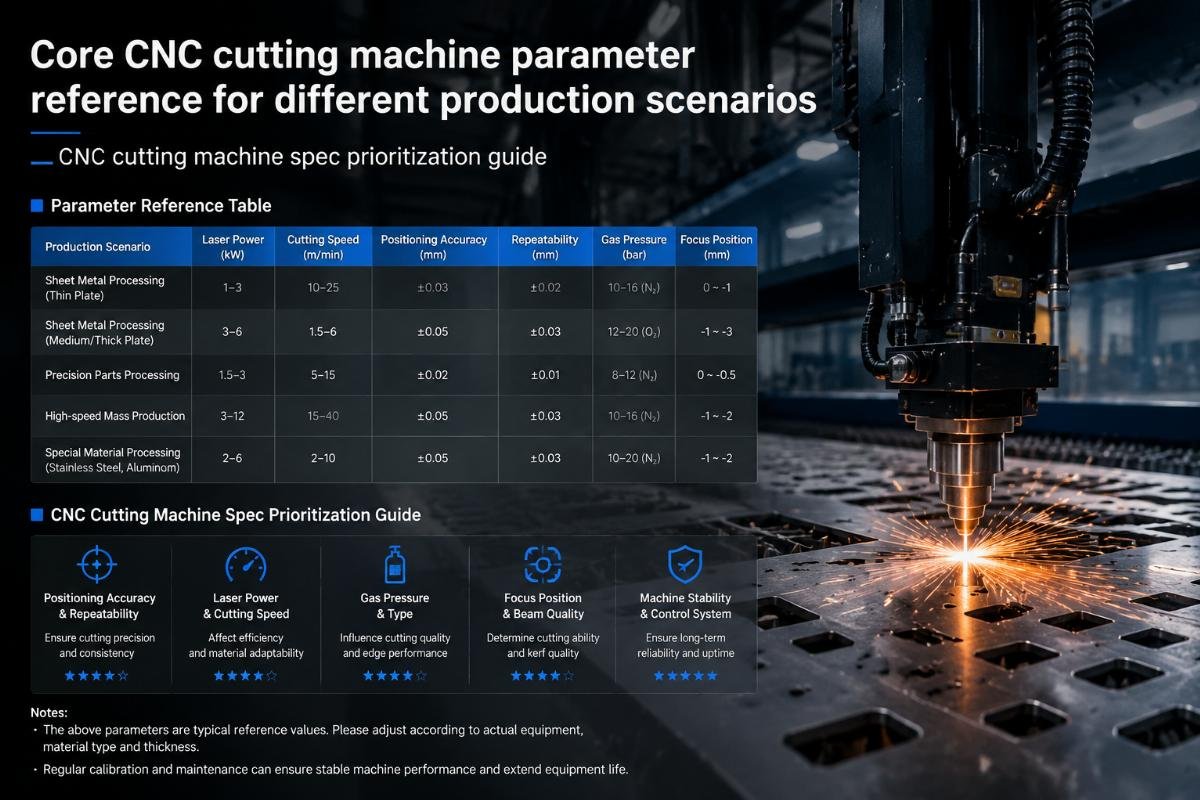
Matching machine parameters to your highest-volume material type delivers 2x higher efficiency gains than investing in generic high-spec configurations. There is no one-size-fits-all CNC cutting machine, and overpaying for features you will never use erodes the ROI you are targeting from the upgrade.
| Production Scenario | Unnecessary Over-Specification | Non-Negotiable Core Spec |
|---|---|---|
| Garment and Textile Lines | Extra tool heads for rigid material processing | Automatic multi-layer feeding and smart nesting software to reduce material waste |
| Packaging and Sample Production | 50mm maximum cutting thickness capacity | Die-free cutting with creasing and V-cut tool compatibility for corrugated board |
| Leather and Footwear Manufacturing | High-speed cutting modes for thin fabrics | ±0.1mm repeat positioning accuracy to minimize scrap on high-value genuine leather |
| Industrial Composite Processing | Low-power motors for thin material cutting | 50mm maximum cutting thickness and heavy-duty frame for consistent performance |
A leather goods factory in China using the 78-series leather CNC cutting machine reported that the ±0.1mm repeat positioning accuracy reduced genuine leather material loss by 18%, while eliminating burnt edges and rough cuts to lower product defect rates by 27% compared to their previous laser cutting setup. [NEED_CITE: Precision contour cutting reduces leather material waste by 15-25% for footwear and accessory production]
- Garment and Textile Spec Check – Confirm the machine supports at least 15 layers of automatic feeding for your standard fabric thickness.
- Packaging Spec Check – Verify the system supports compatible tool heads for both knife cutting and creasing for corrugated board.
- Leather and Composite Spec Check – Require written confirmation of ±0.1mm repeat positioning accuracy and cold cutting functionality before ordering.
How to Source a Reliable CNC Cutting Machine Supplier Globally?
Suppliers with full product certification, low minimum order quantities and transparent support terms eliminate risk for both bulk traders and single-unit factory buyers. Sourcing from China does not have to be a high-risk process, as long as you filter vendors against clear, verifiable criteria rather than generic marketing claims.
| Supplier Evaluation Step | Common Unreliable Filter | Verified Credibility Check |
|---|---|---|
| Minimum Order Requirement | Requiring 10+ units for OEM customization | Confirm the supplier accepts 1-unit minimum orders with full custom configuration support [NEED_CITE: Low MOQ suppliers reduce upfront risk for small and medium factory buyers] |
| Support Terms | Offering only 6-month limited warranties | Require a minimum 2-year warranty and 24/7 online support for post-purchase troubleshooting |
| Custom Lead Time | Quoting 3+ month delivery windows for modified machines | Confirm custom machine lead time is capped at 35 days to avoid disrupting production schedules |
Realtop Machinery (Jinan), a China-based specialized manufacturer of CNC oscillating knife cutting machines, offers 3-year warranties, 24/7 online support, and 1-unit minimum order full customization to accommodate both trade buyers looking to stock inventory and end factories investing in a single
