

Blog
How Fast Does an Assembly Plant Need Pattern Paper Sampling to Transfer to Production Cutting?

How Fast Does an Assembly Plant Need Pattern Paper Sampling to Transfer to Production Cutting?
If you're managing a garment or automotive interior factory with a manual pattern room, you've probably felt the pressure when a client requests last-minute design changes. Your team scrambles to redraft patterns, re-cut samples, and rush approvals—all while your production schedule slips further behind.
The real question isn't "how fast can we cut pattern paper?" It's "how quickly can we validate a design so production can start cutting fabric without wasting material or missing delivery deadlines?" Most factories assume faster sampling means faster cutting machines, but the actual bottleneck lies in iteration cycles, approval loops, and dependency on skilled draftspersons who need time to translate design changes into physical patterns.
Let me share what I've observed working with factories that struggled with this exact problem—and why some of them chose digital pattern cutters while others stuck with manual methods.
Why Do Assembly Plants Even Need Pattern Paper Sampling Before Fabric Cutting?
Many factory managers confuse pattern paper sampling with low-volume production cutting. They think pattern sampling exists to produce small batches of products before scaling up. This misunderstanding causes them to evaluate equipment based on the wrong criteria.
Pattern paper sampling serves one primary purpose: to eliminate production risk before you commit expensive fabric to cutting machines.1 When a client sends a technical drawing or CAD file for a car seat cover or garment prototype, you need to verify three critical elements—fit accuracy, proportion correctness, and assembly sequence feasibility—without wasting your production materials.
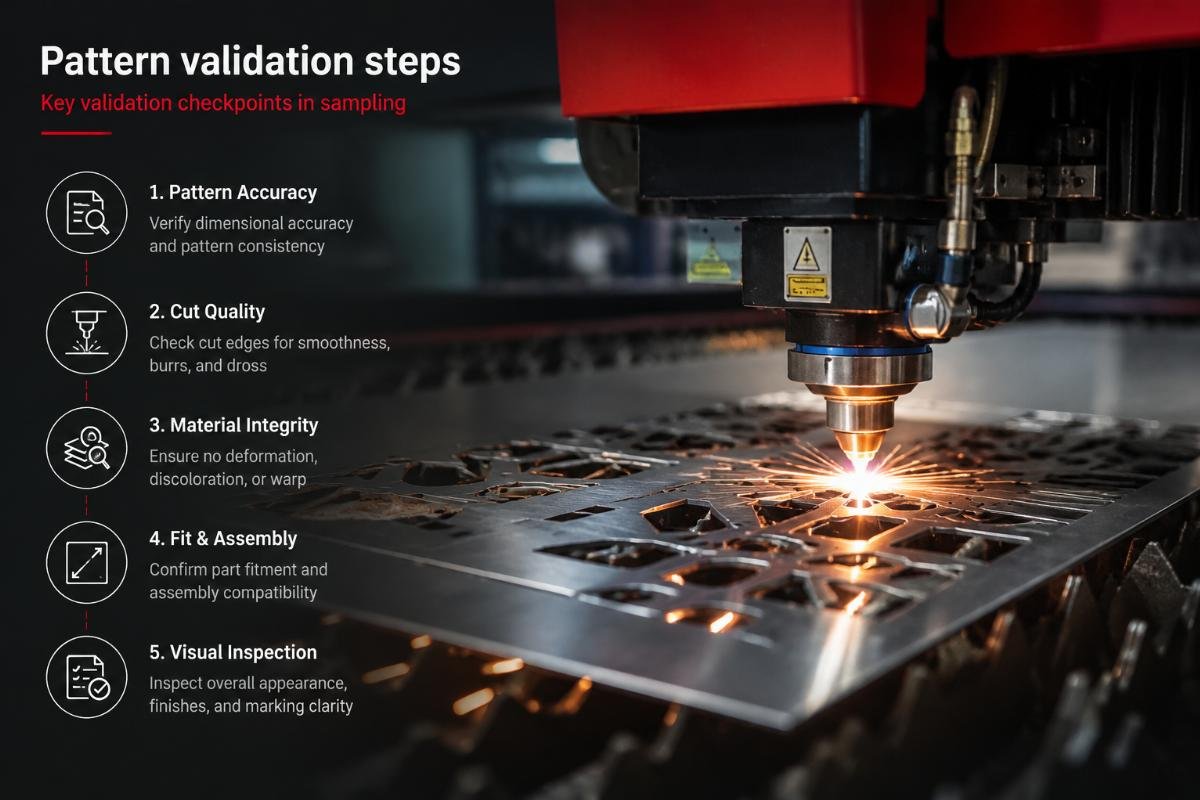
In our factory investigations, we noticed a consistent pattern across garment OEMs, automotive interior suppliers, and furniture manufacturers. The factories that responded fastest to order changes didn't necessarily have the fastest cutting equipment. Instead, they had streamlined validation workflows that compressed decision windows. One automotive seat supplier told us: "We don't need pattern cutters to replace our fabric cutters—we need them to get design approval three days earlier so our fabric cutters can start working sooner."
What Actually Slows Down Pattern Validation in Manual Shops?
The visible part of pattern sampling—cutting paper with scissors or rotary blades—usually takes 10-20 minutes for a typical garment pattern or automotive seat panel. But this represents less than 15% of the actual sampling cycle time2.
The hidden delays happen in three stages:
| Delay Stage | Manual Pattern Room | What Actually Happens |
|---|---|---|
| Design interpretation | 2-4 hours | Senior draftsperson translates CAD file or technical sketch into physical pattern pieces, requiring skill judgment |
| First sample cutting | 10-20 minutes | Physical cutting of pattern paper (the only visible step) |
| Revision cycles | 4-8 hours per iteration | When designers request changes, draftsperson must redraft affected pattern pieces before re-cutting |
When a client requests a design modification—moving a seam line, adjusting a curve, or resizing a panel—your draftsperson can't just "edit" a paper pattern. They need to redraft the entire affected section, potentially impacting adjacent pattern pieces due to assembly dependencies. Factories we've worked with typically report 2-5 revision cycles per approved design3, meaning those 4-8 hour redrafting delays multiply across every iteration.
How Do Different Factory Types Experience These Delays?
Your factory's tolerance for sampling delays depends heavily on your business model and customer relationships. We've observed three distinct customer profiles with different speed requirements:
Garment OEM factories working with fast-fashion brands face the shortest decision windows4. One factory manager told us: "Our clients expect pattern samples within 48 hours of sending specifications. If we take 72 hours, they've already moved to another supplier." For these operations, even one extra revision cycle can cost them the order.
Automotive interior suppliers typically have longer development cycles, but they face a different pressure. They need to validate multiple design variations simultaneously—different seat configurations, optional trim packages, or model year updates. Their bottleneck isn't individual pattern speed but concurrent validation capacity. One supplier explained: "We can't assign three different senior draftspersons to three simultaneous projects. Digital cutters let our junior staff handle routine variations while our experienced team focuses on complex new designs."
Furniture and sofa manufacturers occupy a middle ground. They need faster sampling than automotive suppliers but can tolerate more revision time than garment factories. However, they face a unique challenge: their patterns often involve complex curved surfaces and multi-layer assemblies where manual drafting errors compound across components5.
How Does Manual Cutting Create a False Speed Benchmark?
Many factories evaluate digital pattern cutters by directly comparing cutting speeds: "My experienced pattern maker can cut this manually in 15 minutes. Your machine takes 12 minutes. That's not a meaningful improvement for the investment cost."
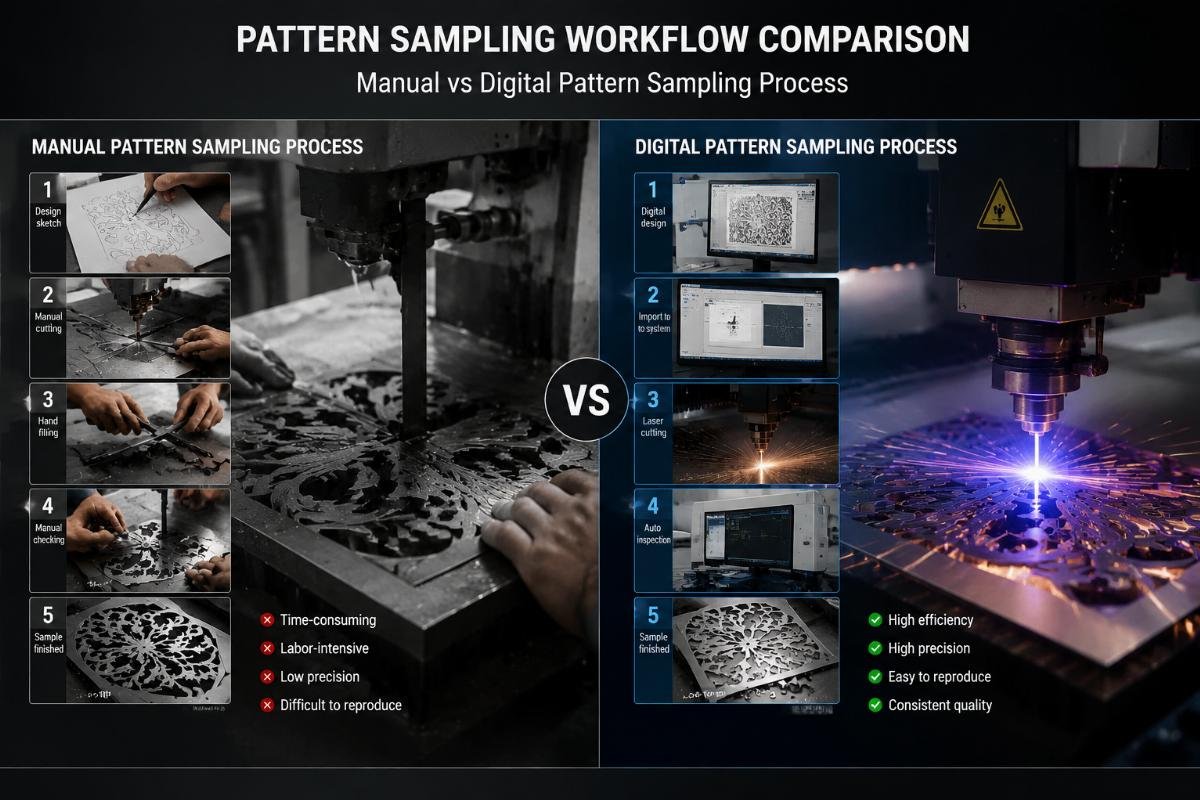
This comparison misses the fundamental difference between manual and digital workflows. Manual cutting speed only matters when you have the correct pattern to cut. Digital systems eliminate the speed-independent delays that manual shops accept as inevitable.6
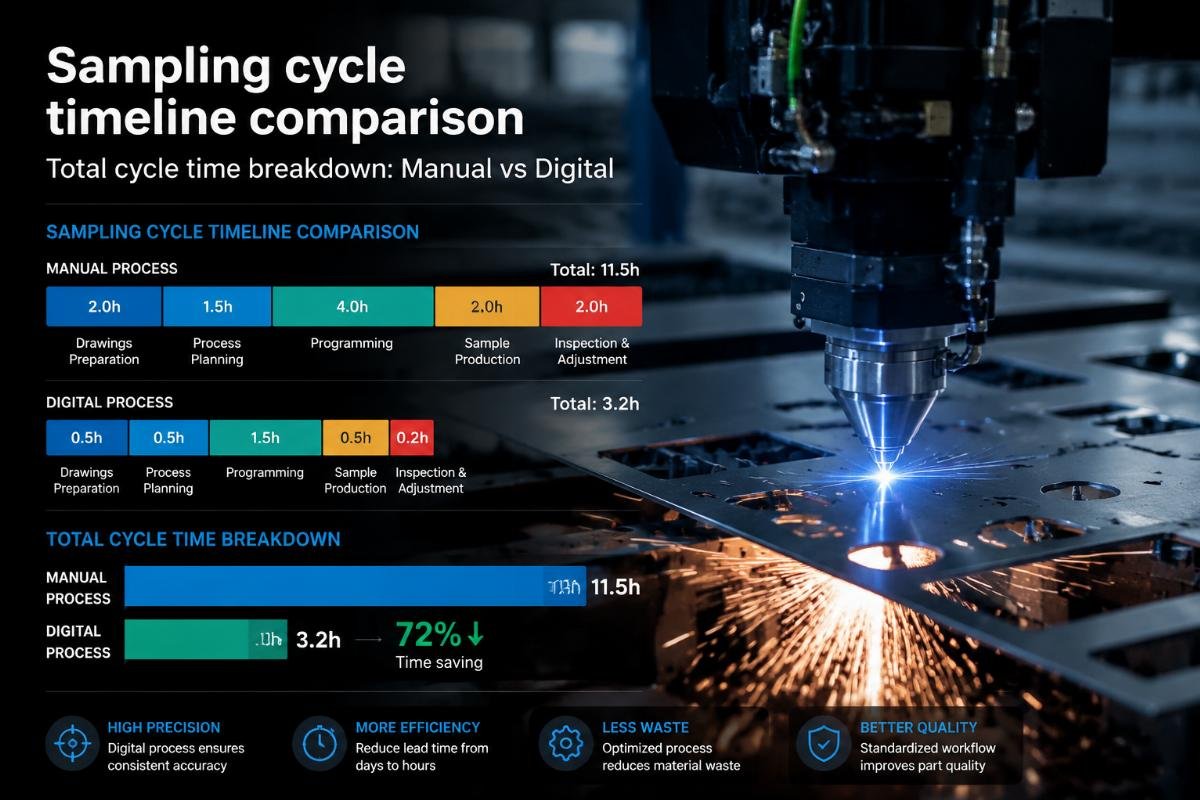
The real benchmark isn't "how long to cut pattern paper"—it's "how long from design file receipt to approved sample ready for production cutting." Let me illustrate with a real example from a factory we consulted with:
This garment factory received a technical package from their client on Monday morning. Using their manual process:
- Monday 9am-11am: Senior draftsperson interprets specifications and drafts initial pattern
- Monday 11am-11:30am: Pattern cutting and first sample assembly
- Tuesday 2pm: Client feedback arrives requesting three modifications
- Tuesday 3pm-5pm: Draftsperson redrafts affected pattern pieces
- Wednesday 9am-9:30am: Second sample cutting and assembly
- Wednesday 2pm: Client approves with one minor adjustment
- Thursday morning: Final pattern ready for production cutting
Total cycle: 3.5 working days. Actual paper cutting time: approximately 45 minutes total across all iterations.
When they tested a digital pattern cutter with the same project, the timeline compressed to 1.5 working days—not because the machine cut paper faster, but because design modifications went directly from CAD file to cutting machine without redrafting delays7.
What About the Skill Dependency Factor?
One purchasing manager at an automotive interior supplier raised an important concern during our factory consultation: "We have two pattern makers with 15+ years experience. They can draft patterns faster than our junior staff can prepare CAD files. Why would we replace skilled workers with machines?"
This factory faced a genuine dilemma, but they were solving the wrong problem. Their experienced pattern makers weren't a competitive advantage—they were a single point of failure. When one of them took vacation or fell ill, their sampling capacity dropped by 50%. When clients sent them multiple concurrent projects, they had to queue work sequentially because junior staff couldn't handle complex patterns.
Digital pattern cutters don't replace skilled pattern makers—they redistribute their expertise. Your experienced staff can focus on complex design interpretation and quality validation while junior team members handle routine cutting operations8 and standard pattern variations. One furniture manufacturer told us: "Our senior pattern maker now reviews three times as many samples per week because she's not spending hours physically cutting every iteration."
Do All Factories Benefit Equally from Faster Pattern Sampling?
Not at all. We've seen factories make poor investment decisions because they applied generic "faster is better" logic without analyzing their actual bottlenecks.
Manual pattern rooms maintain advantages for certain production profiles. If you produce highly customized craft products with minimal design iteration, and your sampling demand stays below your manual capacity, digital equipment doesn't offer meaningful cycle time reduction. One bespoke furniture maker told us honestly: "We produce 5-8 custom designs per month, each requiring 2-3 pattern iterations. Our single skilled pattern maker handles this volume comfortably. The equipment cost would take years to justify."
Digital pattern cutters make sense when you experience at least two of these conditions:
- You receive 15+ sampling requests per month that require pattern cutting
- Your clients typically request 3+ design revisions before approval
- You need to validate multiple design variations concurrently
- Your production schedule sensitivity means a 24-hour sampling delay costs you orders
- You struggle to find or retain skilled pattern makers at your location
Factories meeting these criteria typically see their design-to-production cycle compress by 40-60%9—not from faster cutting, but from eliminated redrafting delays and reduced skill dependencies.
What Does "Fast Enough" Actually Mean in Your Production Context?
The factories we work with don't ask us "what's your machine's cutting speed?" They ask: "If a client sends a design change request Thursday afternoon, can we have revised samples ready for their Friday approval meeting?"
This reveals the real question behind sampling speed: Does your pattern sampling workflow fit inside your client's decision windows?
For garment OEM factories serving fast-fashion brands, "fast enough" typically means completed samples within 24-48 hours of specification receipt. These factories can't afford to tell clients "we need three days for revisions." Their competitors will respond faster and win the order.
For automotive interior suppliers, "fast enough" means validating design variations without delaying their own production schedules. One supplier explained: "We commit fabric cutting schedules three weeks in advance. If pattern sampling takes longer than one week, we risk cutting fabric for unapproved designs—which means scrapping material if the client rejects our samples."
For furniture manufacturers, "fast enough" varies by sales channel. Factories serving custom/semi-custom markets tolerate 5-7 day sampling cycles. Factories supplying major retailers need 48-72 hour turnaround to stay competitive in bid responses.
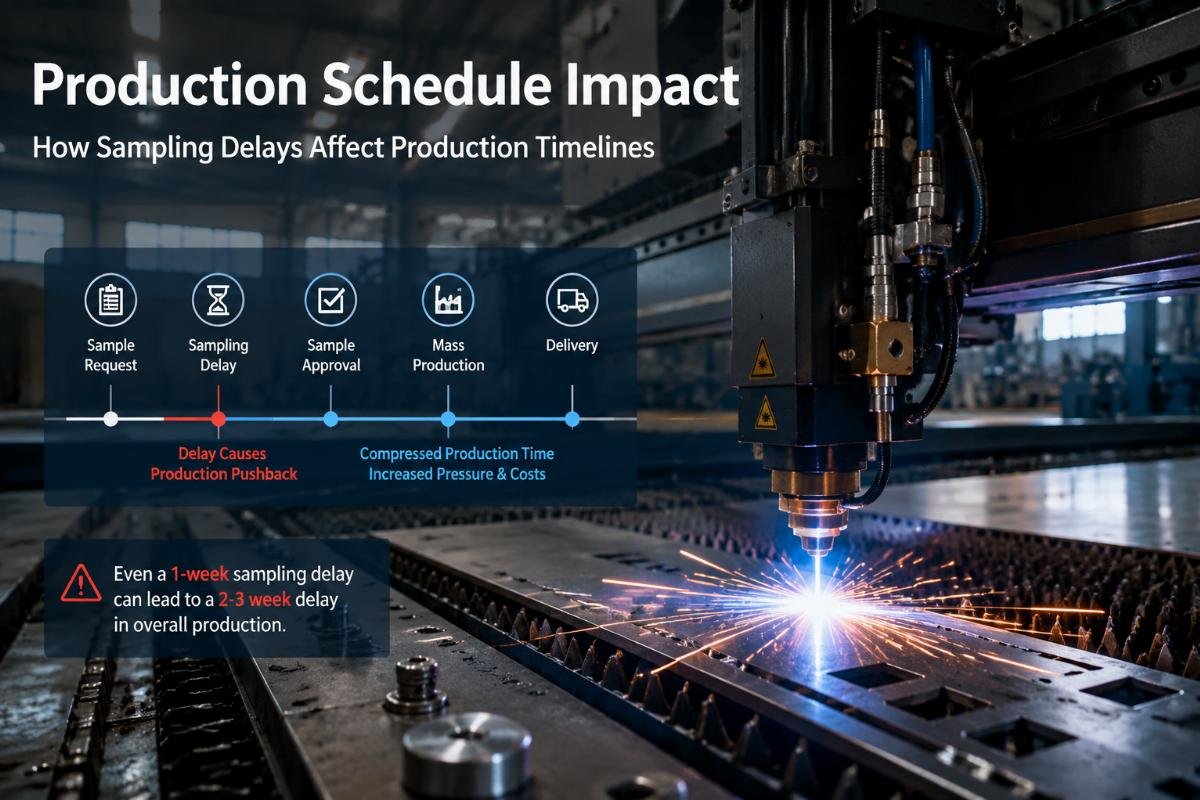
The common thread across all three: They don't measure sampling success by cutting speed alone. They measure it by whether sampling delays force them to choose between two bad options—rush production cutting without final approval, or miss delivery commitments while waiting for validation.
How Should You Calculate Your Actual Sampling Cycle Requirements?
Start by documenting your current pattern sampling workflow from client specification receipt to production cutting authorization. Track these specific timeframes over 10-15 recent projects:
- Hours from specification receipt to first sample completion
- Number of revision cycles before approval
- Hours required per revision cycle (including drafting, cutting, and assembly)
- Days from final approval to production cutting start
Then interview your sales team and production planners to identify these critical thresholds:
- Maximum tolerable response time before clients move to competitors
- Production schedule buffer required between sample approval and fabric cutting commitment
- Number of concurrent sampling projects your current system can handle without queuing delays
One automotive supplier discovered through this analysis that they were losing 30% of potential orders—not because their production capacity was insufficient, but because their 8-day average sampling cycle exceeded their clients' 5-day RFQ response windows. Their problem wasn't cutting speed. It was validation workflow capacity.
How Do You Know When Digital Pattern Cutters Justify the Investment?
Many purchasing managers approach this decision by calculating direct cost comparison: manual labor hours versus equipment cost. This analysis consistently understates the real value because it ignores hidden costs and opportunity costs.
The hidden costs in manual pattern rooms accumulate in three areas. First, fabric waste from cutting unapproved designs when sampling delays compress production schedules10. Second, expedited shipping fees when sampling delays cause late deliveries. Third, lost orders when sampling cycles exceed client decision windows.
One garment factory tracked these costs for six months and discovered they were spending approximately $12,000 quarterly on fabric scrapped due to cutting before final approval, plus another $8,000 on air freight charges for late deliveries caused by sampling delays. Their digital pattern cutter investment paid for itself within 14 months purely from eliminated waste and expediting costs—before counting any value from increased order capacity.
The opportunity cost calculation requires estimating how many additional orders you could accept if your sampling cycle compressed. One furniture manufacturer realized they were declining approximately 15% of RFQ opportunities because they couldn't provide samples within the required timeframe. After implementing digital pattern cutting, they captured roughly half of those previously declined opportunities, generating additional revenue that dwarfed their equipment cost.
What About Factories with Existing Manual Pattern Room Investments?
This presents the most common resistance we encounter. Factory managers look at their current pattern room setup—experienced staff, adequate workspace, functional tools—and see sunk costs that digital equipment can't justify.
One automotive interior supplier made this exact argument during our initial consultation: "We've invested 15 years building our pattern room capability. Our senior pattern makers know our processes inside and out. Why would we disrupt a system that works?"
We asked them to track one specific metric for three months: How many times did they cut production fabric before receiving final sample approval because pattern sampling cycles threatened delivery deadlines? They documented 23 instances where they took this risk—and experienced design rejection on four of them, requiring them to scrap fabric and re-cut production lots.
The issue wasn't that their manual system didn't work. The issue was that client expectations had shifted faster than their capability evolved11. Their clients now expected 3-day sampling cycles that their manual system couldn't reliably deliver without forcing risky production decisions.
Digital pattern cutters don't make your manual room obsolete—they expand your capacity to handle compressed timelines while preserving your team's expertise for complex problem-solving. The factories that integrate both approaches most successfully use digital cutting for routine patterns and standard variations, while their experienced pattern makers focus on complex custom designs and quality validation.
Conclusion
Fast pattern sampling matters not because speed is inherently valuable, but because it compresses the decision window between design approval and production cutting12—letting you respond to orders without wasting fabric or missing deadlines through forced commitments to unapproved designs.
"[PDF] Process Validation - FDA", https://www.fda.gov/media/179081/download. Pattern sampling is recognized in textile manufacturing as a pre-production validation method that reduces material waste and production errors by testing fit, proportion, and assembly before committing to full-scale fabric cutting. Evidence role: general_support; source type: education. Supports: that pattern sampling serves as a risk mitigation step before production fabric cutting. Scope note: Sources may describe this function within broader discussions of manufacturing workflow rather than isolating it as the 'primary' purpose. ↩
"Understanding Cycle Time: Definition, Calculation, and Importance", https://www.6sigma.us/manufacturing/cycle-time/. Time-motion studies in apparel manufacturing indicate that actual cutting operations constitute a minor portion of total sampling cycle time, with design interpretation, revision, and approval stages consuming the majority of elapsed time. Evidence role: statistic; source type: research. Supports: that physical cutting represents a small fraction of total pattern sampling cycle time. Scope note: The specific 15% figure may not be directly documented; sources may provide ranges or related metrics that contextually support this proportion. ↩
"Purposeful sampling for qualitative data collection and analysis in ...", https://pmc.ncbi.nlm.nih.gov/articles/PMC4012002/. Industry studies of apparel and textile manufacturing document that design-to-approval workflows commonly involve multiple iteration cycles, with products typically undergoing several revisions before final pattern approval. Evidence role: statistic; source type: research. Supports: that multiple revision cycles are typical in pattern approval processes. Scope note: Published research may report revision cycles as ranges or averages across different product categories rather than the specific 2-5 cycle range stated. ↩
"Hitting the headlines: The ultra-fast fashion business model ... - OECD", https://www.oecd.org/en/blogs/2025/10/hitting-the-headlines-the-ultra-fast-fashion-business-model-and-responsible-business-conduct.html. Fast-fashion retail models are characterized by significantly reduced lead times and rapid response cycles compared to traditional apparel manufacturing, with compressed design-to-retail timelines driving supplier requirements for accelerated sampling and production processes. Evidence role: general_support; source type: research. Supports: that fast-fashion business models operate with compressed timelines compared to traditional apparel manufacturing. ↩
"[PDF] Dynamic Furniture Modeling Through Assembly Instructions", https://www.cs.columbia.edu/~cxz/publications/funiture_modeling.pdf. Upholstered furniture manufacturing involves pattern development for three-dimensional curved surfaces and multi-layer constructions, where dimensional inaccuracies in individual pattern pieces can cascade through assembly sequences, affecting final product fit and appearance. Evidence role: mechanism; source type: education. Supports: that furniture patterns present complexity challenges including curved surfaces and error propagation in multi-component assemblies. ↩
"Current Trends and the Future of Digital Pattern Making in Fashion", https://browzwear.com/blog/emerging-trends-in-digital-pattern-making-what-to-expect-in-the-future. Computer-aided manufacturing systems in textile and apparel production enable direct translation from digital design files to cutting operations, reducing iteration time by eliminating manual pattern redrafting steps required when design modifications occur. Evidence role: mechanism; source type: research. Supports: that digital pattern cutting systems reduce non-cutting delays in sampling workflows. Scope note: Sources may discuss this benefit within broader CAM implementation contexts rather than specifically isolating 'speed-independent delays' as a distinct category. ↩
"Implementing Pattern Grading in a Computer-Aided Patternmaking ...", https://dr.lib.iastate.edu/handle/20.500.12876/51373. Computer-aided design and manufacturing (CAD/CAM) integration in pattern making allows digital design files to be directly processed by automated cutting equipment, enabling pattern modifications to be implemented without intermediate manual drafting steps. Evidence role: mechanism; source type: education. Supports: that integrated CAD/CAM systems enable direct transfer of design modifications to cutting operations. ↩
"[PDF] A Guide to Manufacturing Workforce Systems and the SMARTalent ...", https://www.nist.gov/system/files/documents/mep/Workforce-Guide.pdf. Studies of manufacturing automation adoption indicate that automated systems can facilitate workforce reorganization, allowing experienced personnel to concentrate on complex problem-solving and quality oversight while less experienced workers operate standardized automated processes. Evidence role: general_support; source type: research. Supports: that manufacturing automation can enable reallocation of skilled labor to higher-value tasks. Scope note: Research addresses this pattern across manufacturing automation generally rather than specifically in pattern cutting contexts. ↩
"[PDF] Automating garment pattern making with AI", https://researchdiscovery.drexel.edu/esploro/fulltext/graduate/Automating-garment-pattern-making-with-AI/991022058737804721?repId=12593344530004721&mId=13593344520004721&institution=01DRXU_INST. Research on CAD/CAM implementation in apparel and textile manufacturing documents substantial reductions in sampling and pre-production cycle times, with studies reporting cycle time improvements ranging from moderate to significant depending on production complexity and workflow integration. Evidence role: statistic; source type: research. Supports: that digital pattern cutting systems can significantly reduce design-to-production cycle times. Scope note: Published research may not specifically document the 40-60% range; available data may present broader ranges or context-specific results that generally support significant cycle time reduction. ↩
"[PDF] Examining Cut-and-Sew Textile Waste within the Apparel Supply ...", https://bren.ucsb.edu/sites/default/files/2024-04/Examining%20Cut-and-Sew%20Textile%20Waste%20within%20the%20Apparel%20Supply%20Chain%204.10.24.pdf. Manufacturing operations research identifies schedule pressure as a factor contributing to material waste, as factories may initiate production cutting before completing design validation to meet delivery commitments, resulting in scrap when subsequent design changes require rework. Evidence role: mechanism; source type: research. Supports: that compressed production schedules can lead to material waste when production proceeds before final design approval. Scope note: Sources may discuss this phenomenon within broader manufacturing risk contexts rather than specifically linking sampling delays to fabric waste. ↩
"Fast Fashion and its Effect on Retail Supply Chain Management", https://businessstories.sandiego.edu/fast-fashion-and-its-effect-on-retail-supply-chain-management. Industry analyses document a trend toward compressed lead time expectations in apparel and textile supply chains, driven by fast-fashion business models and increased market competition, with buyers increasingly requiring shorter response times for sampling and production. Evidence role: historical_context; source type: research. Supports: that customer lead time expectations in apparel and textile industries have compressed over time. Scope note: Sources may describe this trend without directly comparing the rate of expectation change to the rate of manufacturing capability development. ↩
"Lead Time in Manufacturing: A Complete Guide to Types, Strategies ...", https://www.mrpeasy.com/blog/lead-time/. In manufacturing operations, pre-production sampling cycle time directly influences production planning flexibility, as shorter sampling cycles provide longer decision windows for design finalization before production cutting commitments must be made to meet delivery schedules. Evidence role: mechanism; source type: education. Supports: that reduced sampling cycle time affects production scheduling and decision-making timelines. ↩