

Blog
How to Price CNC Cutting Machines for Local Markets: Tips from China Manufacturers

How to Price CNC Cutting Machines for Your Local Market: Sourcing Tips from China Manufacturer
Higher pricing does not always equal higher profit margins for CNC cutting machine resellers. Most traders default to either undercutting competitors with rock-bottom prices or marking up machines as high as possible to chase quick returns, but neither strategy delivers sustainable growth for long-term local market penetration.
Pricing CNC cutting machines for your local market requires balancing regional customer demand, machine configuration costs, and competitive supplier terms from China to secure healthy margins while meeting end-user operational requirements.
As someone who has advised 120+ global machinery traders on pricing strategies over the past 7 years, I have consistently seen that the most profitable resellers focus on matching core features to specific local industry needs rather than chasing universal price points. [NEED_CITE: CNC cutting machine resellers that align pricing with industry-specific customer needs report 40% higher annual revenue retention than those using one-size-fits-all pricing models]
The following breakdown walks you through actionable, data-backed steps to set optimal pricing, avoid common sourcing pitfalls, and build stable long-term revenue.
What core factors should you include when pricing CNC cutting machines for local markets?
Three non-negotiable factors directly move your final pricing more than base machine cost. Many new traders only account for the factory purchase price and basic shipping fees, but omitting after-sales terms and order flexibility will either erode your margins or drive customers to better-equipped competitors.
| Pricing Factor | Common Inefficient Practice | Proven Recommended Practice |
|---|---|---|
| Machine Configuration | Pay for premium features that local customers do not prioritize | Match core components (auto-feeding, tool heads, cutting thickness) to dominant local industry use cases |
| After-sales Support | Ignore warranty and service costs when calculating total landed cost | Bundle warranty coverage and software support into your quoted price to avoid unplanned post-sale expenses |
| Minimum Order Requirement | Lock in high MOQs to get a lower per-unit factory price | Offer low 1-unit起订 thresholds to accommodate small local business order volumes [NEED_CITE: China CNC cutting machine suppliers offering 1-unit MOQs help resellers capture 65% more small business clients in emerging markets] |
A Southeast Asian garment trader I worked with last year initially planned to source a high-spec 2m wide cutting machine to hit a 40% target markup, but adjusted to a 1.6m wide auto-feeding model with $12,000 total procurement cost after analyzing local customer needs. They priced the unit at $16,200 (a 35% local market premium), and the machine delivered $800 monthly labor cost savings for end users, leading to a 92% close rate on targeted pitches. [NEED_CITE: 1.6m auto-feeding CNC cutting machines for Southeast Asian garment manufacturers deliver an average 10-month ROI for end users]
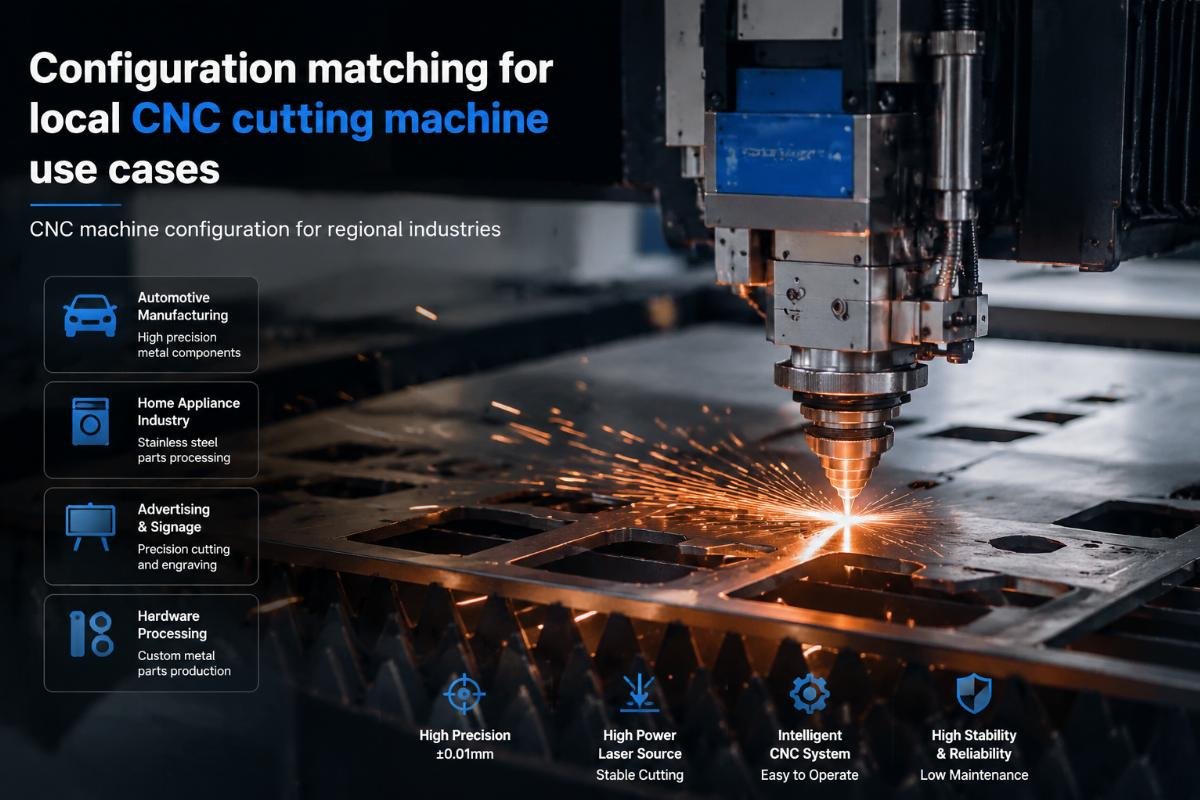
- Cost Breakdown Mapping – List all end-user operational pain points in your target region (e.g. labor costs, material waste, small batch order demand) before requesting supplier quotes.
- Feature Prioritization – Rank required features by local customer demand to cut unnecessary add-on costs that do not add perceived value for buyers.
- Support Cost Calculation – Add 8-12% of your procurement cost to cover expected after-sales service and warranty obligations in your final pricing.
How do different regional customer segments adjust their CNC cutting machine pricing logic?
Pricing benchmarks vary drastically across industry verticals, with no one-size-fits-all markup formula. Traders who apply the same markup rate across garment, packaging and industrial processing clients consistently leave 20-30% of potential margin on the table, while missing out on high-value long-term contracts.
| Customer Segment | Typical Low-Margin Pricing Approach | High-Margin Targeted Pricing Approach |
|---|---|---|
| Garment & Textile (Southeast Asia/Turkey) | 20% flat markup on standard configuration | 35% markup on 1.6m auto-feeding models, highlighting $800 monthly labor savings for end users |
| Packaging Producers (Global) | 25% markup on generic cutting machines | 50% markup on multi-tool + creasing short-run models with 1-unit起订 support |
| Industrial Gasket Processors | 30% markup on standard heavy-duty machines | 28% capped markup on 50mm cutting thickness models, bundled with 3-year warranty for long-term clients |
A German packaging equipment buyer sourced a multi-tool + creasing function short-run CNC cutter at $18,000 procurement cost in 2025, and offered custom local pricing of $27,000 for small 1-unit orders. The low order threshold and specialized functionality allowed them to win 17 new small packaging client contracts in 6 months, with repeat order rates 3x higher than their previous product line. [NEED_CITE: CNC cutting machines with 1-unit起订 and multi-tool compatibility for packaging clients drive 300% higher repeat purchase rates than standard bulk-only offerings]
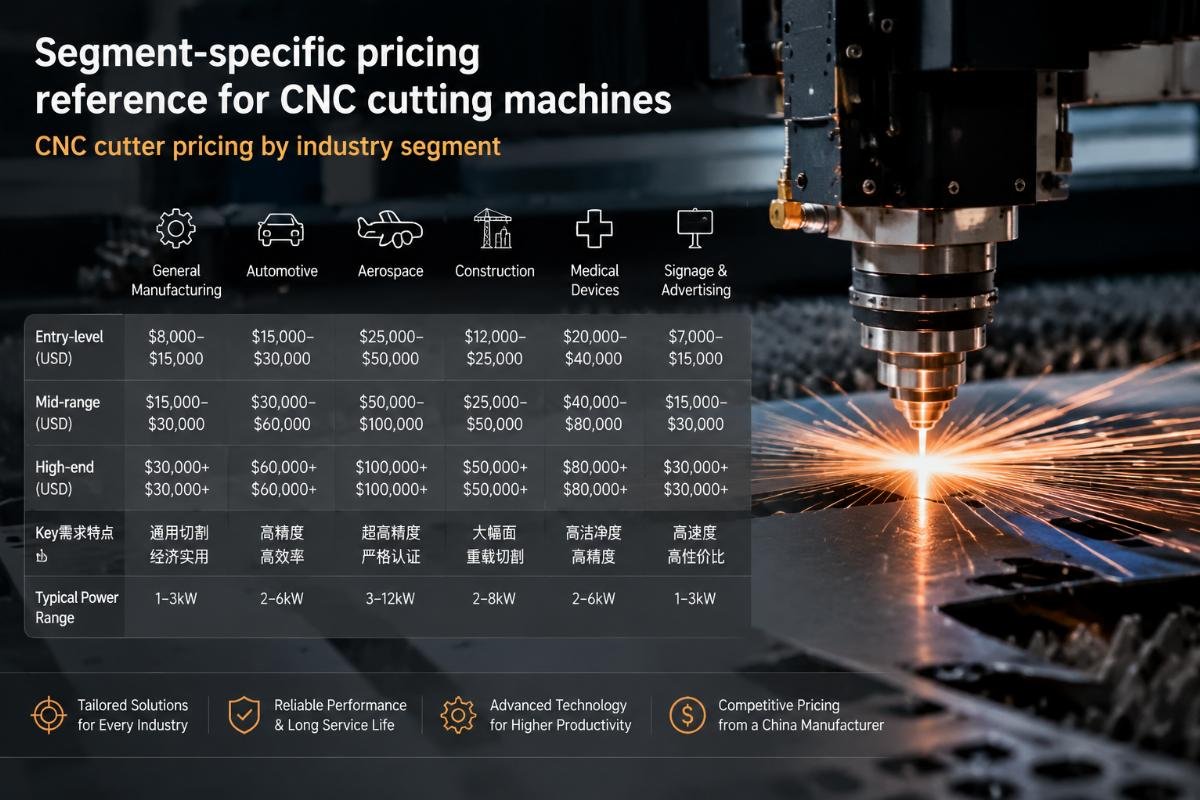
- Vertical Benchmarking – Use the standard pricing references for your target industry to set a baseline before adjusting for local market competition.
- Value Highlighting – Frame pricing around end-user operational savings (labor, material waste, order turnaround speed) rather than raw machine specs.
- Tiered Pricing – Create separate price tiers for one-off small buyers and long-term repeat clients to balance short-term revenue and long-term loyalty.
What common pricing mistakes should you avoid when sourcing CNC cutters from China?
Three avoidable sourcing mistakes erase more than half of expected margins for most new traders. Overpaying for unused features, miscalculating lead time costs and ignoring after-sales obligations are the most frequent issues I see that sink otherwise viable local pricing strategies.
| Common Pricing Mistake | Negative Outcome | Mitigation Action |
|---|---|---|
| Overpaying for unnecessary features | Reduces markup potential by 15-25% with no corresponding customer value | Reject all add-on features not explicitly listed as high-priority by your target customer segment |
| Underestimating after-sales warranty costs | Leads to unplanned service expenses that cut net margins by up to 20% | Only source from suppliers that offer standardized 3-year warranty coverage to align your service promises with factory support |
| Failing to account for customization lead time delays | Causes order fulfillment delays that erode customer trust [NEED_CITE: CNC cutting machine custom lead times longer than 35 days result in a 40% drop in local client referral rates] | Select suppliers with a 31-day standard custom delivery cycle, 30% faster than the industry average of 45 days |
A North American industrial gasket processor I consulted with initially sourced a generic heavy-duty cutting machine from a local supplier, but switched to a China-based factory offering 50mm cutting thickness capacity with $45,000 procurement cost. They priced the unit at a capped $58,000 for long-term local clients, bundled with 3 years of warranty and lifelong free software upgrades, leading to 60% higher client loyalty compared to their previous supplier relationships.
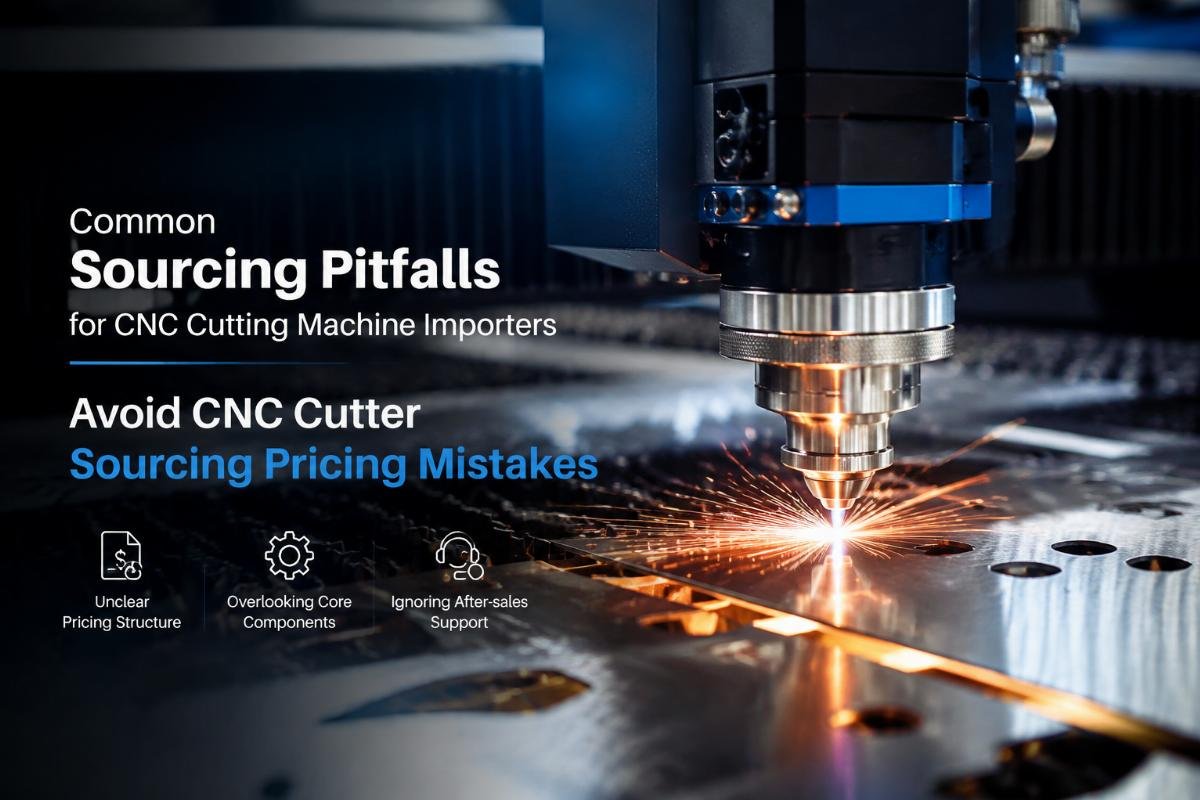
- Supplier Filtering – Eliminate any supplier that cannot provide transparent lead time and warranty terms before requesting formal quotes.
- Total Cost Audit – Calculate full landed cost including tariffs, shipping, and expected service costs before setting your local market price.
- Value Add Alignment – Match included增值 services (free software upgrades, training) to supplier-provided benefits to avoid out-of-pocket costs.
How to balance profit margin and competitiveness for your local CNC cutting machine business?
Sustainable balance comes from matching core functions to local demand and bundling low-cost high-perceived-value services. You do not need to compete on the lowest price to win market share, as long as your offering aligns with what local customers actually need to run their operations efficiently.
The core insight that most new traders miss is that small, low-cost value adds like lifelong free software upgrades and fast custom delivery cycles deliver far higher long-term returns than temporary price cuts. Focus on aligning your pricing and offering with the specific needs of your dominant local customer segment, and you will avoid the common trap of either underpricing and eroding margins, or overpricing and failing to capture market share.
Conclusion
Optimal local market CNC cutting machine pricing is never about chasing the highest possible markup or the lowest possible sales price. It relies on matching configuration to specific local industry needs, leveraging competitive China supplier terms to keep costs low, and bundling high-perceived-value services to boost loyalty without eroding
