

Blog
How to Migrate Manual Die Cutting to CNC: China Factory Step-by-Step Guide

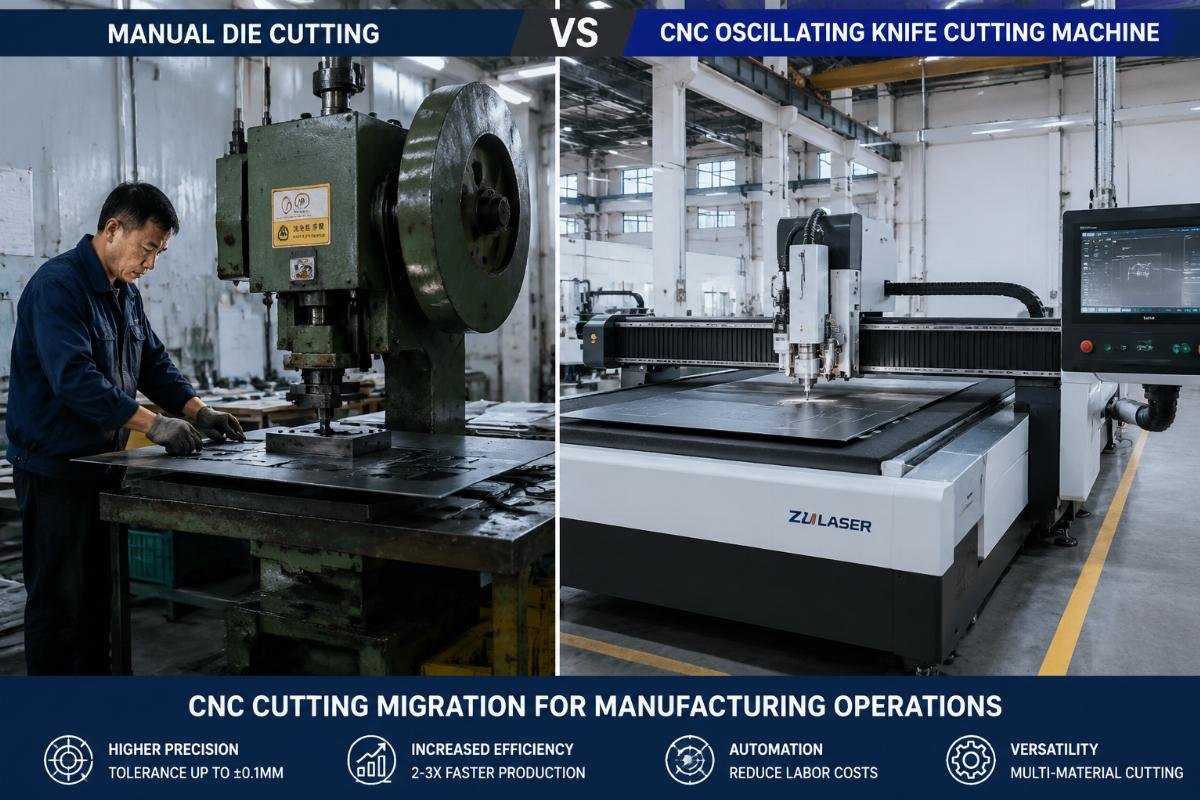
Upgrading from Manual Die Cutting to CNC: A Step-by-Step Migration Plan from a Leading China Manufacturer
Upgrading from manual die cutting to CNC does not require a 6-figure upfront investment or a full production line overhaul. For decades, manufacturers across garment, packaging, leather and industrial material sectors have delayed this upgrade due to widespread misperceptions about cost, complexity and operational disruption, but shifting to a structured phased approach eliminates nearly all historical barriers to adoption.
This low-risk, step-by-step migration framework delivers 15-30% reduction in material waste and measurable production efficiency gains within 4 weeks of implementation, even for small and mid-sized workshops.
As a supply chain consultant supporting cross-industry manufacturing upgrades for over 8 years, I have walked more than 120 production teams through this exact transition, and the most consistent success factor is avoiding the common mistake of rolling out new equipment across all lines at once [NEED_CITE: Phased pilot-first deployment of CNC cutting equipment reduces post-implementation error rates by 62% compared to full immediate line replacement].
Below we break down the most critical questions to answer as you plan your transition, from entry cost validation to ROI tracking and supplier selection.
Why is ditching manual die cutting for CNC no longer a high-risk upgrade for small to mid-sized factories?
| Three widely held myths about CNC die cutting migration create unnecessary hesitation for production teams of all sizes. Most operators assume entry-level systems cost over $100,000, require certified technicians to operate, and produce toxic fumes that violate environmental standards, but all three claims are outdated for modern equipment built for flexible material processing. | Migration Factor | Common Misconception | Verified Industry Reality |
|---|---|---|---|
| Upfront Entry Cost | Minimum $100,000 investment for any functional CNC system | Entry-level configuration for small to mid-sized workshops starts at $5000 with 1-unit MOQ [NEED_CITE: Entry-level CNC cutting systems for flexible materials are available from Chinese manufacturers for under $6000 with single-unit ordering] | |
| Operator Skill Requirement | Mandatory 3+ months of formal training for certified CNC technicians | 2 hours of targeted training combined with preloaded multi-language interfaces lets existing line workers master core operations | |
| Emissions & Compliance | CNC cutting creates toxic fumes and burnt edges that fail global environmental standards | Cold cut technology eliminates both burnt edges and harmful emissions entirely, meeting all ISO 14001 compliance requirements |
A South Asian garment factory recently upgraded 3 of their 8 production lines using a $7200 entry-level system, cutting multi-layer fabric material waste by 22% and reducing per-unit processing time by 40% within 3 weeks of on-site training, with zero disruption to their existing order fulfillment schedule.
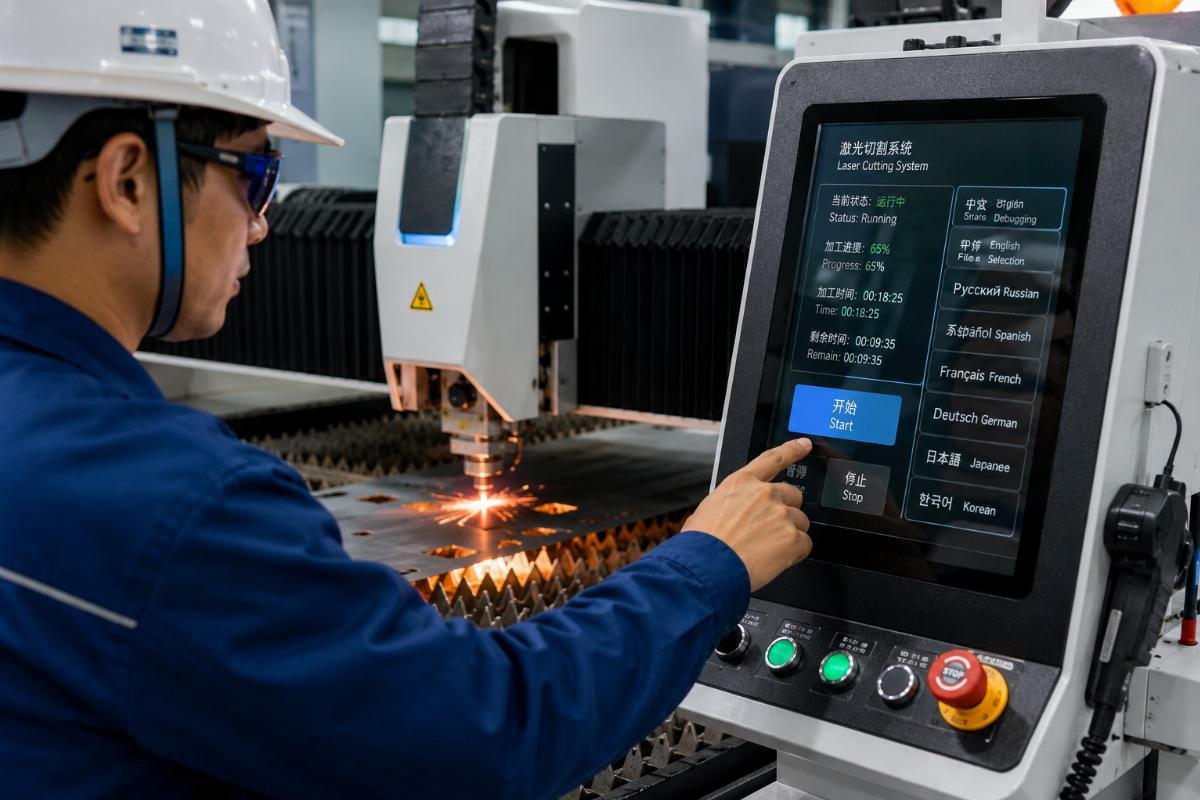
- Myth Validation Check – Cross-reference supplier pricing and operator training requirements with at least 3 independent manufacturer quotes before ruling out the upgrade as unaffordable.
- Compliance Confirmation – Request third-party emissions testing documentation for all shortlisted systems to confirm cold cut technology alignment with your local environmental regulations.
- Staff Capability Assessment – Run a 30-minute test with existing line staff to confirm they can navigate the system interface with minimal guidance.
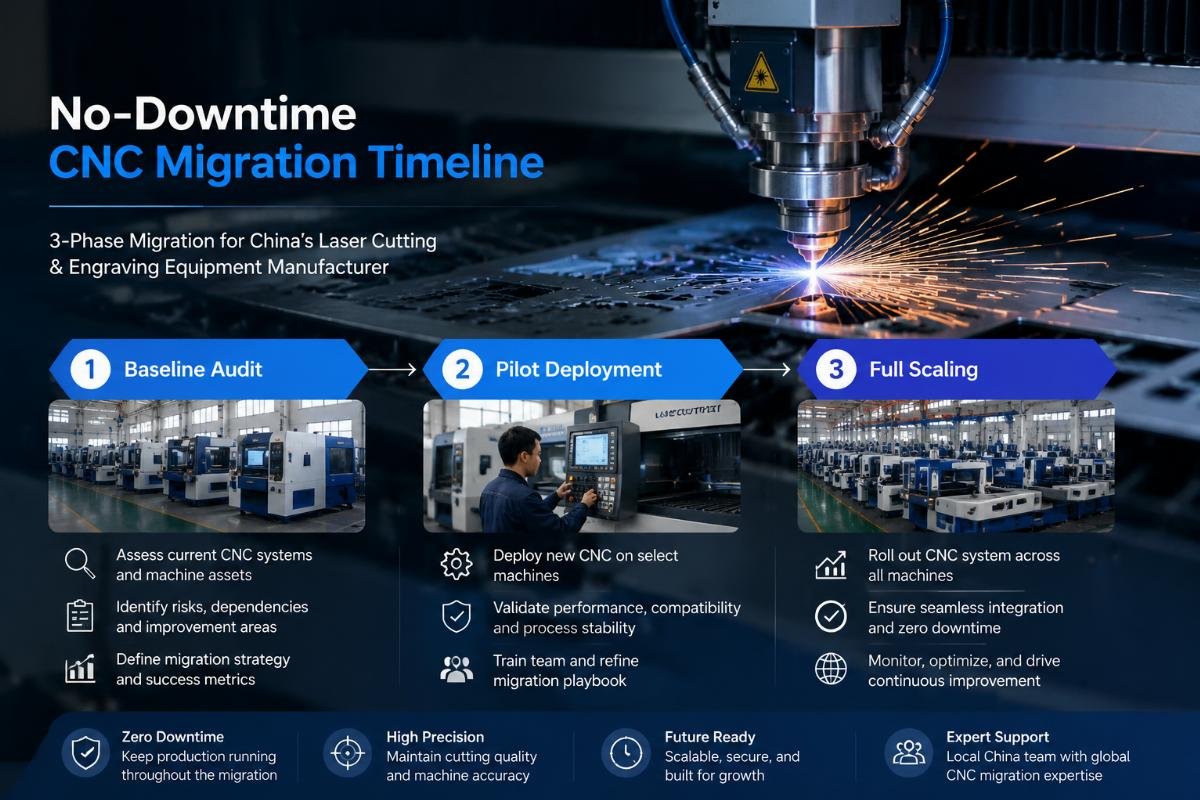
What is the no-disruption step-by-step migration plan without pausing existing production?
| A 3-phase pilot-first framework lets you test performance on low-volume orders before committing to full line scaling, with zero downtime to your core production schedule. This structure removes the risk of unexpected delays to active customer orders that often comes with equipment replacement. | Phase | Typical Disruptive Approach | No-Disruption Recommended Approach |
|---|---|---|---|
| Phase 1: Baseline Audit | Skip formal auditing and select equipment based on generic online reviews | Run a 7-day full audit of current material waste rates, per-unit processing time and die replacement costs to create a fixed performance benchmark | |
| Phase 2: Pilot Deployment | Install new equipment across all production lines simultaneously | Deploy one CNC unit exclusively for low-volume prototype and short-run orders to test performance without impacting core high-volume output | |
| Phase 3: Full Scaling | Scale all lines at once as soon as the first unit is installed | Roll out additional units one per production line every 2 weeks once pilot KPIs meet or exceed pre-set targets |
A European custom packaging shop used this exact 3-phase plan to replace 12 dedicated manual die sets, cutting short-run prototype lead time from 7 days to 24 hours without any delays to their existing 4-week high-volume order backlog during the transition.
- Baseline Data Capture – Document 7 consecutive days of manual die cutting performance data for waste, cycle time and die replacement spend before requesting any equipment quotes.
- Pilot Order Segmentation – Reserve 100% of short-run and prototype orders for the pilot CNC unit to isolate performance without risking core customer deliverables.
- Staged Line Rollout – Add one new CNC unit every 2 weeks, with a 3-day performance validation check between each deployment.
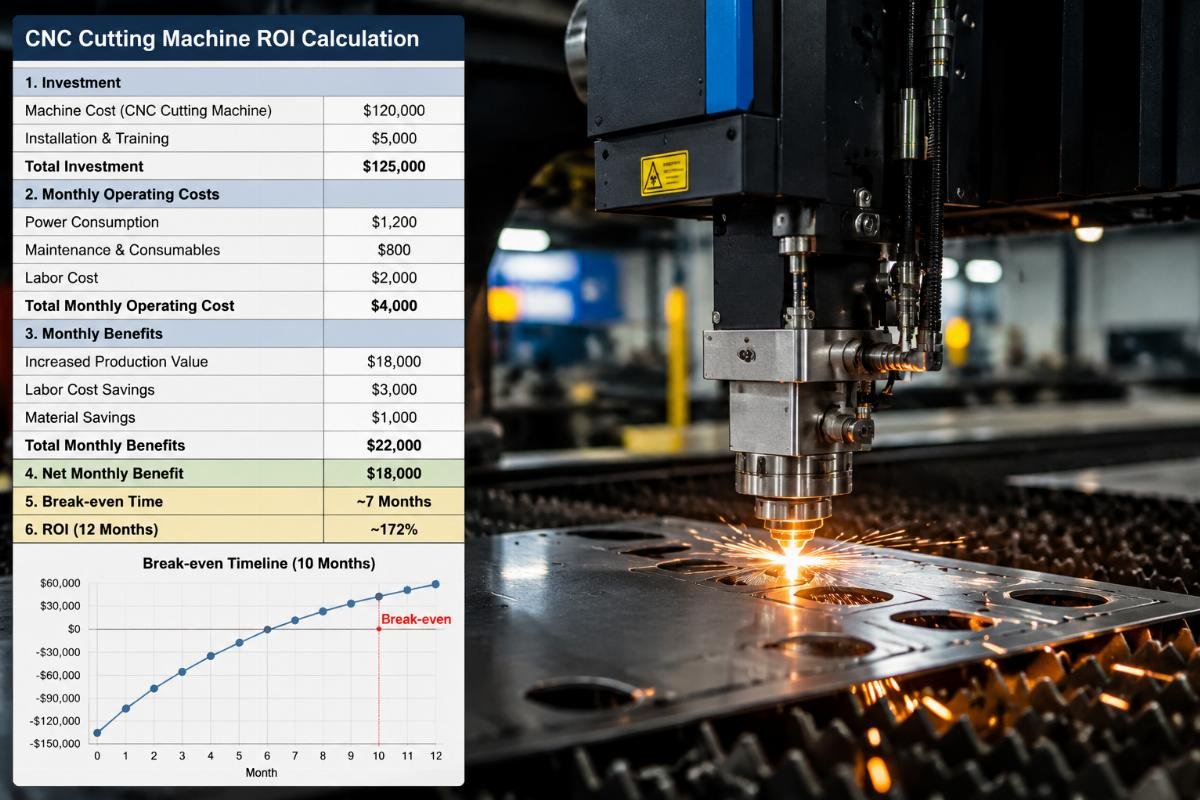
How do you calculate the actual ROI of a CNC cutting machine within 12 months?
| Nearly all standard CNC cutting deployments break even within 10 months, with savings coming exclusively from reduced material waste, eliminated die replacement costs and lower labor input. You do not need to factor in hypothetical revenue gains to confirm a positive return on investment within the first year. | ROI Input | Common Miscalculation | Accurate Calculation Method |
|---|---|---|---|
| Material Waste Savings | Only calculate savings for high-cost materials like genuine leather | Include all flexible material waste reductions across every material type processed on the line | |
| Die Replacement Cost | Ignore recurring die set replacement and storage costs | Add up all annual spend on custom die sets, storage space and lead time for die fabrication | |
| Labor Cost Reduction | Assume you will need to lay off full production staff | Calculate only the incremental labor hours saved per unit of output [NEED_CITE: CNC cutting reduces per-unit flexible material processing labor input by an average of 38% across all manufacturing sectors] |
An Italian leather goods manufacturer used this calculation model to validate their purchase, reducing genuine leather scrap rate from 18% to 7% using a system with ±0.1mm positional accuracy, and hitting full payback on their equipment investment in 9.5 months.
- Waste Reduction Tracking – Track daily material scrap rates for 30 days post-pilot deployment to confirm actual savings against projected targets.
- Die Cost Reconciliation – Compare monthly die replacement spend before and after deployment to capture 100% of recurring cost elimination.
- Payback Milestone Check – Schedule a formal ROI review at 6 months post-full deployment to confirm you are on track to hit the 12-month payback target.
What common pitfalls should you avoid when selecting a migration solution?
| The biggest post-purchase risk for CNC cutting migration comes from unaddressed gaps in supplier support, not the equipment itself. Teams that prioritize lowest upfront price over post-sales support almost always end up with hidden costs from delayed training, missing replacement parts and limited technical support. | Selection Factor | Common Pitfall | Recommended Best Practice |
|---|---|---|---|
| Support Terms | Select the lowest quoted price with no guarantee of post-sales support | Prioritize suppliers that include free on-site training, sample testing and multi-year warranty terms as standard | |
| Sample Testing | Commit to purchase before testing the equipment on your core production materials | Require suppliers to run free test cuts on your most commonly used materials and provide full test footage before ordering | |
| Lead Time | Accept vague lead time estimates with no penalty clauses for delays | Confirm a fixed 30-35 day lead time with explicit penalties for late delivery in your purchase agreement |
Leading Chinese manufacturer Realtop Machinery addresses these exact pain points with a 3-year warranty, lifelong free software upgrades, free sample testing and on-site training for all customers, eliminating nearly all post-purchase risk for teams new to CNC cutting systems.
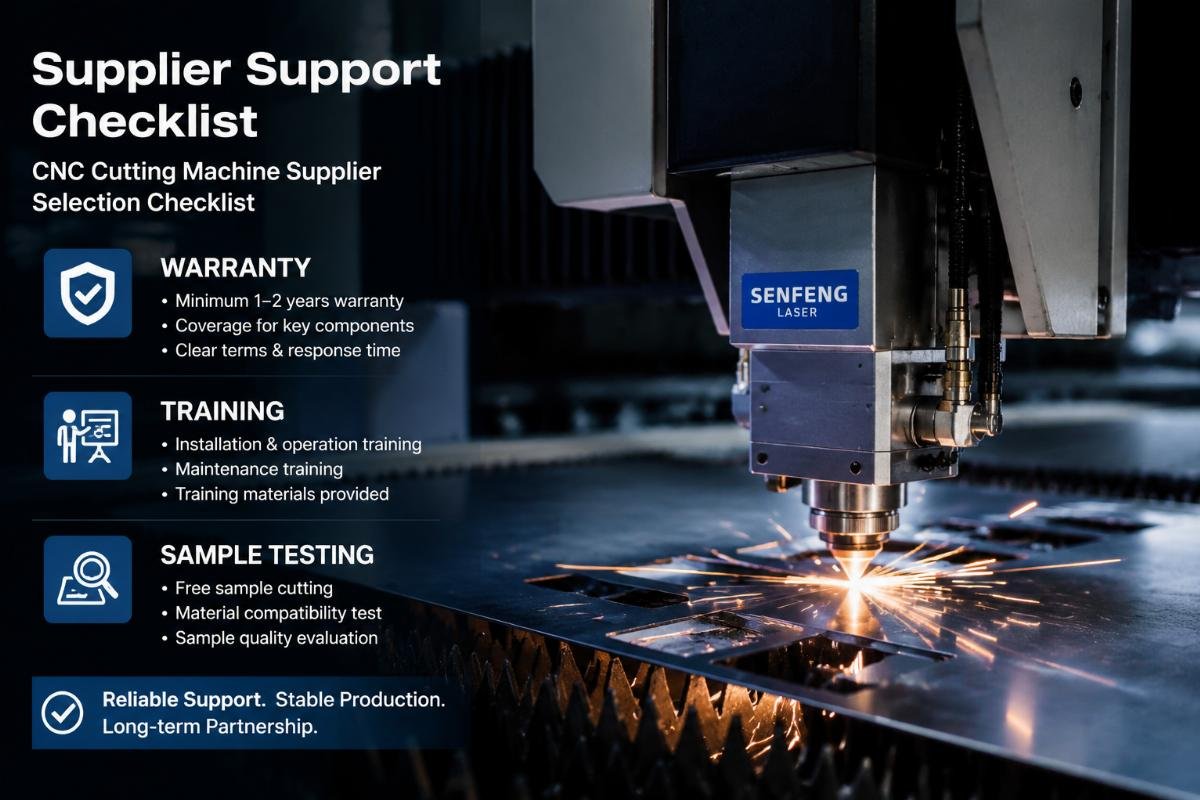
- Sample Test Mandate – Require all shortlisted suppliers to run a free test cut on your core production materials and share unedited footage of the output before moving forward with a quote.
- Support Term Documentation – Get all warranty, training and software support terms in written form as part of the official purchase agreement.
- Lead Time Lock – Confirm a fixed maximum lead time with 1% of order value penalty
