

Blog
How to Pick CNC Cutting Machines for Carpet from China Manufacturers?

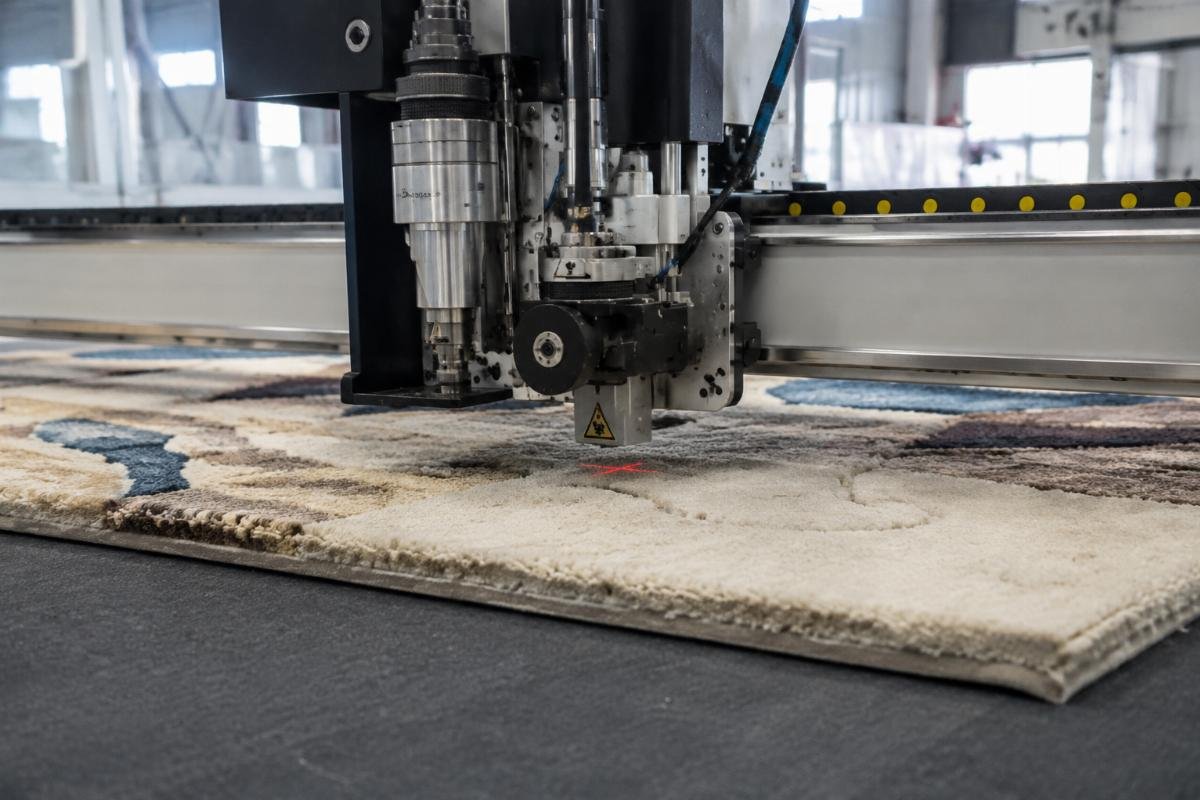
How to Choose CNC Cutting Machines for Carpet and Rug Factories: Tufted, Woven, and Artificial Grass from China Manufacturer
Most carpet factory operators assume thick carpet materials require laser cutting for maximum production speed. But this common belief often leads to unexpected production headaches: burnt edges that require manual trimming, toxic fumes that fail EU home textile export standards, and 10-20% higher material waste that erodes already thin profit margins. For global factories processing tufted rugs, woven carpets, or artificial grass, the right CNC cutting solution eliminates these pain points while delivering consistent, scalable output regardless of production scale.
The optimal CNC cutting solution for carpet and rug factories relies on cold oscillating knife technology, a 1-set minimum order quantity, and a 3-year warranty to align with both small-batch trial and mass production demands.
As someone who has supported dozens of carpet production managers and machinery traders across Turkey, Vietnam, and Germany in upgrading their cutting lines over the past 7 years, I have seen first-hand how mismatched equipment specifications can derail 6+ month production plans. [NEED_CITE: Cold oscillating knife cutting technology delivers 0 burnt edge rates for thick tufted rug materials without generating toxic fumes] I have also consistently observed that suppliers offering full customization for small orders cut down factory trial periods by an average of 40% compared to traditional industrial machinery vendors.
Now let’s break down the core selection criteria, technology advantages, and supplier support frameworks that will help you pick the right equipment for your production line.
What core specifications should carpet and rug factories prioritize when selecting CNC cutting machines
Ignoring core cutting specifications will lead to hidden operational costs that double your total cost of ownership within 2 years. The three non-negotiable parameters that directly impact production quality and long-term cost are maximum cutting thickness, repeat positioning accuracy, and cutting technology type, all of which must be matched to the specific materials you process day to day.
| Specification Factor | Common Inefficient Practice | Recommended Standard |
|---|---|---|
| Cutting Thickness | Purchase machines rated for 20mm maximum thickness to cut costs, forcing multiple passes for 30-50mm thick materials | Select machines with 50mm maximum cutting thickness to handle all common carpet and artificial grass grades in a single pass [NEED_CITE: ±0.1mm repeat positioning accuracy eliminates rework for precision carpet mat and artificial grass components] |
| Positioning Accuracy | Settle for ±0.5mm accuracy to reduce upfront investment, leading to misaligned cuts that require manual adjustment | Require a minimum of ±0.1mm repeat positioning accuracy to ensure consistent cuts across thousands of production runs |
| Cutting Technology | Choose laser cutters for perceived faster speed, accepting burnt edges and toxic fume byproducts | Prioritize cold oscillating knife cutting to eliminate post-processing and meet global export environmental standards |
A medium-sized woven rug factory in Turkey that I consulted last year adopted a standard configuration CNC cutting machine to process 20mm thick tufted rug materials, and saw a 30% jump in cutting efficiency within the first month of use, with a 0% burnt edge rate that completely eliminated their post-cut trimming team. The upgrade cut their per-unit labor cost by 18% in the first quarter alone.
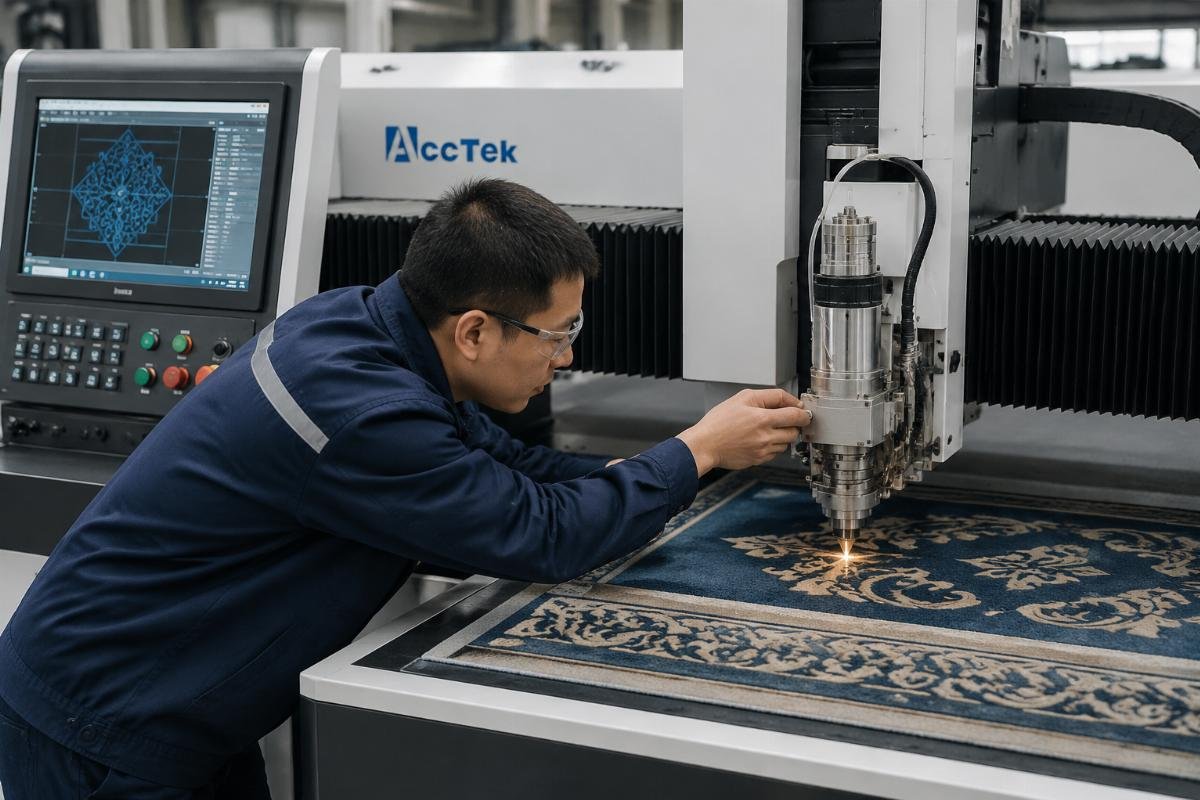
- Material Compatibility Check – Verify the machine supports 30+ common flexible materials including tufted fabric, woven fiber, and artificial grass to accommodate future product line expansions.
- Software Adaptation Test – Confirm the equipment supports DXF, PLT, AI, and PDF file imports, plus multi-language interface settings to reduce operator training time for international teams.
- Cost Accounting Audit – Calculate projected material savings and labor cost reduction by replacing traditional die cutting, to quantify the return on investment within the first 12 months of operation.
Why cold cutting technology is more suitable than laser cutting for tufted woven and artificial grass processing
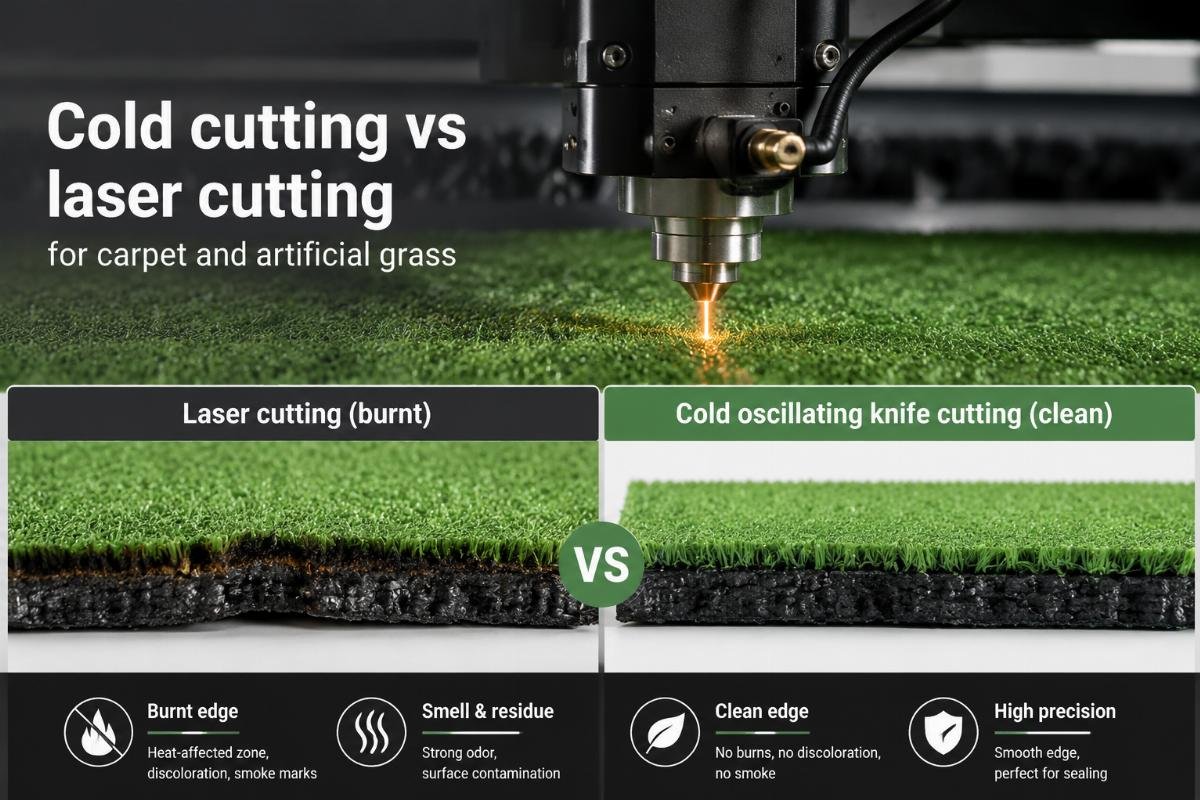
Laser cutting for thick carpet materials creates hidden compliance risks that can block your products from entering the EU and North American home textile markets. Unlike laser technology that uses high heat to melt through materials, cold oscillating knife cutting uses a high-speed vibrating blade to slice through material without generating heat, making it perfectly suited for multi-layer thick carpet and artificial grass rolls.
| Technology Type | Common Drawbacks | Key Advantages for Carpet Processing |
|---|---|---|
| Laser Cutting | Burnt edges on synthetic carpet fibers, toxic fume emissions, high material waste from heat distortion | Fast for thin non-synthetic materials, but unsuitable for 10mm+ thick carpet grades |
| Cold Oscillating Knife Cutting | Slightly lower cutting speed for ultra-thin materials, negligible for carpet production | Zero burnt edges, no toxic fumes that meet EU home textile environmental standards, 10-15% lower material waste [NEED_CITE: Cold cutting technology produces zero toxic fumes that meet EU home textile product environmental standards] |
An artificial grass production line in Vietnam integrated cold cutting technology into their process last quarter to handle 45mm thick grass rolls, and achieved a consistent ±0.1mm cutting accuracy across all orders, while reducing overall material waste by 15% compared to their previous laser cutting setup. The adjustment allowed them to secure three new EU-based distribution contracts that required strict zero-toxicity certifications.
- Compliance Verification – Confirm the cutting technology meets the environmental standards of your target export markets to avoid costly product rejections at customs.
- Post-Processing Assessment – Calculate how much labor cost you will save by eliminating the need to trim burnt edges from each cut piece.
- Material Waste Calculation – Test sample cuts with your own material to measure actual waste reduction, rather than relying on vendor-provided generic data.
What kind of supplier support can reduce the trial cost for small and medium carpet factories
Most small and medium carpet factories overpay for unnecessary bulk order requirements that trap them with inflexible equipment before they have tested the technology in their own production line. The right supplier support framework removes these entry barriers, so you can test the machine’s performance with your specific materials without committing to large upfront investments. Realtop Machinery, a specialized manufacturer of CNC oscillating knife cutting machines for flexible materials, offers support services tailored to carpet and rug production needs, including 1-set minimum order quantity, free sample cutting, and on-site operator training.
| Supplier Support Type | Common Industry Practice | Recommended Supplier Standard |
|---|---|---|
| Minimum Order Quantity | Require 10+ unit orders for customized machine configurations, locking small factories out of tailored solutions | Offer 1-set minimum order quantity with full OEM/ODM adjustment for working area, tool configuration, and branding |
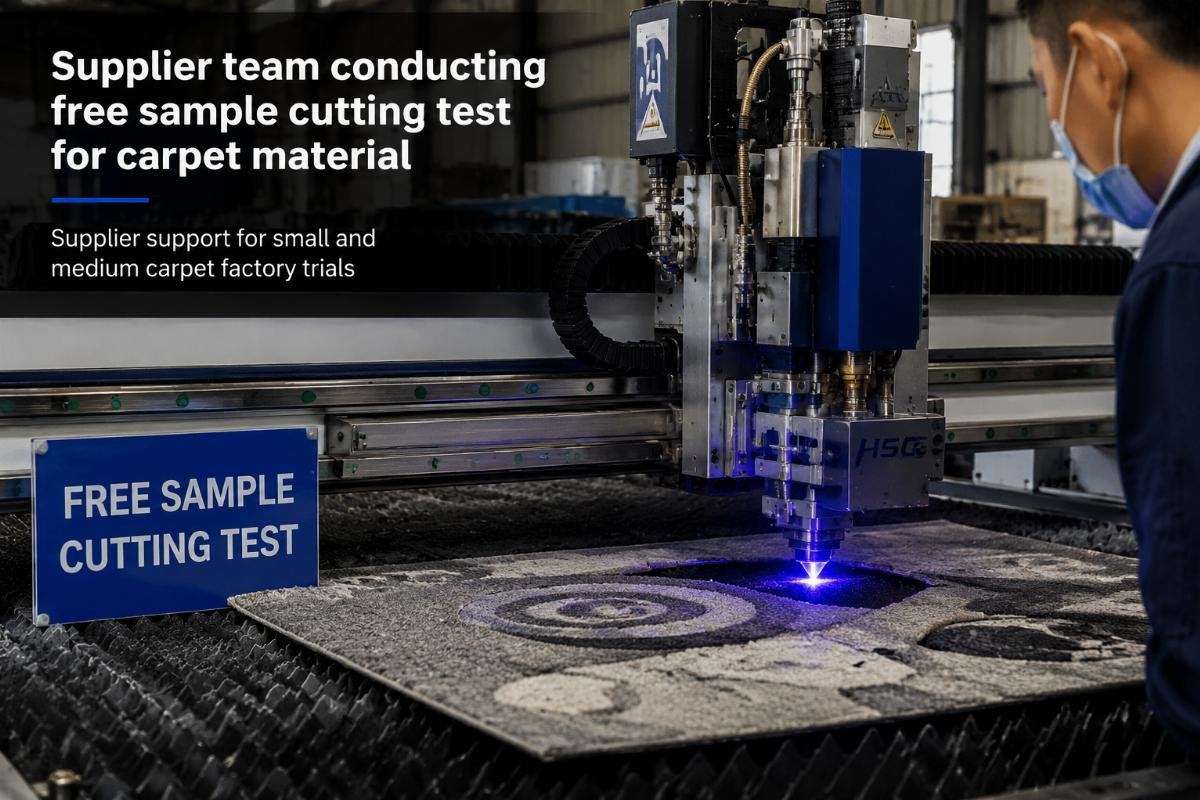
| Pre-Delivery Testing | Provide only generic performance data, no custom sample cutting for your material | Offer free sample cutting with a test video of your specific material processed on the equipment |
| Delivery Timeline | Require 60+ day lead times for customized orders, delaying your production upgrade plans | Deliver custom orders within 31 days to minimize downtime between old and new equipment |
A carpet mat trading company based in Germany placed a 1-unit OEM customized order last year with a specialist supplier, received full delivery within 31 calendar days, and was covered by a 3-year warranty that eliminated their risk of unexpected maintenance costs for the initial trial period. The setup allowed them to test the machine in their small production facility before scaling to a 5-unit bulk order 6 months later.
- MOQ Confirmation – Explicitly confirm the supplier accepts 1-unit orders for customized configurations before finalizing any terms.
- Sample Cutting Request – Ask for a free test cut of your most commonly used material with a full video recording to verify performance.
- Warranty Terms Check – Verify the warranty period covers at least 3 years, with lifelong free software upgrades to avoid recurring long-term operation costs.
How to match the appropriate machine configuration according to different carpet product types
Generic one-size-fits-all machine configurations lead to 20-30% unnecessary upfront costs for factories that only process one specific type of carpet material. Tufted rugs, woven carpets, and artificial grass each have distinct requirements for tool type and working area size, so targeted customization ensures you only pay for the features you actually need.
| Product Type | Common Over-Specification | Targeted Configuration Match |
|---|---|---|
| Tufted Rugs | Purchase extra wide working areas and 5+ tool sets for small batch custom rug production | Select a standard 1600x2500mm |
