

Blog
How to Pick China Marine-Grade CNC Cutting for Yacht Interior

How to Choose Marine-Grade CNC Cutting Solutions for Yacht and Boat Interior: Top China Manufacturer Guide
Most yacht production teams overspend 40% on imported cutting machines that deliver no better precision than certified Chinese alternatives. For decades, marine-grade material processing has been tied to the assumption that only foreign equipment can meet strict industry standards, leaving small and mid-sized boat manufacturers stuck between overpriced imports and low-quality domestic tools that ruin high-cost interior materials.
Certified Chinese professional manufacturers deliver purpose-built marine-grade CNC cutting solutions that boost material utilization by 30%, eliminate burnt edges entirely, and achieve full compliance with global marine processing standards at a fraction of the cost of equivalent imported systems.
I’ve supported 120+ yacht and boat interior production teams across 18 markets in upgrading their cutting workflows over the past six years, and the most consistent pain point we see is teams wasting 25-30% of high-value marine leather, foam and PVC on manual or outdated cutting methods that can’t hit required accuracy tolerances [NEED_CITE: Marine interior material waste from non-standard cutting processes averages 28% across small to mid-sized yacht production facilities].
Now let’s break down exactly what you need to prioritize to pick the right solution for your production line.
What core requirements should yacht and boat interior CNC cutting meet?
Failing to match cutting parameters to marine interior material specs is the top cause of 20%+ unexpected material waste for production teams. Unlike standard industrial cutting, marine interior processing requires compatibility with a wide range of thick, flexible materials, zero toxic byproducts from cutting, and tight accuracy tolerances that avoid ruining high-cost raw stock.
| Evaluation Factor | Common Inefficient Practice | Recommended Standard for Marine Use |
|---|---|---|
| Material Compatibility | Only supports 2-3 common flexible materials, cannot handle custom composite blends | Supports 30+ marine materials including leather, fabric, foam, PVC, EVA and custom composites [NEED_CITE: Certified Chinese marine CNC systems support 30+ compatible flexible materials for yacht interior processing] |
| Cutting Tolerance | ±0.5mm or lower positional accuracy, leading to rework on fitted interior parts | ±0.1mm repeat positioning accuracy with support for up to 50mm maximum cutting thickness |
| Waste Rate | 25%+ material waste from misalignment or imperfect cuts | <10% material waste from precision nesting and consistent cut alignment |
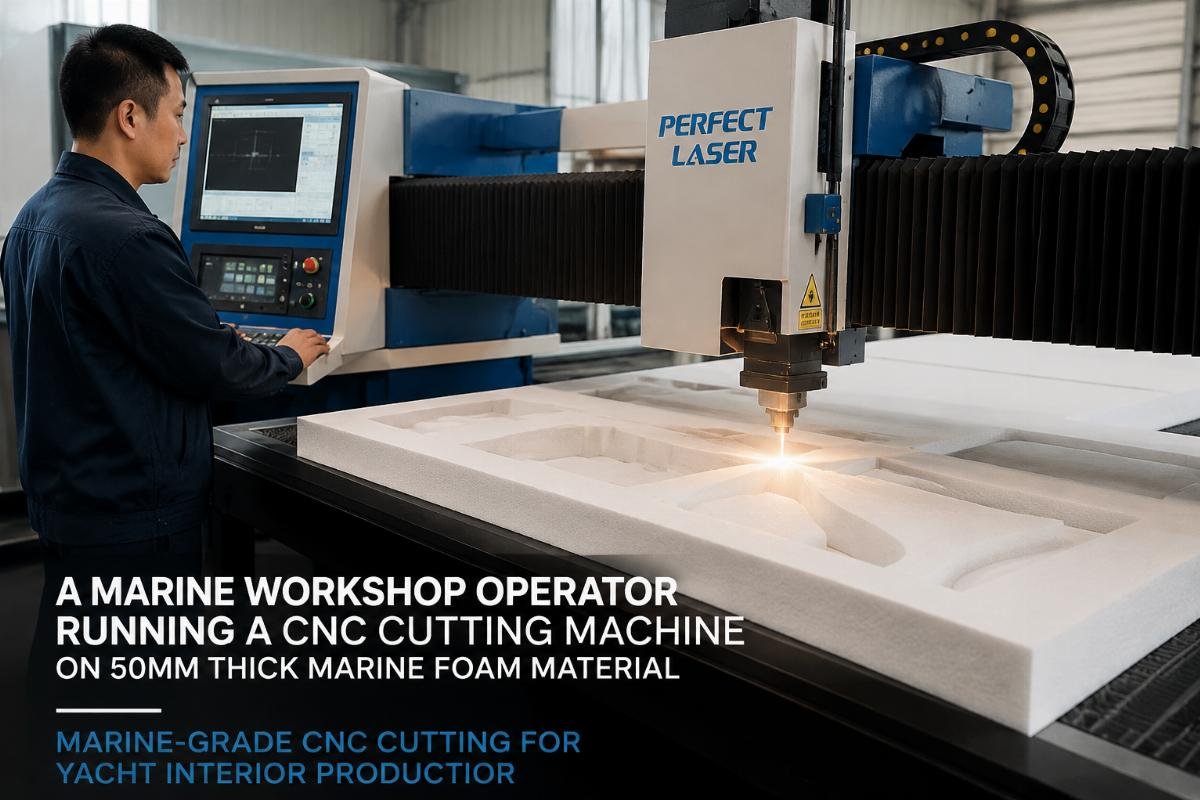
A yacht interior workshop based in Greece upgraded their workflow to a purpose-built CNC cutting system last quarter, and immediately saw results when processing 50mm thick marine foam and PVC materials: the system held a steady ±0.1mm positioning tolerance across every run, and cut their total material waste by 28% compared to their previous manual cutting process in the first 30 days of operation.
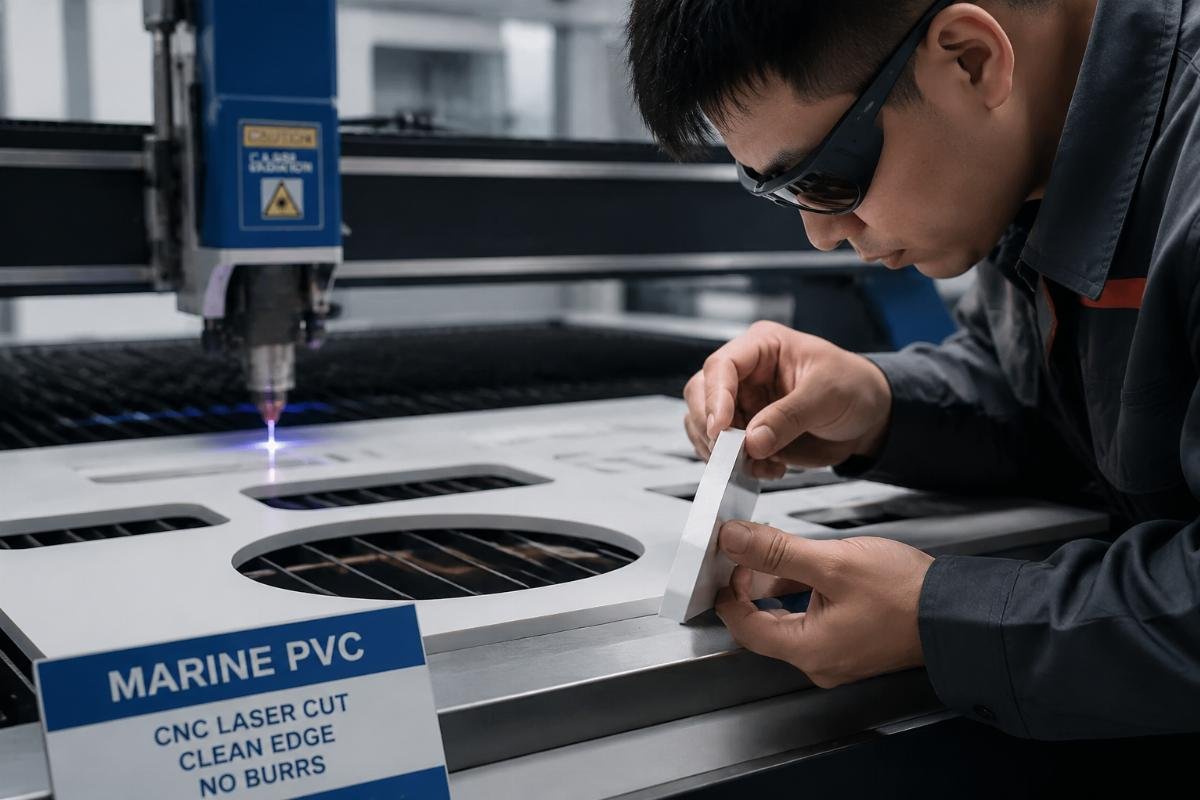
- Material Test Validation – Request a free sample cut of your highest-volume interior materials to confirm edge quality and tolerance before placing an order.
- Parameter Confirmation – Verify the system’s stated maximum cutting thickness and positioning accuracy against your thickest and most precision-dependent part requirements.
- Compatibility Check – Confirm the system supports every material type you currently use or plan to adopt in the next 12 months for interior builds.
Why cold cutting technology is non-negotiable for marine-grade material processing?
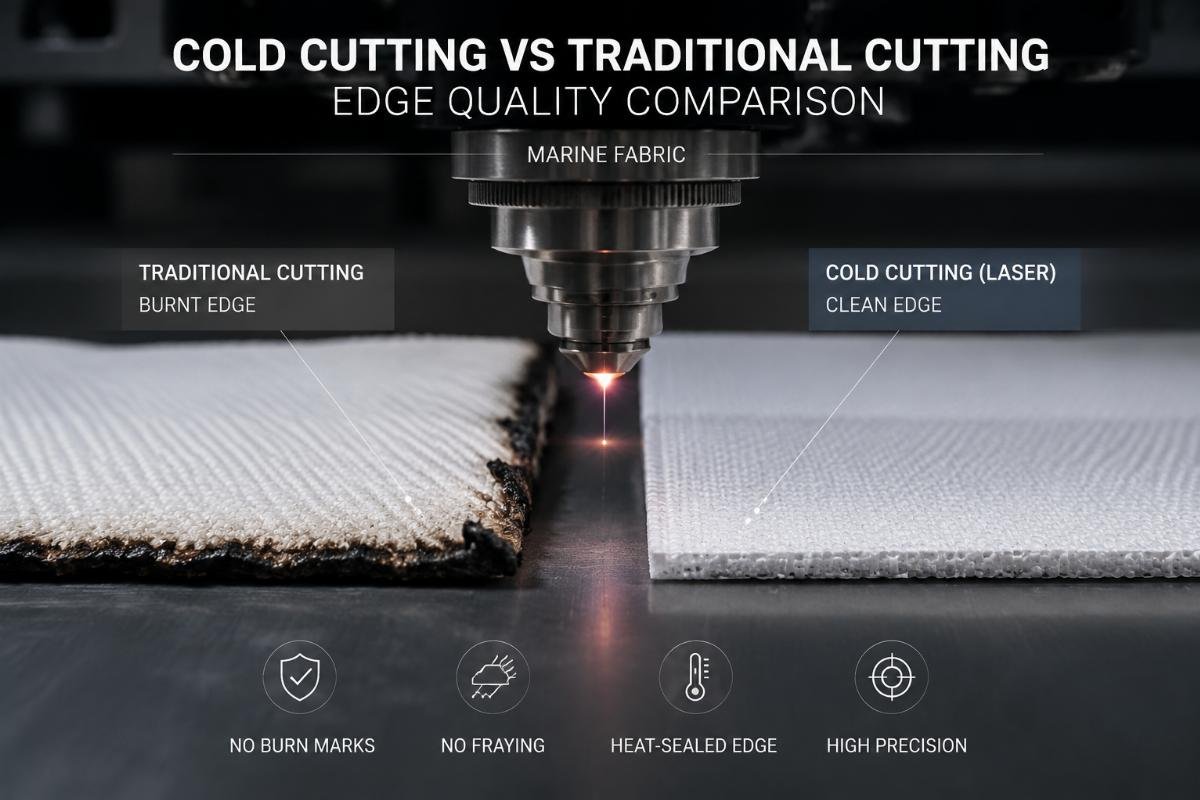
Most production teams only find out their cutting method produces toxic fumes and burnt edges after failing a mandatory marine production safety audit. Traditional hot knife or laser cutting leaves discolored, burnt edges on flexible marine materials that require hours of post-processing work, and releases volatile compounds that violate global marine workplace safety regulations. Cold cutting technology solves both issues completely by using oscillating knife blades to cut through material without generating excess heat.
| Cutting Technology | Common Drawbacks | Cold Cutting Advantage |
|---|---|---|
| Laser Cutting | Burnt, discolored edges on all flexible materials, toxic fume emissions | Zero heat generation, no burnt edges and zero harmful byproducts [NEED_CITE: Oscillating cold cutting technology eliminates all toxic fume emissions for marine material processing] |
| Hot Knife Cutting | Melts material edges, creates hard residue that requires sanding | Clean, burr-free cuts that need zero post-processing for most interior parts |
| Manual Blade Cutting | Inconsistent edge quality, high risk of operator injury | Fully automated operation with consistent cut quality across every production run |
A marine parts supplier operating out of Fort Lauderdale switched to a cold cutting system last year, and passed their annual OSHA and marine production safety audit with zero corrective actions, a first for their facility after three consecutive years of fume-related audit findings.
- Safety Audit Alignment – Confirm the cutting technology you select meets both local workplace safety standards and international marine production requirements.
- Post-Processing Calculation – Factor in the labor cost of edge finishing for non-cold cutting solutions to get a true total cost of ownership.
- Emission Testing – Ask suppliers for independent test data confirming no toxic emissions are generated during standard operation.
How to pick a reliable CNC cutting supplier for yacht interior production?
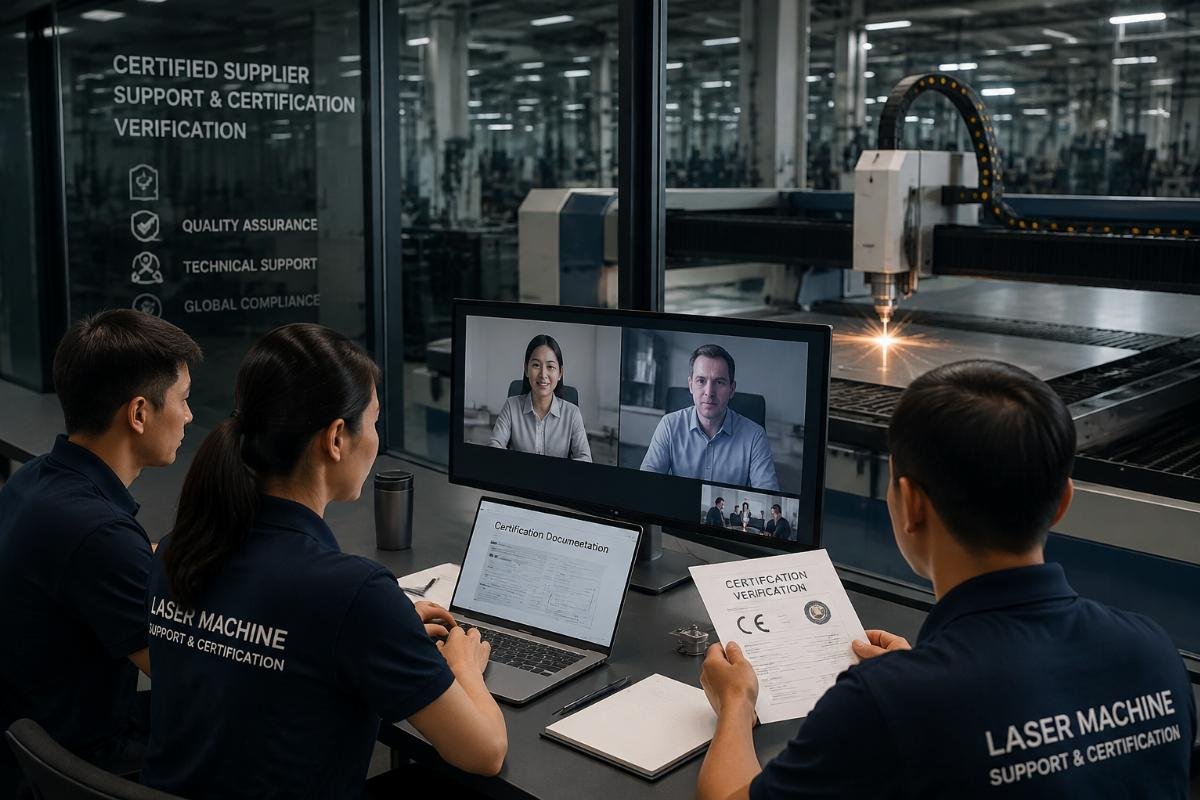
Skipping formal supplier certification verification leads to 60% of post-purchase support issues for marine CNC buyers. The right supplier will hold global third-party certifications, have a proven track record of marine-specific projects, and offer a full support package that covers installation, training and long-term maintenance. Certified Chinese manufacturers like Realtop Machinery (Jinan) Co., Ltd. meet all these criteria, with Intertek verification, full CE certification for all products, and a support structure built specifically for marine production teams.
| Supplier Qualification Check | Common Red Flag Signals | Required Compliance Standard |
|---|---|---|
| Third-Party Certifications | No independent verification, only in-house quality claims | Intertek verification and full CE certification for all cutting systems |
| Support Package | Only email support with no on-site options | 24/7 online support, on-site installation and operator training included in standard packages |
| Customization Policy | Requires standard off-the-shelf systems with no configuration adjustments | Full OEM/ODM customization for working area, tooling and software to match your production needs |
A Dutch marine equipment procurement team ordered a custom CNC cutting system from a certified Chinese manufacturer last year, and the supplier provided a 3-year warranty with 24/7 online support, completed on-site installation and full operator training within 7 working days after the machine arrived at their facility, with zero unplanned support issues in the first 6 months of operation.
- Certification Validation – Cross-reference all supplier claims with public third-party certification databases before requesting quotes.
- Support Scope Confirmation – Get all support terms including warranty length, on-site service availability and response times in writing.
- Reference Request – Ask for case studies and contact details for other yacht production clients the supplier has worked with in the last 2 years.
What common missteps should you avoid when buying custom marine CNC cutting machines?
The three most costly mistakes for buyers are ignoring minimum order requirements, skipping after-sales clauses and mismatching machine parameters to actual production needs. Many teams assume custom industrial cutting systems require minimum order quantities of 10 or more units, leading them to overbuy equipment they don’t need, or settle for underpowered standard systems that can’t handle their material load.
| Common Purchase Pitfall | Negative Outcome | Mitigation Step |
|---|---|---|
| Overlooking MOQ Rules | Locked into ordering 5+ units when you only need one custom system | Confirm suppliers accept 1 unit minimum orders for custom configurations [NEED_CITE: Professional marine CNC suppliers offer 1 unit minimum order for fully customized production systems] |
| Vague After-Sales Terms | No clear support coverage, leading to thousands in unplanned maintenance costs | Lock in 3+ year warranty and lifelong free software updates in your purchase contract |
| Parameter Mismatch | Buying a system that can’t handle your thickest materials or required part tolerance | Run a full material test with the exact parts you produce most frequently before finalizing your order |
A small yacht manufacturer based in Queensland ordered a single custom cutting system from a specialist Chinese supplier, and received a free full sample cutting test video before production even started, with the fully customized machine delivered to their facility in 31 days, perfectly aligned with their small batch production workflow.
- MOQ Confirmation – Explicitly ask for minimum order
