

Blog
Are roll-fed automatic feeding and take-up devices included with the cutter?

Are roll-fed automatic feeding and take-up devices included with the cutter?
You're comparing quotations from three suppliers and the prices differ by 30%, but all claim to offer "CNC roll-fed cutting machines." You see feeding devices in product photos, yet one supplier suddenly mentions "optional auto-feeding module" during negotiation. Now you're confused whether these devices come standard or cost extra—and you're not alone in this procurement trap.
Roll-fed automatic feeding and take-up devices are NOT universally included with CNC cutters—inclusion depends entirely on each supplier's quotation structure and bundling strategy. You must explicitly confirm the exact delivery checklist during inquiry and contract stages, because "included" has no industry-wide definition, and product images never represent base-price configurations.
Most buyers assume this is a simple product specification question, but what you're actually facing is a procurement communication problem that causes thousands of dollars in unexpected costs or delivery disputes every month1.
Why do buyers assume feeding devices come standard?
When I receive inquiries about roll-fed cutting machines, nearly 70% of customers ask about cutting speed, material compatibility, or software features2—but never ask "what physical components are included in this quoted price." They assume all suppliers define "roll-fed cutter" the same way, which creates the most expensive misconception in CNC equipment purchasing.
The assumption chain breaks down at three critical stages: when you see "roll-fed" in product names, when marketing materials show complete production lines, and when you compare quotations without knowing what each price actually covers.
The product name trap
Buyers see "CNC roll-fed cutting machine" and mentally picture a complete system ready for continuous material processing. The term "roll-fed" describes the machine's capability to handle rolled materials—not a guarantee that feeding mechanisms are physically included. We can equip the machine to accept rolled materials, but whether automatic feeding devices ship with your order is a separate commercial decision.
The visual evidence trap
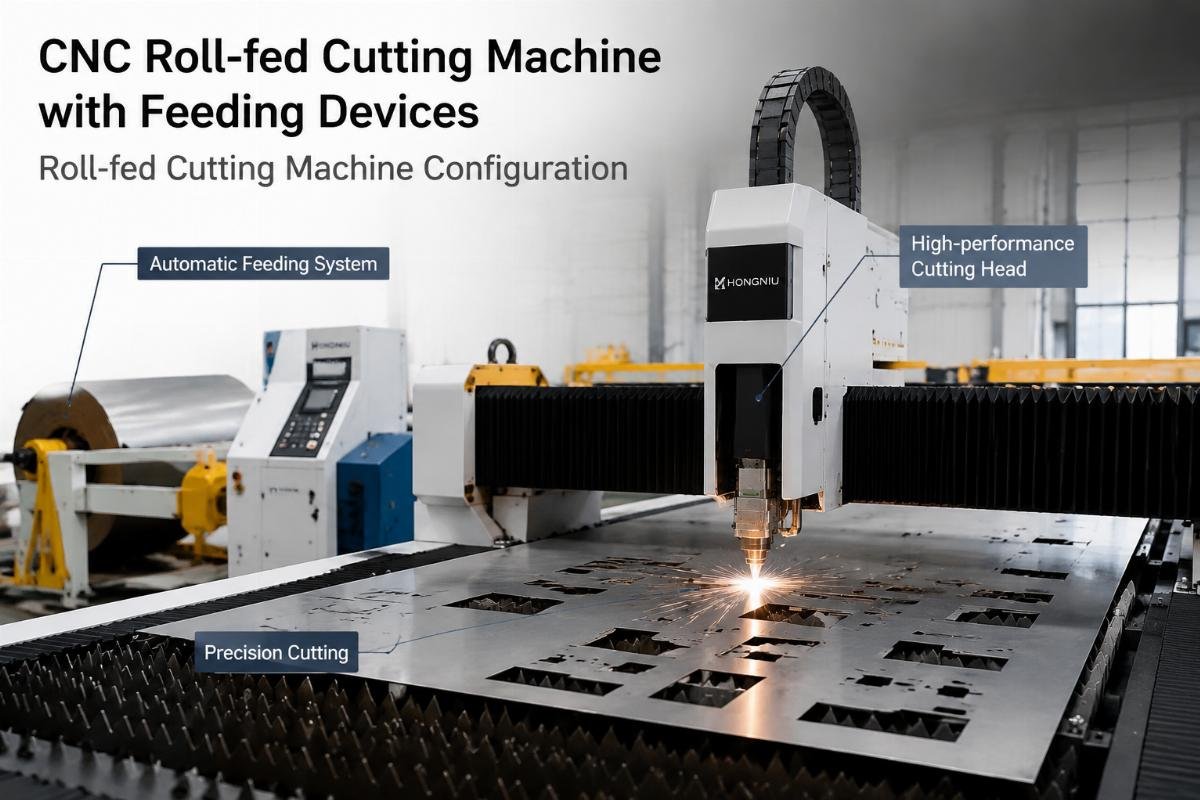
Product photos and videos show cutting machines with feeding racks, tension bars, and take-up rollers because that's how customers actually use the equipment in production. Marketing teams photograph complete working systems, not stripped-down base units3. When you see these images, you're looking at a fully-configured production line—which may include optional modules that cost $3,000 to $8,000 extra depending on automation level.
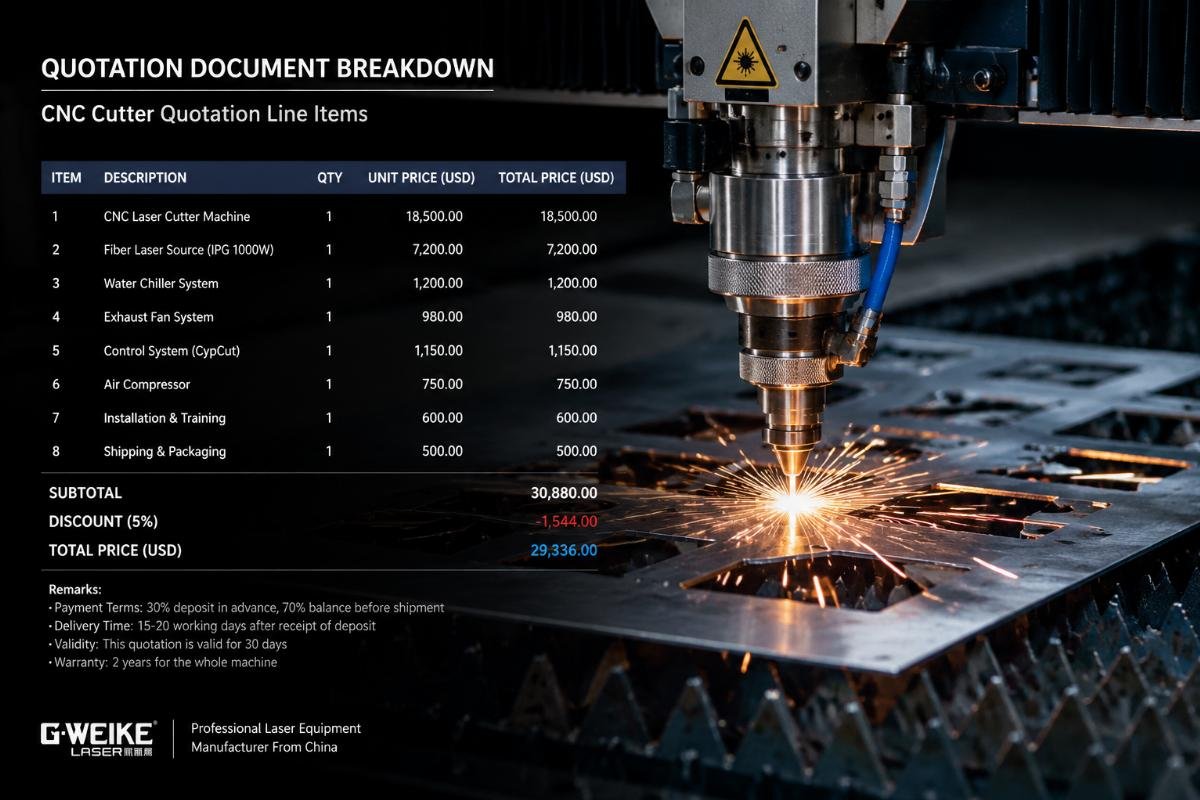
I once had a furniture manufacturer show me a competitor's product video during negotiation, pointing at the feeding device and saying "they include this, so you should too." When I asked to see their quotation breakdown, the competitor had listed "auto-feeding system" as a separate $4,500 line item—the buyer simply hadn't noticed it in the 12-page quotation document.
The price gap trap
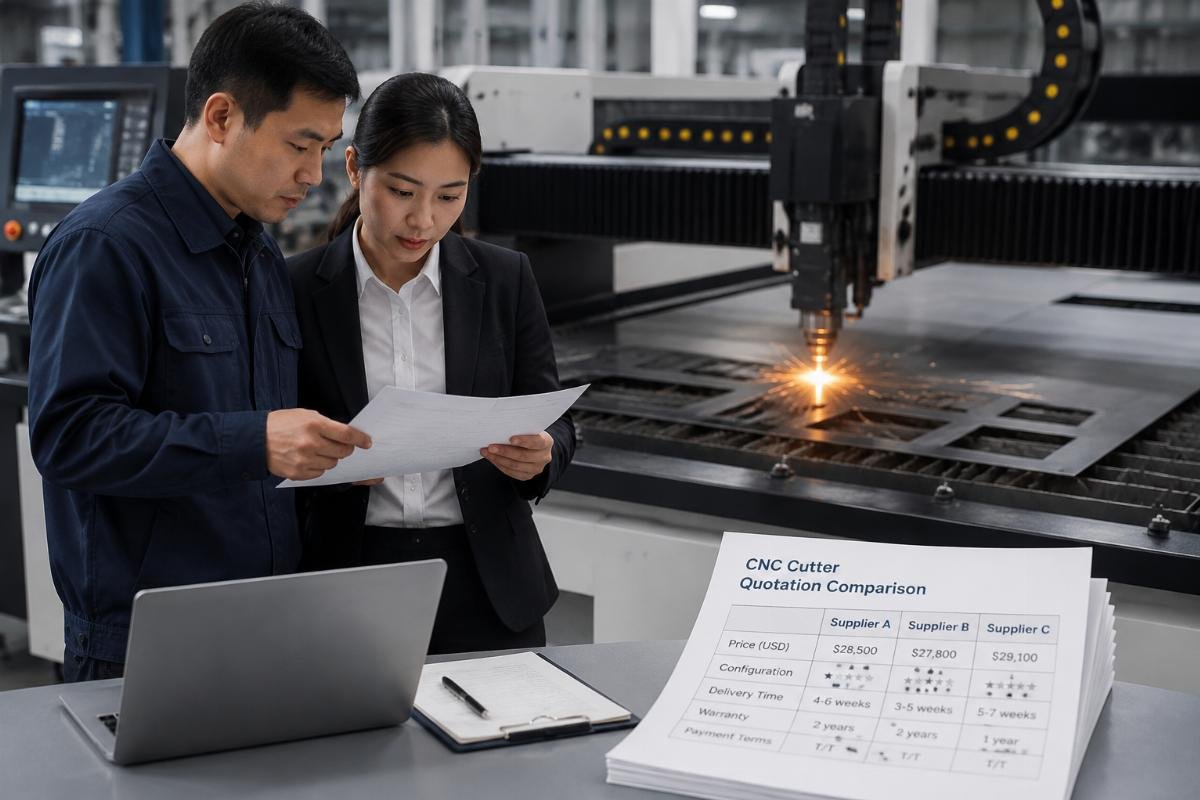
You receive three quotations: $28,000, $35,000, and $42,000 for "the same machine." The natural reaction is assuming quality differences, but the real difference is often what's bundled in each price. Supplier A quotes base machine only. Supplier B includes manual feeding rack. Supplier C bundles full automatic feeding and take-up devices. Without asking "what exactly is included in this price," you cannot compare apples to apples.
The most dangerous part? Some suppliers deliberately quote low base prices to win initial attention, then introduce "necessary optional modules" during technical discussions. By that point, you've already invested time in their solution and feel pressured to accept add-on costs.
What determines whether feeding devices should be included in your purchase?
The question shouldn't be whether suppliers include feeding devices as standard—it's whether your production setup actually needs automatic feeding systems at all. I've seen buyers pay for full automation they never use, and I've seen workshops struggle with manual feeding when they should have invested in automation from day one.
Your feeding device decision depends on four operational variables that quotations never ask about: daily production volume, material width consistency, labor cost structure, and whether you run continuous production or batch sample-making.
Production volume threshold
Automatic feeding devices make economic sense when you process more than 500 linear meters of rolled material daily4. Below that threshold, manual feeding costs less than the $4,000-$7,000 investment in automatic systems. I worked with a packaging factory processing 200 meters daily—they insisted on auto-feeding because competitors had it, then realized one operator could manually load material in 3 minutes, making the device idle 90% of shift time.
Calculate your breakeven point: If one operator spends 45 minutes per 8-hour shift loading material manually5 (approximately $8-$12 in labor cost depending on your region), versus automatic feeding system costing $5,000 with 5-year lifespan, you need to process roughly 400+ meters daily to justify automation through labor savings alone.
Material width consistency
Automatic feeding systems perform best with standardized material widths—typically 1600mm, 1800mm, or 2000mm rolls6 that your suppliers consistently deliver. If you process custom widths, small rolls for sampling, or frequently switch between 1200mm and 2200mm materials, automatic feeding devices require constant manual adjustment anyway, eliminating their speed advantage.
We configure feeding devices for a furniture manufacturer who sources leather from three suppliers. Two suppliers deliver consistent 1800mm width rolls, but the third varies between 1700mm and 1900mm. The operator must manually adjust tension and alignment for that third supplier's materials, which takes the same time as manual loading. The feeding device only saves time on 60% of their materials.
Continuous production vs. batch sampling
Automatic take-up devices prove valuable when you cut 50+ meters continuously without stopping—materials roll onto the take-up shaft as cutting proceeds, keeping the work area clear. But if you cut 2-5 meter pieces for samples, prototypes, or small orders, material never reaches the length where take-up becomes necessary. The cut pieces simply drop into collection bins.
A sofa manufacturer I worked with runs 8-12 hour continuous cutting shifts using 300-meter fabric rolls. Their take-up device winds finished cut pieces automatically, preventing material from dragging on the floor or tangling. Compare that to an advertising shop making vehicle wrap samples in 3-meter lengths—they never need take-up function because each piece completes before reaching the machine's rear edge.
Labor cost arbitrage
In regions where operator wages exceed $15-$20 per hour, automatic feeding pays for itself within 8-12 months7 through labor reduction. In regions where wages remain $5-$8 per hour, the payback period extends to 3-4 years, making manual feeding more economical for many buyers.
This explains why European and North American buyers typically purchase fully-automated configurations, while some Southeast Asian and South American buyers choose base machines with manual feeding8. Neither choice is wrong—each reflects rational cost calculation based on local labor markets.
How do suppliers structure their quotations differently?
When you request quotations for "CNC roll-fed cutting machines," different suppliers interpret that request through completely different bundling philosophies. Understanding these structures helps you decode what you're actually paying for and where price gaps originate.
Suppliers use three common quotation structures: base machine only, commonly-used bundle, and complete production package. Each structure serves different buyer types, but suppliers rarely explain which structure they're using unless you explicitly ask.
Base machine only structure
This quotation includes the cutting machine itself with standard vacuum table, cutting head, control system, and basic software. Material handling devices, feeding racks, take-up systems, and even material hold-down rollers appear as separate optional line items. Total base price might be $24,000-$28,000 for a 1625mm cutting area machine.
Suppliers using this structure typically serve experienced buyers who know exactly which modules they need, or buyers who already own feeding equipment from previous machines. The advantage is price transparency—you see every component itemized. The disadvantage is that first-time buyers often don't realize critical accessories are missing until installation day.
We use this structure when buyers specifically request "machine only" quotations or when they're replacing existing equipment and keeping their current feeding systems. I always include a "recommended accessories" section listing common add-ons with prices, so buyers can make informed decisions.
Commonly-used bundle structure
This quotation includes the base machine plus accessories that 80% of customers eventually purchase: manual feeding rack, material hold-down rollers, waste collection bin, and basic take-up bar. Automatic feeding motors and electronic tension control remain optional. Total bundled price might be $32,000-$36,000.
Most Chinese manufacturers use this structure because it balances price competitiveness with practical usability9. The included accessories allow immediate production startup, while automatic modules remain available for buyers who need higher throughput. The challenge is that "commonly-used bundle" isn't standardized across suppliers—one might include take-up bar while another doesn't.
When I prepare these quotations, I bold the included accessories in the equipment list and separately list optional automation upgrades. This prevents the "I thought it was included" disputes during delivery inspection.
Complete production package structure
This quotation includes everything for turnkey operation: base machine, automatic feeding with tension control, motorized take-up system, edge alignment sensors, material load/unload cart, tool kit, spare parts set, and sometimes even dust extraction systems. Total package price might be $42,000-$48,000.
European suppliers and some premium Chinese brands use this structure for industrial buyers who need guaranteed production-ready systems10. The advantage is zero ambiguity—everything arrives for immediate operation. The disadvantage is you're paying for components you might not need, and the high total price might exceed budget limits even though the per-component pricing is fair.
The line item detail problem
Here's what causes most confusion: suppliers rarely use identical line item descriptions. One calls it "automatic feeding device," another says "material unwinding system," a third lists "servo-driven feeding rack." You're comparing three quotations, and you cannot tell if they're offering equivalent systems or completely different mechanisms.
| Common Line Item Names | What It Actually Refers To | Typical Price Range |
|---|---|---|
| Manual feeding rack | Fixed-height material holder without motors | $800-$1,200 |
| Automatic feeding system | Motorized unwinding with basic tension | $3,500-$5,500 |
| Servo-driven feeding | Motorized + automatic tension control + edge alignment | $6,000-$8,500 |
| Take-up bar | Simple bar that material wraps around (manual rotation) | $400-$700 |
| Motorized take-up | Automatic winding with adjustable speed | $2,800-$4,200 |
| Complete roll handling system | Automatic feeding + take-up + tension + alignment | $9,000-$13,000 |
I've seen buyers assume "feeding system" in two different quotations meant the same thing, when one supplier offered manual rack and the other offered servo-driven automatic system—a $5,000 functional difference hidden in identical terminology.
What specific questions must you ask during inquiry stage?
Most procurement mistakes happen because buyers ask about machine capabilities but never verify physical delivery contents. You need a verification checklist that forces suppliers to explicitly state what ships in the quoted price versus what costs extra.
Ask these five questions in your initial inquiry email, and require suppliers to answer each point in their quotation document—not just verbally during follow-up calls where details get lost or misremembered.
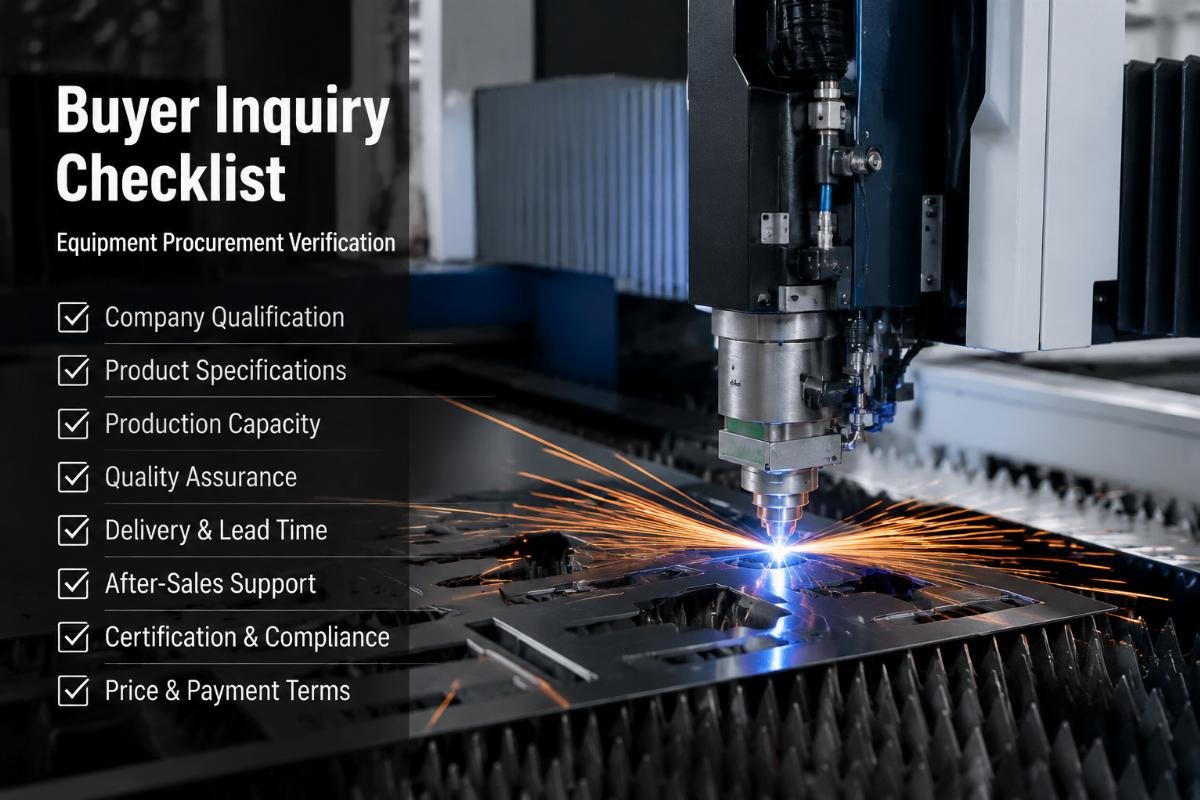
Question 1: What physical components are included in the quoted base price?
Don't accept "standard configuration" as an answer. Require suppliers to list every physical component: cutting machine with [specific dimensions], vacuum pump with [power rating], control computer with [specifications], software license, material feeding rack [manual or automatic], hold-down rollers [quantity], take-up device [type], cutting tools [quantity and types], and any other accessories.
I send a "delivery checklist template" to potential customers before quotation, listing 30+ possible components with checkboxes. They mark which items they expect included, and I mark which items are actually included in my price. This prevents 90% of misunderstandings before they start.
Question 2: Which components appear in your product photos but are not included in base price?
This forces honest disclosure. If marketing materials show automatic feeding but the base price includes only manual rack, the supplier must explicitly state this discrepancy. Some suppliers will volunteer this information professionally, while others get defensive—which tells you a lot about their business practices.
When I present quotations, I include annotated photos where optional accessories are marked in red with prices listed directly on the image. Customers see exactly what they're getting versus what costs extra.
Question 3: What is the total price for a production-ready system?
Even if you don't plan to buy all accessories immediately, knowing the complete system price helps you budget for future upgrades and compare true value across suppliers. A $28,000 base machine that requires $12,000 in accessories to operate effectively is less competitive than a $36,000 bundled system.
Ask suppliers to provide two quotations: one for base machine, one for recommended production configuration. The price difference reveals how much you'll likely spend on accessories eventually.
Question 4: Can I see itemized pricing for all optional components?
Transparent suppliers welcome this question because itemized pricing proves fair component costs. Evasive suppliers resist because itemized lists reveal inflated accessory prices that subsidize low base machine prices.
We maintain public pricing sheets for all accessories and optional modules. Customers can calculate their own configurations before contacting sales, which builds trust and reduces negotiation friction.
Question 5: What do your existing customers in my industry typically purchase?
This reveals real-world usage patterns. If you're a furniture manufacturer and the supplier's other furniture customers all purchase automatic feeding, that's valuable data. If they mostly purchase base machines with manual feeding, that also tells you something about industry norms.
I share configuration statistics from similar customers: "80% of packaging factories with production volumes similar to yours choose automatic feeding with manual take-up," or "most advertising shops in your size range operate effectively with manual feeding and no take-up device." This helps buyers make informed decisions instead of guessing.
How should you verify what's included before signing the contract?
Verbal confirmations and email promises mean nothing if the contract equipment list doesn't match. You need specific contract language that eliminates interpretation gaps and creates enforceable delivery standards.
Add an appendix to your purchase contract titled "Equipment Delivery Checklist" that lists every component by name, quantity, and specification. Both parties initial each line item, making this appendix legally equivalent to the main contract terms.
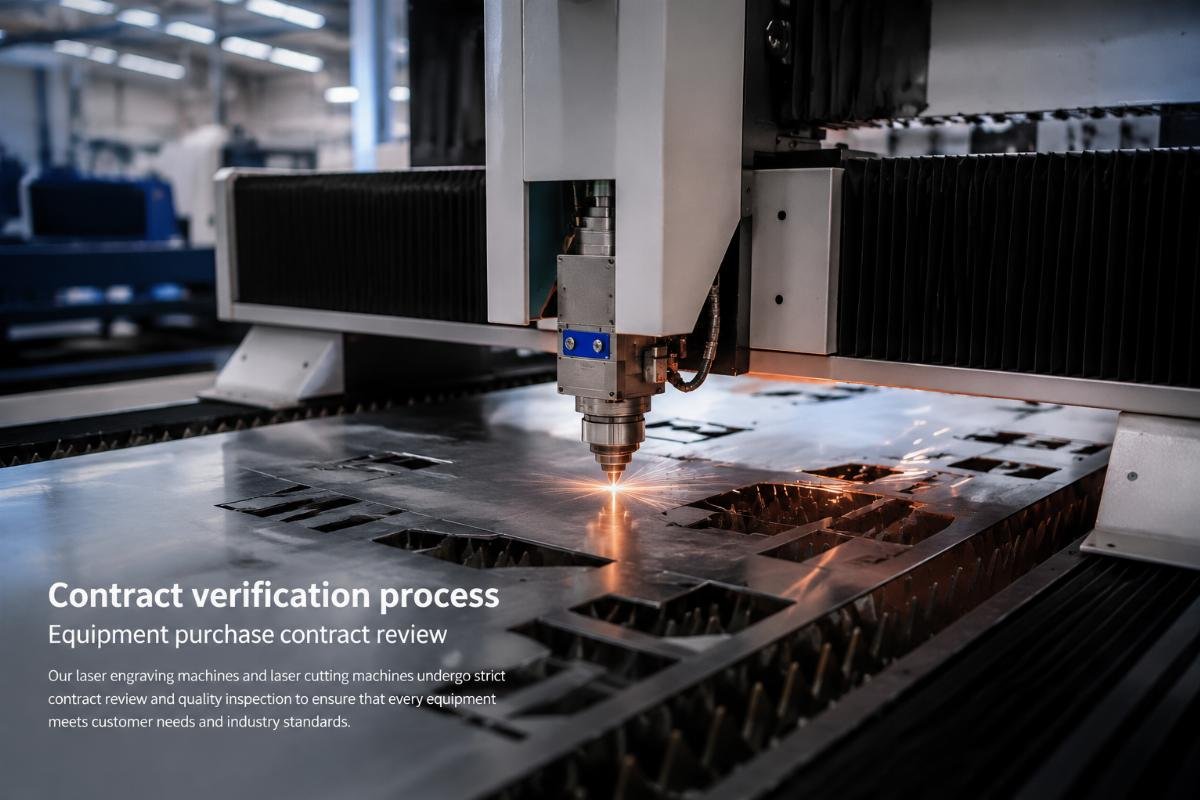
Component-level specification
Don't write "includes feeding device"—write "includes motorized feeding system with servo motor (model XYZ-500), automatic tension control, adjustable height range 800-1200mm, maximum roll weight capacity 200kg." The specification level forces suppliers to deliver exactly what you negotiated, not substitute cheaper alternatives.
We provide component specification sheets that customers can directly copy into their purchase contracts. Each specification includes model numbers, technical parameters, and reference photos so delivery inspection becomes objective pass/fail verification.
Photo documentation requirement
Require suppliers to provide factory photos of your specific machine during assembly, showing all included components physically attached or packed. These photos become contract attachments, creating visual evidence of what was promised versus what was delivered.
Before shipment, I send customers 15-20 photos showing their machine from multiple angles, close-ups of accessories, packing process, and shipping container loading. These photos protect both parties—customers verify contents before shipment leaves factory, and I have proof of proper packing if damage occurs during transit.
Inspection acceptance criteria
Define how you'll verify delivery completeness. Will you accept component count only, or will you test functionality of each device? Who bears costs if components are missing or non-functional—supplier ships replacements at their cost, or you source locally and deduct from payment?
Standard contract language: "Buyer shall inspect delivered equipment within 7 days of arrival. Any missing components listed in Equipment Delivery Checklist shall be shipped by Supplier at Supplier's cost within 15 days of notification. Any non-functional components shall be repaired or replaced at Supplier's cost within 30 days."
Price adjustment terms
If you agree to purchase base machine first with option to add feeding devices later, specify the future accessory prices in the initial contract. This prevents suppliers from raising prices when you want to upgrade, claiming "costs have increased since your initial purchase."
We offer "modular expansion pricing" contracts where future accessory prices are locked for 18-24 months after machine delivery. Customers can start with base configuration and add automation later at pre-agreed prices, giving them financial flexibility without price uncertainty.
Conclusion
Roll-fed automatic feeding and take-up devices are never "standard" across suppliers—you must verify exact delivery contents during inquiry and contract stages by asking specific questions about physical components, itemized pricing, and production-ready system costs. Configuration depends on your production volume and labor costs, not what competitors purchase.
"[PDF] Chapter 9 Determining Fair and Reasonable Pricing", https://www.vita.virginia.gov/media/vitavirginiagov/supply-chain/pdf/Chapter-9.pdf. Research on B2B procurement indicates that specification ambiguity and incomplete delivery definitions contribute to post-purchase disputes, resulting in additional costs for clarification, returns, modifications, or legal resolution, though quantification of aggregate industry costs remains limited. Evidence role: general_support; source type: research. Supports: Contractual ambiguity in equipment procurement leads to financial disputes between buyers and suppliers. Scope note: Specific monthly cost figures for the CNC equipment sector are not established in published research ↩
"Manufacturers: Pre-Purchase Guide for Equipment | NIST", https://www.nist.gov/blogs/manufacturing-innovation-blog/manufacturers-pre-purchase-guide-equipment. Research on industrial equipment procurement indicates that buyers frequently prioritize technical specifications over contractual delivery details during initial inquiry stages, though the exact proportion varies by industry and buyer experience level. Evidence role: statistic; source type: research. Supports: Buyers commonly focus on technical specifications rather than delivery scope verification during equipment procurement. Scope note: General procurement behavior research may not provide the exact 70% figure for CNC equipment specifically ↩
"Complying with the Made in USA Standard", https://www.ftc.gov/business-guidance/resources/complying-made-usa-standard. B2B marketing research indicates that product photography and promotional materials commonly depict equipment in fully-configured, operational contexts to demonstrate capabilities and applications, which may include optional accessories or configurations beyond base models, making detailed specification review essential during procurement. Evidence role: general_support; source type: research. Supports: Marketing materials for industrial equipment typically showcase fully-configured operational systems. ↩
"8 Key Criteria for Your Industrial Automation ROI Calculation", https://wes-tech.com/blog/8-key-criteria-for-your-industrial-automation-roi-calculation/. Manufacturing engineering literature establishes that automation investments become economically justified when production volumes reach levels where labor costs and efficiency gains exceed equipment acquisition and maintenance costs over the asset lifecycle, though specific thresholds vary by equipment type, labor rates, and operational context. Evidence role: general_support; source type: research. Supports: Automation investment decisions in manufacturing depend on production volume thresholds where labor costs exceed equipment amortization. Scope note: The 500-meter threshold is context-specific and may not apply universally across different materials, labor markets, or production environments ↩
"Standard time (manufacturing) - Wikipedia", https://en.wikipedia.org/wiki/Standard_time_(manufacturing). Industrial engineering time-motion studies establish that material handling activities, including loading, positioning, and adjustment tasks, constitute significant portions of manufacturing cycle time, with specific durations varying by material characteristics, equipment design, and operator experience. Evidence role: general_support; source type: research. Supports: Manual material handling tasks consume measurable portions of production shift time. Scope note: The 45-minute estimate is context-specific and depends on material type, roll size, equipment design, and operator proficiency ↩
"How Wide Are Fabric Rolls Typically? - CV Linens", https://www.cvlinens.com/blogs/styling-tips/how-wide-are-fabric-rolls?srsltid=AfmBOoq7h8Og2OjC9Ou-Bbje-4q0VxJ5B4Lg1eMxawMTE8FhmCSdCBSZ. Material manufacturing industries produce rolled goods in standardized widths to facilitate equipment compatibility and supply chain efficiency, with common dimensions varying by material type, regional standards, and application requirements, though specific standard widths differ across textile, film, paper, and other material categories. Evidence role: general_support; source type: institution. Supports: Rolled materials are manufactured in standardized widths for industrial applications. Scope note: The specific widths mentioned (1600mm, 1800mm, 2000mm) may not be universal standards across all material types or regions ↩
"How to Calculate ROI to Justify a Project - HBS Online", https://online.hbs.edu/blog/post/how-to-calculate-roi-for-a-project. Manufacturing economics establishes payback period methodology as the time required for cumulative cost savings (primarily labor reduction) to equal initial capital investment, with typical industrial automation projects showing payback periods ranging from several months to several years depending on labor rates, utilization rates, and equipment costs. Evidence role: mechanism; source type: education. Supports: Capital equipment payback periods are calculated by comparing labor cost savings against equipment acquisition costs. Scope note: The specific 8-12 month range depends on assumptions about utilization rates, labor savings, and equipment costs that vary by application ↩
"[PDF] Models for Building Regional Manufacturing Economies", https://ipc.mit.edu/wp-content/uploads/2023/10/Regional-Manufacturing-1-Nov.pdf. International manufacturing research indicates that automation investment levels vary significantly across regions, influenced by factors including labor costs, wage trends, capital availability, production scale, and industrial development stage, with higher-wage economies generally showing greater automation adoption rates. Evidence role: general_support; source type: research. Supports: Manufacturing automation adoption varies by region based on economic factors. Scope note: Regional patterns are generalizations that do not account for individual company strategies, industry segments, or specific market conditions ↩
"Pricing Strategy - International Trade Administration", https://www.trade.gov/pricing-strategy. International trade research indicates that equipment manufacturers develop quotation and bundling strategies reflecting their competitive positioning, target market preferences, and regional business practices, with approaches varying by company size, market segment, and customer sophistication. Evidence role: general_support; source type: research. Supports: Manufacturing equipment suppliers adopt quotation structures based on competitive positioning and target markets. Scope note: Characterizing practices of 'most Chinese manufacturers' requires market research data that may not be publicly available ↩
"Machinery: weak and uncertain growth profile for EU sales in 2024 ...", https://www.exportplanning.com/en/magazine/article/2025/04/30/machinery-weak-and-uncertain-growth-profile-for-eu-sales-in-2024-which-markets-have-high-potential-in-2025/. Manufacturing equipment market research indicates that suppliers serving industrial customers often provide turnkey solutions that include all necessary components for immediate operation, reflecting customer preferences for reduced procurement complexity and guaranteed system integration, though specific practices vary by supplier positioning and target segment. Evidence role: general_support; source type: research. Supports: Equipment suppliers targeting industrial markets may offer comprehensive turnkey solutions. Scope note: Generalizations about European suppliers require market research that may not comprehensively cover all suppliers or market segments ↩