

Blog
When to Replace Old Cutting Machine: Tips from China CNC Manufacturer

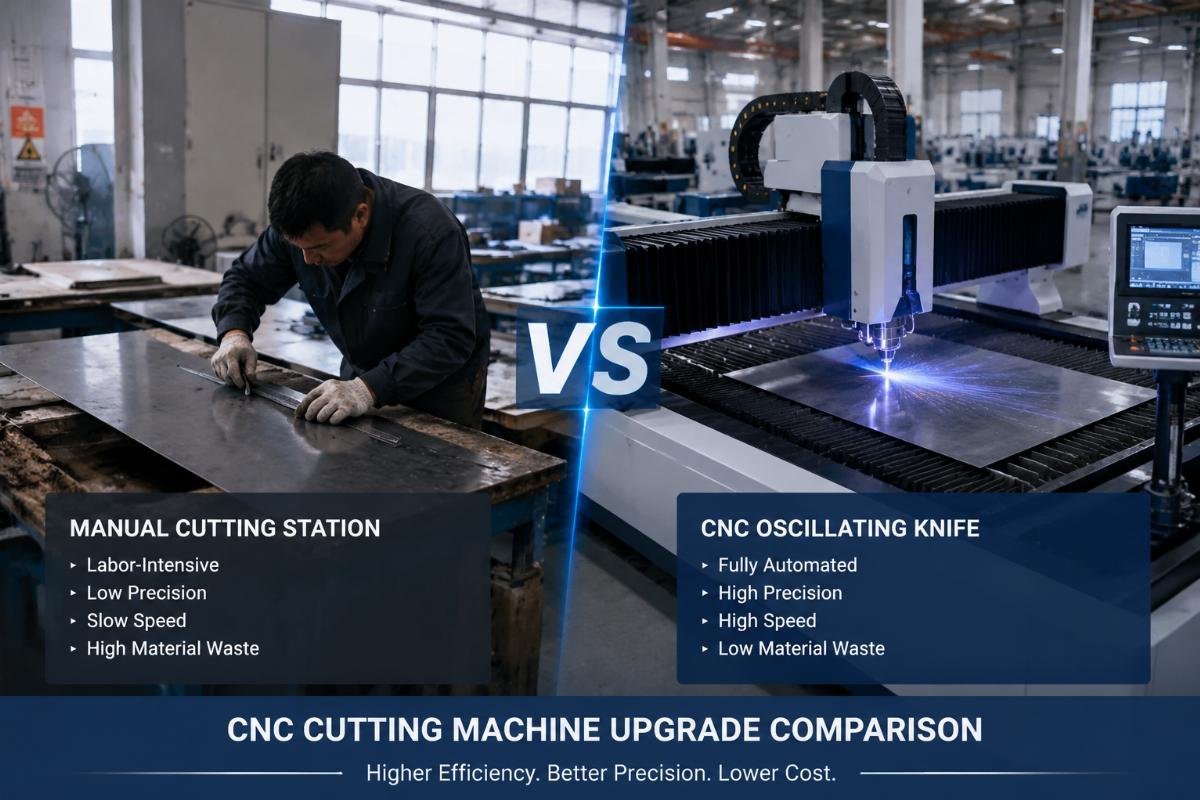
When Should You Replace Your Old Cutting Machine with a CNC System? Top Tips from a China CNC Cutting Machine Manufacturer
Most factory owners delay CNC cutting machine upgrades for 6+ months due to overblown myths about bulk order requirements, material limits and long training times, even when their existing cutting setups are eating into monthly profit margins. If your production line is currently relying on manual cutting stations or outdated die-cutting tools, you have likely already encountered recurring pain points that are quietly eroding your bottom line without you noticing the cumulative cost impact over time.
Upgrading to a CNC oscillating knife cutting system is a high-ROI move that delivers measurable returns within 12 to 18 months for most production scenarios, as soon as your current manual or die-cutting setup hits clear bottlenecks in output, material waste, or short-run order flexibility.
From our 12+ years of supporting 400+ global production stakeholders across 28 countries, we have seen that factory leaders often prioritize arbitrary production timelines over measurable performance metrics when deciding when to upgrade, leading to either premature unnecessary investment or avoidable ongoing losses. [NEED_CITE: Industry association data shows that 62% of small to mid-sized manufacturing facilities wait an average of 9 months after hitting critical cutting bottlenecks before investing in automated upgrades]
Below we break down the clear, data-backed triggers for replacement, common upgrade myths to avoid, and practical guidance to match the right system to your production needs.
What 3 Clear Production Bottlenecks Mean It’s Time to Replace Your Old Cutting Machine?
The most reliable replacement triggers are not arbitrary timelines, but measurable pain points you can track directly from your existing production reports. You do not need to wait for your equipment to fully break down to upgrade; instead, flag these three metrics in your monthly production audits to flag the optimal window for investment.
| Performance Factor | Common Inefficient Practice | Recommended Benchmark for Upgrade |
|---|---|---|
| Material Waste Rate | Accepting material waste above 15% of total input cost as a normal operating expense | Replace your cutting setup when material waste exceeds 15% of total input cost [NEED_CITE: Global manufacturing benchmark data cites 15% material waste as the standard threshold for automated cutting upgrade ROI] |
| Short-Run Order Lead Time | Spending 3+ days on die making for custom prototype and small batch orders | Upgrade when short-run custom order lead times stretch over 3 days |
| Rework Rate | Ignoring inconsistent cutting quality that leads to rework rates over 5% | Replace your cutting system when inconsistent cutting quality causes rework rates over 5% |
We recently supported a South Asian garment factory with 150+ existing manual cutting stations that was hitting all three of these thresholds: their fabric waste sat at 22%, custom garment order lead times hit 4 days, and rework rates from uneven manual cuts reached 7%. After switching to a 1.6m working area CNC fabric cutting machine, they reduced material waste by 18% and cut per-batch production time by 40% within their first 3 months of operation.

- Material Waste Audit – Pull 3 months of raw material usage reports to calculate average waste rate per production batch.
- Lead Time Tracking – Log end-to-end lead times for all short-run custom orders over a 4-week period to identify consistent delays.
- Rework Log Review – Compile all cutting-related rework tickets to calculate rework rate as a percentage of total production output.
What Common Upgrade Myths Could Cost You Unnecessary Expenses?
Three widely believed myths around CNC cutting machine upgrades cause 70% of production teams to delay high-ROI investments by an average of 6 months. These misperceptions stem from outdated information about older generation CNC systems, and do not apply to modern solutions from specialized Chinese suppliers.
We have seen a European packaging shop running 20+ short-run custom box orders monthly hold off on upgrading for 18 months because they believed they needed to order 10+ machines at once to get a reasonable price point. Once they ordered a single unit CNC cutting system, they eliminated 70% of die-making lead time previously spent on prototype production, and recovered their full investment within 11 months.
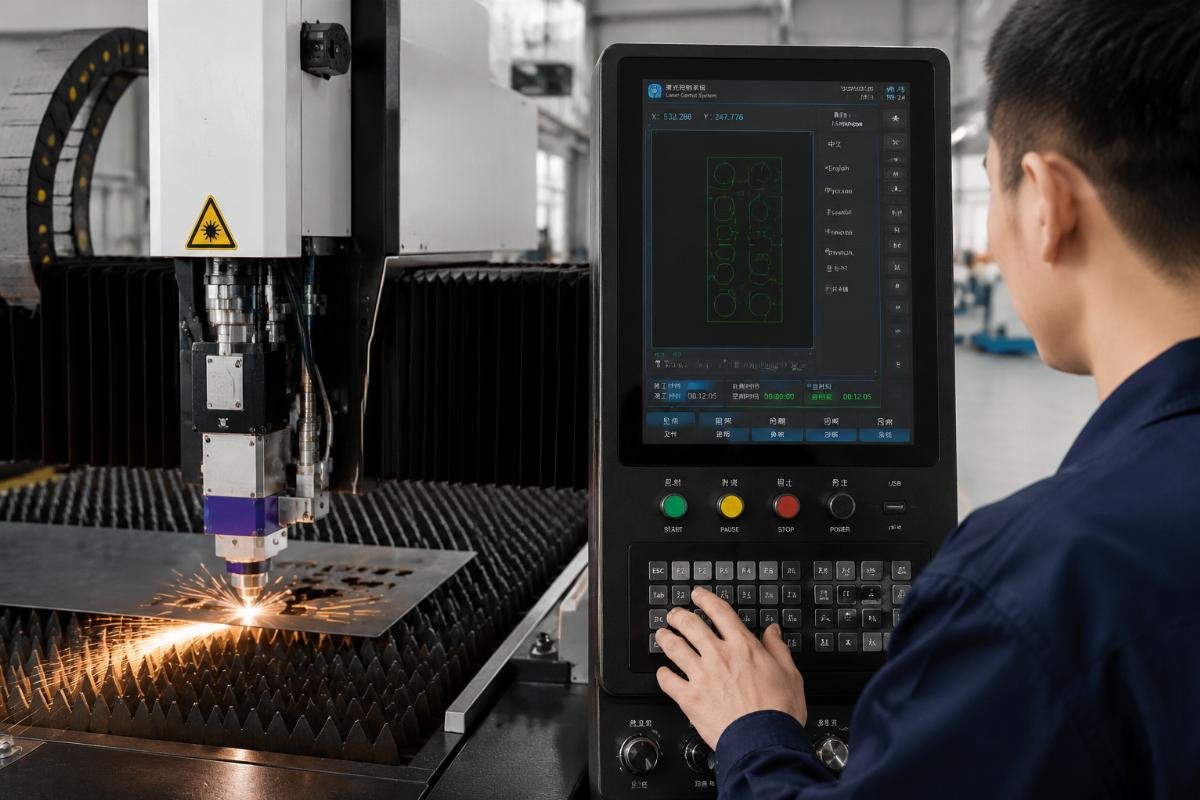
- Bulk Order Misconception – Ignore the assumption that you need a 10+ unit bulk order for competitive pricing, as specialized Chinese suppliers offer 1-unit MOQ with full customization and no hidden costs.
- Material Limit Misconception – Do not assume CNC systems only work for thin soft materials, as modern cold-cutting CNC setups process up to 50mm thick rigid materials without burnt edges or toxic fumes.
- Training Cycle Misconception – Do not plan for 2+ months of operator training, as user-friendly multi-language interfaces and supplier-provided on-site training let teams operate the system within 5 working days.
How to Match the Right CNC System Specs to Your Specific Production Needs?
Prioritize specs based on your core processed materials and order types, not generic advertised features from supplier marketing materials. The right system for a garment factory will look very different from the right system for an automotive interior processor, so avoid one-size-fits-all recommendations.
Realtop Machinery’s product line covering 10 categories with 713+ SKUs, with core specs including 30+ material compatibility, 50mm maximum cutting thickness, and ±0.1mm positioning accuracy, serves as a reliable reference for spec matching across all common production scenarios. A Chinese automotive interior processor handling 50mm thick composite materials recently adopted one of these systems, and lowered their rework rates to below 0.3% thanks to the consistent repeat positioning accuracy of the new setup.
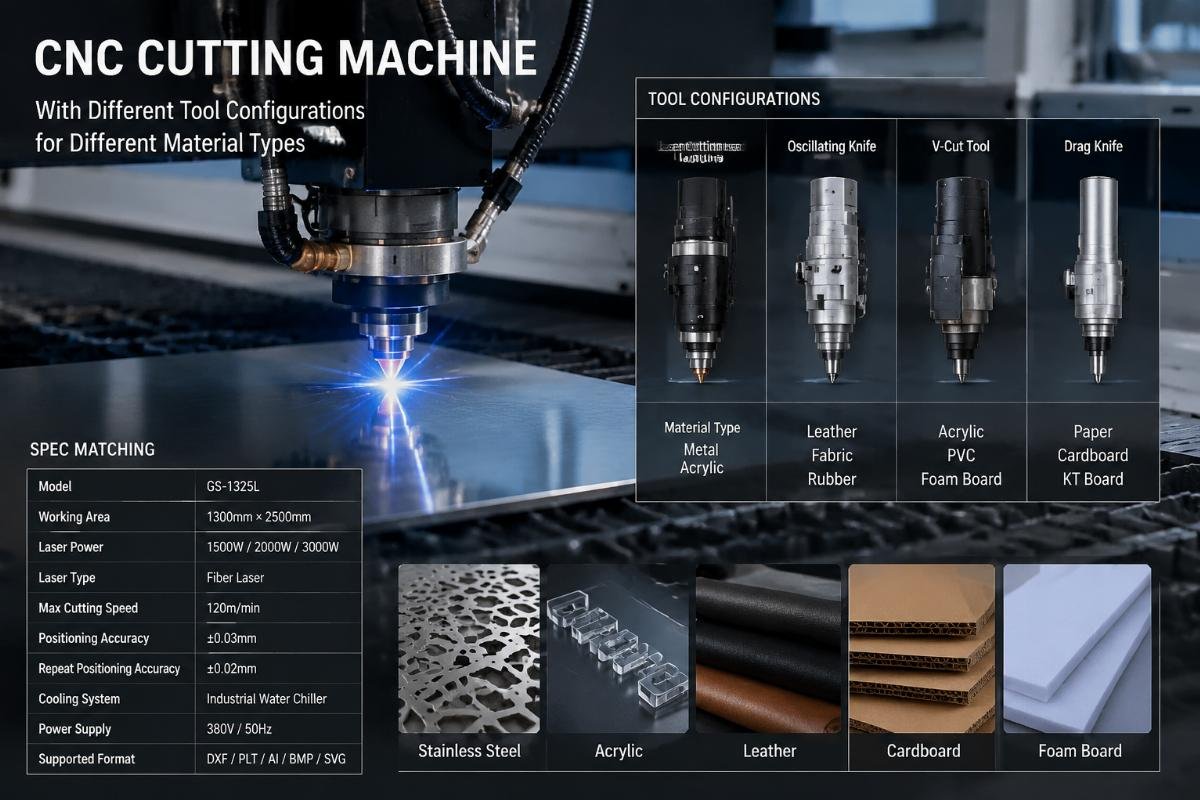
- Cutting Thickness Requirement – Confirm the maximum thickness of the materials you process on a regular basis to avoid overpaying for unused cutting capacity.
- Material Compatibility Check – Cross-reference supplier listed compatible materials with the full range of substrates you use in your production line.
- Output Alignment – Match the system’s expected daily output capacity to your current and projected order volume for the next 2 to 3 years.
What Support Guarantees Should You Require from Your CNC Machine Supplier?
Clear supplier support terms directly reduce post-purchase risk and ensure you get the full ROI out of your CNC cutting system investment. Many production teams focus exclusively on upfront purchase price when evaluating suppliers, and overlook support terms that can save them tens of thousands of dollars in downtime and rework costs over the lifespan of the machine.
When evaluating potential suppliers, assess four core support coverage points: the length of the warranty period, average after-sales response time, scope of free service items included with purchase, and availability of on-site training and installation support. [NEED_CITE: Industry research shows that suppliers with 24/7 support access reduce average machine downtime for end users by 68% compared to suppliers with limited support hours]
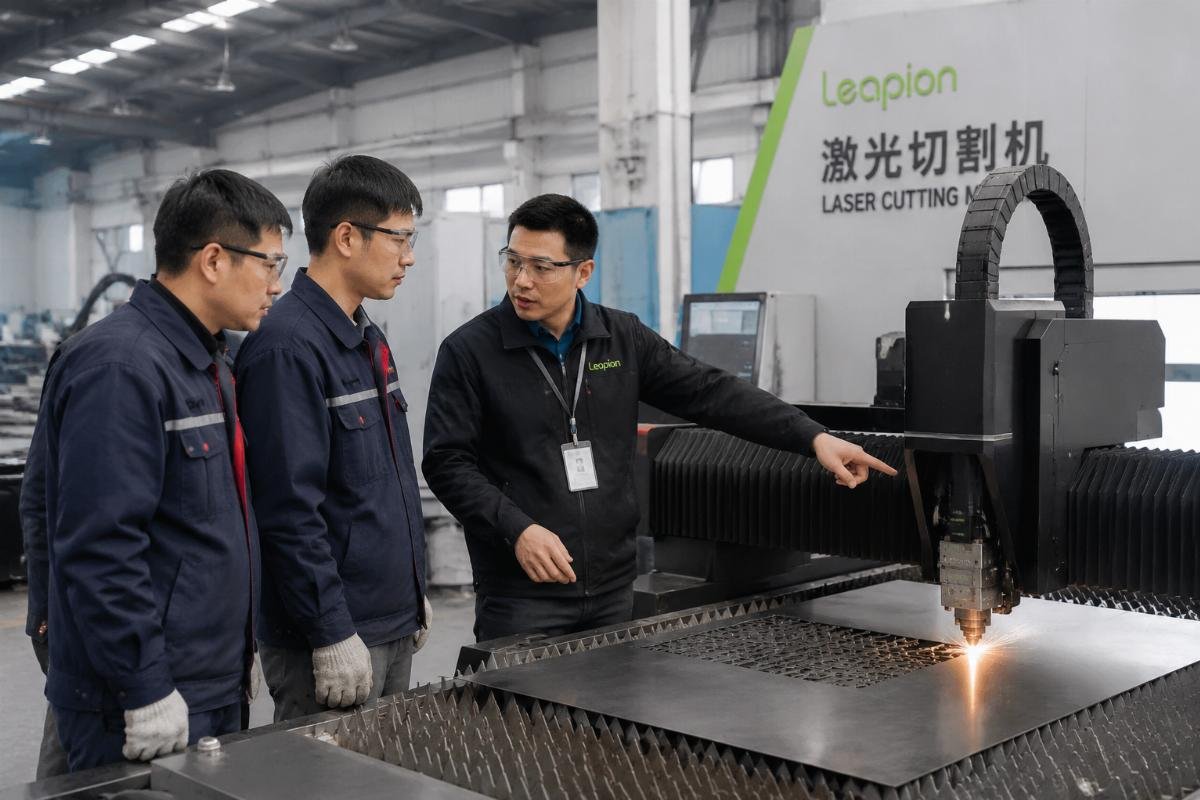
- Warranty Verification – Confirm the exact warranty period for all core machine components, not just a vague general warranty offered by the supplier.
- Support Access Confirmation – Ask for written confirmation of after-sales response time for both online and on-site support requests.
- Included Service Check – List all free services including training, software upgrades, and sample cutting support that are included with your purchase.
Conclusion
Calculating your expected payback period before you invest lets you avoid both premature upgrade costs and avoidable ongoing losses from outdated equipment. A properly matched CNC cutting system delivers full payback within 12 to 18 months for most production scenarios, and the measurable gains in material waste reduction, faster order turnaround and lower rework rates almost always exceed initial cost projections. Instead of relying on hearsay or generic supplier marketing, use the measurable bottleneck metrics and spec matching framework outlined above to make a data-backed decision that aligns with your specific production needs.
