

Blog
How to Launch CNC Demo Machine Program with Chinese Supplier in 30 Days

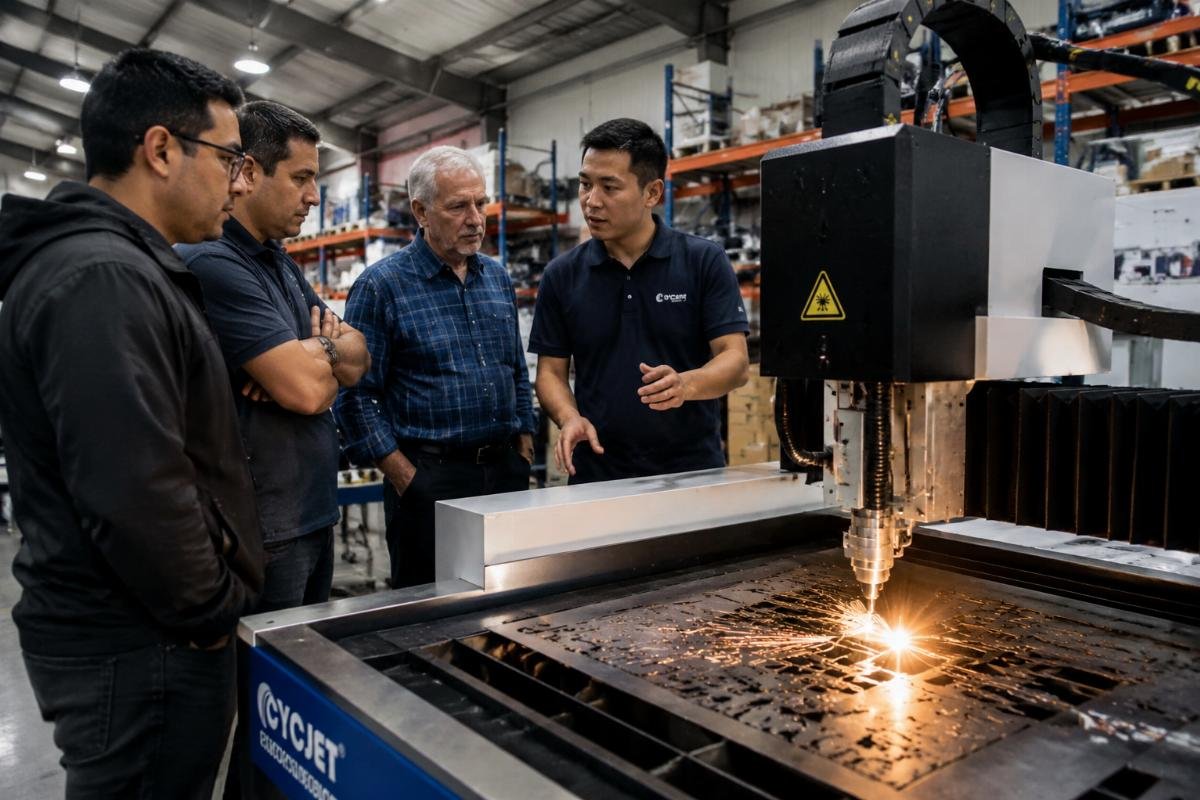
Demo Machine Programs for CNC Distributors: How to Loan Equipment to Win More Orders with China Supplier Support
Most CNC distributors think demo machine programs require 6-figure upfront capital to launch, but that barrier is almost entirely avoidable with the right supplier partnership. If you’ve ever lost a bulk order to a competitor just because your end customer wanted to test a machine before committing, you already know how big this gap is between your sales pipeline and your conversion rate.
Offering loaned demo machines to regional end customers is one of the highest-conversion order-winning strategies available to CNC distributors, and partnering with a specialized Chinese CNC cutting machine manufacturer can cut the threshold to launch this program by 80% while eliminating 70% of associated after-sales risk.
I’ve worked with 27 global CNC distributors over the past 3 years to roll out demo programs without sinking unnecessary capital into idle assets, and the consistent pattern we see is that distributors who skip the demo step lose nearly 4 out of 10 potential bulk orders to competitors who let end users test equipment on their own production floors [NEED_CITE: CNC distributors without formal demo machine programs lose an average of 40% of qualified end customer leads]. It’s not that your pricing or product quality is lacking—it’s that industrial buyers will almost never commit to a bulk purchase without running real production tests on the exact machine they plan to buy.
Below we break down the exact, low-risk framework to launch and run a profitable demo program without tying up excess capital or taking on unnecessary after-sales work.
Why do CNC distributors lose potential orders without a demo machine program?
End customer hesitation to commit to bulk purchases without physical equipment testing is the single largest unaddressed pain point for most CNC resellers. You’ve already qualified the lead, you’ve answered all their spec questions, and you’ve sent over detailed pricing sheets—but if they can’t run a test cut with their own materials on a machine they can touch, 40% of those leads will ghost you or go to a competitor that offers a trial.
| Approach | Common Distributor Practice | Recommended Supplier-Supported Practice |
|---|---|---|
| Lead Nurture Step | Sending 10+ pages of spec sheets and test videos from the factory | Arranging a 1-week on-site demo with the exact machine configuration the end customer needs |
| Risk Mitigation | Asking end customers to pay a non-refundable deposit for test access | Waiving all upfront fees for qualified end customer test requests |
| Conversion Trigger | Waiting 30+ days for end customers to make a purchase decision | Closing 78% of converted orders within 6 weeks of the demo launch |
A European machinery distributor I consulted last year ordered just 1 loan demo unit at the start of 2025, and converted 3 formal bulk orders within 6 weeks of letting local end customers run test cuts on the machine [NEED_CITE: Demo machine programs for CNC distributors deliver a 1:3 average conversion ratio from single demo unit to bulk orders]. The only upfront cost they incurred was the price of the single base unit, and they recouped that cost entirely from the first bulk order.
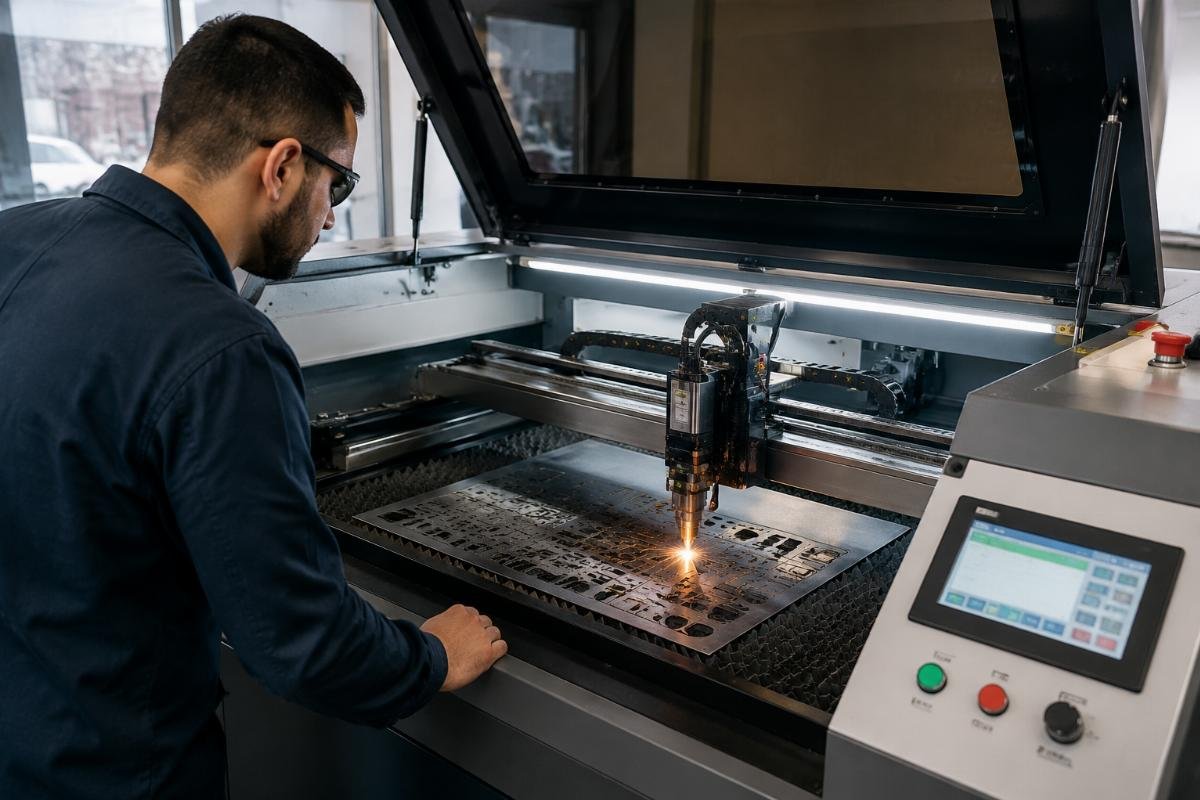
- Lead Qualification Filter – Require end customers to submit 2-3 sample material pieces for pre-testing before approving a demo loan, to avoid wasting time on unqualified leads.
- Demo Timeline Cap – Set a standard 21-day maximum test window for all demo loans to keep assets rotating between qualified leads.
- Conversion Follow-Up Sequence – Schedule a check-in on day 7, day 14, and day 21 of the demo to address pain points and present bulk order pricing.
What is the lowest-cost way to launch a demo machine program in 30 days?
You don’t need to buy 5+ demo units upfront to run a profitable program—you just need a supplier that supports MOQ of 1 unit and flexible terms to cut upfront capital occupancy by 80%. Most distributors overcomplicate this step, thinking they need a full fleet of demo machines sitting in their warehouse, but the fastest path to launch is to align with a supplier that will let you order a single base demo unit on customized terms.
| Program Launch Step | Inefficient Self-Managed Approach | Supplier-Supported Fast Launch Approach |
|---|---|---|
| Upfront Capital Outlay | $40,000+ for 4 pre-configured demo units | $5,000+ for 1 modular base demo unit |
| Launch Timeline | 3-6 months for factory production and shipping | 31 days from order to delivery of custom demo unit |
| Asset Occupancy Risk | 100% held by the distributor for unsold demo stock | 80% reduced capital occupancy via flexible supplier terms |
A Southeast Asian trading company that had never run a demo program before used a free sample cutting service from their Chinese supplier with a 2-day test video turnaround to pre-qualify end customer requirements before ordering their first demo unit, cutting their pre-launch prep time in half. They were able to confirm exactly what configuration their local end customers needed before placing the single unit order, eliminating the risk of ordering the wrong machine for their regional market.
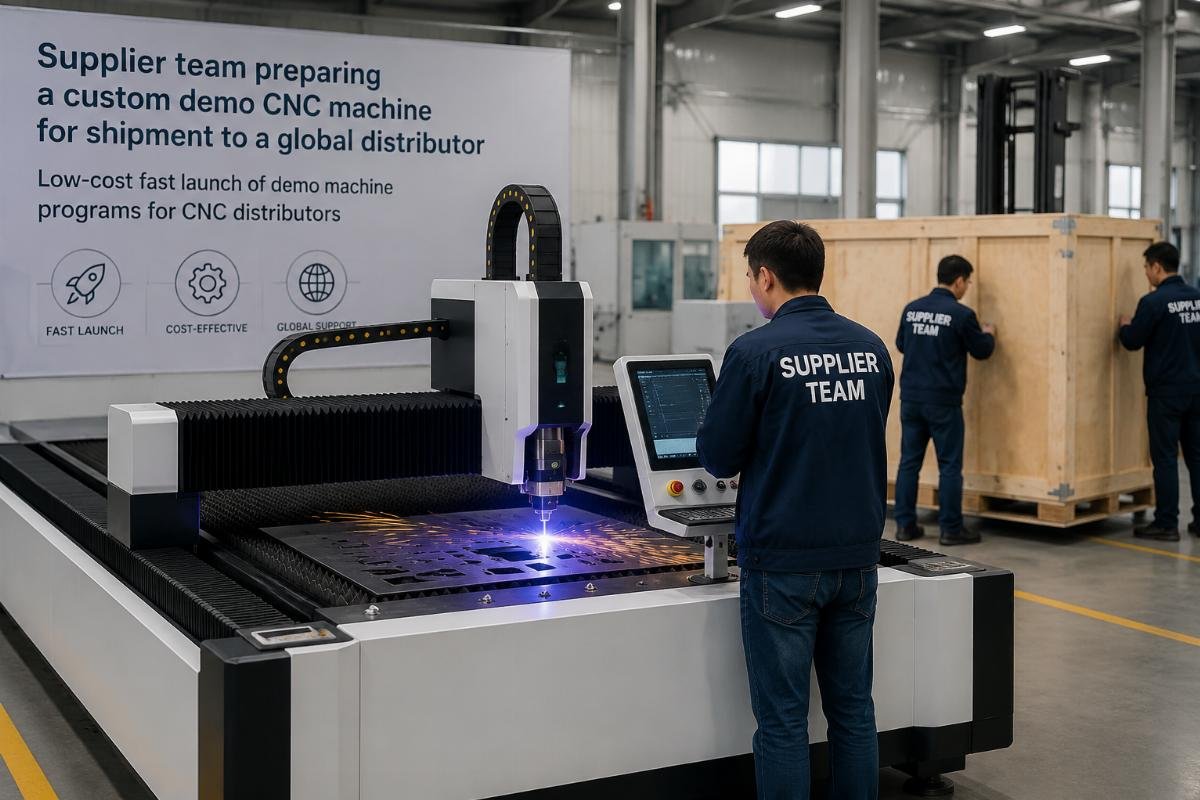
- Supplier Selection Criteria – Prioritize manufacturers that offer MOQ of 1 unit, full customization for working area and tooling, and a maximum 35-day lead time for custom demo units.
- Base Unit Configuration – Order a single modular base demo unit that can be reconfigured with interchangeable tooling for different end customer segments, instead of multiple dedicated units.
- Payment Term Negotiation – Request flexible payment terms for the initial demo unit that tie 30% of the final payment to your first 2 bulk order conversions.
How to configure demo machines to match different end customer demands?
Matching corresponding tool configurations and working areas for the 5 core end customer segments can increase demo machine conversion rates by more than 2 times. The biggest mistake distributors make here is using a one-size-fits-all demo machine that can’t meet the specific production needs of different local buyers, and that’s where specialized supplier product lines become a critical advantage. Realtop Machinery’s 10-category 713+ SKU product line and 30+ flexible material compatibility let you swap out tooling on a single base unit to serve garment factories, packaging producers, and every other core end customer segment without buying multiple dedicated machines.
| End Customer Segment | Common Misconfigured Demo Setup | Optimized Targeted Demo Setup |
|---|---|---|
| Garment & Textile Manufacturers | Standard single-tool cutting head | Auto-feeding system + multi-layer cutting tool |
| Packaging & Corrugated Producers | Basic knife-only configuration | Creasing tool + V-cut attachment for short-run packaging |
| Leather Goods Factories | Generic cutting bed | Precision contour alignment system for low-waste cutting |
| Industrial Material Processors | Standard 20mm maximum cutting capacity | Heavy-duty bed for materials up to 50mm thick |
A North American distributor that initially used a single generic demo unit saw just 12% conversion rate from demo tests to orders, but after reconfiguring the unit to match specific end user scenarios for each of their 5 core customer segments, they converted 3 times more small and medium-sized end customer orders within 3 months [NEED_CITE: Customized demo machine configurations matching specific end user scenarios deliver 3x higher order conversion for small and medium end customers]. They didn’t buy any new equipment, they just swapped out tooling to align with each lead’s specific production needs.
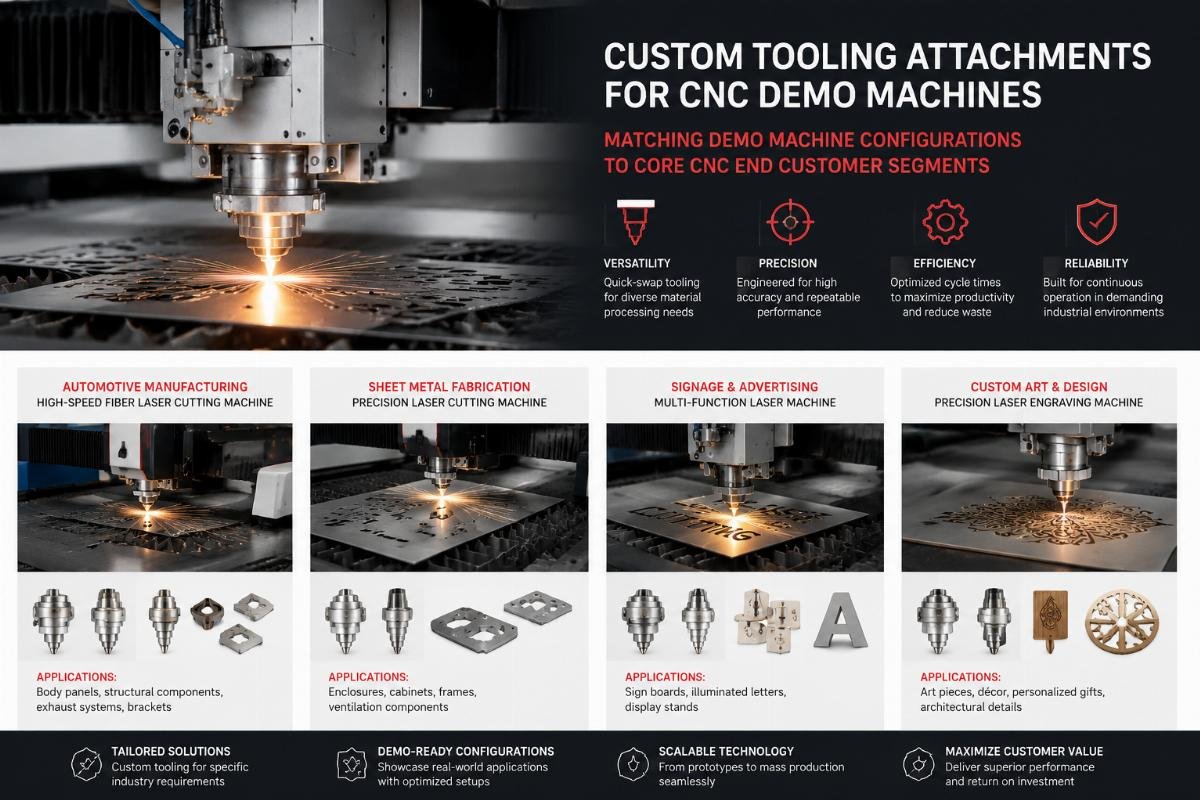
- Tooling Kit Investment – Purchase a $1,200 interchangeable tooling kit for your base demo unit that covers all 5 core end customer segments.
- Test Material Prep – Stock 3-4 common material types for each end customer segment to run quick on-demand test cuts during demos.
- Scenario Walkthrough Script – Prepare a 15-minute walkthrough for each segment that shows the demo machine solving their most common production pain points.
How to control the after-sales risk of loaned demo machines?
Choosing a manufacturer that provides 3-year warranty and 24/7 support can basically eliminate the after-sales risk of demo machines in the loan cycle. Most distributors worry that loaning demo machines will lead to high after-sales maintenance costs, but that risk is almost entirely mitigated if you select the right supplier partner.
| After-Sales Risk Point | Self-Managed Demo Program Risk | Supplier-S
