

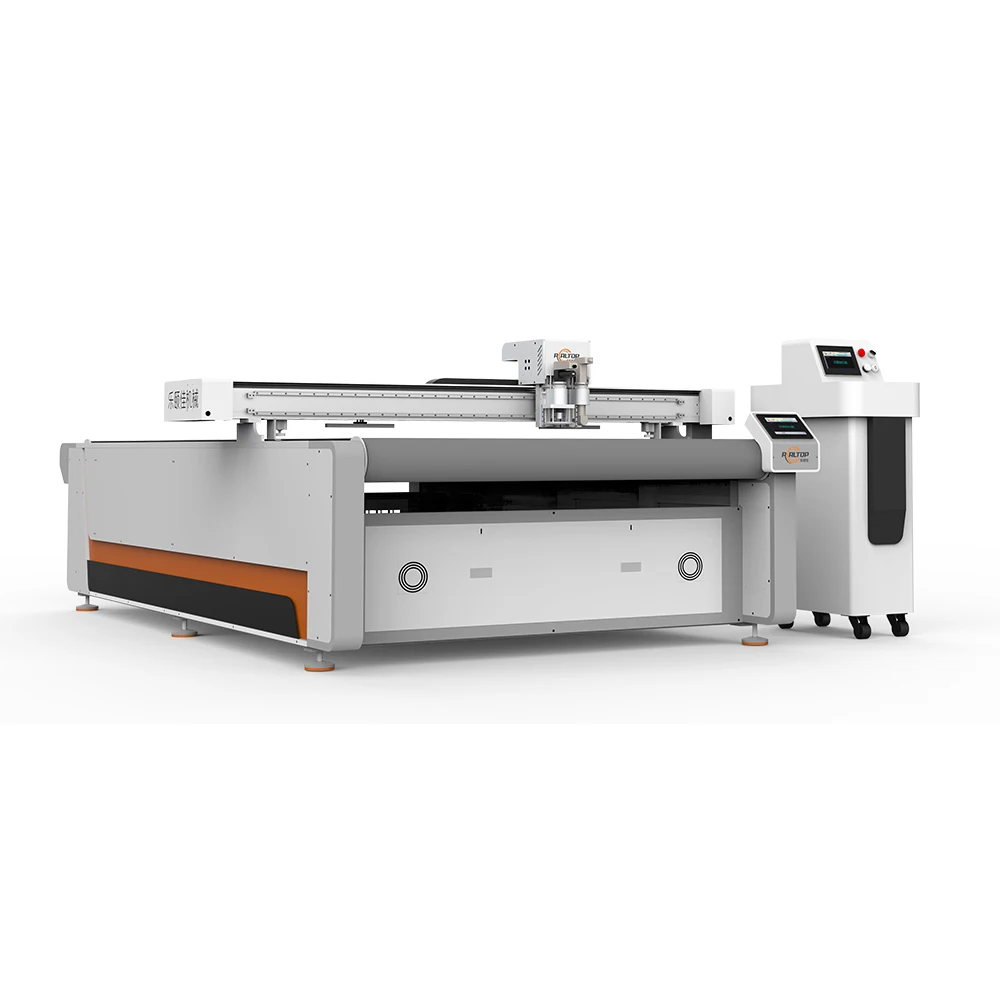
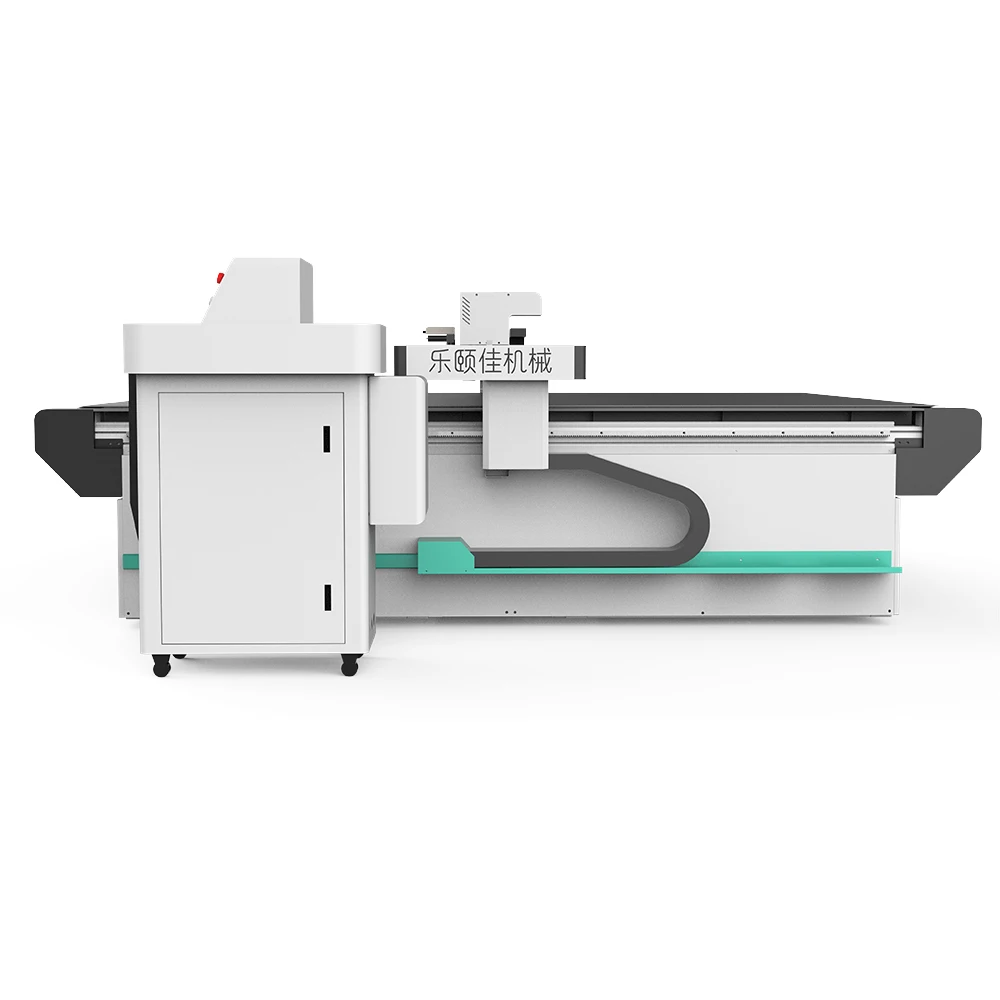
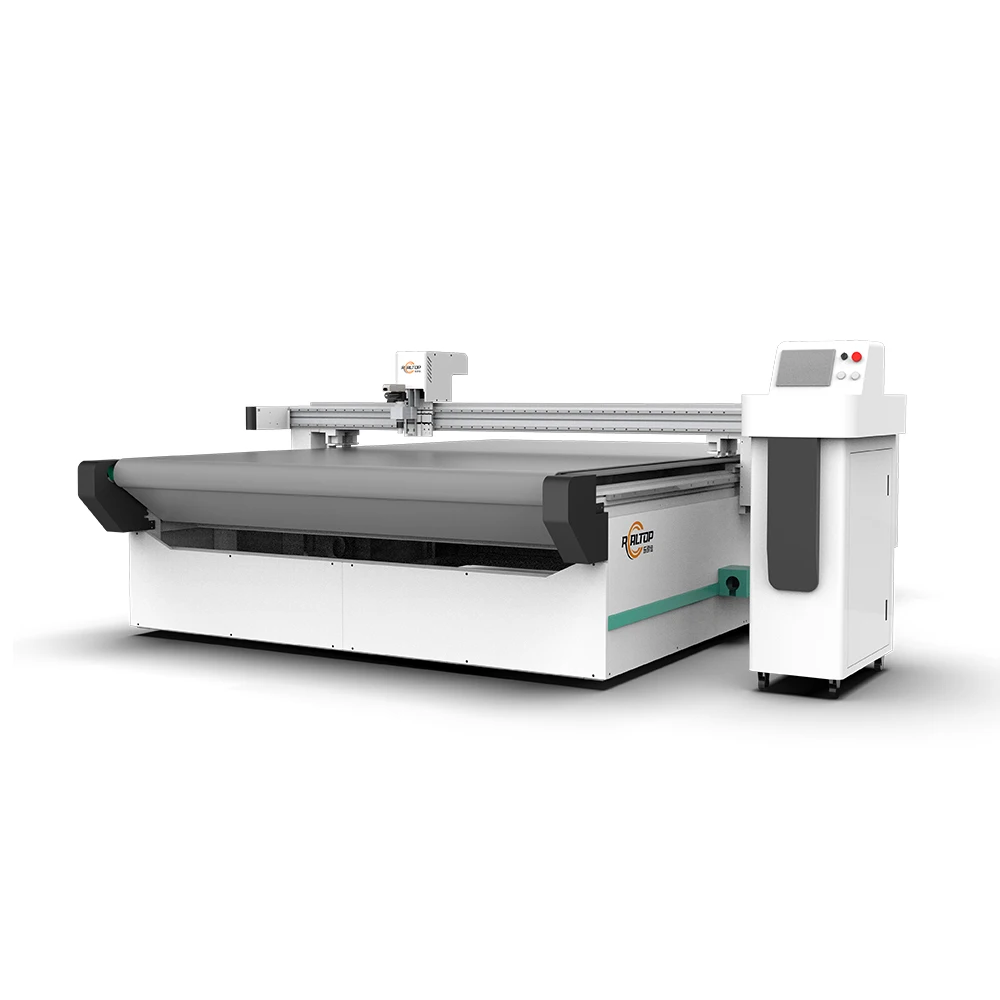
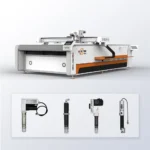
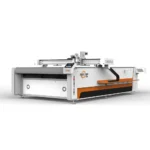
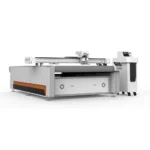
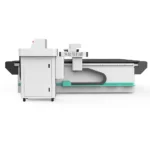

-
 Courier delivery
-
 DHL Courier delivery
-
 Warranty 1 year
-
 Free 30-Day returns

In-House Design Control — Every 1625 cutting table is developed and assembled by the same engineering team that validates your material sample before dispatch.
Technical Specifications
| Parameter | Value |
|---|---|
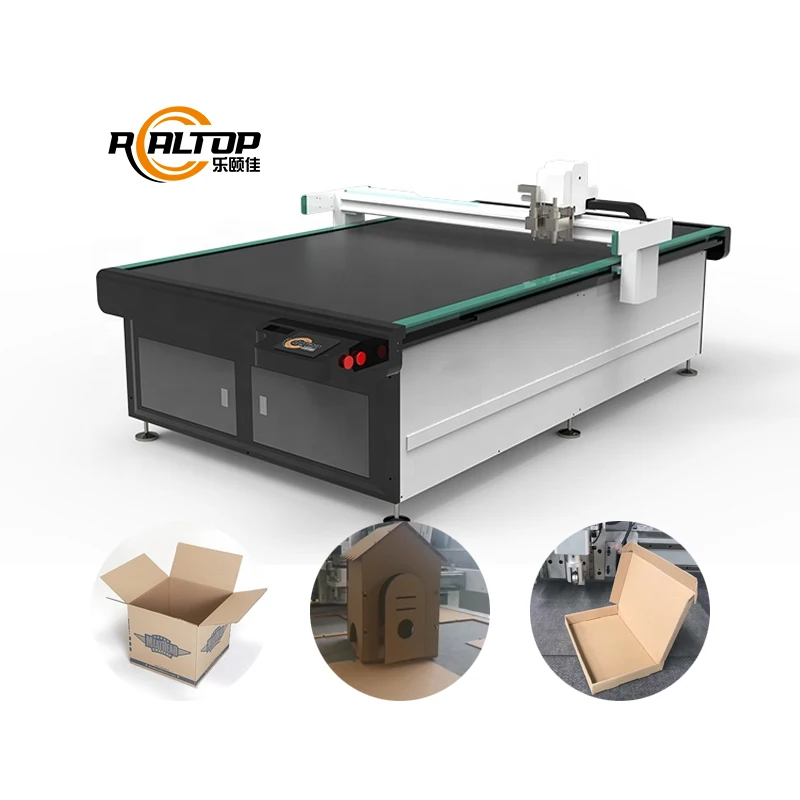
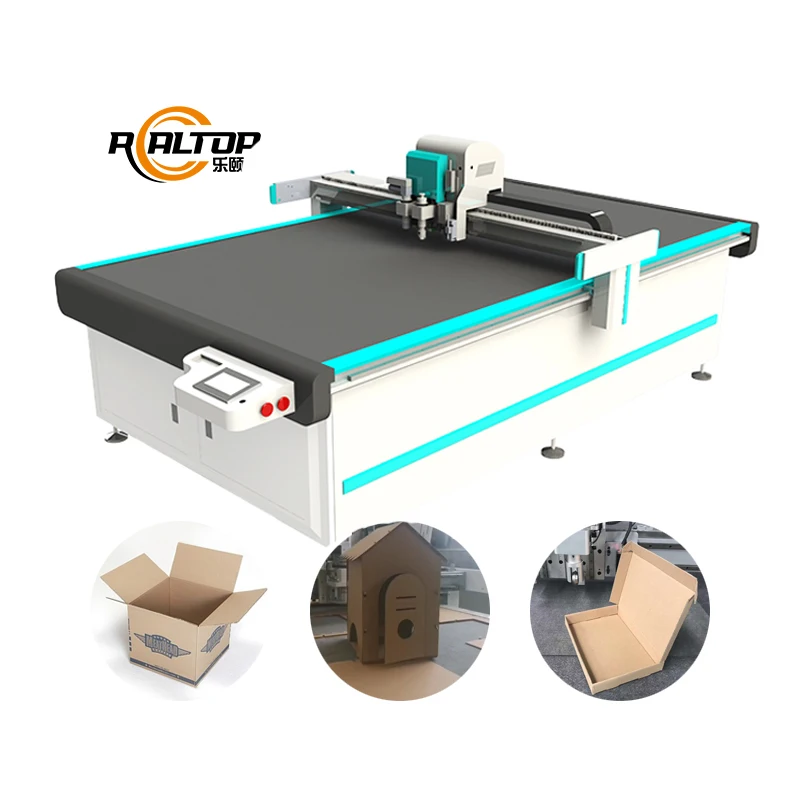
| Product Type | CNC Oscillating Knife Cutting Machine |
| Model | 1625 |
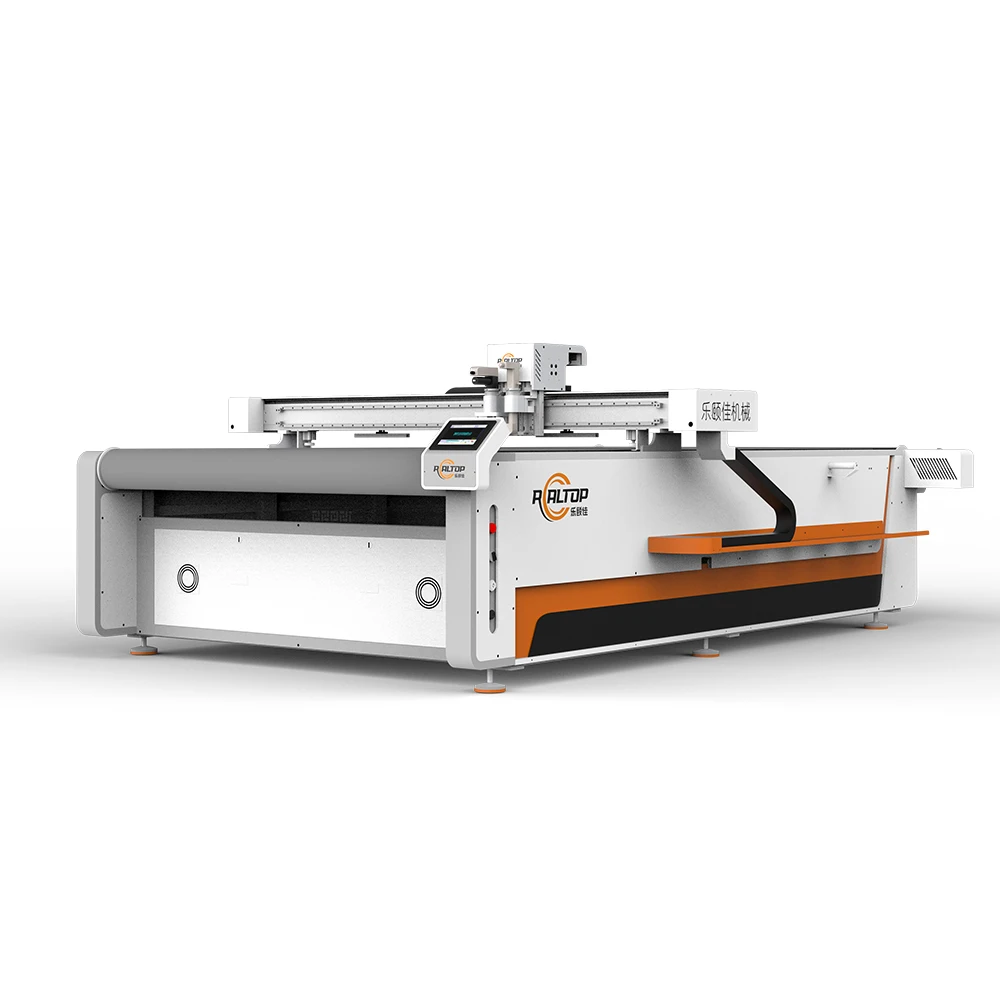
| Working Area | 1600×2500 mm |
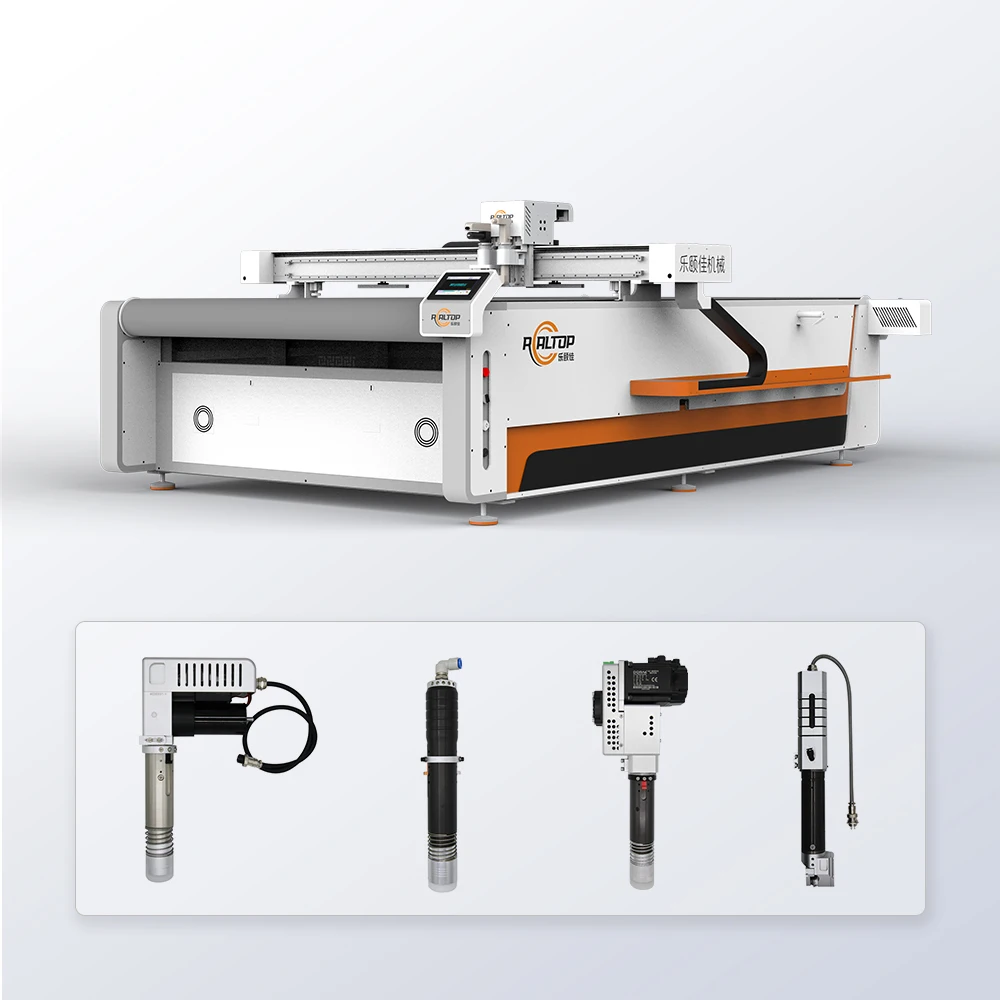
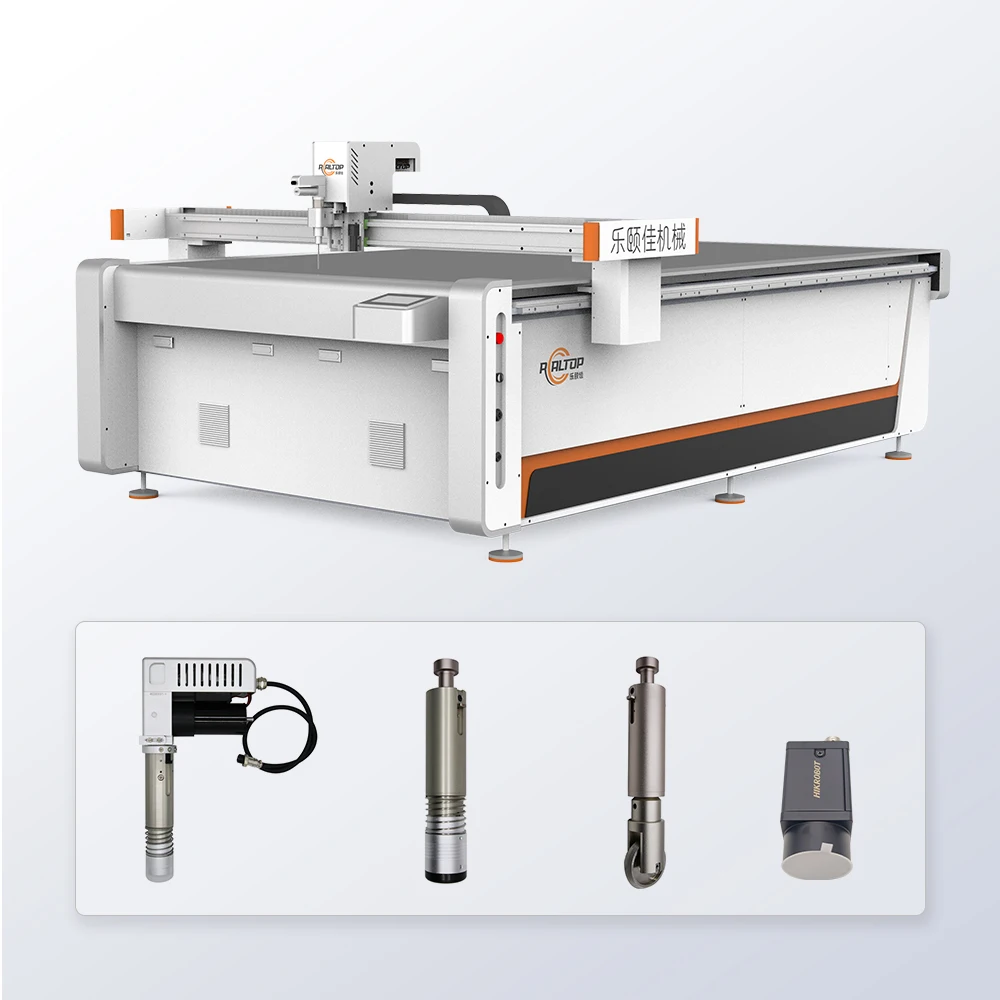
| Tool Head Options | Oscillating knife, Driven rotary knife, Creasing wheel, Kiss cutting tool, Pneumatic knife, Milling tool, V groove knife |
| Cutting Speed | 0–2000 mm/s (basis not stated in source — confirm material / thickness / tool head) |
| Cutting Thickness | ≤ 30 mm (basis not stated in source — confirm material type) |
| Positioning Accuracy | ±0.1 mm |
| Vacuum Pump | 9 kW |
| Vacuum Table | Aluminum bellows vacuum table |
| Servo Motor Options | Panasonic, Delta, Dorna |
| Voltage Options | 110V, 220V, 380V (frequency not stated in source — confirm 50/60Hz) |
| Control System | PLC control panel |
| Compatible File Formats | PLT, DXF, AI, PDF |
| Safety Devices | Infrared sensor, emergency stop |
| Machine Dimensions | 3300×2100×1350 mm |
| Display Language Options | English, Russian, Italian, Chinese; custom languages available |
| Certification | CE (2026) |
Application Suitability
| Application | Material or Output |
|---|---|
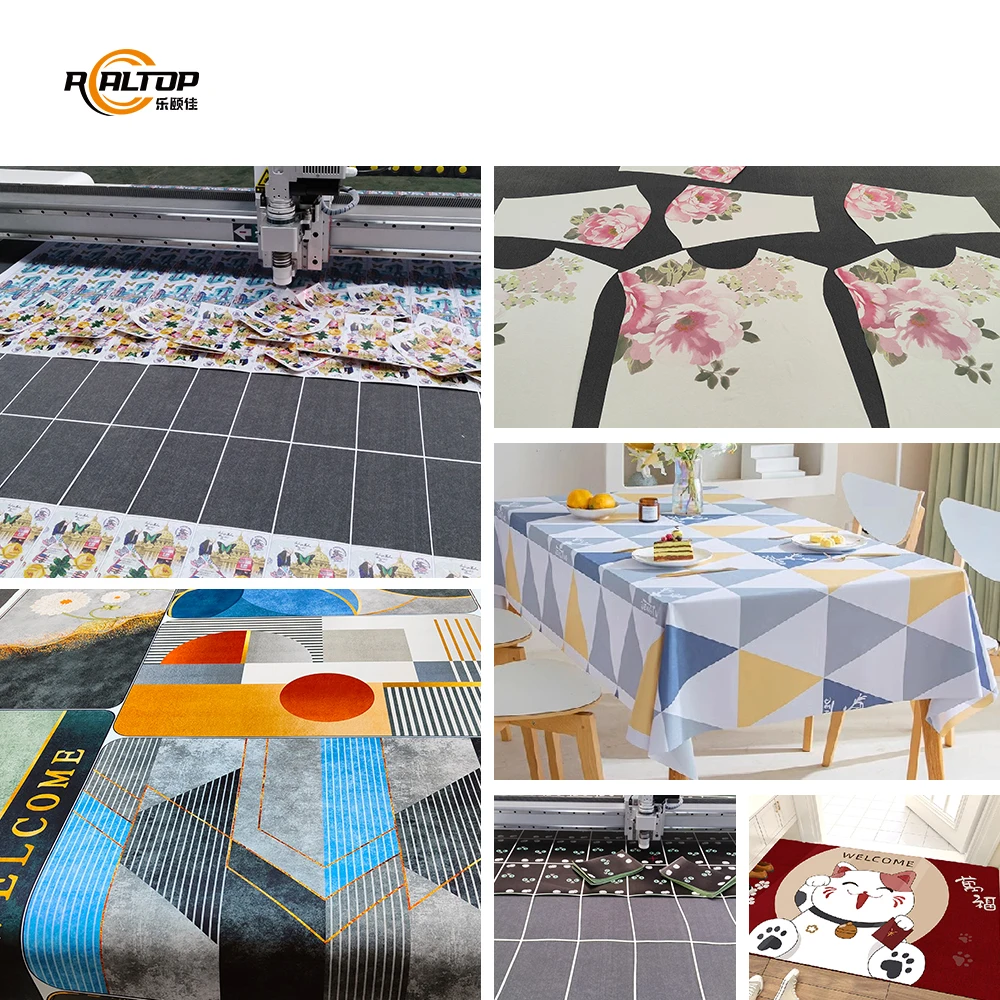
| Apparel manufacturing | Suits, knitwear, lace, complex pattern-matched fabrics |
| Automotive interiors | Seat fabrics, carpets, PVC mats requiring burr-free cold cuts |
| Home textiles | Sofa fabrics, curtains, rugs processed in multi-layer stacks |
| Composite material processing | Carbon fiber prepreg, aramid, specialty materials without delamination |
Why Working Area Alone Fails Fabric and Foam Producers
A buyer once specified a cutting table purely on bed size, only to discover the tool head could not penetrate their coated composite at production speed. Cutting capability depends on the interaction between material structure, tool selection, and vacuum hold-down — not square footage.
I spent years on the assembly floor before moving into technical sales. One order stands out: a customer sent a sample swatch of plain woven fabric, we dialed in the oscillating knife parameters, and the machine ran clean. When full production started, they were actually running a coated composite laminate. The blade loaded up, edges frayed, and an entire batch had to be reworked. Since that job, I insist on sample cutting with the actual production roll before any CNC oscillating knife cutting machine manufacturer ships equipment. [NEED_CITE:]
Tool Head Selection Dictates Edge Quality
The 1625 supports seven distinct tool heads, and choosing among them is not a cosmetic decision. An oscillating knife handles dense woven textiles and foam by vibrating at high frequency, shearing fibers cleanly without dragging the weave. A driven rotary knife suits continuous long cuts on thin knits where speed matters more than corner precision. Pneumatic knife tooling works through thicker stacked plies where downward force must remain constant across the entire cut path. Each option is validated against your specific material before the machine leaves Jinan.
Vacuum Zoning and Material Stability on Small Parts
The aluminum bellows vacuum table on the 1625 provides full-surface adsorption across the 1600×2500 mm bed. This matters most when cutting small pattern pieces — collar stays, gasket profiles, or shoe uppers — where insufficient hold-down causes lift and blade deflection. The 9 kW vacuum pump maintains suction across the working envelope, and the table surface flatness keeps thin films and stretch knits from bridging or wrinkling during high-speed traverses. [NEED_CITE:]
Reading the Specs That Actually Affect Your Floor
Positioning accuracy of ±0.1 mm matters when nesting dozens of garment panels from a single lay — accumulated drift across a long cut path wastes expensive fabric. The PLC control panel centralizes tool head selection, vacuum zoning, and speed parameters in one interface, reducing setup errors between jobs. Servo motor selection across Panasonic, Delta, and Dorna options allows matching drive response to your throughput requirements and local service availability. File format compatibility with PLT, DXF, AI, and PDF means your existing nesting workflow does not need rework before the machine runs production. Language customization on the control display reduces operator errors in multilingual workshops.
What Happens When the Configuration Guess Is Wrong
A wrong tool head on coated foam produces crushed cells and ragged edges that fail downstream quality checks. Insufficient vacuum zoning on small leather pieces lets the material shift mid-cut, scrapping nested layouts. A control panel locked to a language your operators cannot read slows changeover and invites parameter errors during shift handoffs. These failures do not show up on a spec sheet — they surface only after installation, when rework costs are already compounding. [NEED_CITE:]
Why Buyers Source This CNC Oscillating Knife Cutting Machine Manufacturer
Realtop designs both knife and laser cutting platforms in-house, so the recommendation starts from your material — not from whichever technology the catalog happens to push. The 1625 frame, motion system, and tool carriage are built and tested in the same Jinan facility that handles final assembly. Sample cutting on your actual production material is mandatory before quotation, not an optional courtesy. Electrical schematics and voltage confirmation are documented per destination market before the machine ships. The software license and file format compatibility note travels with the documentation package, so your CAD team can verify integration on day one. [NEED_CITE:]
Documentation & Verification
- Machine specification sheet listing every configured option for the 1625
- Electrical schematic and voltage confirmation matching your site supply
- Tool head and table configuration list tied to your tested material
- Sample cutting report run on your actual fabric or composite roll
- Factory test record with positional accuracy and vacuum performance data
- Software license and DXF/PLT/AI/PDF compatibility confirmation note
Installation, Commissioning & Support
- Machine footprint of 3300×2100 mm requires level concrete with anchor provisions
- Dedicated circuit matching confirmed voltage (110V/220V/380V) for the 9 kW vacuum pump plus servo loads
- Unit ships fully assembled — verify door clearances and overhead crane access before delivery
- First-run parameter calibration performed on your material with tool head tuning and vacuum zoning
- Operator training covers PLC panel navigation, tool change procedure, and nesting file import
- Spare parts list identifies blades, vacuum seals, and drive belts specific to your 1625 configuration
What We Need to Move Forward
Send your actual production material — not a catalog swatch — along with target thickness, daily volume, and the file format your nesting software outputs. Confirm your facility voltage, frequency, and preferred control language so electrical and interface specifications are locked before production begins. If your line includes upstream spreading or downstream sorting, share those integration points so the 1625 configuration fits the workflow.
Frequently Asked Questions
Q: How do you confirm the 1625 handles my material thickness before shipment?
A: We run sample cuts on your actual production material using the configured tool head. The test validates edge quality, achievable cutting depth, and speed under real conditions. A written report documents results, and parameters are saved to the PLC panel so your operators start from a proven baseline.
Q: Which tool head fits my fabric — oscillating, rotary, or pneumatic?
A: Selection depends on material structure, thickness, and edge quality requirements. Woven and coated textiles typically suit oscillating knives; thin continuous knits favor rotary tooling; thick multi-layer stacks call for pneumatic knives. We test each option on your sample and recommend based on measured edge quality, not assumption.
Q: Will my existing DXF or AI nesting files work without conversion?
A: The 1625 software accepts PLT, DXF, AI, and PDF formats. We confirm file compatibility during the sample phase by importing your actual production files and verifying geometry, kerf compensation, and tool path output before the machine ships.
Q: What voltage and language options ship with my machine?
A: Voltage is configurable at 110V, 220V, or 380V, and frequency is confirmed for your market before production. Control panel language defaults to English, Russian, Italian, or Chinese, with custom languages available. Both specifications are documented in the electrical schematic.
Q: Can the 1625 working area or tool configuration be customized for my line?
A: The in-house design team can adjust table dimensions, add or swap tool heads, and modify vacuum zoning to match your production requirements. All customizations are documented in the specification sheet and validated through factory testing before dispatch.
You may also like

商品评价
Clear filtersThere are no reviews yet.