


-
 Courier delivery
-
 DHL Courier delivery
-
 Warranty 1 year
-
 Free 30-Day returns

Factory-built cutting configurations — each tool head and vacuum zone is specified against your fabric sample before the machine leaves Jinan, not assumed from a catalog page.
Technical Specifications
| Parameter | Value |
|---|---|
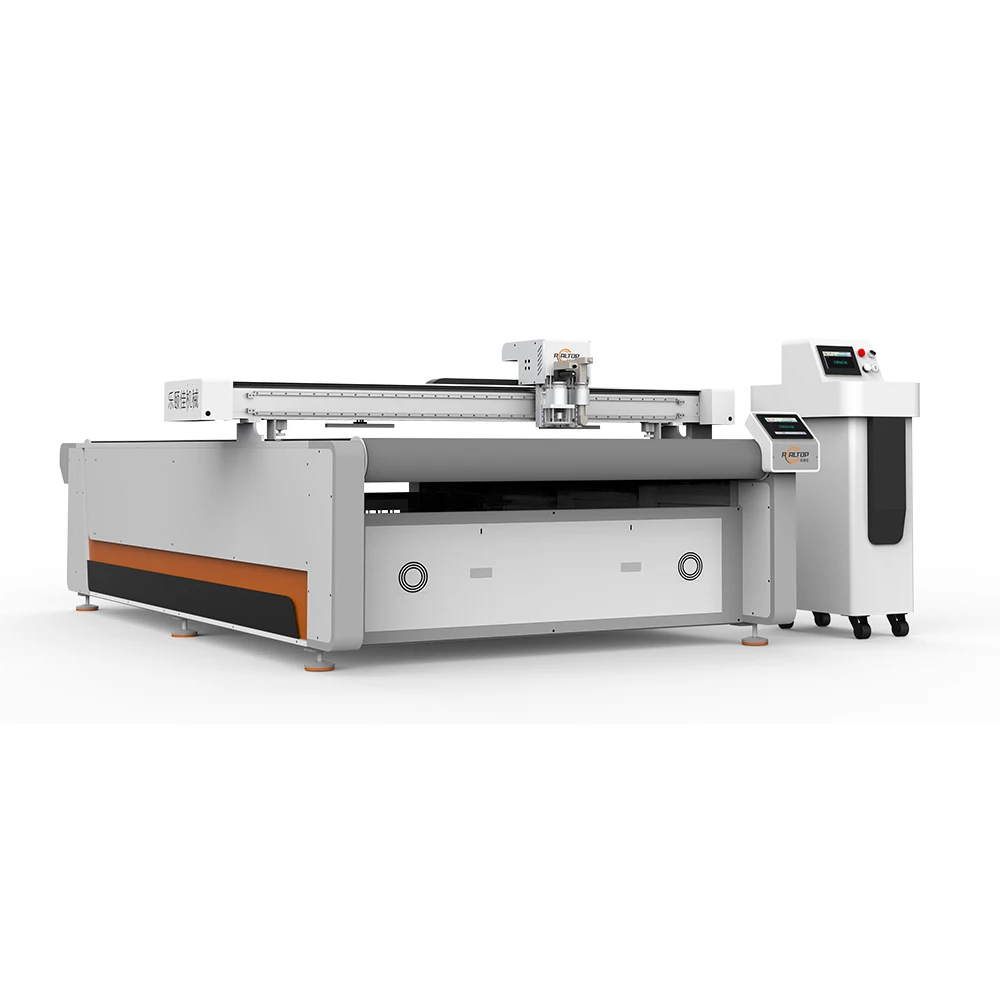
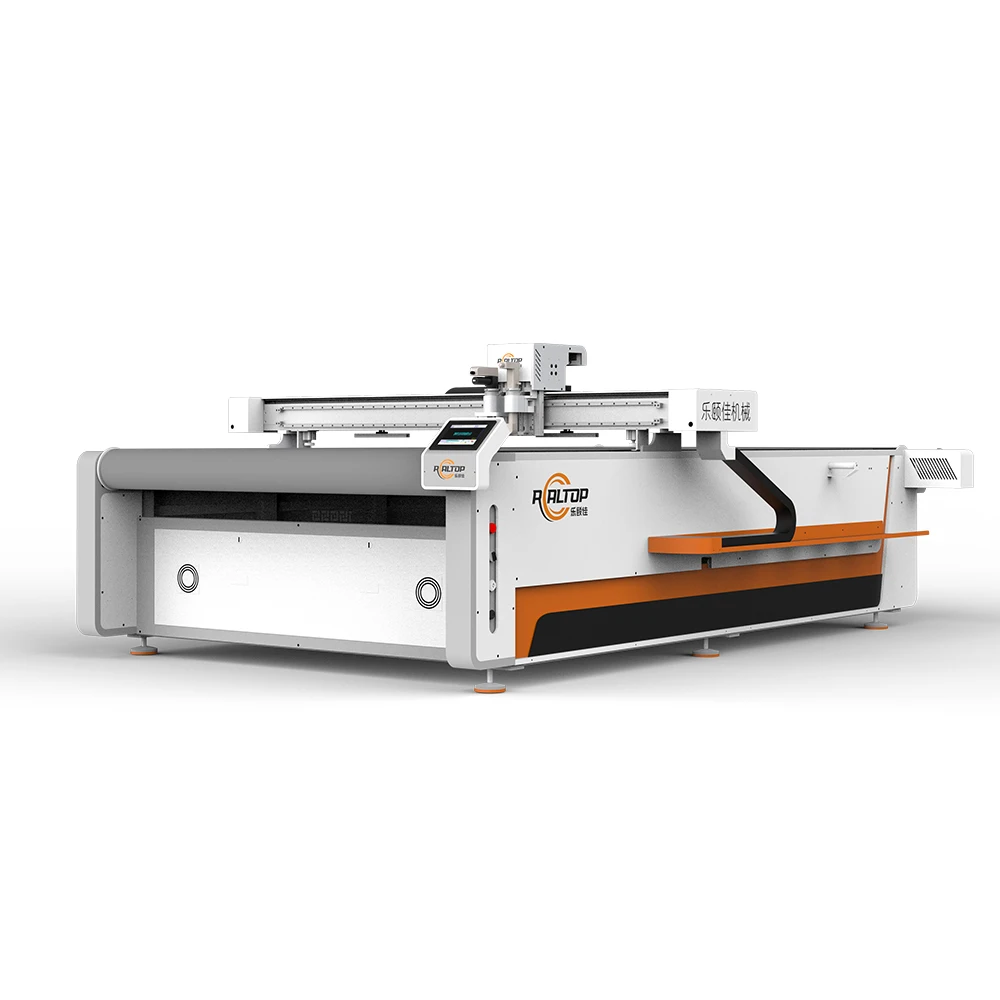
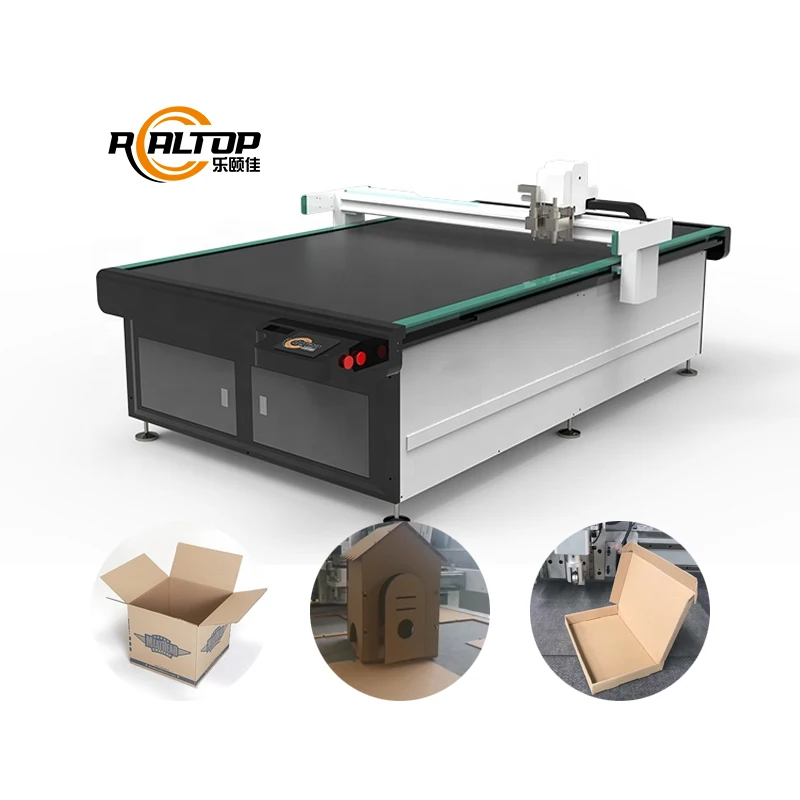
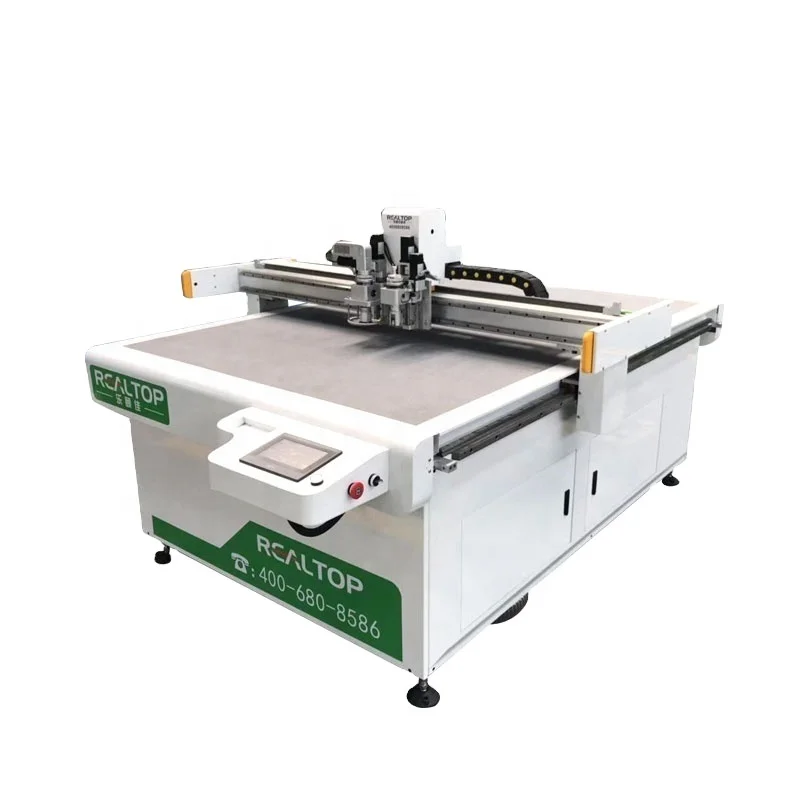
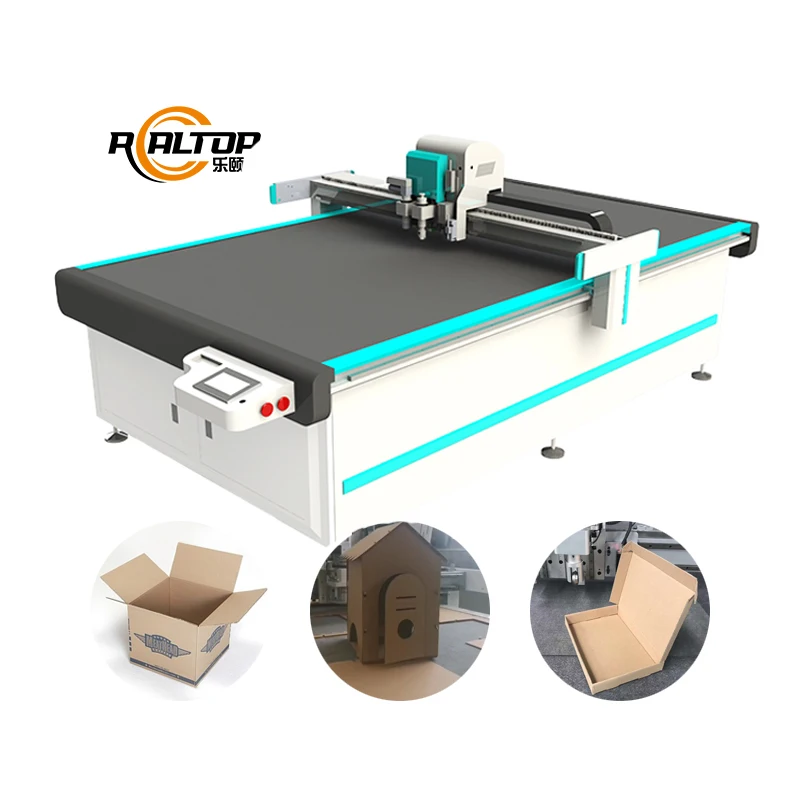
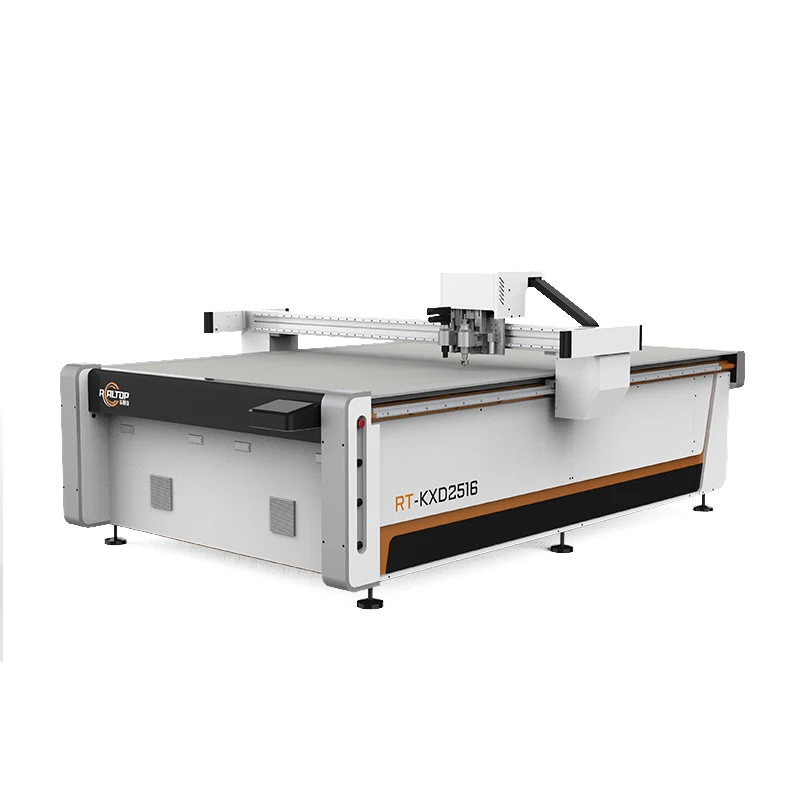
| Product Type | CNC Oscillating Knife Cutting Machine |
| Working Area | 1600×2500 mm |
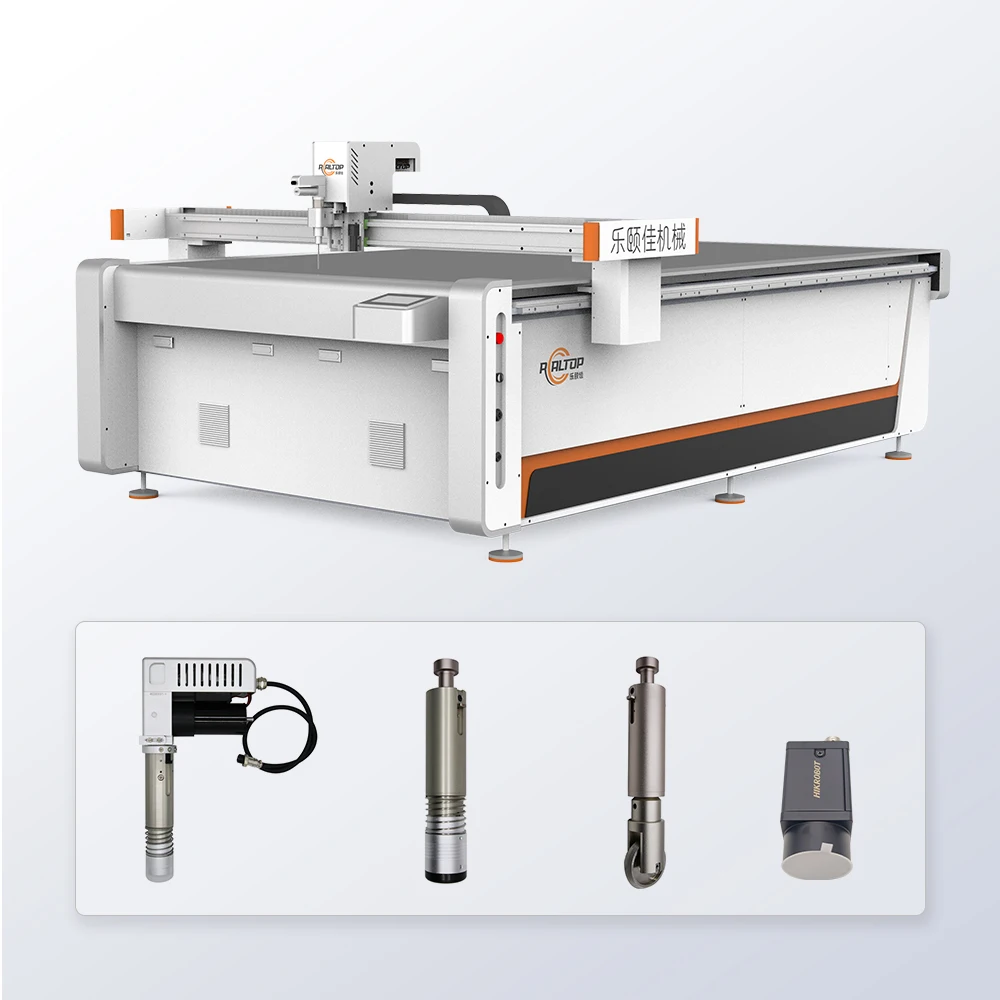
| Available Tool Heads | Oscillating knife, Driven rotary knife, Creasing wheel, Kiss cutting tool, Pneumatic knife, Milling tool, V groove knife |
| Applicable Materials | Fabric, Cardboard, Carton, Mats, PVC, EVA, Leather, Acrylic, Foam, PTFE, Rubber |
| Cutting Speed | 0–2000 mm/s |
| Cutting Thickness | Up to 30 mm (basis not stated in source — confirm block format, material, and layer count) |
| Cutting Accuracy | ±0.1 mm |
| Vacuum Pump | 9 kW |
| Voltage Options | 110V / 220V / 380V (frequency to confirm by destination market) |
| Supported File Formats | PLT, DXF, AI, PDF |
| Safety Devices | Infrared sensor, Emergency stop |
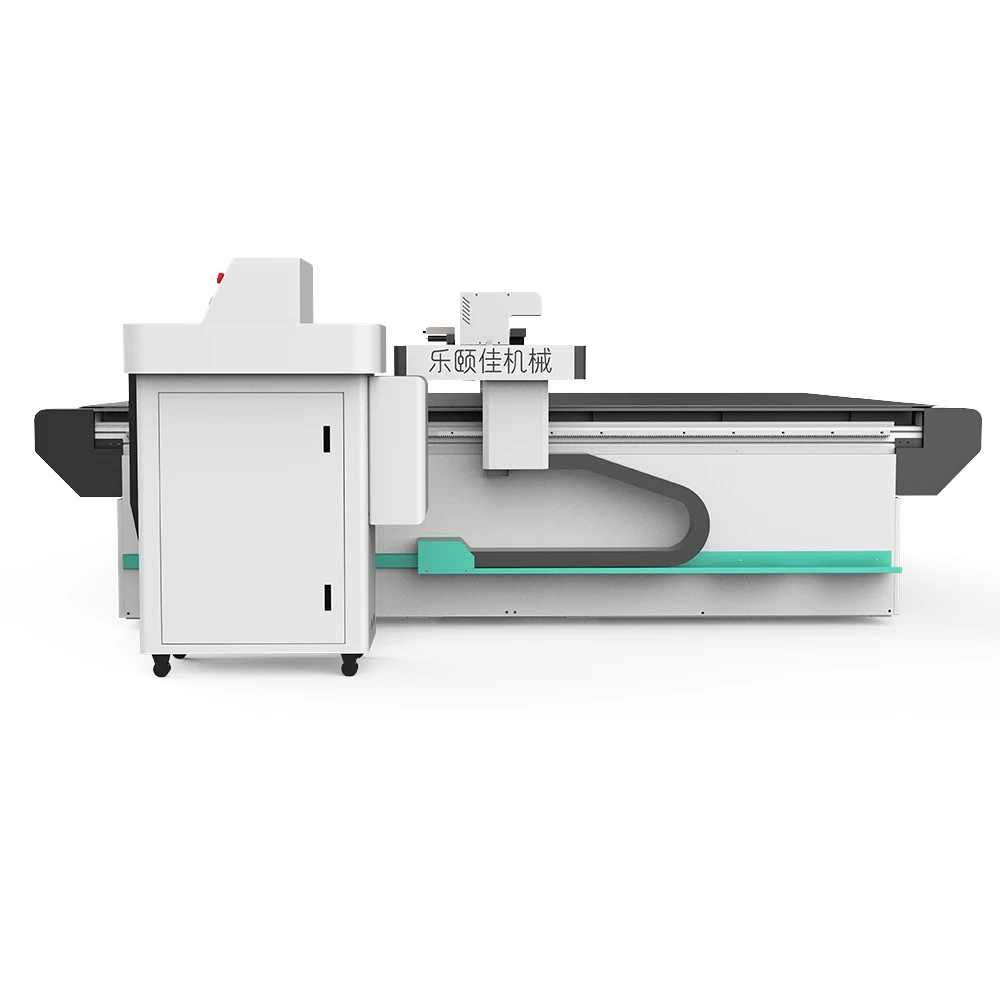
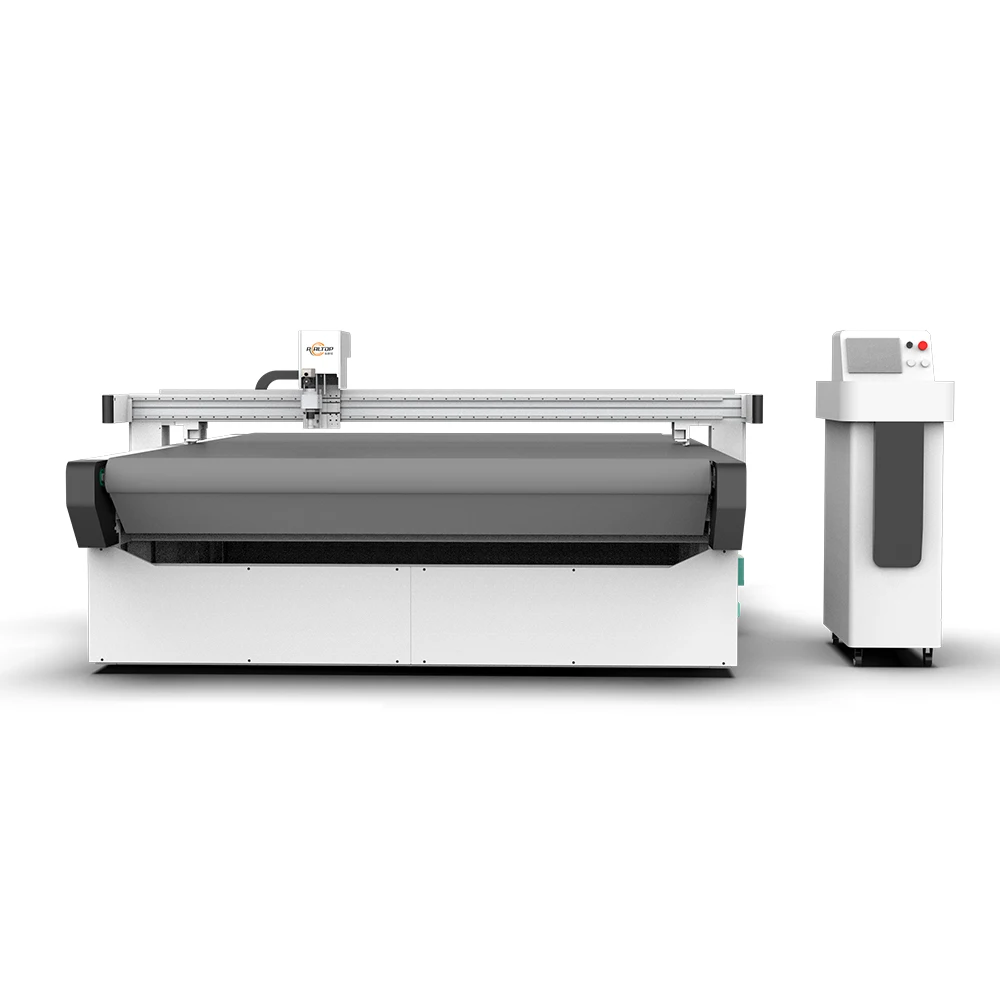
| Machine Dimensions | 3300×2100×1350 mm |
| Control System | PLC control panel with intuitive interface |
| Servo Drive Options | Panasonic, Delta, Dorna (source value — verify against current catalog) |
| Vacuum Table | Aluminum bellows vacuum table |
| Software Language | English, Russian, Italian, Chinese (other languages customizable) |
| Certification | CE |
Application Suitability
| Application | Material or Output |
|---|---|
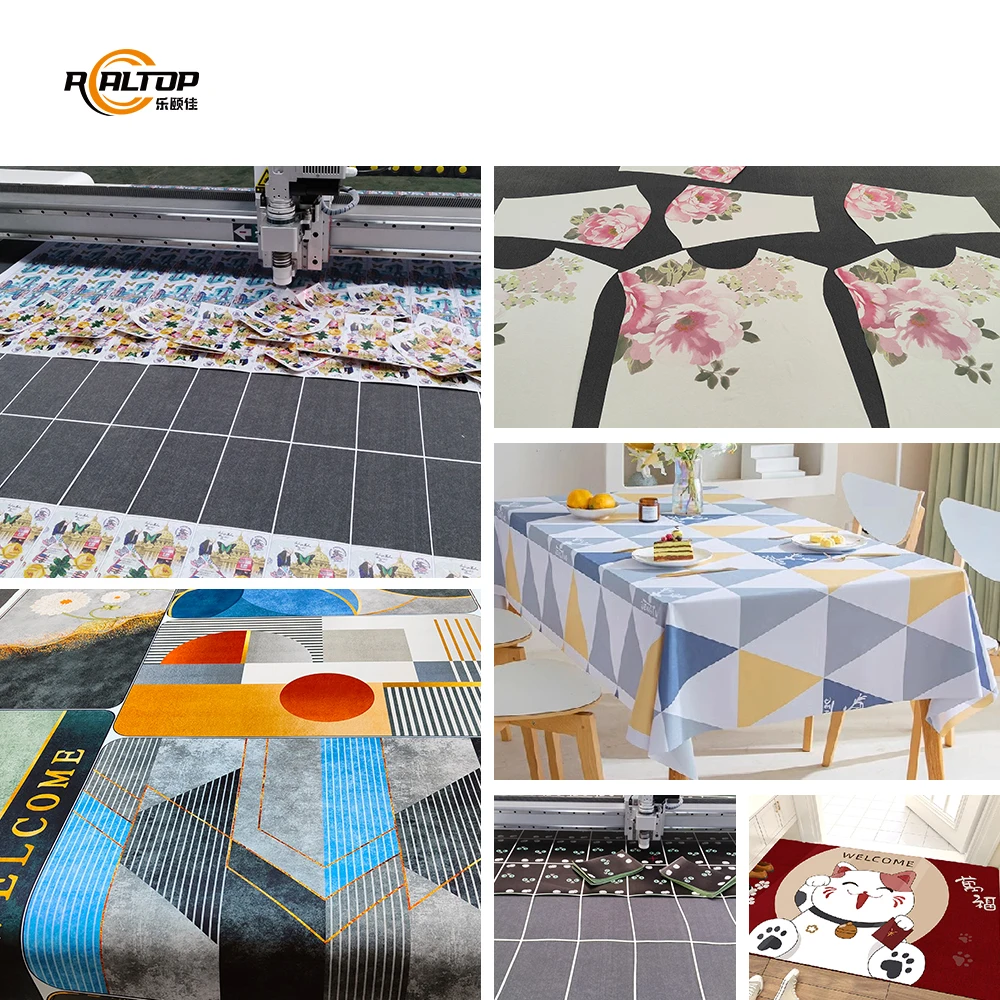
| Apparel manufacturing | Suits, knitwear, lace, complex woven fabrics, pattern-matching multi-layer layouts |
| Automotive interiors | Seat fabrics, floor carpets, PVC mats, headliner textiles |
| Home textiles | Sofa upholstery fabrics, curtains, area rugs, multi-layer blanket panels |
| Composite processing | Carbon fiber prepreg, aramid weaves, specialty layered materials |
Why Material Thickness Claims Fail Without a Sample Cut
A CNC Oscillating Knife Cutting Machine manufacturer that quotes cutting depth without testing your specific fabric stack is guessing — and guessing costs you rolled goods. The only valid thickness rating comes from running your actual material through the machine before the order is confirmed.
I once watched a workshop run high-stretch knit through an oscillating knife at standard parameters. The blade pulled threads across every edge, and two full rolls went to scrap. The spec sheet said 30 mm was fine, but knit at that tension behaves nothing like felt. After that, I started insisting on sample cuts before any configuration gets locked down. A fabric layer cutting machine must prove itself on your exact lay height, weave density, and backing type — not on a generic chart [NEED_CITE: fabric cutting behavior varies by weave density, stretch coefficient, and backing].
Frame Rigidity and Motion Integrity at Full Bed Size
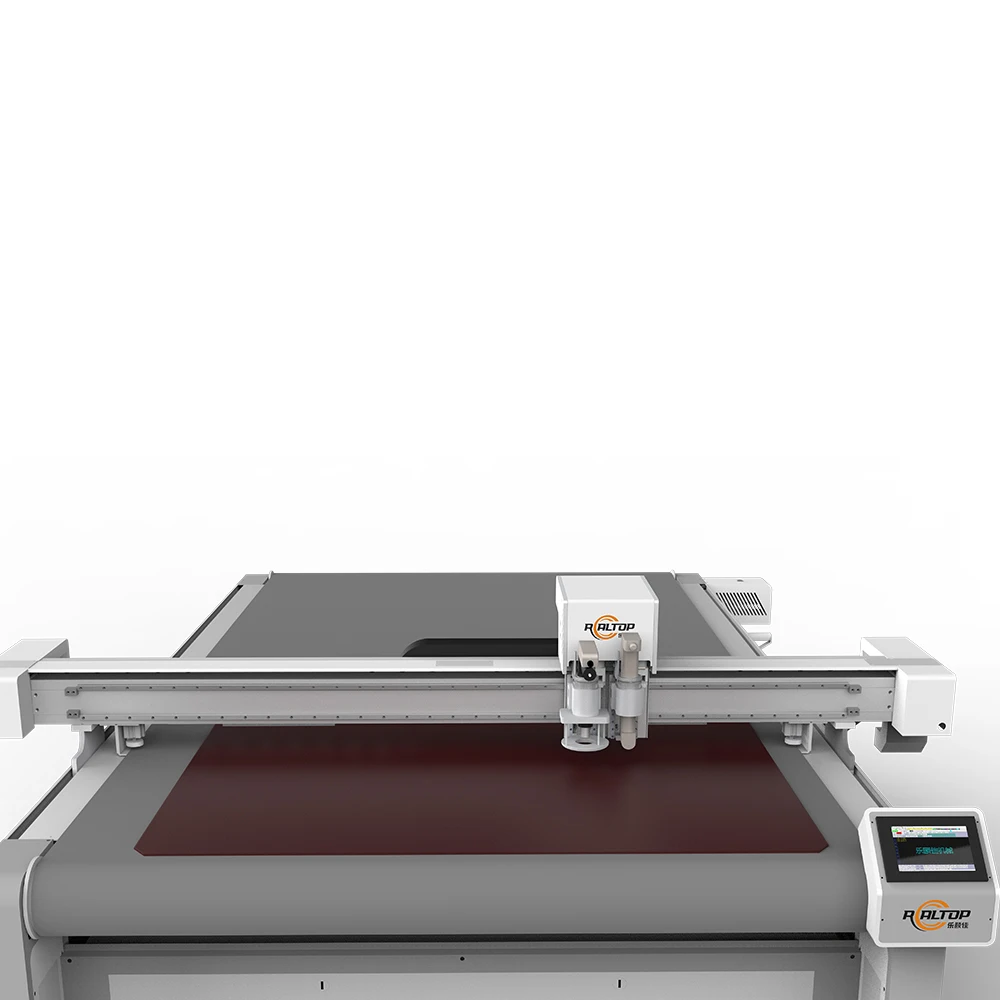
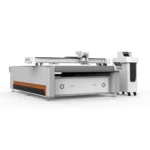
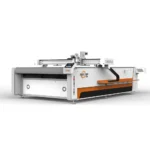
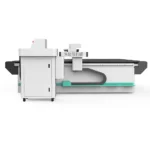
The 1600×2500 mm working area demands a frame that resists deflection when the knife head accelerates across long fabric plies. This CNC Oscillating Knife Cutting Machine uses a welded steel structure with machined mounting surfaces, so the gantry maintains alignment across the full stroke. Aluminum bellows beneath the cutting surface keep the vacuum seal intact even when flexible fabrics shift under tool pressure.
Servo drive options from Panasonic, Delta, or Dorna hold the ±0.1 mm positioning tolerance during continuous cutting passes, which matters when pattern pieces must nest tightly against each other on expensive fabric rolls.
Vacuum Zoning and Material Hold on Flexible Fabrics
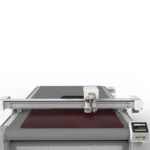
Flexible textiles lift and shift the moment a blade engages them. The aluminum bellows vacuum table on this machine creates a consistent suction field across the full bed, but zoning is what keeps small pattern pieces from drifting during the final cuts. When a garment marker includes collar tabs and cuff strips nested beside large front panels, the vacuum must hold every piece equally until the head clears [NEED_CITE: vacuum table zoning requirements for small garment pattern pieces].
Without proper hold-down, the oscillating knife catches lifted fabric and produces ragged or shifted edges — defects that show up after sewing, not on the cutting table.
Reading the Specs That Actually Matter for Garment Cutting
The seven available tool heads are not interchangeable options — each serves a distinct material behavior. An oscillating knife cuts woven fabrics and thin foams cleanly at high speed, while a driven rotary knife handles thicker knits and multi-layer stacks without pulling threads. A pneumatic knife drops through dense materials like carpet and heavy PVC mats where a rigid blade would deflect.
The 9 kW vacuum pump generates the suction needed to keep layered fabric flat, but its effectiveness depends on table flatness and seal integrity rather than raw power alone. Cutting speed ranges from 0 to 2000 mm/s, though actual production speed depends on material resistance and pattern complexity — a straight panel cut runs faster than a notched collar with tight radii.
PLC control with multi-language support means operators read prompts in their working language, reducing setup errors when switching between garment styles or fabric batches.
The Cost of Wrong Tool Head Selection
I have seen buyers choose a machine based on bed size and then discover the oscillating knife crushes their foam gasket instead of slicing it. The wrong tool head on layered fabric produces frayed edges, delaminated composites, or crushed pile on velvet — and none of these defects appear until the material is already cut [NEED_CITE: tool head and material mismatch defects in textile cutting].
Replacing two rolls of imported suiting fabric costs far more than the time spent running a sample cut first. A buyer who skips this step absorbs the loss silently and blames the blade.
Why Source This Machine From REALTOP
REALTOP designs and fabricates this machine in-house, controlling frame welding, motion system integration, and tool head mounting rather than assembling purchased sub-assemblies. This means a buyer requesting a driven rotary knife for knitwear gets a head mount engineered for that specific tool’s vibration profile, not an adapter plate.
The factory tests every unit with power on before crating, recording vacuum pressure, axis travel, and cutting accuracy against spec. Voltage and plug type are matched to the destination market’s electrical standard before the machine ships — not discovered on arrival.
Software file format compatibility is confirmed during the inquiry stage, so your existing DXF or PLT nesting files load without conversion workarounds. The in-house design team adjusts working area, tool head count, and conveyor integration based on production volume rather than pushing a fixed configuration.
CE certification covers the machine for European machinery directive compliance, and the factory maintains documentation for customs and inspection requirements [NEED_CITE: CE machinery directive compliance for industrial cutting equipment].
Documentation & Verification
- Machine specification sheet listing confirmed tool heads and vacuum table configuration for your fabric type
- Electrical schematic with voltage, frequency, and plug type matched to your facility’s supply
- Sample cutting report produced on your own fabric roll before order commitment
- Factory test record documenting axis accuracy, vacuum pressure, and safety device function
- Operation and maintenance manual in your selected control language with spare parts list
- Software license with confirmed PLT, DXF, AI, and PDF file format compatibility
Installation, Commissioning & Support
- Floor space allocation of at least 3300×2100 mm with clearance for material feed and operator access on two sides
- Dedicated electrical circuit matching confirmed voltage (110V/220V/380V) with appropriate breaker rating for the 9 kW vacuum pump plus servo loads
- Machine arrives partially assembled — gantry and control panel require on-site mounting and alignment verification
- First-run commissioning includes vacuum zone balancing, tool head calibration, and test cuts on your production fabric
- Operator training covers PLC interface navigation, file import workflow, tool change procedure, and nesting software setup
- Spare blade stock and wearable vacuum seal components recommended for first-year maintenance intervals
Before You Request a Quote
Send your fabric type, layer count, and typical marker dimensions so the tool head and vacuum configuration can be specified accurately. Confirm your workshop’s available voltage and frequency, and let us know the control language your operators need. If you have existing nesting files, share a sample so we verify software compatibility before production begins.
Frequently Asked Questions
Q: How is cutting thickness verified against my specific fabric and layer count?
A: We run a sample cut using your actual material at the exact ply height you intend to produce. The tool head, blade type, oscillation frequency, and vacuum pressure are all adjusted during this test. You receive a cutting report showing edge quality and dimensional accuracy before the machine configuration is finalized. This eliminates guesswork on knitwear, stretch fabrics, or layered composites.
Q: What voltage, plug type, and control language options are confirmed before shipment?
A: We match the machine’s electrical system to your facility’s supply standard — voltage, frequency, and plug type are all specified during the order confirmation. The PLC interface language is set to your preference from available options including English, Russian, Italian, and Chinese. Special languages can be configured for the control display and software menus.
Q: Can I send my own material for sample cutting before placing the order?
A: Yes, and this is standard practice for every fabric layer cutting machine we build. Ship us a roll or swatch of your production fabric, and we run it through the exact tool head and vacuum configuration planned for your order. You review the cut samples and the written report before committing.
Q: Which tool head is right for my material and production volume?
A: Oscillating knives suit woven fabrics and thin materials at higher speeds. Driven rotary knives handle stretch knits and multi-layer stacks without thread pull. Pneumatic knives cut dense carpets and heavy PVC. We recommend the configuration after reviewing your material type, thickness, and daily cutting volume.
Q: What does the factory build and testing process cover?
A: Every unit is fabricated, assembled, and tested in-house. The process covers frame welding, motion system installation, servo tuning, vacuum table sealing, and full-axis travel verification. A factory test record documents cutting accuracy, safety device response, and vacuum pressure before the machine is prepared for shipment.
You may also like

商品评价
Clear filtersThere are no reviews yet.