

Blog
¿Puedes aprender a manejar CNC por tu cuenta?

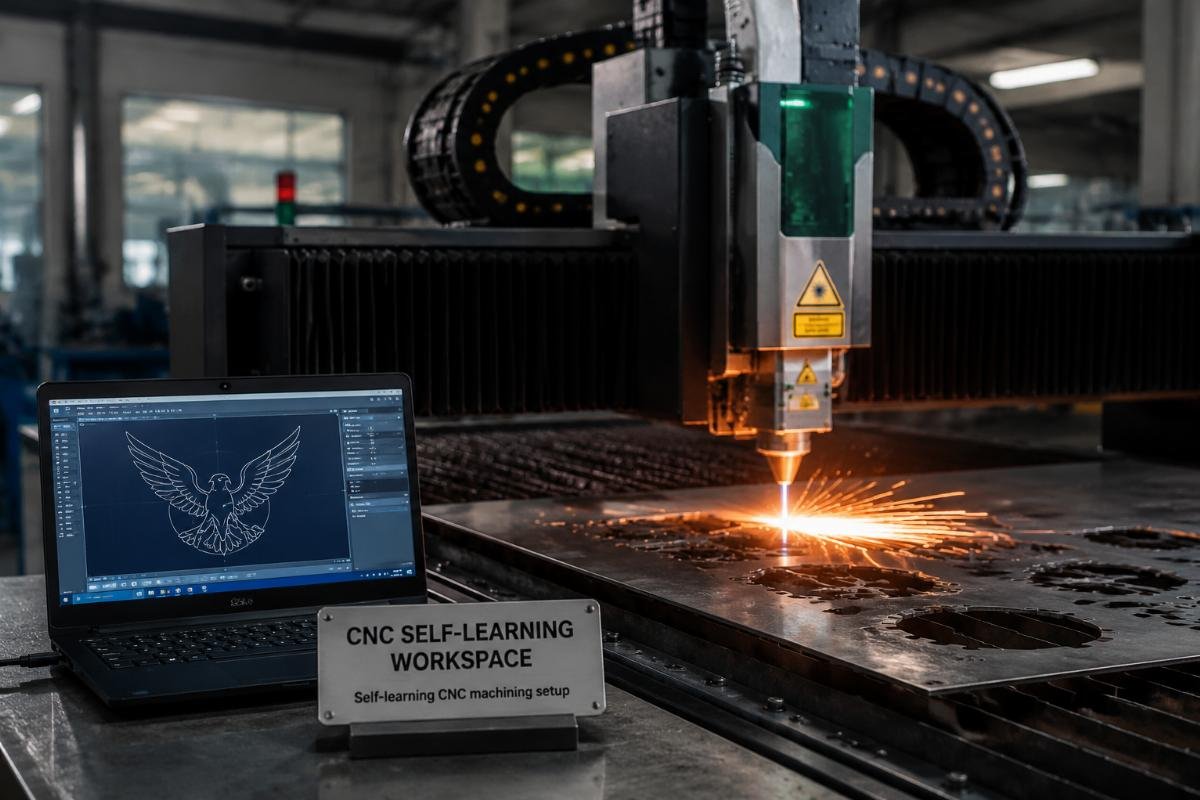
Can You Teach Yourself CNC Machining?
You're standing at a crossroads. Your factory needs a CNC cutting machine, but you don't have a CNC engineer on staff. The purchase cost is one thing—but who's going to operate it once it arrives?
Yes, you can teach yourself CNC machining for flexible materials cutting equipment, typically within 2-4 weeks for basic competency1. The learning curve differs dramatically between flexible materials cutters (packaging, leather, fabric) and metal CNC mills—for small manufacturers working with non-metal materials, self-learning is not only feasible but common, provided you understand the three distinct skill layers: software operation, material parameter tuning, and process optimization.
I talk to factory owners like you every week. The question you're really asking isn't whether CNC is hard—it's whether you'll be left stranded after the purchase, staring at an expensive machine you can't use. Let me show you what the real learning path looks like.
What Type of CNC Machining Are You Actually Learning?
You need to know this first: not all CNC machines are the same difficulty.
The term "CNC machining" covers two fundamentally different equipment categories. Metal CNC mills require understanding G-code programming2, tool offset calculations, and coolant systems. Flexible materials CNC cutters (for packaging, leather, fabric, composites, gaskets) use visual design software and automated tool path generation. The learning difficulty differs by a factor of 103.
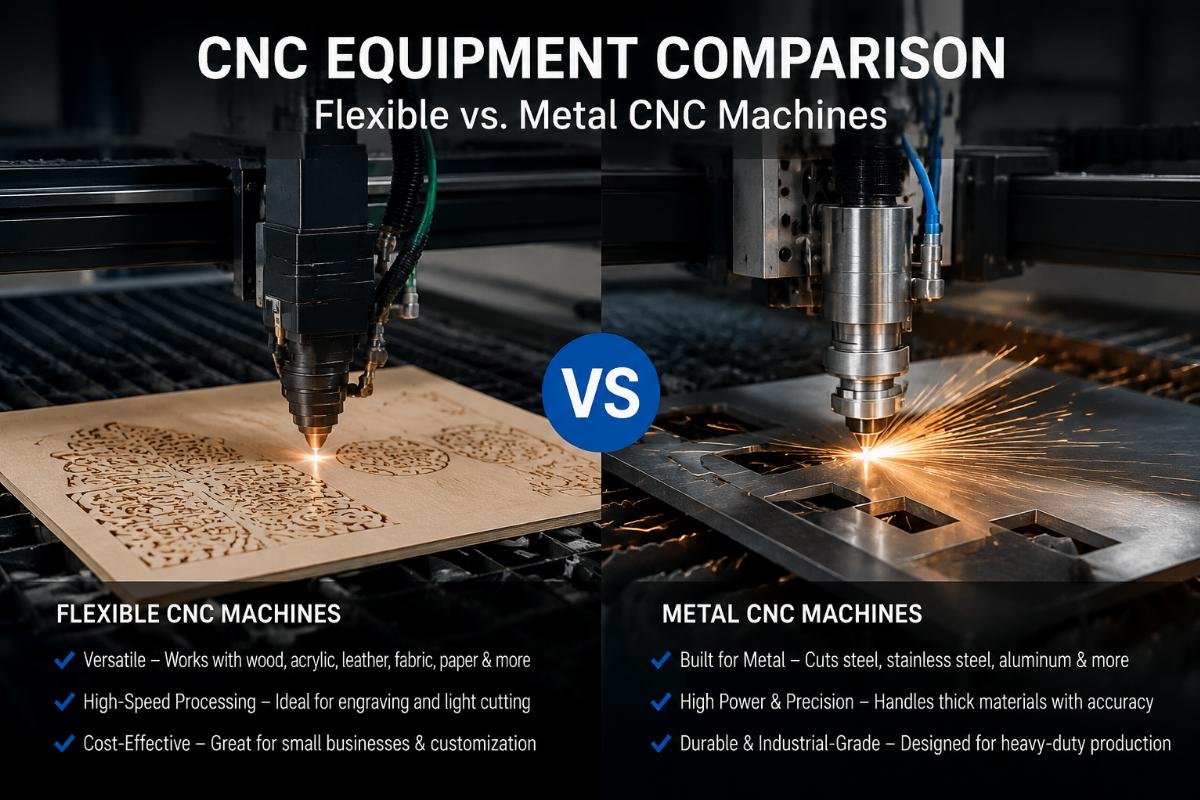
Most small factory owners I speak with are actually asking about flexible materials cutting machines—but they've been scared by stories about metal CNC programming complexity. This confusion wastes weeks of evaluation time.
Equipment Category Learning Comparison
| Equipment Type | Programming Method | Typical Learning Time | Technical Background Required |
|---|---|---|---|
| Metal CNC Mills | Manual G-code or CAM software | 3-6 months basic operation | Mechanical drawing reading, tooling knowledge |
| Flexible Materials CNC Cutters | Visual design software (AI, DXF import) | 1-2 weeks software operation | Basic computer file management |
| Parameter Tuning (Flexible) | Machine interface adjustment | 2-4 weeks material-specific | Material characteristics observation |
At Realtop, we manufacture flexible materials CNC cutting machines. I see customer onboarding patterns every month. The first operation question we receive is almost never about software—it's about material-specific cutting parameters. This tells me where the real learning bottleneck sits.
Why This Distinction Matters for Self-Learners
When a customer says "I have no CNC experience," I ask three clarifying questions:
- What materials will you cut? (This determines equipment type)
- Do you currently use design software like CorelDRAW or Adobe Illustrator? (This predicts software learning speed)
- Do you have someone who adjusts production equipment when results aren't perfect? (This identifies material tuning capability)
These questions reveal learning capacity far better than formal education credentials. I've seen garment factory managers with high school diplomas operate cutting machines proficiently in two weeks. I've also seen mechanical engineers struggle with leather cutting parameters for months because they rely on theoretical formulas instead of observing material behavior.
The specific materials you plan to process create your learning difficulty floor. Metal cutting requires understanding chip formation and tool wear. Flexible materials cutting requires understanding material tension, blade depth penetration, and multi-layer registration. These are different skill sets.
What Are the Three Learning Layers in CNC Operation?
Self-learning fails when people underestimate how many distinct skills CNC operation requires.
CNC cutting operation has three separate learning layers: software operation (converting designs to cutting files), material parameter tuning (blade depth, cutting speed, vacuum pressure), and process optimization (material utilization, production sequencing). Most self-learners master layer one quickly but get stuck at layer two because vendor documentation doesn't cover material-specific variables.
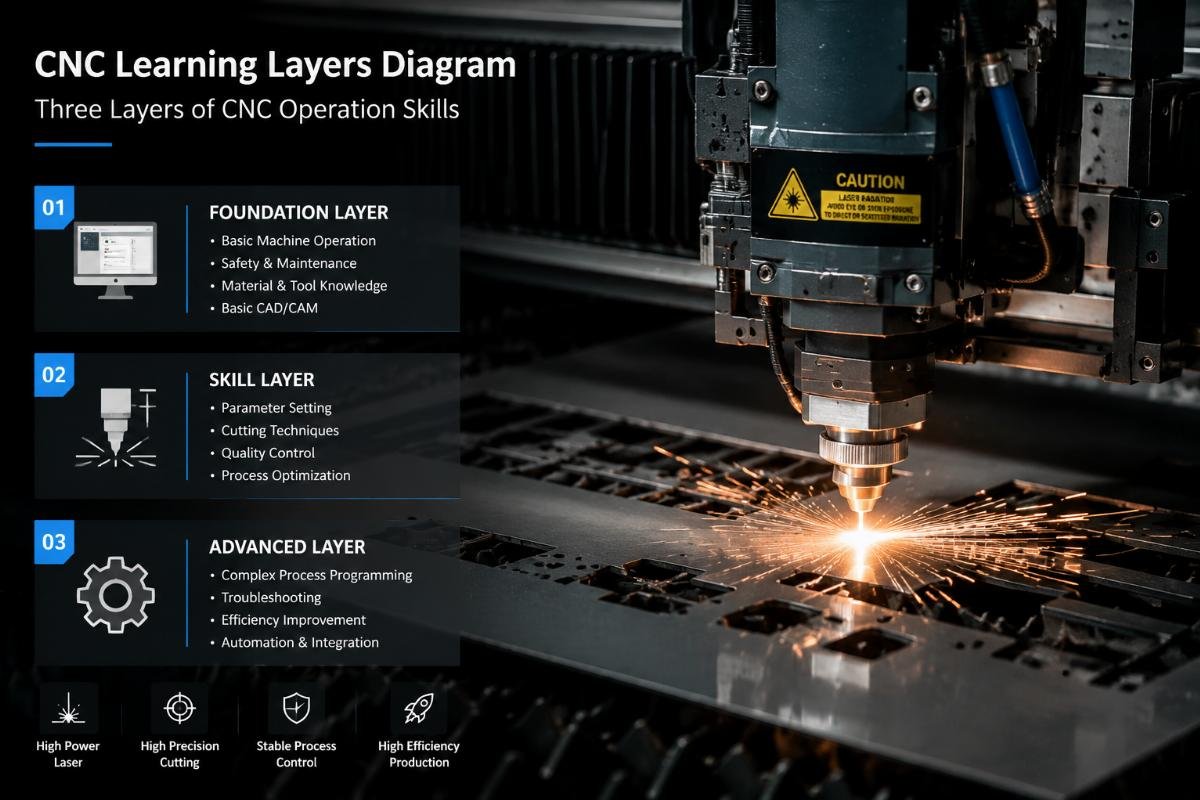
I break down learning difficulty this way based on customer support patterns:
Layer 1: Software Operation (Days to Learn)
This is the part most people overestimate in difficulty. Modern flexible materials CNC cutters import standard design files—AI, DXF, PLT formats that design software already exports. You're not writing code. You're loading files and clicking "Cut."
Typical software learning includes:
- File import and scaling verification (1-2 hours practice)
- Tool path preview and collision checking (2-3 hours)
- Origin point setting and material positioning (1 hour)
- Basic cutting path editing for material defects (3-4 hours)
A customer who currently uses CorelDRAW or AutoCAD for design already has the conceptual foundation. They understand layers, vectors, and file formats. Software operation training usually takes one full day of focused practice.
The mistake I see self-learners make here: they watch vendor training videos once and assume they've learned software operation. Real competency comes from running 5-10 actual cutting jobs with different file types. You need to encounter edge cases—rotated designs, grouped objects, overlapping cut paths—to build reflexes.
Layer 2: Material Parameter Tuning (Weeks to Learn)
This is where self-learners hit the wall. And it's where most vendor support tickets come from.
Software operates identically whether you're cutting leather or gasket material. But blade depth, cutting speed, and vacuum pressure change dramatically by material type. Vendor manuals provide starting parameters, but your specific material batch may behave differently.
Material tuning variables include:
| Parameter | Impact on Cutting | Typical Adjustment Range |
|---|---|---|
| Blade Depth | Cut-through success, material damage | 0.1-2.0mm depending on material thickness |
| Cutting Speed | Edge quality, production efficiency | 50-800mm/s material-dependent |
| Vacuum Pressure | Material flatness, thin material distortion | 30-90% machine capacity |
| Blade Angle | Complex curve accuracy | 30°, 45°, 60° blade types |
| Cutting Direction | Fabric grain direction, leather stretch | 0°, 90°, 45° rotation testing |
Standard onboarding at Realtop includes a material parameter recommendation chart. But here's what I tell customers: these are starting points, not final answers. Your actual leather batch might be 0.2mm thicker than standard. Your packaging board might have different moisture content. You need to run test cuts and adjust.
Self-learners succeed at layer two when they approach it as experimental observation, not memorization. I recommend new operators keep a parameter logbook:
- Material type and supplier batch number
- Initial parameter settings
- Cut quality result (clean edge / rough edge / incomplete cut)
- Adjusted parameters
- Final successful settings
After cutting 8-10 different material batches, you build intuition. You start recognizing patterns—"this material feels similar to the leather I cut last month, I'll start with those parameters."
The time investment here is material-specific. Cutting corrugated packaging board has a 1-week learning curve because parameters are forgiving—board is rigid and consistent. Cutting thin elastic fabric has a 3-4 week curve because tension variation creates huge result differences.
Layer 3: Process Optimization (Months to Accumulate)
This is the experience layer that separates acceptable operation from excellent production efficiency.
Process optimization means:
- Nesting designs to minimize material waste (can improve material utilization from 70% to 85%4)
- Sequencing cutting paths to reduce machine idle travel time (can increase production speed by 20%5)
- Scheduling blade replacement before quality degradation appears
- Coordinating cutting with upstream/downstream production steps
I'm transparent about this: layer three requires accumulated production volume. You don't learn it from manuals. You learn it by cutting 500 jobs and noticing patterns.
However, small factory owners don't need to master layer three immediately. Acceptable operation happens at layer two competency. Layer three is continuous improvement over 6-12 months of regular production.
Most customer questions in the first month are layer two issues. By month three, questions shift to layer three optimization. This progression is normal and expected.
How Long Does Self-Learning Actually Take for Different Materials?
Generic "it depends" answers are useless for planning. Let me give you concrete timelines.
Self-learning timeline for flexible materials CNC cutting ranges from 2 weeks (rigid packaging materials) to 6 weeks (elastic or composite materials), measured to independent operation competency. The timeline assumes 2-3 hours daily practice6, access to vendor parameter documentation, and at least 20 different cutting jobs during learning7.
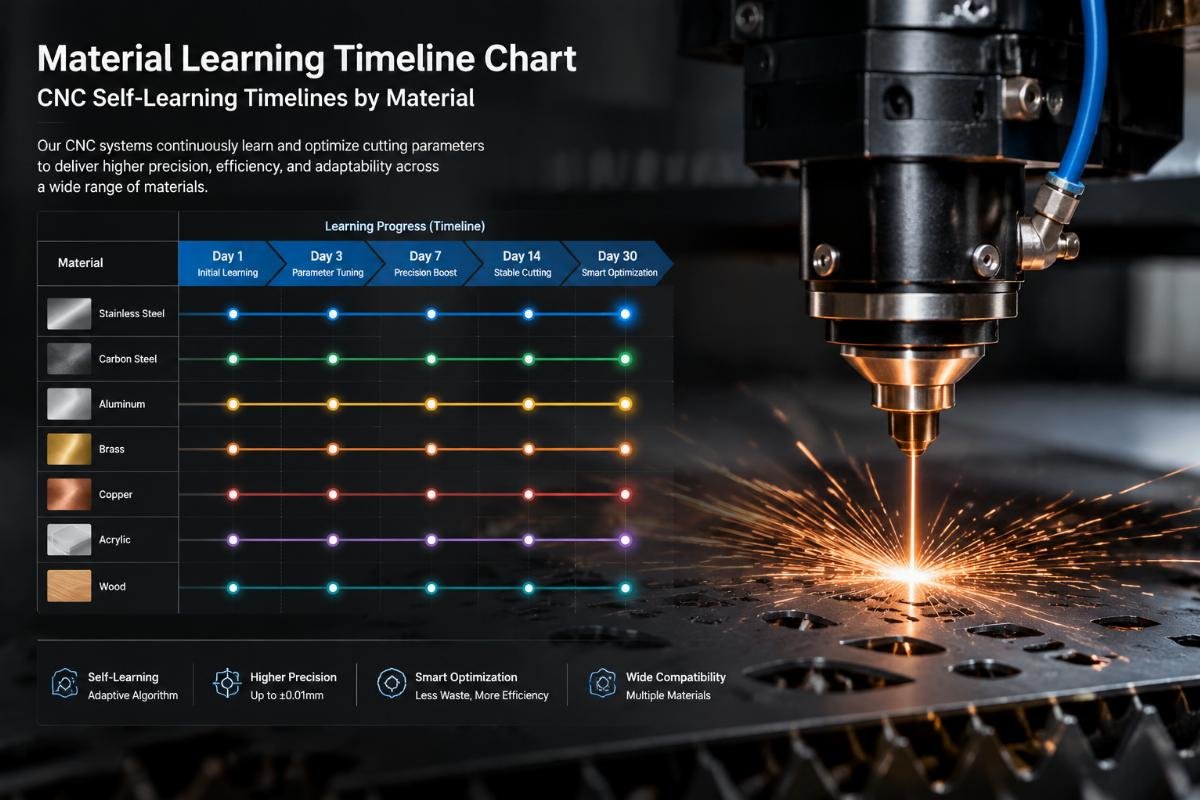
Based on customer onboarding patterns I've observed:
Fast Learning Materials (2-3 Weeks to Competency)
Materials with stable physical properties and forgiving parameter ranges:
- Corrugated packaging board and cardboard
- PVC and rigid foam board
- Leather (vegetable tanned, consistent thickness)
- Single-layer technical fabric (industrial textiles)
- Rubber gasket materials (uniform density)
Why these are faster: you get immediate visual feedback when parameters are wrong (incomplete cuts or rough edges), and adjustments produce predictable results. Blade depth tolerances are wide—being off by 0.2mm usually doesn't ruin the cut8.
Customer success pattern: operators run initial training cuts in week one, process actual production orders with supervision in week two, and operate independently by week three. Support tickets drop to near zero by day 20.
Moderate Learning Materials (3-5 Weeks to Competency)
Materials with variable properties or narrow parameter windows:
- Multi-layer composite materials (fabric + foam combinations)
- Elastic fabrics with directional stretch
- Synthetic leather with backing layers
- Carbon fiber and technical composites
- Car interior materials (headliners, door panels)
Why these take longer: parameter interactions are complex. Changing cutting speed affects both cut quality and material distortion. Vacuum pressure that holds outer layers can wrinkle inner layers. You need to run more experimental cuts to map the acceptable parameter range.
Customer success pattern: operators handle standard production by week three but still encounter edge cases requiring support through week five. Material-specific intuition develops around day 30. Support tickets reduce to occasional batch variation questions.
Slower Learning Materials (5-6 Weeks to Competency)
Materials requiring specialized techniques or sensitive to environmental conditions:
- Thin elastic fabric (apparel, stretch textiles)
- Advertising vinyl and reflective materials
- Leather with significant thickness variation
- Multi-material stacks (gasket + metal mesh + rubber)
- Moisture-sensitive materials (natural fiber textiles)
Why these are hardest: environmental factors matter. Humidity changes fabric tension. Temperature affects material stiffness.9 Blade wear impacts results faster. Operators need to recognize subtle quality degradation before it ruins production runs.
Customer success pattern: supervised operation extends through week four. Independent operation with quality confidence appears around week five to six. These customers typically maintain more frequent vendor contact through month three.
The Hidden Variable: Design Complexity
Material learning timelines assume moderate design complexity—shapes with straight lines, curves, and holes, but not extreme detail.
Highly detailed designs with intricate curves, small internal features, or precision registration requirements add 1-2 weeks to learning timelines regardless of material type. The skill here isn't cutting—it's quality verification and troubleshooting when dimensional accuracy drifts.
What Learning Resources Actually Work for Self-Taught Operators?
I see customers waste time on the wrong learning resources.
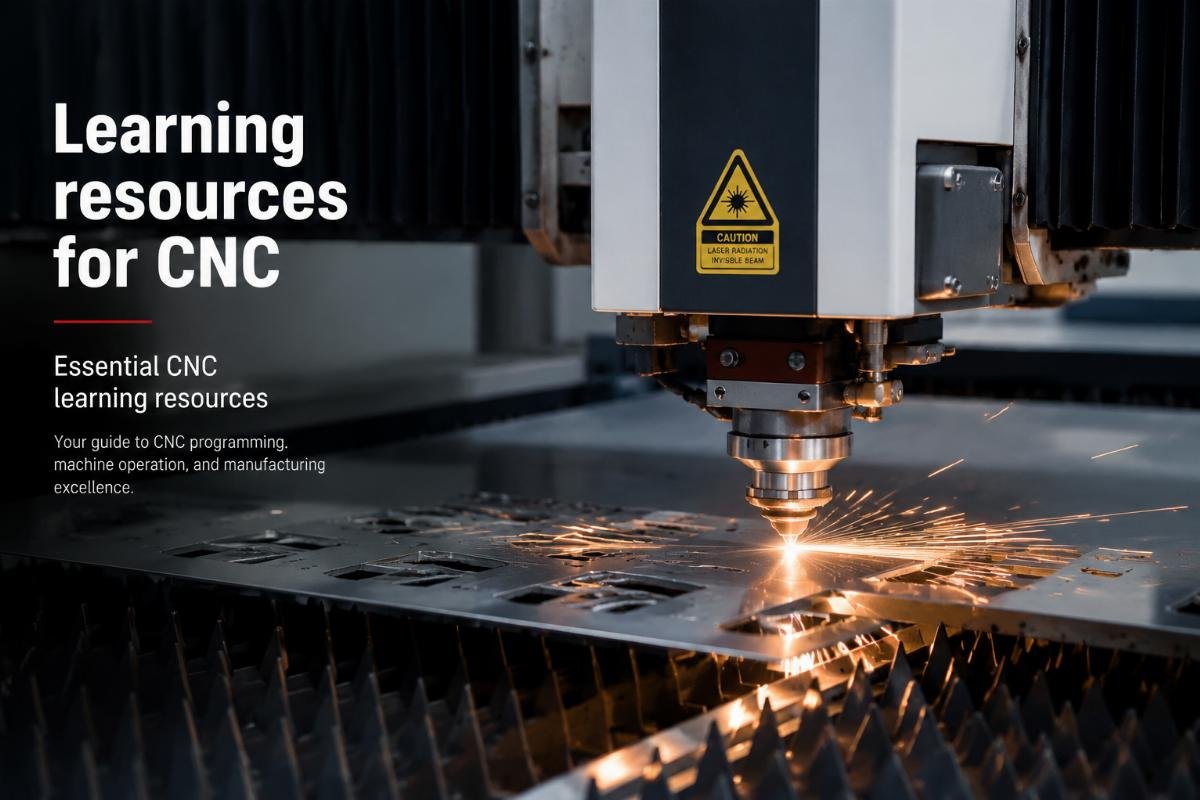
Effective self-learning for flexible materials CNC cutting requires three resource types: vendor technical documentation (parameter starting points), peer operator communities (material-specific troubleshooting), and structured practice projects (progressive difficulty). Online video tutorials are useful for software operation but insufficient for material parameter tuning—you need feedback loops on your specific equipment and materials10.
Here's what actually helps based on customer feedback patterns:
What Works: Vendor Technical Documentation
When customers succeed at self-learning, they start here:
- Equipment operation manual (critical safety procedures, basic machine functions)
- Material parameter reference charts (starting points for common materials)
- Software user guide (file format requirements, tool path basics)
- Maintenance schedule and procedures (blade replacement timing, cleaning protocols)
At Realtop, we provide these in both print and digital formats. But I tell customers: read the safety section carefully, skim the rest, then refer back when you encounter specific questions. Trying to memorize the entire manual before cutting your first job is inefficient.
The documentation weakness: it can't cover every material variation you'll encounter. Parameter charts list "leather" settings, but your specific leather might be oil-tanned while the chart assumes vegetable-tanned. You need additional resources for gap coverage.
What Works: Structured Practice Projects
Self-learners who succeed deliberately practice with progressive difficulty:
Week 1 Practice (Software Operation Focus):
- Cut 5 simple geometric shapes (circles, rectangles, triangles)
- Cut 3 designs with internal holes and islands
- Cut 2 designs requiring origin point repositioning
- Cut 1 design with multiple tool types (scoring + cutting)
Week 2-3 Practice (Parameter Tuning Focus):
- Cut same design in 3 different material batches, document parameter differences
- Cut complex curves, evaluate edge quality, adjust speed parameters
- Cut material at 80% vacuum pressure, 90%, 100%, observe results
- Deliberately create parameter errors (too shallow, too fast), learn failure recognition
Week 4+ Practice (Production Simulation):
- Cut actual customer orders with supervisor review
- Practice material nesting for waste reduction
- Run multi-hour production jobs, monitor consistency
- Handle blade changes during production runs
I recommend new operators treat the first 30 cutting jobs as deliberate learning exercises, not just production output. Run the same design twice with different parameters and compare results. Intentionally test parameter limits so you recognize when you're approaching them during production.
What Doesn't Work: Generic CNC Video Tutorials
YouTube and online training platforms have thousands of CNC tutorials. Most are useless for your specific situation.
Problems with generic video content:
- 80% focus on metal CNC mills (irrelevant for flexible materials cutting)
- Software tutorials show outdated versions with different interfaces
- Material parameter advice doesn't match your equipment's capabilities
- No feedback mechanism when your results differ from the video
Videos are useful for one specific purpose: seeing software navigation workflows. Watching someone import a file, set the origin point, and start a cut helps you understand the sequence. Beyond that, videos don't replace hands-on practice with your actual machine and materials.
What Helps: Peer Operator Communities
The most valuable troubleshooting resource I see customers use: finding other operators cutting similar materials.
Industry associations, trade show contacts, and online forums for specific material types (leather working, garment manufacturing, packaging production) provide material-specific knowledge that vendors can't. Another leather goods manufacturer who cuts the same supplier's materials knows parameter nuances that we might not have documented.
At Realtop, we maintain a customer communication network where factory owners share application tips. This isn't marketing—it's acknowledging that material expertise lives with the people processing thousands of parts daily.
However, peer knowledge has limits. Another operator's successful parameters might not transfer directly to your machine if equipment capabilities differ. Use peer advice as hypotheses to test, not absolute answers.
What You Absolutely Need: Vendor Support Access
I'm stating the obvious, but it's critical: self-learning requires safety net access to vendor technical support.
Evaluate vendor support structure before purchase:
- Response time commitments (same-day for production-stopping issues?)
- Support channels (phone, email, remote screen sharing, on-site visits?)
- Parameter adjustment guidance (will they help troubleshoot material-specific issues?)
- Duration of included support (lifetime, first year only, per-incident fees?)
Realtop provides phone and video support during customer onboarding, typically 3-5 contact sessions in the first month as operators encounter edge cases. Support frequency drops rapidly after week three for most materials. But knowing support exists reduces learning anxiety significantly.
Self-learning doesn't mean learning alone. It means taking primary responsibility for skill development while having expert backup for complex troubleshooting.
What Are the Real Obstacles to Self-Learning CNC Cutting?
Let me show you where self-learners actually fail.
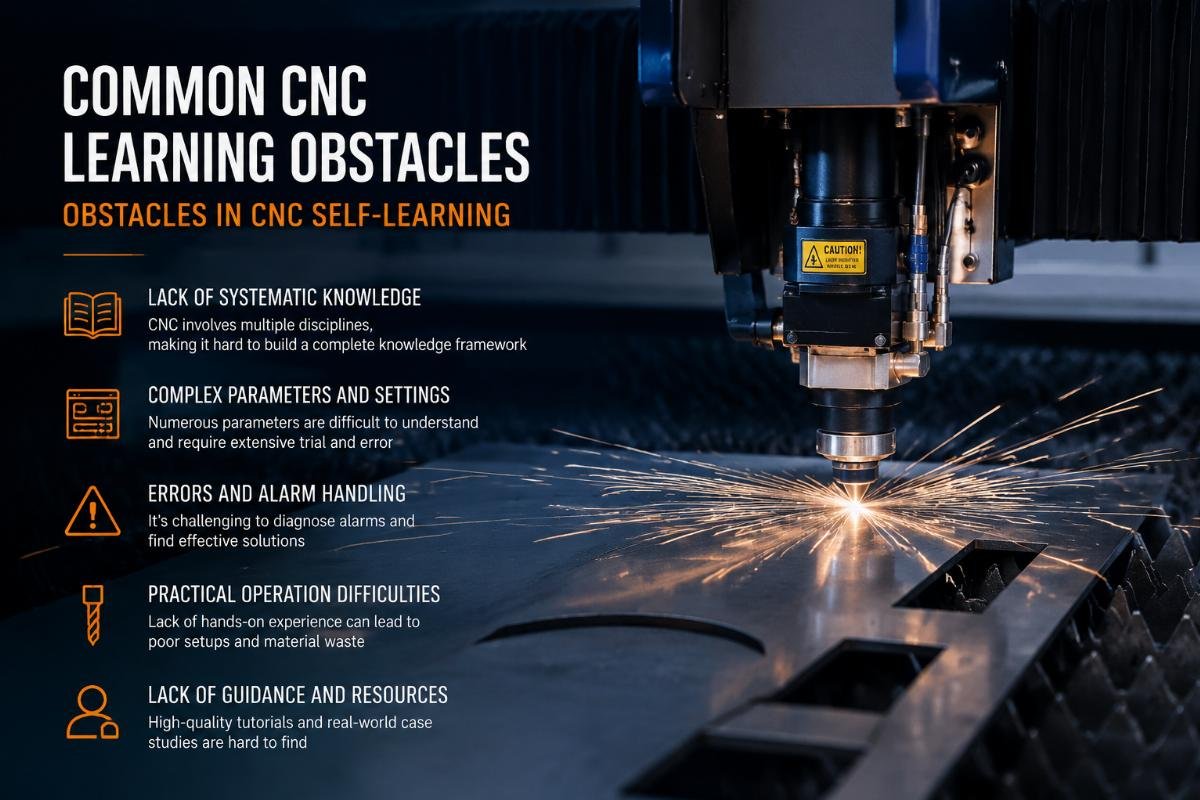
The primary obstacles to self-taught CNC cutting are not technical complexity but organizational issues: insufficient practice time allocation (learning requires 2-3 hours daily for 3-4 weeks), lack of experimental material budget (testing parameters consumes materials), and absence of supervisor review during early production (quality errors compound before recognition). Customers with technical backgrounds often struggle more than hands-on production workers because they over-rely on theoretical understanding11 instead of empirical adjustment.
Obstacle 1: Underestimating Practice Time Requirements
The most common learning failure pattern: customers schedule one day for "CNC training" then expect operators to run production immediately.
Competent operation requires repetition. You need to load files 30 times before the workflow becomes automatic12. You need to adjust blade depth 40 times before you recognize when settings are drifting. You need to troubleshoot 10 failed cuts before you develop diagnostic instincts
"Online CNC Operator Training | Penn Foster", https://www.pennfoster.edu/programs/trades/cnc-operator-professional-training. Vocational training programs for manufacturing equipment operation typically range from 2-8 weeks for basic competency depending on equipment complexity and prior experience, with simpler automated systems requiring less time than manual machining operations. Evidence role: general_support; source type: education. Supports: typical training duration for basic manufacturing equipment operation competency. Scope note: General manufacturing training timelines rather than specific data on flexible materials CNC cutting equipment ↩
"G-code - Wikipedia", https://en.wikipedia.org/wiki/G-code. G-code is a standardized numerical control programming language (ISO 6983) used to control automated machine tools, specifying tool movements, speeds, and operations through alphanumeric commands that the machine controller interprets. Evidence role: definition; source type: encyclopedia. Supports: the technical definition and function of G-code in CNC machine control. ↩
"The Effect of Learning Curve on Production - Purdue Business", https://business.purdue.edu/news/features/Learning-Curve.php. Research on manufacturing skill acquisition indicates that equipment requiring manual programming and multi-variable process control demonstrates significantly longer training periods than automated systems with visual interfaces, though specific quantitative ratios vary by study methodology and competency definitions. Evidence role: general_support; source type: research. Supports: relative complexity differences between manual programming and automated software-based manufacturing systems. Scope note: General findings on manufacturing automation complexity rather than specific factor-of-10 comparison for these equipment types ↩
"[PDF] with less material production Material efficiency - MIT", https://web.mit.edu/ebm/www/Publications/Phil.%20Trans.%20R.%20Soc.%20A-2013-Allwood-.pdf. Studies on cutting pattern optimization in manufacturing demonstrate material utilization improvements typically ranging from 5-20 percentage points depending on part geometry complexity, material type, and optimization algorithm sophistication, with higher gains observed in irregular shape cutting. Evidence role: statistic; source type: research. Supports: typical material utilization improvement ranges from nesting optimization in manufacturing. Scope note: General research findings rather than specific validation of the 70% to 85% range cited ↩
"Toolpath Strategies for Maximum Efficiency in CNC Machining", https://machiningconceptserie.com/toolpath-strategies-for-maximum-efficiency-in-cnc-machining/. Research on manufacturing process optimization indicates that tool path sequencing and travel time reduction can yield productivity improvements ranging from 10-30% depending on part complexity, machine capabilities, and baseline efficiency, with greater gains in operations with high non-cutting time ratios. Evidence role: statistic; source type: research. Supports: productivity improvements from tool path and process sequence optimization. Scope note: General manufacturing optimization research rather than specific validation of the 20% figure ↩
"The influence of deliberate practice on skill performance ... - PubMed", https://pubmed.ncbi.nlm.nih.gov/38295223/. Research on skill acquisition and deliberate practice suggests that focused practice sessions of 1-4 hours daily are effective for developing motor and technical skills, with optimal duration varying by task complexity, learner experience, and cognitive load, though practice quality and feedback mechanisms are more predictive of learning outcomes than duration alone. Evidence role: general_support; source type: research. Supports: effective practice duration for motor and technical skill acquisition. Scope note: General skill acquisition research rather than specific validation for CNC equipment operation training ↩
"Effects of the amount of practice and time interval between ... - PMC", https://pmc.ncbi.nlm.nih.gov/articles/PMC6467396/. Learning research indicates that skill acquisition benefits from varied practice across multiple contexts and problem types, with competency development requiring sufficient repetitions to encounter diverse scenarios and build pattern recognition, though specific repetition thresholds vary widely by task complexity and individual learning rates. Evidence role: general_support; source type: research. Supports: the role of varied practice repetitions in skill development. Scope note: General learning science principles rather than specific validation of the 20-job threshold ↩
"[PDF] Typical Tolerances of Manufacturing Processes", https://web.mae.ufl.edu/designlab/Lab%20Assignments/EML2322L-Tolerances.pdf. Cutting process specifications for flexible materials indicate that acceptable tolerances vary significantly by material type, thickness, and application requirements, with rigid materials generally permitting larger depth variations than thin or elastic materials, though specific tolerance values depend on material properties and quality standards. Evidence role: general_support; source type: research. Supports: typical tolerance ranges in flexible materials cutting processes. Scope note: General principles of cutting tolerances rather than specific validation of the 0.2mm threshold ↩
"Materials in Extreme Environments | PNNL", https://www.pnnl.gov/materials-extreme-environments. Materials science research demonstrates that hygroscopic materials like textiles absorb moisture from humid environments, altering dimensional stability and mechanical properties, while temperature variations affect polymer chain mobility in synthetic materials, changing stiffness and elastic behavior, with magnitude of effects depending on material composition and environmental exposure duration. Evidence role: mechanism; source type: research. Supports: how environmental conditions affect material mechanical properties. ↩
"Continuous concurrent feedback degrades skill learning - PubMed", https://pubmed.ncbi.nlm.nih.gov/9473972/. Educational research on skill acquisition consistently identifies immediate, specific feedback as a critical component of effective learning, with context-specific practice and feedback demonstrating superior transfer to real-world performance compared to generic instruction, particularly for procedural and motor skills. Evidence role: expert_consensus; source type: research. Supports: the importance of specific, timely feedback in skill development. ↩
"Factors influencing theoretical knowledge and practical skill ...", https://pubmed.ncbi.nlm.nih.gov/12672386/. Research on expertise and learning indicates that extensive theoretical knowledge can sometimes interfere with practical skill acquisition when learners attempt to apply abstract principles rather than developing empirical pattern recognition, a phenomenon related to expert blind spots, though outcomes vary significantly by individual learning approaches and task characteristics. Evidence role: general_support; source type: research. Supports: how different types of prior knowledge affect practical skill acquisition. Scope note: General findings on knowledge transfer rather than specific research on CNC operator training outcomes by background ↩
"Phases of procedural learning and memory: characterisation ... - PMC", https://pmc.ncbi.nlm.nih.gov/articles/PMC8048153/. Cognitive psychology research on automaticity indicates that procedural skills transition from controlled to automatic processing through repeated practice, with repetition requirements varying widely from dozens to thousands of trials depending on task complexity, consistency of execution context, and individual differences, though no universal threshold applies across all skills. Evidence role: general_support; source type: research. Supports: repetition requirements for developing automatic procedural skills. Scope note: General automaticity research rather than specific validation of the 30-repetition threshold ↩