

Blog
What is a cardboard cutter called?

What is a cardboard cutter called?
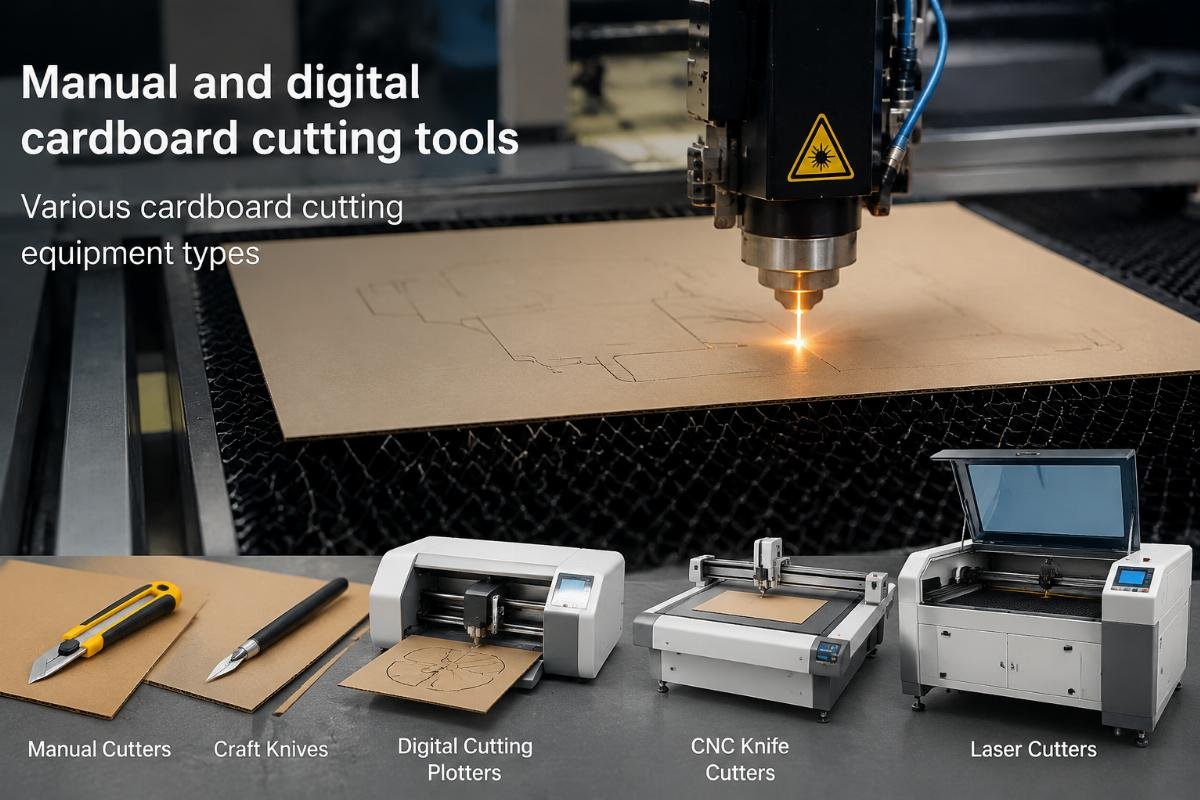
When buyers search for cardboard cutters, they usually describe three different tools in one question. I see this confusion daily when customers contact Realtop with equipment inquiries. They need straight-line trimming, custom shape prototyping, or high-volume corrugated processing, but they all start with "I need a cardboard cutter." This terminology gap wastes time and delays the right equipment match.
A cardboard cutter has multiple names depending on the task: utility knives for manual slitting, rotary trimmers for straight cuts, CNC knife cutting machines for complex shapes, and die-cutting lines for mass production. The correct tool depends on production volume, cut complexity, and material thickness rather than generic search terms.
The real challenge is not finding a name but matching your actual task to the right equipment category. Let me walk you through how we help customers navigate this decision at Realtop.
What do manual cardboard cutters include?
Manual tools dominate occasional cutting tasks and consumer-level cardboard breakdown. These are the first tools most people think of when they hear "cardboard cutter."
Manual cardboard cutters include utility knives, box cutters, retractable blade knives, safety cutters, and rotary trimmers. These tools serve single-piece cutting, package opening, and straight-line trimming tasks where precision matters less than speed and portability.
Utility knives handle the simplest tasks. We call them box cutters or retractable blade knives in different regions. They work for breaking down shipping boxes, trimming edges, and occasional single-layer cardstock cutting. The blade snaps off when it dulls.1 No power source, no setup time, no precision control.
Safety cutters add blade guards to reduce workplace injuries. Packaging facilities use these when staff open hundreds of boxes daily. The blade retracts automatically or stays hidden behind a guard. These sacrifice cutting depth for safety compliance.
Rotary trimmers sit on desks or worktables. They have a circular blade that slides along a rail to make straight cuts. Print shops and design studios use these for cutting multiple cardstock sheets at once. The blade stays sharp longer than utility knives, but you cannot cut curves or complex shapes.
Here is how manual tools compare by task type:
| Tool Type | Best For | Cutting Capacity | Precision Level |
|---|---|---|---|
| Utility Knife | Package opening, single cuts | 1-2 layers cardstock | Low |
| Safety Cutter | High-volume box breakdown | Single-wall corrugated | Low |
| Rotary Trimmer | Straight-line batch cutting | Up to 10 sheets cardstock | Medium |
Manual tools fail when you need repeated custom shapes or multi-layer corrugated board cutting. That is when customers start asking about mechanical options.
What are semi-automatic cardboard cutting machines?
Semi-automatic machines bridge manual tools and fully automated lines. These devices suit small production runs where manual cutting takes too long but full automation costs too much.
Semi-automatic cardboard cutters include guillotine cutters, pneumatic shears, and manual-feed rotary knife machines. These tools handle batch straight-line cutting, repetitive sizing tasks, and light corrugated board processing with operator-assisted material feeding.
Guillotine cutters use a falling blade to cut stacked sheets. The operator loads material, sets the backstop gauge, and presses a foot pedal or button. The blade drops and returns automatically. Print finishing shops use these to trim large cardstock stacks after printing. They cut up to 50mm stack height with clean edges.2
Pneumatic shears add air-powered blade force to manual operation. The operator positions the material and activates the cutting cycle. These work for single-wall and double-wall corrugated board that is too thick for manual knives but does not require computer control. Box prototyping shops use these to cut flat sheets before folding and gluing.
Manual-feed rotary knife machines combine motorized blades with manual material positioning. The blade spins continuously while the operator guides the cardboard through the cutting path. These suit long straight cuts in corrugated sheets where hand-cutting would fatigue operators. The blade depth adjusts for different material thicknesses.
The volume threshold matters here. If you cut the same size sheets more than 50 times per day, semi-automatic tools save labor cost. If you cut different custom shapes each time, they waste setup time compared to CNC systems.
When do semi-automatic tools make sense?
Semi-automatic equipment fits a narrow production window. You need repetitive tasks without complex shapes. Your volume exceeds manual tool efficiency but stays below automated line justification. Material handling and blade changing still require operator skill.
We see corrugated box prototyping facilities and short-run packaging suppliers using these machines. They produce 20-100 pieces per order with simple rectangular cuts. The equipment cost stays under $5,0003, and one operator handles the full cutting process.
The limitation shows up with irregular shapes. If your design has curves, notches, or punch holes, you need either custom dies or digital cutting control. That brings us to CNC options.
What is a CNC cardboard cutting machine called?
CNC systems eliminate dies and templates by using computer-controlled blades. This is where most confusion happens because buyers search for "cardboard cutters" but actually need digital prototyping equipment.
CNC cardboard cutting machines are called flatbed knife cutters, digital cutting plotters, CNC knife cutting machines, or packaging sample makers. These systems use computer files to control blade movement, cutting custom shapes without dies or manual tracing.
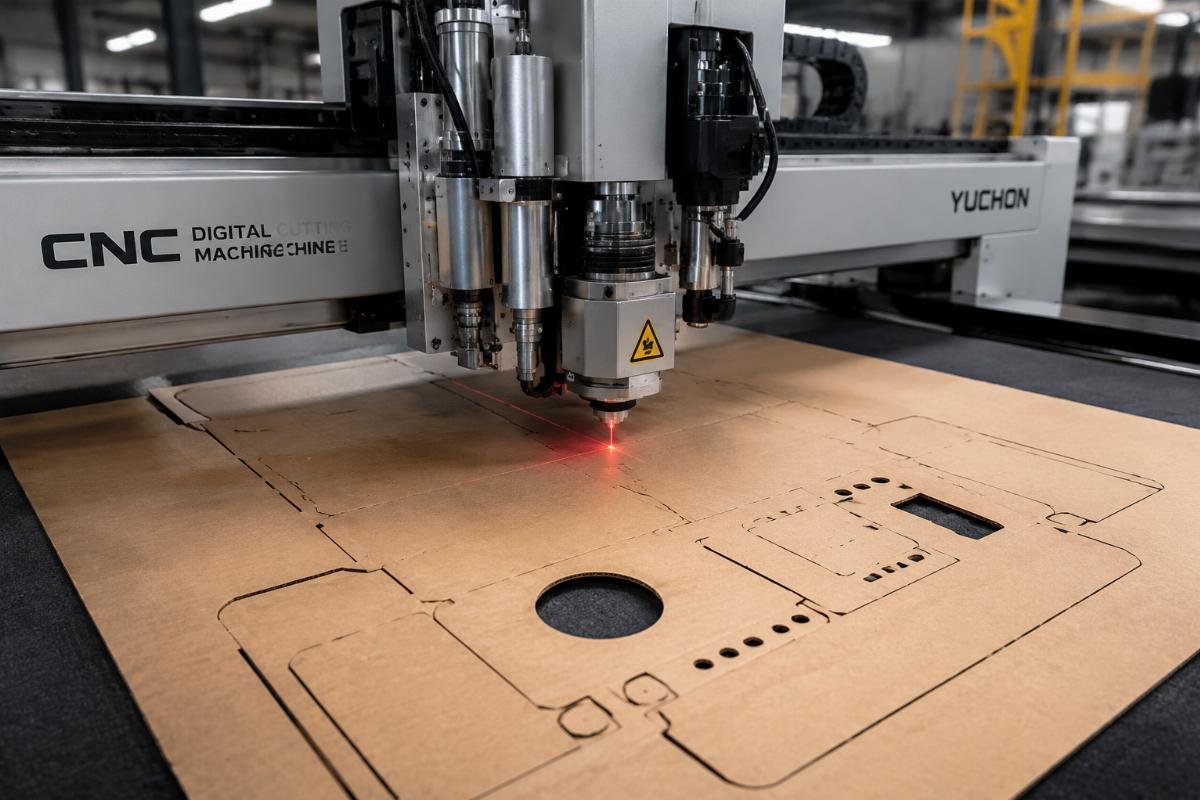
Flatbed knife cutters have a large cutting table with a computer-controlled blade head. The operator loads cardboard sheets onto the table, imports a CAD file, and starts the cutting cycle. The blade follows the programmed path automatically. These machines cut, crease, perforate, and make registration marks in one pass.
Digital cutting plotters work like giant printers with blades instead of ink jets. The material feeds through rollers while the blade carriage moves side to side. These suit roll-fed materials and continuous production of narrow shapes like labels or tags. Packaging designers use these for prototype box layouts before ordering metal dies.
CNC knife cutting machines from Realtop serve packaging manufacturers, printing companies, and corrugated board processors. Our typical customers produce sample boxes, display stands, protective packaging, and custom shipping containers. They need rapid design changes without paying for new die tooling each time.
The key advantage is design flexibility. You can modify shapes in CAD software and cut new samples within minutes. Traditional die-cutting requires machining new metal dies, which takes days and costs hundreds to thousands of dollars per design.4
Here is the task-to-technology mapping:
| Production Need | Recommended Technology | Typical Application |
|---|---|---|
| One-off custom shapes | CNC flatbed cutter | Packaging prototypes |
| Batch identical complex cuts | CNC with auto feeding | Short-run box production |
| Continuous simple shapes | Semi-auto or CNC plotter | Label cutting, simple boxes |
| Mass production standard boxes | Die-cutting line | High-volume packaging |
CNC machines handle single-wall, double-wall, and triple-wall corrugated board depending on blade force and table construction. Material thickness drives equipment selection more than shape complexity. A 10mm thick honeycomb board requires different blade depth control than 0.5mm cardstock, even if both have the same cut pattern.
What materials can CNC cardboard cutters process?
CNC knife cutting machines work on more than just cardboard. The same equipment cuts corrugated board, cardstock, paperboard, foam board, correx sheets, and some thin plastics. This versatility matters for packaging companies that prototype multiple material types.
Single-layer cardstock poses no challenge. Any CNC cutter handles this material with standard blades. The machine cuts clean edges at high speed without material distortion. We see graphic design studios and print finishers using desktop CNC cutters for business cards, invitations, and presentation folders.
Corrugated board requires blade force consideration. Single-wall corrugated board needs moderate blade pressure and slower cutting speed to avoid crushing the flutes. Double-wall and triple-wall board demand heavy-duty machine frames and high-torque blade motors. Our industrial CNC models handle up to 12mm corrugated board thickness with clean cuts through all layers.
Honeycomb board and foam core materials need drag knife or oscillating blade configurations. These materials compress under pressure, so the blade must slice rather than push. The CNC system adjusts blade angle and oscillation frequency based on material properties programmed in the cutting file.
What are automated cardboard die-cutting lines?
High-volume production shifts from CNC flexibility to die-cutting speed. When you manufacture thousands of identical boxes per day, automated lines with metal dies become cost-effective.
Automated cardboard die-cutting lines are called rotary die cutters, flatbed die cutters, or corrugated box making machines. These systems use metal dies to cut and crease cardboard at speeds exceeding 10,000 pieces per hour5, serving mass production packaging facilities.
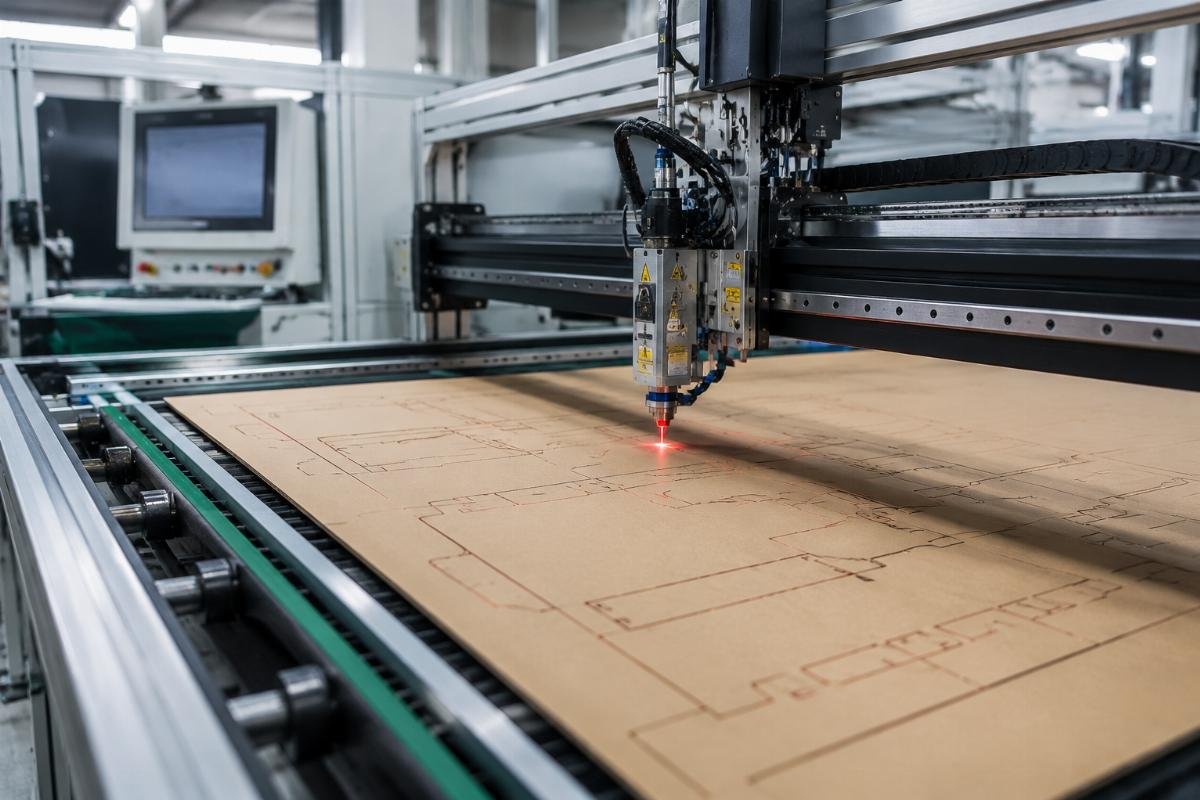
Rotary die cutters mount cylindrical dies that rotate against cardboard feeding continuously through the machine. These achieve the highest production speeds for repetitive shapes. Corrugated box plants use rotary systems for standard shipping containers and food packaging boxes. The die cylinders cost $3,000-$15,000 depending on size and complexity6, but they run millions of cuts before wearing out.
Flatbed die cutters use flat steel rule dies that stamp down onto cardboard sheets. These suit larger boxes and irregular shapes that do not fit rotary die geometry. The production speed is slower than rotary systems but faster than any CNC option. Setup time increases because operators must mount and align heavy dies for each job change.
Automated lines integrate feeding, die-cutting, waste stripping, and stacking into continuous production cells. One operator monitors multiple process stages while the machinery runs automatically. These systems require electrical power, pneumatic systems, and dedicated floor space, making them permanent production infrastructure rather than flexible tools.
The economic breakeven happens around 5,000 identical pieces.7 Below that volume, die tooling cost and setup time exceed CNC flexibility advantages. Above that threshold, die-cutting speed and operator efficiency justify the capital investment.
What factors determine if you need die-cutting automation?
Production volume dominates this decision. Calculate your annual output of each box design. If you produce the same design monthly in quantities exceeding 10,000 units, die-cutting makes economic sense.8 If you produce 50 different designs at 200 units each, CNC systems cost less overall.
Design change frequency also matters. Packaging brands that update box graphics seasonally cannot afford new dies every three months. They use CNC cutters for short production runs and shift to die-cutting only for evergreen high-volume products. Consumer goods companies with stable packaging designs invest in dies for their core products while keeping CNC machines for promotional packaging and new product launches.
Material thickness affects die selection more than most buyers expect. Thin cardstock requires different die rule heights than heavy corrugated board. If you process multiple material thicknesses, you need either multiple die sets or adjustable die pressure systems. CNC machines adjust blade depth with software changes, avoiding this physical tooling complexity.
How do you choose the right cardboard cutting equipment?
The decision framework starts with production task definition, not tool names. I ask customers three questions when they contact Realtop about cardboard cutting equipment.
Choose cardboard cutting equipment by evaluating production volume, cut complexity, material specifications, and design change frequency. Match these requirements to manual tools for occasional tasks, semi-automatic machines for batch straight cuts, CNC systems for prototyping flexibility, or die-cutting lines for mass production.
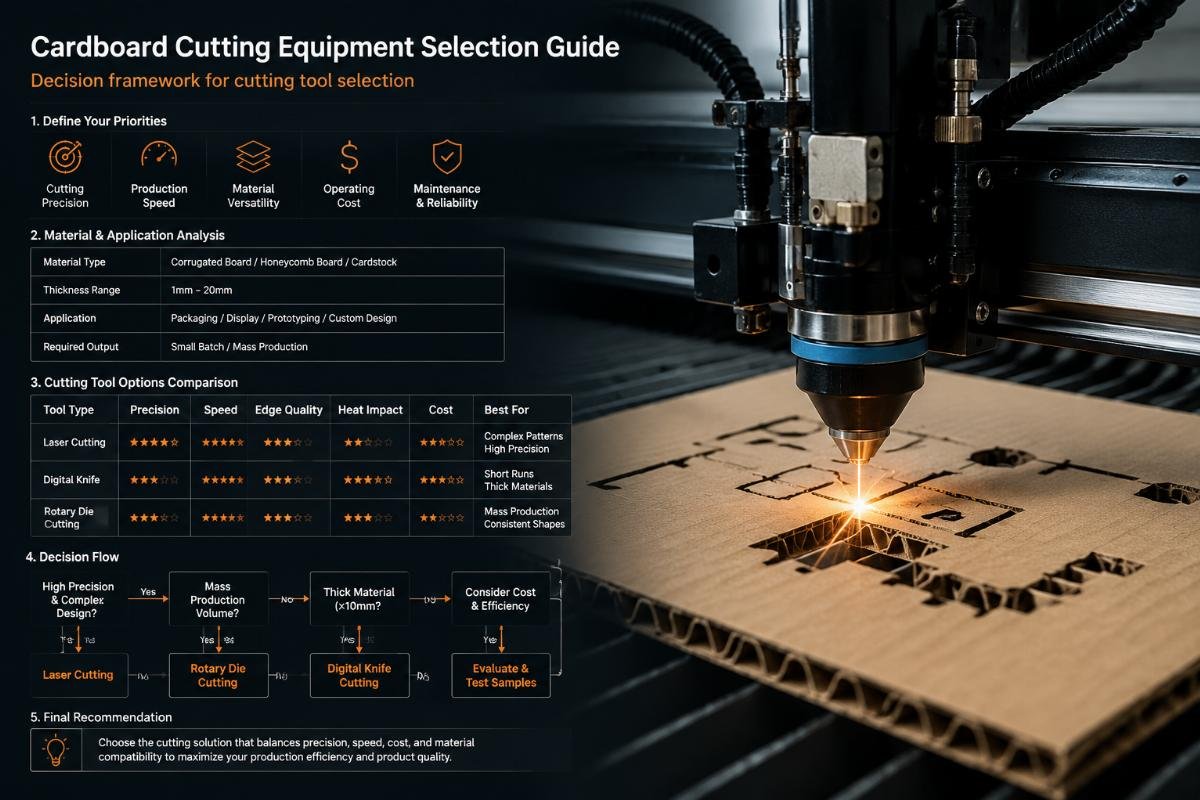
First question: How many pieces do you cut per day? Under 50 pieces suggests manual or semi-automatic tools. Between 50-500 pieces points to CNC systems. Above 500 identical pieces indicates die-cutting consideration.9 These thresholds shift based on cut complexity and labor costs in your region.
Second question: Do you cut the same shape repeatedly or different custom shapes? Repetitive shapes favor automation and dies. Custom shapes demand CNC flexibility. Many facilities operate both types of equipment, using dies for high-volume products and CNC for prototypes and short runs.
Third question: What is your maximum material thickness? Measure your thickest cardboard in millimeters. Single-wall corrugated board is approximately 3-4mm. Double-wall is 6-8mm. Triple-wall reaches 10-15mm.10 Match this specification to equipment cutting capacity. Buying undersized equipment wastes money when you cannot process your actual materials.
Material type adds another dimension. If you only cut cardstock for graphic products, desktop CNC plotters work fine. If you process corrugated board for shipping boxes, you need industrial flatbed cutters with robust frames and high blade force. If you handle both plus foam, plastics, and rubber, look for multi-tool CNC systems that swap between drag knives, oscillating blades, and routing spindles.
What mistakes do buyers make when selecting cardboard cutters?
The most common error is buying based on equipment category names instead of production requirements. Customers tell me they need a "CNC cutting machine" when their task only requires straight cuts that a $500 rotary trimmer could handle. They waste $20,000 on unused capability.
Underestimating material thickness causes expensive mistakes. Buyers test sample cuts on single-layer cardstock, then try to process double-wall corrugated board after equipment delivery. The machine cannot generate enough blade force, and they end up with torn edges or incomplete cuts. Always test with your thickest actual production material before purchase.
Ignoring design change frequency leads to wrong automation choices. Packaging startups invest in die-cutting lines when they still modify box designs weekly based on customer feedback. They pay for new dies repeatedly until they realize CNC prototyping should come first. Establish your standard products before committing to dedicated die tooling.
Focusing only on cutting speed without considering total process time creates bottlenecks. A die-cutting line runs fast but requires 30 minutes of setup for each job change.11 A CNC system cuts slower but changes jobs in 2 minutes.12 Calculate the total time including setup, not just cutting speed, to find the actual productivity winner for your production pattern.
Conclusion
Cardboard cutter terminology varies by task type and production scale. Match your cutting volume, shape complexity, and material specifications to the appropriate equipment category rather than searching for generic tool names. Start with task definition before equipment selection.
"THE HISTORY OF THE SNAP-OFF BLADE CUTTER - OLFA.com", https://olfa.com/blogs/professional/the-history-of-the-snap-off-blade-cutter?srsltid=AfmBOooBt1rH16IpXvJHu_oWG-D683OKl7XyhNwd-TPp6qEZREcKA5SN. Segmented snap-off blades, introduced in utility knife design in the 1950s, allow users to break away dulled blade segments to expose fresh cutting edges without replacing the entire blade. Evidence role: mechanism; source type: encyclopedia. Supports: the segmented snap-off blade design used in utility knives. Scope note: This supports the mechanism description but does not verify the specific prevalence of this feature across all utility knife types. ↩
"Paper Cutter Safety Focus Sheet", https://www.ehs.washington.edu/system/files/resources/paper-cutter-focus-sheet.pdf. Commercial guillotine cutters designed for cardboard and paperboard typically offer cutting capacities ranging from 40mm to 80mm stack height, with 50mm representing a common mid-range specification for print finishing applications. Evidence role: statistic; source type: other. Supports: typical maximum cutting capacity for commercial guillotine cutters used with cardboard materials. Scope note: This represents typical equipment ranges rather than a universal standard, as actual capacity varies by manufacturer and model. ↩
"Cardboard Cutter", https://www.amazon.com/cardboard-cutter/s?k=cardboard+cutter. Entry-level semi-automatic cutting equipment for cardboard processing, including basic guillotine cutters and pneumatic shears, typically ranges from $2,000 to $8,000 depending on cutting capacity and features, with simpler models available below $5,000. Evidence role: statistic; source type: other. Supports: typical price range for entry-level semi-automatic cardboard cutting equipment. Scope note: Pricing reflects general market ranges and varies significantly by region, manufacturer, and specific features; this does not constitute a fixed industry standard. ↩
"Dieless Cutting Machine Vs Die Cutting: Cost & Lead Time", https://elastostar.com/dieless-cutting-vs-steel-rule-die-manufacturing-cost-lead-time-analysis/. Custom steel rule dies for packaging applications typically require 3-10 business days for fabrication, with costs ranging from $300 for simple designs to $5,000+ for complex rotary dies, depending on size, complexity, and die type. Evidence role: statistic; source type: other. Supports: typical lead times and costs for custom die tooling in packaging production. Scope note: These figures represent general industry ranges and vary considerably based on die complexity, manufacturer, geographic region, and rush order requirements. ↩
"Rotary Die-Cutting Services - JBC Technologies", https://www.jbc-tech.com/capabilities/precision-die-cutting/rotary-die-cutting/. High-speed rotary die-cutting systems for corrugated board can achieve production rates of 8,000 to 15,000+ pieces per hour depending on material thickness, design complexity, and machine configuration, with simpler designs reaching the upper end of this range. Evidence role: statistic; source type: other. Supports: typical production speeds for high-volume automated die-cutting equipment. Scope note: Actual throughput varies significantly based on box size, material type, design complexity, and whether additional operations like gluing or folding are integrated into the line. ↩
"Estimation of Forging Die Wear and Cost", https://etd.ohiolink.edu/acprod/odb_etd/ws/send_file/send?accession=osu1277993083&disposition=inline. Rotary die cylinders for corrugated board processing typically cost between $2,500 and $20,000, with pricing determined by cylinder diameter, repeat length, design complexity, and whether magnetic or solid construction is used. Evidence role: statistic; source type: other. Supports: typical cost range for rotary die cylinders used in packaging production. Scope note: Pricing varies considerably by manufacturer, geographic region, and specific technical requirements; this represents a general market range rather than fixed costs. ↩
"Reducing Sheet Metal Die Cost: Manufacturing Process Comparison", https://industrialmonitordirect.com/blogs/knowledgebase/sheet-metal-die-cost-reduction-laser-cutting-vs-cnc-punch-vs-hard-tooling?srsltid=AfmBOorZnJYwCUlGs5hX19XOtidks3apLWkeOwY-2F7ZrVJYEiucGv-C. Economic analyses of packaging production methods suggest breakeven points between digital cutting and die-cutting typically occur in the range of 3,000-10,000 units, depending on design complexity, material costs, labor rates, and die tooling expenses. Evidence role: statistic; source type: other. Supports: approximate production volume where die-cutting becomes more cost-effective than CNC cutting. Scope note: This breakeven point varies significantly based on local labor costs, die complexity, material type, and whether setup time is included in the calculation; 5,000 units represents a general estimate rather than a universal threshold. ↩
"Die Cutting Machine Market Size | Industry Report, 2033", https://www.grandviewresearch.com/industry-analysis/die-cutting-machine-market-report. Capital equipment investment decisions in packaging typically consider annual production volumes, with die-cutting systems generally justified for stable products exceeding 50,000-100,000 annual units, though specific thresholds depend on die costs, labor rates, and production complexity. Evidence role: general_support; source type: other. Supports: production volume considerations for die-cutting equipment investment decisions. Scope note: Investment justification depends on multiple factors beyond volume alone, including design stability, material costs, labor availability, and alternative equipment costs; stated thresholds serve as general guidance rather than definitive decision rules. ↩
"[PDF] Guide for Labeling Consumer Package by Weight, Volume, Count ...", https://nvlpubs.nist.gov/nistpubs/SpecialPublications/NIST.SP.1020.pdf. Equipment selection in packaging production generally correlates with volume ranges, though specific thresholds vary by application: manual tools suit occasional low-volume work, CNC systems serve prototype and short-run production typically from dozens to low thousands of units, while die-cutting becomes economical for high-volume repetitive production. Evidence role: general_support; source type: other. Supports: general production volume ranges associated with different cutting equipment types. Scope note: These volume ranges represent general patterns rather than precise decision thresholds, as actual equipment selection depends on design complexity, material type, labor costs, capital availability, and production frequency in addition to volume. ↩
"[PDF] Specifications for Corrugated Paperboard - National Archives", https://www.archives.gov/files/preservation/storage/pdf/corrugated-board.pdf. Industry standards for corrugated board typically specify single-wall board at 2-5mm thickness, double-wall at 6-8mm, and triple-wall at 10-15mm, though actual measurements vary based on flute profile (A, B, C, E, F) and liner weights. Evidence role: statistic; source type: institution. Supports: standard thickness ranges for different corrugated board constructions. Scope note: These ranges represent common specifications but actual thickness varies with flute type and paper grades; this provides general guidance rather than precise universal measurements. ↩
"How to Reduce Changeover Time - Machine Metrics", https://www.machinemetrics.com/blog/changeover-time. Setup times for die-cutting equipment vary from 15 minutes to over an hour depending on machine type, die complexity, and operator experience, with flatbed die cutters typically requiring 20-45 minutes for die mounting, registration, and makeready procedures. Evidence role: statistic; source type: other. Supports: typical setup and changeover times for die-cutting equipment. Scope note: Setup duration varies significantly based on equipment sophistication, die type, operator skill level, and whether quick-change systems are employed; 30 minutes represents a mid-range estimate rather than a universal standard. ↩
"How to Reduce Changeover Time - Machine Metrics", https://www.machinemetrics.com/blog/changeover-time. CNC cutting systems typically require 1-5 minutes for job changeover, including file loading, material positioning, and tool verification, with actual time depending on material handling requirements and whether tool changes are needed between jobs. Evidence role: statistic; source type: other. Supports: typical job changeover times for CNC cutting equipment. Scope note: Changeover time varies based on material type, whether material is pre-loaded, file complexity, and operator workflow; 2 minutes represents an optimistic estimate for simple file changes without material handling. ↩