


-
 Courier delivery
-
 DHL Courier delivery
-
 Warranty 1 year
-
 Free 30-Day returns

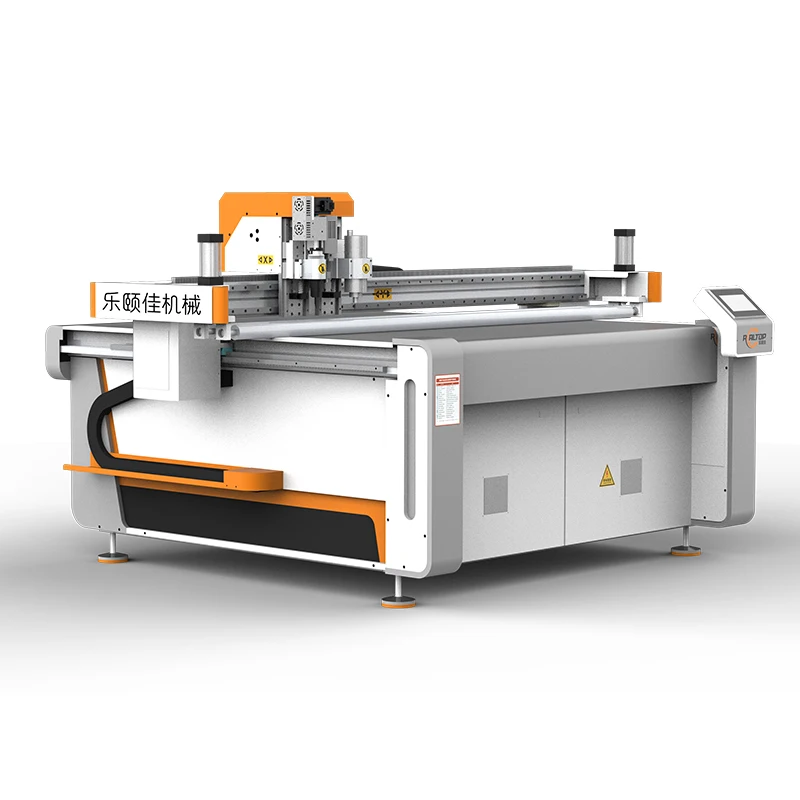
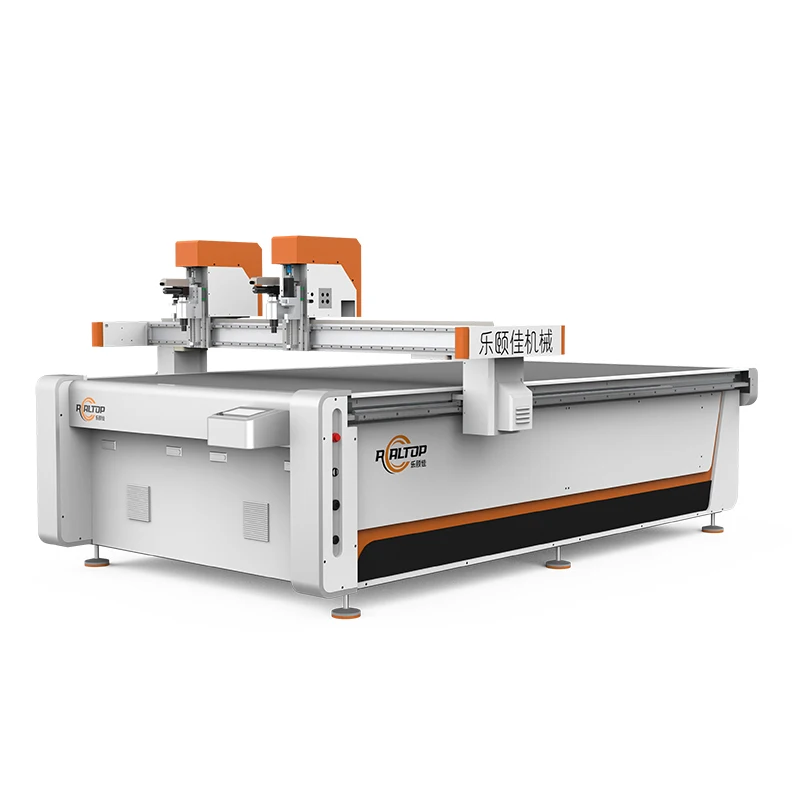
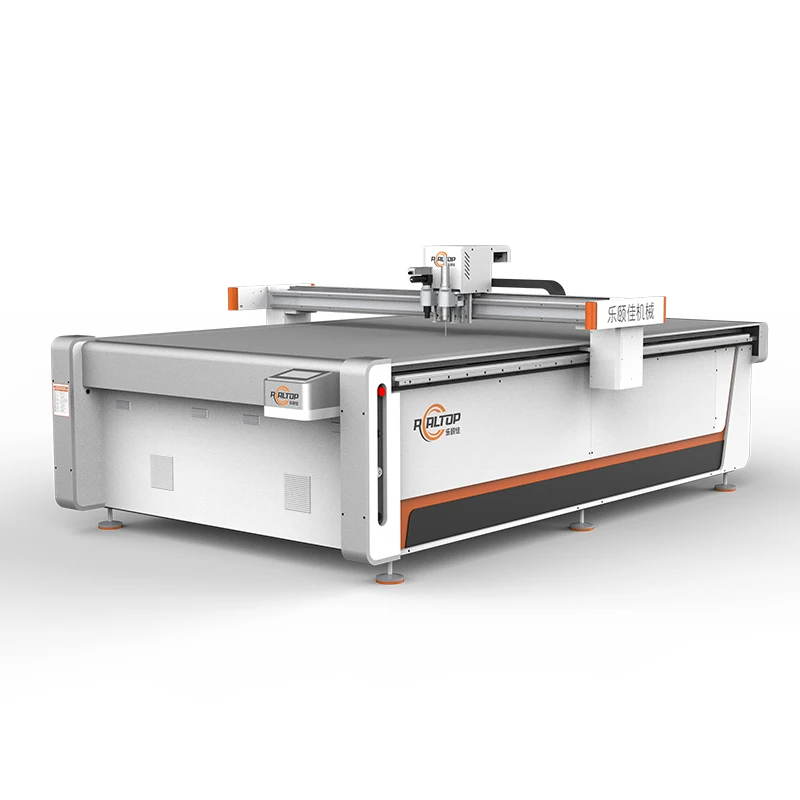
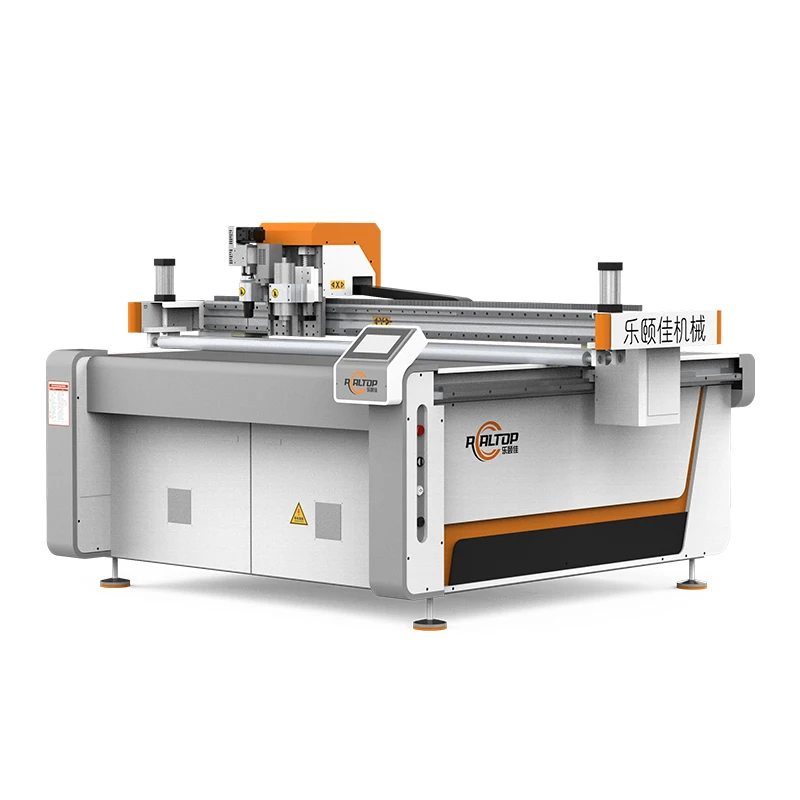
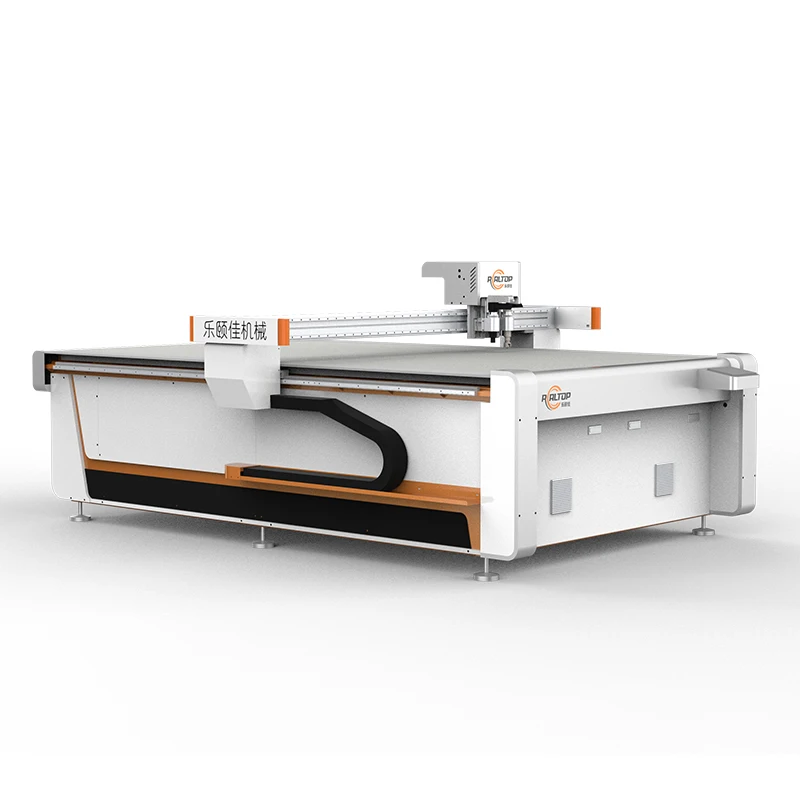
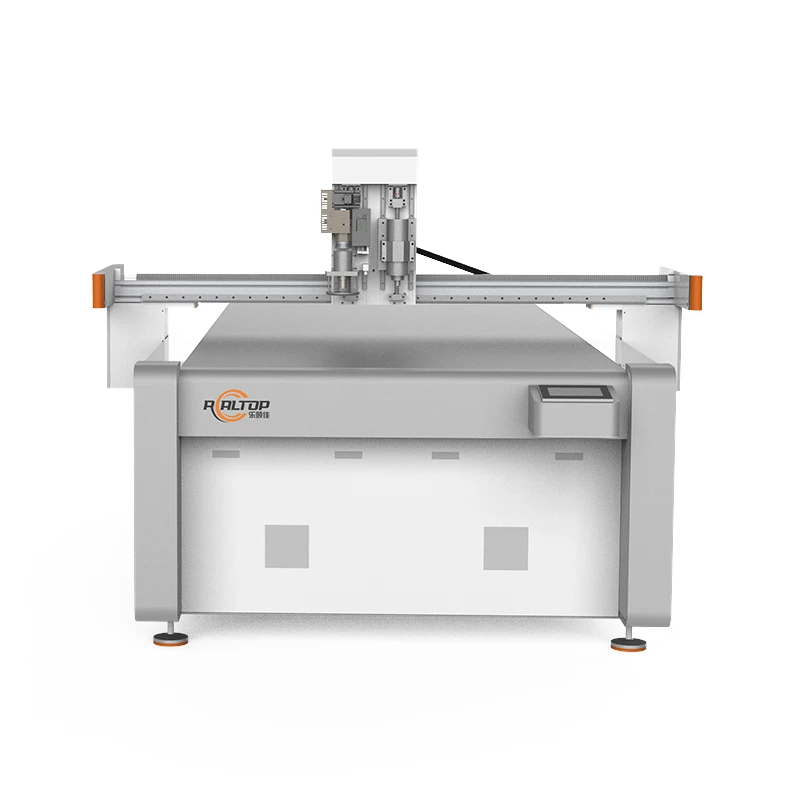
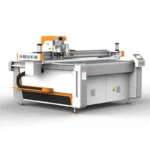
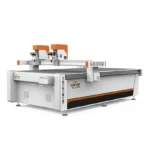
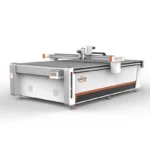
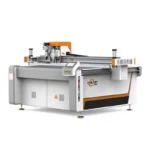
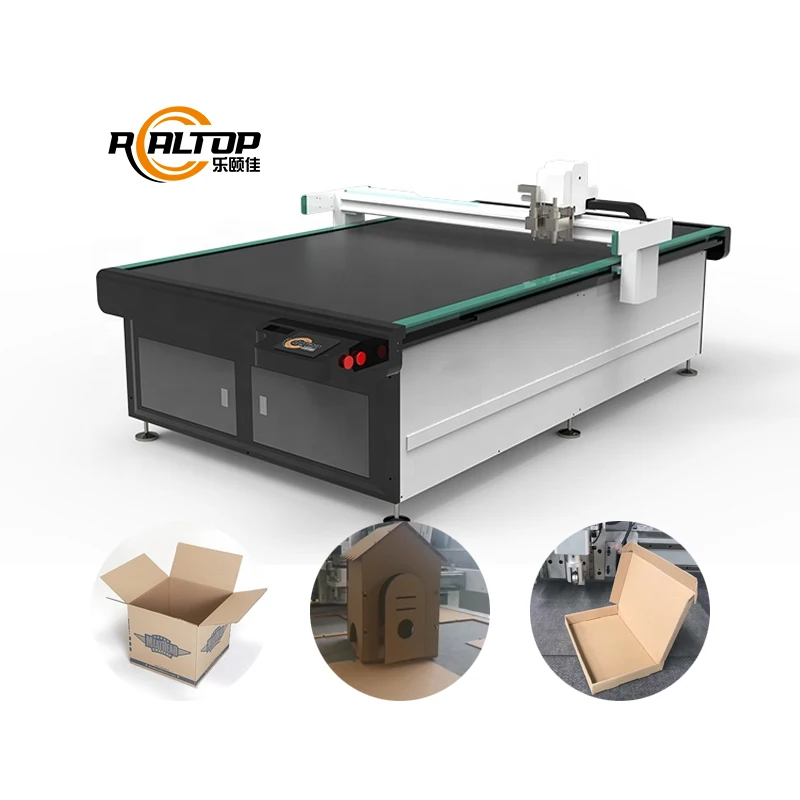
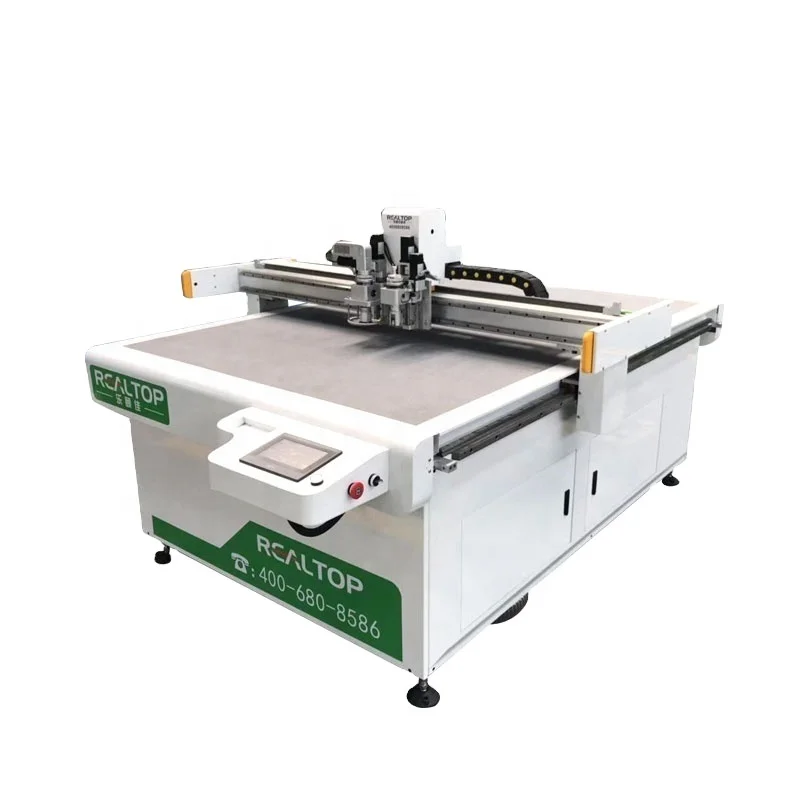
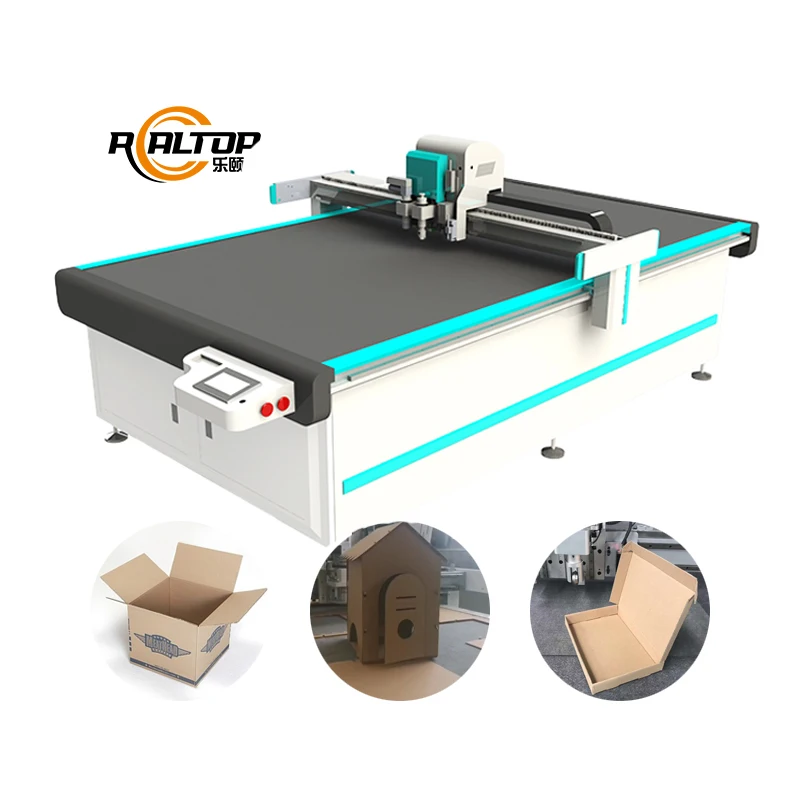
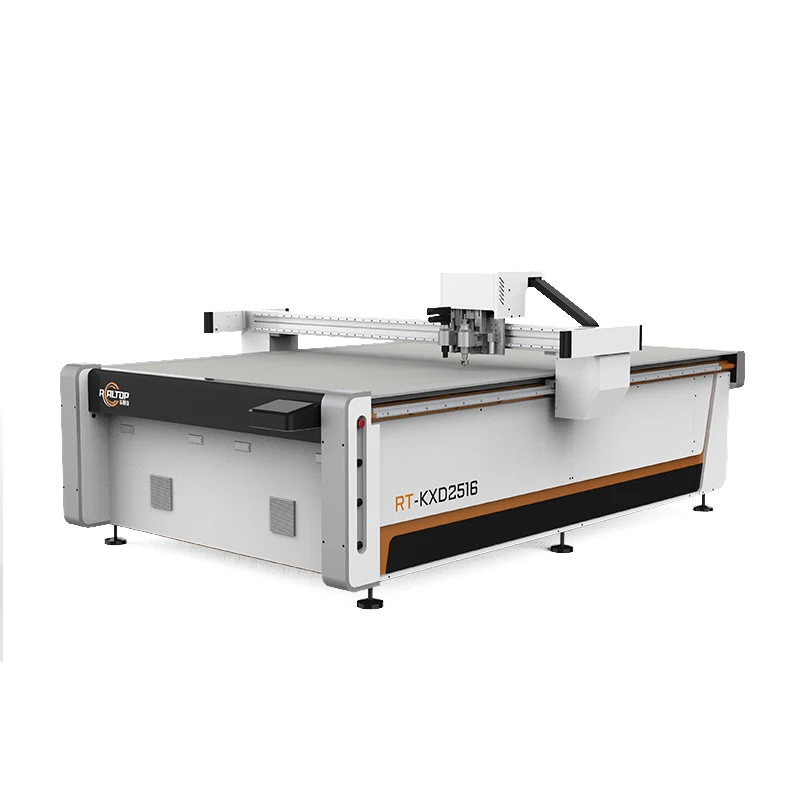
Design-Driven Assembly — The RT-D2516/RT-S2516 platform is engineered from frame welding through final calibration on our own machining center, matching the oscillating knife and vacuum zoning to the buyer’s composite or flexible sheet before it leaves the factory.
Technical Specifications
| Parameter | Value |
|---|---|
| Model | RT-D2516/RT-S2516 |
| Product Type | CNC Oscillating Knife Cutting Machine |
| Working Area | 1600 × 2500 mm |
| Machine Dimensions | 3450 × 2300 × 1250 mm |
| Rated Power | 9 kW |
| Working Table | Flat magnesium-aluminum alloy with PVDF fluorocarbon coating |
| Transmission | Digital servo motor, linear guide, synchronous belt, ball screw |
| Repeated Accuracy | ≤0.1 mm |
| Translational Velocity | 800–2000 mm/s |
| Cutting Speed | 200–800 mm/s (varies by material density and thickness) |
| Cutting Thickness | ≤100 mm (basis not stated in source — confirm block format / material / thickness) |
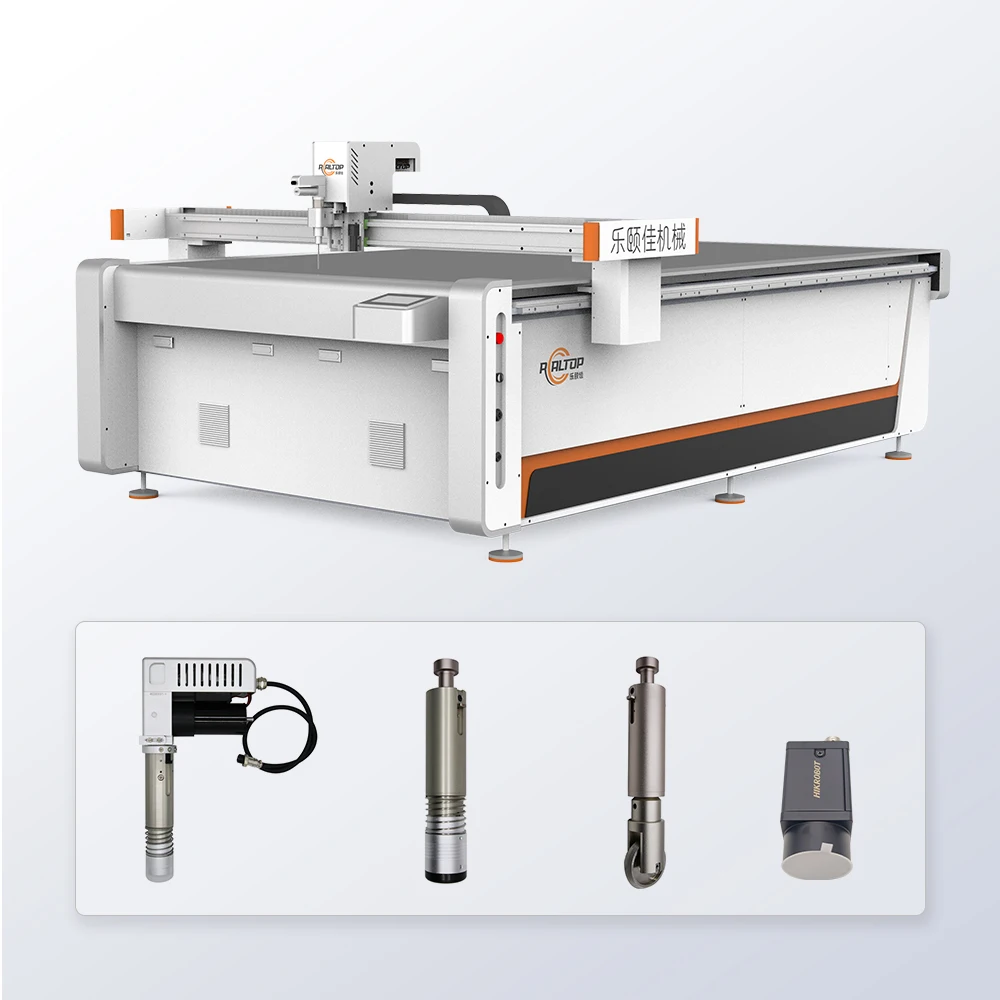
| Multifunctional Head | Swiss imported knife with vibration full-cut, half-cut and cursor location |
| Tool Head Options | Oscillating knife, pneumatic knife, high-power vibrating knife, circular knife, V-cutting knife, drag knife, creasing wheel, dotted line knife, punching, brush |
| Visual Positioning | Small CCD mark-point positioning, panoramic camera recognition, projection positioning |
| Vacuum Pump | 7.5 kW, aviation aluminum shell, built-in silencer sponge |
| Voltage | 380V ±10% |
| Instruction Format | HP-GL compatible |
| Safety System | Infrared induction blocking, beam anti-collision, emergency stop with in-situ resume |
| Frame | Thick-walled seamless steel, high-temperature tempering, CNC machining center finished |
| Standards | CE declaration where applicable |
Application Suitability
| Application | Material or Output |
|---|---|
| Composite panel trimming | Carbon fiber prepreg, glass fiber laminate, honeycomb core |
| Automotive interior parts | Headliner fabric, door panel foam, acoustic insulation composites |
| Footwear and leather goods | Multi-layer synthetic leather, sponge composite, EVA foam |
| Gasket and seal production | Rubber sheet, silicone, PTFE-filled composite |
| Flexible packaging samples | PVC sheet, soft glass, corrugated board |
| Signage and display | Acrylic-backed vinyl, foam board, magnetic sheet |
Why a 1600×2500 Bed Does Not Guarantee You Can Cut 20mm Carbon Fiber
A CNC oscillating knife cutting machine manufacturer must match the tool head, vacuum hold-down and stroke depth to your exact laminate stack, not simply quote the work envelope.
I once shipped a flatbed cutter configured for 3mm PVC to a buyer who then loaded 18mm carbon fiber composite plate. The knife snapped on the first pass, the delaminated layers jammed the gantry, and we had to re-engineer the cutting profile remotely before the machine could run production parts. That failure had nothing to do with the frame or motors — it was a configuration mismatch that should have been caught before crating. When you source this class of equipment, the question is never just "what is the table size," but what tooling geometry, oscillation frequency and vacuum zoning your specific composite sheet demands. [NEED_CITE: oscillating knife cutting parameters for composite laminates]
Frame Rigidity and Long-Term Positional Accuracy
The RT-D2516/RT-S2516 chassis is welded from thick-walled seamless steel tube, then subjected to high-temperature tempering before final machining on a CNC machining center. This sequence relieves welding stress that would otherwise warp the frame over months of thermal cycling. In composite cutting, where a 0.3mm positional drift can misalign a multi-ply carbon fiber layup, the foundation matters as much as the knife. The Taiwan Hiwin linear rails and ball screw drive transmit Delta servo motion with a repeated accuracy specification of ≤0.1 mm across the full 1600 × 2500 mm stroke.
Vacuum Zoning for Small Composite Parts
The magnesium-aluminum alloy table receives a fluorocarbon PVDF powder coat plus anodic and hard oxidation treatment, creating a surface that resists resin transfer and solvent exposure common in composite shops. The 7.5 kW vacuum pump pulls through zoning channels that can isolate suction to the active cutting area. This is critical when you are nesting small gasket profiles from expensive prepreg stock — a full-table vacuum on a single small part will not generate enough local hold-down to prevent material lift during high-frequency oscillation. Proper zoning keeps the sheet pinned directly under the knife path without wasting pump capacity on empty table surface. [NEED_CITE: vacuum table zoning requirements for oscillating knife cutting]
Matching the Tool Head to Composite Density
The Swiss imported oscillating knife handles full-cut, half-cut and cursor location in one head, suitable for mid-density composites like honeycomb sandwich and closed-cell foam. For denser laminates — solid glass fiber plate or multi-layer carbon fiber — the high-power vibrating knife delivers deeper stroke and more aggressive chip clearance. The V-cutting knife is reserved for scoring fold lines on packaging-grade composite board, while the drag knife handles thin vinyl overlays. Selecting the wrong head for your material is the single most common cause of ragged edges and delamination in CNC knife cutting, and it is a decision that must be made against your actual sample, not a catalogue generalization.
The Hidden Cost of Specifying on Bed Size Alone
A buyer who purchases strictly on working area often discovers that the standard vacuum layout cannot hold small aerospace gasket blanks, or that the default oscillating knife chatters on glass-fiber-reinforced polymer. Reworking the tool head and re-drilling vacuum zones after delivery means downtime, replacement tooling and a service call that could have been avoided with a sample test. The material itself may cost several times more per square meter than the cutting consumable, so a single delaminated sheet represents a loss that erodes the perceived savings of buying a baseline configuration. [NEED_CITE: composite material waste from incorrect cutting tool selection]
Why Build and Test Under One Roof
In-house frame welding, CNC machining and full mechanical assembly allow the RT-D2516/RT-S2516 configuration to be adjusted after seeing the buyer’s material, not locked in from a standard bill of materials. The same design team that engineers the knife cutting tables also develops the laser cutting systems, so the cutting method can be matched to the material rather than forced into one technology. Voltage, plug type and control panel language are confirmed against the buyer’s electrical standard before the machine enters final assembly. Sample cutting on the buyer’s own composite sheet generates a cutting report that documents tool head selection, speed parameters and edge quality before the order is committed to production.
Documentation & Verification
- Machine specification sheet listing tool head and vacuum zone configuration matched to your composite grade
- Electrical schematic confirming 380V ±10% wiring, breaker sizing and plug type for your facility
- Sample cutting report on your composite sheet documenting edge finish, thickness capability and tool selection
- Factory test record with dimensional verification across the 1600 × 2500 mm work envelope before dispatch
- HP-GL file format compatibility note and software licence documentation for your nesting workflow
- Spare parts list covering oscillating knife blades, vacuum seals and CCD camera consumables
Installation, Commissioning & Support
- 3450 × 2300 mm footprint requires level concrete floor with anchor provisions for the 9 kW drive load
- Dedicated 380V ±10% three-phase circuit with isolated earth for the Delta servo drives and 7.5 kW vacuum pump
- Machine ships as a single assembly; gantry and tool head carriage are calibrated at factory and do not require field alignment
- First-run commissioning includes vacuum zone mapping, knife depth calibration on your composite material and CCD mark recognition tuning
- Operator training covers tool head changeover between oscillating, drag and V-cutting knives for mixed-material production
- Preventive maintenance schedule for Hiwin rail lubrication, vacuum pump silencer sponge inspection and synchronous belt tension checks
Preparing Your Inquiry
When requesting a quotation, include the composite material type, layup structure, sheet thickness and the dimensions of the finished parts you need to produce. Specify your facility voltage and frequency, the control language your operators require, and whether your workflow uses CCD mark-point recognition for printed contours. If your production involves multiple material types, list each with its daily volume so the tool head configuration and vacuum zoning can be sized accordingly.
Frequently Asked Questions
Q: How is the tool head matched to my composite material and thickness?
A: We run a sample cutting test on your actual composite sheet before confirming the configuration. The tool head — whether oscillating knife, high-power vibrating knife or drag knife — is selected based on the laminate density, resin system and edge quality your application requires, not on a generic material chart.
Q: What voltage and language options are confirmed before the machine ships?
A: Voltage at 380V ±10% is standard, with plug type and control panel language confirmed at order stage. We verify your facility electrical standard and document the wiring configuration in the electrical schematic before production begins, eliminating field rewiring on arrival.
Q: Can I send my composite material for sample cutting before ordering?
A: Yes, and we strongly recommend it. We cut your composite sheet on the RT-D2516/RT-S2516, document the tool head selection, cutting speed and edge quality in a sample report, and only then finalize the machine configuration. This prevents tooling mismatch after delivery.
Q: What customization is available for working area and vacuum zoning?
A: The RT-D2516/RT-S2516 platform supports vacuum zone reconfiguration to match your nesting pattern, CCD camera selection between mark-point and panoramic recognition, and tool head combinations chosen per your material range. Each option is confirmed in the specification sheet before production.
Q: What documentation accompanies the machine at shipment?
A: You receive the machine specification sheet, electrical schematic, factory test record, sample cutting report on your material, HP-GL software licence note, spare parts list, operation manual and CE declaration where applicable. Packing photographs are provided before crating.
You may also like

商品评价
Clear filtersThere are no reviews yet.