


-
 Courier delivery
-
 DHL Courier delivery
-
 Warranty 1 year
-
 Free 30-Day returns

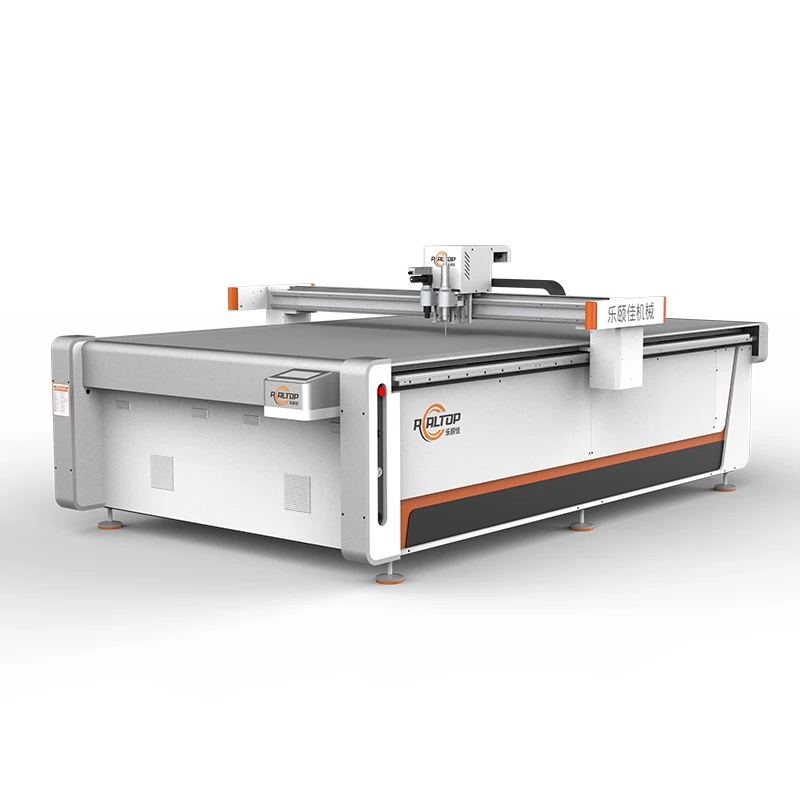
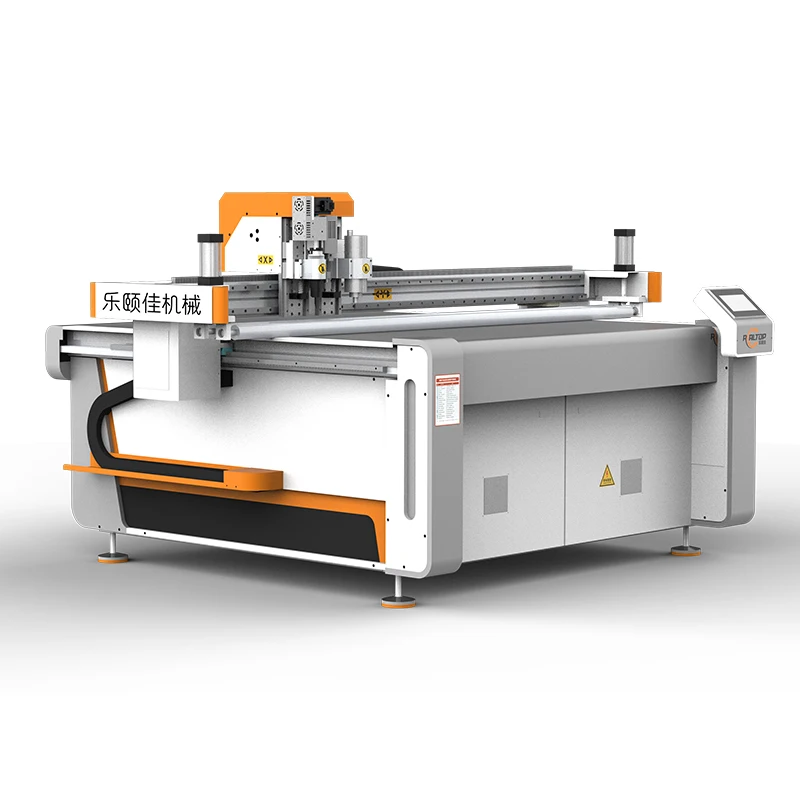
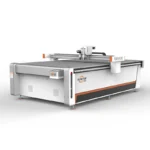
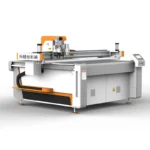
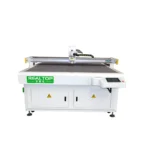
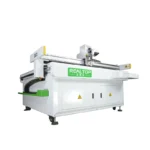
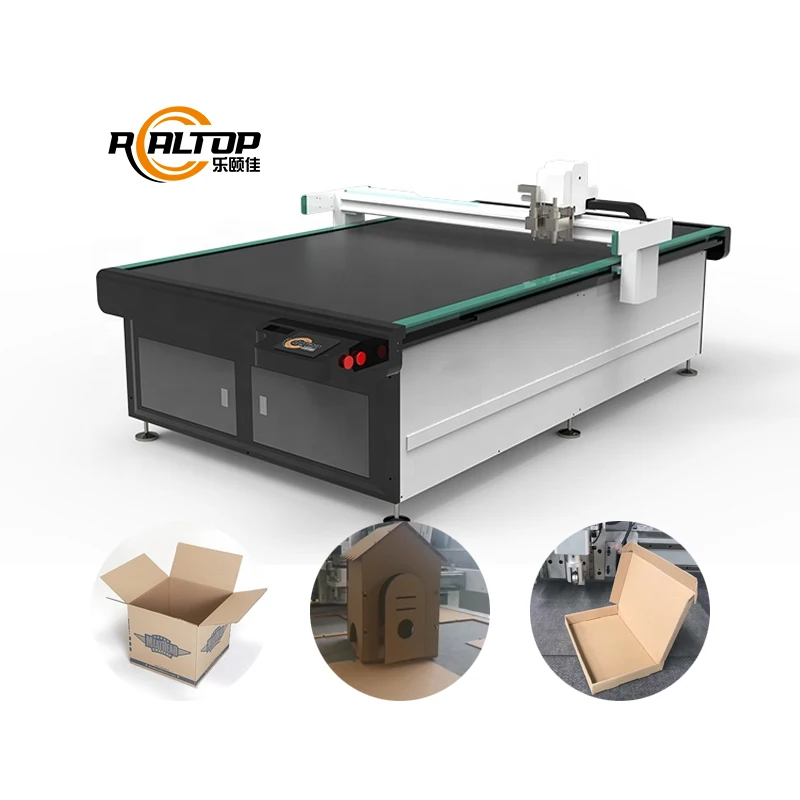
Built in Our Jinan Facility — Realtop engineers design and assemble this CNC oscillating knife cutting machine from the frame up, giving distributors full traceability from raw steel to factory-tested shipment rather than dealing with a trading company.
Technical Specifications
| Parameter | Value |
|---|---|
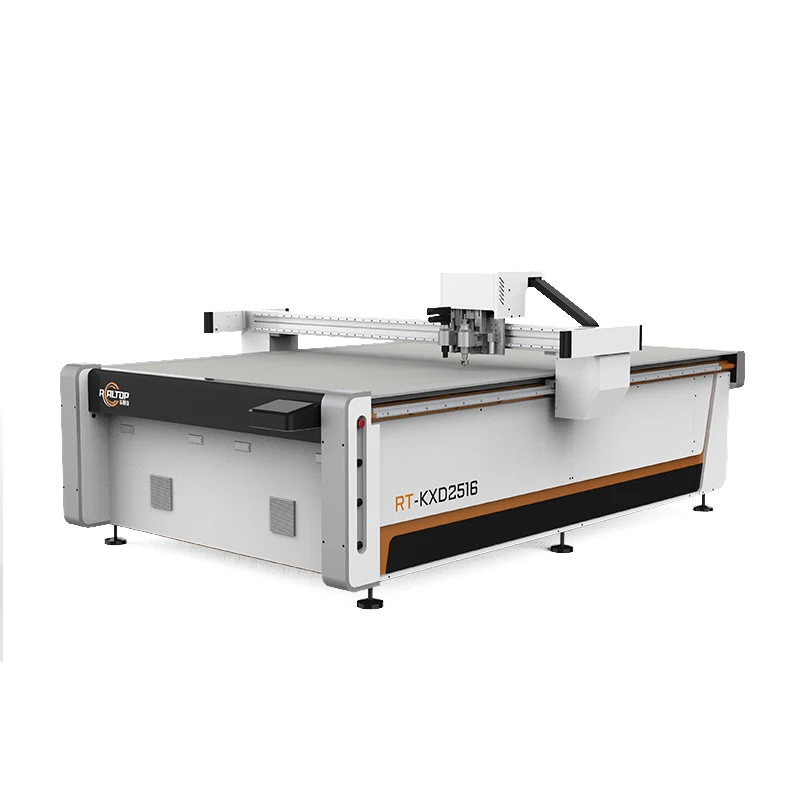
| Model | RT-D2516 / RT-S2516 |
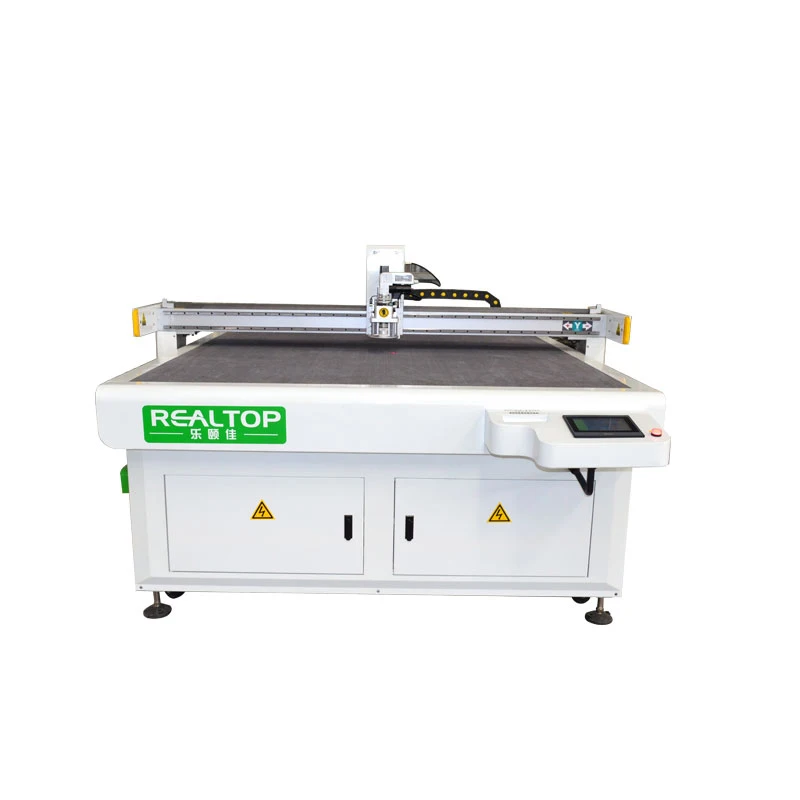
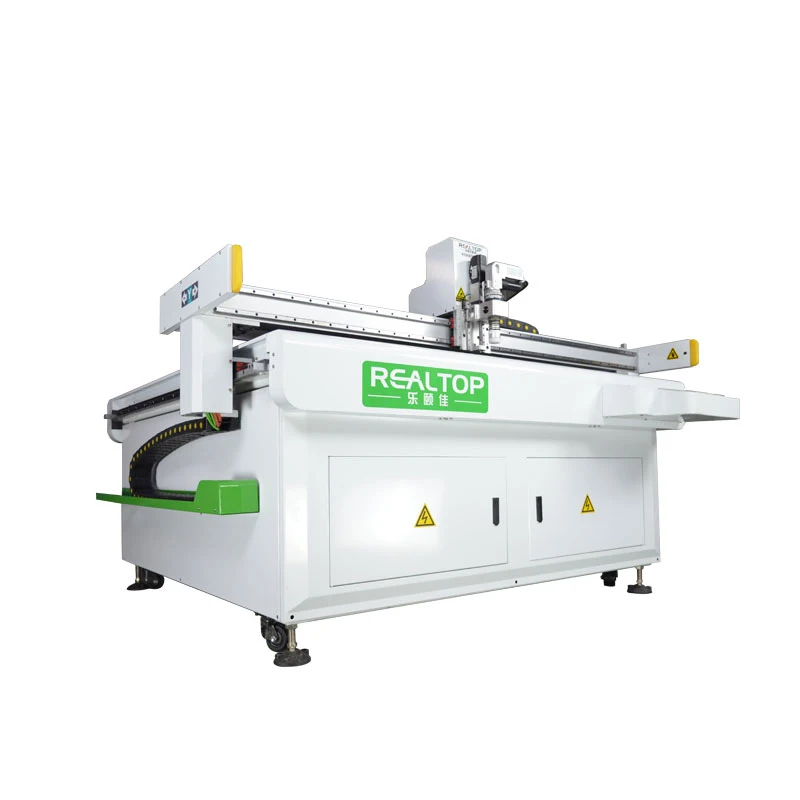
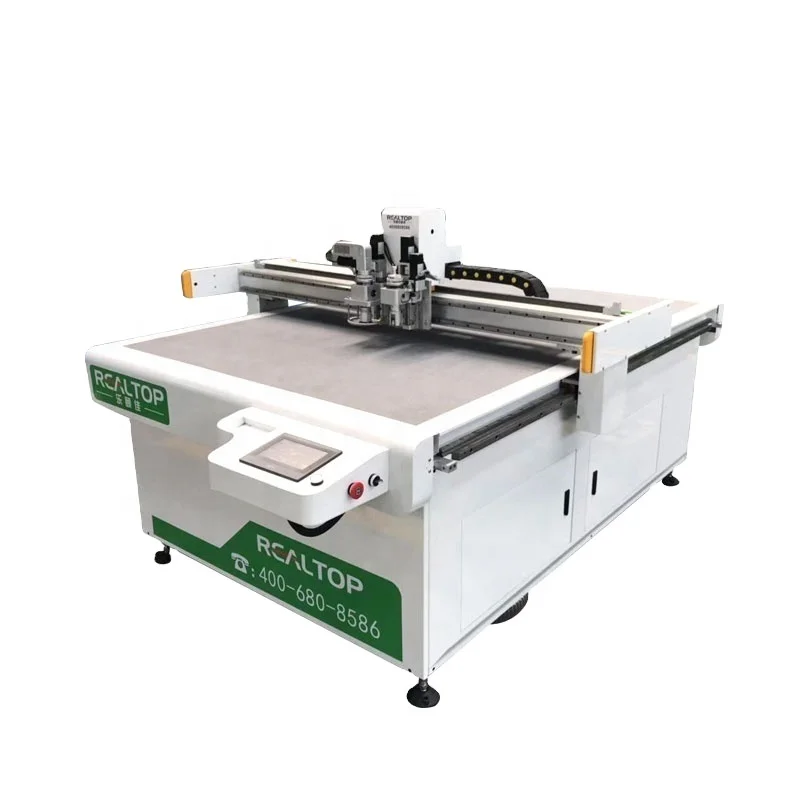
| Product Type | CNC Oscillating Knife Cutting Machine |
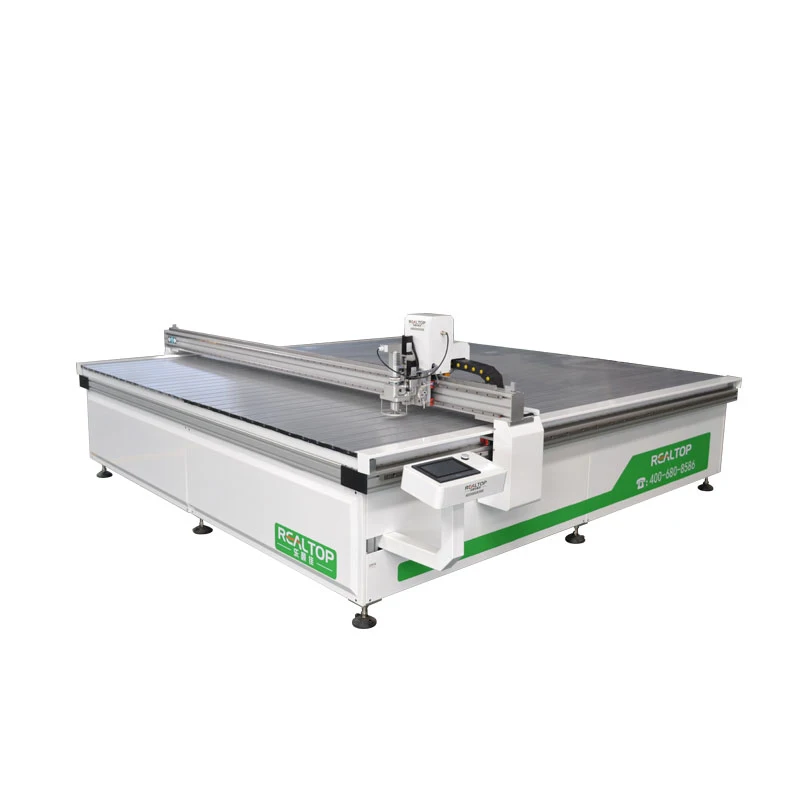
| Working Area | 1600 × 2500 mm |
| Overall Dimensions (L×W×H) | 3450 × 2300 × 1250 mm |
| Rated Power | 9 kW |
| Voltage | 380V ±10% (frequency to be confirmed per market) |
| Control System | CNC with HP-GL compatible format |
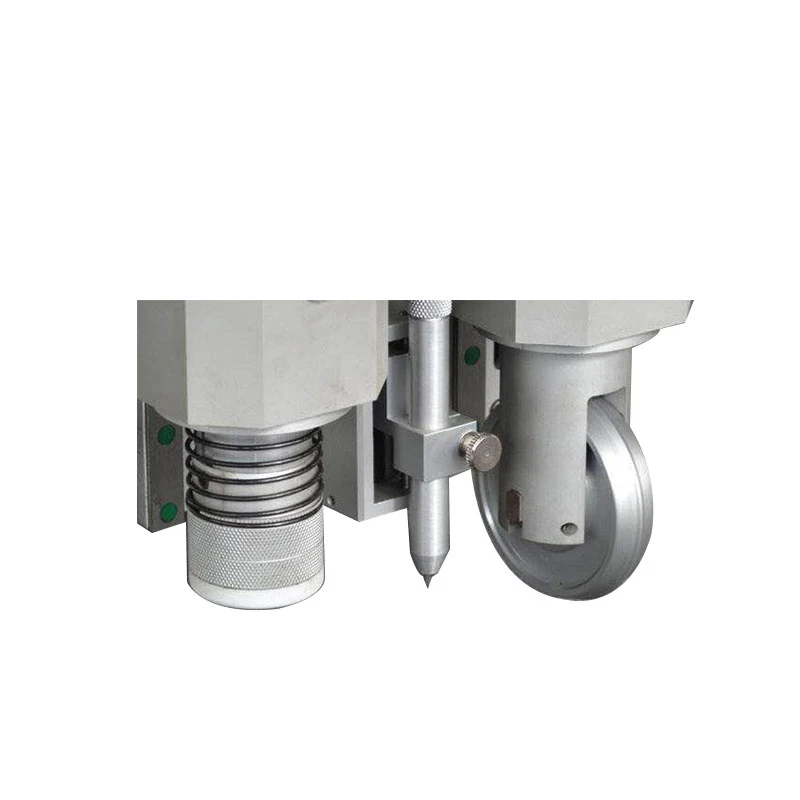
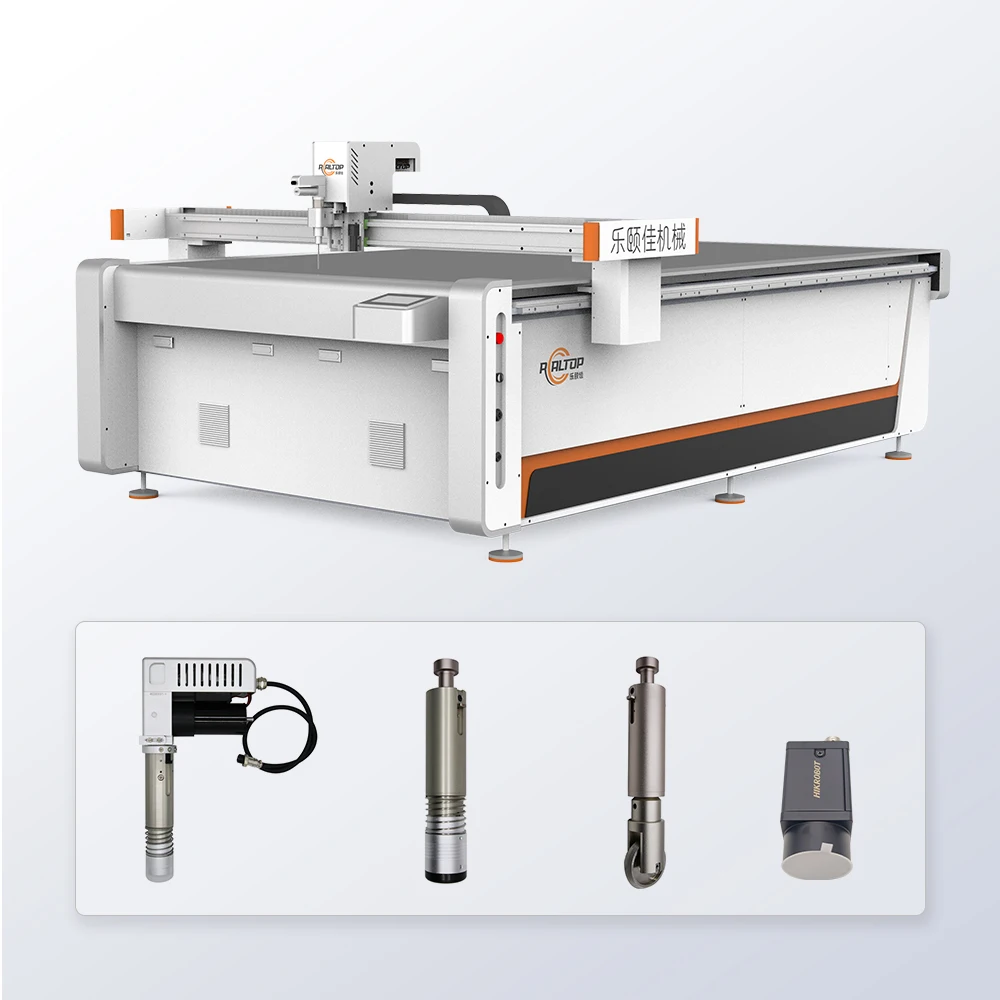
| Tool Head Options | Swiss imported oscillating knife, pneumatic knife, high-power vibrating knife, circular knife, V-cutting knife, drag knife, creasing wheel, dotted line knife, punching tool, brush |
| Visual Positioning | CCD camera mark point positioning / panoramic camera / projection positioning |
| Maximum Cutting Thickness | ≤100 mm (varies by material — confirm before order) |
| Translational Velocity | 800–1200 mm/s |
| Repeatability | ≤0.1 mm |
| Transmission System | Digital servo motor (Delta or Panasonic optional), Taiwan Hiwin linear guide, synchronous belt, ball screw |
| Vacuum Table | Magnesium-aluminum alloy with PVDF fluorocarbon coating, anodic and hard oxidation |
| Vacuum Pump | 7.5 kW with aviation aluminum shell and built-in silencer |
| Safety Devices | Infrared sensor stop, anti-collision beam sensors, emergency stop with in-situ resume |
| Optional Configuration | Auto-feeding system, Germany imported conveyor belt |
| Software Language | English, Russian, Italian, Chinese; custom languages available |
Application Suitability
| Application | Material or Output |
|---|---|
| Gasket and Sealing Pad Production | Rubber, silicone, PTFE, ETFE, fiberglass composites |
| Automotive Interior Trimming | PU foam, EVA, XPE, non-woven fabric, carpet |
| Composite Panel Fabrication | Fiberglass, PVC, PP, PE sheet and layered composites |
| Footwear and Luggage Manufacturing | Leather, textile, sponge, synthetic uppers |
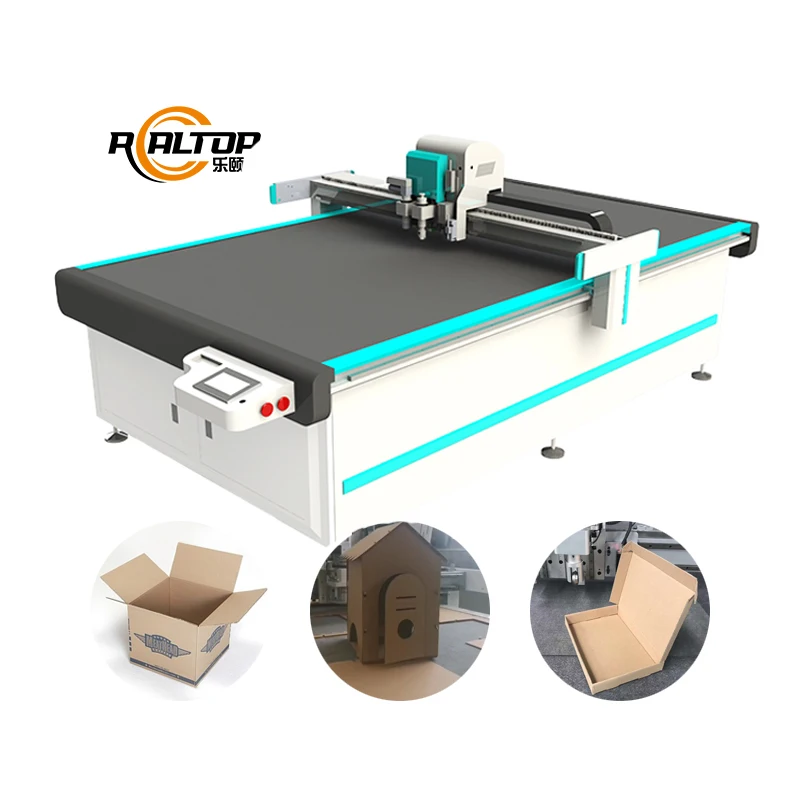
| Packaging and Carton Sample Making | Cardboard, corrugated board, sticker, film |
| Advertising and Signage | Foam board, PVC board, vinyl, corrugated plastic |
Why the Wrong Vacuum Table Ruins Small-Part Composite Cutting
Uniform suction across the entire bed is what separates a clean cut from a scrapped part.
When a distributor sends a CNC oscillating knife cutting machine manufacturer an order based only on working area, the machine arrives and struggles holding small gasket blanks or nested automotive interior pieces flat during high-speed cuts. The vacuum zoning never gets discussed until the first production run shows lifted edges and ragged contours [NEED_CITE: vacuum table zoning requirements for small-part cutting]. That discovery usually happens after the container has already cleared customs.
Frame Construction That Holds Geometry Over Years
The RT-D2516/RT-S2516 frame is welded from thick-walled seamless steel, then high-temperature tempered to relieve internal stress before final machining on a CNC machining center. This sequence matters because untreated weld stress releases slowly during the first year of operation, pulling the gantry out of square by fractions of a millimeter — enough to cause visible drag marks on composite surfaces. Realtop’s in-house machining center verifies flatness before the table leaves the factory floor.
Vacuum Table Surface Treatment for Chemical Resistance
The magnesium-aluminum alloy table undergoes three sequential surface treatments: PVDF fluorocarbon coating, anodic oxidation, and hard oxidation. Each layer serves a distinct purpose — the PVDF layer resists chemical attack from composite dust and adhesive residue, the anodic layer prevents galvanic corrosion where dissimilar metals meet, and the hard oxidation provides a wear surface that maintains flatness through years of material loading and unloading.
Servo Drive and Linear Guide Interaction at Speed
The digital servo motor (Delta or Panasonic optional) paired with Taiwan Hiwin linear rails and ball screw transmission delivers the repeatability rated at ≤0.1 mm. At translational velocities reaching 1200 mm/s, the servo must decelerate and reverse direction at corners without overshoot. The synchronous belt handles rapid traverses while the ball screw manages precision positioning — this dual-path transmission is what maintains dimensional accuracy when cutting intricate gasket profiles from PTFE or layered fiberglass composites [NEED_CITE: servo motor response requirements for CNC knife cutting].
Cutting Thickness Claims Versus Material Reality
The ≤100 mm cutting thickness specification applies to specific low-density foams and soft sponges. Dense rubber gasket stock, fiberglass-reinforced composites, and layered automotive interior materials each present different resistance to the oscillating knife. A Swiss imported oscillating knife handles the majority of flexible composites cleanly, but high-density silicone or thick PTFE sheets may require the high-power vibrating knife or pneumatic knife option. This is exactly why sample cutting on the buyer’s actual material must happen before the order is locked.
The Cost of Skipping Material-Specific Configuration
Distributors who specify a machine based on working area and price alone absorb the downstream cost when the end user discovers the default tool head cannot penetrate their actual production material. The oscillating knife designed for fabric tears through rubber gasket stock with ragged edges, the vacuum pump sized for large panels cannot hold small nested pieces flat, and the CCD camera configured for standard mark spacing cannot track high-density print registration at production speed [NEED_CITE: material-specific tool head selection in digital cutting]. Every one of these problems surfaces during the buyer’s first live production week.
Why Sourcing Directly From the Factory Floor Matters
Realtop operates both knife and laser cutting platform production within a single Jinan facility, meaning a distributor sourcing multiple machine types deals with one factory, one quality protocol, and one documentation standard. The in-house design team configures each RT-D2516/RT-S2516 for the buyer’s stated material range — tool head selection, vacuum zoning, and CCD calibration all happen on the factory floor before crating. Voltage and plug type are confirmed against the target market’s grid standards, and control language is set to match the end operator’s working language before the machine ships.
Documentation & Verification
- Machine specification sheet confirming tool head and table configuration for your material range
- Electrical schematic with voltage and frequency matched to your destination market grid
- Factory test record documenting cutting results on your submitted sample material
- CE declaration where applicable for your import jurisdiction requirements
- Complete spare parts list with part numbers and packing photographs for shipment cross-check
- Software license documentation and file format compatibility confirmation
Installation, Commissioning & Support
- The 3450 × 2300 × 1250 mm overall dimensions require a floor space with clearance for material staging on at least two sides
- The 9 kW rated power plus 7.5 kW vacuum pump demand a dedicated circuit matching 380V ±10% at your local frequency
- Machine ships fully assembled — no on-site frame welding or gantry alignment required
- First-run parameter tuning includes vacuum zone calibration, tool head depth setting, and CCD mark registration
- Operator training covers file import workflow, nesting optimization, and in-situ resume after emergency stop
- Spare oscillating knife blades, vacuum table seals, and drive belts included in initial shipment
What We Need to Quote Accurately
Send us the specific composite material type, typical sheet thickness range, and maximum sheet dimensions you process. Confirm your facility voltage and frequency so we build the electrical system to match. If your production workflow depends on a particular file format or nesting software, let us verify compatibility before the order goes to production.
Frequently Asked Questions
Q: Can I visit the Jinan factory and witness a test cut on my own composite material before placing an order?
A: Yes. We run your submitted material samples through the RT-D2516/RT-S2516 with the tool head and vacuum configuration proposed for your order. You receive a sample cutting report documenting edge quality, dimensional accuracy, and cutting speed achieved. This test happens before you commit to production.
Q: What OEM customization is available for distributors building a regional product line?
A: Branding on the machine body and control interface, voltage and plug type matched to your market, control panel language localization, and software translation are all configurable. We handle these at the factory level during assembly, not as field modifications after delivery.
Q: How is the machine frame manufactured, and what quality control steps are applied?
A: The frame is welded from thick-walled seamless steel, high-temperature tempered, then finish-machined on our CNC machining center. Dimensional inspection verifies flatness and squareness. The complete assembly undergoes a factory run test with documented results before crating.
Q: What documentation ships with the machine for customs clearance and end-user handover?
A: You receive the machine specification sheet, electrical schematic, voltage confirmation record, factory test record, CE declaration where applicable, operation and maintenance manual, software license note, and spare parts list with packing photographs.
Q: What is the typical lead time from order confirmation to a factory-tested, ready-to-ship machine?
A: Typical multi-week lead times apply, depending on the tool head configuration and optional equipment selected. The timeline includes material sample testing, assembly, factory run test, and documentation preparation before the machine is cleared for crating and shipment.
You may also like

商品评价
Clear filtersThere are no reviews yet.