

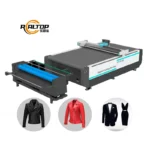
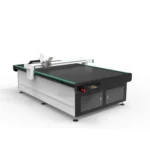
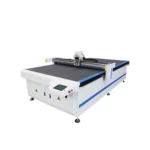
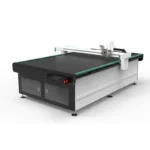

-
 Courier delivery
-
 DHL Courier delivery
-
 Warranty 1 year
-
 Free 30-Day returns

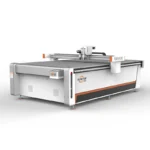
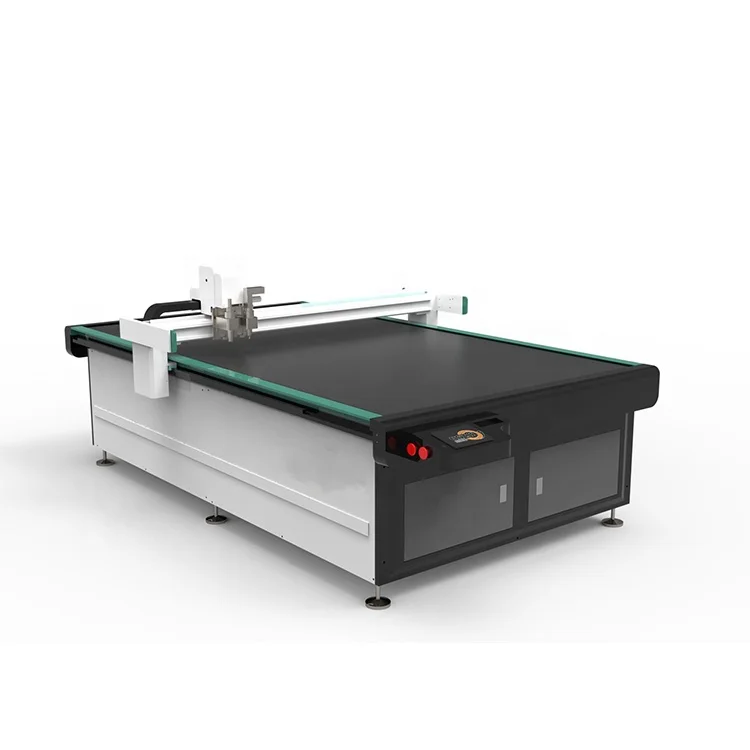
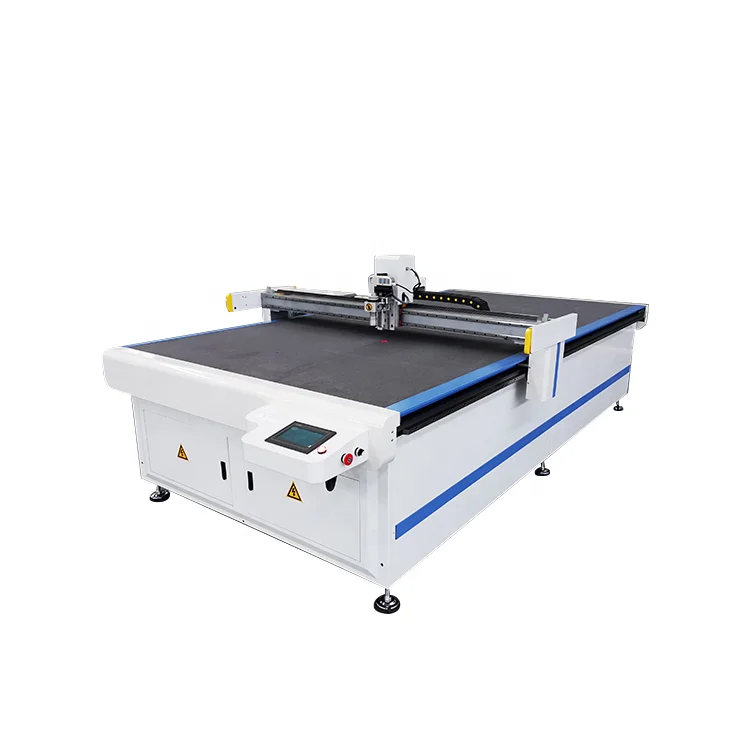
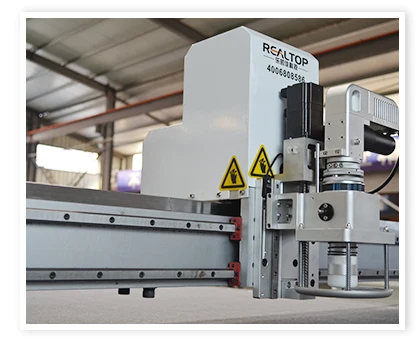
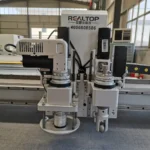
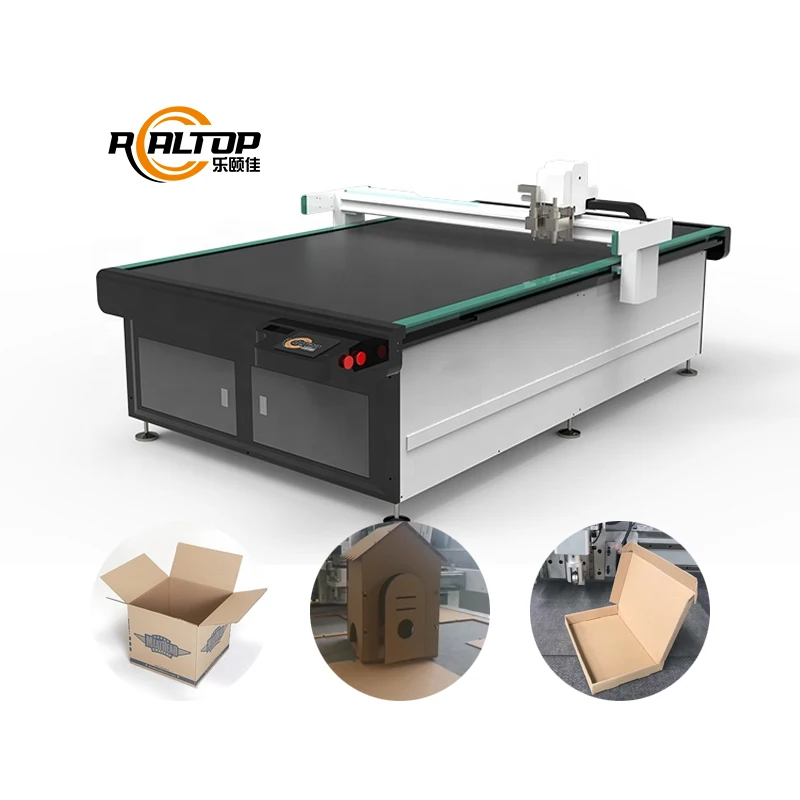
Precision-Welded Frame Construction — Every RT-D2516/RT-S2516 chassis undergoes high-temperature tempering after seamless steel welding, then finishes on a CNC machining center to eliminate residual stress before assembly.
Technical Specifications
| Parameter | Value |
|---|---|
| Model | RT-D2516/RT-S2516 |
| Working Area | 1600×2500 mm |
| Overall Dimensions | 3450×2300×1250 mm |
| Rated Power | 9 kW |
| Voltage | 380V±10% |
| Table Type | Flat working table with vacuum adsorption |
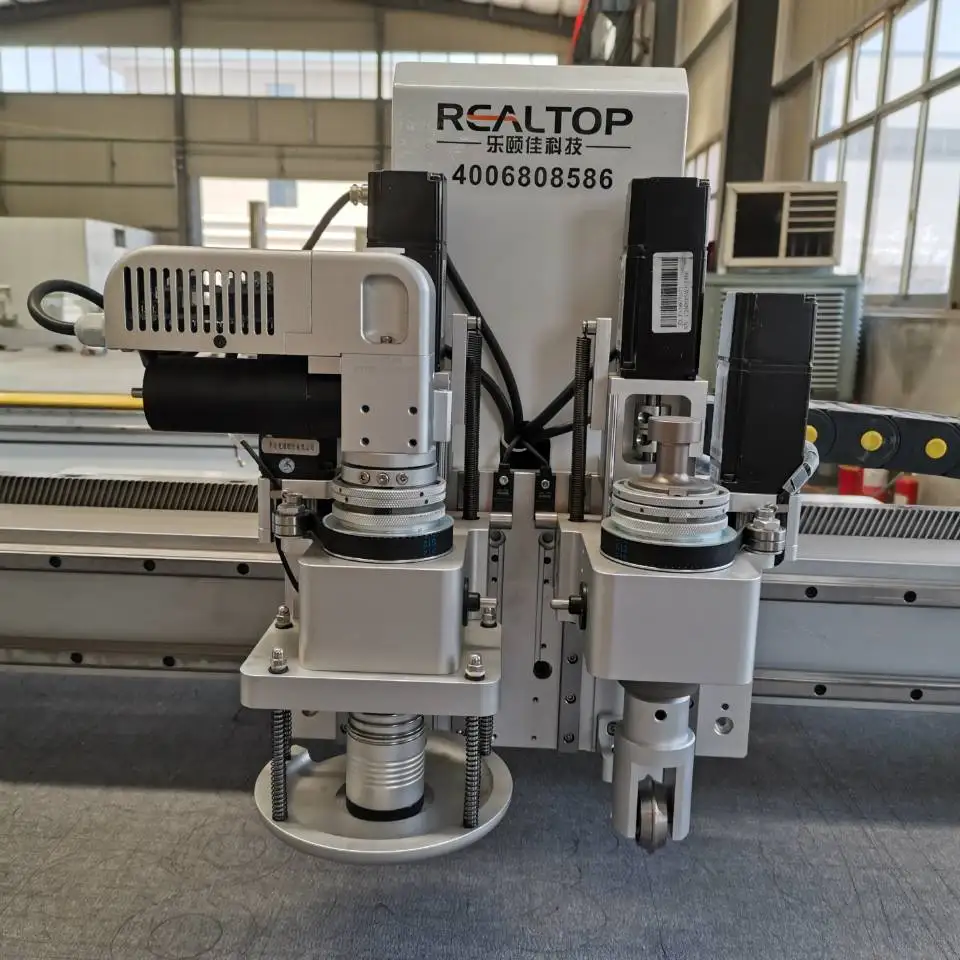
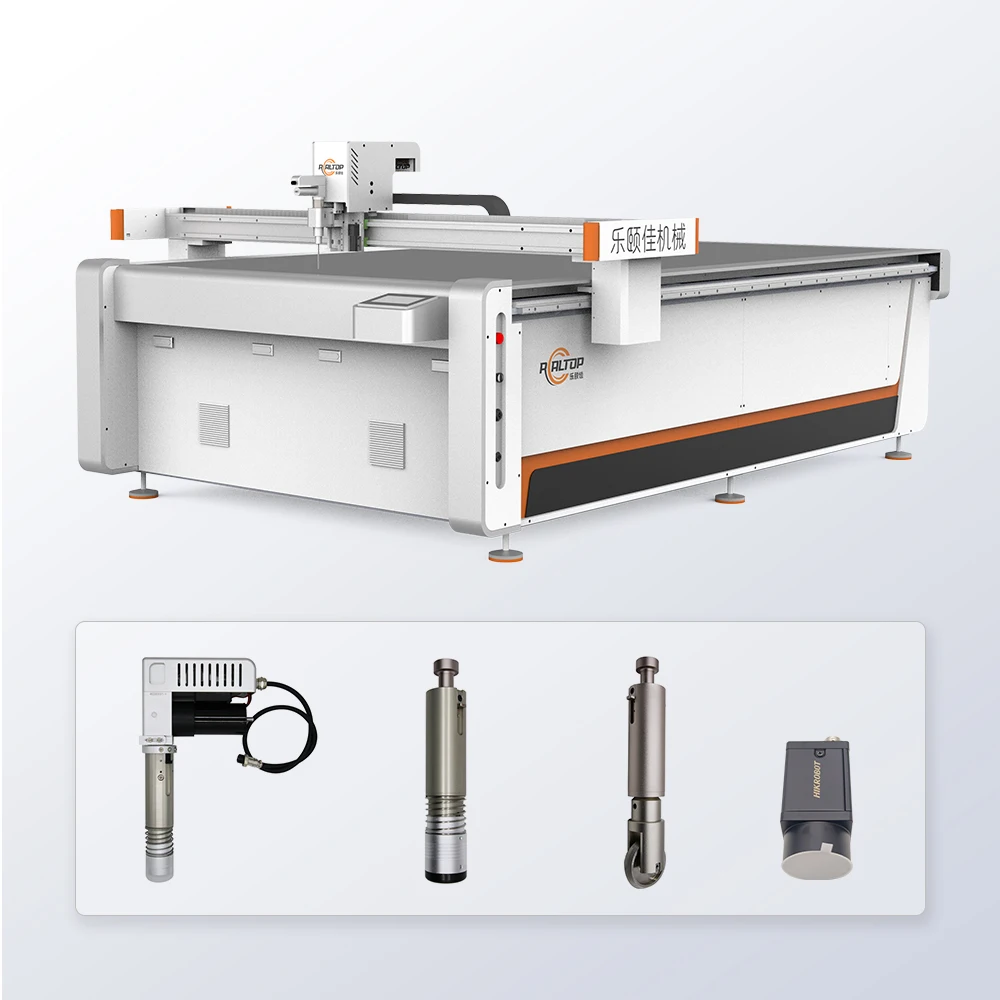
| Tool Head | Swiss-imported oscillating knife with vibration full/half cutting and cursor location |
| Safety Devices | Infrared sensors, anti-collision blocking, emergency stop |
| Translational Velocity | 800–1200 mm/s |
| Cutting Thickness | 20–80 mm depending on material (basis not stated in source) |
| Repeated Accuracy | ≤0.1 mm |
| Transmission System | Digital servo motor, linear guide, synchronous belt, ball screw |
| Vacuum Pump | 7.5 kW |
| Control / File Formats | HP-GL compatible |
| Motion Components | Delta servo motor, Taiwan Hiwin rail, Germany-imported conveyor belt |
| Language Options | English, Russian, Italian, Chinese; special languages configurable |
Application Suitability
| Application | Material or Output |
|---|---|
| Automotive interior trimming | Carbon fiber prepreg, fiberglass sheets, acoustic insulation foam |
| Gasket and seal fabrication | PTFE, ETFE, rubber compounds, composite fiber sheets |
| Footwear and luggage panel cutting | PU, EVA, XPE foam, synthetic leather, textile layers |
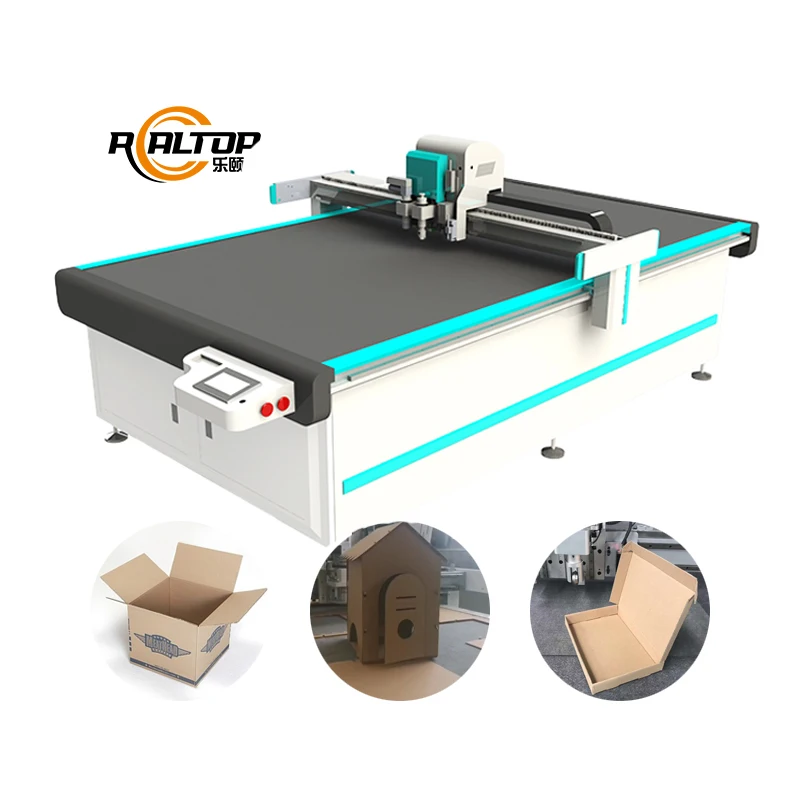
| Packaging sample making | Corrugated cardboard, sticker film, corrugated board |
| Industrial composite layup | Multi-layer prepreg stacks, resin-infused fabric panels |
| Signage and graphic finishing | PVC board, foam board, vinyl, adhesive film |
Why Frame Rigidity Decides Cutting Accuracy on Composites
A flatbed digital cutting table must resist dynamic vibration across every stroke, especially when an oscillating knife cycles through dense fiberglass or layered prepreg. If the frame flexes under load, the tool path drifts and edge quality degrades — often only visible after an entire batch is cut. The RT-D2516/RT-S2516 addresses this with thick-walled seamless steel tube welding followed by high-temperature tempering and CNC machining center finishing.
I once worked with a Middle East composite fabricator who experienced ragged edges on carbon fiber panels. The issue traced back to frame vibration on their previous machine, where the weld seams had not been stress-relieved. After switching to a thermally tempered frame structure, the cut tolerances held consistently through long production runs. When you are evaluating a CNC oscillating knife cutting machine manufacturer, the welding protocol and post-treatment process deserve as much scrutiny as the servo brand or the spindle specs [NEED_CITE: structural stress-relief standards for CNC machine frames].
Seamless Steel Construction and Thermal Tempering
The frame starts as thick-walled seamless steel tube, welded into a single rigid structure. After welding, the entire frame enters a tempering cycle at controlled temperature to release internal stress from the heat-affected zones. This is the step many workshops skip to save time, but it prevents the frame from warping months into service. The CNC oscillating knife cutting machine manufacturer completes the process by running the frame across a CNC machining center, which mills the rail mounting surfaces to a flat reference plane. This is what holds the ≤0.1 mm repeatability specification across the full 1600×2500 mm working area.
Vacuum Table Engineering for Composite Holding
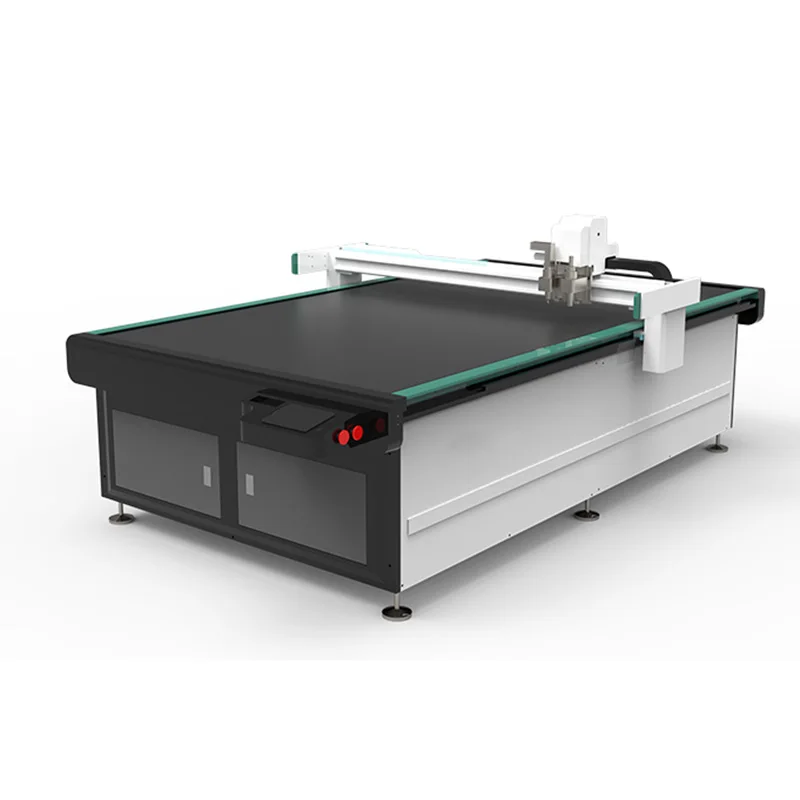
The magnesium-aluminum alloy vacuum table receives fluorocarbon PVDF powder spraying and anodic oxidation treatment. This gives the surface high flatness for consistent material contact and corrosion resistance against resin off-gassing from prepreg materials. The 7.5 kW vacuum pump is housed in an aviation aluminum shell with built-in silencer sponge, reducing noise on the shop floor while resisting chemical exposure. Zoning is configured to match the sheet sizes typical in composite layup, so small gasket blanks hold as securely as full 1600×2500 mm panels [NEED_CITE: vacuum zoning design for CNC flatbed cutting tables].
Decoding the Specs That Matter in Production
The 800–1200 mm/s translational velocity defines how fast the knife head moves between cuts, not through them — actual cutting speed depends on material density and thickness. The Swiss-imported oscillating knife cycles at high frequency to shear through composite fibers cleanly, which matters far more than travel speed when you cut 20 mm fiberglass or layered prepreg. The Delta servo motors paired with Taiwan Hiwin linear guides provide the positional accuracy that keeps nested gasket patterns within tolerance. HP-GL compatibility means the control accepts files from most CAD nesting software used in composite shops, but file format and nesting workflow should be confirmed before order placement.
When the Wrong Configuration Costs a Production Run
Selecting a tool head by machine model rather than by material is one of the most common mistakes in composite cutting. An oscillating knife that handles EVA foam cleanly will crush carbon fiber prepreg if the vibration frequency and blade geometry do not match the resin content and fiber orientation. I have seen workshops replace blades weekly because the configuration was never validated against their actual production material. The same applies to vacuum hold-down: insufficient zoning on small gasket pieces causes material lift during cutting, producing dimensional errors that only surface during assembly downstream [NEED_CITE: tool head selection criteria for composite CNC cutting].
Why Procurement Teams Choose This Build
Realtop operates an in-house design team and core factory covering both knife and laser platforms, so the cutting method is matched to the material rather than forced into one technology. The frame welding and tempering is done under the same roof, giving the CNC flatbed digital cutting table OEM full traceability from raw tube to finished machine. Voltage, control language, and tool head configuration are specified per order and confirmed before production starts. Every machine ships with a sample cutting report run on the buyer’s own material, so edge quality and tolerance are documented before the crate leaves Jinan. The CE declaration is included where applicable for European market entry.
Documentation & Verification
- Machine specification sheet listing every confirmed component and dimension
- Electrical schematic with voltage and frequency matched to destination market
- Tool head and vacuum table configuration list tied to your material type
- Sample cutting report on buyer-supplied composite material before dispatch
- Factory test record documenting accuracy verification across the full working area
- Software license and HP-GL file format compatibility note for your nesting workflow
Installation, Commissioning & Support
- Requires level concrete floor capable of supporting the 3450×2300×1250 mm footprint
- Dedicated 380V±10% circuit with proper grounding for the 9 kW rated load
- Arrives partially assembled; rail and gantry alignment completed on site
- First-run parameter tuning on your composite material thickness and type
- Operator training covers tool head changeover, nesting workflow, and vacuum zoning setup
- Spare parts list includes oscillating knife blades, vacuum seals, and drive belts
Before You Request a Quote
To configure the RT-D2516/RT-S2516 correctly, share the composite material type, resin content if known, sheet dimensions, and daily cutting volume. Specify your local voltage and frequency standard, preferred control language, and any existing nesting software in use. If edge quality on a specific prepreg or fiberglass grade is critical, send a material sample for a 72-hour continuous cutting validation before final configuration is locked.
Frequently Asked Questions
Q: How does the core factory ensure frame stability and precision over the machine’s service life?
A: The frame is built from thick-walled seamless steel tube, welded into a single structure, then high-temperature tempered to relieve internal stress. After tempering, a CNC machining center mills the rail mounting surfaces flat. This process prevents the warping and accuracy drift that appears months after installation on untreated frames.
Q: What is the extent of your OEM and ODM capability for custom CNC cutting configurations?
A: The in-house design team and core factory handle custom table sizes, tool head combinations, vacuum zoning layouts, and control language options. Configurations are engineered around the buyer’s specific material and production workflow, then documented in a specification sheet and sample cutting report before production commitment.
Q: How is the vacuum table zoning designed and tested to handle specific composite material dimensions?
A: The magnesium-aluminum table is divided into independently controlled vacuum zones sized to match the buyer’s typical sheet and blank dimensions. Each zone is tested with the actual material to confirm sufficient hold-down force, preventing lift on small gasket pieces during high-frequency oscillating knife cuts.
Q: Can you provide build-quality documentation before we place a bulk import order?
A: Yes. The factory provides a machine specification sheet, electrical schematic, factory test record, sample cutting report on the buyer’s material, and packing photographs. A facility visit or detailed photo documentation of the welding, tempering, and assembly process can be arranged before order confirmation.
You may also like

商品评价
Clear filtersThere are no reviews yet.