




-
 Courier delivery
-
 DHL Courier delivery
-
 Warranty 1 year
-
 Free 30-Day returns

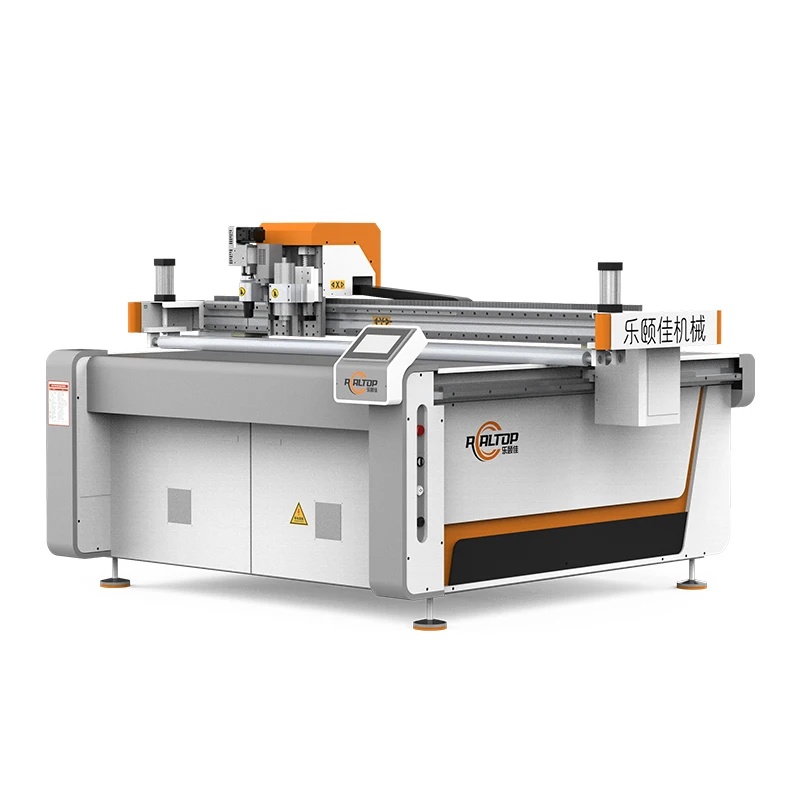
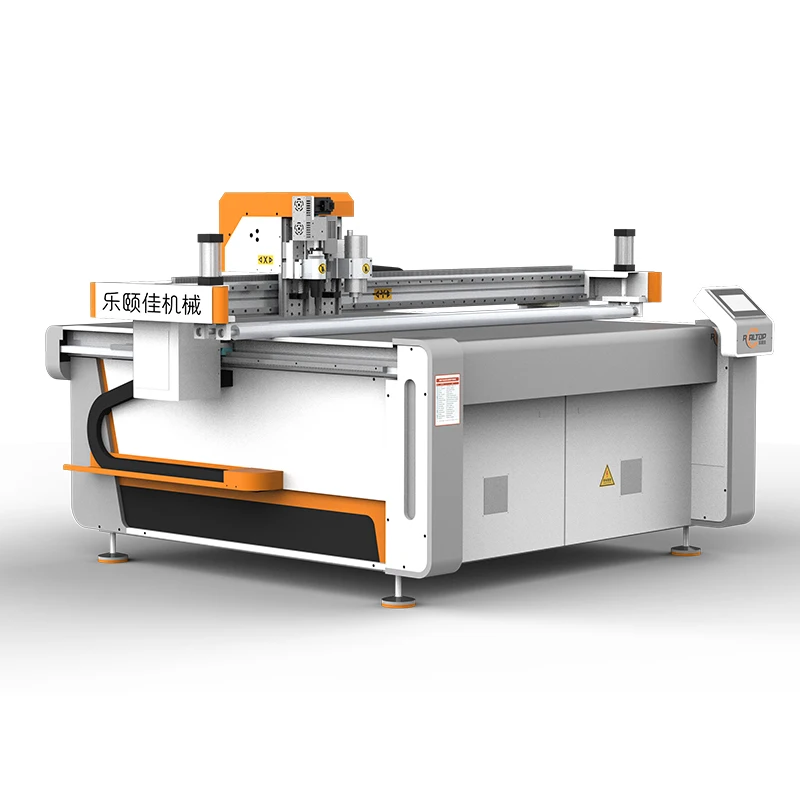
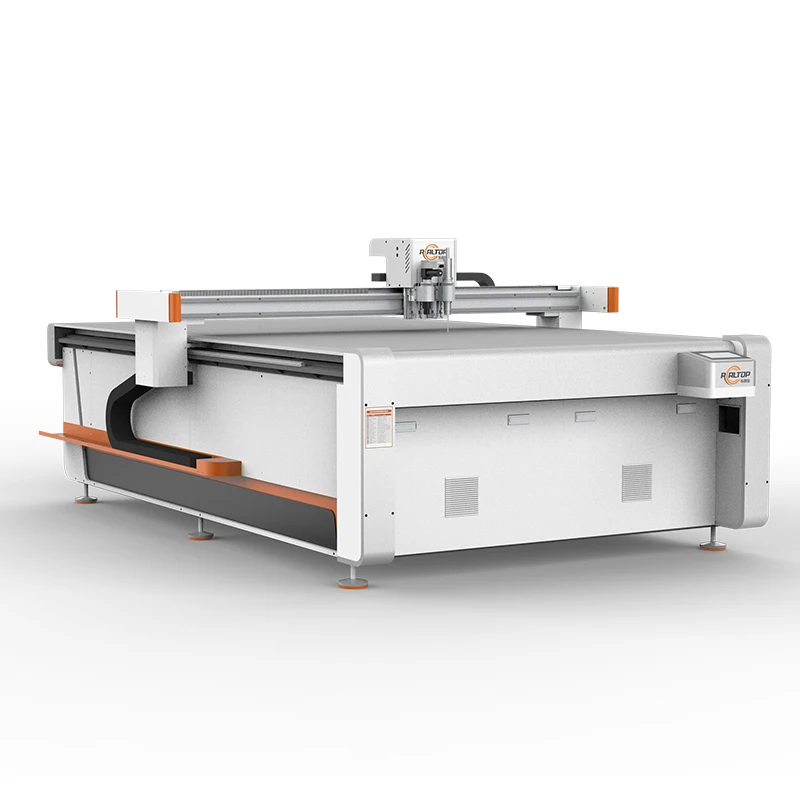
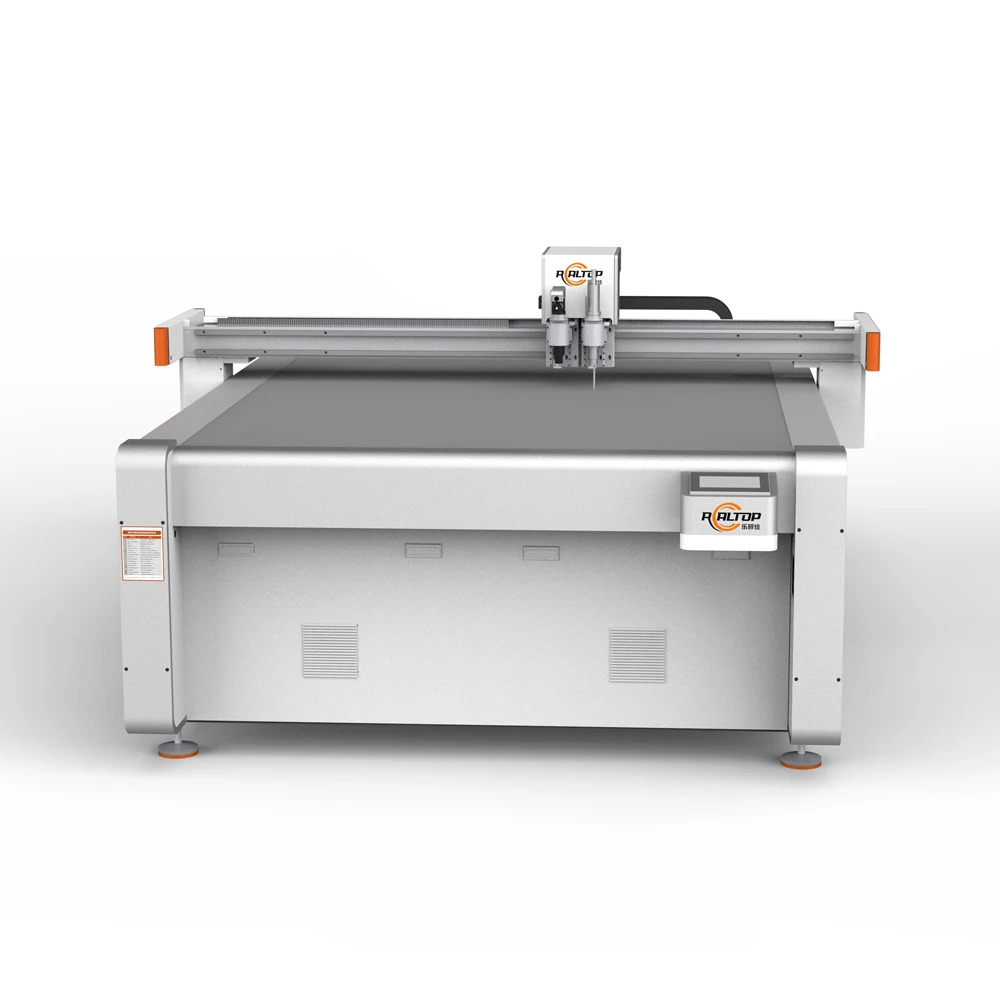
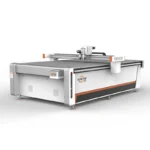
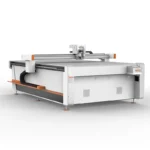
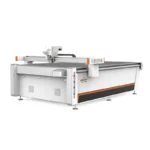
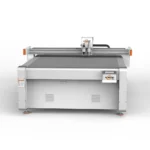
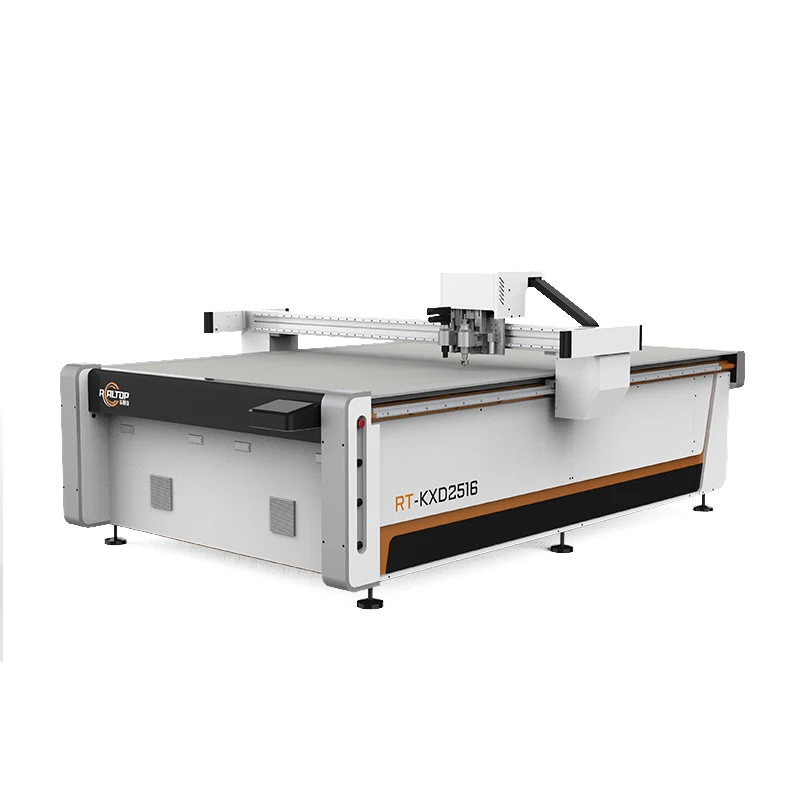
Thick-Walled Steel Frame Construction — Every RT-D2516/RT-S2516 chassis is welded from seamless steel tube, stress-relieved at high temperature, and finished on a CNC machining center before assembly begins.
Technical Specifications
| Parameter | Value |
|---|---|
| Model | RT-D2516 / RT-S2516 |
| Product Type | CNC Oscillating Knife Cutting Machine |
| Working Area | 1600 × 2500 mm |
| Machine Dimensions | 3450 × 2300 × 1250 mm |
| Rated Power | 9 kW |
| Table Type | Flat vacuum working table |
| Cutting Thickness Capacity | ≤100 mm (basis varies with material density and layer structure — confirm on sample) |
| Translational Velocity | 800 – 2000 mm/s |
| Cutting Speed Range | 200 – 800 mm/s (depending on material) |
| Repeated Positioning Accuracy | ≤0.1 mm |
| Transmission System | Digital servo motor, linear guide, synchronous belt, ball screw |
| Tool Head Options | Oscillating knife, pneumatic knife, high-power vibrating knife, circular knife, V-cutting knife, drag knife, creasing wheel, dotted-line knife, punching, brush |
| Visual Positioning Options | Small CCD mark-point positioning, panoramic camera recognition, projection positioning |
| Vacuum Table Material | Magnesium-aluminum alloy with PVDF fluorocarbon coating and hard anodic oxidation |
| Vacuum Pump | 7.5 kW, integrated aviation aluminum shell with built-in silencer |
| Frame Construction | Welded thick-walled seamless steel, high-temperature tempering, CNC machining center finish |
| Instruction Format | HP-GL compatible |
| Voltage | 380 V ±10 % |
| Safety System | Infrared sensors with anti-collision beam blockers |
Application Suitability
| Application | Material or Output |
|---|---|
| Acoustic panel fabrication | PET fiber board, polyester fiber acoustic panels, foam-core composites |
| Automotive interior trim | Sponge composite leather, soft-touch instrument panel substrates, door panel laminates |
| Gasket and seal production | Rubber sheet, silicone, PVC soft glass, non-asbestos fiber composites |
| Signage and display | Foam board, corrugated plastic, PVC foam, lightweight composite sheets |
| Flexible material conversion | Leather, garment textiles, multi-layer fabric layups |
Why a 1600 × 2500 Working Area Means Nothing Without Material Validation
Cutting depth capability is not a single number — it shifts with material density, layer adhesion, and moisture content.
I watched a composite fabricator order a flatbed cutter based entirely on working area. The machine arrived, and their acoustic panels — denser than the test samples — refused to cut cleanly at the listed thickness. The oscillating knife stalled mid-stroke, leaving ragged edges on every panel. That failure was not the machine’s fault. It was the specification process that skipped material testing. [NEED_CITE: cutting force requirements by composite material density]
When a buyer specifies a CNC oscillating knife cutting machine manufacturer for composite work, the conversation must start with the actual material stack, not the brochure dimensions.
Frame Rigidity Under Continuous Composite Loads
Acoustic panels and multi-layer laminates impose uneven cutting resistance across the beam travel. The RT-D2516/RT-S2516 frame addresses this through thick-walled seamless steel tube welding followed by high-temperature tempering — a process that relieves internal stress before the frame ever reaches the CNC machining center. Without this sequence, microscopic frame deflection accumulates over production runs, and repeated accuracy degrades past the ≤0.1 mm specification within months of operation.
Vacuum Zoning for Irregular Composite Parts
A CNC oscillating knife cutting machine manufacturer must match vacuum table zoning to the actual part geometry the buyer produces. The magnesium-aluminum alloy table on this system carries PVDF fluorocarbon coating and hard anodic oxidation for flatness retention, but flatness alone does not hold small gaskets or narrow trim strips in place. The 7.5 kW vacuum pump with integrated silencer delivers suction across the 1600 × 2500 mm surface, and zoning configuration determines whether a 50 mm-wide acoustic baffle strip stays flat or lifts at the trailing edge during the final pass.
Reading the Specification Sheet Beyond Surface Numbers
The Swiss-imported oscillating knife head performs full cutting, half cutting, and cursor location from a single tool station — this matters when a composite part requires kiss-cutting a release liner without penetrating the substrate below. Cutting speed is listed at 200–800 mm/s, but the achievable rate depends on material hardness and total stack thickness. [NEED_CITE: oscillating knife cutting speed correlation with material Shore hardness] The Delta servo motor and Taiwan Hiwin linear guide combination maintains positional accuracy during direction reversals, which is where most contour errors originate on dense composite panels. HP-GL instruction compatibility means nesting software must output to that format; confirming this before order avoids workflow deadlocks after installation.
What Happens When the Tool Head Does Not Match the Material
A drag knife dragged through 40 mm acoustic PET fiber board produces crushed edges and delaminated layers. A standard oscillating knife on silicone rubber generates heat buildup that melts the cut channel closed. Each tool head option — pneumatic knife, high-power vibrating knife, circular knife, V-cutting knife — exists because no single blade geometry handles the full range of composites and flexible materials. The cost of wrong selection shows up as scrap rate increase on the shop floor, not in the quotation comparison. [NEED_CITE: tool head selection criteria for composite and elastomer materials]
What the Factory Builds Before the Machine Ships
In-house design and production covers the full chain: frame welding, CNC machining, tool head integration, and control system configuration — buyers deal with the engineering floor, not a trading desk. Voltage and plug specifications are confirmed against the buyer’s facility power supply before production starts, not adjusted after the crate is built. The CCD camera positioning options — mark-point, panoramic, or projection — are selected based on whether the buyer’s workflow involves printed contour following or blank-sheet nesting. Software licence and file format compatibility are documented before the machine leaves Jinan. [NEED_CITE: CE machinery directive documentation requirements for CNC cutting equipment] Every unit ships with a factory test record run on material samples matching the buyer’s specification.
Documentation & Verification
- Machine specification sheet listing confirmed tool head and vacuum zone configuration
- Electrical schematic with voltage and frequency matched to buyer facility
- Sample cutting report on buyer-supplied composite material with edge quality photographs
- Factory test record documenting positional accuracy and cutting speed on confirmed material
- Software licence documentation with HP-GL format compatibility confirmation
- Spare parts list covering oscillating knife blades, vacuum seals, and guide bearings
Installation, Commissioning & Support
- Foundation must support 3450 × 2300 mm footprint with level tolerance for the magnesium-aluminum vacuum table
- Dedicated 380 V ±10 % circuit rated for 9 kW continuous draw plus 7.5 kW vacuum pump startup surge
- Machine ships partially assembled; beam and gantry require on-site alignment to CNC-machined frame datum points
- First-run calibration verifies ≤0.1 mm repeated accuracy across the full 1600 × 2500 mm working envelope
- Operator training covers tool head changeover between oscillating, drag, and circular knife configurations
- Preventive maintenance schedule for Hiwin rail lubrication, synchronous belt tension, and vacuum pump silencer inspection
Preparing Your Inquiry
Share the specific composite material type, sheet dimensions, and maximum thickness you intend to cut. Include your facility voltage and frequency, the CAD or nesting software you currently use, and whether printed contour recognition is part of your workflow. If you can send physical material samples, we run cutting tests before proposing a configuration.
Frequently Asked Questions
Q: How is cutting thickness verified for my specific composite panel density?
A: We request a physical sample of your material and run cutting tests at multiple thickness levels using the tool head configuration recommended for your material type. The sample cutting report documents edge quality, achievable speed, and maximum clean-cut depth before any order commitment is made.
Q: What customization range exists for frame size and tool head configuration?
A: The RT-D2516/RT-S2516 platform supports multiple tool head combinations selected from oscillating, pneumatic, vibrating, circular, drag, and V-cutting options. Working area and frame dimensions can be adjusted for specific production requirements, with all modifications engineered and manufactured in-house rather than outsourced.
Q: How does the factory test record confirm build quality?
A: Before dispatch, each machine runs a documented test cycle on material matching the buyer’s specification. The record captures positional accuracy verification, cutting speed confirmation, vacuum holding performance, and tool head function across all installed tools. This report ships with the machine.
Q: What voltage and control language options are confirmed before production?
A: Voltage and plug type are confirmed against the buyer’s facility power supply documentation before the electrical build begins. Control system language is specified at the same stage. Both are recorded on the electrical schematic and specification sheet that accompany the shipment.
Q: How are spare parts supplied for the oscillating knife and vacuum system?
A: The spare parts list shipped with each machine covers consumable blades, vacuum table seals, guide rail bearings, and pump silencer elements. Availability timelines for each part category are documented so buyers can plan reorder schedules against their production volume.
You may also like

商品评价
Clear filtersThere are no reviews yet.