


-
 Courier delivery
-
 DHL Courier delivery
-
 Warranty 1 year
-
 Free 30-Day returns

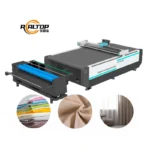
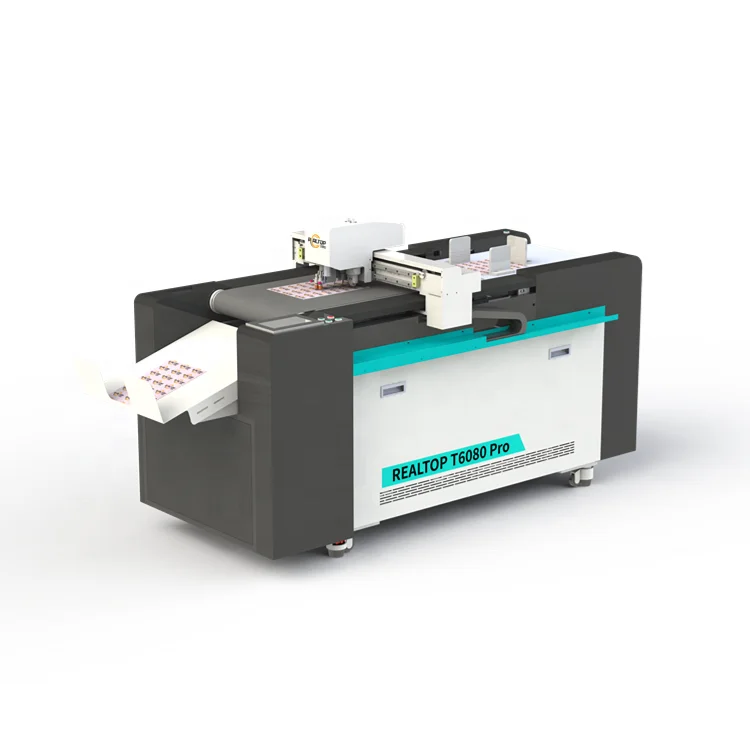
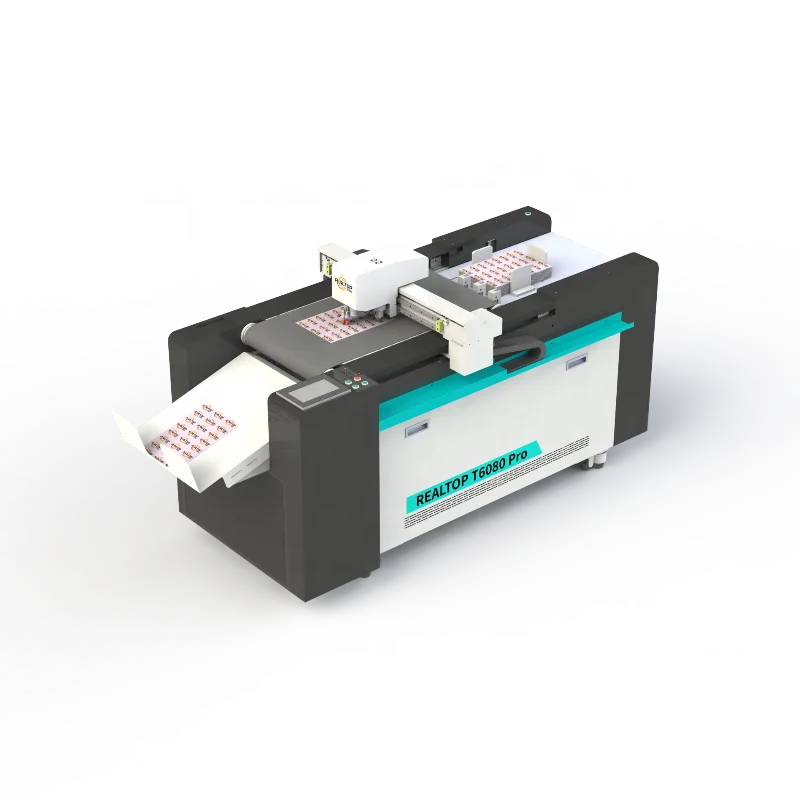
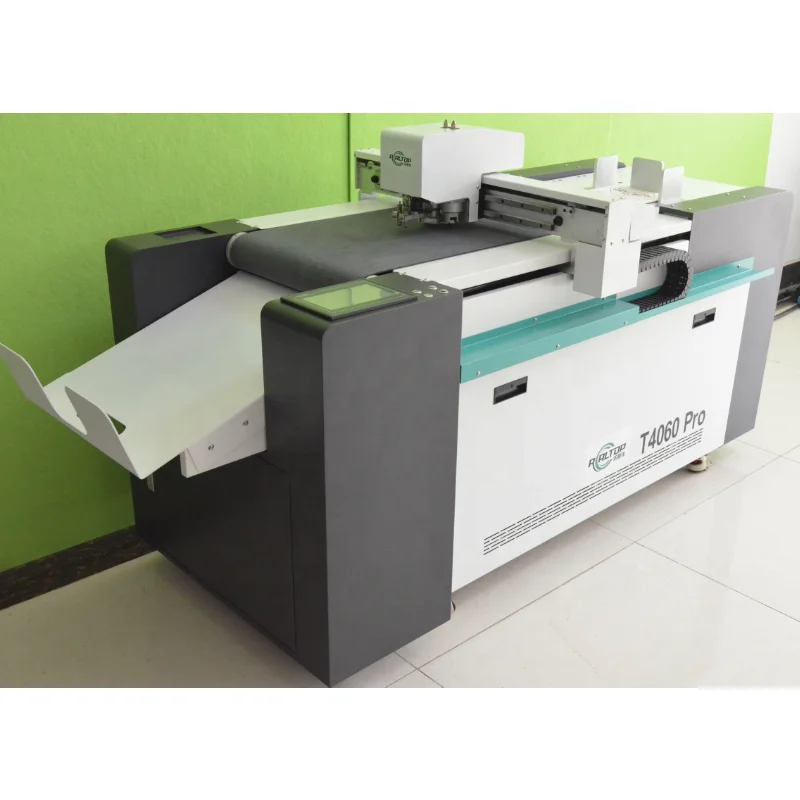
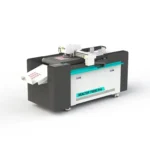
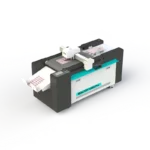
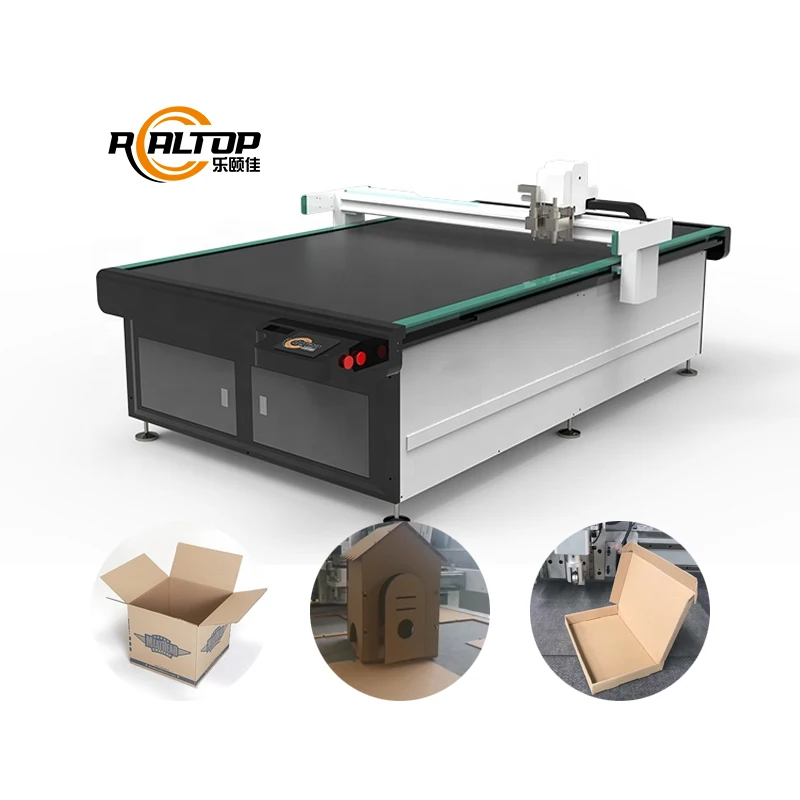
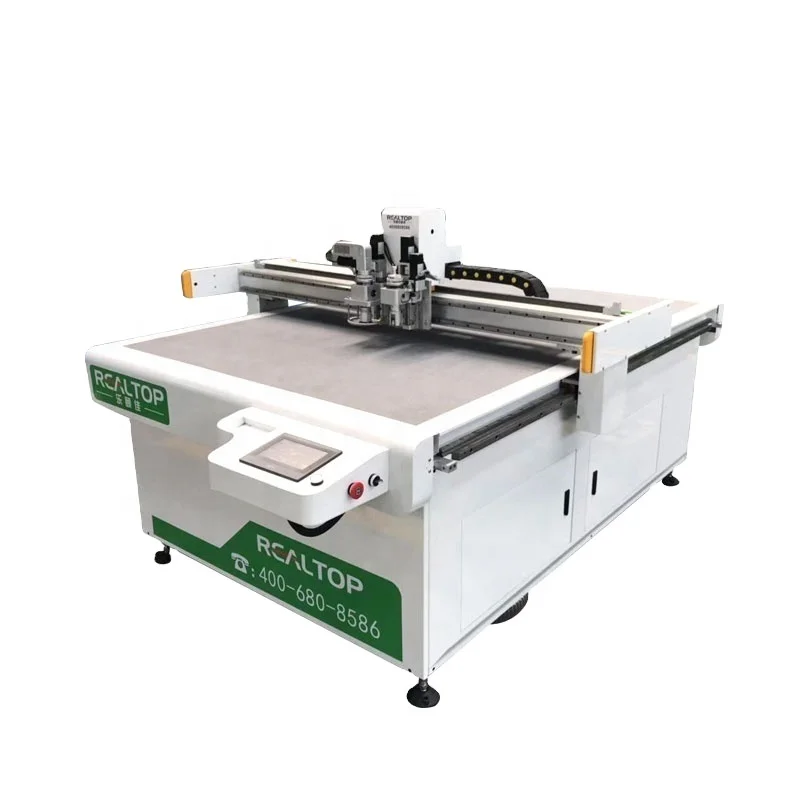
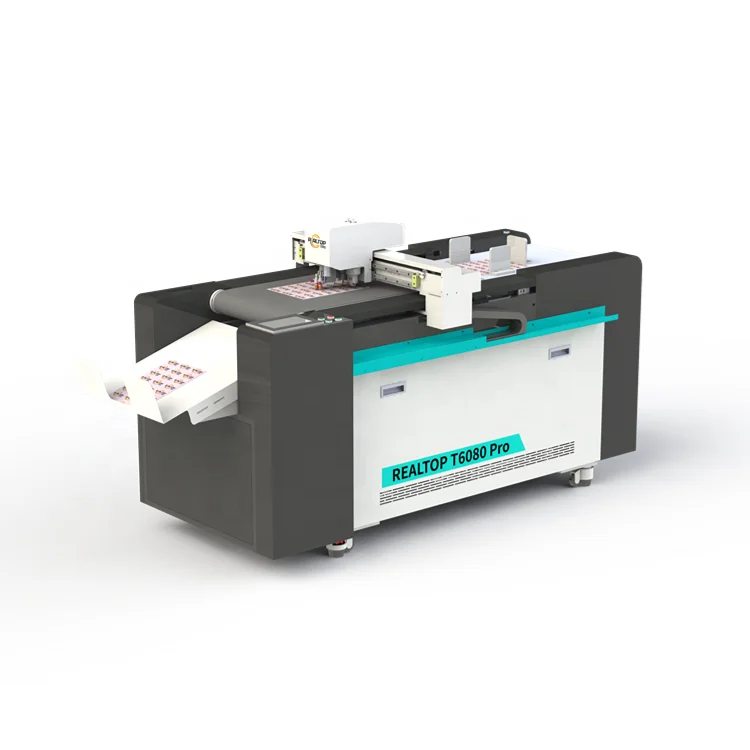
In-House Knife Cutting Design — the RTT-6080 / RTT6080 Pro platform is engineered, assembled and tested under one roof so the cutting tool, kiss cutting tool and CCD camera work together as a single verified system rather than a stack of sourced components.
Technical Specifications
| Parameter | Value |
|---|---|
| Model | RTT6080 / RTT6080 Pro |
| Product Type | CNC Automatic Label Cutting Machine |
| Max Working Area | 600 mm × 800 mm |
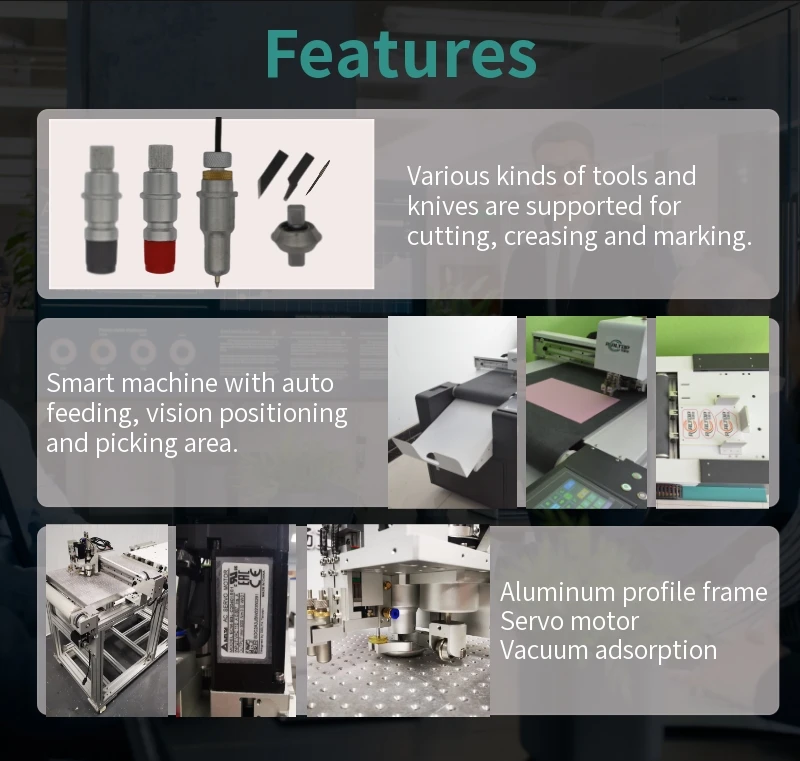
| Tool Group | cutting tool, kiss cutting tool, creasing tool, CCD camera; high speed oscillating knife (Pro model) |
| Max Cutting Speed | 1500 mm/s (according to the material) |
| Cutting Thickness | ≤2 mm (RTT6080); ≤5 mm (RTT6080 Pro) |
| Positioning Accuracy | 0.05 mm |
| File Formats | DXF, PLT, PDF, AI |
| Transfer Method | Ethernet port |
| Rated Power | 3.2 kW |
| Voltage & Frequency | 220V / 380V, 50 Hz |
| Certification | CE |
Application Suitability
| Application | Material or Output |
|---|---|
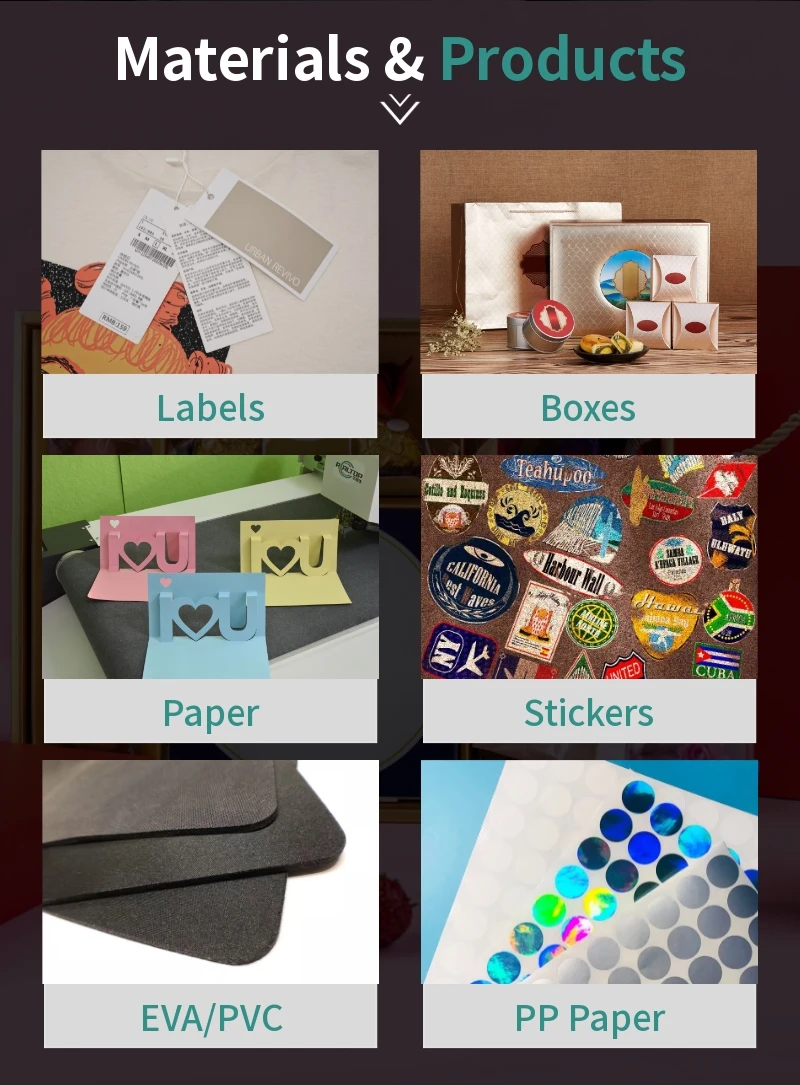
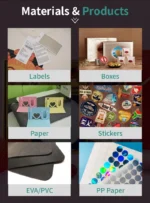
| Label and sticker contour cutting | printed vinyl, coated paper, self-adhesive label stock with registration marks |
| Packaging sample making | carton board, thin corrugated, folding box board up to rated thickness |
| Thin flexible gasket fabrication | cork-rubber sheet, non-asbestos fibre, PTFE gasket material |
| Foam and sealing strip cutting | thin EVA, closed-cell sponge, adhesive-backed foam tape |
Why "CCD Contour Recognition" Often Fails at Production Speed
When a CNC Automatic Label Cutting Machine manufacturer quotes a CCD camera, buyers assume the system will track printed marks reliably at full speed, only to discover misregistration once short-run jobs turn into daily volume. The difference between a lab demo and real output is file-to-camera compatibility verified on the buyer’s actual printed stock.
Printed marks shift slightly from batch to batch, and ink density, lighting and mark geometry all affect how the camera reads the contour. A configuration that tracks one brand of label stock perfectly may lose lock on a matte-finish substrate at higher feed rates [NEED_CITE: CCD tracking variables in digital finishing]. I have seen jobs stall because the software could not import the designer’s AI file cleanly, leaving the operator to redraw contours manually before the camera ever engages. Confirming the complete workflow — from file import to camera lock to cut output — before the order goes to the bench is the only way to avoid that stall.
Printed Mark Tracking on Short and Long Runs
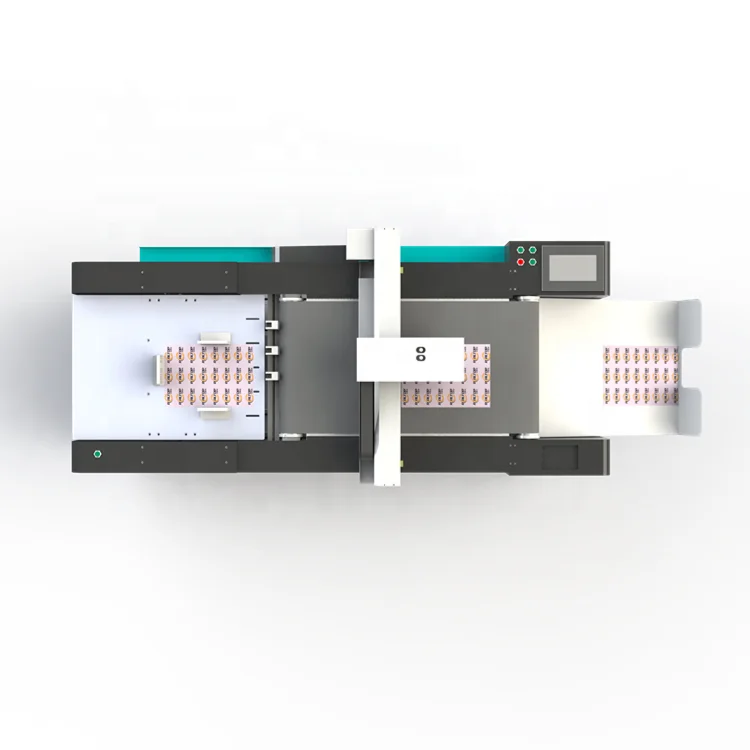
The CCD camera on the RTT-6080 platform reads registration marks on printed label and packaging stock and adjusts the cut path in real time. Because the working area is 600 mm × 800 mm, a single sheet fits multiple label formats or carton sample layouts without repositioning. The CNC Automatic Label Cutting Machine operator loads the printed sheet, the camera locates the reference marks and the system compensates for skew or stretch before any tool touches the material. This keeps contour alignment tight across short-run custom labels and repeated packaging sample batches.
Multi-Tool Workflow in a Single Station
Label jobs rarely need just one cut type. A typical sticker sheet requires a kiss cut to the liner, a through cut to separate the sheet, and sometimes a crease line for a fold-over flap. The RTT6080 groups cutting, kiss cutting and creasing tools in one station so the head swaps automatically between passes. On the RTT6080 Pro, a high speed oscillating knife adds the capacity to cut through thin foam or layered gasket stock up to the rated thickness without ragged edges. The operator does not need to stop the machine and change tools by hand, keeping the sheet registered to the same origin point from start to finish [NEED_CITE: multi-head tool change benefits in digital cutting].
Reading the Specs That Matter on the Floor
Positioning accuracy of 0.05 mm determines how closely the knife follows the printed outline; on a label with a 2 mm bleed, that tolerance keeps the blade well inside the safe zone. Cutting speed is rated at 1500 mm/s according to the material, meaning dense vinyl will run slower than thin paper and the nesting software must be set accordingly. The 3.2 kW rated power covers the spindle, vacuum pump interface and CCD lighting together, so the electrical load on a 220V or 380V supply is predictable before installation. Ethernet transfer means the machine sits on the shop network and receives DXF, PLT, PDF and AI files without a dedicated laptop at the control panel.
What Wrong Zoning and Wrong Tool Cost on Label Jobs
A vacuum table with coarse zoning loses suction on small label formats, and the material lifts as the knife exits the cut. The result is a nicked edge or a half-finished sheet that has to be scrapped. Equally, specifying a drag knife on a laminated label stack that needs a kiss cut to the liner will crush the top layer before the blade reaches the release coat. Both failures look like machine faults but are configuration mismatches [NEED_CITE: vacuum hold-down and tool selection in flatbed digital cutting]. Catching these issues on sample material before the machine leaves the factory avoids rework at the buyer’s facility.
Why Build and Verify the RTT-6080 In-House
The knife and CCD subsystems are designed by the same engineering team that assembles the frame, so mechanical tolerances and camera calibration are validated together rather than handed off between vendors. Every RTT6080 and RTT6080 Pro receives a factory test run on the buyer’s own label or packaging stock before crating, with a cutting report that shows edge quality and registration data. Voltage, plug type and control language are confirmed in writing before production starts, matching the destination market’s electrical and operator requirements. This matters for importers and distributors who cannot afford to troubleshoot a configuration mismatch on their customer’s floor.
Documentation & Verification
- Machine specification sheet listing tool group, working area and cutting thickness limits for each model variant
- Electrical schematic and voltage confirmation matching your facility’s 220V or 380V supply before shipment
- Sample cutting report on your label stock or carton board with contour accuracy and edge quality notes
- Software licence and file format compatibility note covering DXF, PLT, PDF and AI workflows
- CE declaration package for import markets that require machinery directive compliance
- Spare parts list identifying consumable blades, creasing wheels and CCD replacement components
Installation, Commissioning & Support
- Floor space of roughly one square metre plus clearance for sheet loading on the 600 × 800 mm table
- Dedicated 220V or 380V circuit sized for the 3.2 kW rated load to prevent voltage drop during peak cut cycles
- Ethernet drop at the machine location for file transfer from your existing design station
- First-run calibration of the CCD camera on your printed label stock with the service engineer present
- Tool head setup session covering blade depth for kiss cutting and creasing wheel pressure for your board grade
- Consumable blade and creasing wheel inventory sized to your weekly sheet volume to avoid unplanned downtime
What to Include with Your Next Inquiry
Send a sample of the label or packaging material you run most often, along with the printed file you use for contour cutting, so the tool head and CCD configuration can be matched before a quotation is issued. State your local voltage and frequency, and the control language your operators need, so the electrical schematic and software interface are locked before assembly begins.
Frequently Asked Questions
Q: How do I confirm the CCD camera can track my specific printed mark at full cutting speed?
A: We run your actual printed sheet through the RTT6080 at production speed and record camera lock rate, misread count and contour deviation. The sample cutting report shows whether your mark geometry, ink density and substrate finish are compatible, or whether a mark redesign is needed before the machine is built.
Q: Which tool head should I specify for my material — cutting, kiss cutting, creasing or oscillating knife?
A: It depends on material composition and required cut depth. Kiss cutting suits self-adhesive labels where the liner must stay intact; creasing suits folding carton; the oscillating knife on the RTT6080 Pro handles thin foam and layered gasket stock. We test each option on your sample material before finalising the tool group.
Q: Will the software import my existing DXF, AI or PLT files and nesting workflow?
A: The control software reads DXF, PLT, PDF and AI natively. Before order confirmation we import one of your live production files, verify layer mapping and nesting behaviour, and document any export setting your designer should follow to keep the workflow uninterrupted.
Q: Can voltage, plug type and control language be customised for my market?
A: Yes. The RTT-6080 platform is configurable for 220V or 380V at 50 Hz, with destination plug and control interface language confirmed before the electrical schematic is released to the assembly bench. This is recorded in the pre-shipment documentation package.
You may also like

商品评价
Clear filtersThere are no reviews yet.