



-
 Courier delivery
-
 DHL Courier delivery
-
 Warranty 1 year
-
 Free 30-Day returns

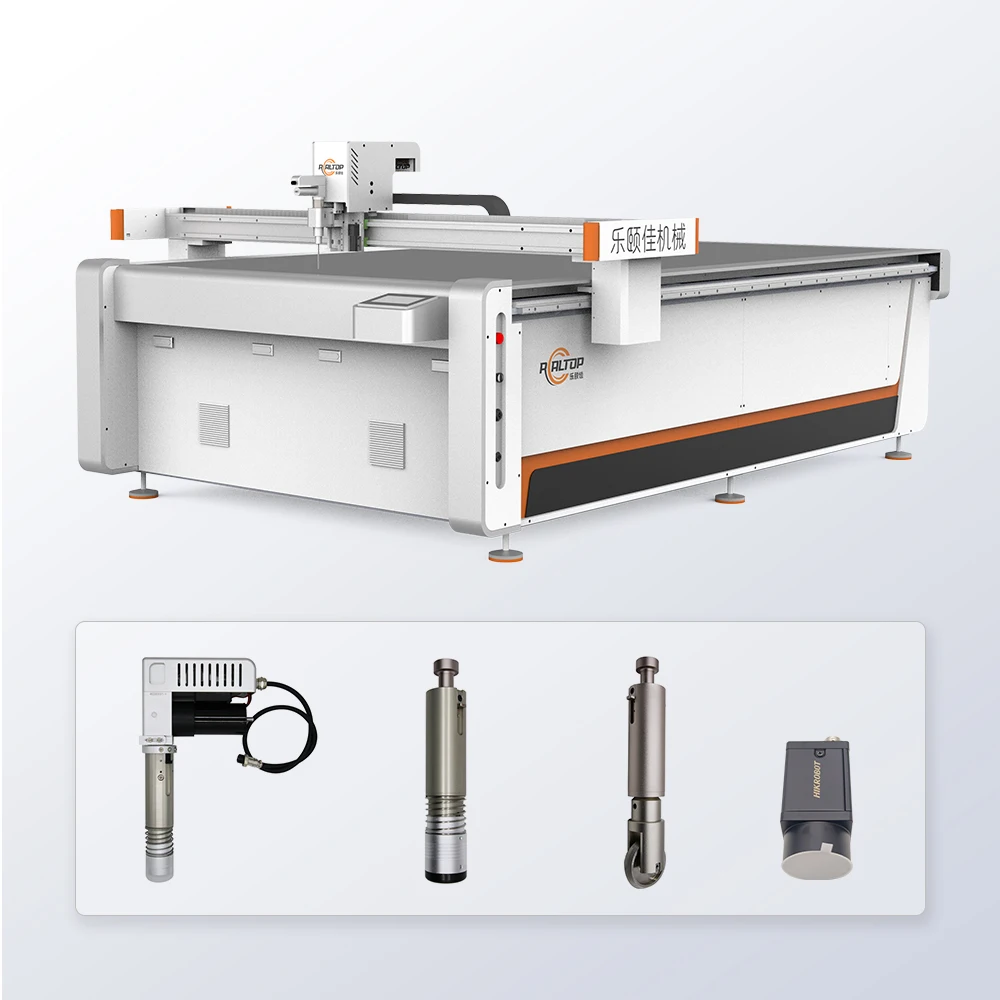
Precision tool head and vacuum zoning matched to your material — Every RT-D2516/RT-S2516 ships only after we test-cut your actual fabric, leather, foam or composite and lock in the exact knife type, suction zone layout and cutting parameters.
Technical Specifications
| Parameter | Value |
|---|---|
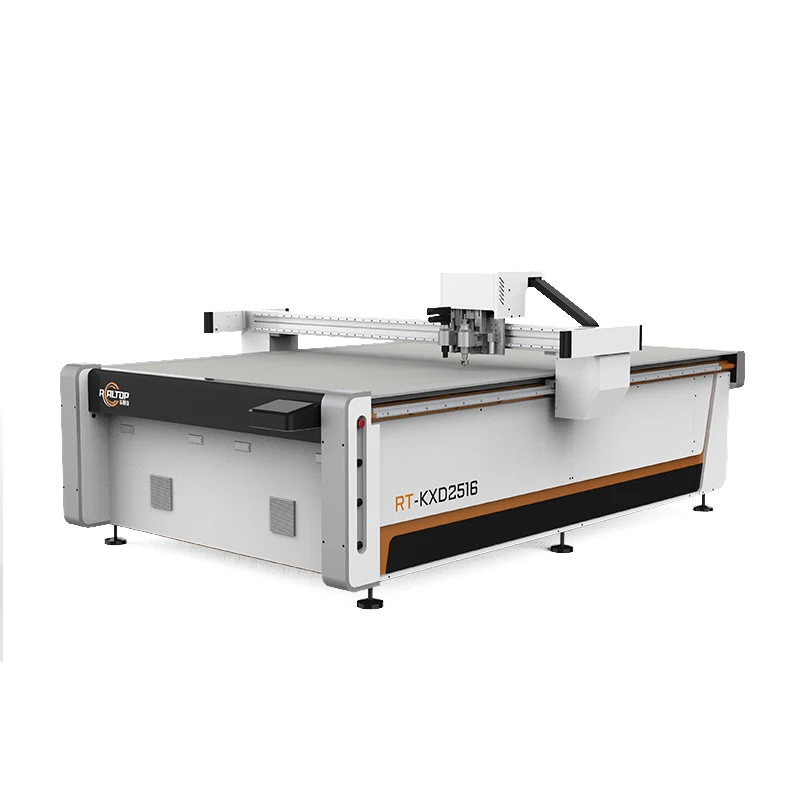
| Model | RT-D2516 / RT-S2516 |
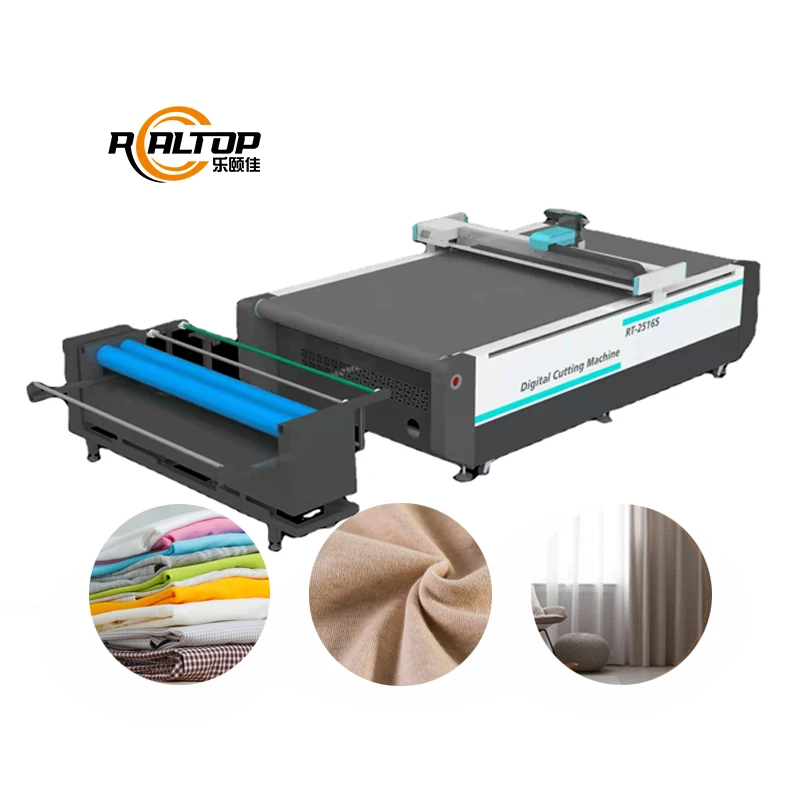
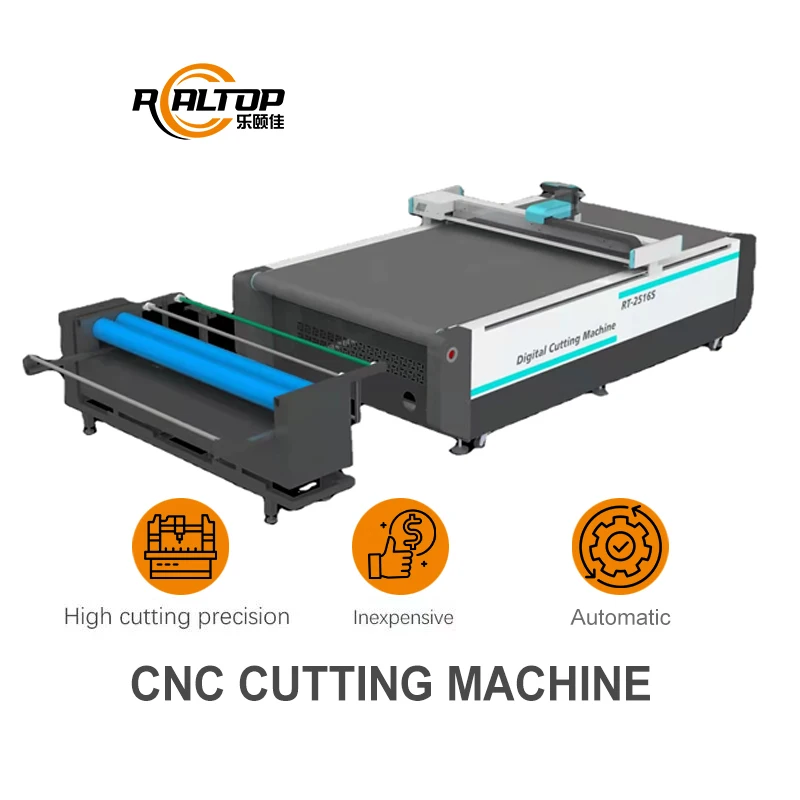
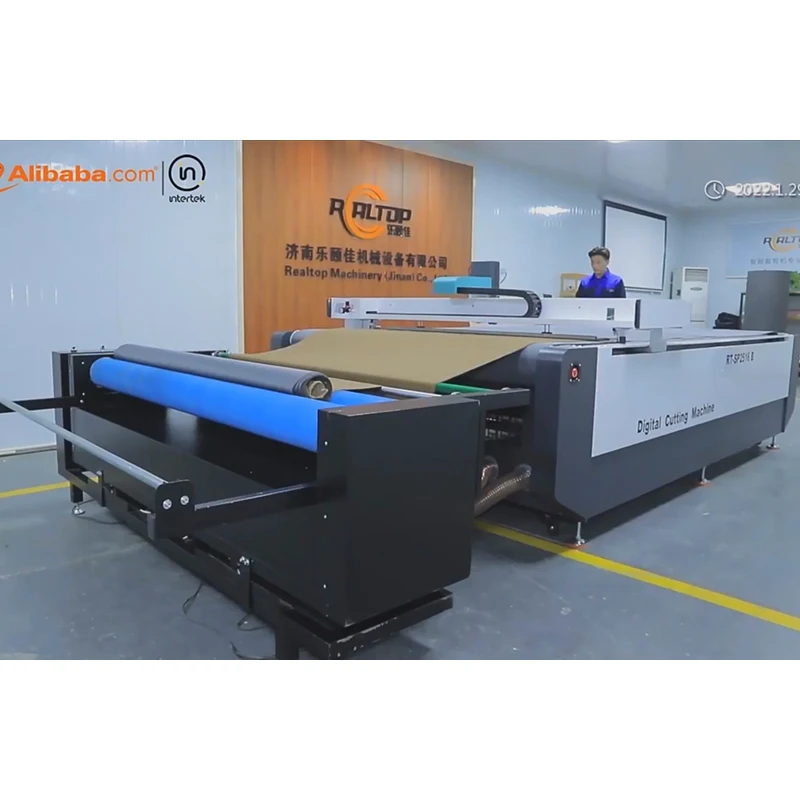
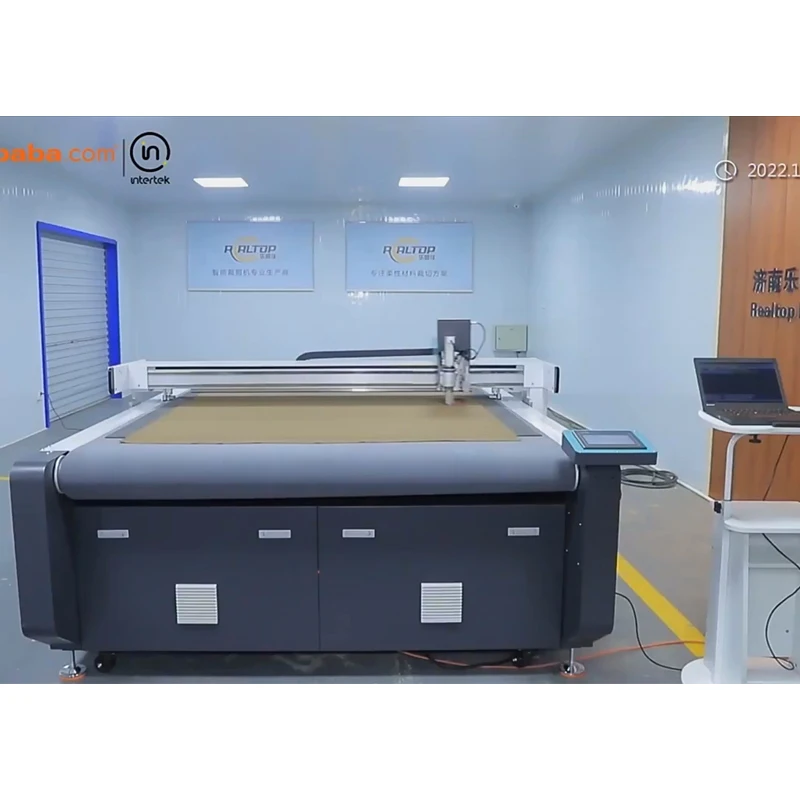
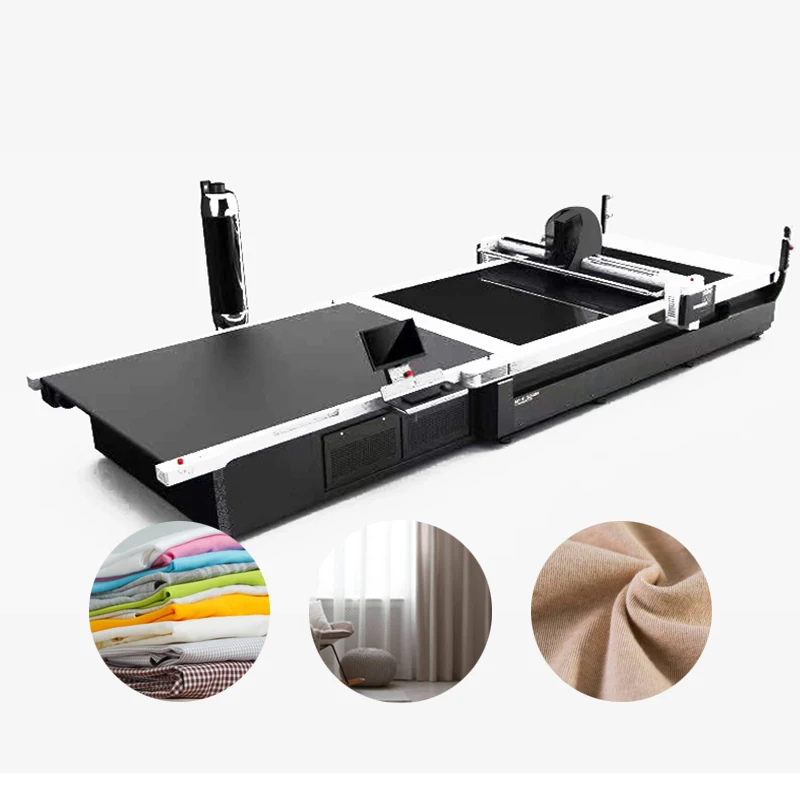
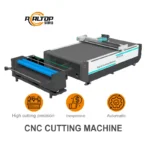
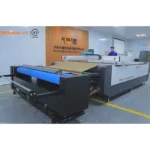
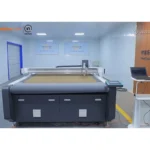
| Product Type | Auto Feeding CNC Digital Round Knife Cutting Machine |
| Working Area | 1600 × 2500 mm |
| Machine Size (L × W × H) | 3450 × 2300 × 1250 mm |
| Rated Power | 9 kW |
| Voltage & Frequency | 380V ± 10% (50Hz / 60Hz to be confirmed) |
| Working Table | Magnesium-aluminum alloy vacuum adsorption, PVDF coated |
| Multifunctional Tool Head | Swiss imported knife; options include oscillating, pneumatic, circular, drag knife, creasing wheel, punching |
| Translational Velocity | 800 – 1200 mm/s |
| Cutting Thickness Range | 20 – 80 mm (varies by material — basis to be confirmed) |
| Repeated Accuracy | ≤ 0.1 mm |
| Transmission System | Taiwan Hiwin linear guides, ball screws, synchronous belts |
| Servo Motor | Delta (optional Panasonic), IP67 rated |
| Vacuum Pump | 7.5 kW, integrated aviation aluminum shell |
| Conveyor System | Germany imported conveyor belt, auto feeding |
| Visual Positioning Options | Small CCD mark point, panoramic camera, projection positioning |
| Instruction System | HP-GL compatible format |
| Language Options | English, Russian, Italian, Chinese (custom available) |
| Safety Devices | Infrared induction, beam anti-collision, emergency stop |
Application Suitability
| Application | Material or Output |
|---|---|
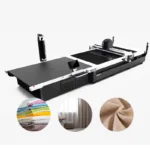
| Garment and footwear production | Fabric rolls, leather hides, shoe uppers, luggage textiles |
| Automotive interior and gasket cutting | PU foam, EVA, composite sheets, sealing pads |
| Packaging and carton sample making | Corrugated cardboard, plastic box board, sticker films |
| Sports and outdoor goods | Non-woven fabric, sponge, XPE, PVC, composite layers |
| Soft home furnishings | Carpet, floor mats, heavy textiles, upholstery foam |
Why the Thickness Claim on Paper Means Nothing Without a Test Cut
The actual cutting depth depends on material composition, density and tool head selection — not on a universal number.
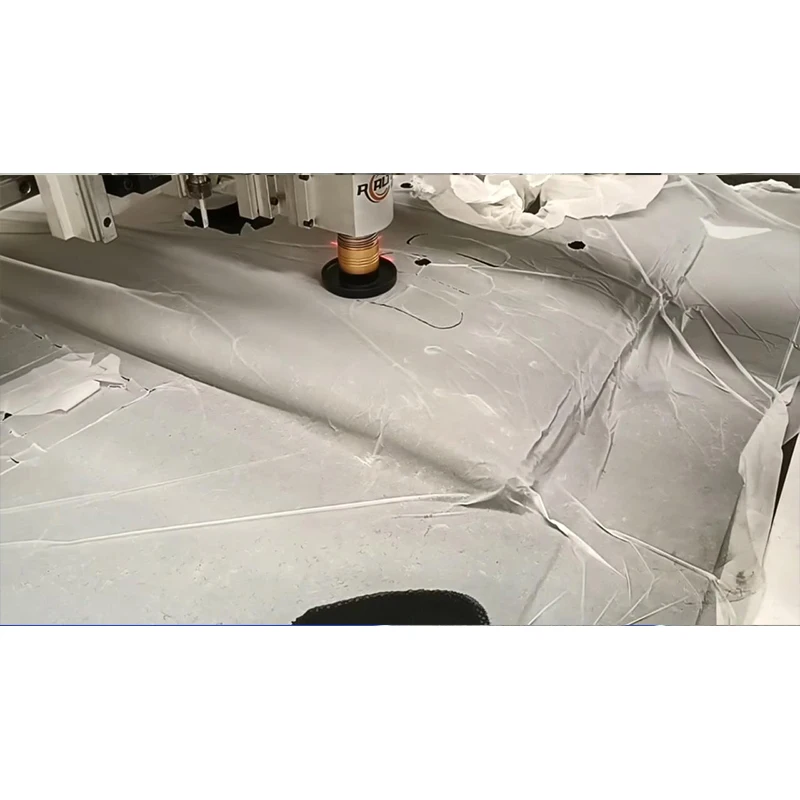
A CNC knife cutting machine manufacturer can list a thickness range on a spec sheet, but the real-world result changes when a buyer switches from soft PU foam to dense rubber gasket material of the same millimeter count. I have seen situations where the material supplied as a sample was thinner than what arrived on the production floor, and the machine could not push the knife through cleanly. That is why we run your actual material — at your actual production thickness — before any order is confirmed [NEED_CITE: CNC cutting tool head selection by material type]. The edge quality, knife wear and required downforce are documented in a sample report, not guessed from a chart.
Tool Head Matching Determines Whether the Edge Holds Up in Production
The Swiss imported knife handles vibration full cutting and half cutting for layered textiles, but a dense composite board may require a high-power oscillating knife or a pneumatic knife to maintain a clean profile. When a buyer processes both corrugated cardboard and adhesive sticker film, we often fit a creasing wheel alongside a drag knife on the same multifunctional head — so the machine completes both scoring and cutting in a single pass. This is the core value of working with a CNC knife cutting machine manufacturer that builds the tooling configuration per order, rather than shipping a fixed head and hoping it covers every material in your catalog.
Vacuum Zoning Keeps Small Parts Flat When Full-Table Suction Fails
Holding a 2-meter sheet of leather down is straightforward. Holding a 50-millimeter gasket cut from the center of that same sheet is where most generic vacuum tables lose grip. The magnesium-aluminum alloy table on the RT-D2516/RT-S2516 is divided into zones with PVDF fluorocarbon coating, and the 7.5 kW pump distributes suction where the workpiece actually sits. When a buyer cuts automotive interior foam in nested layouts with many small offcuts, the zoning prevents those offcuts from lifting into the knife path and producing ragged edges or damaging the blade [NEED_CITE: vacuum table zoning for CNC flatbed cutting].
What the Servo and Frame Specs Mean for Daily Cutting Accuracy
The Taiwan Hiwin linear guides paired with Delta IP67 servo motors deliver repeated positioning accuracy within 0.1 mm. In practice, this means that when your nesting software places fifty pattern pieces across the 1600 × 2500 mm working area, the knife returns to each start point without cumulative drift over a full shift. The thick-walled steel frame has been through high-temperature tempering and finished on a CNC machining center, so it resists deflection when the knife pushes through dense 40 mm composite sheets at translational velocities up to 1200 mm/s. For garment producers running hundreds of fabric layers, that frame rigidity is what separates consistent piece dimensions from gradual size creep that shows up only during sewing assembly.
What Happens When Voltage and Language Are Confirmed After Shipment
Arriving at a buyer’s workshop to find that the local supply is 60 Hz while the machine was built for 50 Hz can mean burned servo drives before the first production run [NEED_CITE: voltage and frequency standards by export market]. Control panels locked in a language the floor operators cannot read lead to miscued tool changes and incorrect cutting depths. These are not theoretical risks — they are the most common avoidable delays we see on cross-border equipment orders. Every RT-D2516/RT-S2516 order locks in the electrical schematic, plug type and HMI language before the build starts, and the documentation package confirms each item before the crate leaves the factory.
Why Buyers Come Back for the Second Machine
The in-house design team covers both the knife tooling engineering and the vacuum table layout, which means modifications do not require waiting on a third-party integrator. Buyers who start with a single RT-D2516/RT-S2516 for fabric cutting often return for a second line configured for heavier composites, because the original order was documented in enough detail that the new configuration builds on proven tool head choices. Sample cutting reports, tool configuration lists and software compatibility notes from the first machine become the baseline for the second, reducing the specification cycle from weeks to days.
Documentation & Verification
- Machine specification sheet with confirmed tool head list and vacuum zone layout
- Electrical schematic and voltage confirmation before production starts
- Sample cutting report on buyer’s own material covering edge quality and dimensional accuracy
- Software licence with HP-GL file format compatibility note for nesting workflow
- Operation and maintenance manual in confirmed control language
- Spare parts list with recommended consumables for the specified knife types
Installation, Commissioning & Support
- Requires a level floor with clearance for the 3450 × 2300 mm footprint and auto feeding conveyor extension
- Dedicated 380V circuit with confirmed frequency matching the servo drive configuration
- Ships fully assembled; requires utility connection and belt tensioning on site
- First-run parameter setting includes vacuum zone calibration and knife depth tuning for your material
- Operator training covers tool head changeover, CCD mark point positioning and nesting file import
- Consumable knife blades and vacuum seals stocked for post-warranty supply
What We Need to Quote Accurately
To specify the right tool head and vacuum configuration, share the material type, maximum thickness and sheet or roll dimensions you will process most often. Confirm your workshop voltage, frequency and the control language your operators need. If you have an existing nesting workflow, send a sample file so we verify HP-GL compatibility and confirm that the software import chain works before the machine is built.
Frequently Asked Questions
Q: How do you confirm the cutting thickness for my specific material?
A: We ask you to send a sample of your actual production material to our Jinan factory. We run test cuts across the full thickness range you need, document the edge quality, knife wear and achievable cutting speed, and include the results in a sample cutting report before any order is finalized.
Q: Which tool head will you recommend and why does it matter?
A: The choice between oscillating knife, drag knife, circular knife or pneumatic knife depends on your material density, thickness and edge quality requirement. We base our recommendation on the sample cutting results, not on a generic selection chart, so the machine arrives configured for your actual production mix.
Q: Can you match the voltage, plug type and control language to my factory?
A: Yes. The electrical specification including frequency and the HMI menu language are confirmed at the order stage. We provide an electrical schematic and voltage confirmation document before shipment, so there are no surprises when the machine is connected on your shop floor.
Q: What customization range is available for OEM or ODM orders?
A: Our in-house design team can adjust the working area size, tool head layout, vacuum zone configuration and auto feeding conveyor specification to match your production workflow. Each modification is documented in the order specification and verified during factory testing before dispatch.
Q: What does the warranty cover and how are parts supplied afterward?
A: The first year includes free replacement parts with the buyer covering shipping costs. After the warranty period, lifetime technical support and spare parts remain available at bare cost. Knife blades, vacuum seals and other consumables are maintained in stock for ongoing supply.
You may also like

商品评价
Clear filtersThere are no reviews yet.