


-
 Courier delivery
-
 DHL Courier delivery
-
 Warranty 1 year
-
 Free 30-Day returns

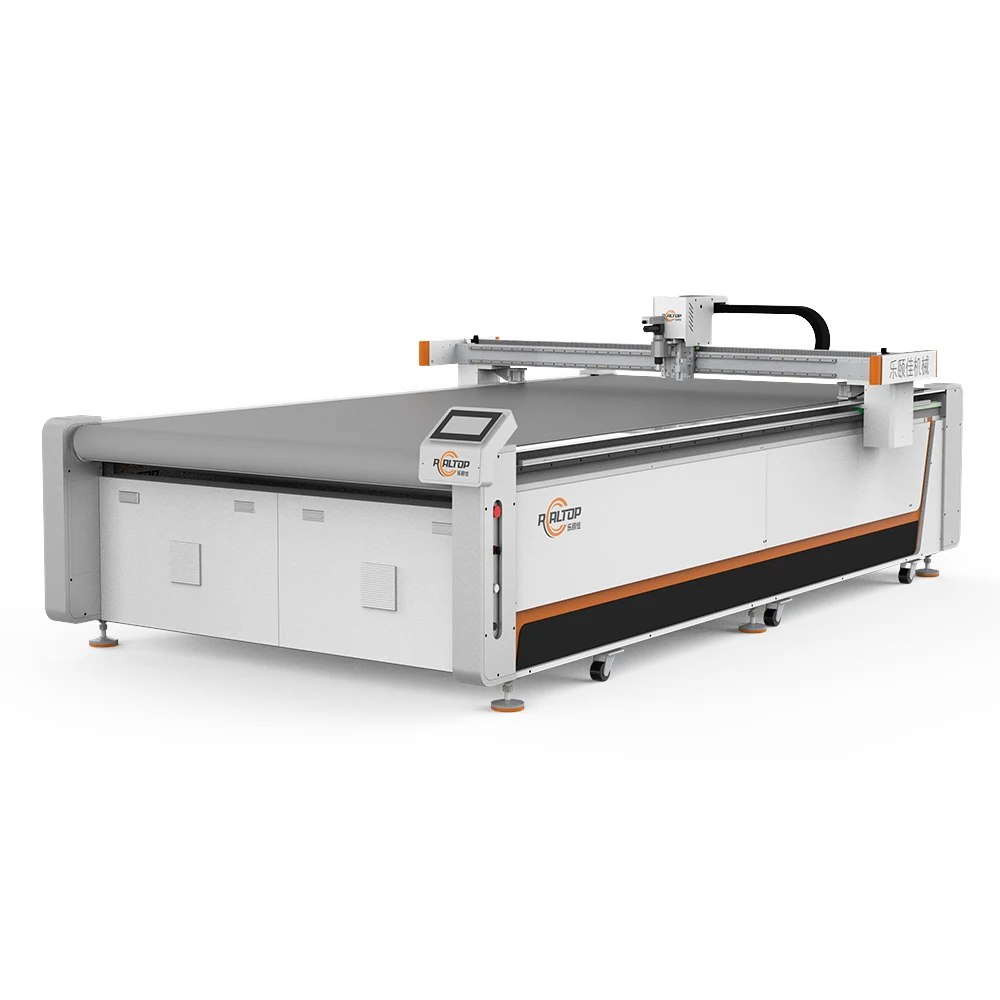
Precision-matched cutting configuration — every RT-D2516/RT-S2516 unit ships only after the buyer’s actual material has been test-cut on the factory floor, locking in tool head, vacuum zoning, and feed parameters before production begins.
Technical Specifications
| Parameter | Value |
|---|---|
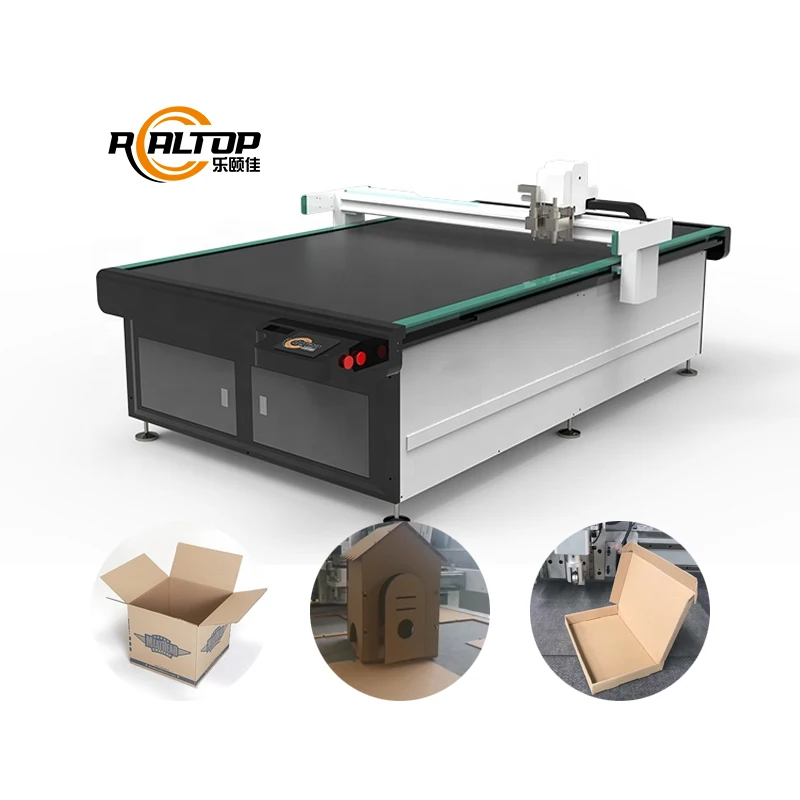
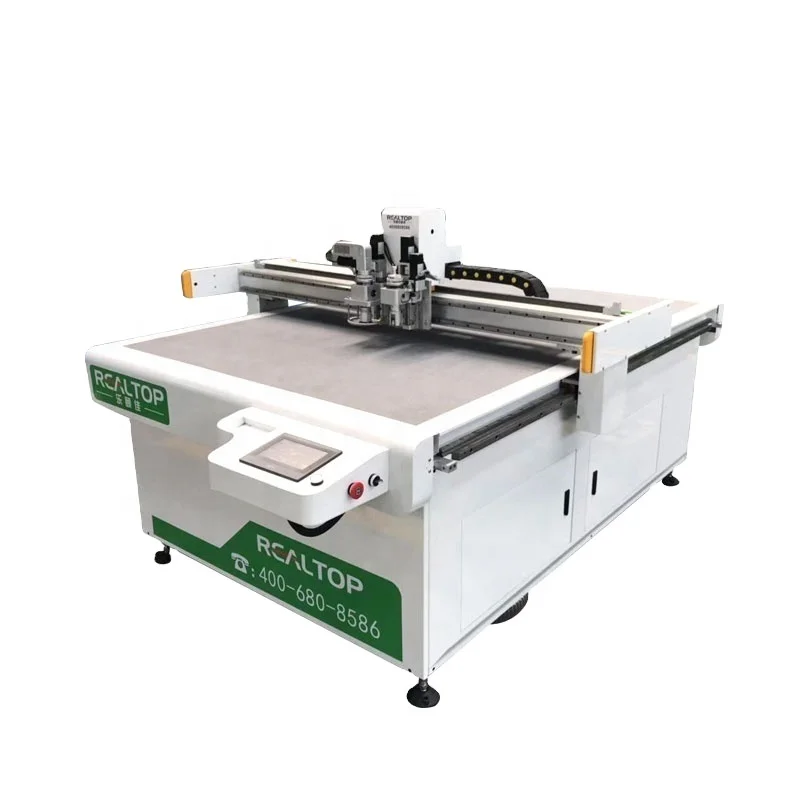
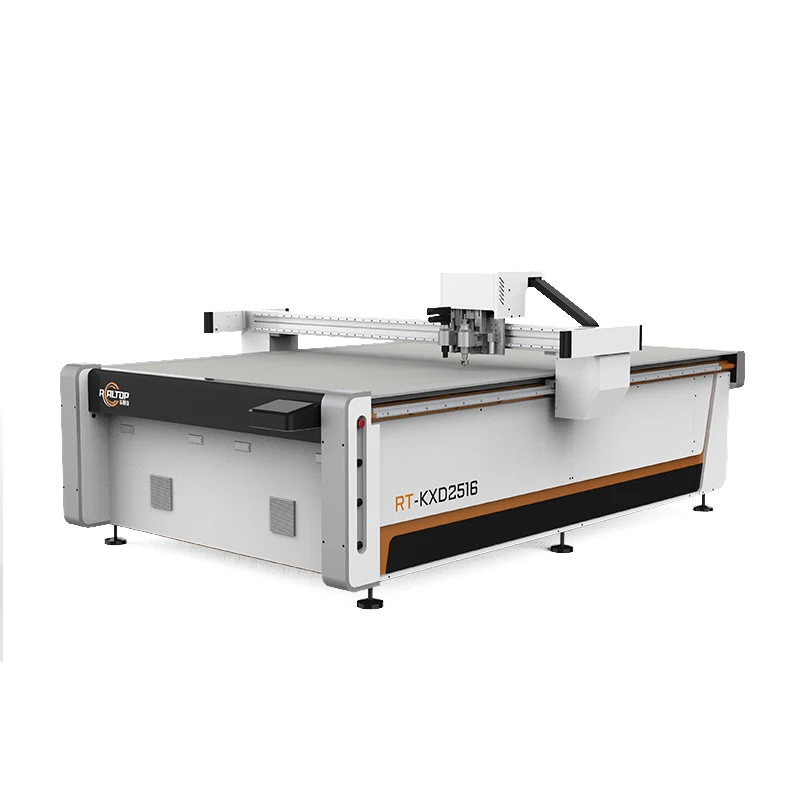
| Model | RT-D2516 / RT-S2516 |
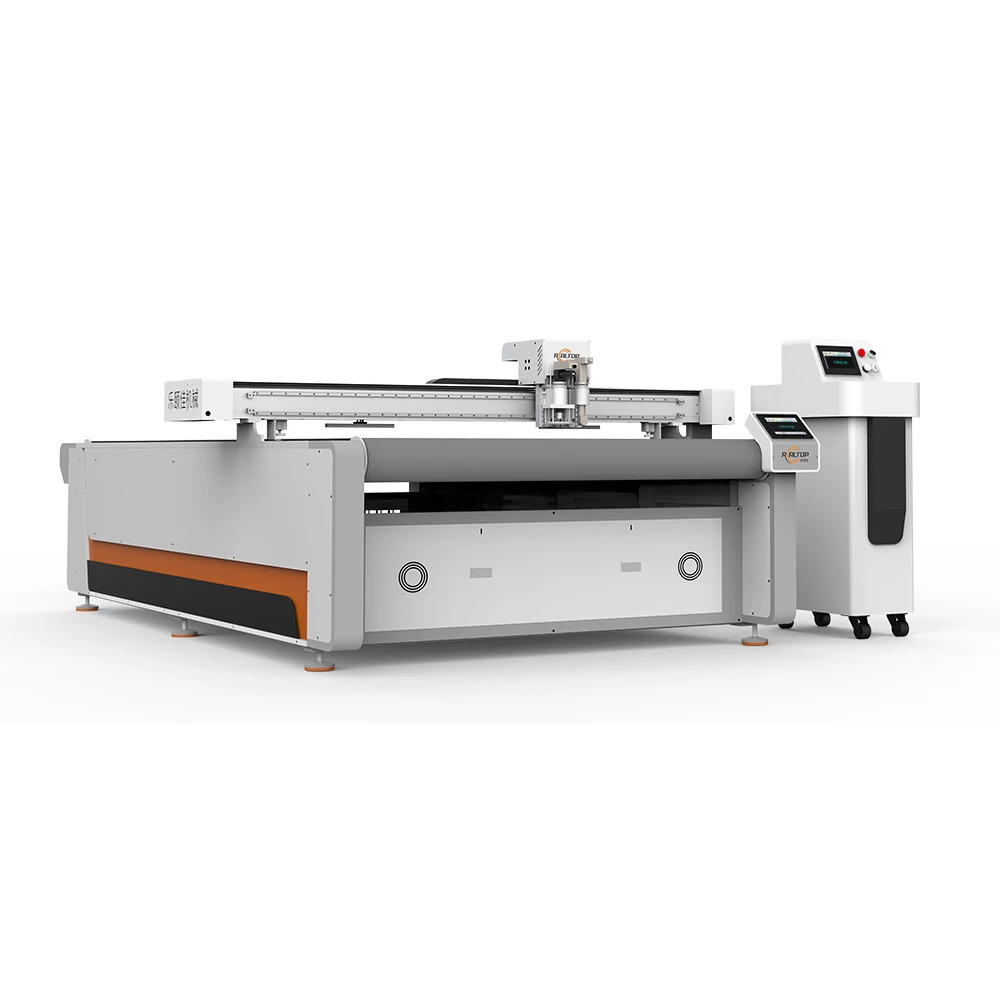
| Product Type | CNC Oscillating Knife Cutting Machine |
| Working Area | 1600 × 2500 mm |
| Machine Size | 3450 × 2300 × 1250 mm |
| Rated Power | 9 kW |
| Voltage | 380V ±10% |
| Translational Velocity | 800 – 2000 mm/s |
| Cutting Speed | 200 – 800 mm/s (basis not stated in source — confirm material and thickness) |
| Cutting Thickness | Up to 100 mm (varies with material) |
| Repeated Accuracy | ≤ 0.1 mm |
| Transmission System | Digital servo motor (Delta or Panasonic optional), Taiwan Hiwin linear guide, synchronous belt, ball screw |
| Vacuum Pump | 7.5 kW, aviation aluminum shell with built-in silencer sponge |
| Vacuum Table | Magnesium-aluminum alloy, PVDF powder sprayed, anodic and hard oxidation treated |
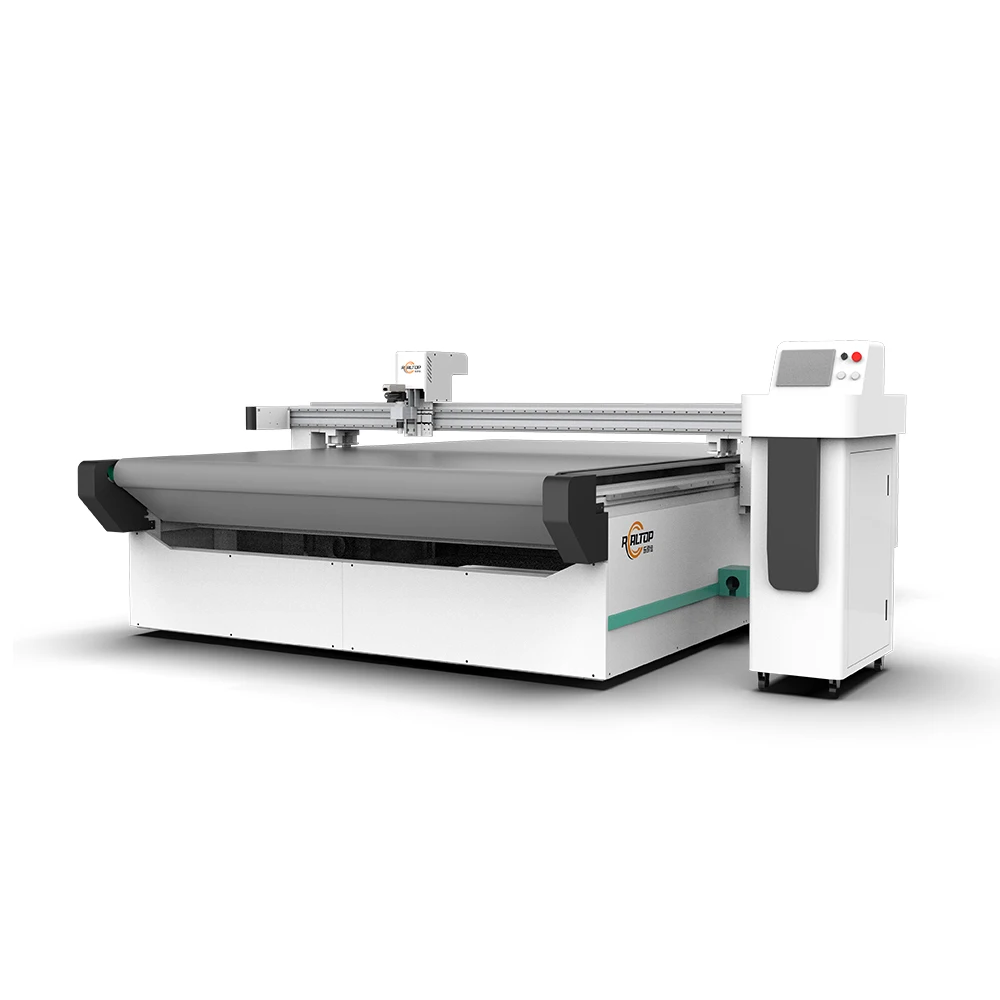
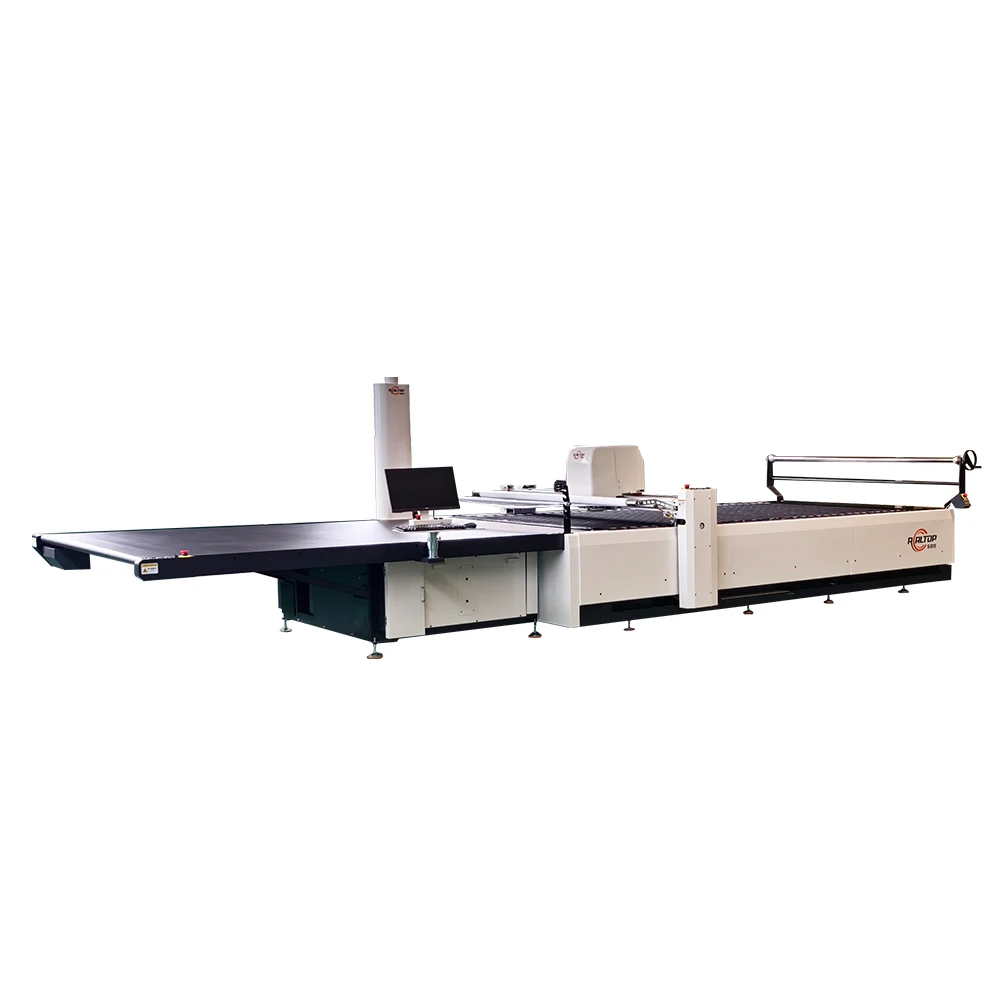
| Fixed Model Options | Flat working table or auto feeding table |
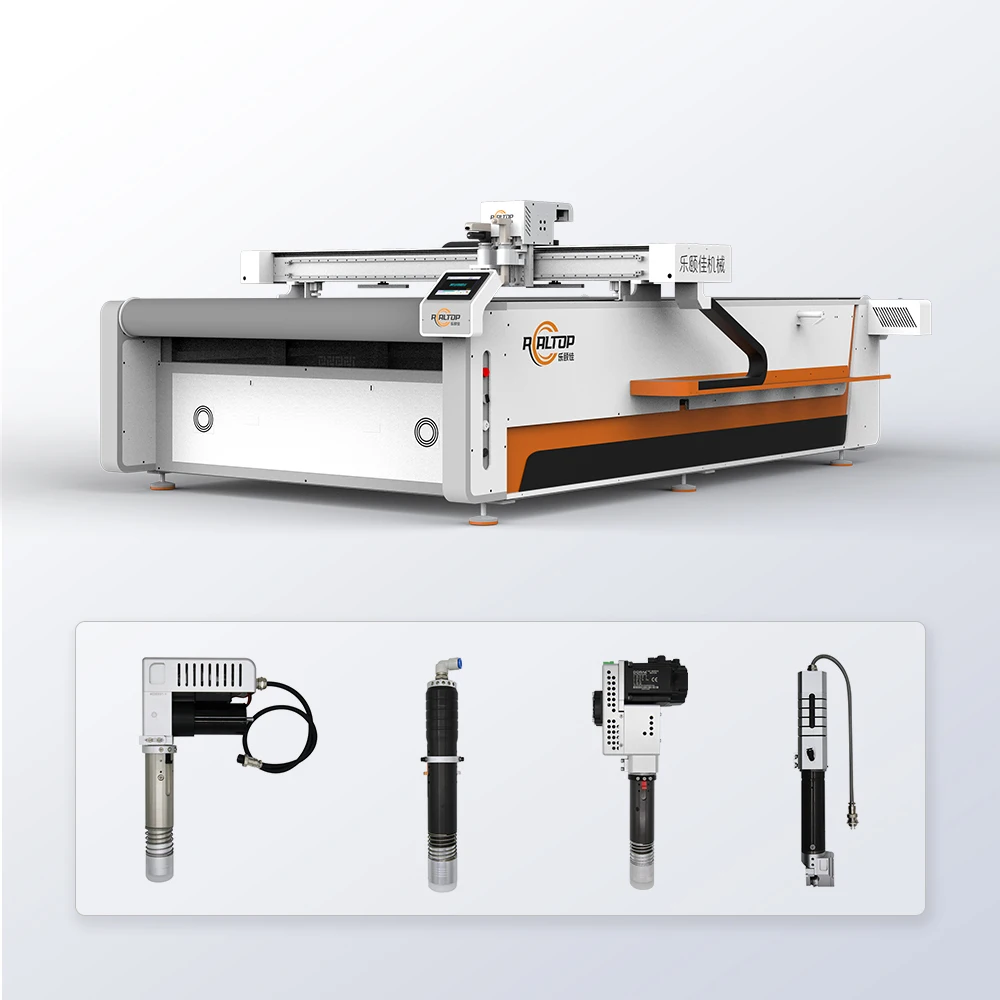
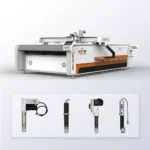
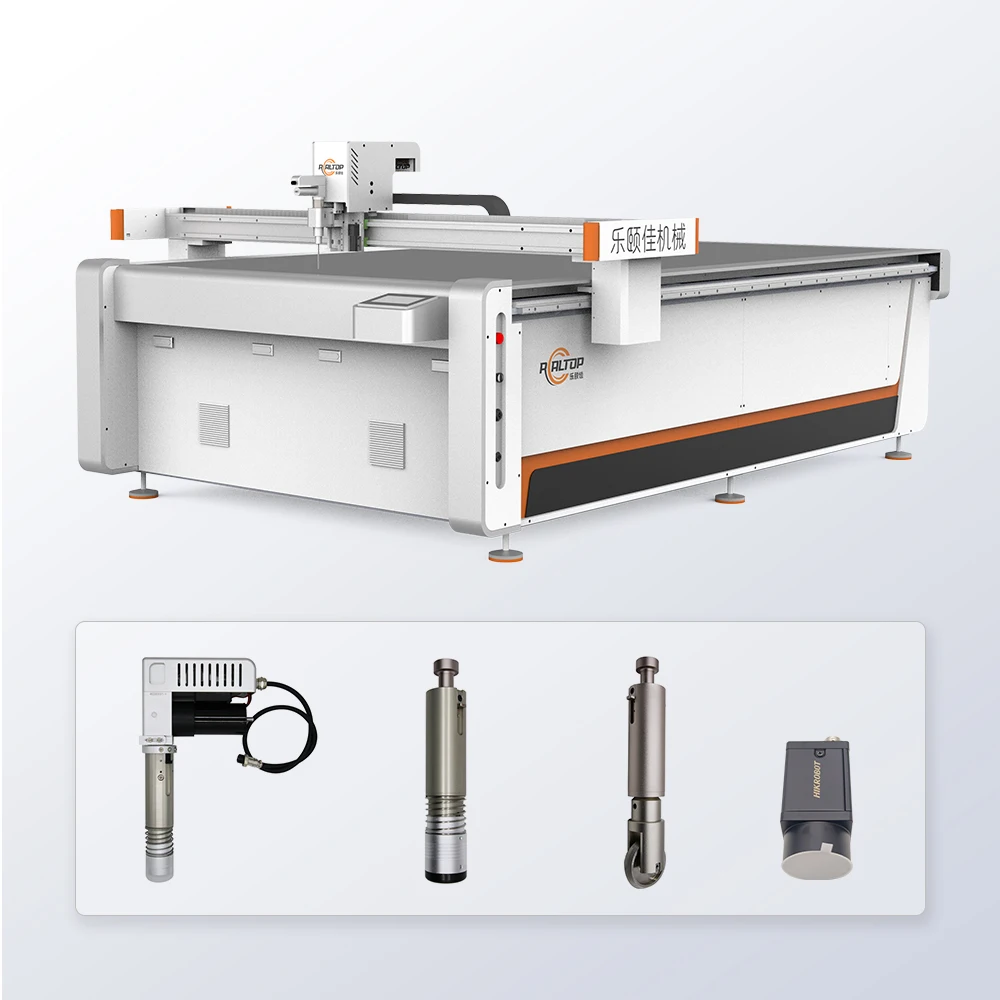
| Tool Head Options | Oscillating knife, pneumatic knife, high-power vibrating knife, circular knife, V-cutting knife, drag knife, creasing wheel, dotted line knife, punching, brush |
| Visual Positioning Options | Small CCD camera mark point, panoramic camera recognition, projection positioning |
| Control Panel | Touch screen, multi-language (English, Russian, Italian, Chinese; others customizable) |
| Instruction System | HP-GL compatible format |
| Software Compatibility | PLT, DXF, AI and other vector formats; auto nesting included |
Application Suitability
| Application | Material or Output |
|---|---|
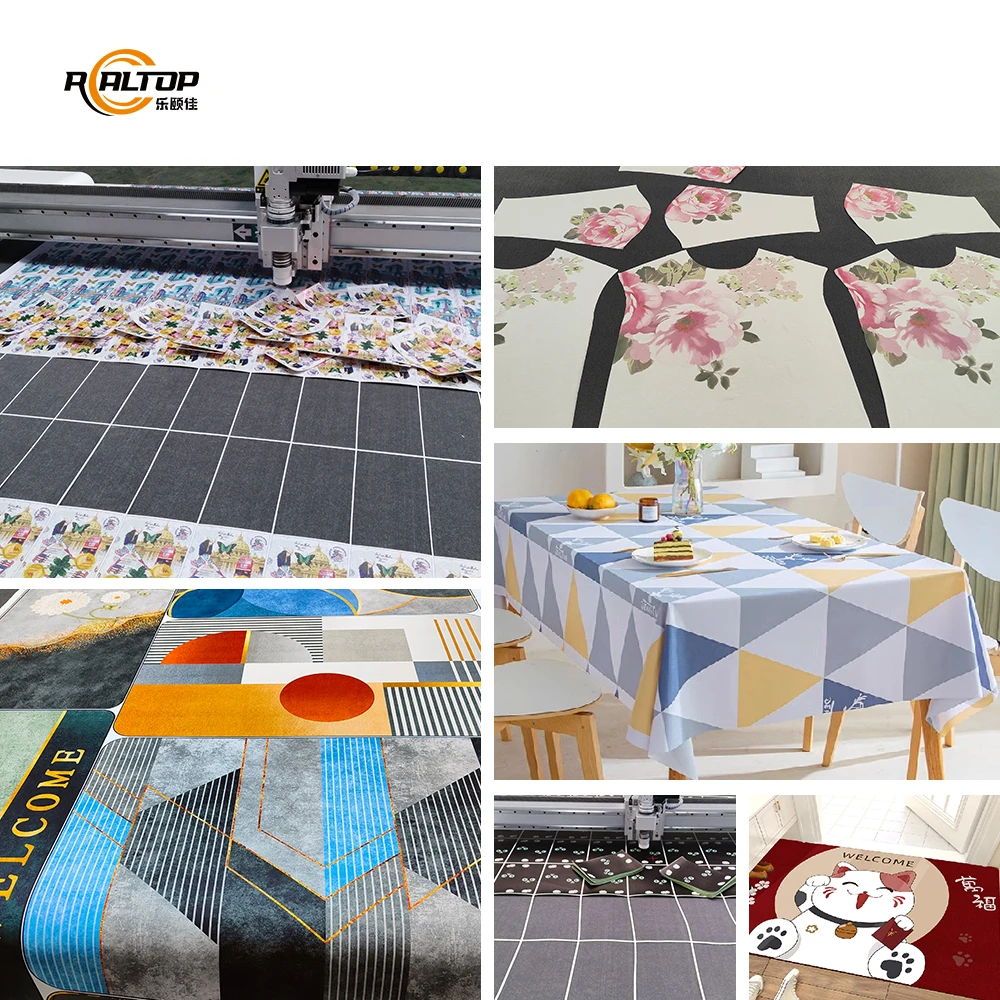
| Automotive interior trimming | High-density composite foam, PU, EVA, and layered fabric laminates |
| Garment and shoe production | Woven cloth, non-woven fabric, leather, PU leather, shoe upper materials |
| Luggage and bag manufacturing | Nylon, polyester, canvas, and synthetic textile composites |
| Carpet and floor mat cutting | Tufted carpet, sponge-backed rugs, and rubber underlay |
| Soft home furnishing | Upholstery fabric, curtain textile, cushion foam layers |
| Gasket and sealing fabrication | PTFE, ETFE, rubber sheet, and composite sealing materials |
| Sports and outdoor gear | Neoprene, XPE foam, carbon fiber prepreg, and technical textiles |
Why the Wrong Tool Head Costs More Than the Machine Itself
When a distributor ships an oscillating knife cutter configured for standard sponge into a factory running high-density composite cotton, the blade stalls, edges crush, and the production line shuts down for days while parameters are rebuilt from scratch. The tool head must be matched to the real material, not the catalog sample. I watched this happen last year — a customer’s automotive interior line lost a full week because the cutting configuration was locked in against a test swatch that did not reflect what actually ran on their conveyor. That is why every CNC cutting machine manufacturer worth working with will insist on receiving your actual production material before finalizing the build sheet [NEED_CITE:]. A mismatched tool head does not just produce bad edges; it accelerates blade wear, overloads the servo motor, and forces operators to slow feed rates well below what the machine is mechanically capable of handling.
Frame Construction and Long-Term Geometric Stability
The RT-D2516/RT-S2516 is built on a thick-walled seamless steel welded frame that undergoes high-temperature tempering followed by CNC machining center finishing. This sequence relieves internal welding stress and ensures the gantry rail seats remain flat across the full 1600 × 2500 mm working area. For a CNC cutting machine manufacturer evaluating build quality, the frame is where precision either holds or drifts over years of continuous vibration cycles. A warped frame throws off the linear guide alignment, and no amount of software compensation recovers true cutting accuracy once the base geometry shifts.
Vacuum Adsorption Engineering for Multi-Layer Textile Stacks
Holding fabric flat during high-speed oscillating knife passes requires more than a basic blower under a perforated plate. The vacuum table on this platform uses a magnesium-aluminum alloy base treated with fluorocarbon PVDF powder spray, anodic oxidation, and hard oxidation in sequence. The multi-stage finish resists abrasion from dragged material edges and maintains surface flatness across the entire cutting zone. The 7.5 kW vacuum pump sits inside an aviation aluminum shell lined with silencer sponge, reducing operational noise while keeping the pump protected from dust and fiber debris common in textile cutting environments [NEED_CITE:]. For distributors importing into markets with strict workplace noise limits, this integrated silencing approach avoids the need for secondary acoustic enclosures.
What the Specification Sheet Actually Means on the Shop Floor
The Delta or Panasonic servo motor choice directly affects how the machine handles direction reversals when cutting tight curves in garment patterns or shoe uppers — Japanese servos typically offer finer encoder resolution for smoother deceleration into corners. The Taiwan Hiwin linear guide paired with ball screw drive maintains the ≤ 0.1 mm repeated accuracy claim across thousands of cutting cycles, which matters when nesting software packs dozens of pattern pieces into a single fabric lay and each piece must align with downstream sewing jigs. Cutting speed is listed as 200 – 800 mm/s, but the achievable rate depends entirely on material density and ply count — a single layer of polyester lining will cut at the upper range, while a 50 mm stack of composite foam may require the lower end to keep edge quality acceptable. The Swiss imported oscillating knife assembly delivers both full-cut and half-cut modes, letting operators kiss-cut through a top fabric layer while leaving the backing paper intact for later peeling. Tool head options extend to a creasing wheel for carton sample work and a V-cutting knife for angled foam profiles, making the platform configurable across the material range a CNC cutting machine manufacturer typically encounters.
The Hidden Cost of Skipping Material Verification Before Shipment
A buyer who confirms only working area dimensions and voltage — without sending actual production material for a test cut — risks discovering at installation that the specified vacuum zoning cannot hold small pattern pieces down during high-speed passes, or that the chosen oscillating knife frequency crushes rather than shears their specific foam density. These issues are fixable, but fixing them on-site costs far more in downtime and parts shipping than catching them during the factory test phase [NEED_CITE:]. I have seen production managers stand in front of a newly installed cutter watching fabric lift off the table with every blade stroke because the vacuum zone layout was never validated against their actual piece size distribution.
Why Source This Platform from the Core Factory
Realtop designs and manufactures both knife and laser cutting platforms in-house, so a distributor can consolidate cutting technology sourcing under one OEM partner rather than managing separate suppliers for fabric and metal work. The factory runs CNC machining center finishing on every welded frame rather than outsourcing to a general machine shop, keeping geometric tolerances under direct quality control. Tool head and table configurations are specified per material and production volume before the order enters the build queue, not swapped from a default catalog setup. Voltage, plug type, and control panel language are confirmed and tested before crating, eliminating the field rewiring and firmware reflash jobs that erode distributor margins [NEED_CITE:]. Sample cutting on the buyer’s own material is a standard pre-shipment step, producing a documented report that travels with the machine.
Documentation & Verification
- Machine specification sheet matched to your confirmed tool head and table configuration
- Electrical schematic and voltage confirmation aligned to your local grid standard
- Sample cutting report generated on your actual fabric or foam material
- Factory test record documenting repeated accuracy and cutting edge quality
- Software license with confirmed PLT, DXF, and AI file format compatibility
- Spare parts list covering blades, knife holders, and vacuum table seals
Installation, Commissioning & Support
- Requires a level concrete floor with clearance for the 3450 × 2300 mm machine footprint plus operator access on three sides
- Dedicated 380V ±10% circuit rated for the 9 kW machine load plus 7.5 kW vacuum pump startup surge
- Auto feeding table variant needs additional conveyor run-out space beyond the base frame length
- Touch screen control panel configured to your chosen language before dispatch, with on-site parameter tuning at startup
- First-piece validation run using your material to confirm cutting speed and vacuum hold-down settings
- Oscillating knife blade replacement and vacuum pump filter cleaning schedules documented in the operation manual
Before You Request a Quote
To configure the RT-D2516/RT-S2516 correctly for your production line, share your primary material type, maximum thickness, and typical ply count per cut. Confirm your local voltage and frequency standard along with the preferred control panel language. If you run printed contour cutting, specify whether your marks are registration dots, fiducial crosses, or full-edge print boundaries so the correct CCD or panoramic camera system is selected.
Frequently Asked Questions
Q: How is precision maintained across the full working area over time?
A: The frame is welded from thick-walled seamless steel, then stress-relieved through high-temperature tempering before CNC machining center finishing. This process ensures the linear guide rails and ball screw mounts remain geometrically stable, supporting the ≤ 0.1 mm repeated accuracy specification throughout continuous production use.
Q: Can the control panel language and voltage be customized before shipment?
A: Yes. The touch screen supports English, Russian, Italian, and Chinese as standard, with additional languages configurable during production. Voltage is set and verified at 380V ±10% or adjusted to match your local grid specification, and the plug type is matched before the machine leaves the factory.
Q: What OEM options are available for distributors and importers?
A: The factory supports private-label branding on the machine body and control panel interface. Distributors can specify custom color schemes, logo placement, and packaging markings. Technical documentation and operation manuals can be co-branded or produced entirely under the distributor’s own brand identity.
Q: How is the correct tool head selected for my material?
A: Send a representative sample of your actual production material to the factory. The engineering team runs test cuts with different tool head options — oscillating knife, pneumatic knife, drag knife, or circular knife — and documents edge quality, cutting speed, and blade wear. The configuration that performs best is locked into your build specification.
Q: What documentation ships with the machine?
A: Each unit includes a machine specification sheet, electrical schematic, voltage confirmation document, factory test record, sample cutting report, operation and maintenance manual, software license with file format notes, and a spare parts list. CE declaration is provided where applicable to the destination market.
You may also like

商品评价
Clear filtersThere are no reviews yet.