


-
 Courier delivery
-
 DHL Courier delivery
-
 Warranty 1 year
-
 Free 30-Day returns

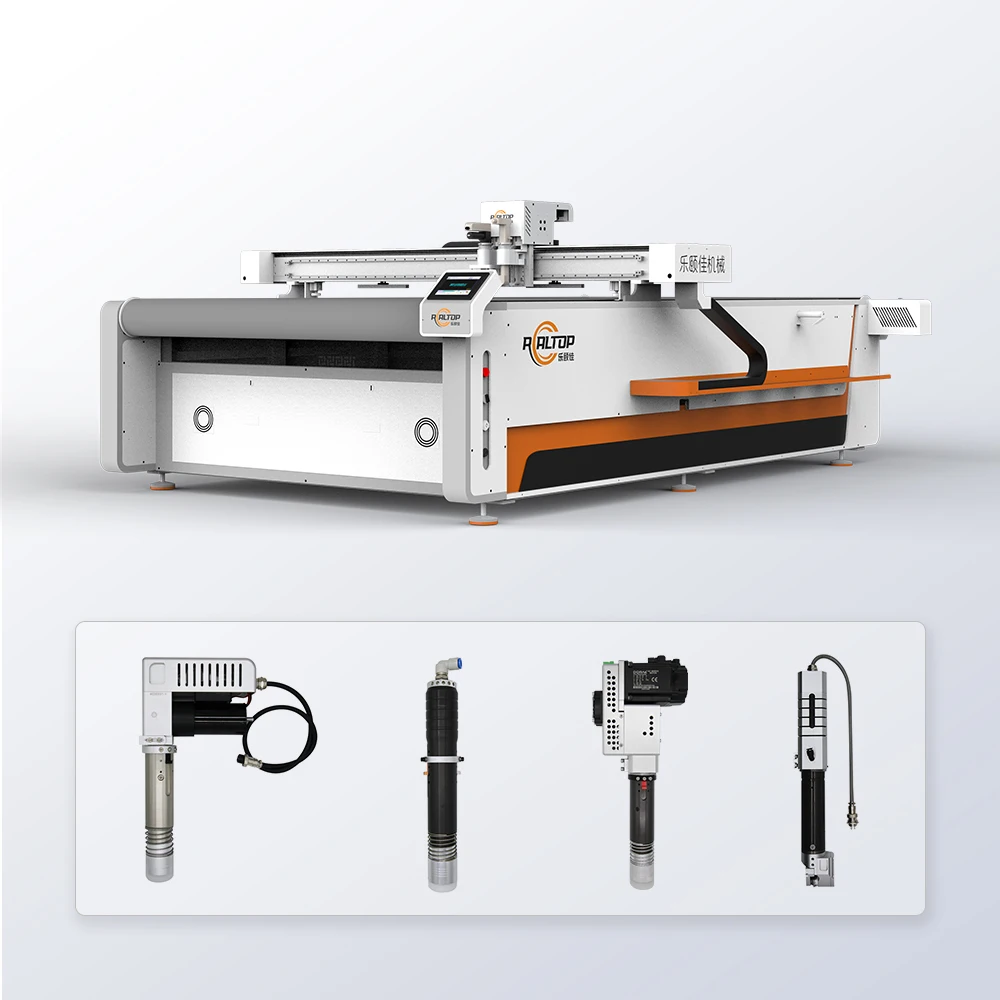
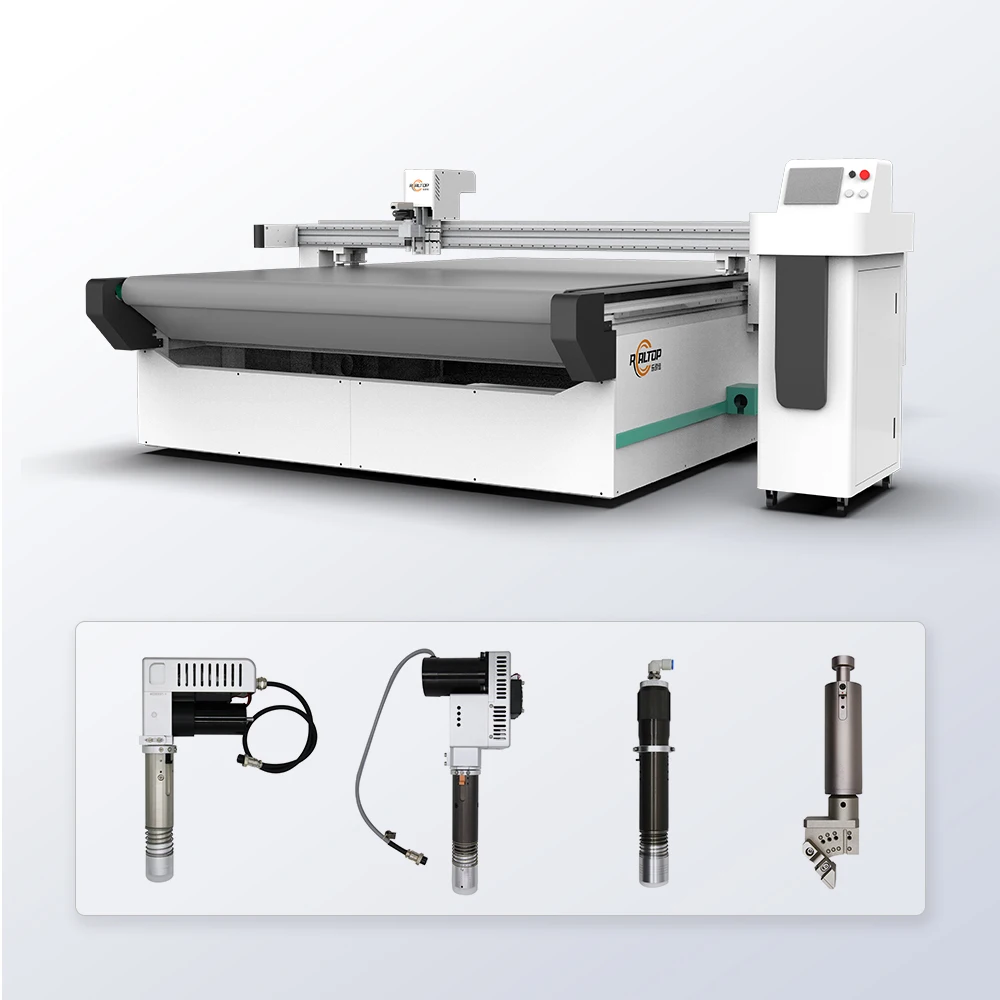
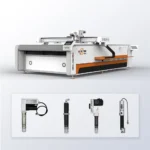
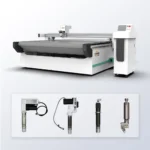
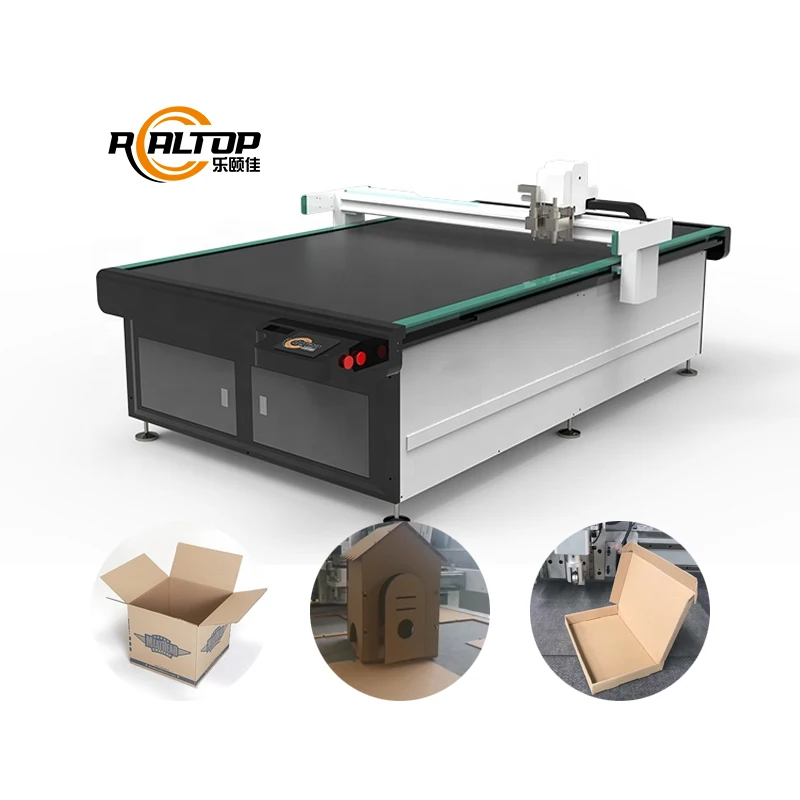
Welded Steel Frame Integrity — The RT-D2516/RT-S2516 frame is built from thick-walled seamless steel, stress-relieved and finished on a CNC machining center to hold flatness across the 1600×2500mm working area under continuous vacuum load.
Technical Specifications
| Parameter | Value |
|---|---|
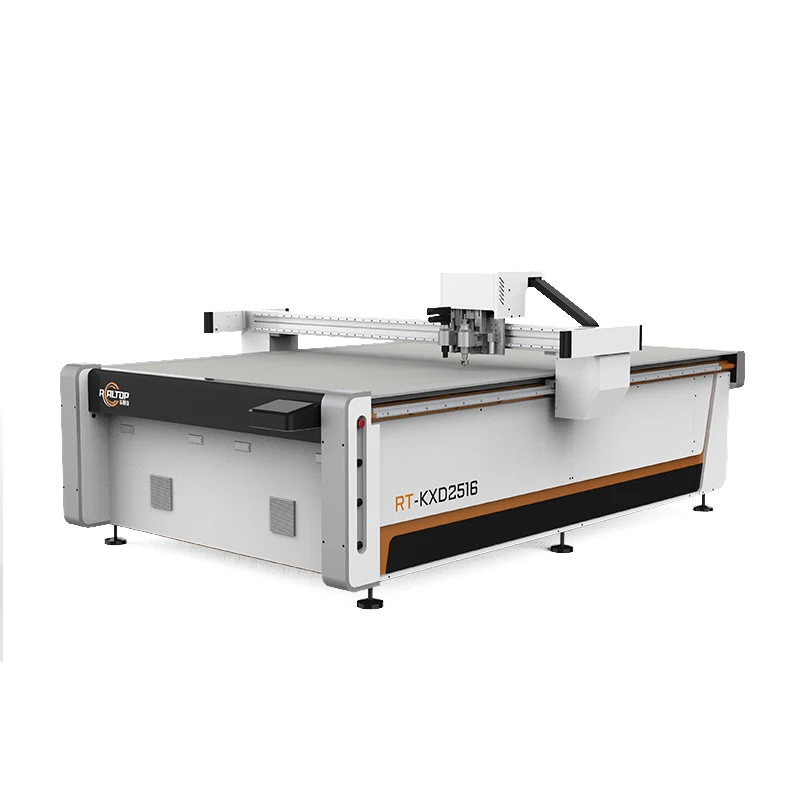
| Model | RT-D2516/RT-S2516 |
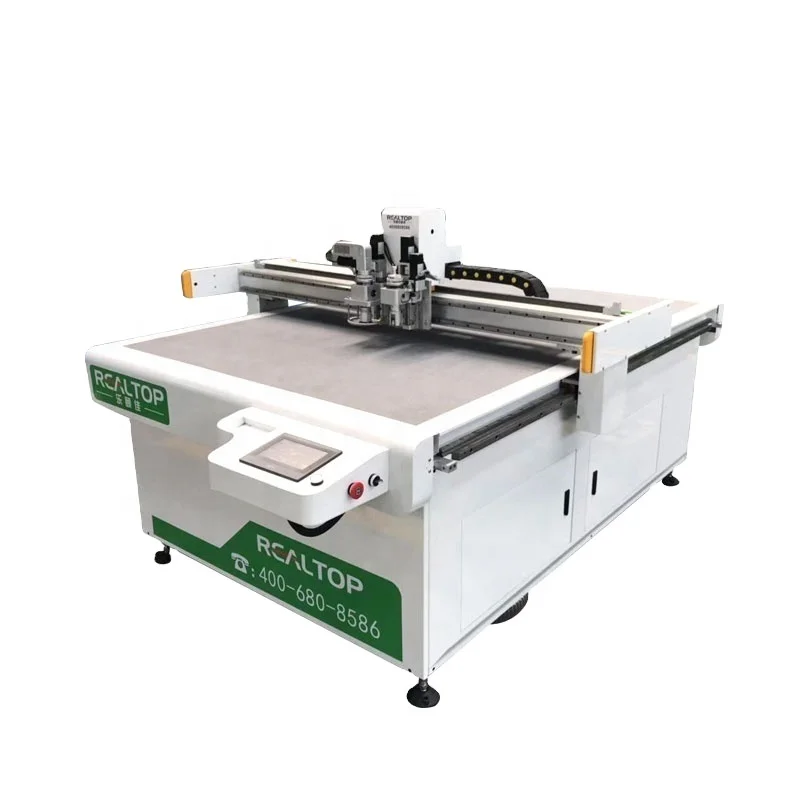
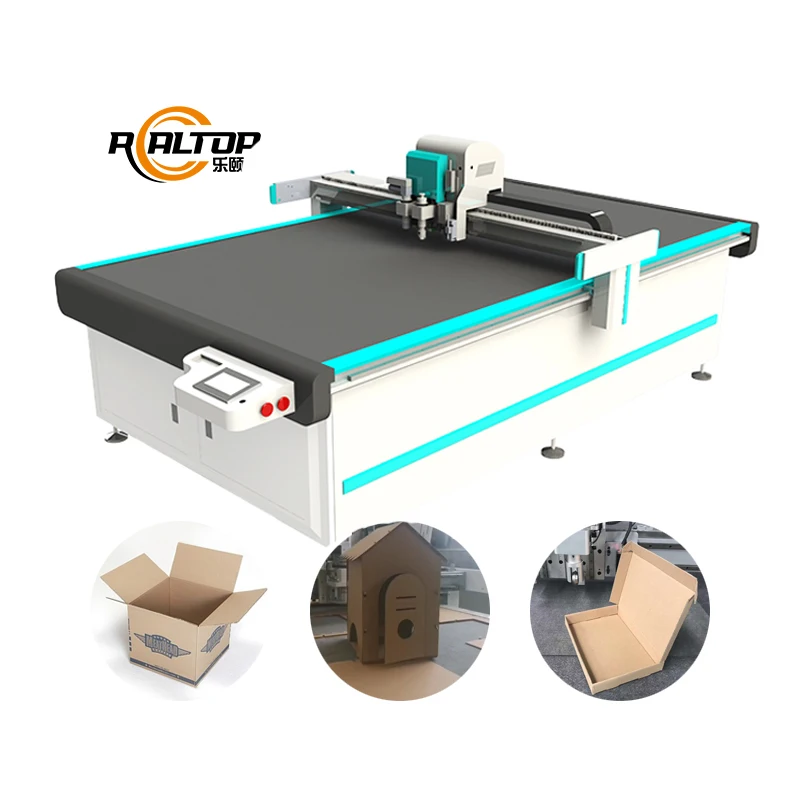
| Product Type | CNC Oscillating Knife Cutting Machine |
| Working Area | 1600 × 2500 mm |
| Machine Dimensions | 3450 × 2300 × 1250 mm |
| Rated Power | 9 kW |
| Table Options | Flat working table or auto-feeding conveyor table |
| Translational Velocity | 800–2000 mm/s |
| Cutting Speed | 200–800 mm/s (varies with material type and thickness) |
| Cutting Thickness | Up to 100 mm (basis not stated in source — confirm block format, material and layer count) |
| Repeated Accuracy | ≤ 0.1 mm |
| Servo Motor | Delta (Panasonic optional), IP67 rated |
| Linear Guide | Taiwan Hiwin rail |
| Conveyor Belt | Germany-imported belt (auto-feeding models) |
| Vacuum Pump | 7.5 kW |
| Voltage | 380V ± 10% |
| Control Panel | Touch screen, multi-language support |
| Software Compatibility | PLT, DXF, AI; auto typesetting and nesting |
| Visual Positioning | Small CCD mark-point, panoramic camera, or projection positioning (optional) |
| Safety Devices | Infrared sensors, anti-collision, emergency stop |
| Instruction Format | HP-GL compatible |
Application Suitability
| Application | Material or Output |
|---|---|
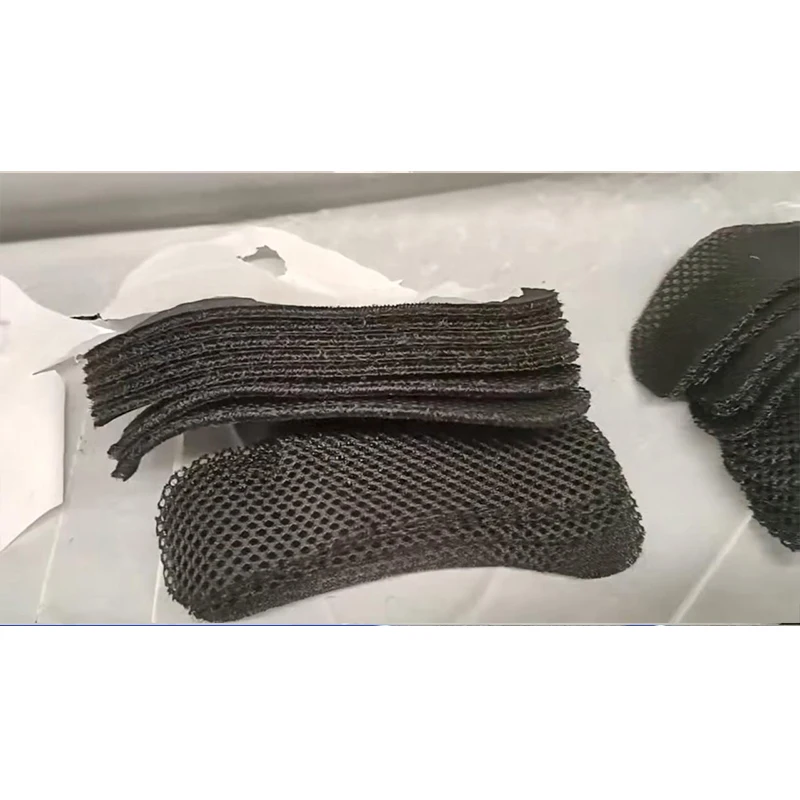
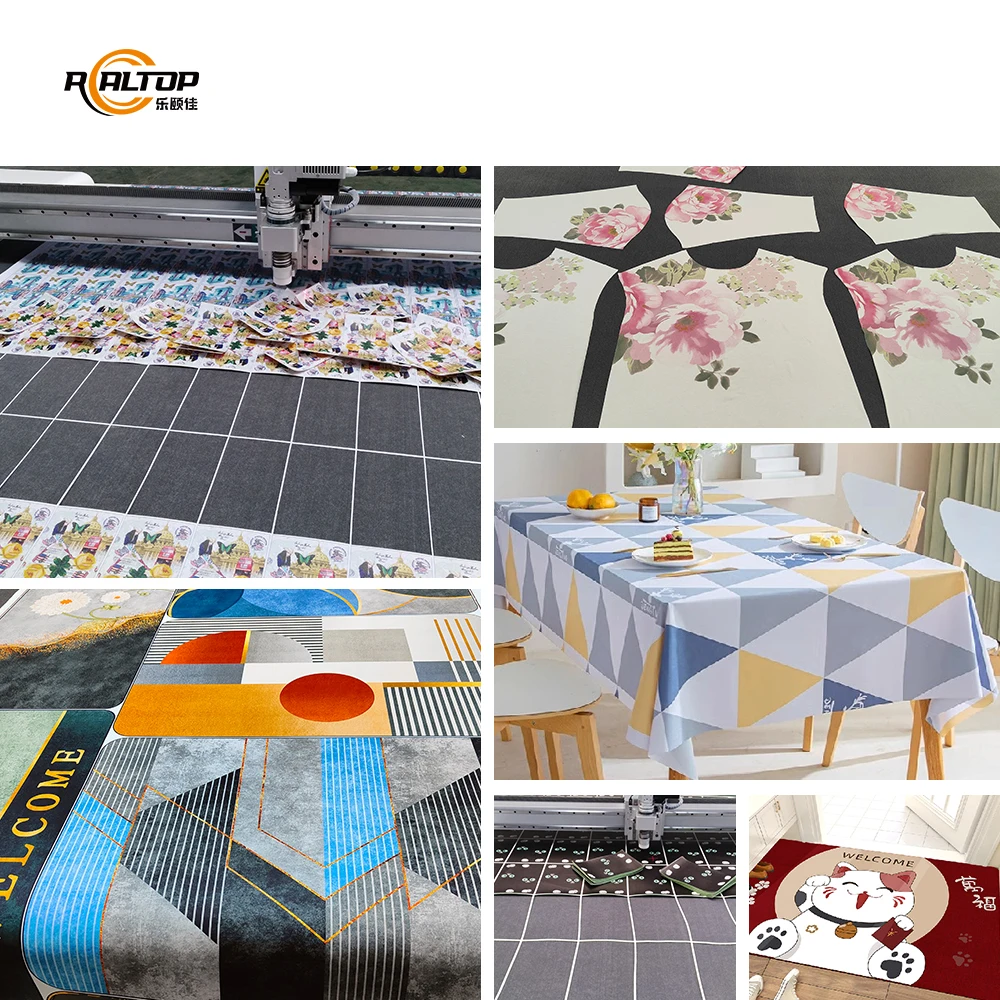
| Garment and footwear cutting | Single and multi-layer fabric, textile, non-woven fabric |
| Automotive interior trimming | Composite leather, PU, EVA, XPE foam, sponge composite materials |
| Gasket and seal production | Rubber, PTFE, ETFE, silicon, soft glass |
| Signage and packaging sampling | PVC sheet, corrugated cardboard, sticker, film |
| Soft furnishings and carpet | Leather, cloth, carpet, foam board, PP and PE sheets |
What Material Thickness Does to Your Quoted Cutting Speed
Cutting speed is only meaningful when tied to the exact material stack you run every day.
A buyer once sent me a fabric sample rated for single-layer cutting and asked us to quote production speed for multi-layer composite panels. The numbers looked fine on paper, but when the material arrived at our Jinan workshop for sample testing, the oscillating knife struggled through the denser inner layers and the actual throughput dropped noticeably. The machine was not at fault — the specification was. [NEED_CITE: relationship between material density and oscillating knife cutting speed in multi-layer fabric production]
This CNC oscillating knife cutting machine manufacturer always runs a sample test on the buyer’s actual material before any speed claim is locked in, because thickness, density and layer count together determine real cycle time.
Frame and Motion Build From the Core Factory
The RT-D2516/RT-S2516 frame starts as thick-walled seamless steel tubing, welded into a single rigid structure and then put through high-temperature tempering to release internal stress. After tempering, every mounting surface is finished on a CNC machining center, which means the linear rails, servo mounts and vacuum table sit on a true plane rather than on hand-leveled weldments. This matters for a CNC fabric cutting machine factory that ships overseas, because a frame that holds geometry at the factory will hold it after ocean freight and installation on an uneven shop floor.
Vacuum Table Engineering and Suction Uniformity
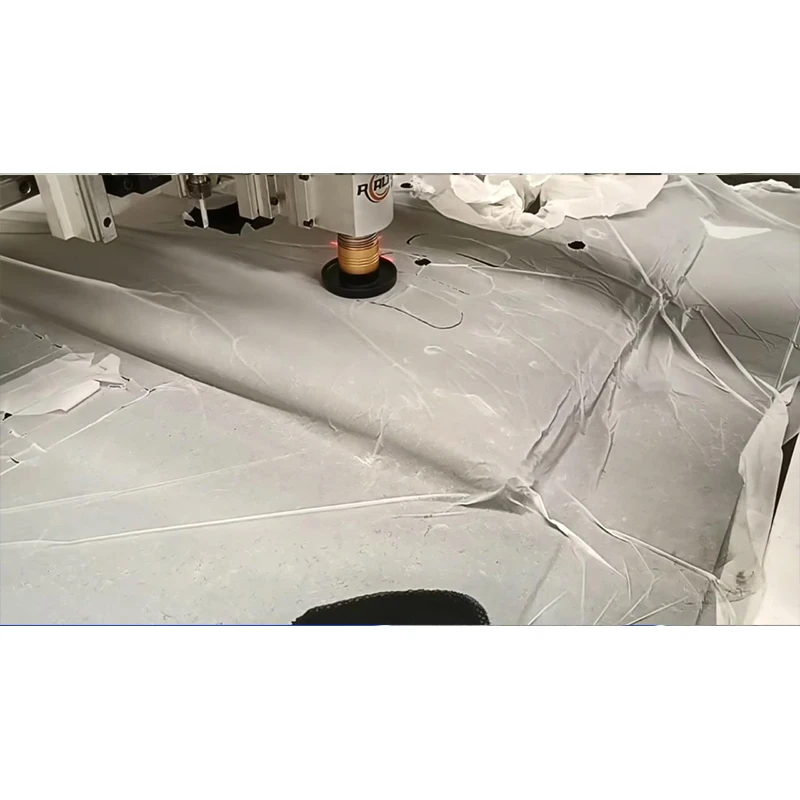
The working table uses a magnesium-aluminum alloy base with fluorocarbon PVDF powder spraying and hard oxidation treatment. This combination gives the surface high flatness and resists abrasion from repeated material loading. The vacuum zoning is designed so suction remains uniform across the full 1600 × 2500 mm area — a critical detail when cutting small pattern pieces that tend to lift at the edges. With the same fan power, the engineered port layout increases effective suction noticeably compared to a simple drilled-plate design. [NEED_CITE: vacuum table zoning impact on small-part fixation in digital cutting]
Reading the Spec Sheet Against Your Production Reality
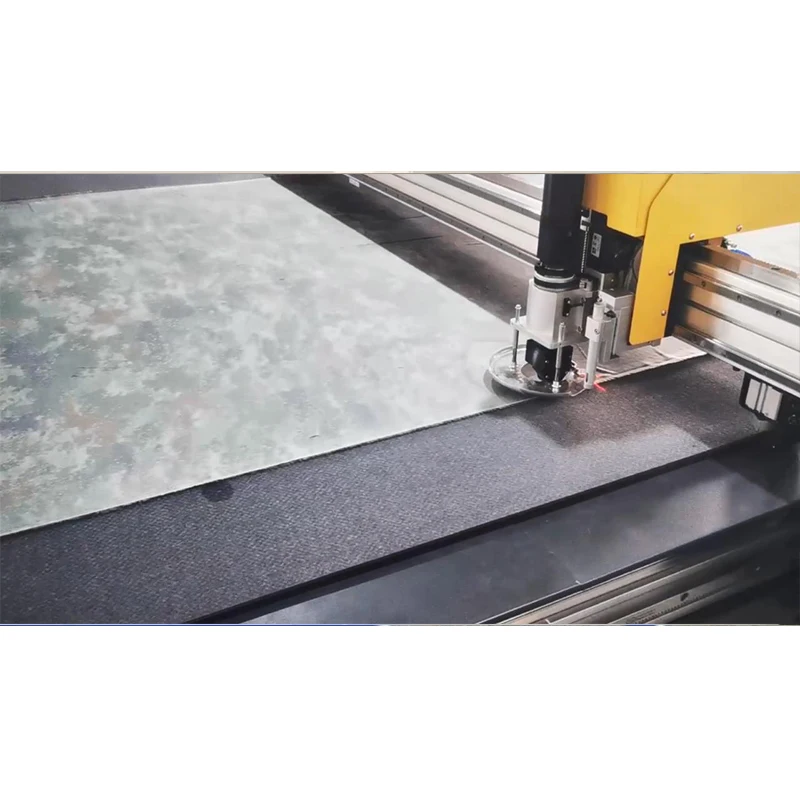
The Delta IP67 servo motors provide real-time automatic gain adjustment and vibration suppression, which keeps the knife path accurate when the head decelerates around tight contours in leather or dense composite material. Cutting speed is listed at 200–800 mm/s, but the actual rate depends on material hardness, layer count and knife type — a Swiss imported oscillating knife cuts clean through sponge composite leather at a different rate than it does through single-layer cotton. The 7.5 kW vacuum pump pairs with the table zoning to hold material flat; if your parts are small and the vacuum zones are too large, pieces can shift mid-cut and ruin the batch. The optional CCD camera positioning handles printed contour work by tracking registration marks, which is essential for signage and appliqué producers running pre-printed vinyl or fabric. Software accepts PLT, DXF and AI files with auto typesetting, so your existing nesting workflow carries over without re-formatting.
The Cost of Skipping Material-Specific Tool Head Selection
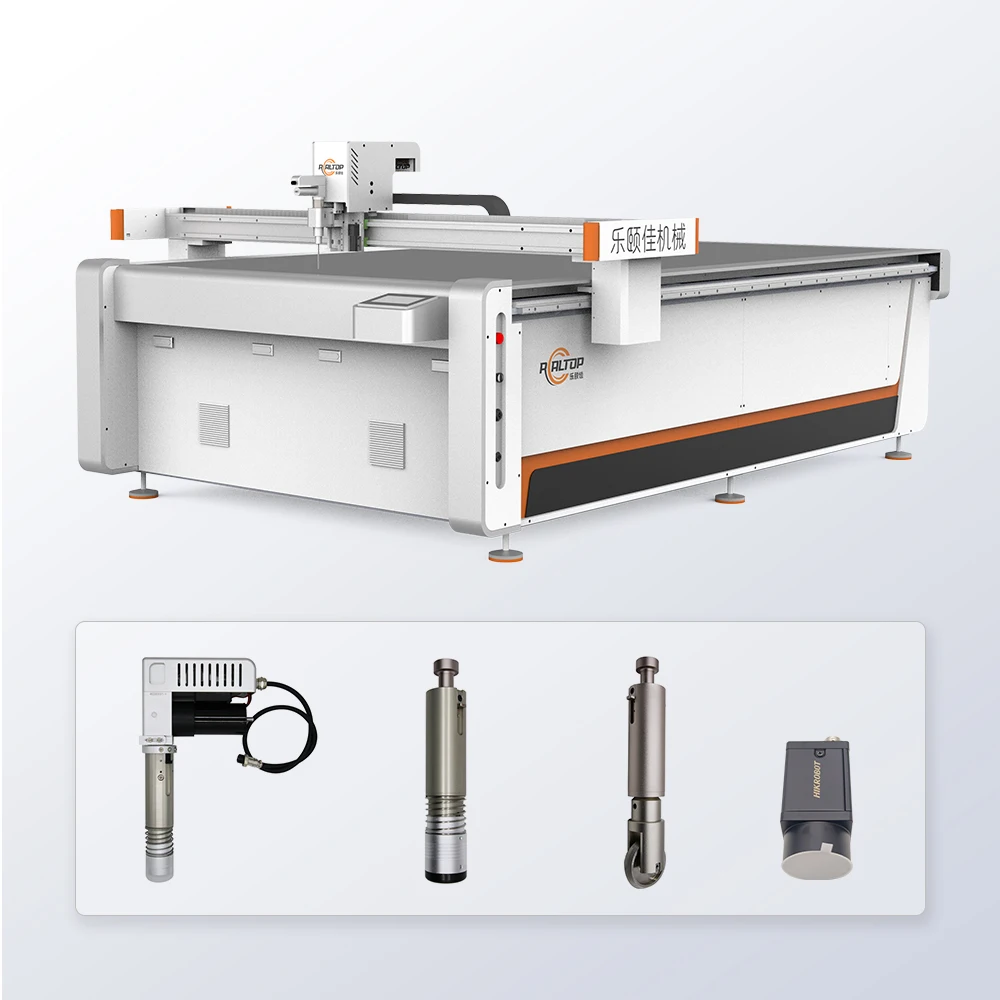
Choosing the wrong tool head for your material produces visible defects: ragged edges on woven fabric, crushed cells in foam, or delamination in composite panels. A pneumatic knife handles dense rubber gaskets cleanly, while a circular knife suits long straight cuts in carpet rolls. If you specify a single oscillating knife for every job because it was the default on the quotation, you accept edge quality compromises on at least half your material range. [NEED_CITE: tool head selection and edge quality in oscillating knife cutting of composite materials]
That mismatch often surfaces weeks after installation, when the production team blames the machine and the buyer blames the supplier, when the real issue was a configuration decision made before the order was placed.
Why Source This CNC Oscillating Knife Cutting Machine from the Core Factory
The design team in Jinan engineers both the knife cutting and laser cutting platforms in-house, so you are not locked into one cutting method when your material mix changes. Every RT-D2516/RT-S2516 leaves the factory with a documented test record that includes cut samples run on the buyer’s own material, not a generic demo sheet. The voltage, control language and plug type are confirmed before production starts, eliminating the shipment-surprise problem that plagues equipment imports. OEM customization covers working area adjustments, tool head swaps and conveyor table integration for buyers who need the machine to fit an existing production cell. Spare parts lists and packing photographs are shared before the crate is sealed, so your receiving team knows exactly what to expect on the dock.
Documentation & Verification
- Machine specification sheet with tool head and table configuration confirmed per material
- Electrical schematic and voltage confirmation matching the destination country standard
- Sample cutting report produced on the buyer’s own fabric or composite stack
- Software licence and file format compatibility note for PLT, DXF and AI workflows
- Factory test record signed off before crating with packing photographs for shipment check
- Operation and maintenance manual with spare parts list included in the crate
Installation, Commissioning & Support
- The 3450 × 2300 × 1250 mm footprint requires a level concrete pad with clearance for the 1600 × 2500 mm conveyor feed path
- A dedicated 380V three-phase circuit with ±10% tolerance must be available before the 9 kW rated load is connected
- The 7.5 kW vacuum pump needs its own breaker and short duct run to avoid suction loss
- First-run calibration includes vacuum zone mapping and servo gain tuning for the buyer’s actual material thickness
- Touch screen control panel is set to the operator’s language during on-site commissioning
- Delta servo drives and Hiwin linear rails carry standard spare part codes available through regional distributors
What to Include in Your Inquiry
Send the material data sheet with layer count, density and maximum sheet size so we can match the tool head and vacuum table configuration to your job. Confirm your local voltage and frequency, the control language your operators need, and whether you require CCD camera positioning for printed contour work. If you run an existing nesting software, share the file format so compatibility is verified before the order is placed.
Frequently Asked Questions
Q: How is the RT-D2516/RT-S2516 frame built to maintain precision over time?
A: The frame is welded from thick-walled seamless steel tubing and then high-temperature tempered to release welding stress. Every mounting surface is finished on a CNC machining center afterward, ensuring the Hiwin linear rails and servo motor mounts sit on a verified flat plane that holds geometry through shipping and long-term vibration.
Q: What OEM options are available for voltage, language and table configuration?
A: Voltage is configurable within the 380V ±10% range with plug and frequency matched to the destination market. The touch screen control panel supports multiple languages set before dispatch. Table options include a flat working table or an auto-feeding conveyor table with Germany-imported belt, and tool heads are specified per the buyer’s material range.
Q: How is build quality verified before the machine ships?
A: Each unit undergoes a factory test that includes cutting the buyer’s own material sample, with a signed test record and packing photographs shared before crating. Electrical schematics, voltage confirmation documents and the tool head configuration list are included so the buyer can verify every specification against the purchase order.
Q: What is the typical lead time from order placement to factory test completion?
A: Lead time depends on the configuration complexity and current production schedule, typically running several weeks from order confirmation through assembly, testing and documentation preparation. Custom OEM requests such as non-standard working areas or special tool head combinations may extend this timeline.
Q: Can buyers visit the factory to see the design and production process?
A: Yes, visits to the Jinan facility are arranged to show the design team’s development workflow, the welding and tempering process, CNC machining center finishing and final assembly. Buyers can observe sample cutting on their material and discuss configuration details directly with the engineering team.
You may also like

商品评价
Clear filtersThere are no reviews yet.