




-
 Courier delivery
-
 DHL Courier delivery
-
 Warranty 1 year
-
 Free 30-Day returns

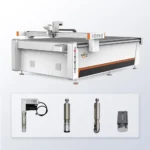
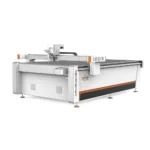
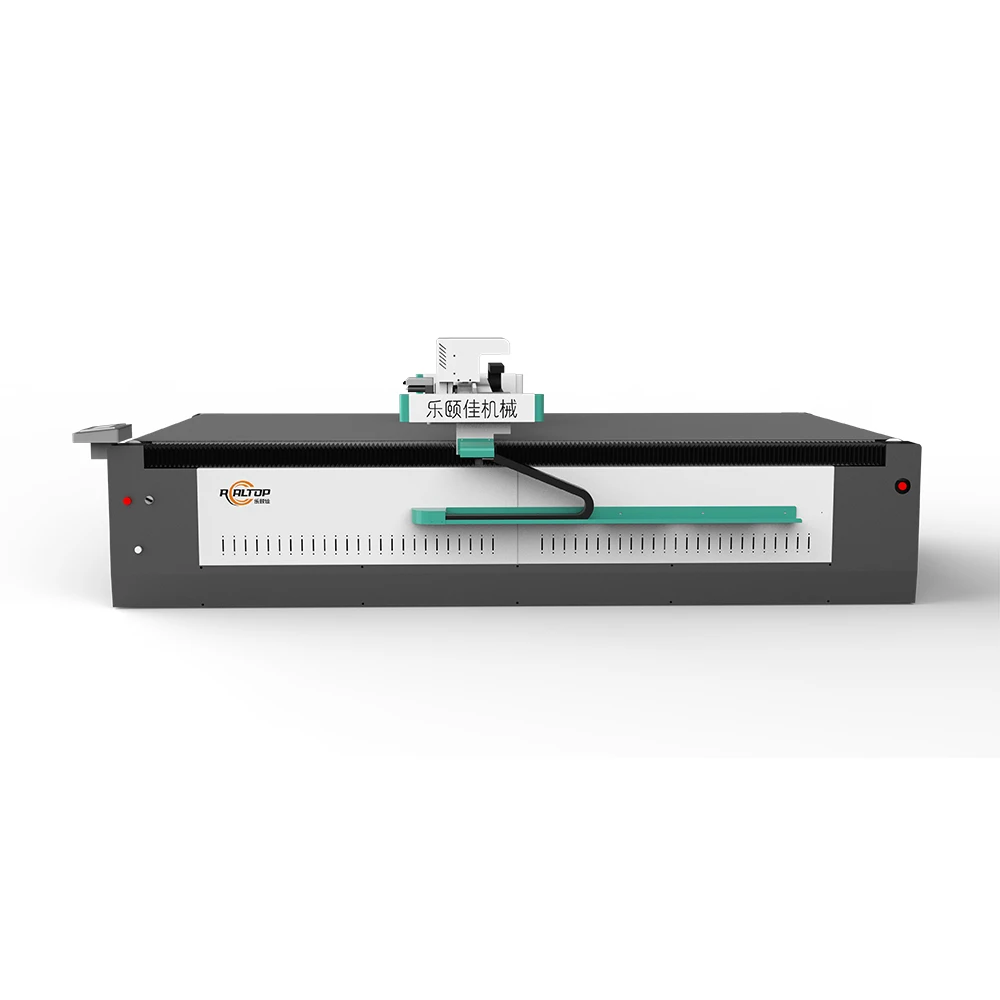
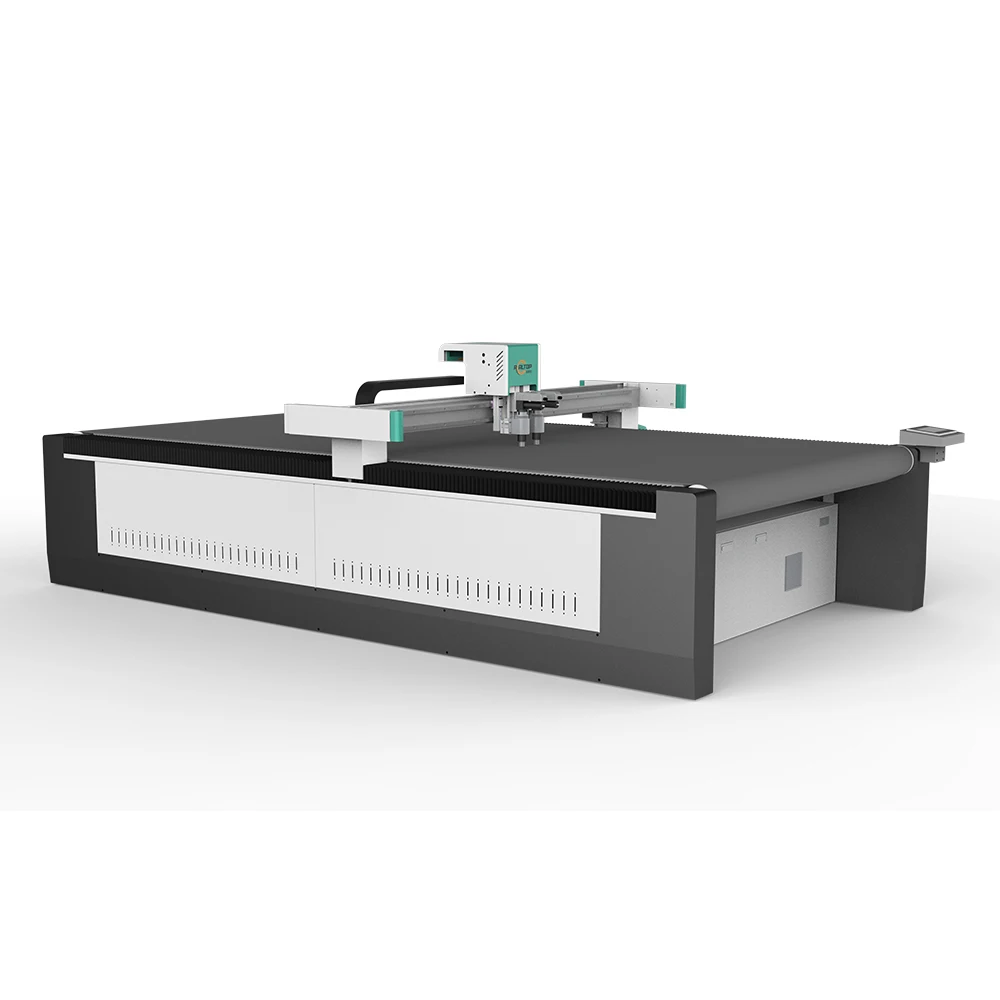
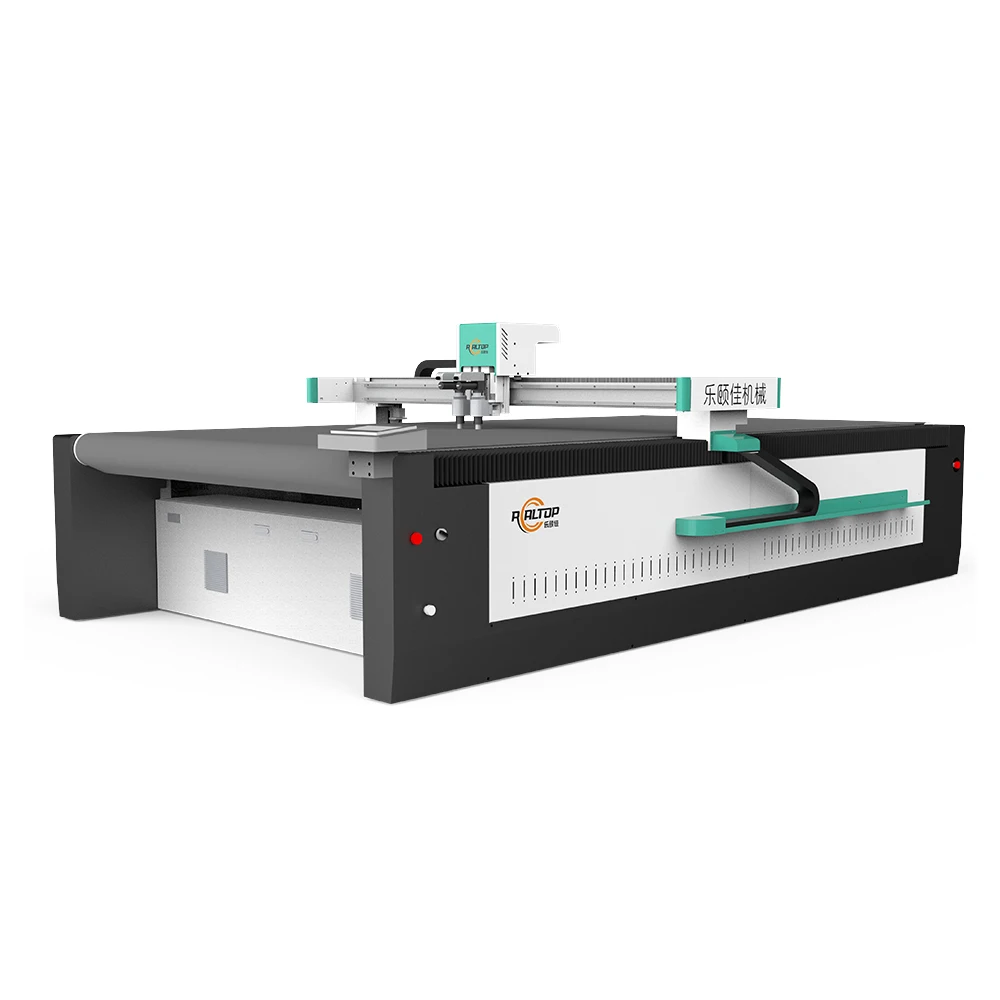
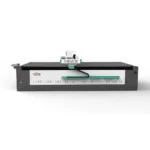
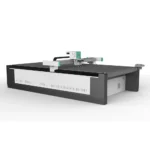
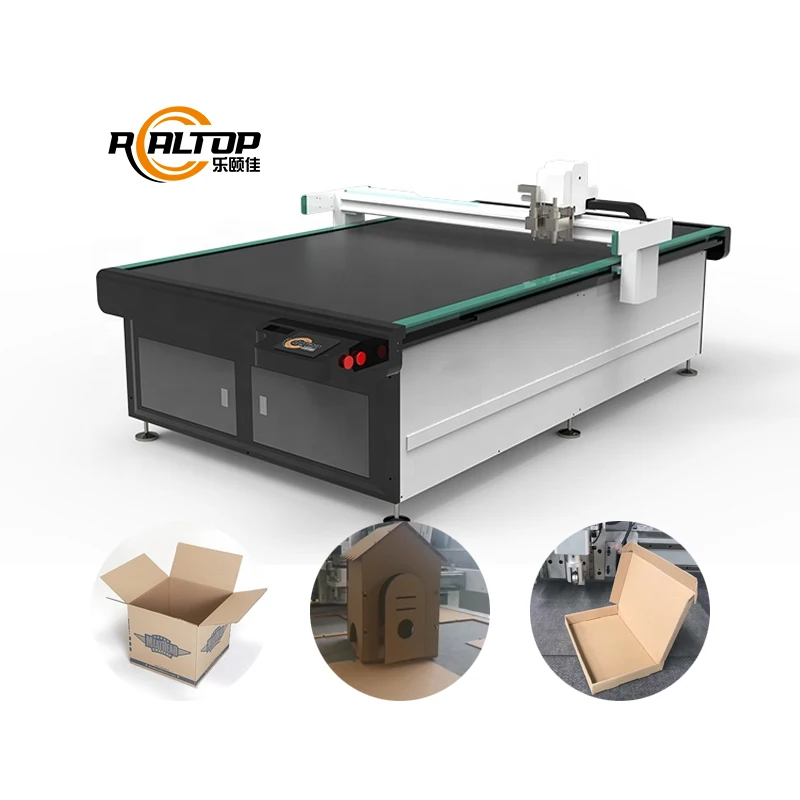
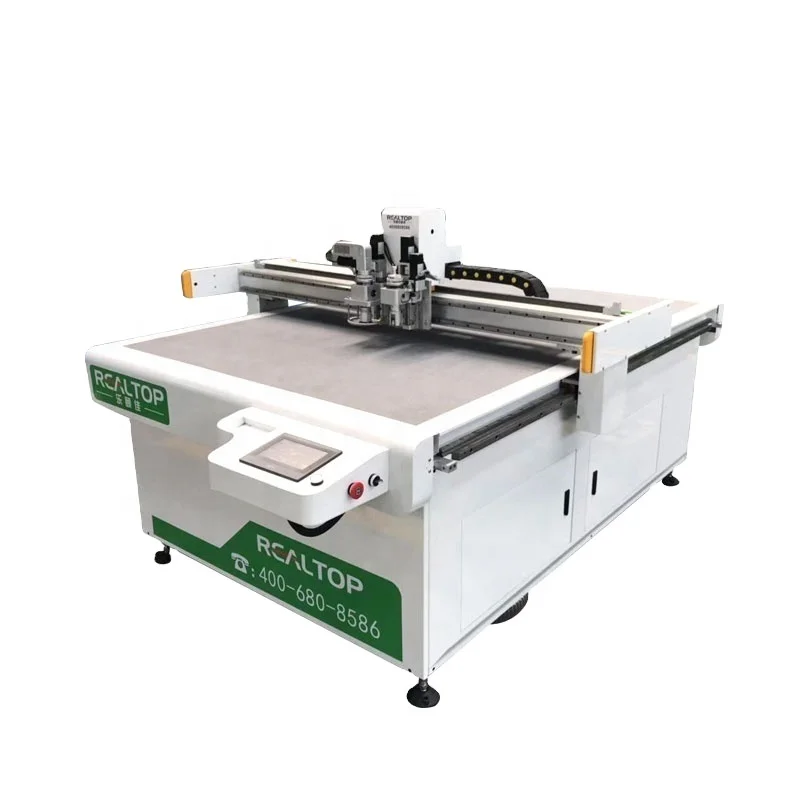
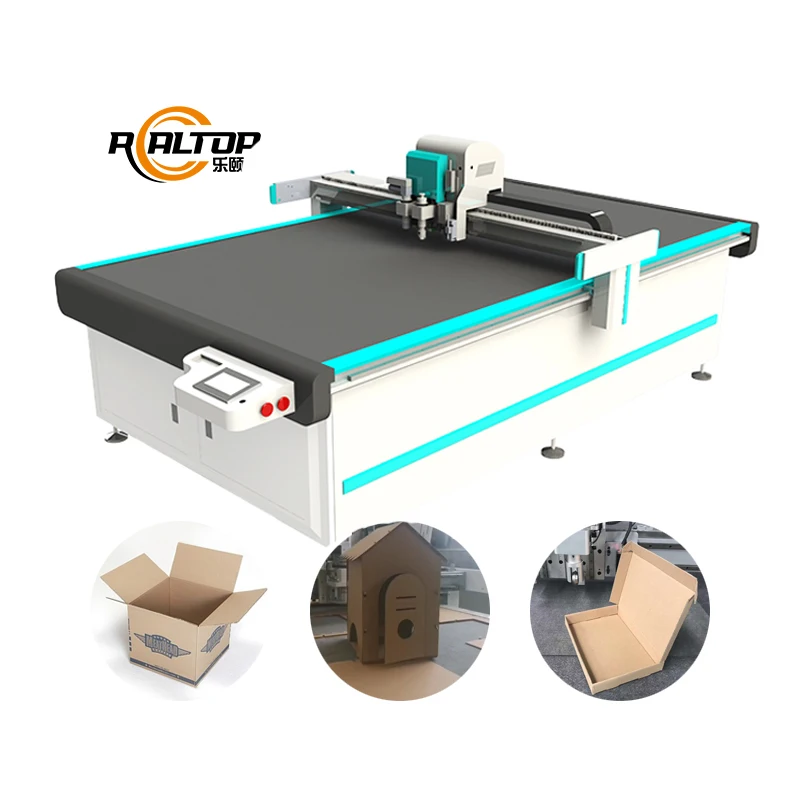
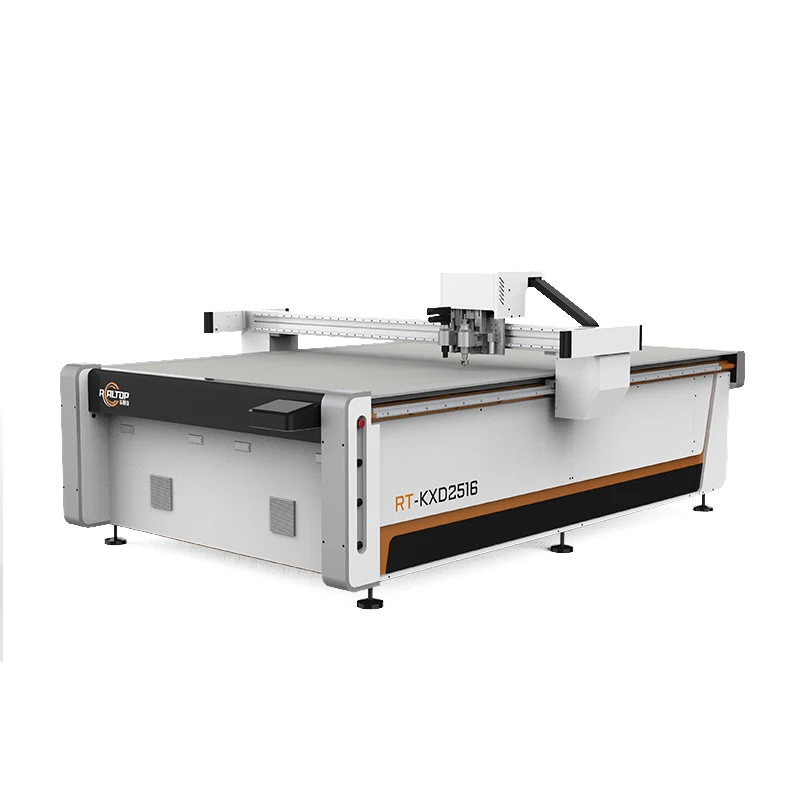
Precision Ground Frame Engineering — Every Realtop 1625 cutting table starts with a heavy-duty frame machined to flatness tolerances that keep the oscillating knife tracking true across the full 1600×2500 mm bed, even when cutting dense aramid honeycomb or multi-layer carbon fiber stacks.
Technical Specifications
| Parameter | Value |
|---|---|
| Model | 1625 |
| Product Type | CNC Oscillating Knife Cutting Machine for Composites |
| Working Area | 1600×2500 mm |
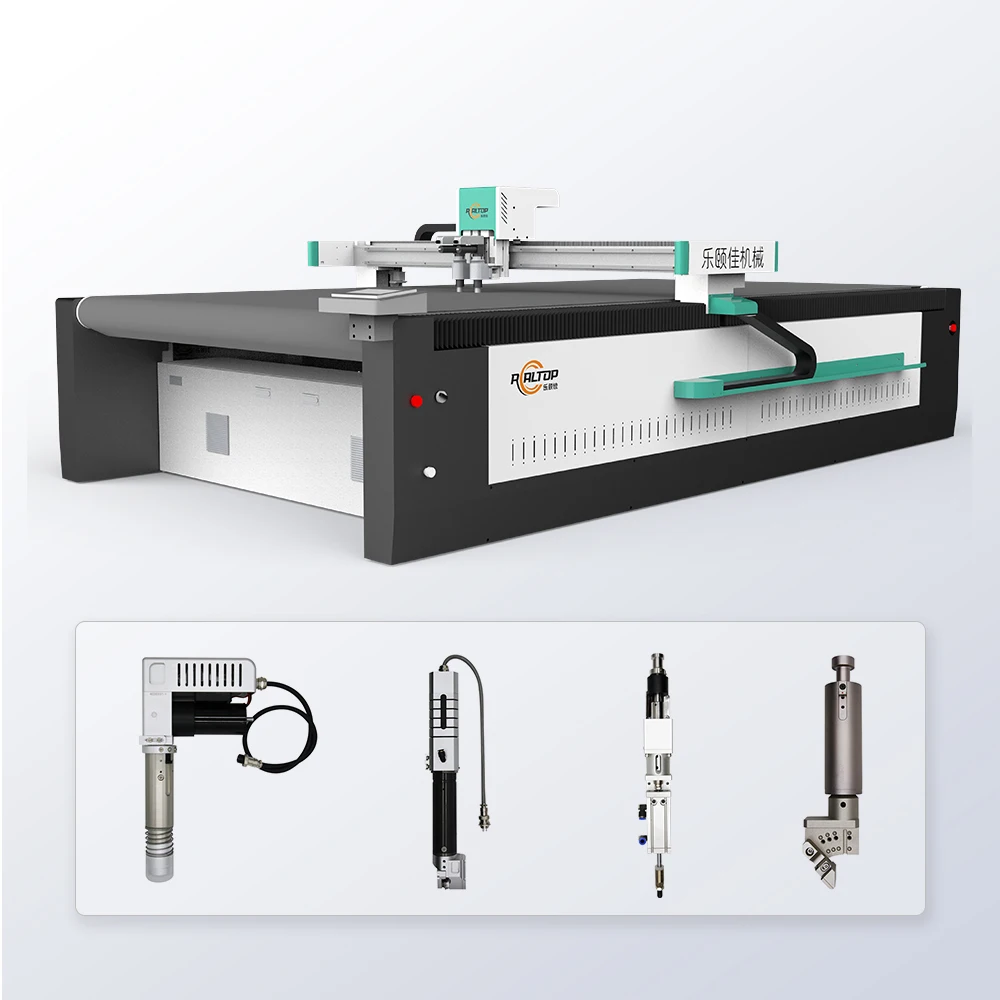
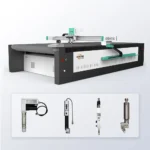
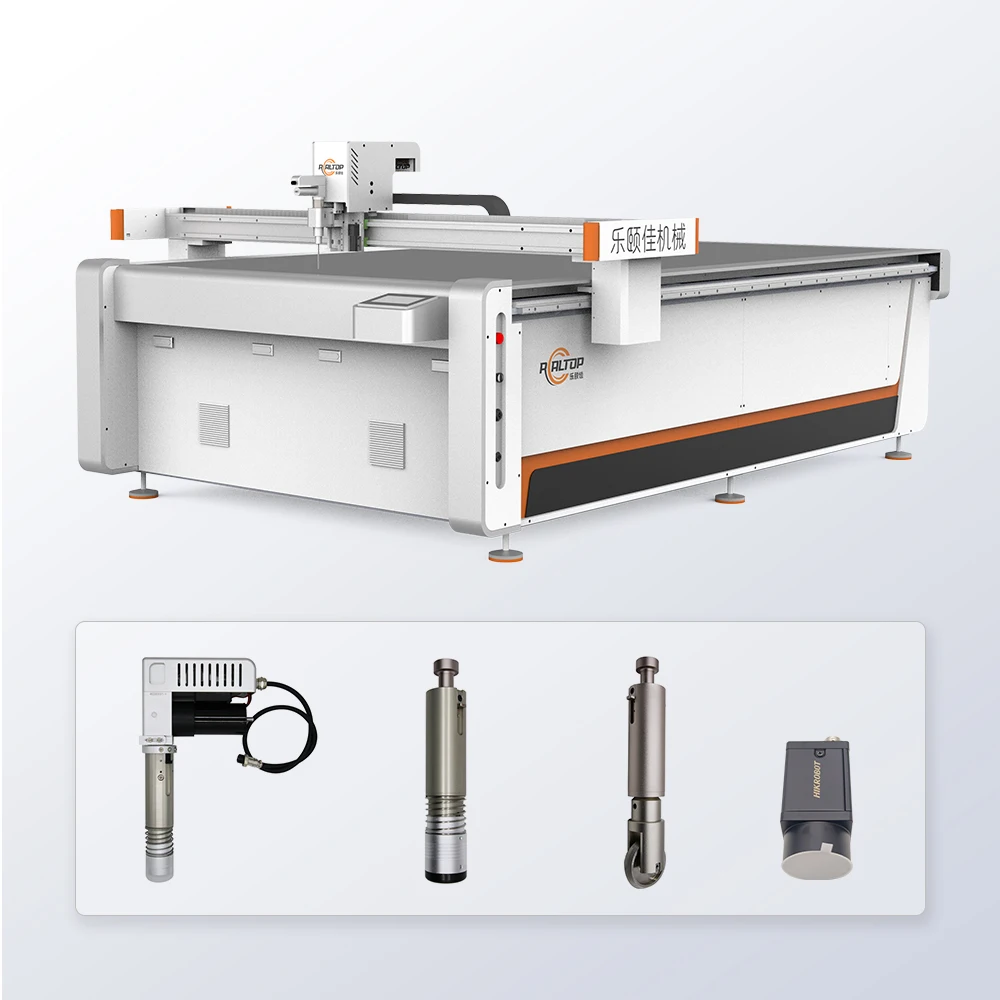
| Tool Head Options | Oscillating knife, Driven rotary knife, Creasing wheel, Kiss cutting tool, Pneumatic knife, Milling tool, V groove knife |
| Cutting Speed | 0–2000 mm/s |
| Maximum Cutting Thickness | ≤ 30 mm |
| Positioning Accuracy | ±0.1 mm |
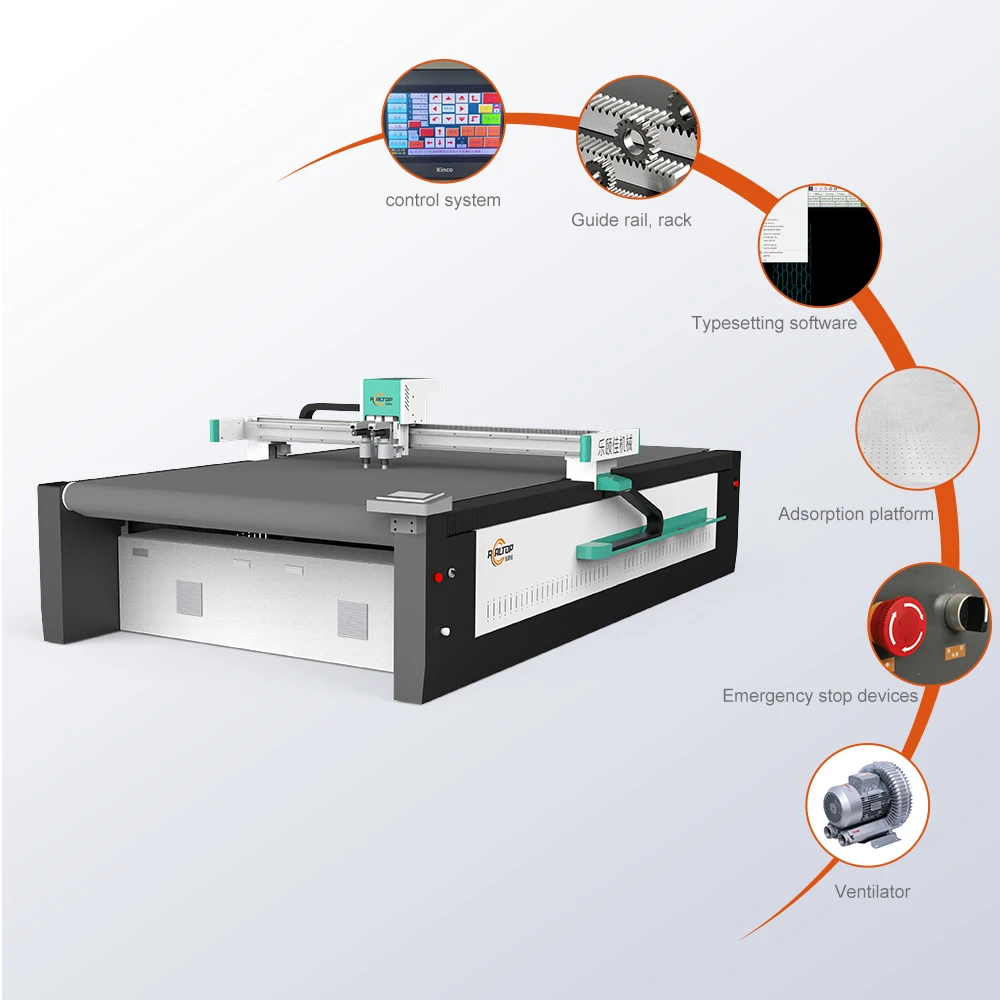
| Vacuum Pump Power | 9 kW |
| Vacuum Table | Aluminum bellows vacuum table with high flatness and sealing |
| Machine Frame | Heavy-duty frame with precision-ground surface |
| Servo Drive Options | Panasonic, Delta, Dorna (brand options available) |
| Control System | PLC control panel with optional display languages |
| Software | Dedicated packaging box structure design software included |
| File Formats Supported | PLT, DXF, AI, PDF |
| Voltage Options | 110V, 220V, 380V |
| Safety Devices | Infrared sensor device and emergency stop device |
| Overall Dimensions (L×W×H) | 3300×2100×1350 mm |
Application Suitability
| Application | Material or Output |
|---|---|
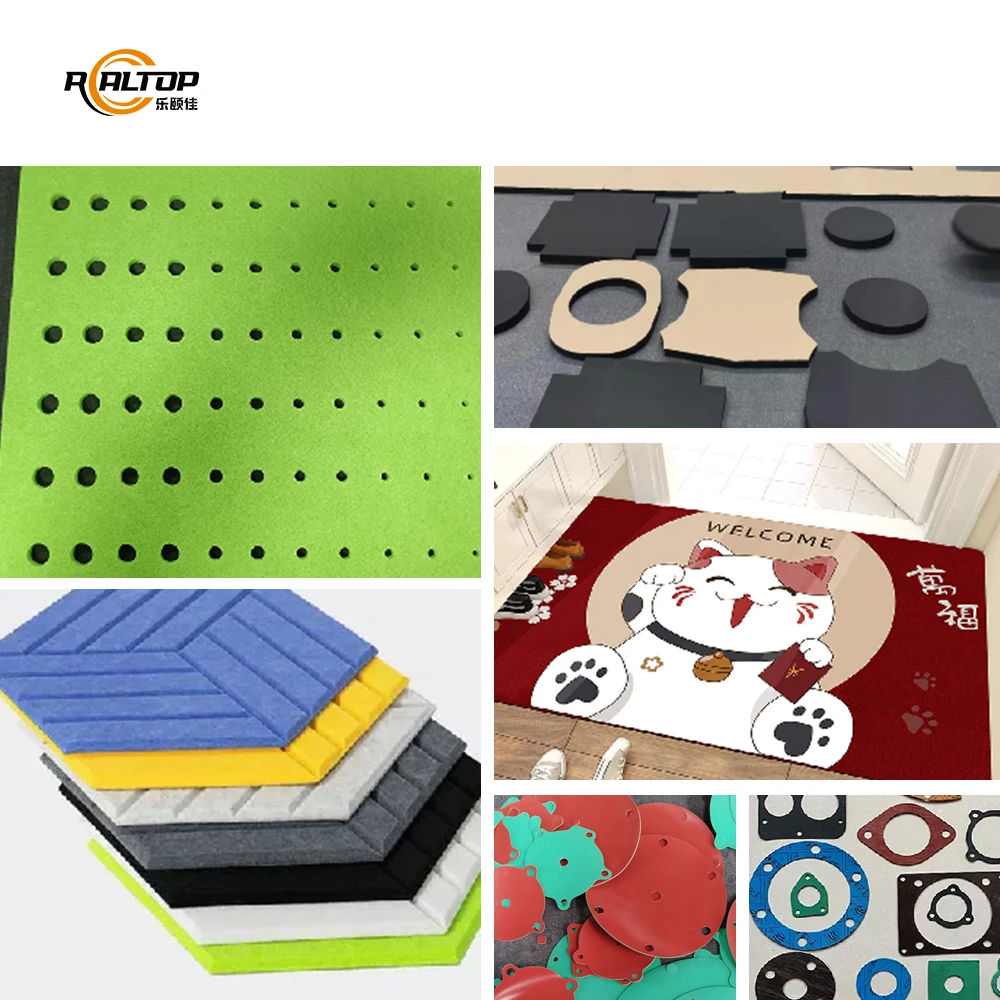
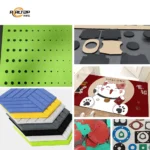
| Aerospace interior trim and structural prepreg | Carbon fiber prepreg, aramid honeycomb (Nomex), fiberglass cloth, ceramic fiber blankets |
| Automotive lightweight body and interior panels | Carbon fiber covers, FRP, acoustic felt, damping pads, carpets, sealing strips |
| Wind turbine blade core and infusion media | Fiberglass cloth, carbon fiber cloth, vacuum infusion mesh, PET/PVC foam core materials |
| Sporting goods and performance equipment | Carbon fiber sheets, Kevlar fabric, high-performance foam for helmet liners and bicycle frame prepreg |
Why Material Thickness Alone Is the Wrong Starting Point for Composites
Many composite fabricators specify a CNC oscillating knife cutting machine manufacturer based on bed size, only to find the machine chews through blade consumables on carbon fiber prepreg or leaves delaminated edges on aramid honeycomb cores. The cutting method must match the composite structure, not just the sheet dimensions.
A 1600×2500 mm bed handles most aerospace and automotive panel formats, but cutting 30 mm acoustic insulation foam requires different oscillation frequency and blade geometry than slicing 2 mm carbon fiber cloth. I have watched production lines stall because the tool head was selected for the wrong end of the composite spectrum — soft foam versus rigid honeycomb — and no amount of parameter tweaking fixes a fundamental mismatch [NEED_CITE: composite material cutting method selection guidelines].
Frame Rigidity and Motion Accuracy in Composite Cutting
Composite materials demand repeatable cut paths because even slight deviation can compromise layup registration or honeycomb cell alignment. The 1625 uses a heavy-duty frame with a precision-ground surface, and the aluminum bellows vacuum table maintains flatness across the entire working envelope. When paired with servo drive options from Panasonic, Delta, or Dorna, the system holds ±0.1 mm positioning accuracy — critical when nesting wing skin panel patterns or cutting battery insulation sheets that must fit precisely into EV module housings.
Tool Head Selection Across the Composite Spectrum
A single composite shop might process carbon fiber prepreg in the morning and PET foam core in the afternoon. The 1625 offers interchangeable tool heads — oscillating knife for fabric and prepreg, driven rotary knife for thicker foam stacks, V groove knife for chamfered edges on sandwich panels, and milling tool for rigid composite boards. This CNC oscillating knife cutting machine manufacturer builds each configuration around the buyer’s actual material stack rather than shipping a generic head and hoping it works [NEED_CITE: oscillating knife tooling for composite material processing].
What the Specification Sheet Actually Means for Your Shop Floor
The 9 kW vacuum pump paired with the aluminum bellows table is sized to hold lightweight fiberglass cloth flat without wrinkling, yet strong enough to secure dense carbon fiber sheets during high-speed cuts. Cutting speed reaches 2000 mm/s on compatible materials, though actual throughput depends on composite density, ply count, and contour complexity. The PLC control panel supports multiple display languages — English, Russian, Italian, Chinese, with special languages customizable — so operators in different regions work in their native interface. File format support covers PLT, DXF, AI, and PDF, which handles most nesting outputs from composite-specific CAD/CAM packages.
The Hidden Cost of Skipping Material Trials
Composite materials vary batch to batch — resin content, fiber orientation, and core density all shift cutting behavior. Buyers who skip sample cutting trials often discover mid-production that their specified blade type produces frayed edges on Kevlar or crushes Nomex honeycomb cells instead of shearing them cleanly. These defects may not surface until the parts reach layup or bonding stations, where dimensional drift or poor edge adhesion triggers scrap [NEED_CITE: composite part edge quality standards in aerospace manufacturing]. A trial on your own material, with documented edge quality and cycle data, is the only reliable way to confirm the configuration before the machine ships.
Why Source This Machine Directly from the Factory
Realtop operates an in-house design team and core factory covering both the mechanical build and the control integration, so engineering changes — custom vacuum zoning, non-standard voltage, or language-specific HMI — happen on the production floor rather than through a third-party reseller. The heavy-duty frame and precision-ground table surface are manufactured in-house, giving the factory direct control over flatness tolerances. Tool head and table configurations are specified per material and production volume, not selected from a fixed catalog. Every machine ships with a factory test record run on the buyer’s own composite material, and CE documentation is available where applicable.
Documentation & Verification
- Machine specification sheet matching your exact tool head and vacuum table configuration
- Electrical schematic confirming voltage, phase, and plug type before production begins
- Sample cutting report on your composite material with edge quality and cycle documentation
- Factory test record with photographs taken before crating
- Operation and maintenance manual in your selected control language
- Software licence and file format compatibility confirmation note
Installation, Commissioning & Support
- Floor space planning around the 3300×2100×1350 mm footprint with access clearance for material loading
- Dedicated electrical circuit matching your confirmed 110V, 220V, or 380V supply with correct phase configuration
- Vacuum pump and 9 kW power circuit commissioning with pressure verification across all table zones
- First-article cutting trial on your composite stock to validate blade selection and oscillation parameters
- Operator training on PLC panel in your confirmed language covering tool change, nesting import, and safety interlocks
- Spare blade and consumable kit sized to your daily cutting volume and material abrasiveness
Before You Send an Inquiry
Composite cutting requirements vary widely depending on fiber type, resin system, and part geometry. To get an accurate configuration recommendation, share your primary material types with thickness ranges, typical sheet dimensions, daily cutting volume, and your facility’s voltage and frequency. If you run specific nesting software upstream, confirm the file format so compatibility is verified before the order. Sample cutting on your actual material is available and strongly recommended before commitment.
Frequently Asked Questions
Q: How does buying from the manufacturer differ from ordering through a trading company?
A: Realtop designs and builds the frame, motion system, and control integration in-house. When you need a non-standard vacuum zone layout or a specific servo brand, the change is engineered on the factory floor. Trading companies resell fixed configurations and route custom requests back to the factory, adding delay and miscommunication risk to every specification change.
Q: What customization options does the factory offer for composite cutting applications?
A: The factory customizes tool head combinations, vacuum table zoning, voltage and plug type, control panel language, and servo drive brand. For composite buyers, this means the oscillation frequency, blade geometry, and hold-down pressure are matched to your specific fiber and core materials rather than set to a generic default that may not perform on your production stock.
Q: How is machine build quality verified before shipment?
A: Each 1625 undergoes a factory test using the buyer’s composite material or an agreed equivalent. The test record documents positioning accuracy, edge quality, and cutting cycle data. Electrical schematics, mechanical inspection records, and photographic evidence of the machine running your parts are compiled before crating. Buyers may visit the core factory to witness the test in person.
Q: What documentation ships with the cutting machine?
A: The package includes a machine specification sheet, electrical schematic with confirmed voltage details, tool head and table configuration list, sample cutting report on your material, CE declaration where applicable, operation and maintenance manual in your selected language, software licence note, and a spare parts list. Packing photographs are provided before the crate leaves the factory.
You may also like

商品评价
Clear filtersThere are no reviews yet.