





-
 Courier delivery
-
 DHL Courier delivery
-
 Warranty 1 year
-
 Free 30-Day returns

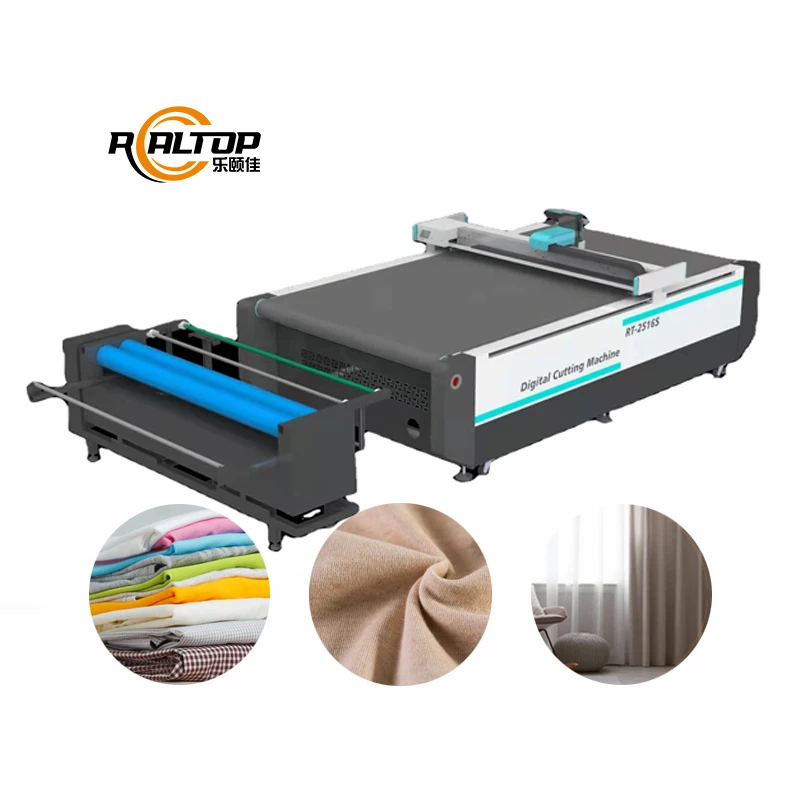
In-House Build Quality — thick-walled steel frames finished on CNC machining centers rather than outsourced weldments, keeping the RT-D2516/RT-S2516 dimensionally stable through years of continuous cutting shifts.
Technical Specifications
| Parameter | Value |
|---|---|
| Model | RT-D2516/RT-S2516 |
| Product Type | CNC Oscillating Knife Cutting Machine |
| Working Area | 1600 × 2500 mm |
| Machine Size | 3450 × 2300 × 1250 mm |
| Rated Power | 9 kW |
| Cutting Thickness | 20 mm – 80 mm (material dependent) |
| Translational Velocity | 800 – 1200 mm/s |
| Repeated Accuracy | ≤ 0.1 mm |
| Transmission System | Digital servo motor, linear guide, synchronous belt, ball screw |
| Table Type | Flat vacuum table with magnesium-aluminum alloy surface |
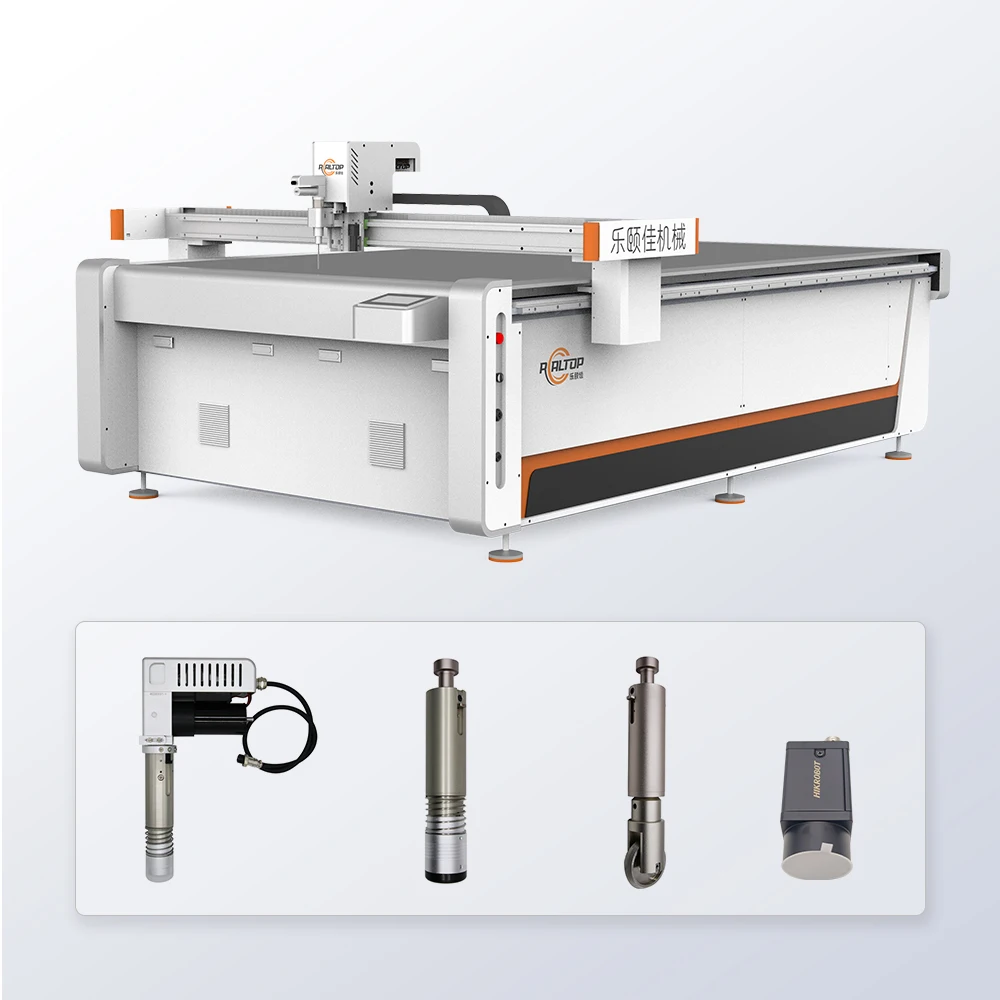
| Tool Head | Swiss imported knife — vibration full cut, half cut, cursor location |
| Safety Device | Infrared sensors, anti-collision, emergency stop |
| Servo Motor | Delta digital servo |
| Linear Guide | Taiwan Hiwin rail |
| Vacuum Pump | 7.5 kW |
| Voltage | 380 V ± 10 % |
| Instruction Format | HP-GL compatible |
| Other Configuration | Germany imported conveyor belt, auto feeding |
Application Suitability
| Application | Material or Output |
|---|---|
| Garment and footwear cutting | Multi-layer fabric, leather, shoe material, non-woven fabric |
| Automotive interior and gasket production | Sponge composite leather, rubber, PU, EVA, XPE, sealing pads |
| Soft home furnishings and carpets | Textile, carpet, sponge, foam board |
| Packaging and carton sample making | Corrugated cardboard, sticker, film, plastic box |
| Graphic advertising and printing | PVC, soft glass, silicon, PP, PE |
| Sports and outdoor products | Composite materials, PTFE, ETFE, fiberglass |
Why the Tool Head Decision Matters More Than the Working Area
A CNC knife cutting machine manufacturer is often asked about table size first, but the cutting result is decided by how the tool head interacts with the material. Specifying a machine by working area alone is the single most common reason buyers end up with ragged edges, crushed foam, or incomplete cuts on thicker composites.
I have seen distributors receive a flatbed cutter that handled thin vinyl perfectly, only to discover it could not push through 40 mm sponge composite leather at production speed because the oscillating frequency and knife stroke were never matched to that density. The working area was generous; the tool head was wrong for the job. Before any quotation is finalized, the material sample must be cut on the actual machine configuration being quoted — not on a showroom unit with a different tool station. [NEED_CITE: oscillating knife frequency and stroke selection for composite materials]
Frame Construction and Long-Term Flatness
Every CNC knife cutting machine manufacturer claims a rigid frame, but the difference shows up after two years of vibration loading. The RT-D2516/RT-S2516 uses a thick-walled seamless steel structure that goes through high-temperature tempering to relieve welding stress, then finishes on a CNC machining center. This sequence keeps the gantry squareness and table flatness within tolerance long after lesser frames have warped under continuous oscillating knife vibration.
Motion Components That Hold Tolerance at Speed
The Delta digital servo motors paired with Taiwan Hiwin linear guides and ball screws deliver ≤ 0.1 mm repeated positioning accuracy. On a 1600 × 2500 mm working area, that means a contour cut started at one corner will close precisely when the head returns, even after hours of continuous nesting runs. For garment manufacturers cutting dozens of fabric plies at a time, that repeatability prevents the slow drift that turns a full day’s output into waste. [NEED_CITE: Hiwin linear guide specification for CNC cutting tables]
Reading the Specs That Actually Affect Your Output
Cutting thickness of 20 mm – 80 mm is listed as material dependent, which is the honest way to state it. A dense rubber gasket at 30 mm behaves very differently from a soft foam at 60 mm. The 7.5 kW vacuum pump paired with the magnesium-aluminum alloy table must hold small nested parts flat while the oscillating knife exits the cut at up to 1200 mm/s translational velocity. If the vacuum zoning is insufficient, small gasket pieces lift on the upstroke and the edge tears. The HP-GL compatible instruction format means existing CAD nesting files import without a software overhaul, but file format compatibility should still be confirmed against your specific nesting workflow before the order is signed.
The Hidden Cost of Skipping Configuration Verification
When a distributor orders a flatbed cutter without confirming vacuum table zoning for their typical part size, small pieces lift during cutting and the operator spends the shift taping material down. Production slows, edge quality drops, and the buyer blames the machine. Similarly, a voltage mismatch discovered after the crate arrives at the port means weeks of delay while a transformer is sourced locally. These are not machine defects — they are specification gaps that a pre-shipment confirmation process prevents entirely. [NEED_CITE: industrial voltage and frequency standards by destination country]
Why Procurement Teams Source This Build
The frame, motion components, and tool head are designed and assembled under one roof, so the CNC knife cutting machine manufacturer controls the tolerance stack from welding to final calibration. Sample cutting on the buyer’s own material is standard before commitment, producing a report that shows edge quality, achievable cutting depth, and cycle time on the exact stock you will run. Electrical schematics and voltage are confirmed against the destination market, and the control language is set before the machine leaves the factory. The in-house design team can adjust table configuration, tool head selection, and conveyor integration to match the production workflow rather than offering a fixed catalog unit.
Documentation & Verification
- Machine specification sheet listing confirmed tool head and table configuration for your material
- Electrical schematic with voltage and plug type validated for your destination market
- Sample cutting report on your own material showing edge quality, depth, and cycle time
- Factory test record documenting repeated accuracy and vacuum holding performance before dispatch
- Software licence and file format compatibility note confirming HP-GL workflow import
- Spare parts list with oscillating knife consumables and guide rail maintenance intervals
Installation, Commissioning & Support
- Floor space must accommodate the 3450 × 2300 mm footprint plus operator clearance on three sides
- Dedicated 380 V ± 10 % circuit rated for the 9 kW total load including the 7.5 kW vacuum pump
- Machine ships with frame and gantry separated; reassembly and leveling completed on site
- First-run calibration sets vacuum zoning, oscillating knife stroke, and servo tuning for your primary material
- Operator training covers tool head changeover, nesting import, and CCD cursor location function
- Consumable knife blades and guide rail lubrication schedule reviewed before handover
What to Include with Your Inquiry
Send the material type, maximum thickness, and typical sheet dimensions you will run daily. Specify the voltage and frequency at your facility along with the preferred control language. Confirm your workshop door width and ceiling height so the 3450 × 2300 × 1250 mm machine envelope can be checked against your access route before shipment is scheduled.
Frequently Asked Questions
Q: How is the actual cutting depth confirmed for my specific material?
A: Before order commitment, your material sample is cut on the RT-D2516/RT-S2516 configuration being quoted. The resulting sample cutting report documents the achieved depth, edge quality, and cycle time for your exact stock thickness and density, so the 20 mm – 80 mm range is verified against your real production requirement rather than left as a generic figure.
Q: Which tool head configuration is correct for my material?
A: The Swiss imported knife head supports vibration full cutting, half cutting, and cursor location in one station. Selection depends on whether your material is dense rubber, layered fabric, or soft foam — each demands a different oscillating frequency and blade type. A sample cut on your material confirms the correct setup before the machine is built.
Q: What voltage and control language are confirmed before shipment?
A: The standard voltage is 380 V ± 10 %, but the electrical schematic and plug type are validated against your destination market’s standards before production begins. Control language is set to your operator requirement at the factory, and a written confirmation document is issued with the specification sheet before the machine is crated.
Q: Is my existing CAD nesting software compatible with this machine?
A: The instruction system accepts HP-GL compatible format, which covers most nesting and CAD platforms used in fabric, leather, and gasket production. A file format compatibility note is issued before order to confirm your specific software exports correctly and that the nesting workflow transfers without manual re-drawing.
You may also like

商品评价
Clear filtersThere are no reviews yet.