





-
 Courier delivery
-
 DHL Courier delivery
-
 Warranty 1 year
-
 Free 30-Day returns

In-House Tool Head Engineering — REALTOP matches the oscillating knife configuration to your leather and fabric production requirements rather than shipping a generic cutter.
Technical Specifications
| Parameter | Value |
|---|---|
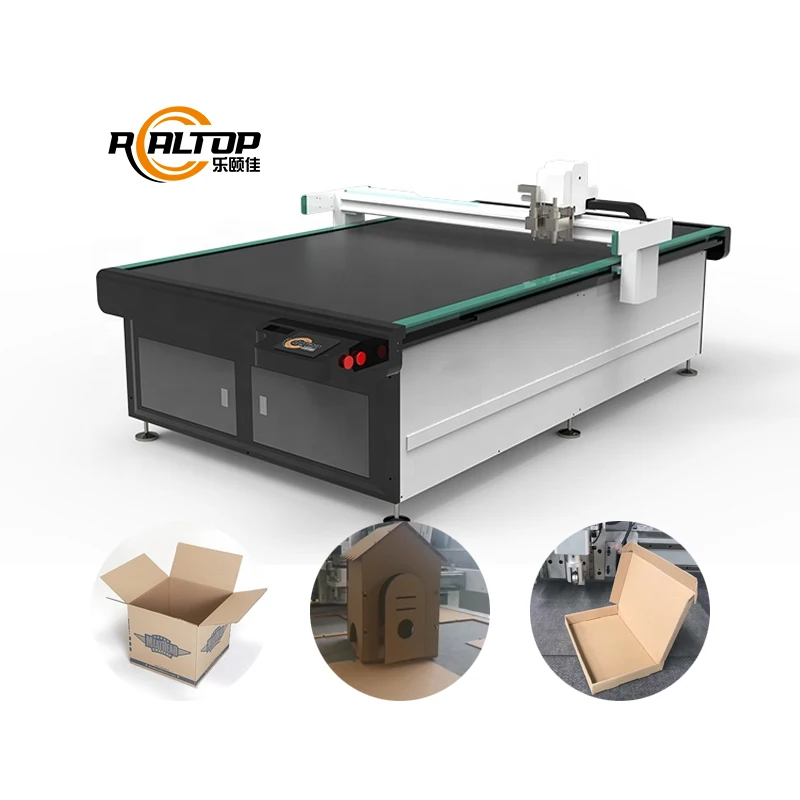
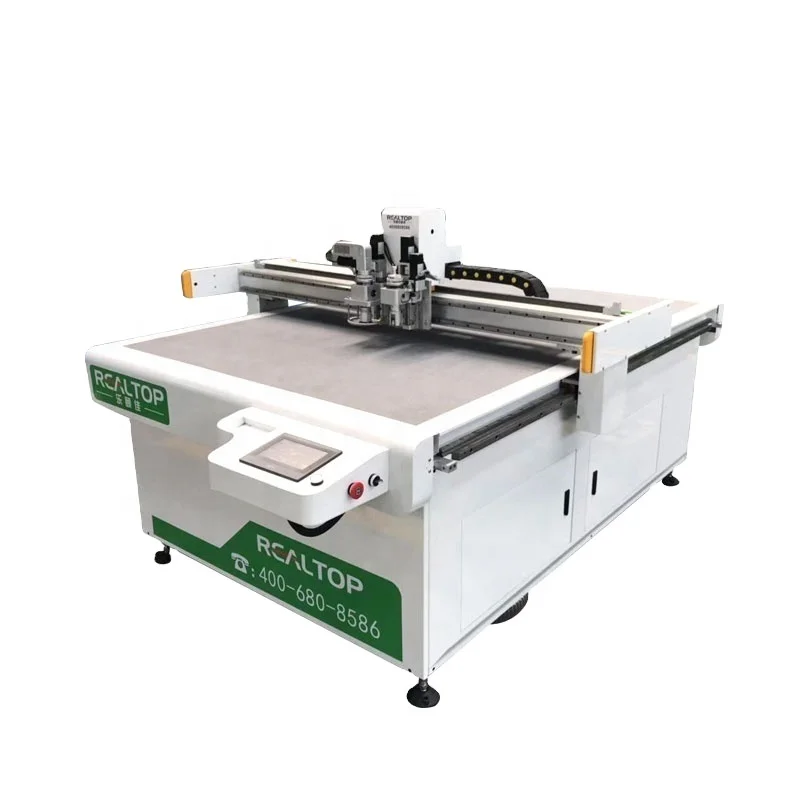
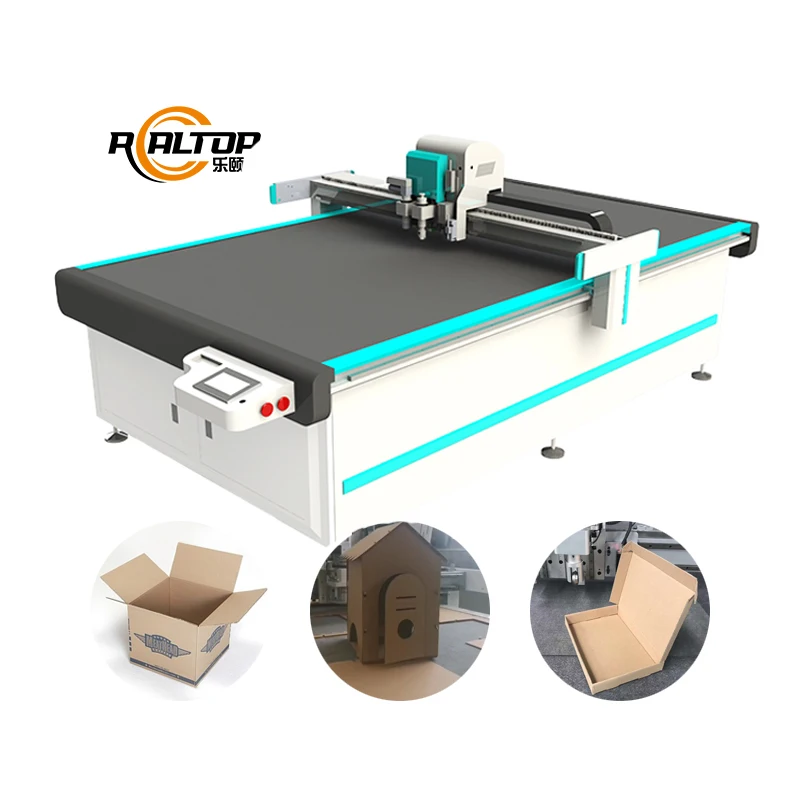
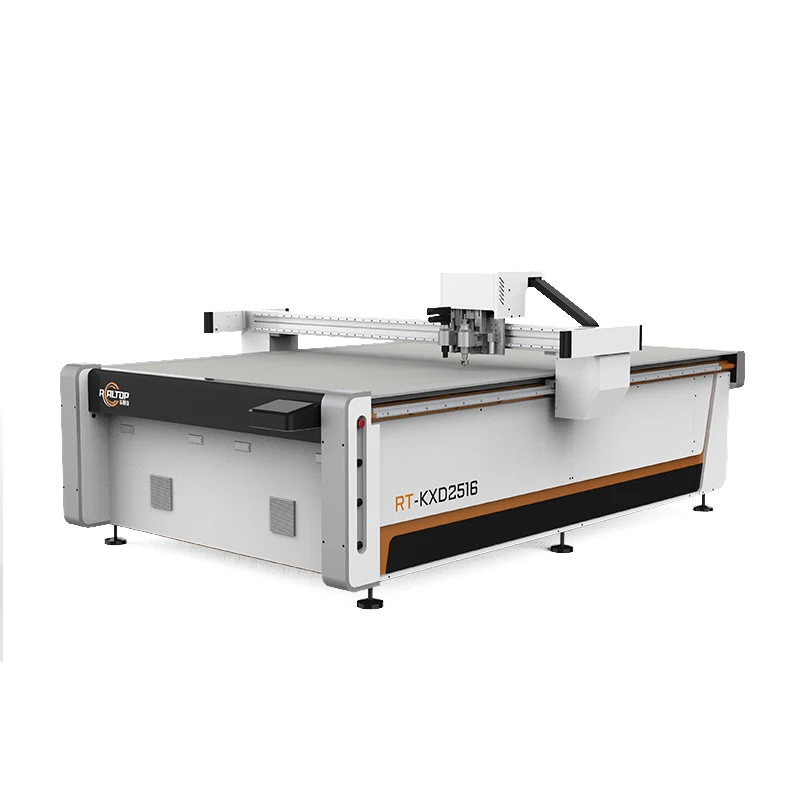
| Product Type | CNC Oscillating Knife Cutting Machine |
| Model | 1625 |
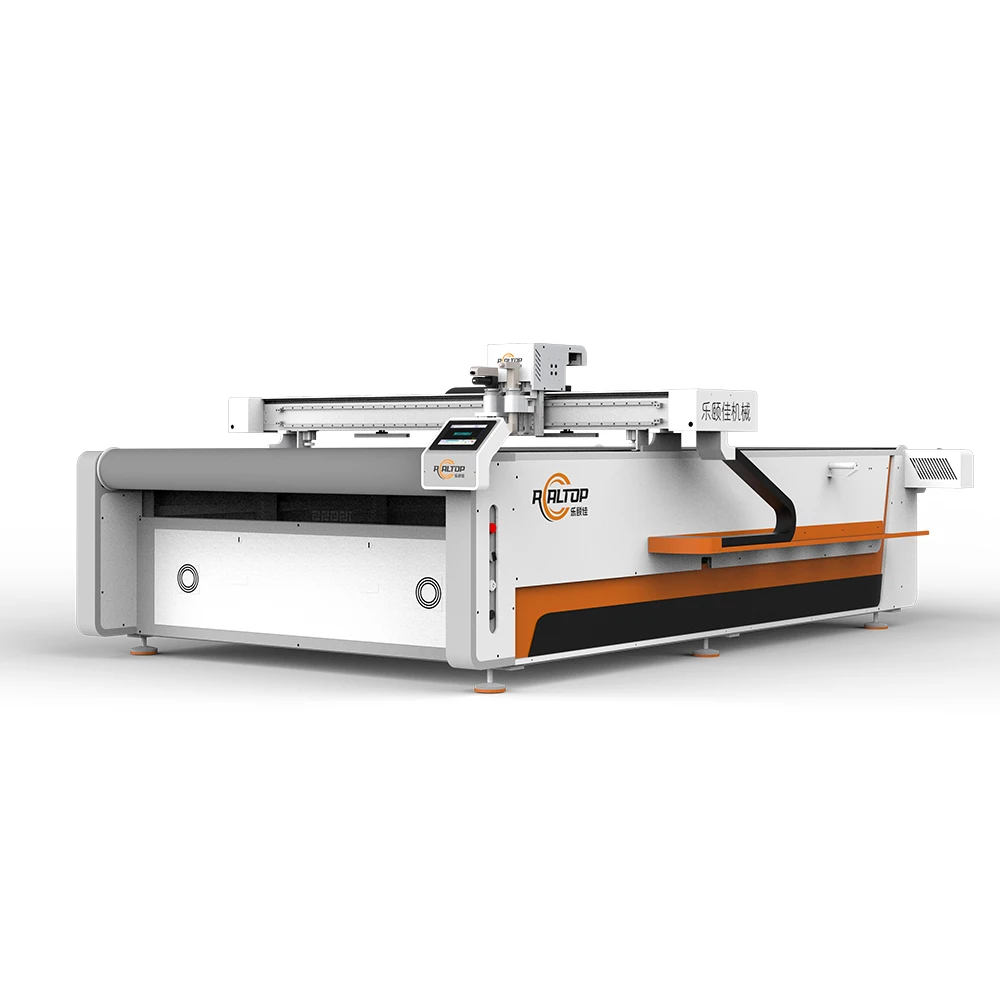
| Working Area | 1600 × 2500 mm |
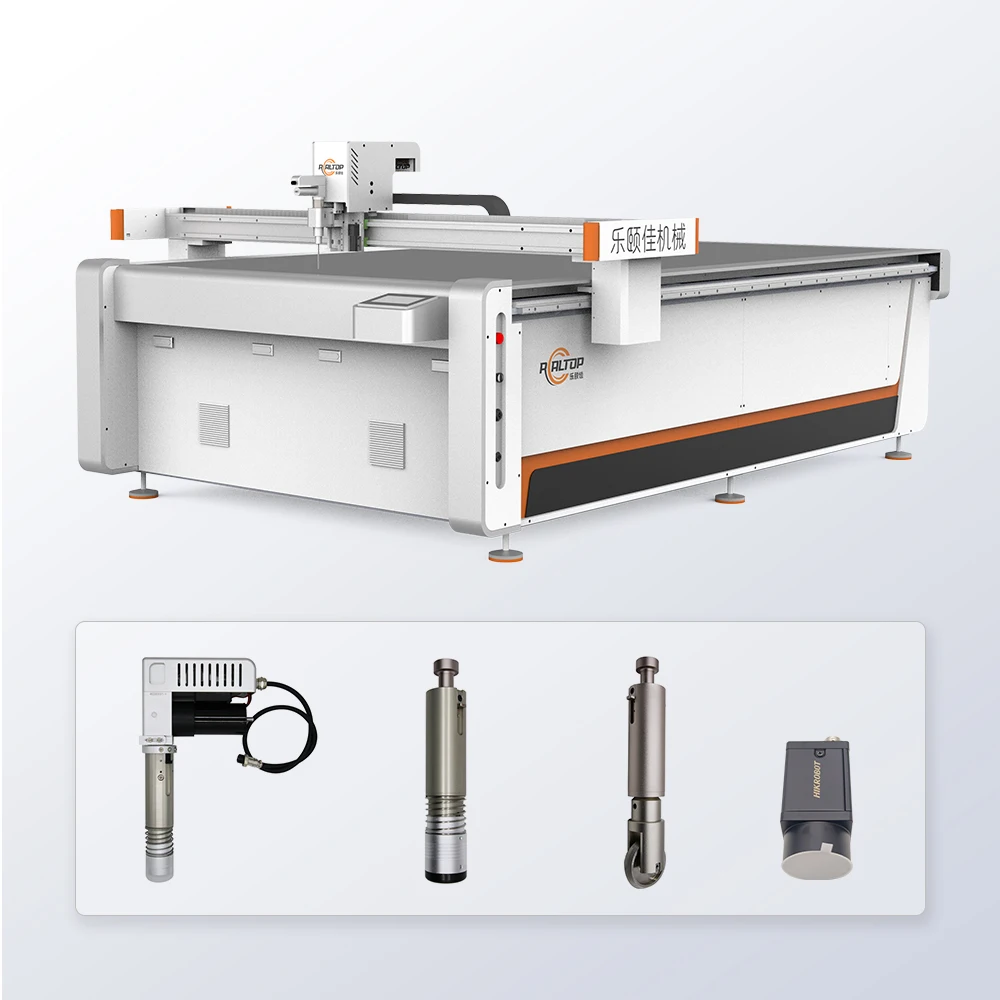
| Tool Head Options | Oscillating knife, Driven rotary knife, Creasing wheel, Kiss cutting tool, Pneumatic knife, Milling tool, V groove knife |
| Applicable Materials | Leather, Fabric, Cardboard, PVC, EVA, Acrylic, Foam, PTFE, Rubber |
| Cutting Speed | 0–2000 mm/s |
| Cutting Thickness | ≤ 30 mm (basis to be confirmed) |
| Cutting Accuracy | ±0.1 mm |
| Vacuum Table | Aluminum bellows vacuum table |
| Vacuum Pump | 9 kW |
| Control System | PLC control panel |
| File Formats | PLT, DXF, AI, PDF |
| Voltage Options | 110V, 220V, 380V |
| Servo Motor Options | Panasonic, Delta, Dorna |
| Machine Dimensions | 3300 × 2100 × 1350 mm |
| Safety Devices | Infrared sensor, Emergency stop |
Application Suitability
| Application | Material or Output |
|---|---|
| Apparel and Footwear | Natural and synthetic leather uppers, shoe patterns |
| Luggage and Bag Production | Zipper bag panels, heavy-duty canvas, synthetic hides |
| Automotive Interiors | Seat fabrics, carpeting, PVC mats, dashboard covers |
| Packaging and Prototyping | Corrugated cardboard, folding cartons, sample making |
Why Material Thickness Dictates the Entire Machine Build
Specifying a CNC oscillating knife cutting machine manufacturer based only on working area dimensions leaves buyers exposed when their actual material thickness demands different tooling.
A standard flatbed setup struggles with dense, multi-layered leather or heavy EVA foam if the knife amplitude and vacuum zoning are not calibrated for the specific density. Many facilities find their machine stalling on thicker synthetic hides or leaving ragged edges on complex zipper bag patterns. Matching the spindle speed, blade type, and vacuum hold-down to the buyer’s daily material mix is a non-negotiable step in the build process [NEED_CITE: industrial cutting tool deflection under high-density material loads].
Configuring the Cutting Head for Leather Goods
Leather and heavy synthetic fabrics require specific tool head selections to maintain edge integrity without crushing the material structure. The oscillating knife handles standard hides, while the pneumatic knife and driven rotary knife are configured for thicker, more abrasive stacks. As a CNC oscillating knife cutting machine manufacturer, we select the exact tool combination based on the buyer’s sample materials before the machine enters the assembly phase.
Vacuum Table Zoning for Small Component Stability
When cutting small zipper bag components or intricate apparel patterns, material lift ruins the batch. The aluminum bellows vacuum table provides high flatness, and its zoning capabilities are configured to concentrate suction exactly where the nested parts are placed. This localized hold-down prevents the oscillating blade from dragging thin synthetic leathers across the bed during high-speed directional changes [NEED_CITE: vacuum adsorption requirements for nested leather parts].
Translating Specs into Shop Floor Reality
The 1600 × 2500 mm working area accommodates full hides and large fabric rolls, but the ±0.1 mm cutting accuracy is what matters for downstream assembly. If the machine frame and motion components lack rigidity, the cutting head drifts during fast contouring. The 9 kW vacuum pump ensures continuous suction across the bed, while the PLC control panel allows operators to store specific parameters for different leather grades, ensuring batch-to-batch consistency in production environments.
The Cost of Overlooking Voltage and Control Language
Shipping a machine with the wrong voltage configuration or an unreadable control interface stops production before it begins. Facilities often overlook confirming the exact frequency and plug type required for their local grid. When the PLC control panel arrives in a language the operators cannot read, or the servo motors fail due to voltage spikes, the downtime costs far exceed the initial hardware investment [NEED_CITE: industrial equipment voltage compatibility standards].
Manufacturing Control and Factory Verification
Our in-house design team engineers both the frame and the tool heads, ensuring the motion system can handle the lateral forces of cutting dense leather. We run the buyer’s actual material on the 1625 model during the factory test, verifying edge quality and cutting depth. The machine is shipped fully assembled, reducing on-site calibration time. Voltage, software language, and file format compatibility are confirmed against the buyer’s existing workflow before production begins.
Documentation & Verification
- Factory test record on buyer’s specific leather and fabric thickness range.
- Electrical schematic confirming local voltage and plug configuration.
- Tool head configuration list matched to material density.
- Software license and PLT/DXF file format compatibility report.
- Operation manual in the requested control language.
Installation, Commissioning & Support
- Requires a level concrete floor to support the 3300 × 2100 mm footprint and dynamic cutting forces.
- Dedicated electrical circuit matching the confirmed 110V, 220V, or 380V requirement for the 9 kW vacuum pump and servo motors.
- Machine arrives fully assembled; commissioning focuses on vacuum zoning and tool head calibration.
- Operator training covers PLC parameter storage for different leather grades and nesting software workflows.
- Spare parts list includes specific oscillating and rotary knife blades for the buyer’s material mix.
Preparing Your Production Data for Quotation
To determine the correct tool head configuration and vacuum zoning, we need the specific types of leather and fabric, including maximum thickness and sheet dimensions. Please provide your local facility voltage and the required PLC interface language. If you are integrating this into an existing workflow, share the file formats you currently use for nesting and pattern making.
Frequently Asked Questions
Q: How do you determine which tool head is best for my specific leather and synthetic materials?
A: We require physical samples of your materials to run test cuts in our factory. We evaluate the edge quality, cutting speed, and material hold-down requirements using the oscillating, rotary, and pneumatic knives. The final tool head configuration is locked in based on these physical test results before we finalize the machine build.
Q: What happens if the machine arrives and cannot read our existing pattern files?
A: We confirm software compatibility during the quotation phase. Our systems support PLT, DXF, AI, and PDF formats. We ask buyers to send a sample production file so our engineers can verify that the nesting software and PLC control panel can parse and execute your specific file structures without requiring third-party conversion software.
Q: Can the vacuum table hold down very small, intricate leather pieces for bag production?
A: Yes, the aluminum bellows vacuum table is divided into specific zones. We configure the zoning based on your typical nesting layouts to ensure maximum suction is directed precisely under small components. This prevents the material from shifting or lifting when the knife changes direction at high speeds.
Q: How is the voltage and electrical setup verified for my region?
A: Before production starts, we issue an electrical schematic and voltage confirmation document. This details the exact voltage (110V, 220V, or 380V), frequency, and plug type matched to your facility. The servo motors and 9 kW vacuum pump are wired and tested against these exact specifications in our factory.
You may also like

商品评价
Clear filtersThere are no reviews yet.