



-
 Courier delivery
-
 DHL Courier delivery
-
 Warranty 1 year
-
 Free 30-Day returns

Integrated design and production — Our in-house engineering team develops both oscillating knife and laser platforms, so a fabric cutting line can be configured around your exact material rather than forcing a single technology across every application.
Technical Specifications
| Parameter | Value |
|---|---|
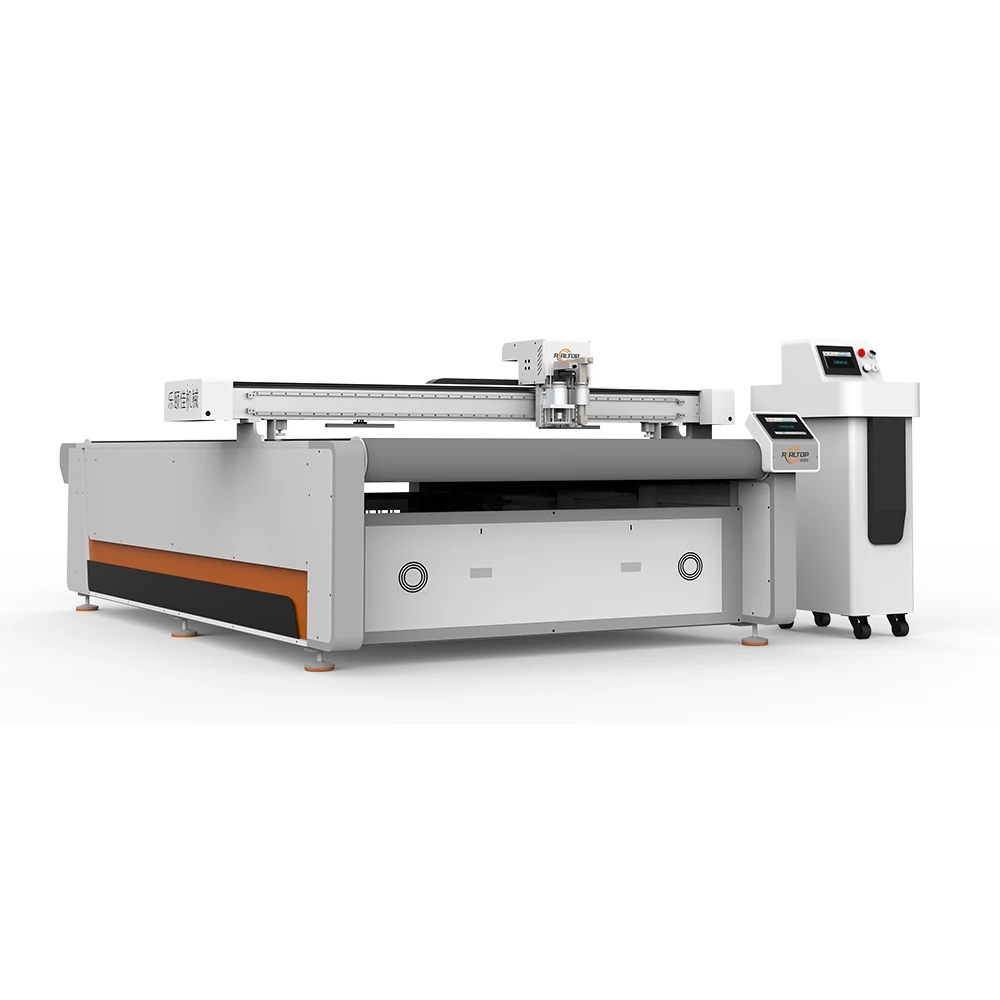
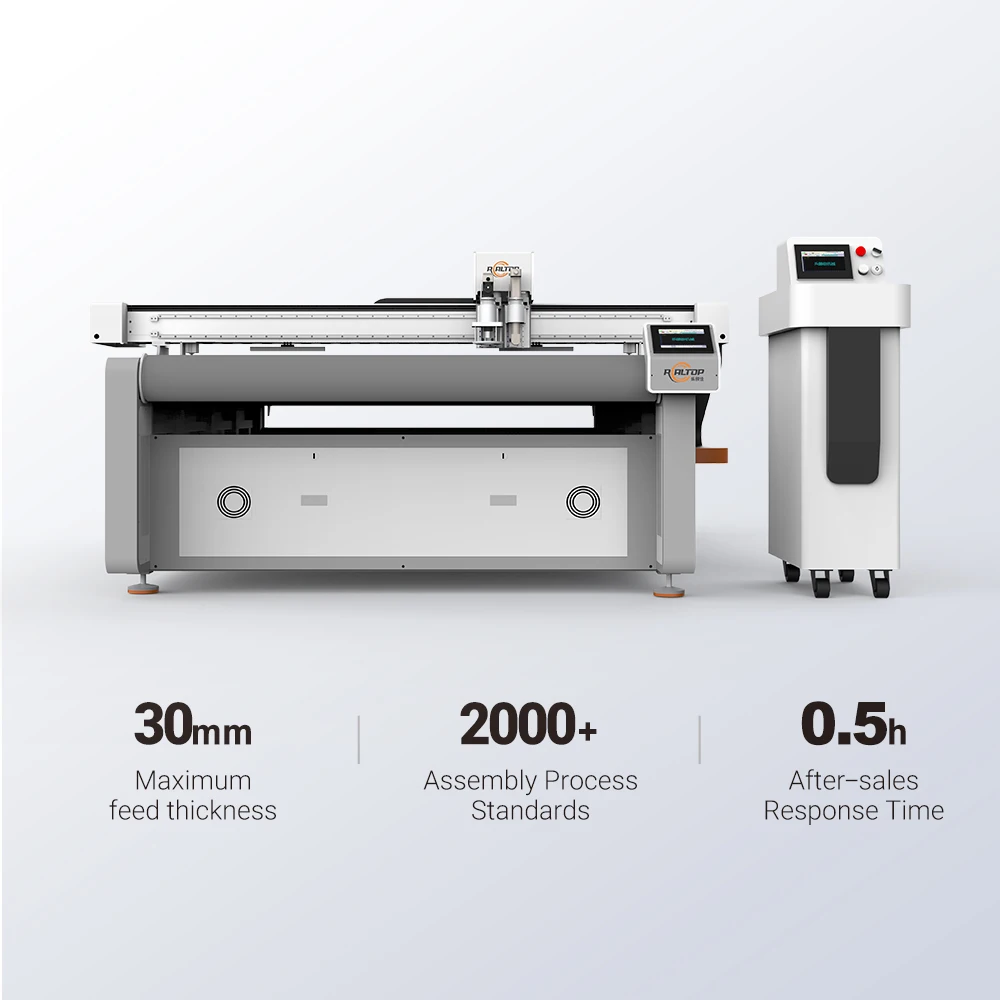
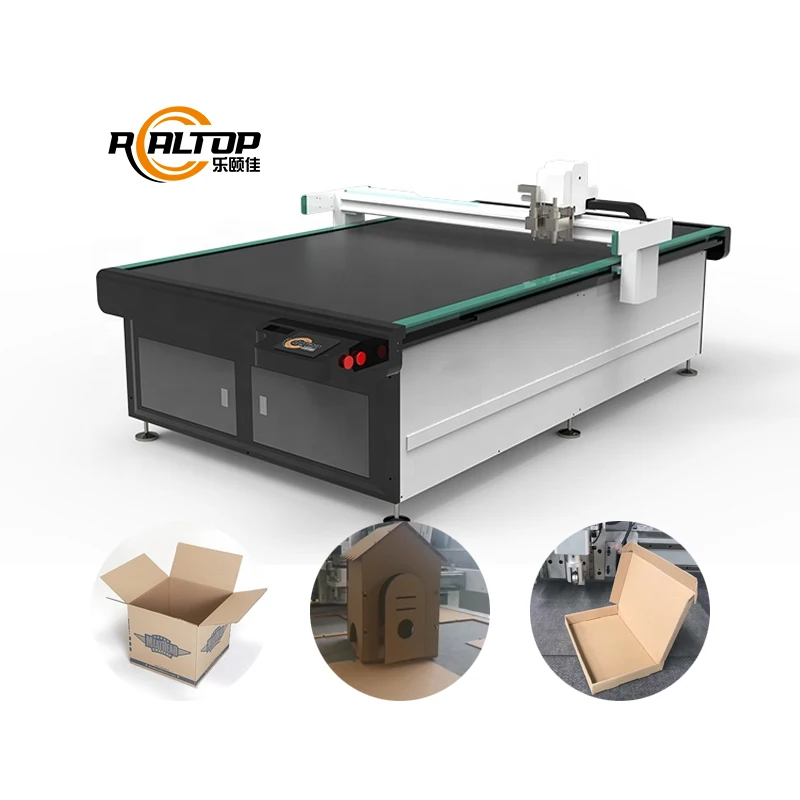
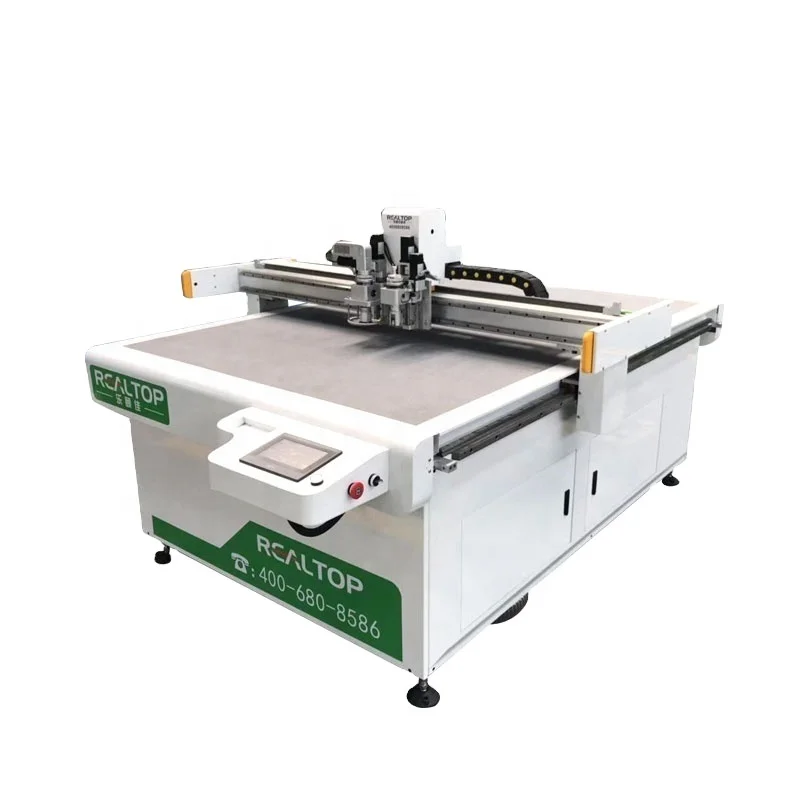
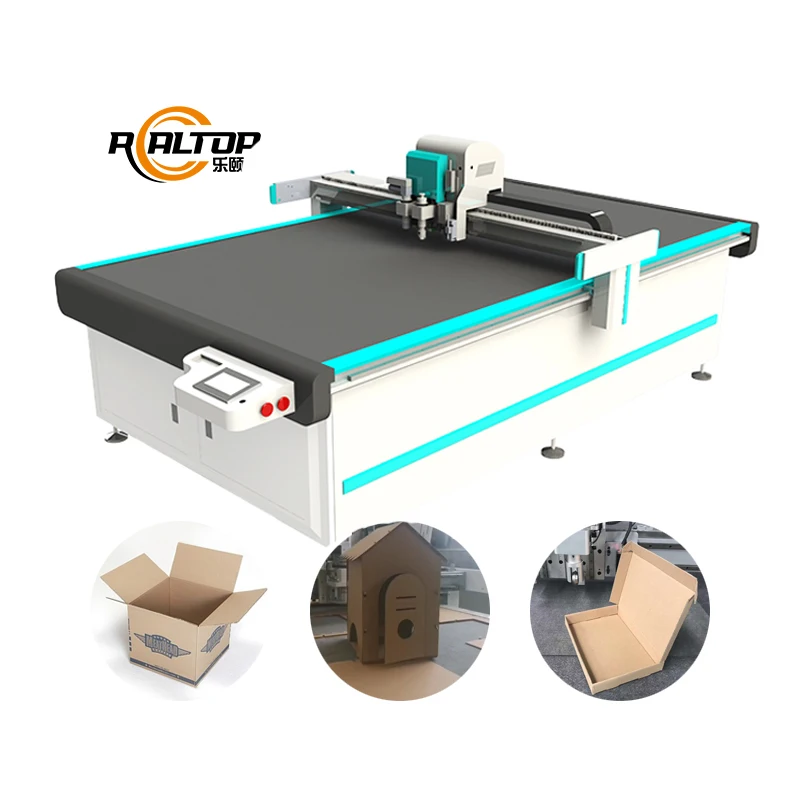
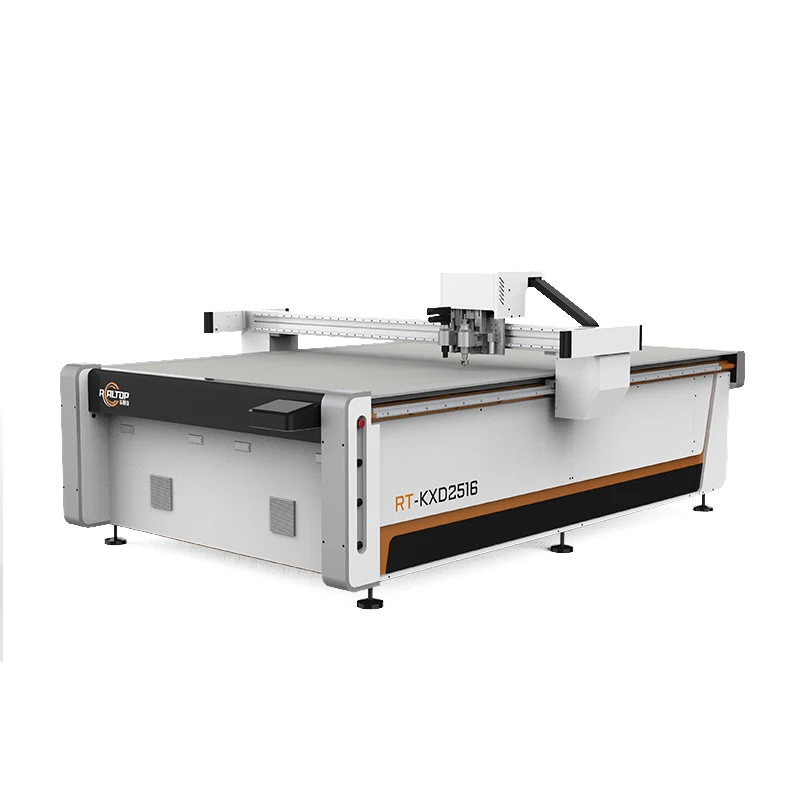
| Product Type | CNC Oscillating Knife Cutting Machine |
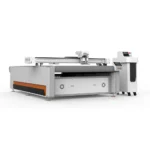
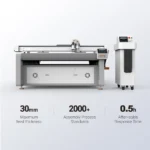
| Working Area | 1600 × 2500 mm |
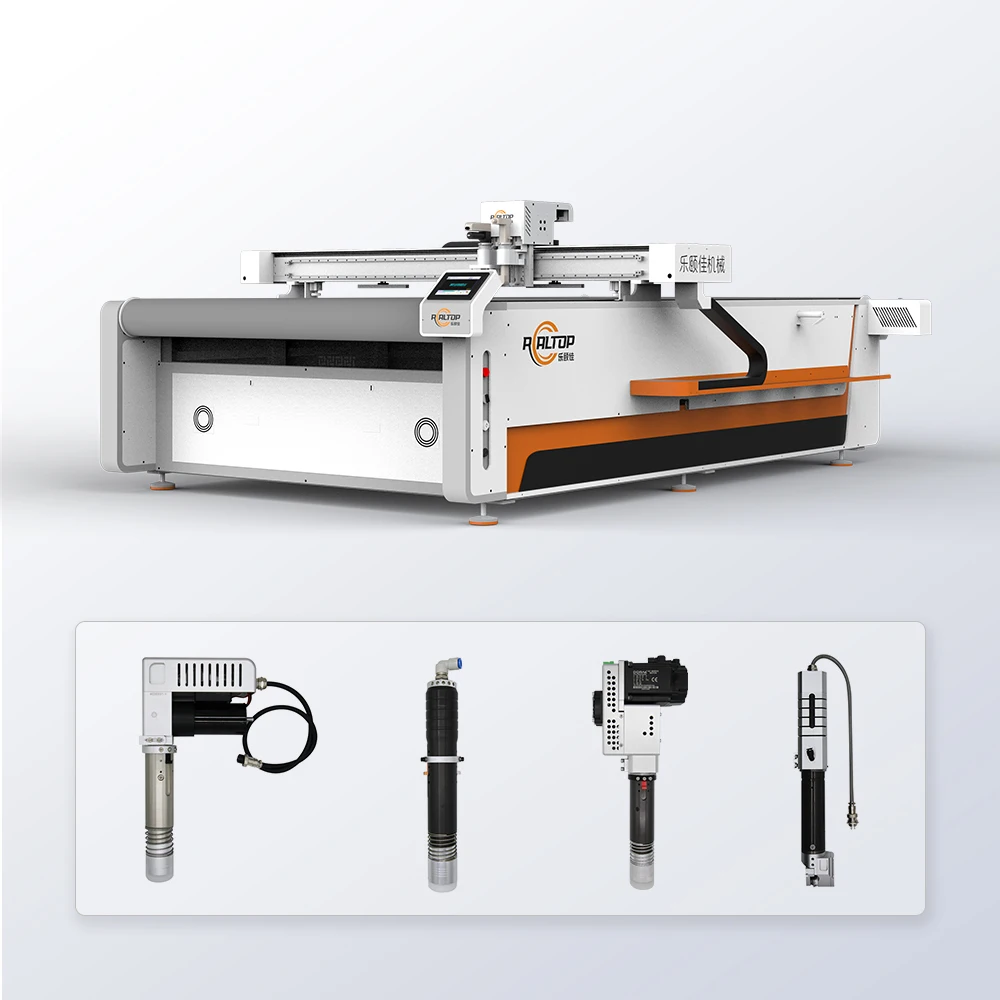
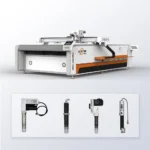
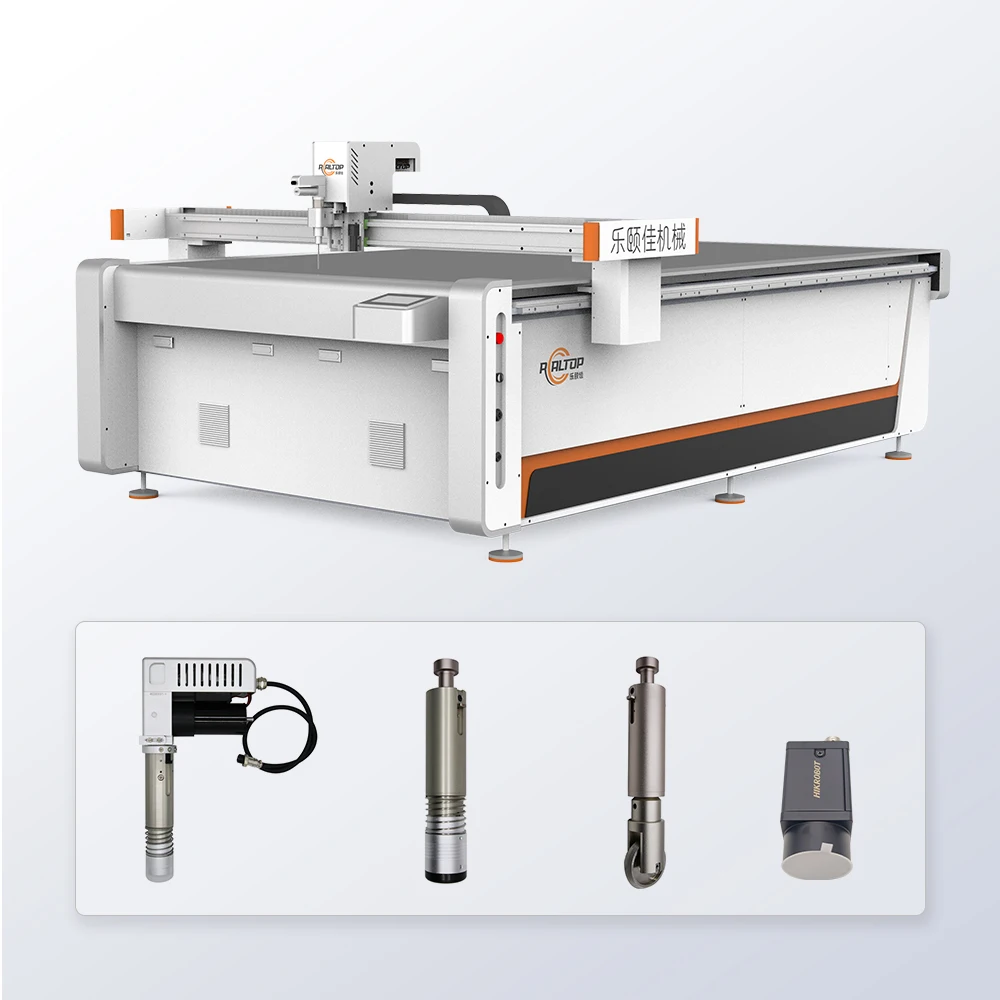
| Tool Head Options | Oscillating knife, Driven rotary knife, Creasing wheel, Kiss cutting tool, Pneumatic knife, Milling tool, V-groove knife |
| Cutting Speed | 0–2000 mm/s |
| Cutting Thickness | ≤ 30 mm (basis not stated in source — confirm material type and density) |
| Positioning Accuracy | ±0.1 mm |
| Vacuum Pump | 9 kW |
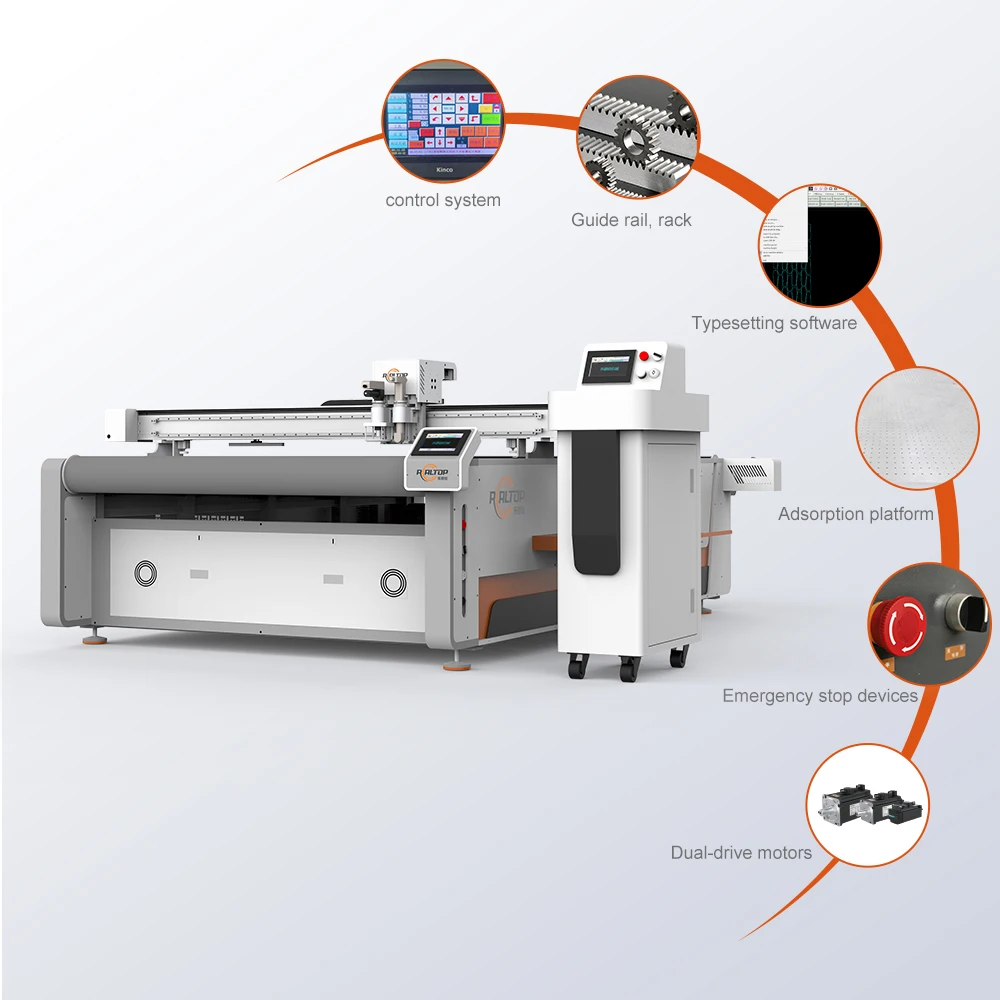
| Vacuum Table | Aluminum bellows vacuum table |
| Voltage Options | 110V, 220V, 380V |
| Servo Motors | Panasonic, Delta, or Dorna options |
| Control System | PLC control panel with intuitive interface |
| Supported File Formats | PLT, DXF, AI, PDF |
| Software Languages | English, Russian, Italian, Chinese (customizable) |
| Safety Devices | Infrared sensor and emergency stop |
| Machine Dimensions | 3300 × 2100 × 1350 mm |
| Certification | CE |
Application Suitability
| Application | Material or Output |
|---|---|
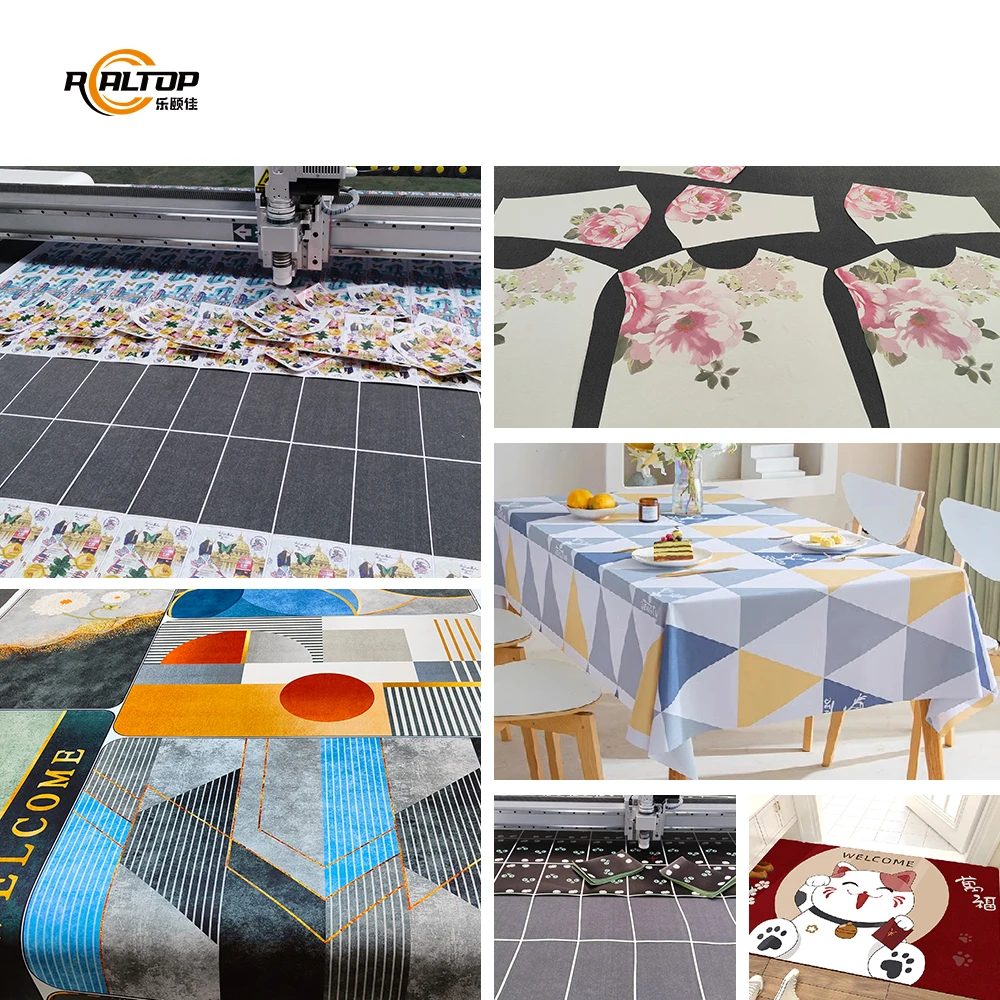
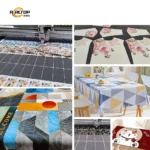
| Apparel manufacturing | Suits, knitwear, lace, and complex woven or knitted fabrics |
| Automotive interiors | Seat fabrics, carpets, PVC floor mats |
| Home textiles | Sofa upholstery fabrics, curtains, area rugs |
| Composite material processing | Carbon fiber prepreg, aramid layers, specialty technical textiles |
Why the Voltage Question Must Come Before the Quotation
Confirming local supply voltage and phase configuration is the single most important step before any CNC fabric cutting machine manufacturer finalizes your order.
I once watched a three-week production shutdown happen because a vibrating knife unit arrived wired for 380V while the buyer’s workshop ran on 415V. The variable frequency drive burned out on first power-up, and replacement parts had to be shipped internationally [NEED_CITE: voltage and frequency standards by export market]. The downtime cost the factory far more than the machine itself. Every electrical schematic should be cross-referenced with the buyer’s actual site conditions — including phase balance, breaker rating, and cable run length — well before the machine enters final assembly.
Matching Tool Heads to Fabric Construction
A CNC fabric cutting machine manufacturer worth working with will never ship a single fixed head and call it universal. Woven suit fabrics respond differently to blade oscillation than knitted stretch materials or multi-layer technical composites. This system offers interchangeable heads — oscillating knife for clean straight and curved cuts through stacked plies, driven rotary knife for continuous contour work on lighter weights, and pneumatic knife for aggressive single-ply synthetic layers. The creasing wheel and V-groove tools extend the machine’s role beyond cutting into fold-line preparation for packaging workflows. Selecting the right head prevents crushed edges, frayed margins, and delaminated composite layers.
CCD Contour Recognition and Print Registration
Printed fabric with sublimation or screen-printed graphics requires the cutter to follow registration marks at production speed. The CCD camera positioning option on this platform tracks printed contours even when the fabric shifts slightly on the vacuum bed. For garment manufacturers cutting pre-printed panels or automotive suppliers trimming branded floor mats, this capability removes the manual alignment step that bottlenecks most cutting rooms. Software compensation adjusts the cut path in real time based on mark detection, maintaining ±0.1 mm accuracy across the full 1600 × 2500 mm working area [NEED_CITE: CCD camera positioning accuracy in textile cutting applications].
Decoding the Numbers That Actually Matter
The 9 kW vacuum pump paired with the aluminum bellows table is not a cosmetic upgrade — it directly determines whether small pattern pieces stay flat during high-speed cuts. When cutting collar stays or gusset panels, insufficient suction allows material to lift into the oscillating blade, producing ruined parts and blade damage. Zoned vacuum regions let the operator activate only the sections beneath the current cut path, concentrating holding force where it counts. The servo motor selection — Panasonic, Delta, or Dorna — affects acceleration response and long-term positional drift; higher-inertia servo options maintain tighter tracking during rapid directional changes at 2000 mm/s. File format compatibility with PLT, DXF, AI, and PDF means your existing nesting workflow transfers without a software rebuild.
The Hidden Cost of Skipping Material-Specific Testing
Ordering a cutting system based on working area alone is one of the most common mistakes in fabric processing procurement. A machine may handle 30 mm of EVA foam perfectly yet struggle with 12 layers of tightly woven canvas because the oscillation frequency and blade geometry were never matched to that material. Ragged edges on cut panels mean downstream sewing operations slow down to handle misalignment, and automotive seat cover producers often discover that burr-free requirements cannot be met without a sample cut first [NEED_CITE: edge quality requirements in automotive textile assembly]. Requesting a test on your actual material roll — at your target ply count and speed — before signing the purchase order is the only reliable way to validate the configuration.
Why Source This Configuration Here
The design team behind this platform engineers both knife and laser cutting systems under one roof, meaning material suitability drives the technology choice rather than the factory only offering what it happens to build. Tool head combinations are specified against your material sample and daily volume, not pulled from a standard catalog. Every unit ships with voltage, plug type, and control language documented and confirmed before the crate is sealed — a discipline learned from costly field failures. Sample cutting reports on your own fabric are generated before commitment, not after delivery. The PLC interface and software are configured in your preferred language so operators do not spend weeks decoding untranslated menus.
Documentation & Verification
- Machine specification sheet listing exact tool head and servo motor configuration selected for your material
- Electrical schematic with voltage and phase confirmation signed off before production release
- Sample cutting report produced on your supplied fabric at target ply count
- Factory test record documenting positional accuracy and vacuum performance across zones
- Software license and file format compatibility note for your nesting workflow
- Spare parts list matched to your chosen tool heads and blade types
Installation, Commissioning & Support
- Floor space planning for the 3300 × 2100 mm footprint plus operator clearance and material staging
- Dedicated circuit sizing based on confirmed 110V, 220V, or 380V supply and 9 kW vacuum pump load
- Machine arrives partially assembled; table leveling and gantry alignment verified on-site during commissioning
- First-run parameter tuning including blade depth, oscillation frequency, and vacuum zone mapping for your material
- Operator training on the PLC interface covering file import, nesting adjustment, and tool change procedures
- Consumable blade and oscillating knife inventory sized to your daily cut volume and material abrasiveness
What We Need to Quote Your Line Accurately
Provide the specific fabric types you process — including weave, weight per square meter, and typical lay height — along with your daily cut volume target. Share your workshop’s confirmed voltage and phase supply, preferred control language, and any existing nesting software or CAD systems the machine must integrate with. If your production involves printed contour cutting, send sample printed panels so CCD recognition can be validated before configuration is locked in.
Frequently Asked Questions
Q: How do I determine the right cutting thickness specification for my fabric lay?
A: Maximum cutting thickness depends on material density and ply count, not just a single number. A 30 mm rating on foam behaves differently than 30 mm of compressed woven fabric. We run a sample cut using your actual material roll at your target lay height to verify blade penetration, edge quality, and cutting speed before finalizing the tool head and oscillation settings for your order.
Q: Can the CCD camera track printed marks reliably at full production speed?
A: The CCD positioning system is designed for production-rate contour recognition, but reliability depends on mark contrast, print quality, and fabric surface texture. We test with your printed material samples to confirm mark detection accuracy and adjust camera sensitivity thresholds so the system maintains registration without pausing the cut path.
Q: Will the vacuum table hold very small pattern pieces without material movement?
A: The aluminum bellows table supports zoned vacuum activation, concentrating suction only under the active cutting region. This prevents small pieces from lifting during high-speed oscillation. Zone configuration is mapped during commissioning based on your most common pattern layouts and piece sizes.
Q: What file formats does the software accept, and will it work with my existing nesting workflow?
A: The system natively supports PLT, DXF, AI, and PDF profiles. Before order confirmation, we verify file import compatibility with your current nesting software and test a complete workflow — from design export through to cut execution — to ensure no data translation issues arise on your production floor.
Q: How are voltage and control language handled for different export markets?
A: Voltage is configurable across 110V, 220V, and 380V with the specific plug type and electrical standard matched to your local supply. Control panel language — including PLC menus and software interface — is set before shipment in English, Russian, Italian, Chinese, or other agreed languages so your operators can work without translation barriers from day one.
You may also like

商品评价
Clear filtersThere are no reviews yet.