




-
 Courier delivery
-
 DHL Courier delivery
-
 Warranty 1 year
-
 Free 30-Day returns

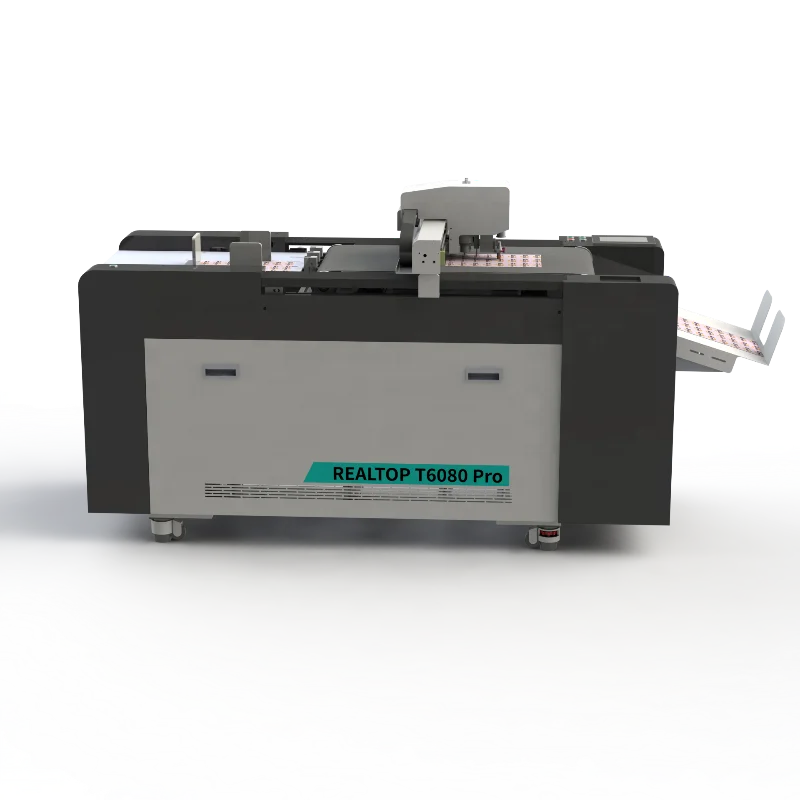
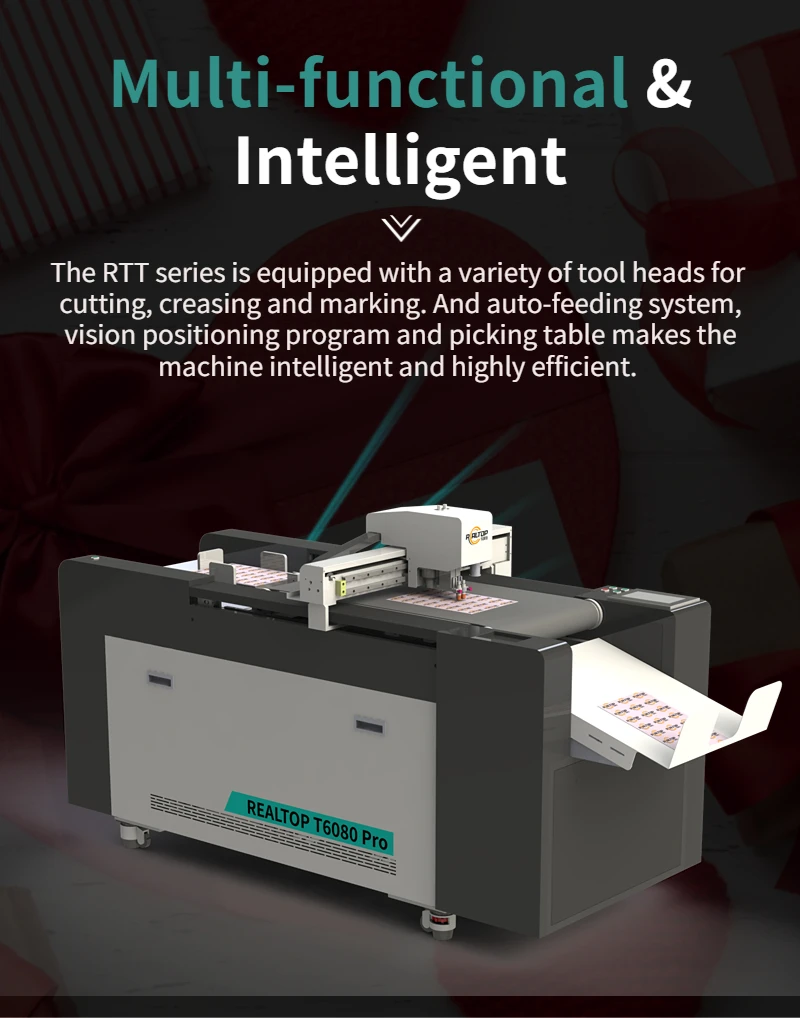
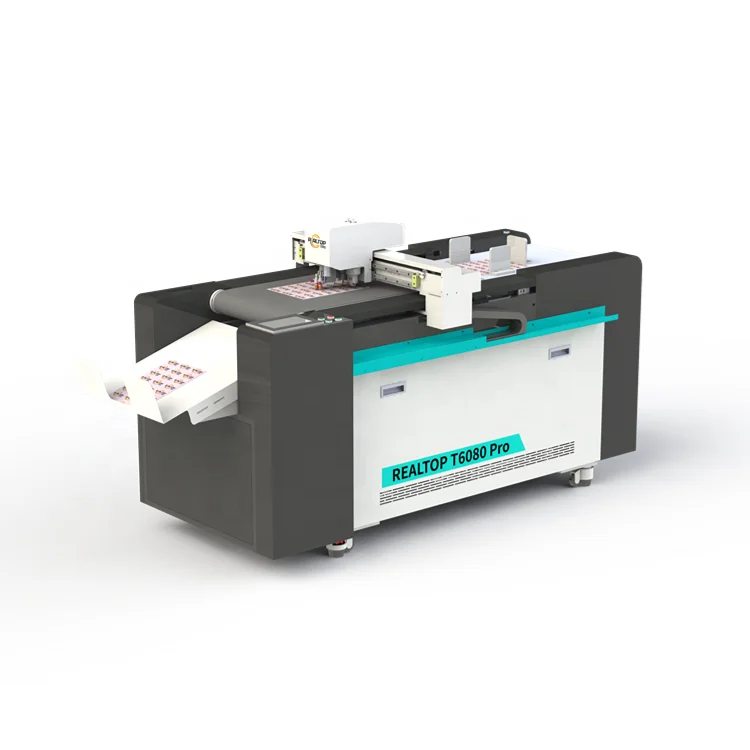
Specified Tooling for Exact Stock — RTT6080 cutter heads are matched to paper weight and board grade, not picked from a default list, so kiss cutting, creasing and through cutting each run on the right tool from day one.
Technical Specifications
| Parameter | Value |
|---|---|
| Model | RTT6080 / RTT6080 Pro |
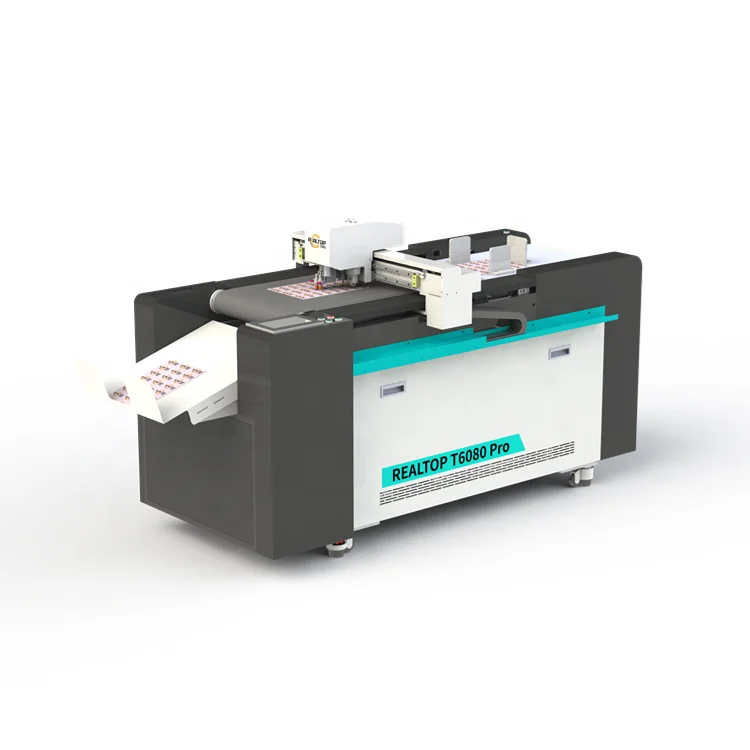
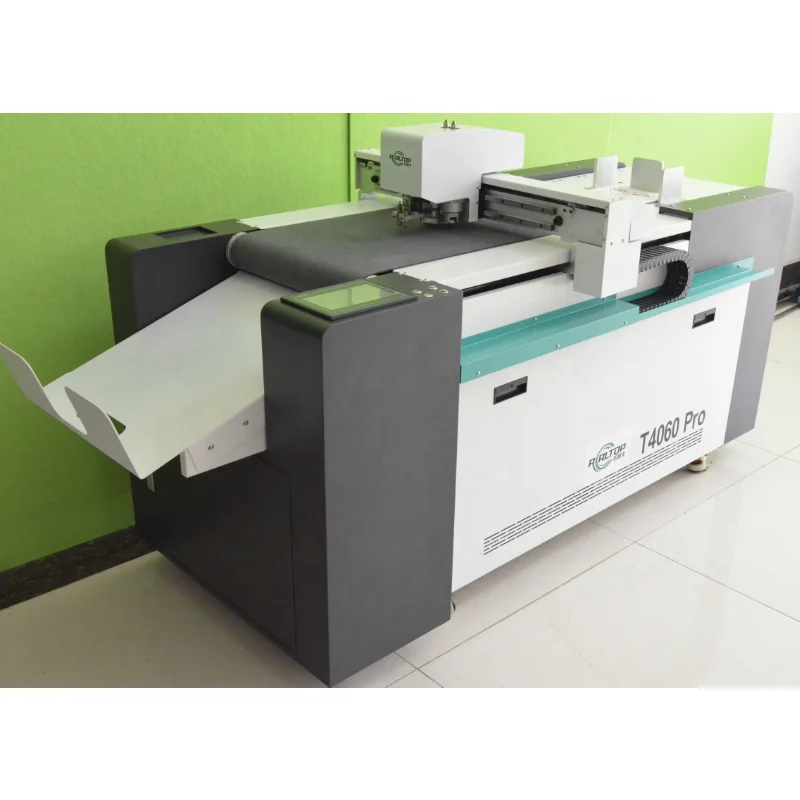
| Product Type | CNC Digital Paper Cutting Machine |
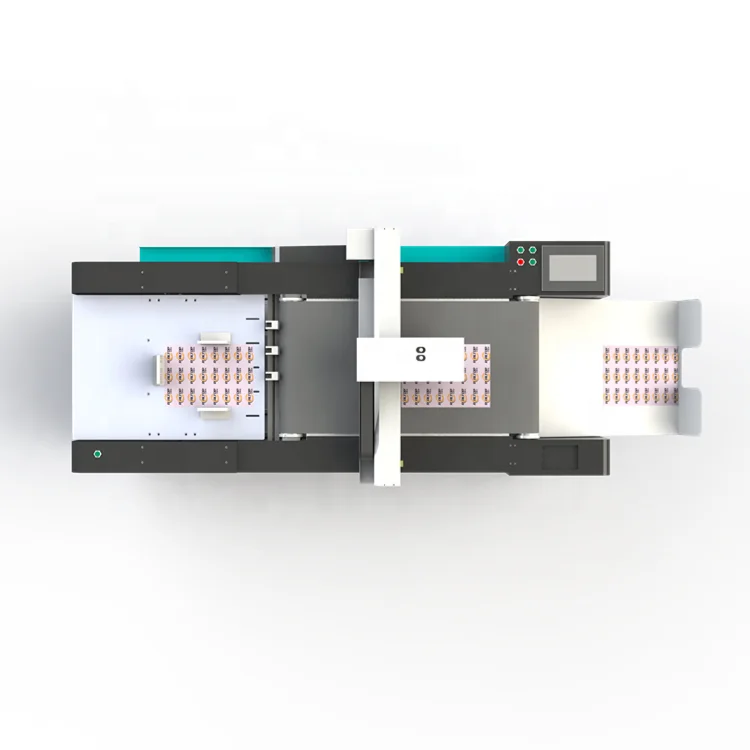
| Working Area | 600 mm × 800 mm |
| Tool Group | Cutting tool, kiss cutting tool, creasing tool, CCD camera |
| High Speed Oscillating Knife | RTT6080 Pro version |
| Max Cutting Speed | 1500 mm/s (material dependent) |
| Cutting Thickness | ≤2 mm (RTT6080) / ≤5 mm (RTT6080 Pro) |
| Positioning Accuracy | 0.05 mm |
| File Format Compatibility | DXF, PLT, PDF, AI |
| Transfer Method | Ethernet port |
| Rated Power | 3.2 kW |
| Voltage & Frequency | 220V / 380V, 50 Hz |
Application Suitability
| Application | Material or Output |
|---|---|
| Packaging sample making | Corrugated board, grey board, folding carton stock up to 2 mm or 5 mm (Pro) |
| Advertising and signage | Printed vinyl, sticker sheets, adhesive-backed film, PP synthetic paper |
| Small-format print finishing | A4 and A3 specialty papers, coated card stocks, textured cover stock |
| Gasket and seal prototyping | Thin non-metallic sheet, rubberized cork, composite fiber sheet |
Why "Working Area" Alone Fails Paper Converters
Buying a flatbed cutter on bed size alone is how shops end up with a machine that cannot hold small parts flat or crease a 350 gsm carton cleanly. The RTT6080 addresses the gap between quoted capability and actual output on paper and thin board.
The cutting result depends on vacuum zoning, tool selection and hold-down strategy, not just the footprint of the table.
In our Jinan workshop we have seen buyers arrive with sample sheets from another supplier, only to find the edge quality collapses the moment the material switches to their own stock. Paper fiber direction, coating weight and moisture content all change how a drag knife or oscillating blade behaves at production speed [NEED_CITE: material behavior variation in digital flatbed cutting]. A CNC digital paper cutting machine manufacturer that tests on the buyer’s actual sheet before shipment eliminates this mismatch before it reaches the factory floor.
CCD Positioning for Printed Contour Work
Registration mark recognition through the CCD camera allows the RTT6080 to align cuts against pre-printed graphics on sticker sheets, packaging prototypes and point-of-sale display pieces. The camera reads printed marks and offsets the cutting path in real time, which matters when a 600 mm × 800 mm sheet carries multiple nested labels with tight trim tolerances. Shops running short-run digital print jobs benefit because the cutting file does not have to be manually repositioned for each sheet.
Dual Model Strategy for Board Weight Range
The standard RTT6080 handles stock up to 2 mm with its cutting, kiss cutting and creasing tool group, which covers most folding carton and A4 specialty paper work. The RTT6080 Pro adds a high speed oscillating knife that extends cutting thickness to 5 mm, opening up double-wall micro-flute, heavy grey board and foam-backed signage materials. Choosing between the two depends on the heaviest stock in your regular rotation, not the thinnest.
What 0.05 mm Positioning Accuracy Means at the Crease Line
Positioning accuracy of 0.05 mm across the working area keeps crease lines centered on fold marks, which is critical when packaging samples must fold square without cracking the printed surface. Combined with Ethernet transfer of DXF, PLT, PDF or AI files, the machine avoids the cumulative error that occurs when files are converted between multiple software layers before reaching the controller. Rated power of 3.2 kW supports sustained servo drive operation without torque drop during dense nested cutting paths. The creasing tool applies controlled pressure matched to board caliper, preventing fiber fracture on coated stocks [NEED_CITE: creasing force requirements by board grade].
The Cost of Skipping a Sample Cut on Your Own Stock
A creasing wheel set for 300 gsm coated board will crush a 200 gsm uncoated sheet, leaving a visible channel that ruins the presentation sample. Kiss cutting depth that works on one adhesive vinyl brand may cut through the liner on another, converting a batch of stickers into scrap. These failures are invisible in specification sheets and only appear when the tool meets the actual material under vacuum hold-down [NEED_CITE: vacuum adhesion variance by material porosity].
Why Source This CNC Digital Paper Cutting Machine Here
Tool head configuration is confirmed against your material list before the order is locked, so the creasing wheel diameter, knife angle and kiss cutting depth are set for your stock range, not a generic default.
CCD camera positioning is tested with your printed sheet file, verifying that registration marks are read accurately at the speed your production volume requires.
Voltage and frequency are matched to your facility supply — 220V or 380V at 50 Hz — and control language is set before the machine leaves the assembly floor.
File format compatibility is verified with your existing DXF, PLT, PDF or AI workflow, confirming nesting and import behavior before the machine ships.
Sample cutting on your exact paper, board or vinyl stock is completed and documented, so you see the edge quality and crease result before committing to delivery.
Documentation & Verification
- Machine specification sheet listing confirmed tool group and voltage
- Electrical schematic with voltage and circuit breaker rating noted
- Tool head and table configuration list matched to your material
- Sample cutting report produced on your paper or board stock
- Factory test record documenting positioning accuracy verification
- Software licence and file format compatibility note for your workflow
Installation, Commissioning & Support
- 220V or 380V dedicated circuit required matching 3.2 kW rated power draw
- 600 mm × 800 mm working area needs clearance on three sides for sheet loading
- Ethernet port connection for direct file transfer from design workstation
- First-run calibration of CCD camera using your printed registration marks
- Creasing wheel pressure adjustment and knife depth setting per your stock range
- Spare tooling list covering knife blades and creasing wheel consumables
What to Include in Your Inquiry
Send the exact paper grade, board weight and coating type you plan to run, along with sheet dimensions and the thickest stock in your rotation. Confirm your facility voltage and the file formats your design team exports. If your work involves printed contour cutting, include a sample print file so we can verify CCD recognition before the machine ships.
Frequently Asked Questions
Q: How do I confirm the cutting thickness for my specific paper weight?
A: Provide the exact gram weight, coating type and caliper of your heaviest stock. We run a sample cut on that material and record the tool head used, cutting depth setting and edge quality result in a sample cutting report. This confirms whether the standard RTT6080 or the RTT6080 Pro with oscillating knife fits your range.
Q: Will the CCD camera keep up with short-run production speeds?
A: The CCD camera reads registration marks as the cutting head traverses the sheet. We test it with your printed file at production speed and document recognition accuracy before the machine is released. If your marks are low contrast or unusually small, we adjust the recognition threshold during factory testing.
Q: What voltage and control language options are available for my market?
A: The RTT6080 supports 220V and 380V at 50 Hz. We confirm your facility voltage and plug type before production, and set the control interface language to match your operator team. All electrical documentation reflects the confirmed configuration at shipment.
Q: Which tool head should I choose for creasing versus kiss cutting?
A: Creasing uses a dedicated wheel that compresses board fibers without cutting through, while kiss cutting scores adhesive layers without penetrating the backing liner. We configure the tool group based on your material list so each process runs on the correct head without manual swapping mid-job.
Q: Can my existing design files import without conversion?
A: The RTT6080 accepts DXF, PLT, PDF and AI files via Ethernet transfer. We verify your file import, nesting layout and contour path behavior on the controller before shipment, noting any required export settings in the software compatibility document so your workflow stays intact.
You may also like

商品评价
Clear filtersThere are no reviews yet.