


-
 Courier delivery
-
 DHL Courier delivery
-
 Warranty 1 year
-
 Free 30-Day returns

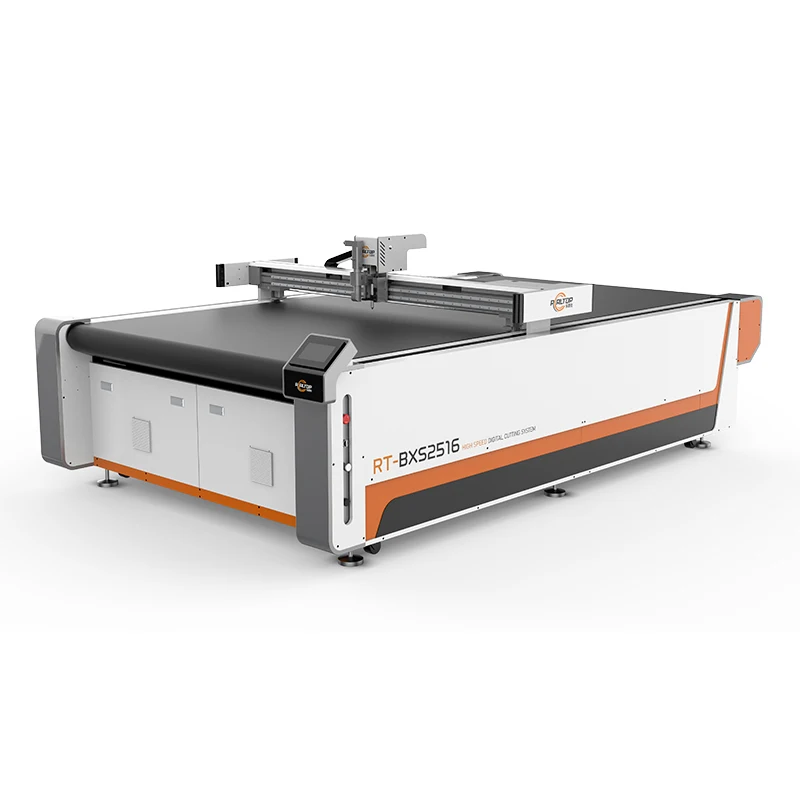
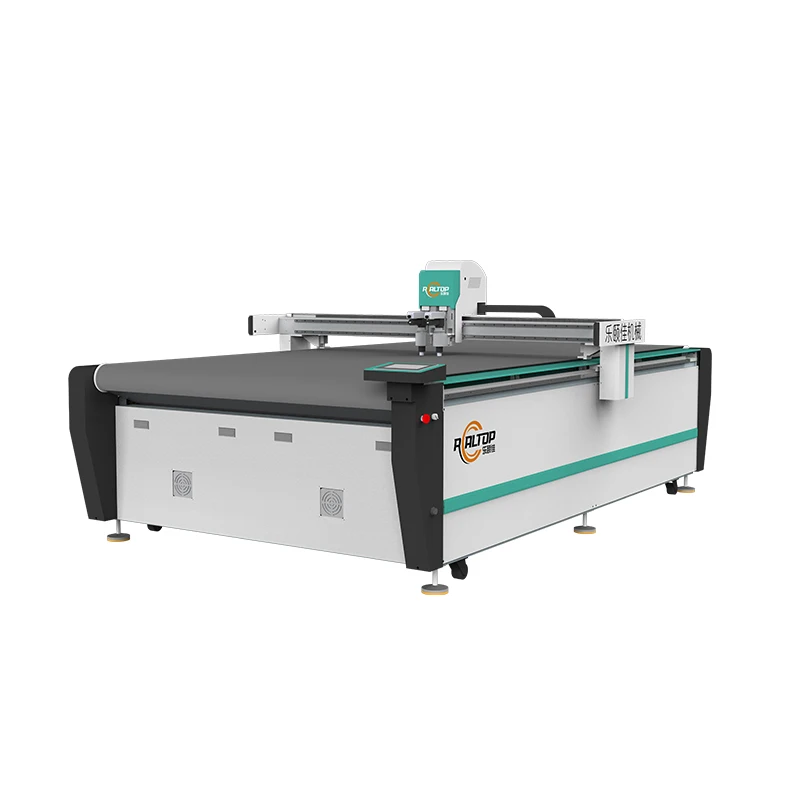
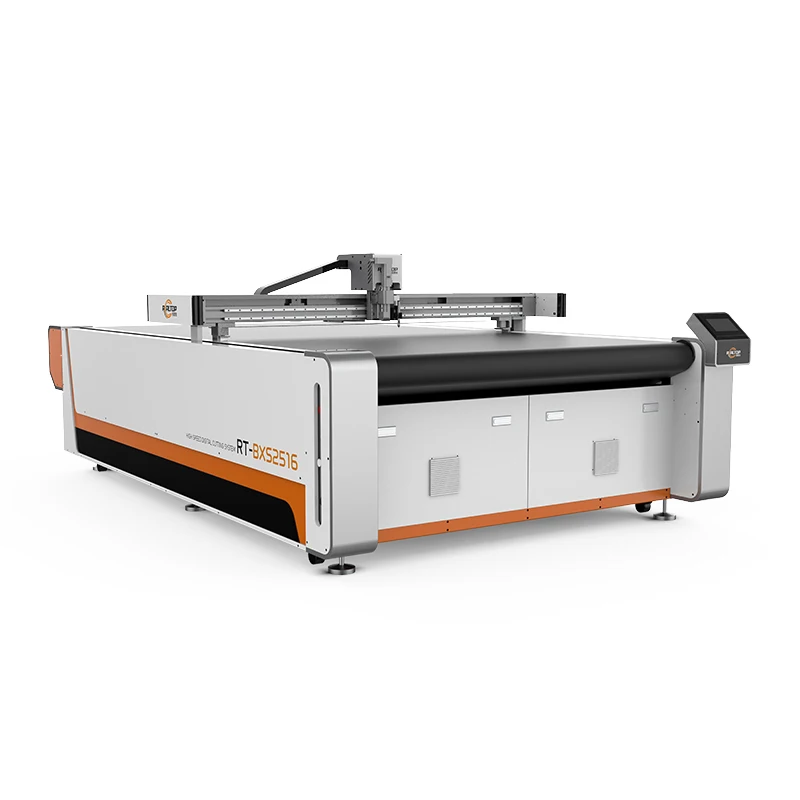
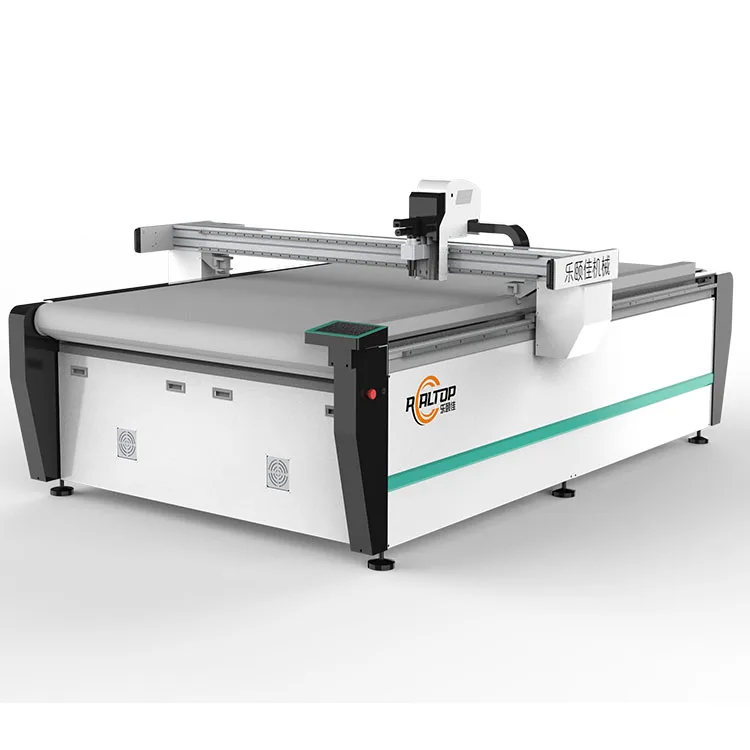
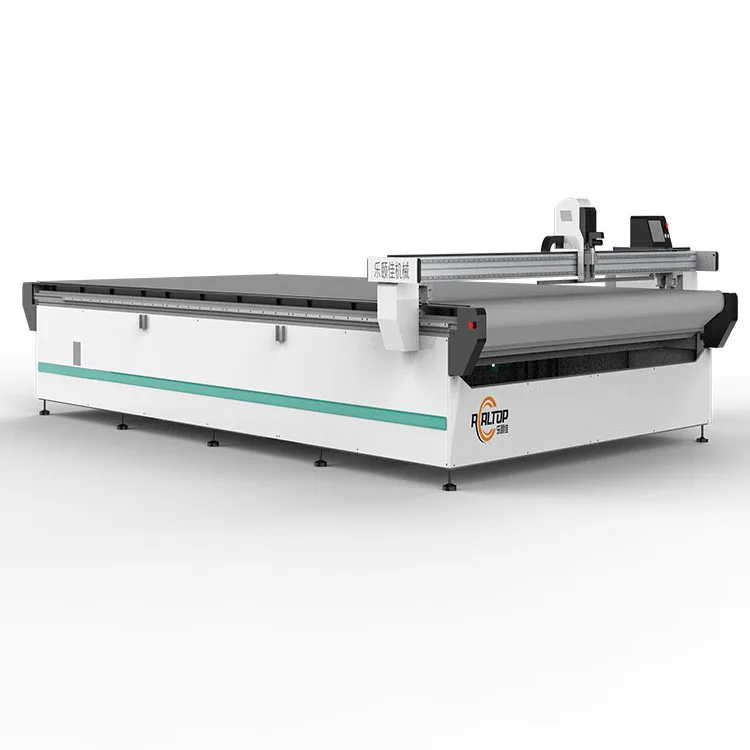
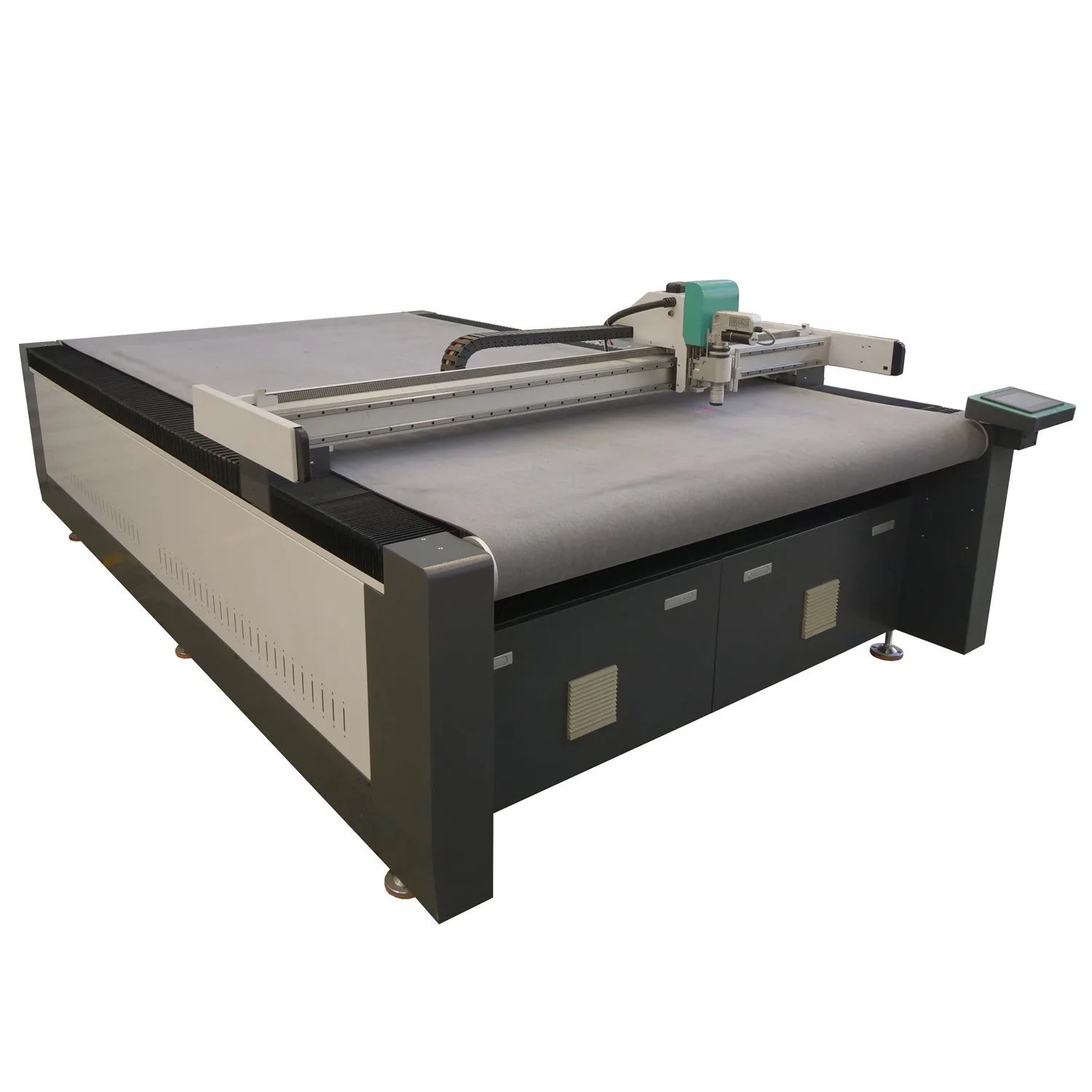
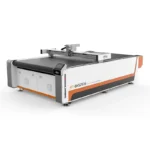
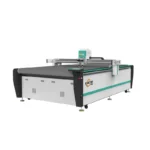
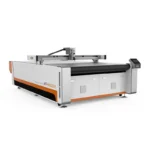
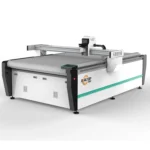
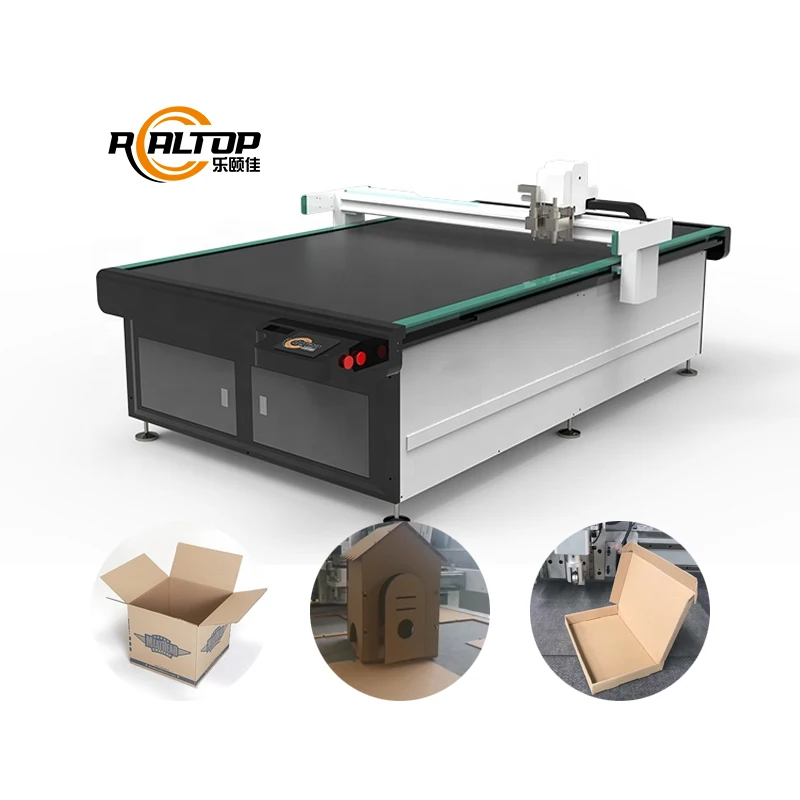
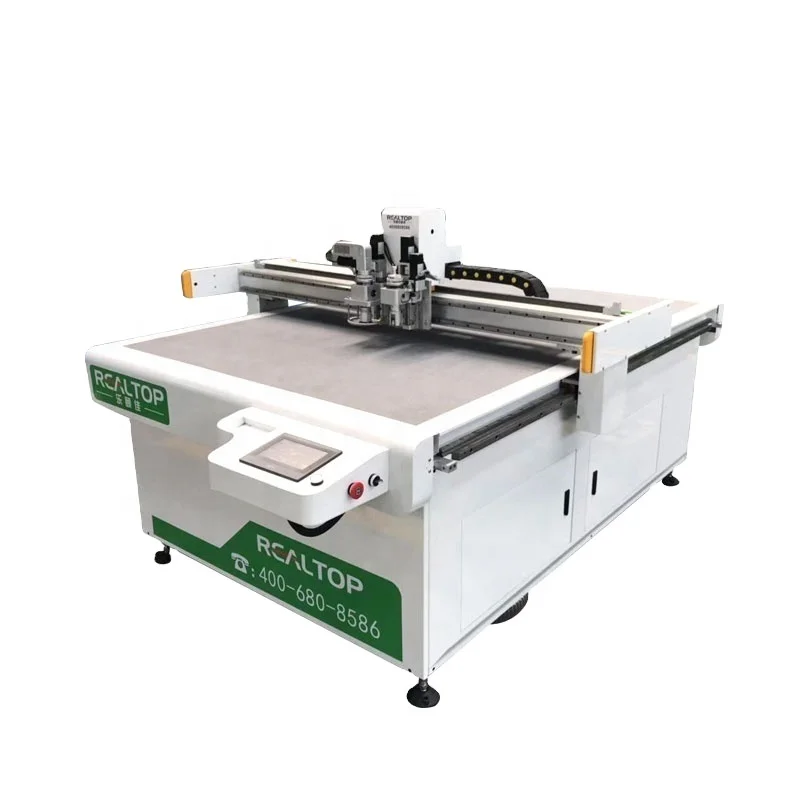
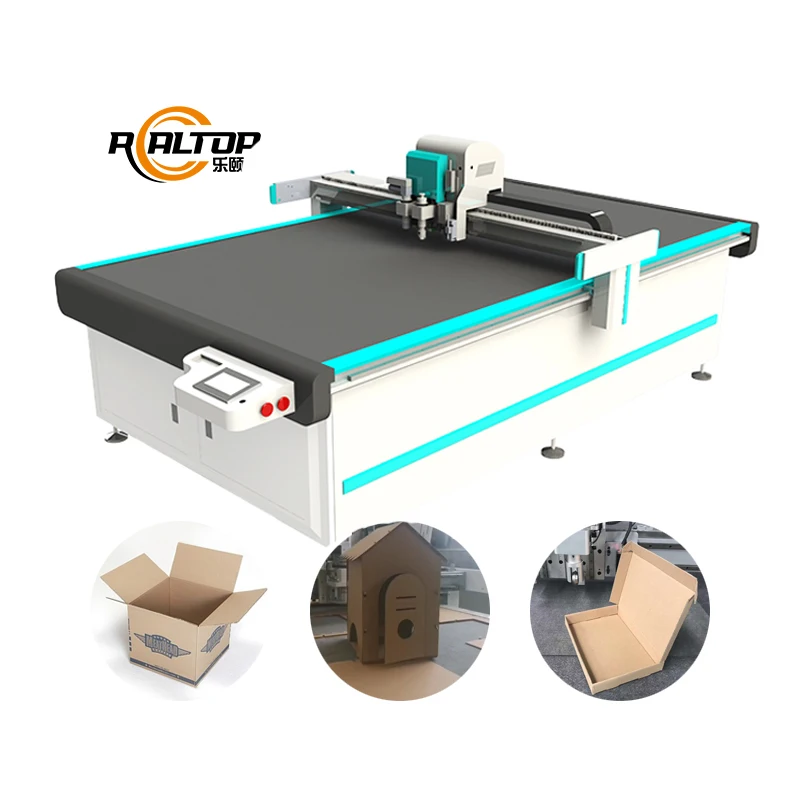
In-house design and production — covering frame welding through motion assembly, REALTOP builds this CNC Oscillating Knife Cutting Machine under one roof, giving distributors a single source for specification and build quality control.
Technical Specifications
| Parameter | Value |
|---|---|
| Product Type | CNC Oscillating Knife Cutting Machine |
| Model | RT-D2516/RT-S2516 |
| Working Area | 1600×2500 mm |
| Machine Size | 3450×2300×1250 mm |
| Rated Power | 9 kW |
| Cutting Speed | 200–800 mm/s (depending on material density and thickness) |
| Translational Velocity | 800–2000 mm/s |
| Cutting Thickness Capacity | Up to 100 mm (varies with material) |
| Repeated Accuracy | ≤0.1 mm |
| Table Type | Flat working table or auto feeding table with conveyor |
| Vacuum Table Material | Magnesium-aluminum alloy with PVDF coating and anodic oxidation |
| Transmission System | Digital servo motor, linear guide, synchronous belt, ball screw |
| Servo Motor Options | Delta or Panasonic, IP67 protection |
| Positioning Options | CCD camera mark point, panoramic camera, projection positioning |
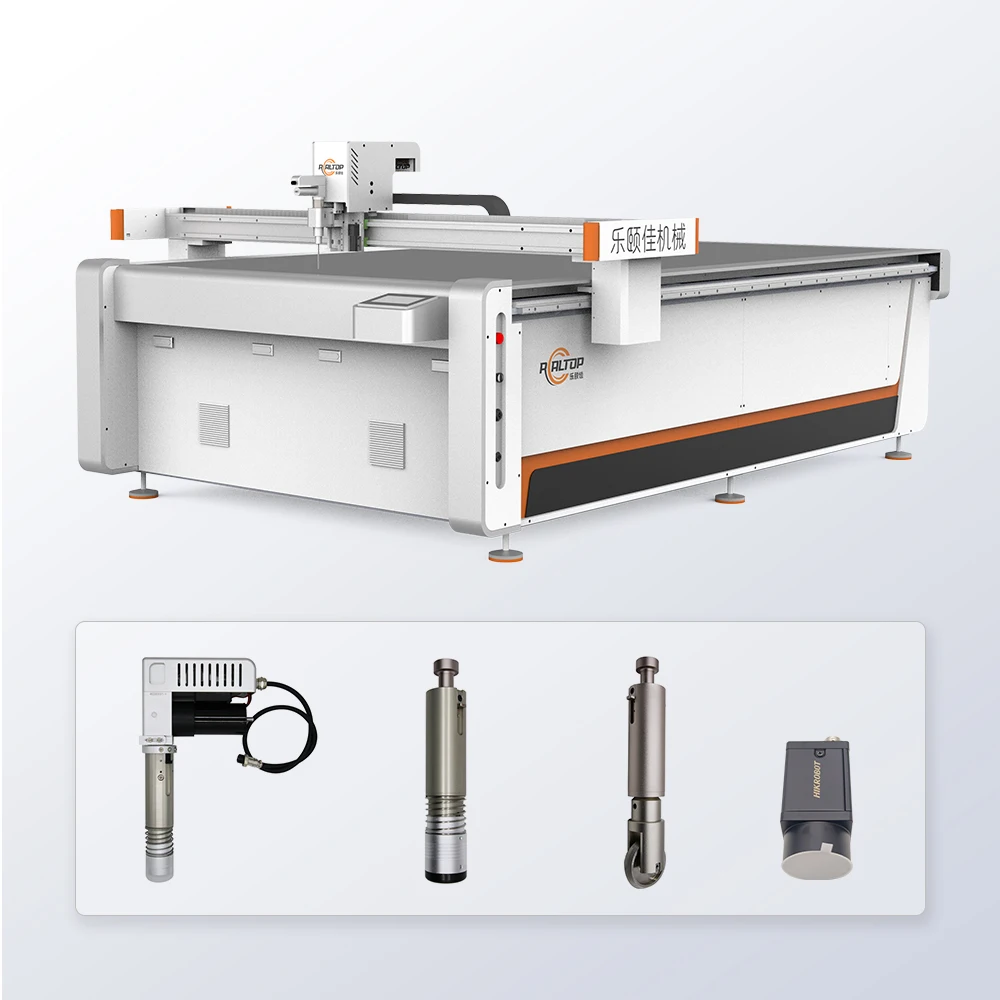
| Compatible Tool Heads | Oscillating knife, pneumatic knife, high-power vibrating knife, circular knife, V cutting knife, drag knife, creasing wheel, dotted line knife, punching, brush |
| Instruction Format | HP-GL compatible; supports PLT, DXF, AI file import |
| Voltage | 380V±10% |
| Vacuum Pump | 7.5 kW |
| Control Panel | Touch screen with multi-language support |
Application Suitability
| Application | Material or Output |
|---|---|
| Garment and footwear production | Woven fabric, non-woven fabric, sponge composite leather, PU, EVA |
| Automotive interior trimming | Leather, synthetic textile, carpet, floor mat composites |
| Soft home furnishings | Upholstery fabric, foam, curtain textile, XPE padding |
| Sports and outdoor goods | Neoprene, carbon fiber sheets, rubber, composite laminates |
| Graphic advertising and printing | Vinyl sticker, film, corrugated cardboard, PVC sheet, foam board |
| Sealing and gasket fabrication | PTFE, ETFE, silicon rubber, soft glass, gasket composite |
| Packaging sample making | Cardboard, corrugated board, plastic box, PP, PE sheet |
Why Working Area Alone Cannot Define a CNC Oscillating Knife Cutting Machine
A machine chosen only on bed size will fail the moment the material changes.
I once watched a garment factory install a large-format cutter based purely on its cutting bed dimensions. When they switched from single-layer cotton to a multi-layer composite fabric for winter outerwear, the blade could not penetrate the stack, and the line stopped for two days. The working area was correct, but the tool head, vacuum zoning and oscillation frequency were never matched to the real material. A CNC Oscillating Knife Cutting Machine manufacturer should ask for your fabric samples before confirming a configuration. [NEED_CITE: fabric composite cutting challenges in garment production]
The lesson applies across industries. A gasket shop cutting PTFE needs high-frequency oscillation and a rigid blade, while a signage producer working thin vinyl benefits from a drag knife and low vacuum zones. Each scenario demands a different setup on the same platform.
Frame Construction That Holds Tolerance Over Years of Vibration
The RT-D2516/RT-S2516 frame is built from thick-walled seamless steel, welded in-house and then subjected to high-temperature tempering before final machining on a CNC machining center. This sequence relieves welding stress and locks in dimensional accuracy. For a distributor planning to stock or resell, frame stability is the difference between a machine that holds 0.1 mm repeatability after three years and one that drifts after the first season of heavy use.
The linear guides and ball screws are mounted to this stress-relieved base, so the motion system inherits the frame’s long-term geometry rather than fighting against distortion.
Motion Components Sourced for Continuous Industrial Duty
Every axis is driven by Delta or Panasonic servo motors with IP67 protection, paired with Taiwan Hiwin linear rails. The synchronous belt and ball screw transmission routes are selected based on the axis travel and load. These are not decorative specifications — IP67-rated servos survive the dust and fiber particles that accumulate in fabric and composite cutting environments, where standard motors often fail at the encoder. [NEED_CITE: IP67 servo motor performance in particulate environments]
The 7.5 kW vacuum pump is housed in an integrated aviation aluminum shell with a built-in silencer, reducing noise at the source instead of relying on external baffling.
Reading the Specs That Actually Determine Cut Quality
Cutting speed is listed as 200–800 mm/s, but the usable speed depends entirely on material density and layer count. A single layer of woven cotton can be cut near the upper range, while a 50 mm stack of sponge composite leather forces the speed down to maintain edge integrity. The oscillating knife tool head handles thick, fibrous stacks, while the drag knife suits thin vinyl and film.
The magnesium-aluminum vacuum table with PVDF fluorocarbon coating and anodic oxidation resists abrasion from repeated part removal and provides consistent hold-down across the surface. For small parts like gaskets or shoe uppers, vacuum zoning keeps pieces from lifting during the final passes.
The positioning system options — CCD camera mark point, panoramic camera, or projection — address different registration needs. CCD tracks printed marks for contour cutting of pre-printed fabric, while projection overlays the cutting path directly onto the material for manual alignment verification.
What Happens When Configuration Skips Material Testing
The most common failure I see in the field is a machine that runs perfectly on the sample material but stalls on the production stock. Wrong tool head selection produces ragged edges on fabric or crushes foam instead of slicing it. Insufficient vacuum zoning lets small parts shift mid-cut, ruining nested layouts and wasting material. [NEED_CITE: vacuum table zoning and small part retention in digital cutting]
Software incompatibility surfaces later, when the buyer discovers their existing DXF or AI nesting files do not import cleanly into the machine’s software. These are all preventable if the CNC Oscillating Knife Cutting Machine manufacturer tests the buyer’s actual material before production begins.
Why Distributors and Importers Source This Machine Here
The frame is welded, tempered and finish-machined in the same Jinan facility, so quality control spans the entire build rather than depending on outsourced weldments.
Tool head and table configurations are specified per buyer material, not locked to a single default package, giving distributors flexibility across different customer segments.
Voltage, frequency, plug type and control panel language are confirmed in writing before production starts, so the machine arrives ready for the destination market without field rewiring.
Sample cutting on the buyer’s own fabric, leather, foam or composite is completed before order confirmation, eliminating the guesswork that causes most field disputes.
OEM documentation, private-label configuration and factory test records are available for distributors who need to support their own brand in the destination market.
Documentation & Verification
- Machine specification sheet listing tool head and table configuration matched to your material
- Electrical schematic and voltage confirmation document signed before production starts
- Sample cutting report on your own fabric or composite material before order commitment
- Factory test record with repeated accuracy measurement taken on the assembled machine
- Spare parts list identifying consumable blades, belts and vacuum seals for first-year planning
- CE declaration included where applicable to the destination market
Installation, Commissioning & Support
- Floor space planning based on the 3450×2300 mm machine footprint plus material staging area
- Dedicated 380V circuit required for the 9 kW rated power and 7.5 kW vacuum pump
- Machine ships partially assembled; gantry and tool carriage are mounted on-site
- First-run parameter tuning on your specific material thickness and cutting path file
- Operator training covers tool head changeover across the available oscillating, drag and creasing options
- Maintenance schedule addresses linear guide lubrication, belt tension and vacuum filter cleaning
What to Prepare Before Requesting a Quotation
When evaluating a CNC Oscillating Knife Cutting Machine manufacturer, send your actual production material — including the specific fabric weave, composite layer structure and total thickness you plan to cut daily. Provide your target cutting speed and the file formats your design team currently uses, so software compatibility can be verified before the machine enters production.
Frequently Asked Questions
Q: How is the frame built and treated to prevent long-term deformation?
A: The frame uses thick-walled seamless steel tube, welded in-house and then high-temperature tempered to relieve internal stress. Final surfaces are machined on a CNC machining center to ensure flatness and parallelism. This process prevents the gradual distortion that causes accuracy drift in machines built from bolted or lightly welded assemblies.
Q: Which component brands can be specified for servos, rails and vacuum?
A: Servo motors are available as Delta or Panasonic units with IP67 protection. Linear rails are Taiwan Hiwin. The 7.5 kW vacuum pump is integrated into an aviation aluminum shell with built-in silencing. Distributors can specify their preferred brand combination to match local service and spare parts availability in their market.
Q: How are electrical standards confirmed before the machine is built?
A: Voltage, frequency, plug type and control language are documented in a written confirmation signed by the buyer before production begins. This prevents the common situation where a machine arrives at the destination port and requires rewiring or transformer installation before it can run.
Q: What OEM options exist for distributors who sell under their own brand?
A: Private-label configuration covers machine color, control panel branding, documentation packaging and software language. Factory test records and specification sheets can be issued under the distributor’s brand identity. Each OEM order includes the same in-house testing and sample cutting verification as standard production.
Q: What documentation ships with the machine for customs and compliance?
A: The standard documentation package includes the machine specification sheet, electrical schematic, operation and maintenance manual, spare parts list, packing photographs and CE declaration where applicable. Additional certificates or test reports required by specific destination markets can be discussed during the order confirmation stage.
You may also like

商品评价
Clear filtersThere are no reviews yet.