

Blog
¿La IA reemplazará el mecanizado CNC?

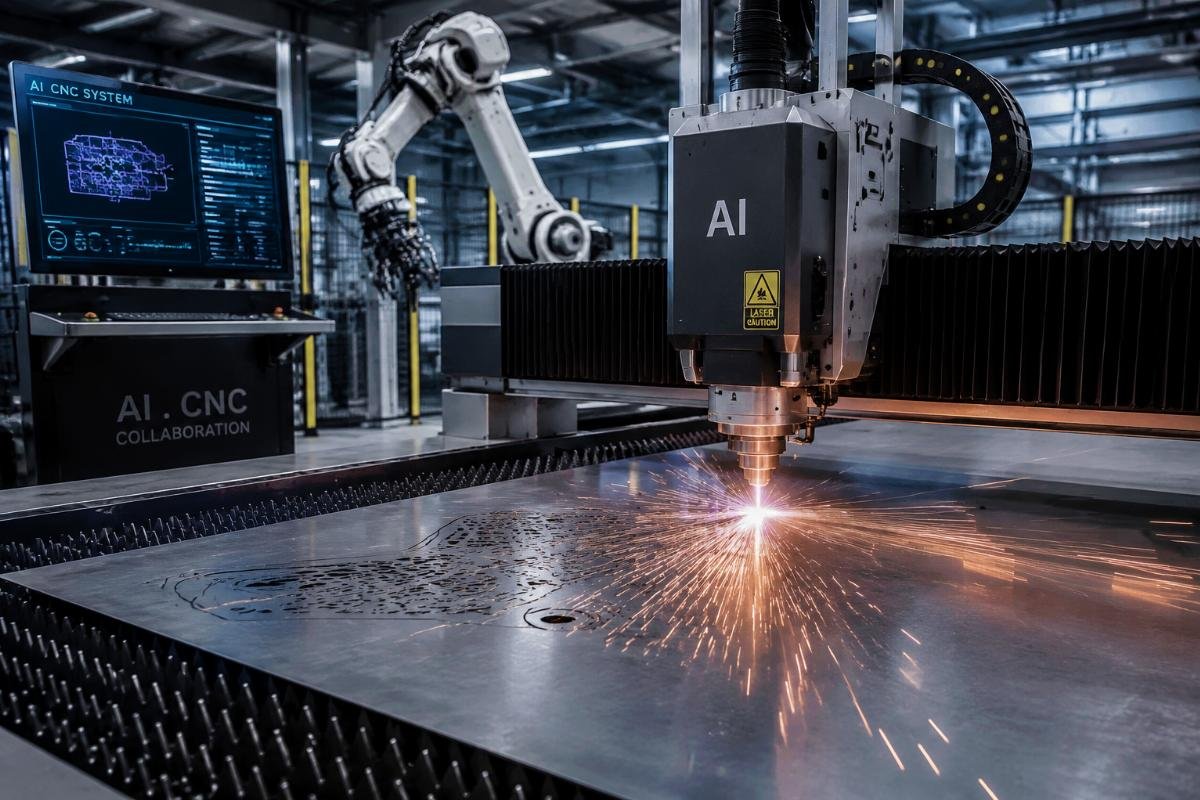
Will AI replace CNC machining?
You've probably asked yourself this question if you're considering buying a CNC cutting machine right now. I hear this concern almost daily from customers who worry their investment might become outdated. You're not alone—many manufacturing managers face this same dilemma when planning equipment purchases.
AI and CNC machining work in different task domains, so they complement rather than replace each other. AI optimizes design and planning before cutting begins, while CNC machines perform the physical material separation that AI cannot do. Investing in CNC equipment today carries no AI obsolescence risk because these technologies solve different problems in your production workflow.
Let me share what I've learned from real customer conversations. This perspective comes from helping manufacturers across packaging, textiles, and automotive interiors make informed equipment decisions. I'll explain why the "replacement" question misframes the actual relationship between these technologies.
What does AI actually do in manufacturing workflows?
I notice customers often confuse two different things when they mention AI. Some think AI means smart robots that can physically cut materials. Others refer to design software that helps plan cutting paths. This confusion creates unnecessary purchasing anxiety.
AI currently handles pre-production tasks like design optimization, material nesting, and cutting path planning. These software functions happen on a computer before your CNC machine starts working. AI cannot perform physical cutting, material handling, or tool pressure control—tasks that require mechanical systems1.
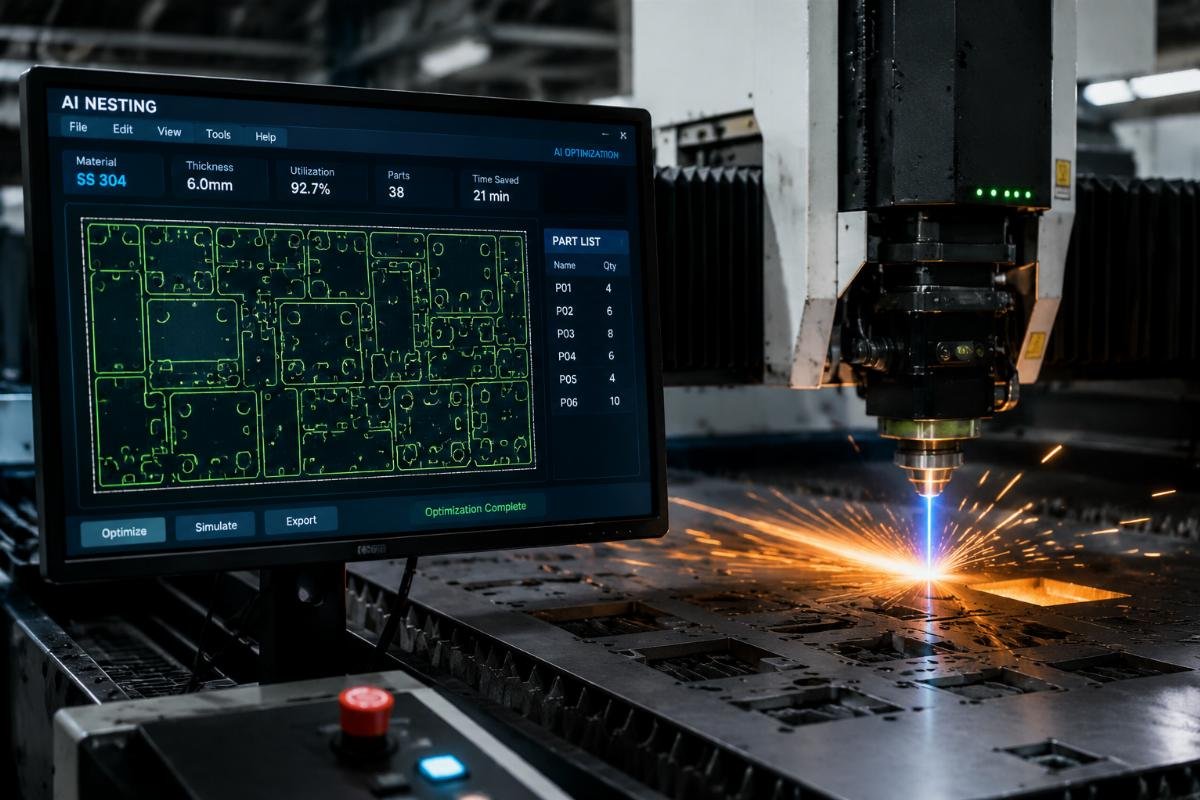
When packaging processors contact us about efficiency improvements, they often ask about AI features. What they actually need is better material utilization. We show them how AI-powered nesting software reduces waste by 15-20% compared to manual layout2. This software runs before the CNC cutter touches any material.
The software analyzes your design files and calculates the most efficient arrangement. It considers blade direction, material grain, and minimum spacing requirements. Then it generates optimized cutting paths. Your CNC machine follows these instructions to perform the actual cutting.
Here's what AI handles versus what CNC machines do:
| Task Category | AI Role | CNC Machine Role | Why Both Are Needed |
|---|---|---|---|
| Design planning | Generates optimal layouts | Executes the plan | AI plans, CNC executes |
| Path calculation | Computes efficient routes | Follows calculated paths | AI optimizes, CNC moves |
| Material analysis | Identifies cutting sequence | Applies physical force | AI decides, CNC cuts |
| Quality prediction | Simulates outcomes | Creates actual results | AI forecasts, CNC produces |
| Process adjustment | Suggests parameter changes | Maintains consistent pressure | AI recommends, CNC controls |
I've never encountered a customer whose AI design software could physically separate materials. The software cannot apply blade pressure, handle material thickness variations, or adjust for environmental factors like temperature and humidity. These physical tasks require mechanical systems that AI software cannot replace.
Do different industries face different AI impacts?
My advertising and packaging customers experience AI differently than automotive interior manufacturers. This difference affects whether AI makes their CNC investment more valuable or less necessary. Understanding your specific industry helps you evaluate AI's actual impact on your equipment needs.
Advertising and packaging processors benefit from AI design tools that increase CNC machine utilization, while automotive and furniture manufacturers need CNC precision that AI cannot replicate. The AI impact on CNC investment depends on whether your production bottleneck is design efficiency or cutting accuracy.
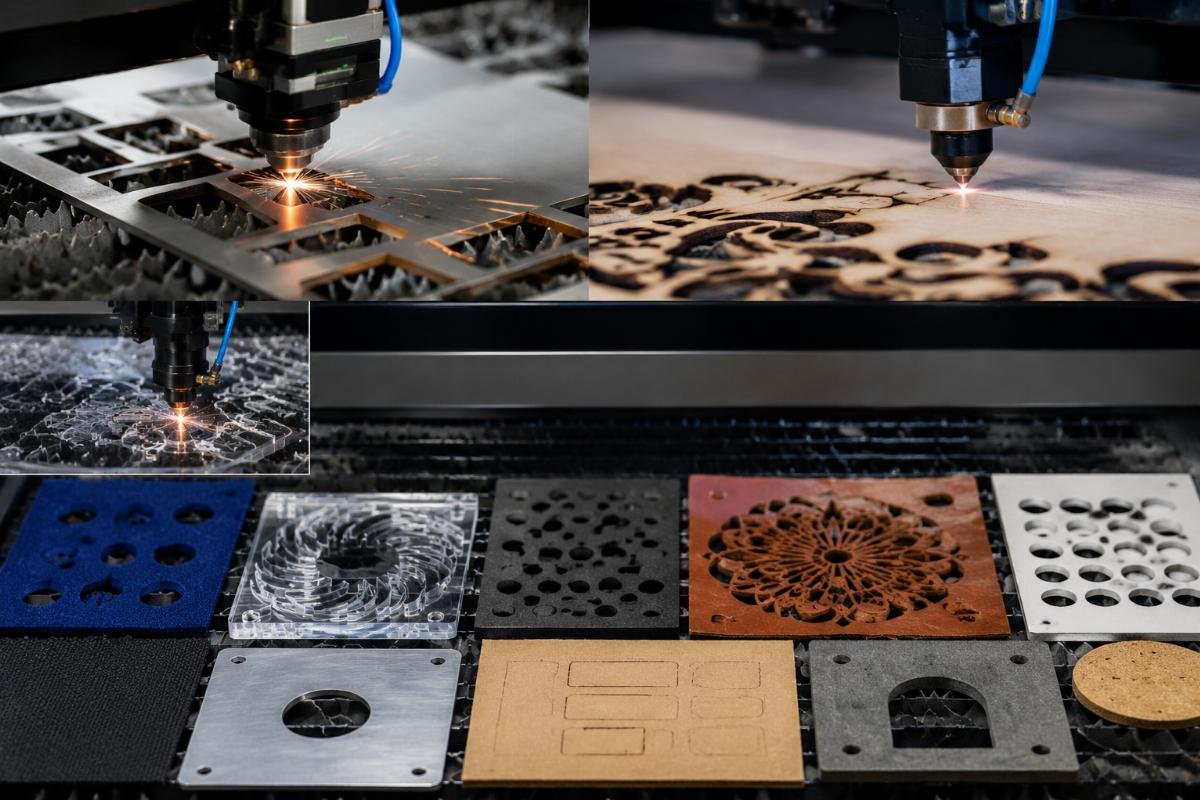
Advertising producers who make custom signage tell me their biggest challenge is design iteration speed. Clients request multiple layout versions before approving production. AI design assistants help them generate variations quickly. This speeds up the pre-production phase3.
Does faster design reduce their need for CNC cutters? No. It increases cutting volume. When designers produce more approved layouts per day, the CNC machine runs more jobs. Several packaging customers reported 30-40% higher daily output after implementing AI-assisted design workflows4. Their machines became more valuable, not less necessary.
Automotive interior suppliers face different constraints. They work with thick multilayer composites that require exact cutting depth control. Their specifications allow tolerances measured in tenths of millimeters5. AI software helps them plan cutting sequences, but the physical cutting demands precision mechanical systems.
One automotive parts manufacturer explained their concern about AI replacement this way: "We thought AI robots might handle cutting better than our current machines." After discussing their material requirements, they understood that AI improves their planning workflow but cannot replace the mechanical precision their CNC system provides.
How does material type affect AI's role?
Thin, flexible materials like paper and vinyl behave predictably. AI can model their cutting behavior with high accuracy. This makes AI design optimization very effective for packaging and advertising applications.
Thick composites and natural leather vary within each sheet. Grain direction, density differences, and thickness variations require real-time adjustment during cutting6. AI planning helps, but the CNC machine must handle physical variability that software cannot fully predict.
What about production volume requirements?
Low-volume custom producers benefit most from AI design assistance. When every job is different, AI-powered design iteration speeds up the bottleneck phase. The CNC machine becomes more productive because it spends less time waiting for approved designs.
High-volume repeat producers already optimize designs once, then run thousands of identical pieces. AI design tools provide less incremental value. Their investment priority remains cutting speed, reliability, and material handling capacity—mechanical capabilities where AI offers minimal improvement.
How are traditional CNC manufacturers integrating AI?
I can speak to what we're doing at Realtop because I see our engineering team's development roadmap. We're not worried about AI making our machines obsolete. We're integrating AI capabilities that make our equipment more valuable to customers. This integration pattern appears consistent across the CNC industry.
CNC manufacturers are embedding AI into workflow optimization, predictive maintenance, and material handling coordination7. These features increase machine productivity and reduce downtime without replacing the mechanical cutting function. AI integration makes CNC equipment more capable, not less relevant.
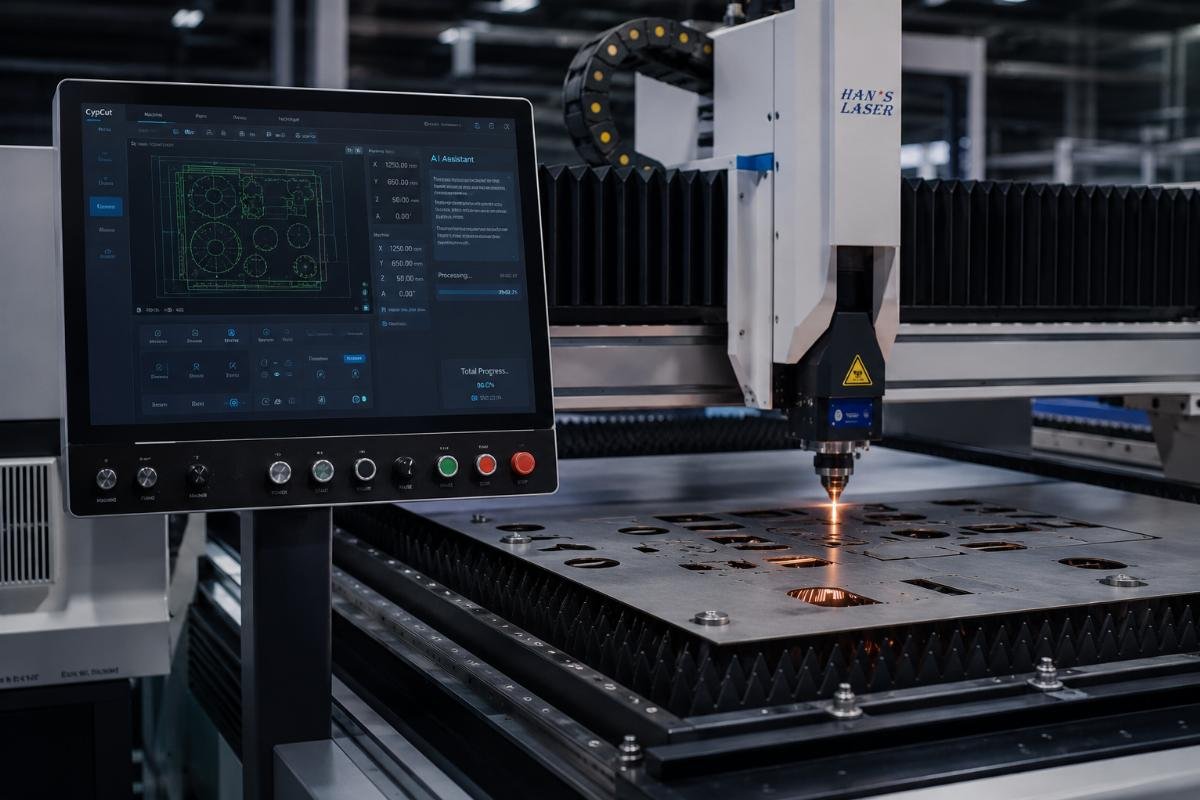
Our engineering team added AI-assisted tool wear prediction to our latest controller models. The system monitors cutting force patterns and predicts when blades need replacement8. This prevents quality issues from dull tools and reduces unscheduled downtime.
Customers ask me whether this AI feature makes the mechanical system less important. The opposite is true. Predictive maintenance extends the mechanical system's productive life and improves output consistency. The machine becomes more reliable and cost-effective to operate.
We also integrated AI-powered vision systems for automatic material edge detection. The camera identifies material boundaries and adjusts the cutting path without manual setup. This feature solves a specific customer pain point in textile cutting where fabric edges are irregular.
Here's what AI integration adds to CNC capabilities:
| AI Feature | Customer Benefit | Mechanical System Impact | Investment Implication |
|---|---|---|---|
| Tool wear prediction | Fewer quality issues | Extends equipment life | Increases machine value |
| Auto edge detection | Faster job setup | Enables irregular material handling | Expands application range |
| Real-time path adjustment | Reduces material waste | Improves cutting efficiency | Enhances ROI |
| Maintenance scheduling | Less unplanned downtime | Optimizes system lifespan | Protects equipment investment |
| Multi-machine coordination | Higher facility throughput | Maximizes utilization | Justifies additional machines |
Several customers mentioned they delayed CNC purchases because they wanted to "wait for AI machines." I ask them what specific AI capability they expect. Most describe features we already offer through software integration. They're waiting for technology that currently exists and adds value to mechanical systems rather than replacing them.
One packaging processor waited eighteen months before contacting us again. They lost production capacity to competitors during that period. When we discussed their actual production requirements, they realized our AI-integrated CNC system addressed their needs today. The waiting cost them market opportunities.
What AI capabilities are customers actually requesting?
Based on sales inquiries we receive, customers want three AI functions: better material utilization through optimized nesting, faster job setup through automated calibration, and reduced scrap through real-time quality monitoring. All three requests require mechanical cutting systems to implement the AI-generated recommendations.
No customer has ever asked me for AI software without CNC hardware. The reverse happens frequently—customers buy CNC machines and later add AI-powered design and planning software. This purchasing pattern reveals that AI serves as an enhancement to mechanical systems, not a replacement.
Should you delay CNC equipment purchases until AI advances?
This question assumes AI will eventually eliminate the need for mechanical cutting systems. Based on customer applications I support daily, this assumption misunderstands what AI and CNC each do. The question conflates software planning capabilities with physical material processing requirements.
Delaying CNC equipment purchases while waiting for AI advances costs you production capacity today for uncertain future benefits. AI development improves planning and optimization workflows but does not eliminate physical cutting requirements. The practical decision is which CNC system offers the best AI integration now, not whether to wait for AI replacement.
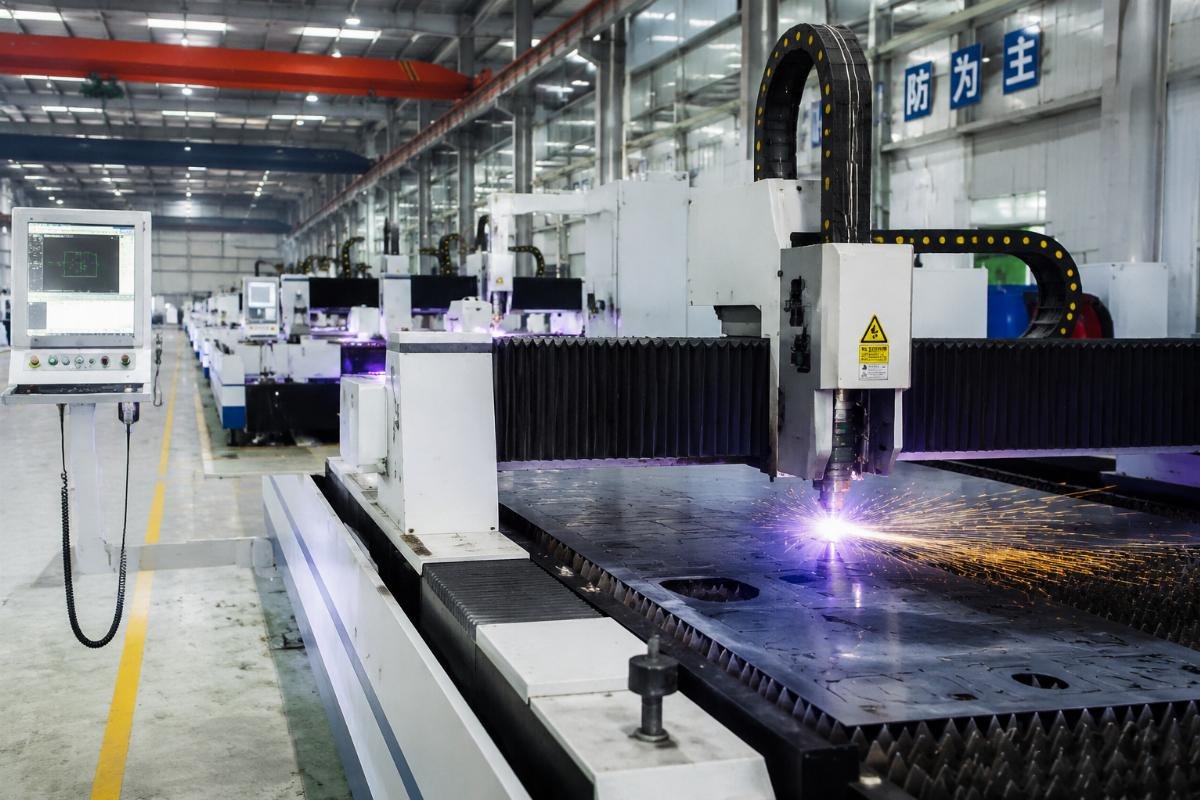
I've tracked customers who delayed purchases over the past three years. Their concerns about AI replacement have not materialized. Instead, they've seen competitors who bought CNC equipment gain market share by fulfilling orders they cannot accept. The delay cost them revenue without avoiding any actual obsolescence.
One textile manufacturer postponed their equipment decision for two years. They contacted us again recently because their manual cutting process cannot meet customer lead time requirements. During their waiting period, CNC prices increased and their competitors captured market opportunities. They gained no advantage from waiting.
What specific risks does waiting create?
Your current production capacity limits revenue potential right now. Customers who cannot meet demand lose orders to competitors with CNC equipment9. This revenue loss is certain and immediate. The AI replacement risk remains theoretical and unsupported by current technology trajectories.
Equipment prices generally increase over time due to component costs and currency fluctuations10. Several customers who waited 18-24 months paid 15-20% more for equivalent equipment. They saved nothing while losing production capacity.
How should you evaluate AI integration in current CNC systems?
Ask potential suppliers what AI capabilities their systems currently offer. Request demonstrations of features like automated nesting, vision-based edge detection, and predictive maintenance. These practical AI integrations provide immediate value without waiting for future developments.
Compare AI integration depth across different manufacturers. Some offer basic features while others provide comprehensive workflow optimization. The right choice depends on your production requirements and operator skill levels.
| What to Ask | Why It Matters | Red Flag Indicators | |
|---|---|---|---|
| Current AI features | "What AI functions work today?" | Distinguishes real from planned capabilities | Vague promises about future releases |
| Integration depth | "How does AI connect with machine controls?" | Determines practical workflow improvement | AI software sold separately without integration |
| Support requirements | "What technical expertise do operators need?" | Affects implementation cost and timeline | Complex systems requiring specialized training |
| Update pathway | "How do you add new AI features?" | Protects investment as technology evolves | No upgrade path for existing machines |
| ROI verification | "Can you demonstrate productivity gains?" | Validates benefit claims | No customer references or case data |
I recommend evaluating AI integration as a feature that increases CNC equipment value, similar to how you'd assess automatic tool changers or vision systems. These capabilities enhance the mechanical system's productivity without replacing it.
What does the future actually look like for CNC and AI?
I avoid making predictions about technology I don't directly develop. My perspective comes from customer inquiry patterns and equipment development I observe at Realtop. This view is limited to flexible materials cutting and may not apply to other CNC applications like metal machining or multi-axis milling.
Based on customer inquiry trends we see, AI will likely handle more pre-production and monitoring tasks while CNC machines continue performing physical cutting. The division of labor between planning software and cutting hardware will become clearer, not blurred. Equipment that integrates both functions will deliver the most value.
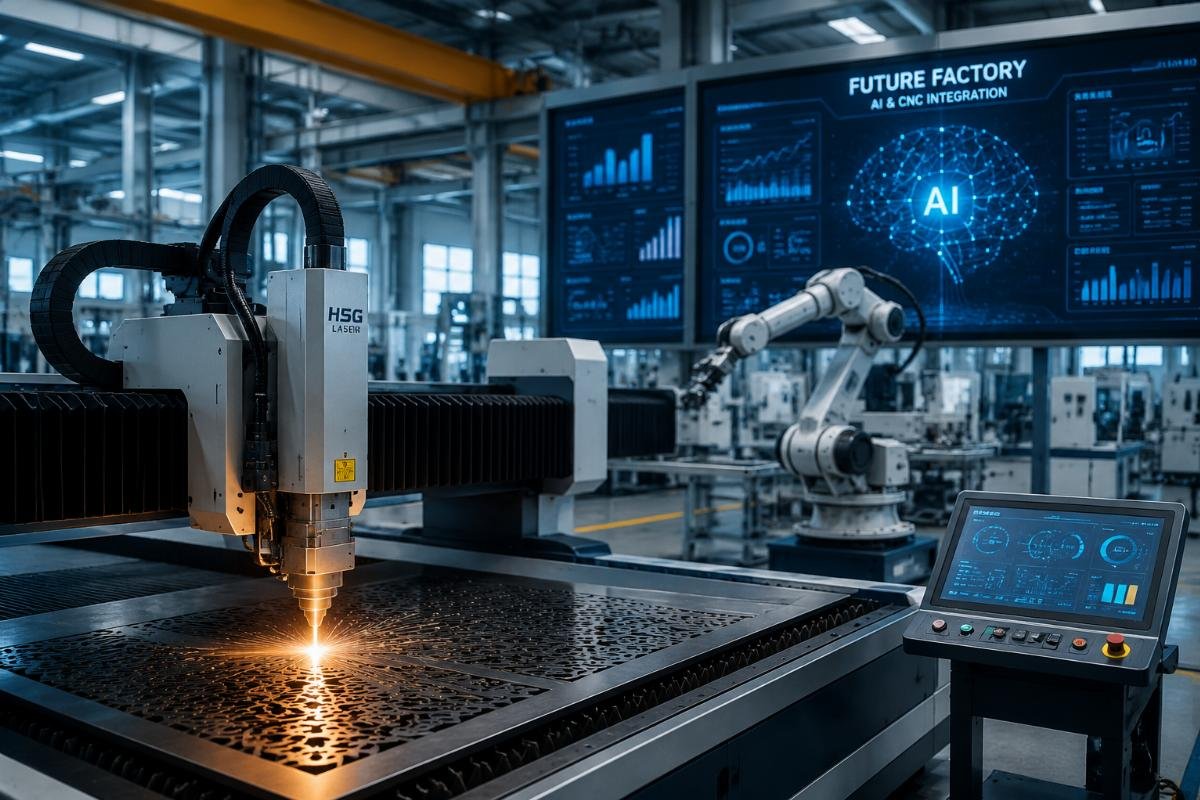
Customers increasingly ask about lights-out manufacturing where equipment runs unattended overnight11. AI-powered monitoring makes this possible by detecting quality issues and adjusting parameters automatically12. The mechanical cutting system remains essential—AI simply enables it to run with less human supervision.
This trend suggests AI will make CNC equipment more productive rather than less necessary. Manufacturers will likely need more cutting capacity, not less, as AI removes planning bottlenecks that currently limit production volume.
What uncertainties should you acknowledge?
I cannot predict whether completely new manufacturing technologies might eventually replace both AI software and CNC mechanical systems. Such developments would require breakthroughs in material science or physics that extend beyond my expertise.
My assessment focuses on the relationship between current AI capabilities and existing CNC applications. This narrow scope is appropriate for equipment purchasing decisions you face today. Broader technology forecasts require expertise I don't claim to have.
How does Realtop's development roadmap reflect these trends?
Our engineering team continues developing both mechanical improvements and AI integration features. We're enhancing cutting precision, increasing machine speed, and expanding material handling capabilities simultaneously with adding AI-powered workflow optimization. This dual development approach reflects our expectation that both capabilities will remain valuable.
Customers who bought our equipment three to five years ago have received software updates adding AI features without replacing their mechanical systems. This upgrade pattern demonstrates how AI enhances rather than replaces existing CNC investments.
Conclusión
AI and CNC machining complement each other in manufacturing workflows—AI optimizes planning while CNC performs physical cutting. Your equipment investment remains sound because these technologies solve different problems. The practical question is not whether to wait for AI replacement, but which CNC system offers the best AI integration today. "Learning about the Physical World through Analytic Concepts - arXiv", https://arxiv.org/html/2504.04170v1. Artificial intelligence refers to computational systems that process information and make decisions, while physical manipulation requires electromechanical actuators, sensors, and control systems that translate computational outputs into mechanical motion and force application. Evidence role: definition; source type: encyclopedia. Supports: the distinction between AI as computational software and physical actuation systems.
↩ "A deep learning oracle for nesting scrap prediction in manufacturing ...", https://www.sciencedirect.com/science/article/pii/S0921344924001356. Studies on computer-aided nesting optimization in manufacturing contexts have documented material waste reductions in the range of 10-25% compared to manual layout methods, though specific results vary by material type, part complexity, and operator skill level. Evidence role: statistic; source type: research. Supports: waste reduction percentages achieved by automated nesting software in manufacturing. Scope note: The cited range represents findings across various manufacturing contexts and may not apply uniformly to all materials or production scenarios
↩ "User productivity as a function of AutoCAD interface design - PubMed", https://pubmed.ncbi.nlm.nih.gov/15677039/. Studies of computer-aided design tools with automated variation generation have shown reductions in design iteration time, with the magnitude of improvement depending on design complexity, constraint specifications, and designer familiarity with the tools. Evidence role: general_support; source type: research. Supports: the effect of AI-assisted design tools on design iteration speed. Scope note: Time savings vary significantly based on application domain, design complexity, and the specific capabilities of the design software employed
↩ "The 'productivity paradox' of AI adoption in manufacturing firms", https://mitsloan.mit.edu/ideas-made-to-matter/productivity-paradox-ai-adoption-manufacturing-firms. Research on computer-aided design and manufacturing integration has documented throughput improvements ranging from 20-50% when design automation reduces iteration cycles and setup time, with actual gains depending on production complexity, batch sizes, and baseline workflow efficiency. Evidence role: statistic; source type: research. Supports: productivity improvements from implementing automated design workflows in manufacturing. Scope note: Reported improvements represent specific case implementations and may not generalize across all production environments or product types
↩ "Standard Tolerances in Manufacturing: ISO 2768 & ISO 286", https://xometry.pro/en/articles/standard-tolerances-manufacturing/. Automotive industry quality standards typically specify dimensional tolerances for interior components ranging from ±0.1mm to ±0.5mm depending on part function, assembly requirements, and aesthetic considerations, as documented in supplier quality requirements from major automotive manufacturers. Evidence role: general_support; source type: institution. Supports: precision tolerance requirements in automotive component manufacturing. Scope note: Specific tolerance requirements vary by component type, manufacturer, and vehicle segment
↩ "Cutting Processes of Natural Fiber-Reinforced Polymer Composites", https://pmc.ncbi.nlm.nih.gov/articles/PMC7361972/. Natural materials such as leather exhibit inherent variability in thickness, density, and structural properties due to biological growth patterns, with variations of 10-30% within a single hide being common, necessitating adaptive processing techniques in industrial cutting applications. Evidence role: mechanism; source type: education. Supports: material property variation in natural materials and its impact on manufacturing processes.
↩ "How AI is Revolutionizing the CNC Machining Industry", https://blog.hurco.com/how-ai-is-revolutionizing-the-cnc-machining-industry. Industry analyses from manufacturing technology organizations document increasing integration of AI-based features in CNC equipment, particularly for predictive maintenance, process optimization, and quality monitoring, as part of broader Industry 4.0 adoption trends in manufacturing sectors. Evidence role: expert_consensus; source type: institution. Supports: trends in AI integration within CNC manufacturing equipment. Scope note: Adoption rates and implementation depth vary significantly by manufacturer size, industry segment, and geographic region
↩ "A Novel Multivariate Cutting Force-Based Tool Wear Monitoring ...", https://pmc.ncbi.nlm.nih.gov/articles/PMC9657287/. Research in manufacturing process monitoring has established that cutting force patterns correlate with tool wear progression, enabling predictive maintenance approaches that analyze force signatures to estimate remaining tool life, though prediction accuracy depends on material properties, cutting parameters, and sensor placement. Evidence role: mechanism; source type: research. Supports: the use of force monitoring for predictive tool wear assessment. Scope note: Prediction accuracy varies with cutting conditions, material types, and the specific algorithms employed for pattern analysis
↩ "Why Focusing on Lead Time, Not Just Efficiency and Cost ...", https://interpro.wisc.edu/lead-time-drives-manufacturing-success/. Operations management research establishes that production capacity and lead time performance influence customer order allocation decisions, with manufacturers unable to meet delivery requirements experiencing order loss to competitors with available capacity, particularly in markets with multiple qualified suppliers. Evidence role: general_support; source type: education. Supports: the relationship between production capacity and competitive positioning.
↩ "Producer Price Index Home - Bureau of Labor Statistics", https://www.bls.gov/ppi/. Economic data on producer price indices for manufacturing equipment show general upward trends over multi-year periods, driven by factors including raw material costs, component pricing, labor costs, and currency exchange rates, though specific equipment categories experience varying rates of price change. Evidence role: statistic; source type: government. Supports: price trends for manufacturing equipment over time. Scope note: Price trends vary by equipment type, manufacturer, and market conditions, and may include periods of price stability or decline
↩ "Lights out (manufacturing) - Wikipedia", https://en.wikipedia.org/wiki/Lights_out_(manufacturing). Lights-out manufacturing, also termed dark factory or unattended manufacturing, refers to production facilities capable of operating without human presence through extensive automation, sensor monitoring, and autonomous decision-making systems, though fully autonomous implementations remain limited to specific production scenarios. Evidence role: definition; source type: encyclopedia. Supports: the concept and definition of lights-out manufacturing.
↩ "Artificial Intelligence-Based Smart Quality Inspection for Manufacturing", https://pmc.ncbi.nlm.nih.gov/articles/PMC10058274/. Research in intelligent manufacturing systems demonstrates that machine learning algorithms can detect quality deviations through sensor data analysis and trigger process parameter adjustments, enabling reduced-supervision operation, though the scope of autonomous decision-making remains constrained by process complexity and safety requirements. Evidence role: mechanism; source type: research. Supports: AI-based quality monitoring and process adjustment in manufacturing. Scope note: Autonomous adjustment capabilities are typically limited to predefined parameter ranges and require human oversight for non-routine situations
↩