

Blog
¿Cuáles son las desventajas del corte CNC?

What are the disadvantages of CNC cutting?
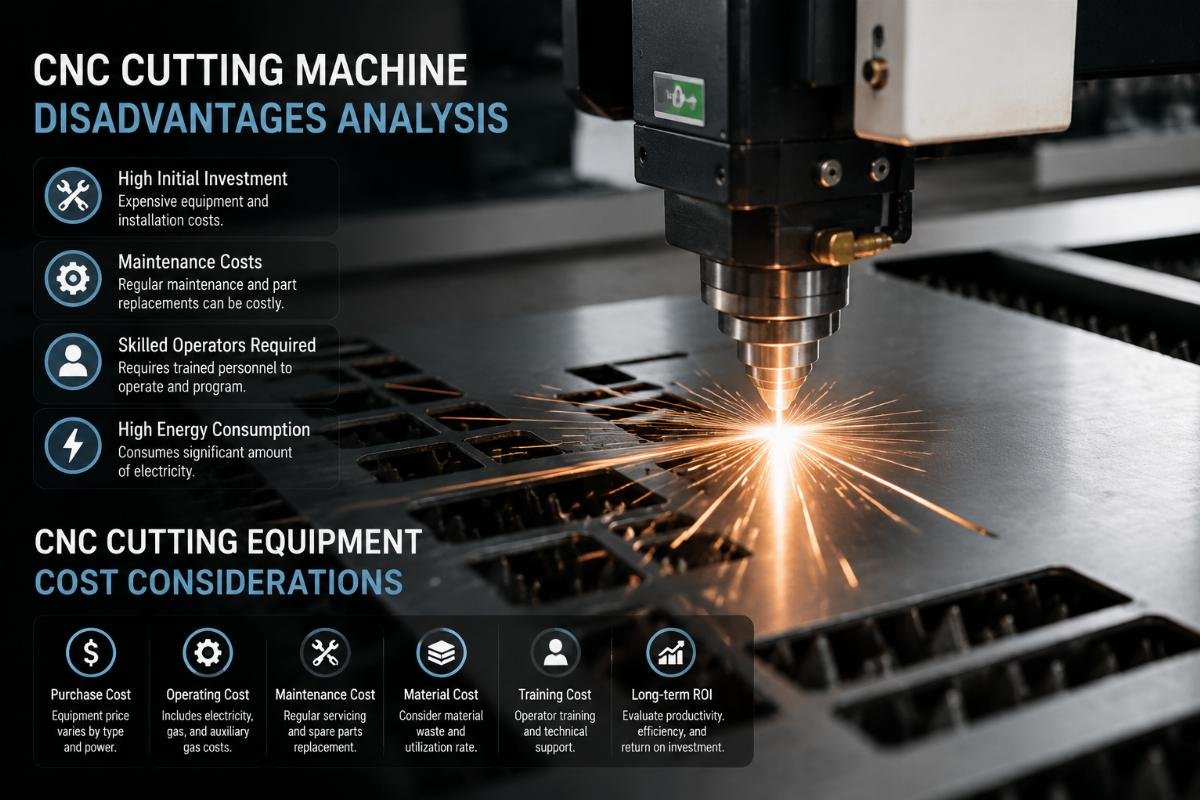
I talk to buyers every week who hesitate before purchasing CNC cutting equipment, and I understand why. The upfront cost feels steep, the technology seems intimidating, and you're not sure whether your production volume justifies the investment. These concerns are real, but I've noticed most buyers focus on the wrong metrics when evaluating disadvantages.
CNC cutting's main disadvantages include high initial equipment cost, complexity requiring operator training, material and thickness limitations, and setup time for small batches. However, these drawbacks often disappear when you compare total cost of ownership against manual cutting, account for hidden labor waste, and match the technology to the right applications.
Most buyers I meet fixate on purchase price while ignoring what their current process actually costs them. Let me walk you through what really matters when you're deciding whether CNC cutting's disadvantages outweigh its benefits for your operation.
Is CNC cutting equipment too expensive for small businesses?
The sticker shock is real when you first see CNC cutting machine pricing. I watch buyers compare our equipment cost to their current hand-cutting tools or manual templates, and the gap feels enormous. This initial reaction drives many purchasing decisions, but it's based on incomplete math.
CNC cutting equipment typically costs between $15,000 and $150,000 depending on bed size and features1, which appears expensive compared to manual tools. However, this comparison ignores labor costs, material waste rates, production speed differences, and rework expenses that manual cutting generates daily.
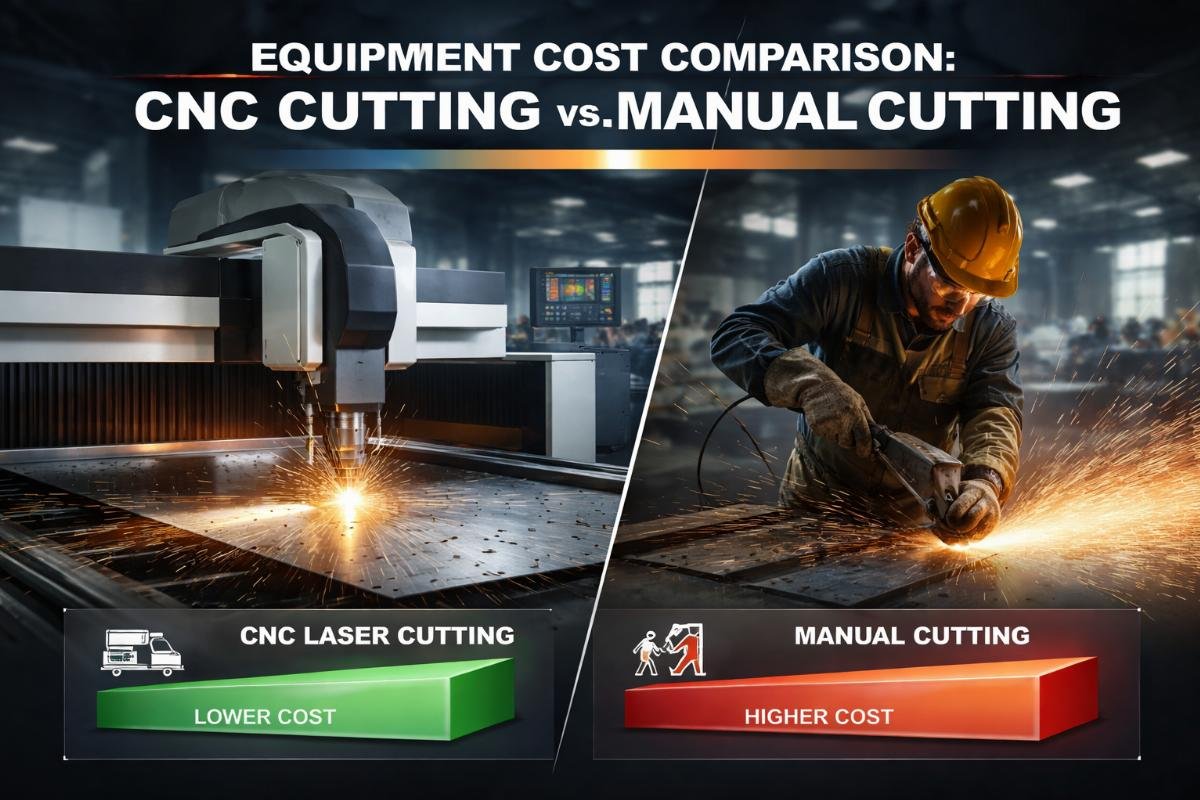
When I help buyers calculate actual costs, the picture changes dramatically. Manual cutting requires constant labor attention2. Your operator stands at the cutting table for every single piece, whether you're making five units or five hundred. CNC cutting loads a file, positions material, and runs unattended while your operator handles other tasks. For a packaging manufacturer processing 200 pieces daily, this labor difference typically creates break-even within 8-18 months depending on local wage rates.
Material waste adds another hidden cost. Manual cutting relies on operator judgment for nesting parts efficiently on your material sheets. Even experienced cutters leave gaps and unusable remnants. I've seen fabric processors reduce scrap from 12-15% down to 4-6% after switching to CNC cutting3 with automatic nesting software. On $50,000 annual material spend, that waste reduction alone recovers $3,000-5,500 yearly.
The purchase price disadvantage exists, but it's not the real cost comparison. Calculate your current monthly spend on cutting labor hours, material waste percentage, rejected pieces from cutting errors, and overtime during rush orders. Most flexible material processors discover their "cheap" current method costs far more than CNC equipment payments when measured over 12-24 months.
Who should avoid CNC cutting due to cost?
True cost barriers exist for specific situations. If you're cutting fewer than 20-30 pieces weekly with simple shapes, manual methods probably win on pure economics. Custom one-off projects without repeat patterns don't benefit from automated cutting. Ultra-low-volume craft operations cutting varied designs once or twice can't justify equipment investment through efficiency gains.
Volume threshold matters more than business size. A small upholstery shop producing 15 identical car seat covers daily hits break-even faster than a large automotive supplier making 50 unique prototype pieces monthly. Production repetition drives ROI, not company revenue.
Is CNC cutting too complex for average operators to learn?
The complexity concern comes up in nearly every sales conversation I have. Buyers imagine CNC cutting requires CAD expertise, programming knowledge, or engineering backgrounds. This fear often stops purchase decisions before we even discuss pricing.
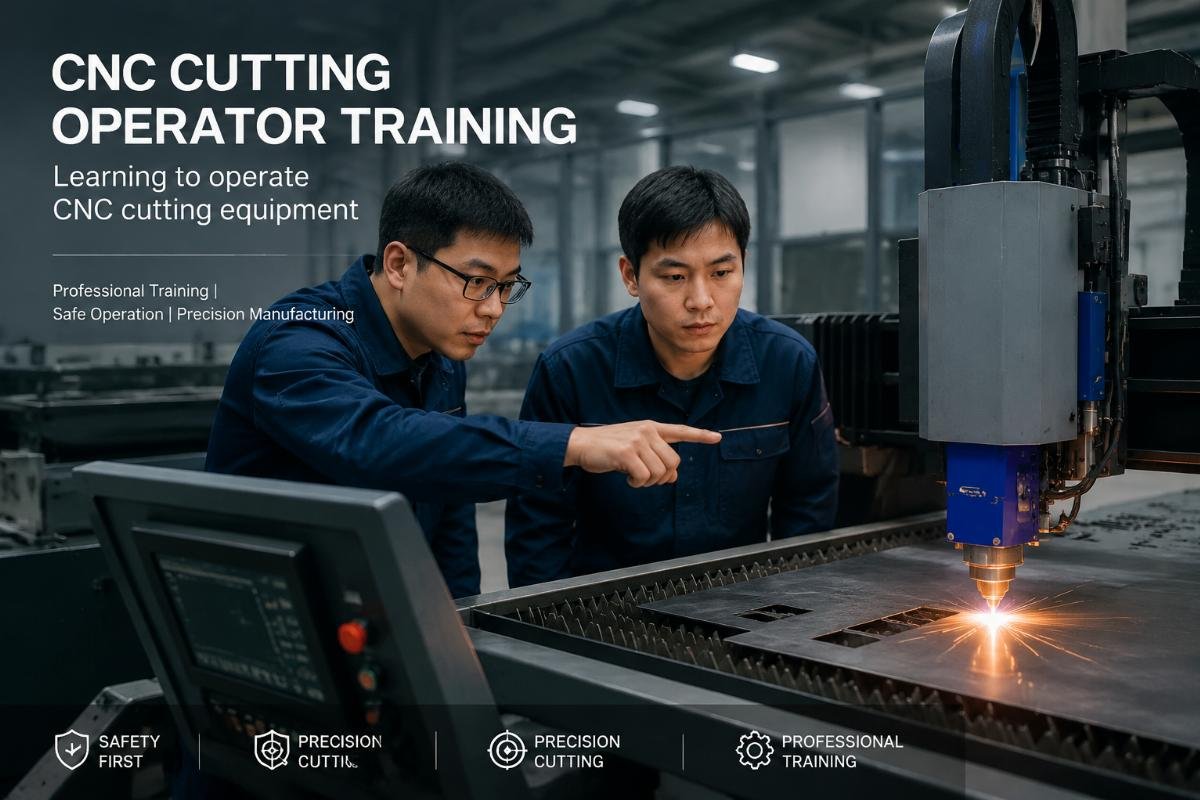
Modern CNC cutting systems for flexible materials require 2-5 days of training for basic operation4, with most operators achieving full proficiency within 2-3 weeks5. The learning curve is significantly shorter than industrial CNC routers or mills because fabric and flexible material cutters use simplified interfaces designed for production floor environments, not engineering departments.
I need to clarify a major confusion here. When most people hear "CNC," they picture metal machining centers that require G-code programming and complex toolpath creation. Flexible material CNC cutters work completely differently. You import a shape file (often a simple PDF or DXF), the software automatically generates cutting paths, you set material thickness and cutting tool type through dropdown menus, and you press start. No programming involved.
The actual training covers material loading, tool selection, basic software functions, and maintenance routines. We typically spend one day on software basics, one day on material handling and fixation methods, and one day on troubleshooting common issues. After that initial training, operators practice on actual production jobs with remote support available.
Where complexity becomes a genuine disadvantage is in organizations with extremely high operator turnover or facilities where the same person won't consistently run the equipment. Each new operator needs that 2-5 day learning investment. If you rotate cutting duties among 8-10 different employees monthly, training overhead becomes burdensome. Manual cutting skills transfer more quickly between workers in those situations.
What technical knowledge does CNC cutting actually require?
Operators need comfort with computer interfaces and basic file management—opening files, saving projects, organizing digital patterns. They don't need design skills or engineering knowledge, but they should understand concepts like scaling, rotation, and mirroring shapes. Someone who struggles with basic computer tasks will find the transition harder than someone already comfortable with digital tools.
Design file creation sits separately from operation. Most buyers already have designers creating patterns, and those files simply export to formats the CNC system reads. If you're currently drawing patterns by hand and need to digitize them first, that adds an upfront conversion project, but it's not an ongoing operational complexity.
What materials can't CNC cutting handle effectively?
Material limitations create real constraints that buyers often discover too late. I've had customers purchase equipment, then realize their specific material falls outside effective CNC cutting parameters. This disadvantage requires honest assessment before you invest.
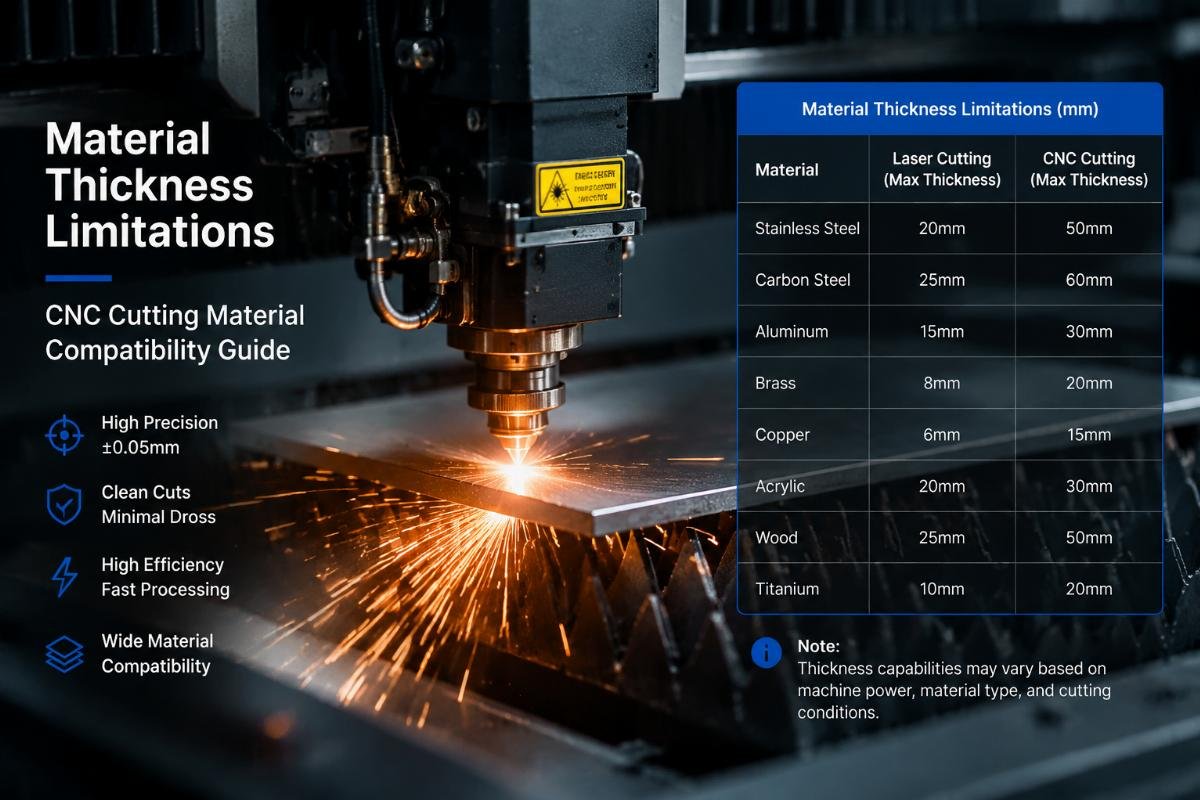
CNC cutting works best on flexible materials under 50mm thickness6 that don't require heat for cutting. Materials outside this range—thick rigid plastics, metals, ultra-thin films under 0.1mm, or highly elastic materials that stretch during cutting—require alternative technologies like laser cutting, die cutting, or waterjet cutting.
Let me break down where CNC cutting's material limitations become genuine disadvantages. Extremely stretchy materials like thin elastic fabrics or foam rubber often distort under the cutting knife's pressure. The material pulls and stretches ahead of the blade, creating imprecise edges. Die cutting with compression works better for these applications because it cuts through thickness rather than dragging a knife through it.
Very thick rigid materials hit mechanical limits. CNC knives typically cut effectively up to 40-50mm depending on material density7. If you're processing rigid cardboard over 60mm thick or stacked material layers exceeding that range, you need router-style cutting with different tooling, which changes the equipment category entirely.
Material inconsistency causes problems that manual cutters handle intuitively but CNC systems struggle with. If your material has significant thickness variation across a single sheet—maybe 3mm in one area and 8mm in another—the CNC cutting depth setting optimized for one section cuts incorrectly in the other. Manual operators adjust pressure instinctively. CNC systems require you to set parameters that work across the entire sheet, which may mean compromising cut quality in variable zones.
How do I know if my material suits CNC cutting?
Materials between 0.2mm and 50mm that maintain consistent thickness, don't require heat sealing, and have enough body to resist cutting pressure work well. This includes most fabrics, synthetic leathers, thin natural leather, gasket materials, technical textiles, corrugated plastics, foam board, and thin composites.
Request sample cutting from equipment suppliers before purchasing. Send your actual production materials, not idealized samples. Include your thickest variant, your thinnest variant, and any materials with texture, coating, or lamination layers. Successful sample cutting on your real materials eliminates this disadvantage risk.
Does CNC cutting take too long for small production runs?
Setup time creates a disadvantage that buyers underestimate until they start operating equipment. This concern comes primarily from small-batch producers who need flexibility to switch between different jobs quickly.
CNC cutting requires 10-30 minutes of setup time per job8 including material loading, file preparation, tool selection, and test cutting. This overhead makes very small batches (under 5-10 pieces) slower than manual cutting, but the crossover point where CNC becomes faster typically occurs between 10-20 pieces9 depending on design complexity.
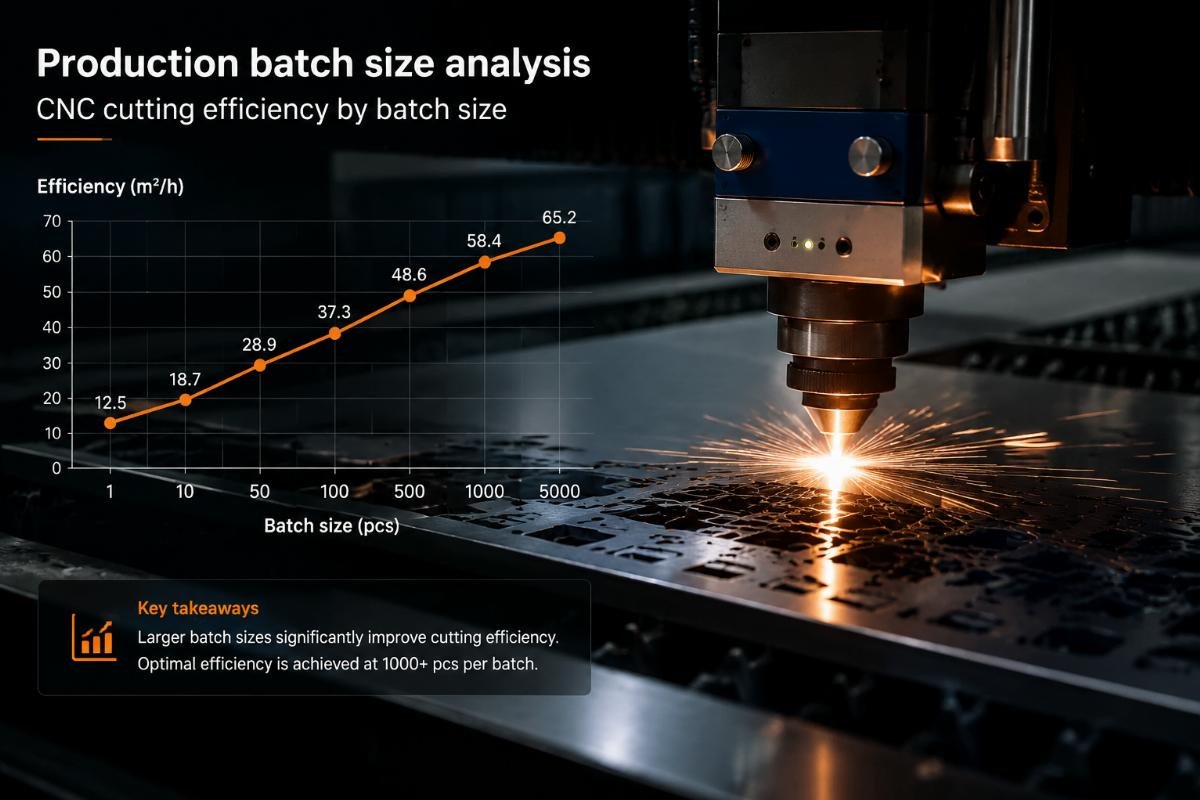
Setup time breaks into distinct phases. You load the digital cutting file, verify it displays correctly, adjust sizing if needed, select cutting tools appropriate to your material, load material onto the cutting bed, secure it properly to prevent shifting, run a test cut on scrap, verify quality, then start production. For simple jobs with materials you've cut before, this takes 10-15 minutes. For new designs or unfamiliar materials, allow 20-30 minutes.
Compare this to manual cutting setup. You pull templates, position them on material, trace or mark cutting lines, organize tools, and begin cutting. Setup takes 3-5 minutes. For a single piece, manual wins easily. For five pieces, manual probably still wins. But around piece number ten, the math reverses. Manual cutting requires full operator attention for each piece. CNC cutting completes pieces unattended after setup. The total time investment crosses over where manual setup simplicity stops offsetting CNC production speed.
I see this disadvantage genuinely limit CNC cutting for custom shops doing primarily one-off work. If 80% of your orders are single pieces with unique designs you'll never repeat, CNC setup overhead doesn't make sense. Your operation thrives on flexibility and quick job switching. The setup time investment becomes a real handicap.
What production patterns favor CNC cutting despite setup time?
Repeat production eliminates setup disadvantage. Once you've set up a job file, saved it, and verified cutting parameters, running that same design next month takes 3-5 minutes to reload and start. You invest setup time once, then benefit from it across multiple production runs.
Even small-batch producers benefit if they make the same ten designs repeatedly rather than constantly new designs. You build a library of verified cutting files. Setup becomes file selection instead of file creation.
The disadvantage framework shifts dramatically when you account for costs that traditional cutting creates but you've stopped noticing. I spend significant time helping buyers identify these hidden expenses before they compare methods.
Traditional cutting methods hide costs in labor inefficiency, inconsistent quality requiring rework, material waste from poor nesting, and overtime during rush periods. These expenses often equal or exceed CNC equipment payments but remain invisible in cost comparisons because they flow through labor and material budgets rather than appearing as equipment expenses.
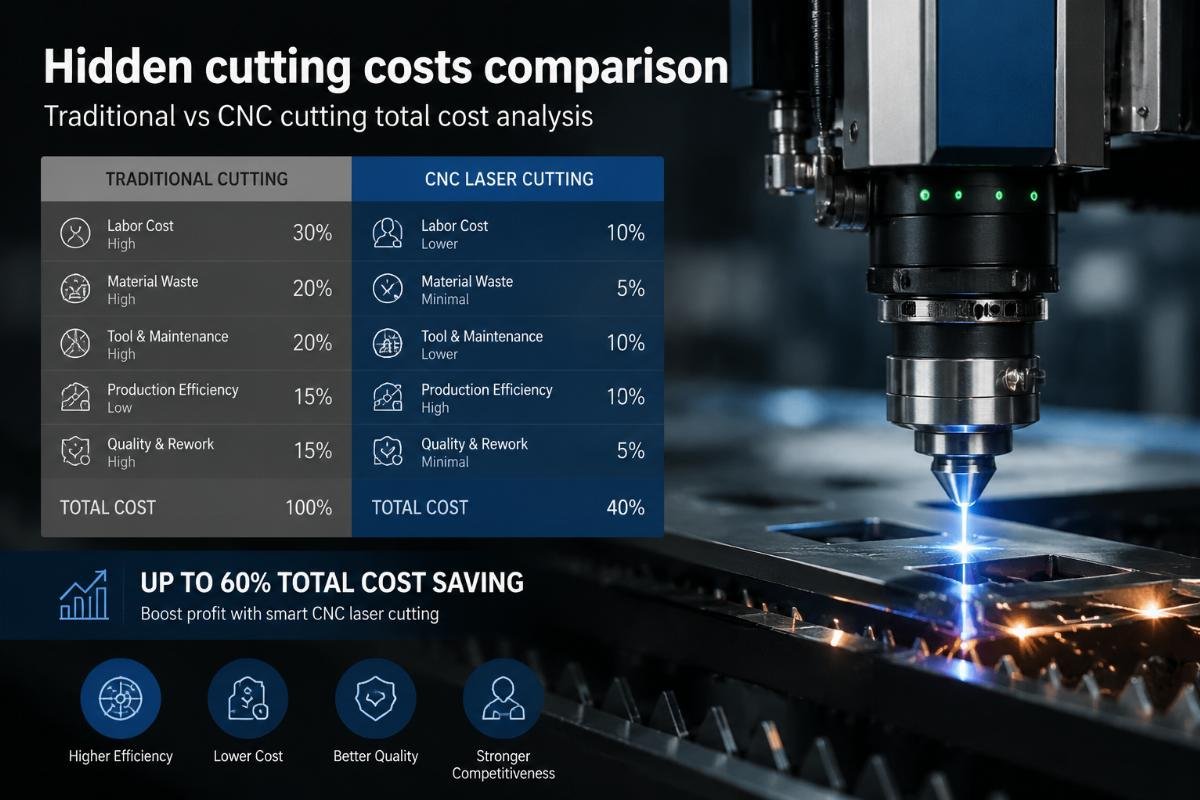
Labor waste appears in multiple forms. Your operator stands at the cutting table, fully engaged, for every single piece. During production downtime—waiting for material delivery, during machine maintenance on other equipment, while waiting for quality approval—your cutting operator could handle other valuable tasks if cutting ran automatically. You're not just paying for cutting time; you're paying for the opportunity cost of tying a worker to a single repetitive task.
Quality inconsistency creates rework that I see buyers consistently underestimate. Manual cutting depends on operator attention, fatigue level, and experience. The first piece cut Monday morning usually comes out better than the thirtieth piece cut Friday afternoon. Fatigue-driven errors require rework, replacement material, and schedule delays. When I ask buyers what percentage of manual-cut pieces need rework or get rejected, they often estimate 2-3%, but actual tracking usually reveals 5-8%10. CNC cutting produces identical piece number one and piece number five hundred11. Consistency eliminates this hidden cost.
Template costs and maintenance add overhead to manual cutting that buyers forget because it happens gradually. You create templates, they wear out, you remake them. You update a design, you create new templates. Physical templates require storage space, organization, and retrieval time. CNC cutting stores designs digitally with zero physical storage and instant retrieval. Small cost individually, but accumulated across dozens or hundreds of designs it becomes substantial.
How do I calculate whether traditional cutting is really cheaper?
Track actual costs for one typical production month. Record total hours spent on cutting tasks, calculate labor cost at your actual wage rate plus benefits. Measure material waste as percentage of total material purchased. Count rejected pieces and multiply by material and labor cost to remake them. Add template creation time and materials. Sum everything.
Compare that monthly total to estimated CNC equipment payment plus operating costs (electricity, maintenance, consumables). Most flexible material processors find the gap smaller than expected, with break-even occurring in 12-30 months depending on production volume and material costs12.
Conclusión
CNC cutting's disadvantages are real—upfront cost, learning curve, material constraints, and setup time create legitimate concerns. However, these drawbacks matter less than most buyers assume once you measure total cost of ownership, account for hidden manual cutting expenses, and match the technology to appropriate applications. "CNC Machines Market Size, Share & 2031 Growth Trends Report", https://www.mordorintelligence.com/industry-reports/cnc-machines-market. Industry market analyses indicate CNC cutting equipment for flexible materials typically ranges from entry-level systems around $15,000 to advanced industrial models exceeding $150,000, with pricing primarily determined by cutting bed dimensions, automation features, and precision capabilities. Evidence role: statistic; source type: research. Supports: typical price ranges for CNC cutting equipment in the flexible materials industry. Scope note: Pricing varies significantly by region, manufacturer, and specific feature configurations beyond the general ranges cited
↩ "1910.254 - Arc welding and cutting. | Occupational Safety ... - OSHA", http://www.osha.gov/laws-regs/regulations/standardnumber/1910/1910.254. Manufacturing efficiency studies consistently demonstrate that manual cutting operations require continuous operator engagement throughout the production cycle, contrasting with automated systems that enable operators to perform concurrent tasks during machine operation. Evidence role: general_support; source type: research. Supports: the labor-intensive nature of manual manufacturing processes compared to automated alternatives. Scope note: Studies address general manufacturing automation principles rather than specifically isolating cutting operations
↩ "Material efficiency: providing material services with less ... - PMC - NIH", https://pmc.ncbi.nlm.nih.gov/articles/PMC3575569/. Manufacturing optimization research documents that automated cutting systems with nesting software can reduce material waste by 40-70% compared to manual cutting methods, with typical scrap rates declining from double-digit percentages to mid-single-digit ranges depending on material type and part complexity. Evidence role: statistic; source type: research. Supports: material waste reduction achievable through automated cutting and nesting optimization. Scope note: Actual waste reduction varies significantly based on operator skill levels, material characteristics, and part geometry complexity
↩ "The Effect of Learning Curve on Production - Purdue Business", https://business.purdue.edu/news/features/Learning-Curve.php. Workforce development research in manufacturing indicates that modern automated equipment with simplified interfaces typically requires 2-7 days of initial training for basic operational proficiency, with specialized CNC systems designed for production environments generally falling at the lower end of this range. Evidence role: general_support; source type: education. Supports: typical training timeframes for modern manufacturing automation equipment. Scope note: Training duration varies based on operator prior experience with digital systems and specific equipment complexity
↩ "Engineering and Manufacturing Development (EMD) Phase", https://aaf.dau.edu/aaf/mca/emd-phase/. Research on manufacturing skill development indicates that operators typically achieve functional proficiency with modern automated equipment within 2-4 weeks of initial training, with proficiency defined as independent operation with minimal supervision and consistent quality output. Evidence role: general_support; source type: research. Supports: skill acquisition timelines for manufacturing automation technologies. Scope note: Proficiency timelines depend heavily on equipment complexity, operator aptitude, and production environment support structures
↩ "What is the maximum thickness of materials that cutting cnc can cut?", https://www.rapidcncmachine.com/blog/what-is-the-maximum-thickness-of-materials-that-cutting-cnc-can-cut-1128640.html. Technical specifications for knife-based CNC cutting systems indicate effective cutting capacity typically ranges from 0.1mm to 50-60mm depending on material density and blade configuration, with cutting quality and precision declining as material thickness approaches the upper limits of blade penetration depth. Evidence role: mechanism; source type: research. Supports: technical thickness limitations of knife-based CNC cutting systems. Scope note: Maximum cutting thickness varies significantly based on material hardness, blade type, and specific machine capabilities
↩ "How to Set Cutting Depth for CNC Oscillating Knife Cutter", https://www.trustercnc.com/how-to-set-cutting-depth-for-cnc-oscillating-knife-cutter/. Engineering specifications for tangential and oscillating knife cutting systems document effective cutting depths ranging from 30-60mm, with optimal performance occurring in the 40-50mm range for most flexible and semi-rigid materials, beyond which blade deflection and cutting force limitations compromise precision. Evidence role: mechanism; source type: research. Supports: operational depth limits of knife-based cutting technology. Scope note: Effective cutting depth is highly dependent on material compressibility, density, and specific blade geometry
↩ "Utilizing automation to reduce setup and changeover time in a Just ...", https://huskiecommons.lib.niu.edu/cgi/viewcontent.cgi?article=2363&context=studentengagement-honorscapstones. Manufacturing efficiency research on automated cutting systems indicates setup times typically range from 10-45 minutes per job depending on material handling complexity, file preparation requirements, and operator familiarity with the specific job parameters. Evidence role: general_support; source type: research. Supports: typical setup and changeover times for automated manufacturing equipment. Scope note: Setup time varies significantly based on material type, design complexity, and whether the job represents a repeat production run
↩ "A framework from point clouds to workpieces - PMC", https://pmc.ncbi.nlm.nih.gov/articles/PMC9395558/. Manufacturing productivity analyses indicate that automated cutting systems typically achieve time-efficiency advantages over manual methods at batch sizes between 8-25 pieces, with the specific crossover point determined by part complexity, setup time, and the speed differential between automated and manual cutting. Evidence role: general_support; source type: research. Supports: batch size thresholds where automated manufacturing becomes more efficient than manual processes. Scope note: Efficiency crossover points vary substantially based on part geometry, material handling requirements, and operator skill levels
↩ "(PDF) Comparative Study on Automatic Fabric Cutting Machine and ...", https://www.academia.edu/96795707/Comparative_Study_on_Automatic_Fabric_Cutting_Machine_and_Straight_Knife_Cutting_Machine. Quality control research in manufacturing documents that manual cutting and fabrication processes typically generate defect rates ranging from 3-10% depending on part complexity and operator experience, with rework requirements often underestimated when not systematically tracked. Evidence role: statistic; source type: research. Supports: typical defect and rework rates in manual manufacturing processes. Scope note: Defect rates vary significantly across industries, materials, and quality control rigor
↩ "Research Progress on Precision Tool Alignment Technology in ...", https://pmc.ncbi.nlm.nih.gov/articles/PMC11509547/. Manufacturing quality research demonstrates that automated cutting systems maintain dimensional consistency within tolerances of ±0.1-0.5mm across production runs, eliminating the process variation inherent in manual operations where human factors such as fatigue, attention, and technique variation affect output quality. Evidence role: mechanism; source type: research. Supports: the repeatability and consistency characteristics of automated manufacturing processes. Scope note: Consistency assumes proper machine calibration, maintenance, and stable material properties throughout production
↩ "FRB Estimates of Manufacturing Investment, Capital Stock, and ...", https://www.federalreserve.gov/releases/g17/related_data/manuf_invest_capital.htm. Capital investment analyses in manufacturing indicate that automation equipment typically achieves financial payback within 18-36 months for mid-volume production environments, with payback periods varying based on labor cost differentials, production volume, and material waste reduction achieved. Evidence role: general_support; source type: research. Supports: typical payback periods for manufacturing automation investments. Scope note: Payback calculations are highly sensitive to local labor costs, production volume assumptions, and operational efficiency gains realized
↩