





-
 Courier delivery
-
 DHL Courier delivery
-
 Warranty 1 year
-
 Free 30-Day returns

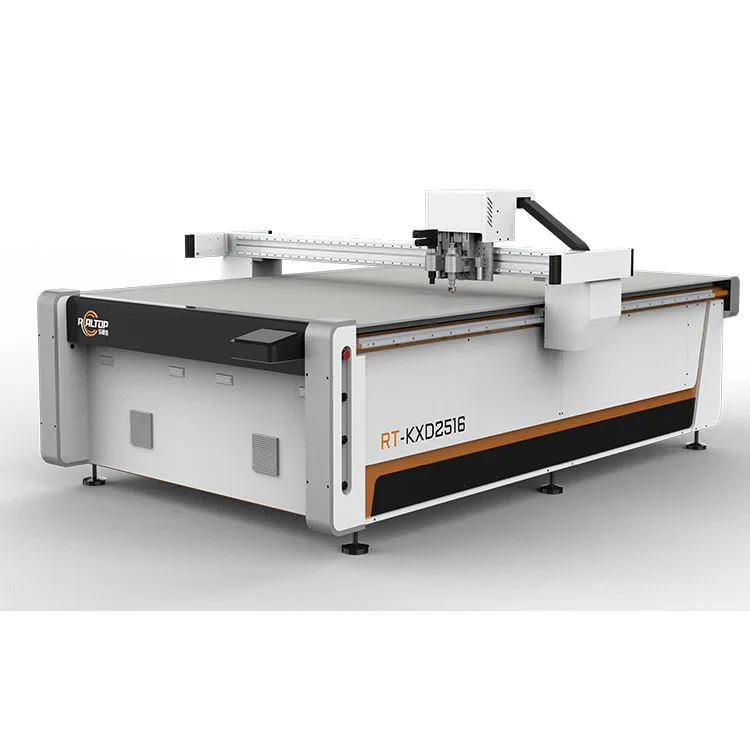
Material-Matched Tooling Specification — every RT–R2513 unit ships with a cutting head and vacuum zoning plan built around the buyer’s actual board grade, verified on sample material before the order is placed.
Technical Specifications
| Parameter | Value |
|---|---|
| Model | RT–R2513 |
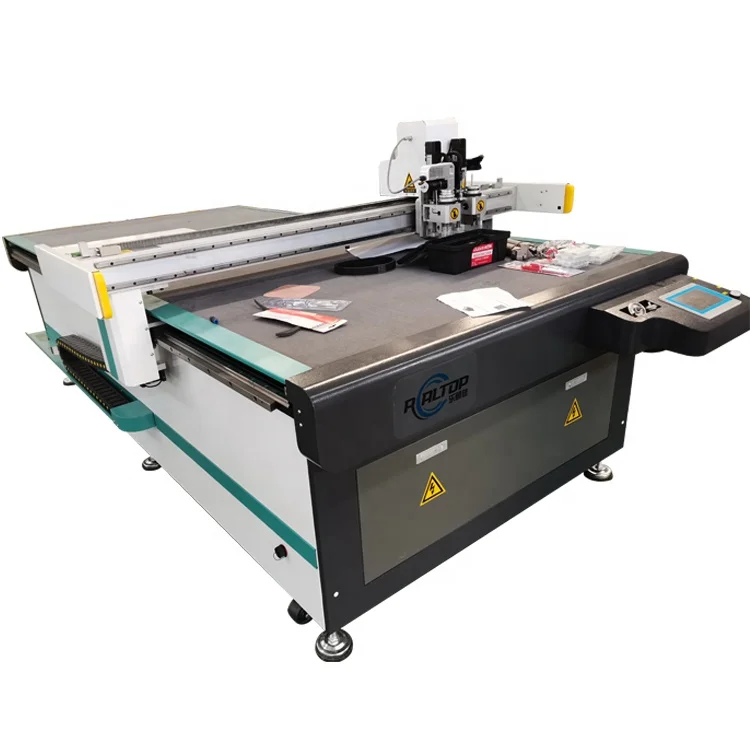
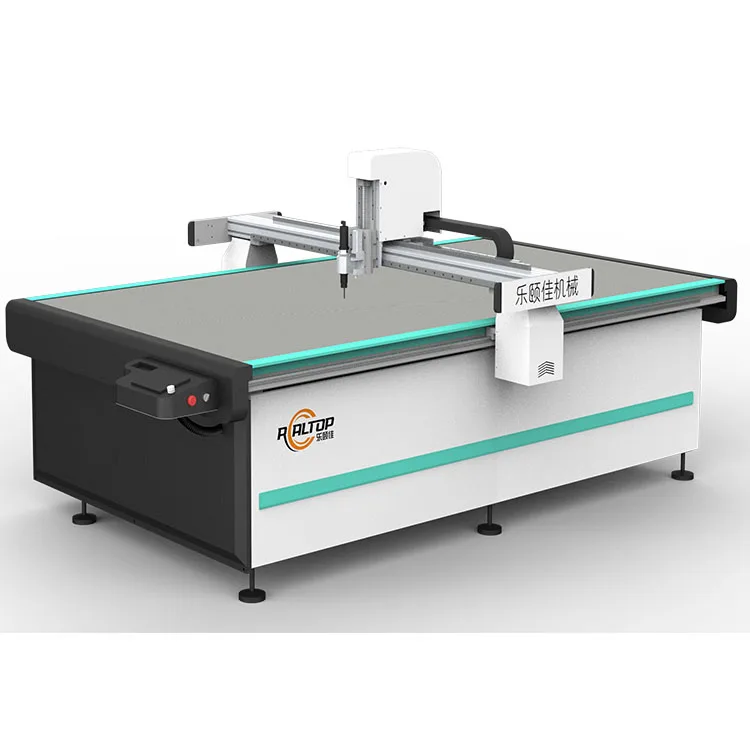
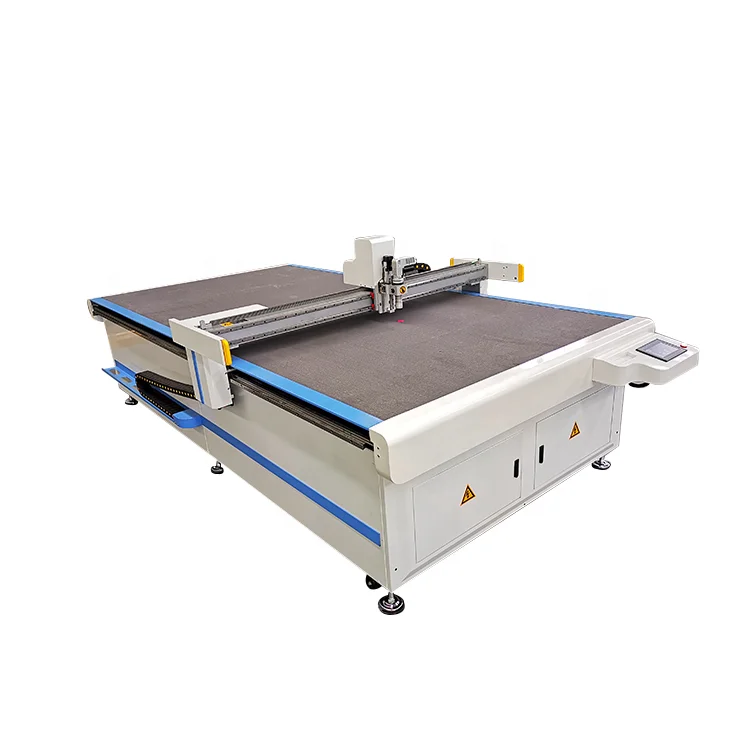
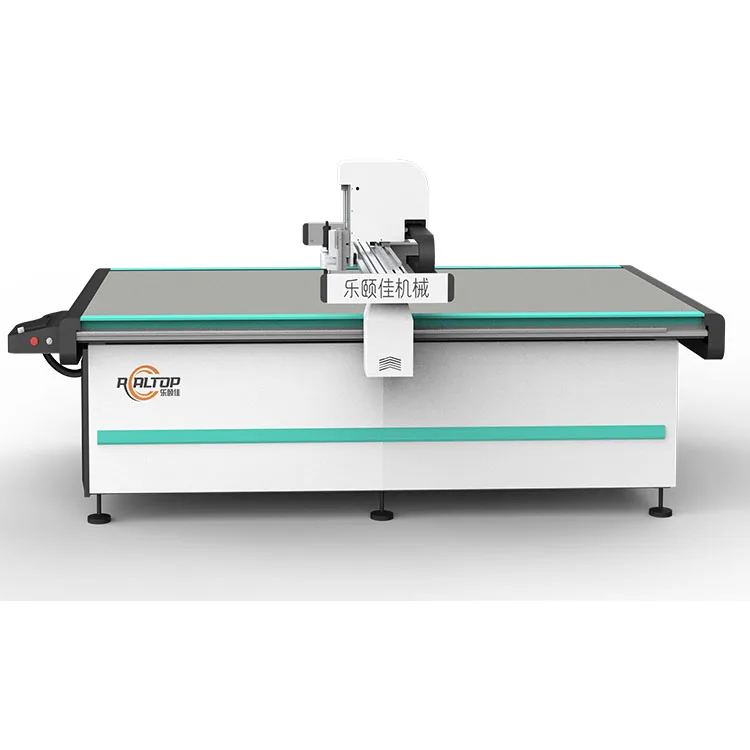
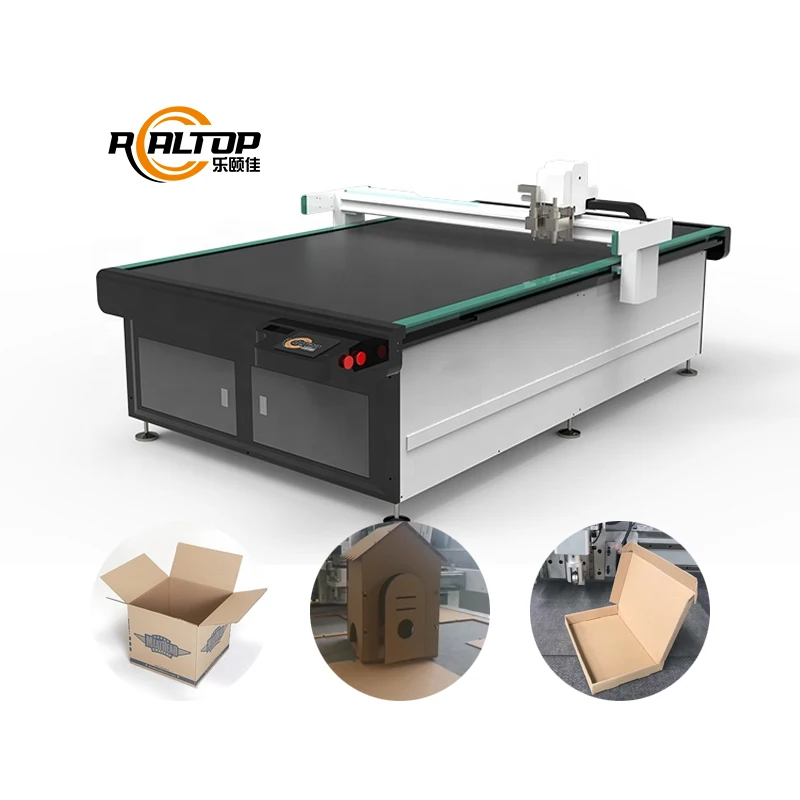
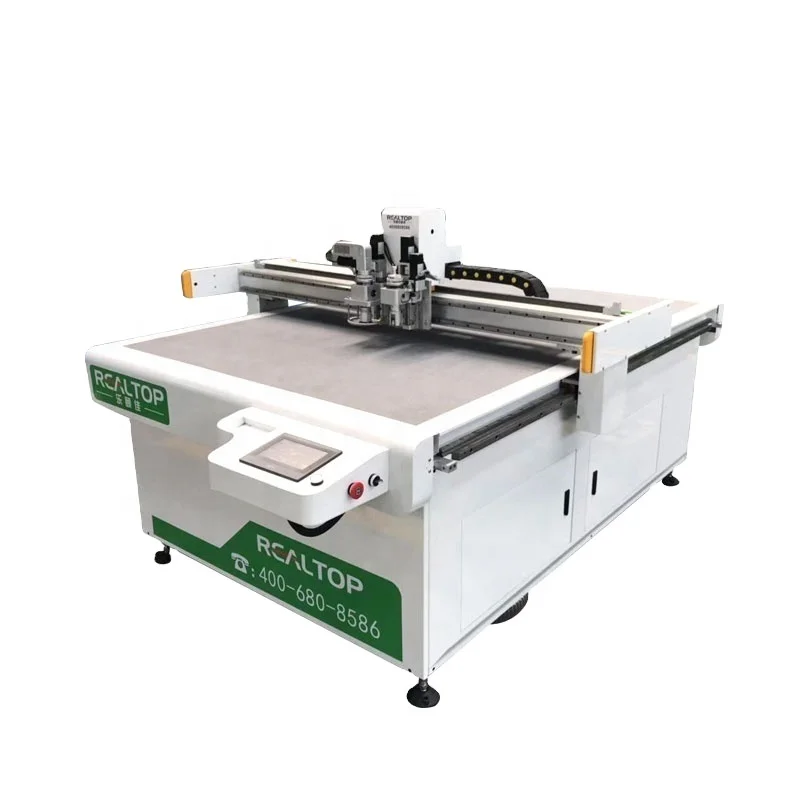
| Product Type | CNC Cardboard Cutting Machine with Oscillating Knife |
| Working Area | 2500 × 1300 mm |
| Machine Dimensions | 3550 × 1910 × 1400 mm |
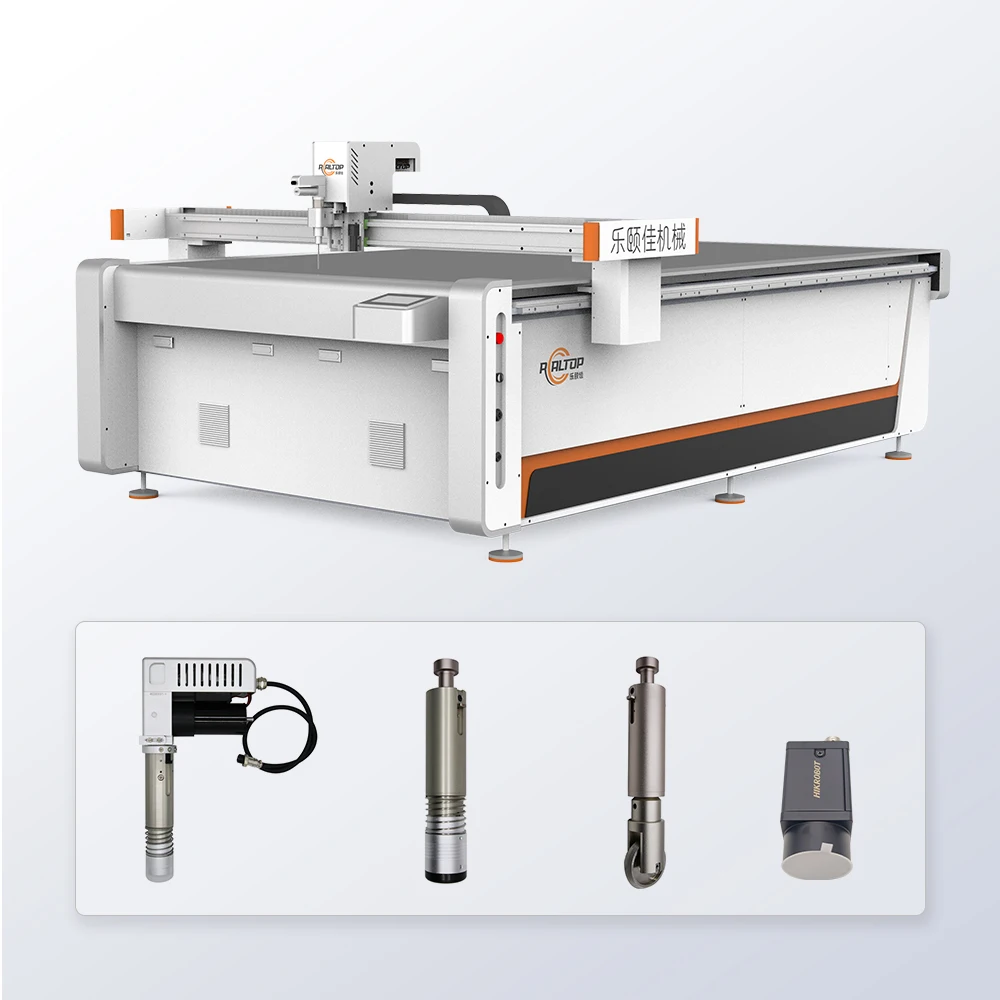
| Cutting Tools | Oscillating knife, creasing tool, kiss-cut knife, round punch |
| Maximum Cutting Thickness | ≤ 18 mm (varies by material density and flute structure) |
| Repeatability | < 0.05 mm |
| Rated Power | 9 kW |
| Vacuum Pump | 7.5 kW |
| Fixing Method | Vacuum system with aluminum alloy honeycomb table and zone-following |
| Guide Rail | Taiwan Hiwin imported straight-line square guide |
| Transmission | Rack transmission |
| Frame | Thick square seamless steel structure, high-temperature treated |
| Profile Formats | DXF, OLT, PDF, AI |
| Data Transfer | Ethernet port |
| Voltage | 380 V (configurable for target market) |
| Safety Devices | Infrared sensors, emergency stop |
| System Language | English, Russian, Italian, Chinese; special languages customizable |
| Software | Professional carton nesting software with automatic layout |
Application Suitability
| Application | Material or Output |
|---|---|
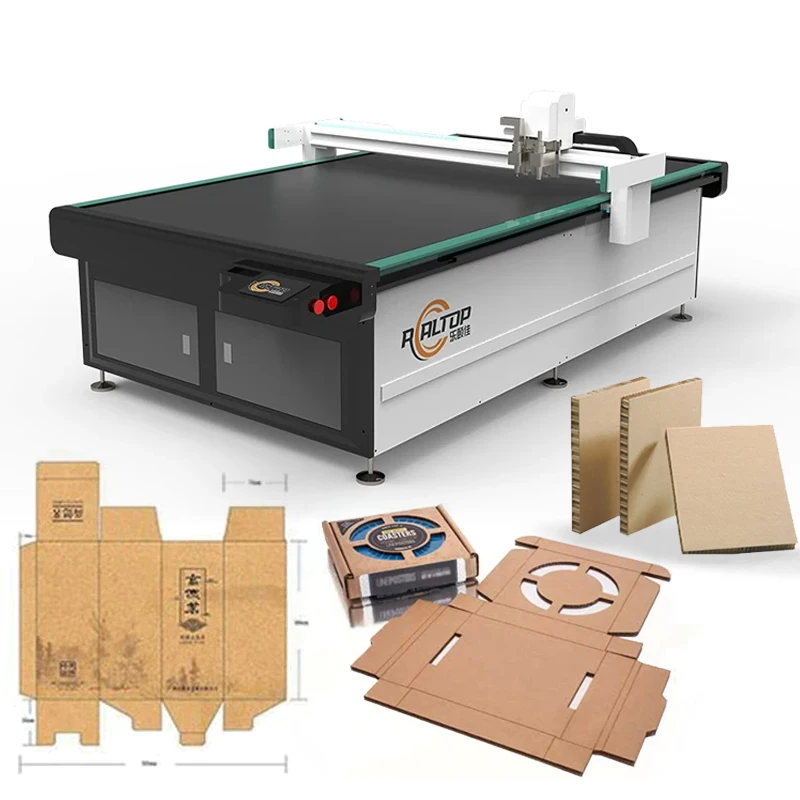
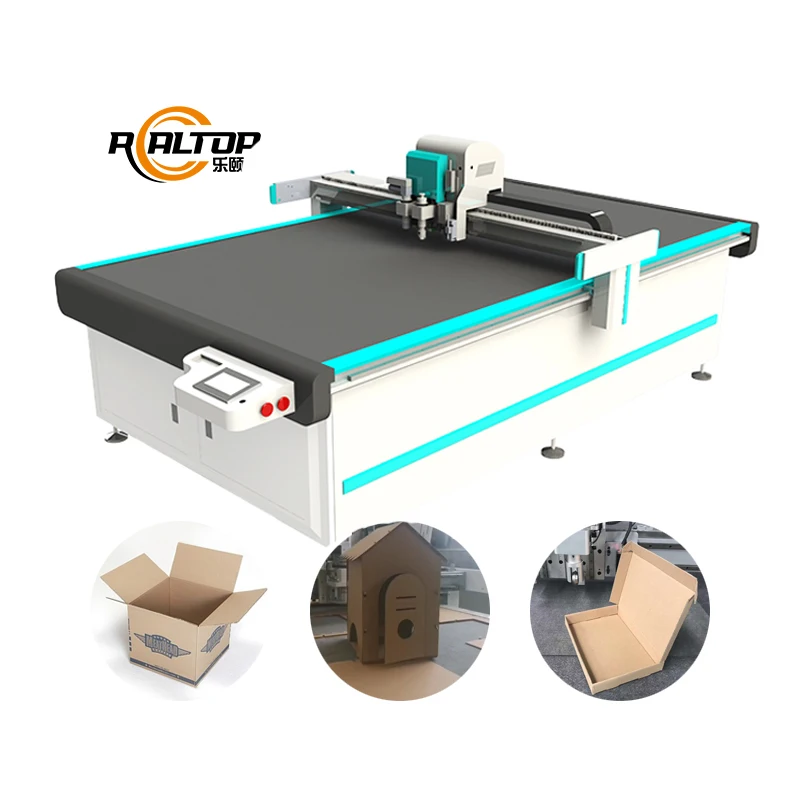
| Packaging sample making and prototyping | Grey board, corrugated board, folding carton stock across multiple grades and thicknesses |
| Short-run carton and box production | Single-face and double-face corrugated, kraft paper board, coated carton board |
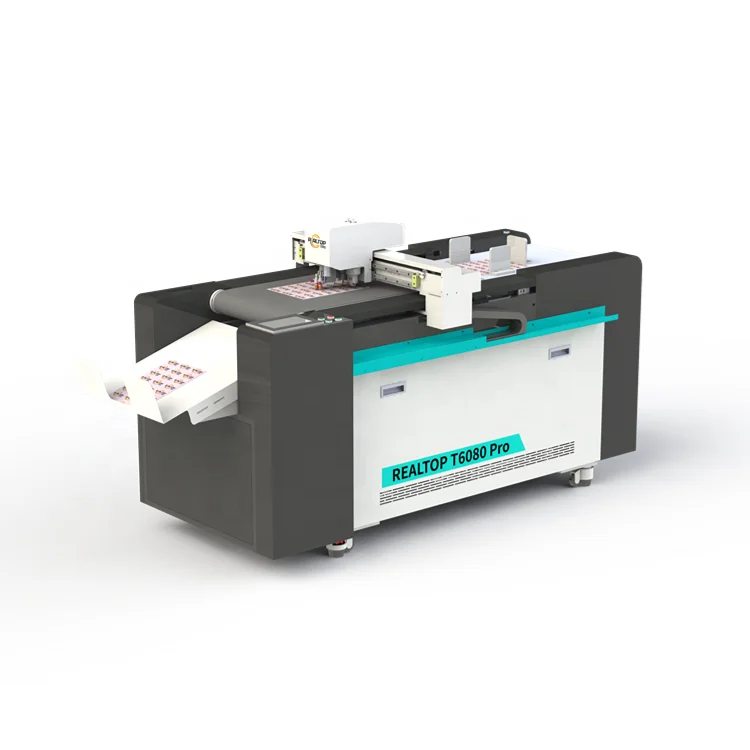
| Sticker and label contour cutting | Self-adhesive vinyl, PP paper, sticker sheets with printed marks |
| Gift box and premium packaging | Laminated paper board, thick grey board up to stated thickness limit |
| Express and logistics carton making | Standard corrugated grades used in shipping and fulfillment packaging |
What "Cutting Depth Ratings" Leave Out on a CNC Cardboard Cutting Machine Manufacturer
The stated 18 mm capacity is a starting point, not a guarantee across every board grade you run.
A vibration knife set for standard corrugated may stall or drag through high-density grey board, leaving ragged edges and crushed flute structure at the cut line. I once watched a packaging line sit idle for nearly a week because the machine was specified on sheet size alone while the buyer’s actual stock was denser than what the test sample assumed. The CNC cardboard cutting machine manufacturer needs to verify cutting depth against your specific board grade, density, and flute type — not just publish a maximum number on a spec sheet [NEED_CITE: cutting force requirements for corrugated versus dense grey board grades].
Tool Head Selection Drives Edge Quality
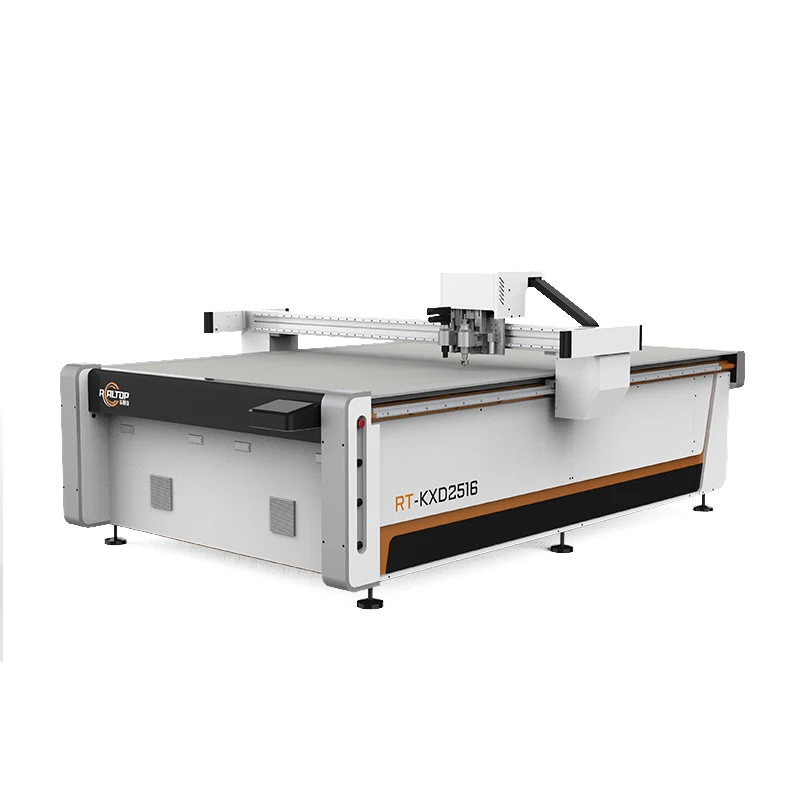
The RT–R2513 carries four tool options in a single work unit: oscillating knife for through-cuts, creasing tool for fold lines, kiss-cut knife for label stock, and round punch for registration or ventilation holes. Each tool engages a different material response. An oscillating knife slices through corrugated cleanly at production speed, while a creasing wheel compresses the board fiber without breaking the surface — both operations happening in one pass eliminates the secondary die-station bottleneck that sample rooms commonly face. The configuration must be chosen around what you actually produce, not a default factory setting.
Vacuum Zoning and Small-Part Stability
The aluminum alloy honeycomb table uses zone-following adsorption, meaning only the active cutting zone draws vacuum rather than the entire surface. For packaging work, this matters when cutting small carton blanks or label sheets where full-table suction would waste energy without improving hold-down. The 7.5 kW vacuum pump supports this zoning approach, keeping flat material registration across the 2500 × 1300 mm working area even when cutting narrow gasket-style profiles or intricate box window cutouts. A CNC cardboard cutting machine manufacturer should confirm which zone map fits your typical blank size before building the table [NEED_CITE: vacuum hold-down requirements for small-format digital cutting].
How Core Parameters Translate to Production Results
The < 0.05 mm repeatability comes from imported Hiwin square guide rails paired with rack transmission, which together resist the lateral deflection that belt-driven systems show when the knife head changes direction at speed. For creasing work, this matters because a fold line that wanders even slightly from the printed score mark produces a box that does not assemble square. The 9 kW rated power covers the oscillating knife motor, vacuum pump load, and servo drives simultaneously without tripping under continuous duty. Ethernet-based data transfer moves large nesting files from the design station to the machine controller without the file corruption that older USB workflows occasionally introduce. The professional carton nesting software calculates material yield automatically, which directly affects board cost per box when running mixed-size orders from a single sheet.
The Cost of Skipping Material Verification
When the wrong tool head meets an untested board grade, the damage shows up as crushed flute edges on corrugated stock or delamination on laminated carton board — both of which render the blank unusable. I have seen buyers accept a machine based on a showroom demo cutting standard E-flute, only to discover on delivery that their daily production stock — a heavier B-flute with coated liner — required a different blade geometry and oscillation frequency. The downtime cost of reconfiguring on-site, plus the wasted board from failed cuts, routinely exceeds what a pre-shipment sample test would have prevented [NEED_CITE: material testing protocols for digital cutting equipment procurement].
Why Source This CNC Cardboard Cutting Machine Manufacturer Directly
The design and production of both knife and laser cutting systems happen under one roof, so a buyer can compare cutting methods against their actual material before locking in a configuration. Tool head and table zoning are specified per material type and daily volume rather than shipped as a default package. CCD camera positioning is available for printed contour work on sticker and label stock, with tracking speed verified against your press output. Software compatibility — whether you run DXF from AutoCAD or AI files from Illustrator — is confirmed before the order, not discovered during installation. Sample cutting on your own board stock is standard procedure, producing a documented report that covers edge quality, crease depth, and achievable feed rate. The RT–R2513 carries a CNC cardboard cutting machine manufacturer warranty of one year, excluding consumables like felt belts and blades.
Documentation & Verification
- Electrical schematic with confirmed voltage and plug type for your facility
- Tool head and vacuum zone configuration list matched to your board grade
- Sample cutting report on your actual cardboard or label stock before shipment
- Software licence documentation with verified file format compatibility note
- Operation and maintenance manual in your chosen control language
- Factory test record showing repeatability and creasing accuracy before dispatch
Installation, Commissioning & Support
- The 3550 × 1910 × 1400 mm footprint requires level concrete flooring with clearance for sheet loading on at least two sides
- 380 V three-phase supply with a dedicated circuit rated above the 9 kW machine load plus the 7.5 kW vacuum pump
- Rack transmission and Hiwin rails arrive pre-aligned; on-site leveling of the honeycomb table is the primary setup task
- First-run parameter tuning covers oscillation frequency, knife depth, and creasing pressure for your specific board grades
- Operator training includes nesting software workflow, tool change procedure, and vacuum zone map configuration
- Ten oscillating blades ship with the machine; felt belt and blade replenishment intervals are documented in the maintenance manual
Before You Send an Inquiry
Provide the exact board grades, flute types, and thickness range your facility runs daily, along with typical blank dimensions and expected volume. Share your current file format workflow and the CAD or design software you use upstream. Specify your local voltage, frequency, and preferred control panel language so the electrical and interface configuration can be confirmed before production begins.
Frequently Asked Questions
Q: How is cutting thickness verified for my specific cardboard grade?
A: The stated ≤ 18 mm capacity varies with material density and flute structure. Before any order, we run your actual board stock on the RT–R2513 and produce a sample cutting report documenting edge quality, achievable feed rate, and crease depth. This ensures the oscillating knife configuration matches your daily production materials rather than a generic laboratory sample.
Q: Which tool head do I need for mixed packaging work?
A: The RT–R2513 supports oscillating knife, creasing tool, kiss-cut knife, and round punch in one unit. Oscillating knife handles through-cuts on corrugated and grey board, the creasing tool compresses fold lines without breaking the surface, and the kiss-cut knife scores labels without cutting the backing. Configuration is confirmed against your product mix during the sample cutting phase.
Q: Will the software import my existing DXF and AI files correctly?
A: The professional carton nesting software accepts DXF, OLT, PDF, and AI formats. File format compatibility is tested with your actual design files before order confirmation, and a compatibility note is included in the documentation package. This prevents workflow disruption when transitioning from your current system to the RT–R2513.
Q: What electrical and language specifications ship with the machine?
A: Standard voltage is 380 V, but configuration is confirmed for your local supply and plug type during the order process. The control system supports English, Russian, Italian, and Chinese, with additional languages customizable. An electrical schematic and language confirmation document are provided before the machine enters production.
Q: How does the vacuum table handle small carton blanks that tend to lift?
A: The aluminum alloy honeycomb platform uses zone-following adsorption, activating vacuum only in the active cutting area. The zone map is configured around your typical blank size so that small parts receive concentrated hold-down without the entire 2500 × 1300 mm surface drawing power. Vacuum zoning suitability is verified during the sample cutting report stage.
You may also like

商品评价
Clear filtersThere are no reviews yet.