




-
 Courier delivery
-
 DHL Courier delivery
-
 Warranty 1 year
-
 Free 30-Day returns

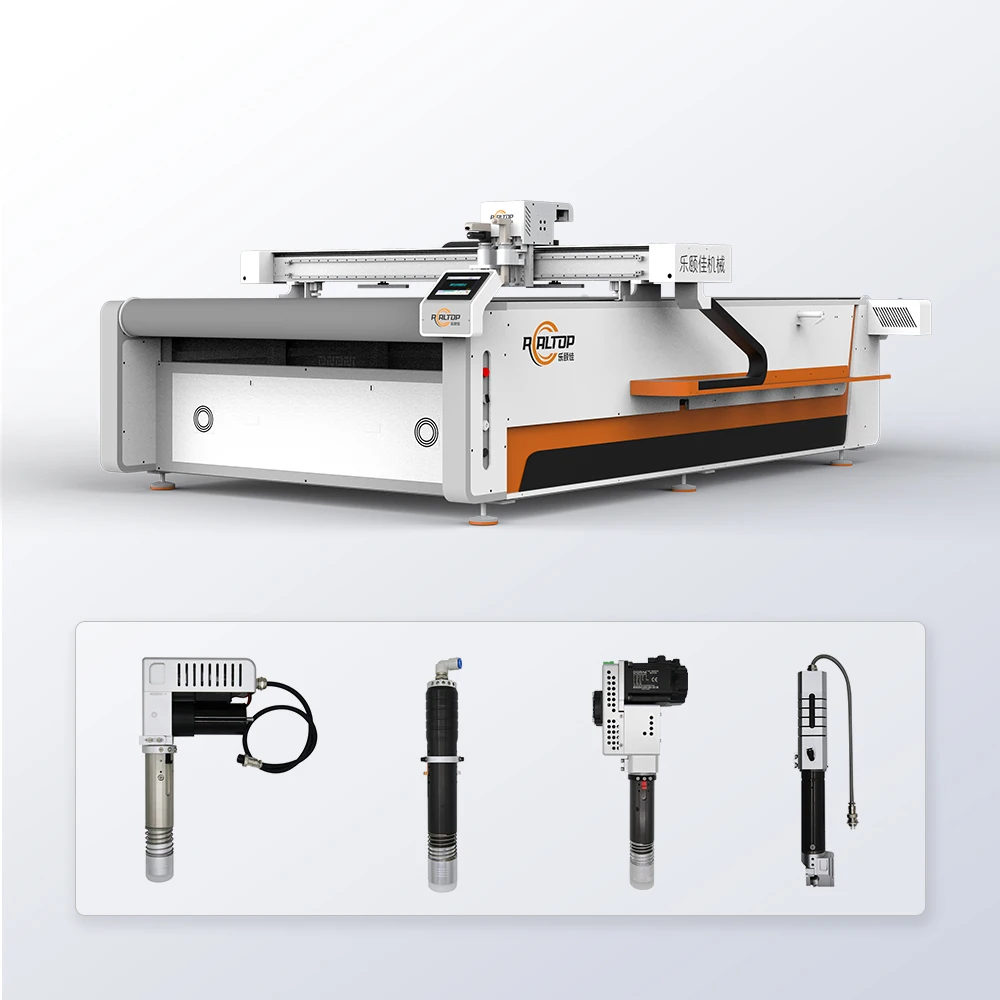
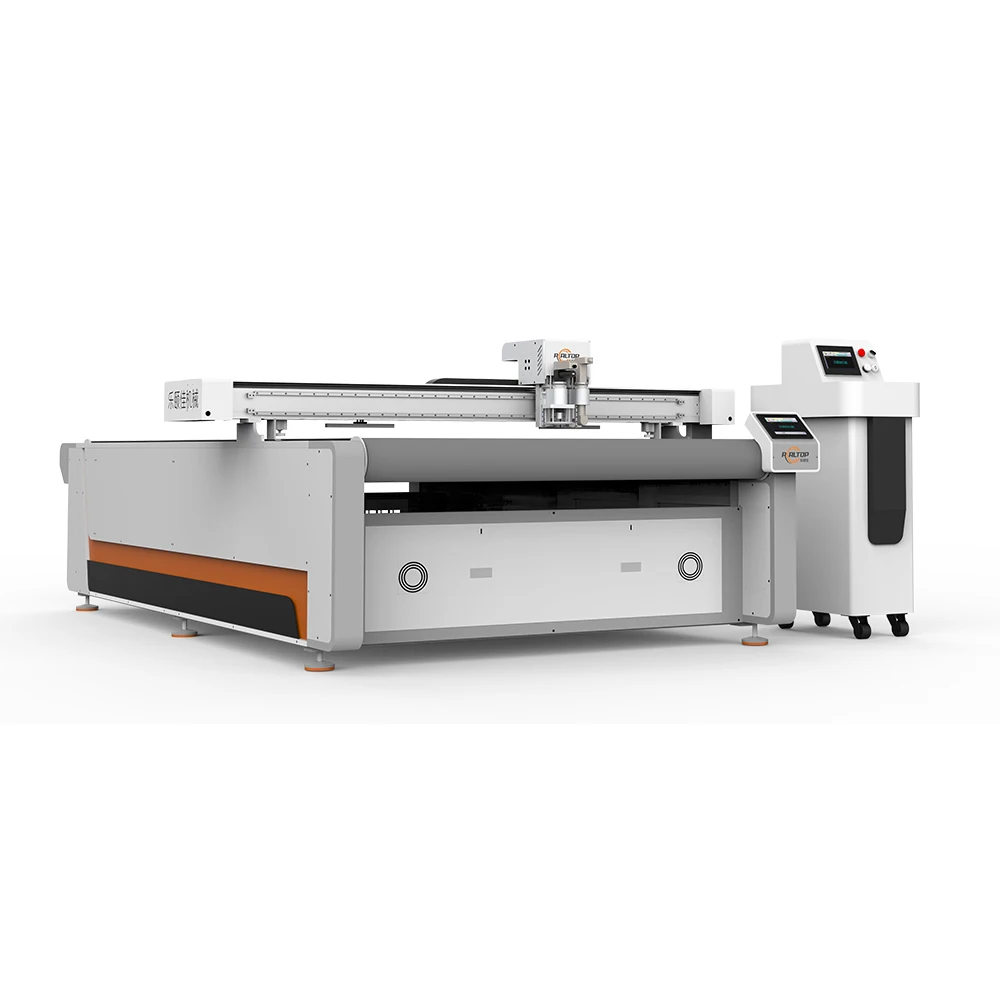
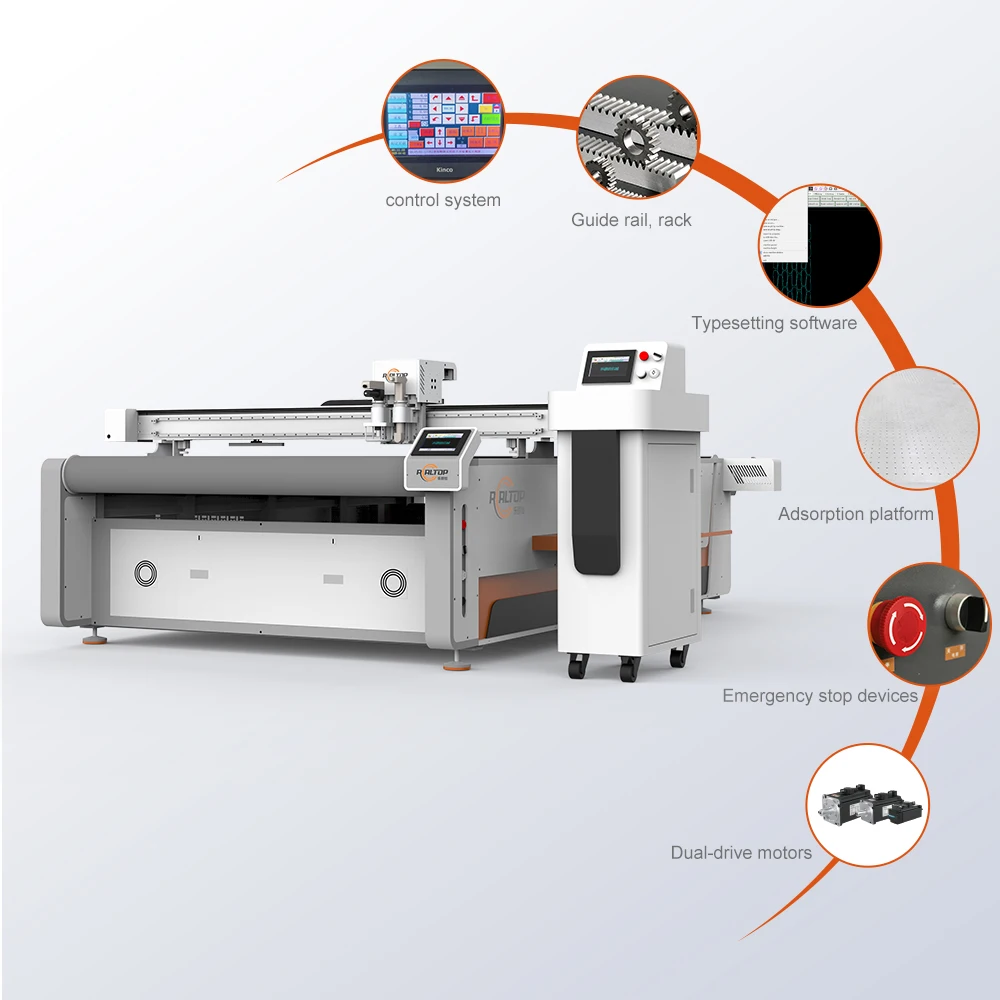
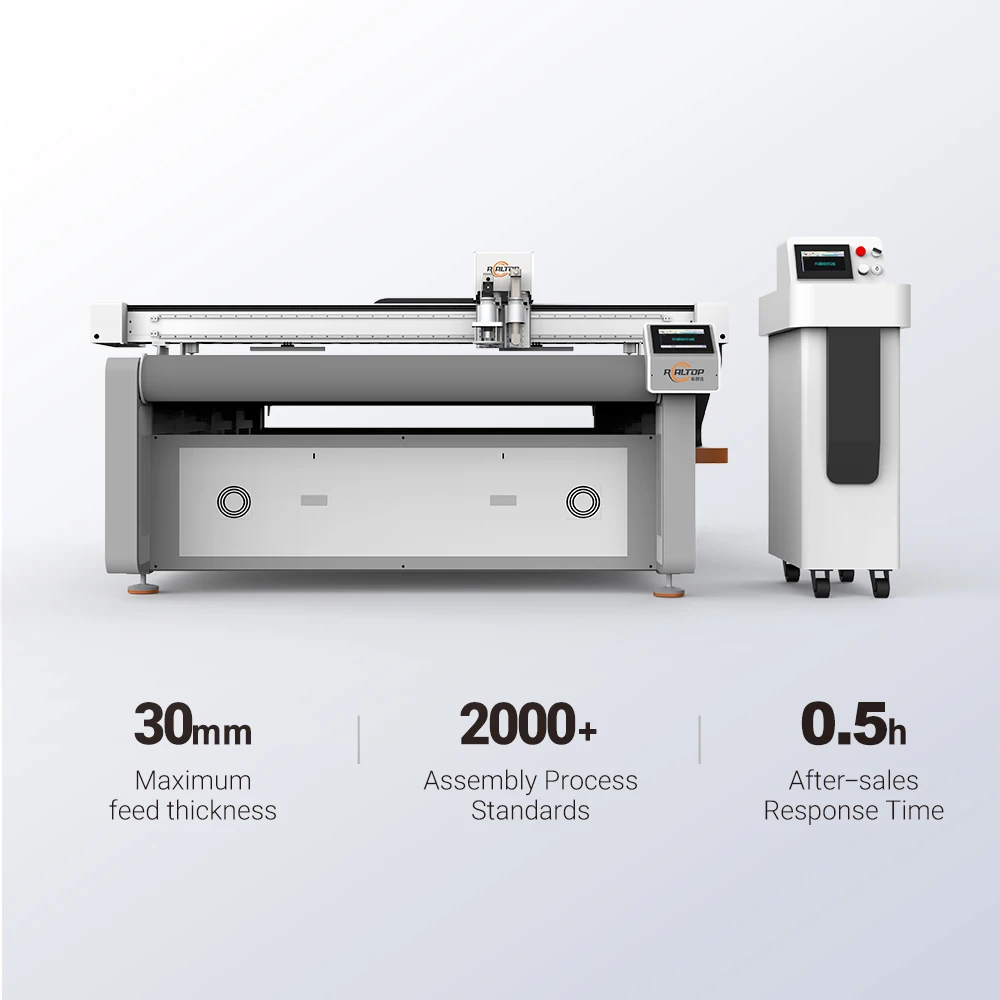
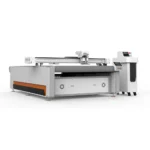
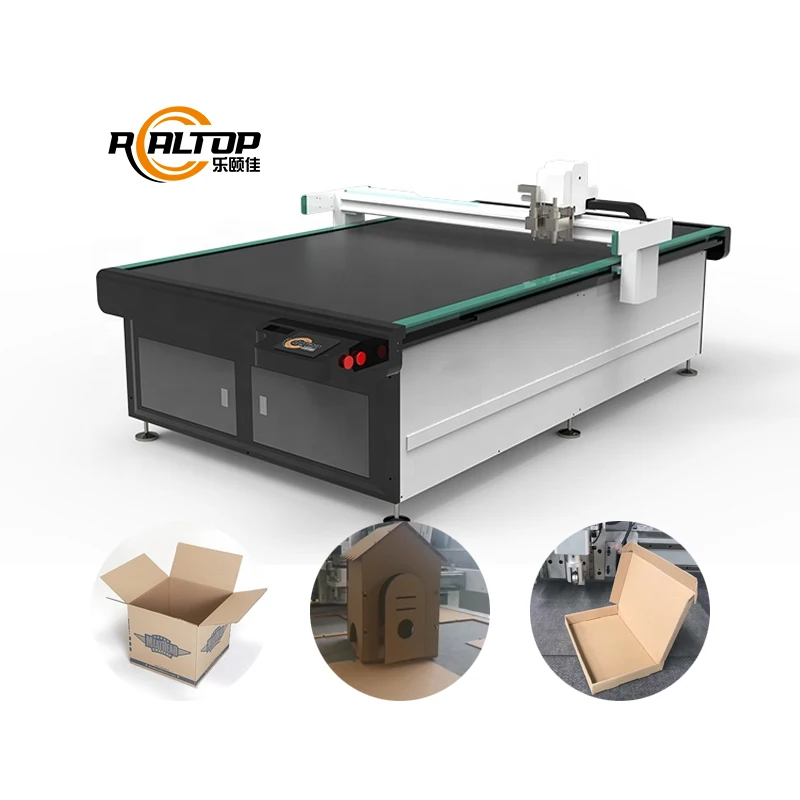
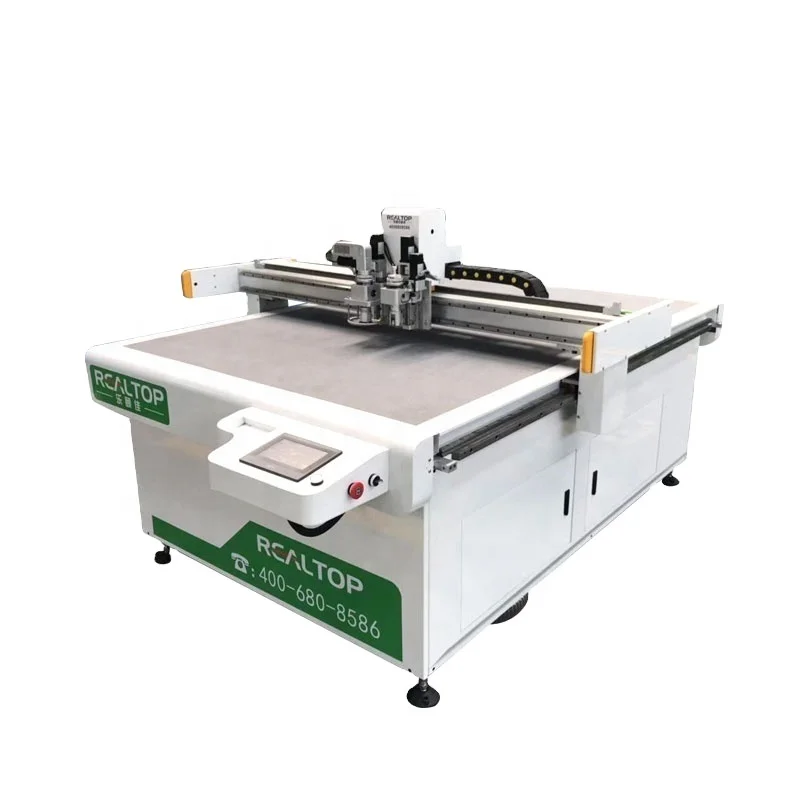
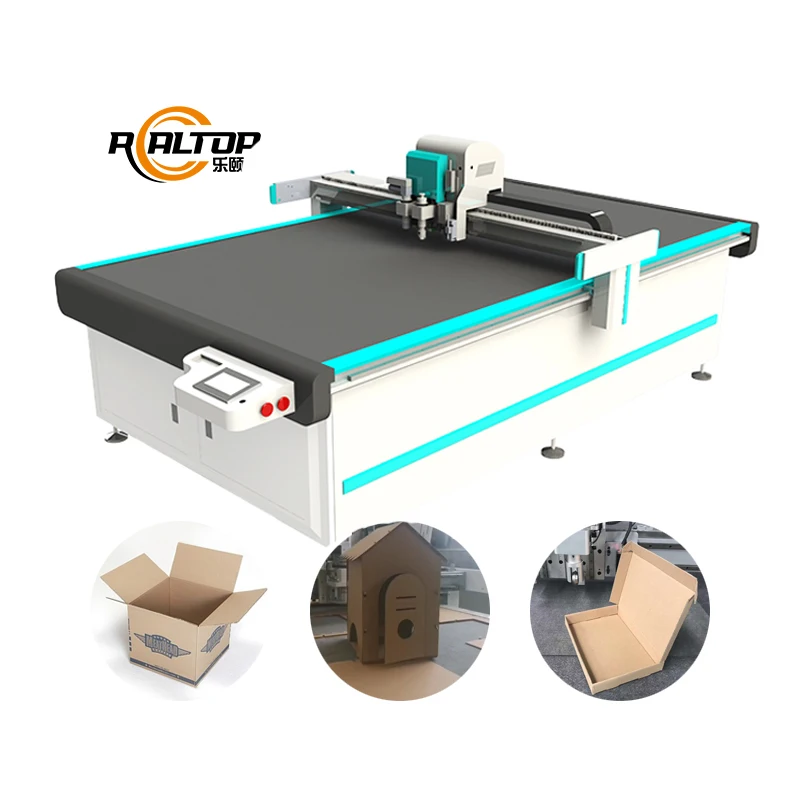
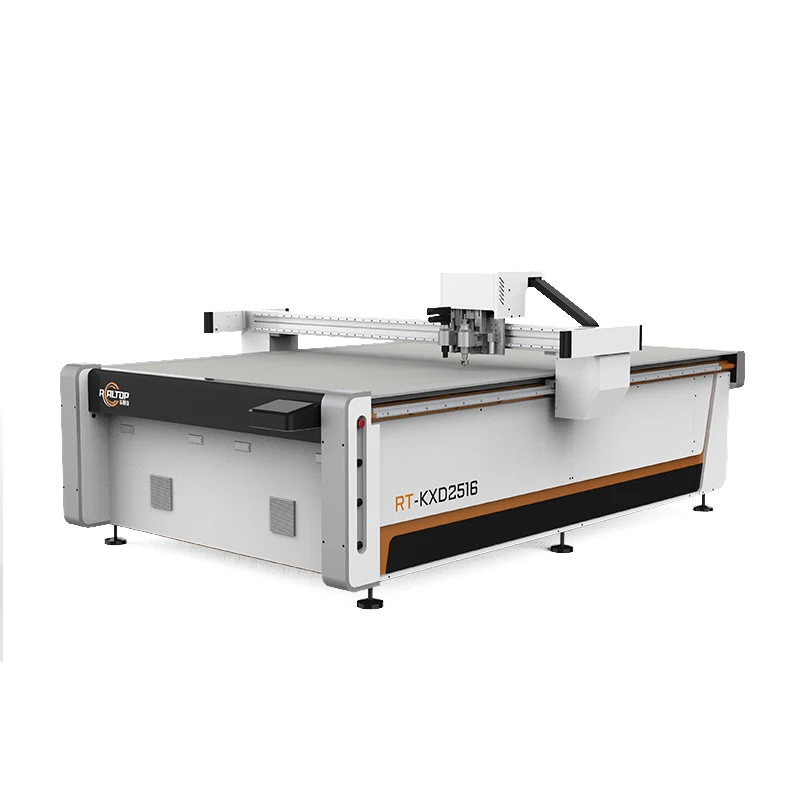
Thick-walled frame engineering — The RT-D2516/RT-S2516 chassis is welded from seamless steel, tempered at high temperature and finished on a CNC machining center, eliminating bed deformation under continuous vacuum load.
Technical Specifications
| Parameter | Value |
|---|---|
| Model | RT-D2516/RT-S2516 |
| Product Type | CNC Oscillating Knife Cutting Machine |
| Working Area | 1600×2500 mm |
| Overall Dimensions | 3450×2300×1250 mm |
| Rated Power | 9 kW |
| Voltage | 380V ±10% (customizable) |
| Table Type | Flat working table or auto-feeding conveyor table |
| Cutting Speed | 200–800 mm/s (varies with material) |
| Cutting Thickness | ≤100 mm (material-dependent) |
| Translational Velocity | 800–2000 mm/s |
| Repeated Accuracy | ≤0.1 mm |
| Transmission System | Digital servo motor, linear guide, synchronous belt, ball screw |
| Servo Motor Options | Delta (China) or Panasonic (Japan) |
| Vacuum Pump | 7.5 kW, aviation aluminum shell with silencer sponge |
| Control Panel | Touch screen, multi-language |
| Software Compatibility | PLT, DXF, AI; auto nesting |
| Safety Devices | Infrared sensing, beam anti-collision sensors, emergency stop with in-situ resume |
Application Suitability
| Application | Material or Output |
|---|---|
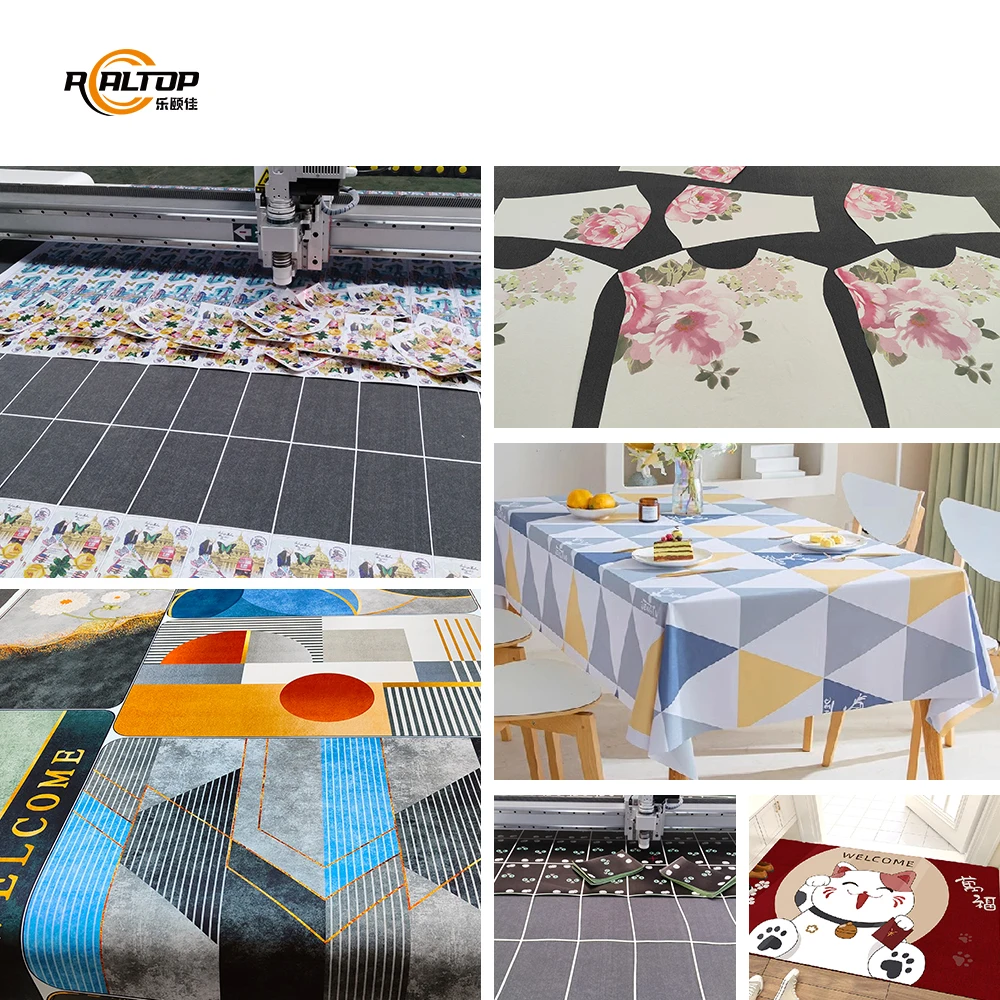
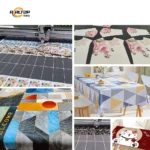
| Garment and apparel production | Woven shirt fabric, knitted textiles, lining material |
| Footwear manufacturing | Leather, synthetic leather, PU, EVA insole and upper stock |
| Automotive interior trimming | Headliner fabric, seat upholstery, carpet and floor mat |
| Soft home furnishings | Sofa upholstery fabric, curtain textile, cushion foam |
| Packaging sample making | Corrugated board, card stock, folding carton stock |
| Composite and gasket fabrication | PTFE, ETFE, XPE, PVC, PP, PE sheet and roll |
Why Buyers Specify Working Area First and Material Compatibility Last
Material behavior under the knife determines whether a cutting table produces saleable parts or scrap.
I watched a South American apparel buyer receive a flatbed cutter that sliced standard cotton cleanly on our test bench. Back in his workshop, the same blade dragged through elastic jersey, stretching the ply and distorting every pattern piece. Hundreds of garments went straight to waste. The machine was rated for the area but not the material. [NEED_CITE: oscillating knife cutting parameters vary by fabric elasticity and ply count]
A CNC oscillating knife cutting machine factory that ships on footprint alone misses the variables that matter: fabric tension, tool head geometry, vacuum zoning for small pieces, and whether the CCD system can track printed registration marks at production speed.
Frame Rigidity and Long-Term Cutting Accuracy
The bed of the RT-D2516/RT-S2516 starts as thick-walled seamless steel tube, welded into a single structure and stress-relieved through high-temperature tempering. Every mounting surface is then finish-machined on a CNC machining center. This sequence matters because vibration from an oscillating knife at 800 mm/s translational velocity transmits cyclical load into the frame. A bed that flexes even fractions of a millimeter accumulates positioning drift across an eight-hour shift. The Taiwan Hiwin linear rails maintain the ≤0.1 mm repeated accuracy only when the underlying structure does not deflect.
Tool Head Selection Drives Edge Quality More Than Blade Speed
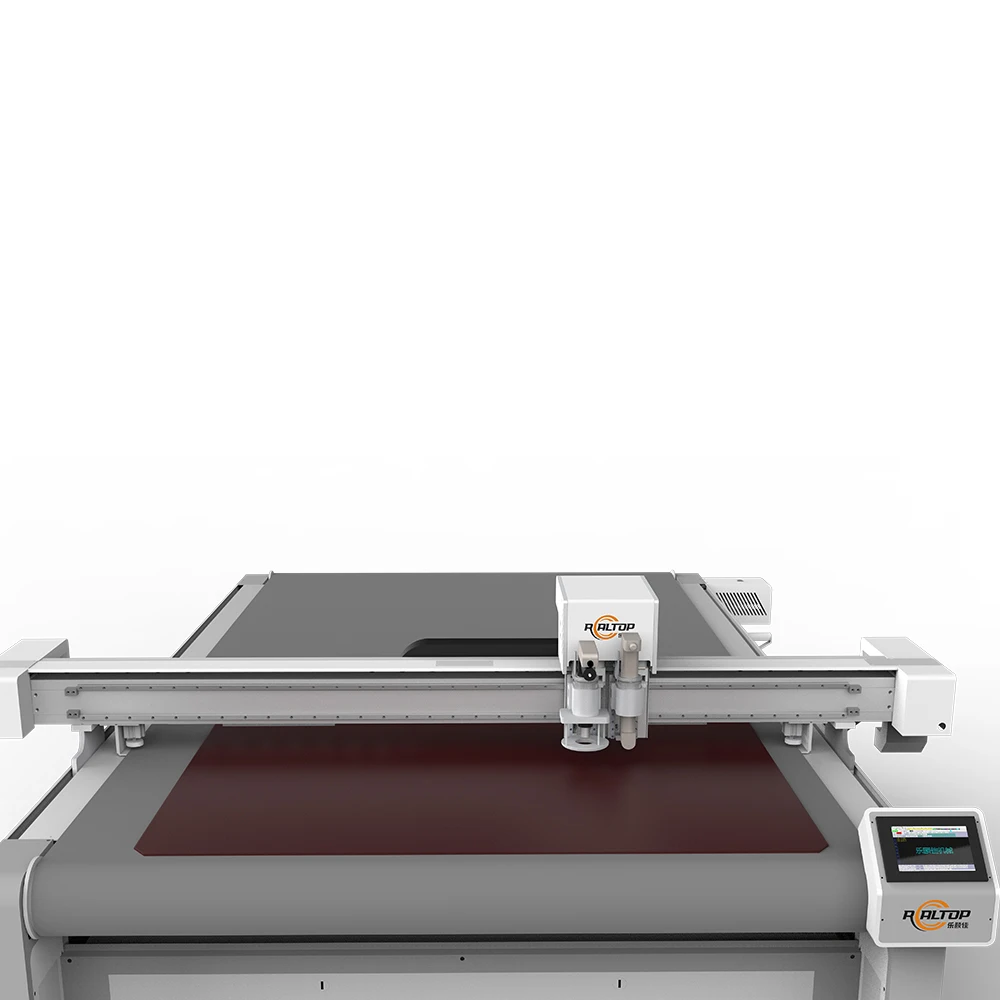
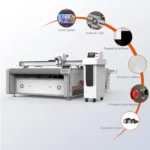
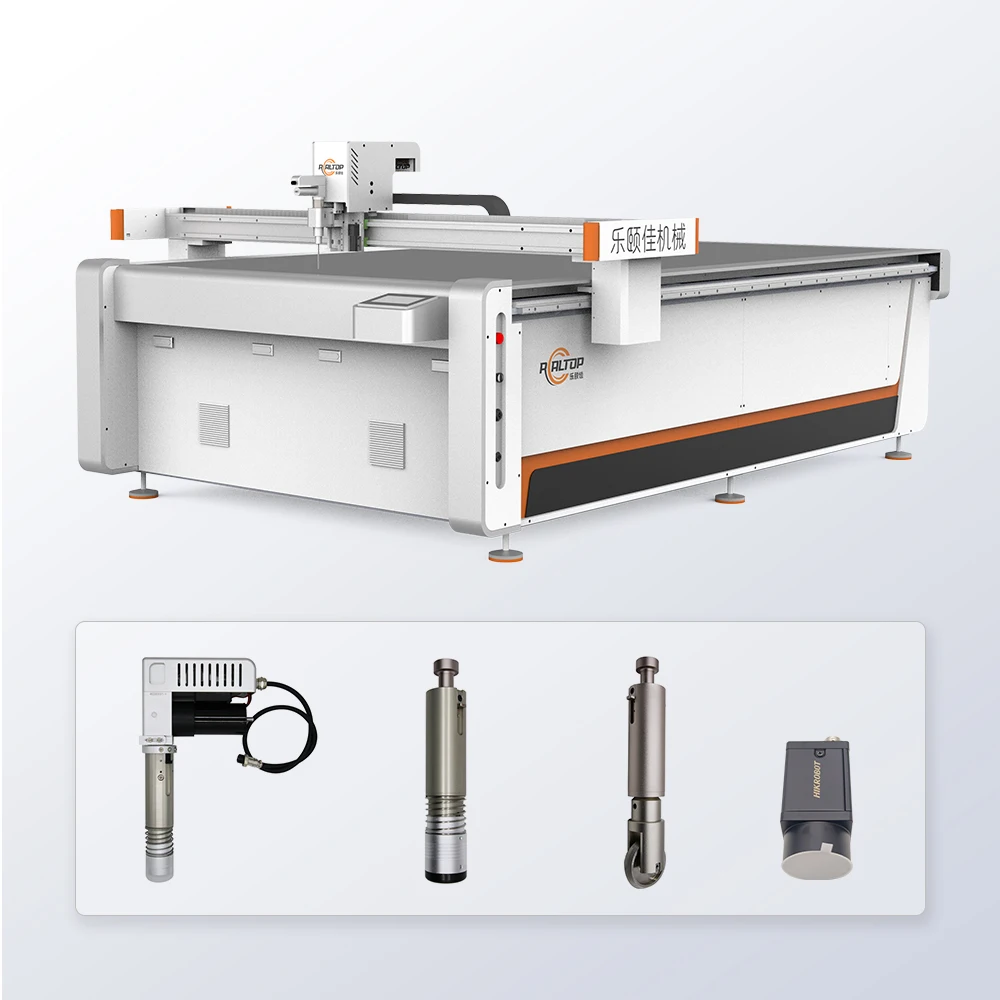
The multifunctional head on this CNC oscillating knife cutting machine factory platform accepts oscillating knife, pneumatic knife, high-power vibrating knife, circular knife, V-cutting knife, drag knife, creasing wheel, dotted line knife, punching tool and brush. Each tool head matches a different material response. A pneumatic knife slices through multi-ply woven fabric with a clean shear, while a drag knife creases carton stock without cutting through. Specifying the wrong head produces ragged edges on knit fabric or crushed foam cores, defects that downstream sewing or assembly cannot hide. [NEED_CITE: tool head selection criteria for textile and composite cutting]
Reading the Specifications That Actually Shape Output
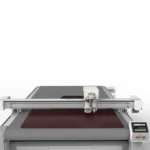
Cutting speed is listed as 200–800 mm/s, but that range depends entirely on the material being processed. A single-ply technical textile at 800 mm/s may yield a clean edge, while a 30 mm foam stack at the same speed will tear. The 7.5 kW vacuum pump and magnesium-aluminum alloy table with PVDF coating deliver the hold-down force that keeps flexible material flat during high-speed passes. Without sufficient zoned vacuum, small pattern pieces lift at the trailing edge and the blade catches them. The CCD camera options — small mark-point, panoramic recognition or projection positioning — determine whether the system can follow printed contours on pre-printed fabric or simply cut from a digital file. Servo motor choice between Delta and Panasonic affects response smoothness at direction changes, which shows up as micro-serrations on curved cuts in slippery synthetics.
The Hidden Cost of Skipped Configuration Steps
When vacuum zoning is left as a single full-table zone, small gasket or appliqué parts lift during the final pass because air leaks around the perimeter of already-cut pieces. When voltage is assumed at 380V but the destination workshop runs a different standard, the servo drives trip on over-voltage protection within hours of commissioning. When the control language is not confirmed, operators spend days cross-referencing translated menus instead of cutting. Each of these failures appears as a field complaint, but the root cause sits in the pre-order specification conversation. [NEED_CITE: industrial equipment commissioning failures traced to specification gaps]
Why Buyers Come Here Instead of a Trading Desk
Realtop operates its own design team and core factory in Jinan, so the engineers who specify the RT-D2516/RT-S2516 frame also handle OEM requests for non-standard working areas or control panel languages. Tool head and table configuration is locked to the buyer’s material profile, not quoted from a generic price list. Sample cutting runs on the buyer’s actual fabric, leather or foam are completed before the order is finalized, so edge quality and CCD tracking are verified against real production conditions. Voltage, plug type and electrical schematics are confirmed to the destination market’s grid standard before the machine enters the assembly line. Distributors receive the same factory-direct technical access, which means warranty claims and spare parts requests go to the build team, not a middle office.
Documentation & Verification
- Machine specification sheet listing every component against your material and thickness profile
- Electrical schematic confirming voltage, frequency and plug type for your market
- Sample cutting report on your actual fabric or composite material before order commitment
- Tool head and vacuum table configuration list matched to your daily production mix
- Software licence with confirmed PLT, DXF, AI file format and nesting workflow compatibility
- CE declaration and factory test record documenting accuracy and safety device function
Installation, Commissioning & Support
- Flat foundation required; 3450×2300 mm footprint with clearance for beam travel and material loading
- Dedicated 380V ±10% circuit with rated capacity exceeding 9 kW for servo and vacuum pump combined
- Machine ships fully assembled; rigging and placement onto prepared floor only
- First-run parameter tuning on your material for oscillation frequency, vacuum zoning and CCD calibration
- Touch screen operator training in confirmed language covering nesting software and tool head changeover
- Spare parts list covering oscillating knife blades, vacuum seals and CCD calibration targets
What to Include With Your Inquiry
Share the exact material types, thicknesses and ply counts you cut most often, along with your daily volume and typical sheet dimensions. Tell us your workshop voltage and frequency, the control language your operators need, and whether you want sample cutting on your own roll stock before the machine is built.
Frequently Asked Questions
Q: How does Realtop’s in-house design process differ from a trading company when customizing the RT-D2516/RT-S2516?
A: Our Jinan design team handles frame geometry, control panel language and electrical specification changes directly. Distributors can request non-standard working areas or voltage configurations without a third-party broker. Every customization is documented in the machine specification sheet and verified during factory testing before dispatch.
Q: How is tool head and vacuum table configuration decided before the order is committed?
A: We review your material type, thickness, ply count and part geometry, then recommend specific tool heads and vacuum zone layouts. A sample cutting run on your actual material confirms edge quality and hold-down performance before you approve the final configuration list.
Q: What factory test documentation ships with the RT-D2516/RT-S2516?
A: Each machine leaves with a factory test record covering repeated accuracy verification, safety device activation, vacuum pressure measurement and a sample cutting report run on the buyer’s own material at agreed speed and tool head settings.
Q: How does Realtop support distributors with installation and spare parts after delivery?
A: We supply rigging guidance, commissioning parameters tuned to the buyer’s material, operator training in the confirmed language and a spare parts list covering blades, vacuum seals and CCD targets. Distributors communicate directly with the factory build team for warranty and replacement orders.
Q: What is the typical lead time from confirmed specification to factory test?
A: After the machine specification sheet, voltage confirmation and tool head configuration are signed off, typical multi-week lead times apply for production and factory testing. Exact timing depends on customization scope and current assembly line scheduling.
You may also like

商品评价
Clear filtersThere are no reviews yet.