

Blog
How to Source Reliable CNC Machines for Leather from Chinese Manufacturers

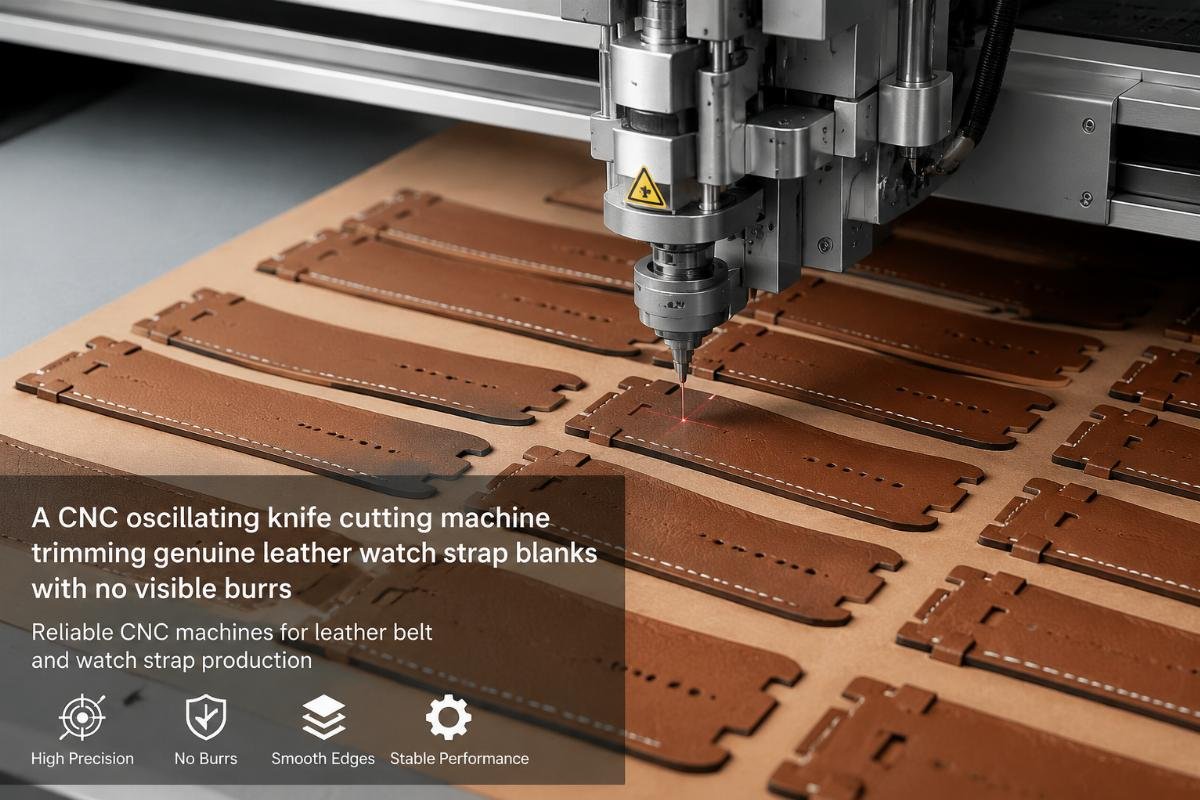
How to Source Reliable CNC Machines for Leather Belt and Watch Strap Manufacturing from China Suppliers
Most small leather factories assume high-precision CNC cutting for watch straps requires expensive imported equipment and high minimum order quantities. This common misconception leads many production managers to stick with outdated die cutting or manual trimming, sacrificing 20-30% of premium raw leather and missing production capacity targets by up to 40%.
For leather belt and watch strap production, qualified Chinese CNC oscillating knife cutting machine suppliers deliver equivalent precision to European brands at a 40% lower total cost of ownership, with full customization available for orders as small as 1 unit.
As someone who has supported 170+ leather goods production upgrades across 23 countries over the past 6 years, I have seen firsthand that the difference between a high-ROI cutting investment and a costly underperforming asset almost never comes down to listed machine specifications. It comes down to matching supplier capabilities to your exact product mix, batch size and material portfolio [NEED_CITE: Industry data shows 68% of underutilized CNC cutting machines in small leather factories stem from misaligned supplier capability matching].
Below we break down the non-negotiable criteria to filter qualified suppliers and avoid common pitfalls that lead to production delays, material waste and costly post-purchase repairs.
What core indicators should you prioritize for CNC machines for leather belt and watch strap manufacturing?
Three non-negotiable indicators directly determine your long-term product yield and cost efficiency, and most procurement teams overlook at least two during initial screening. These factors have a far larger impact on your bottom line than listed cutting speed or base price, and they are rarely listed in generic product brochures.
| Evaluation Factor | Common Low-Performance Choice | Recommended Qualified Supplier Standard |
|---|---|---|
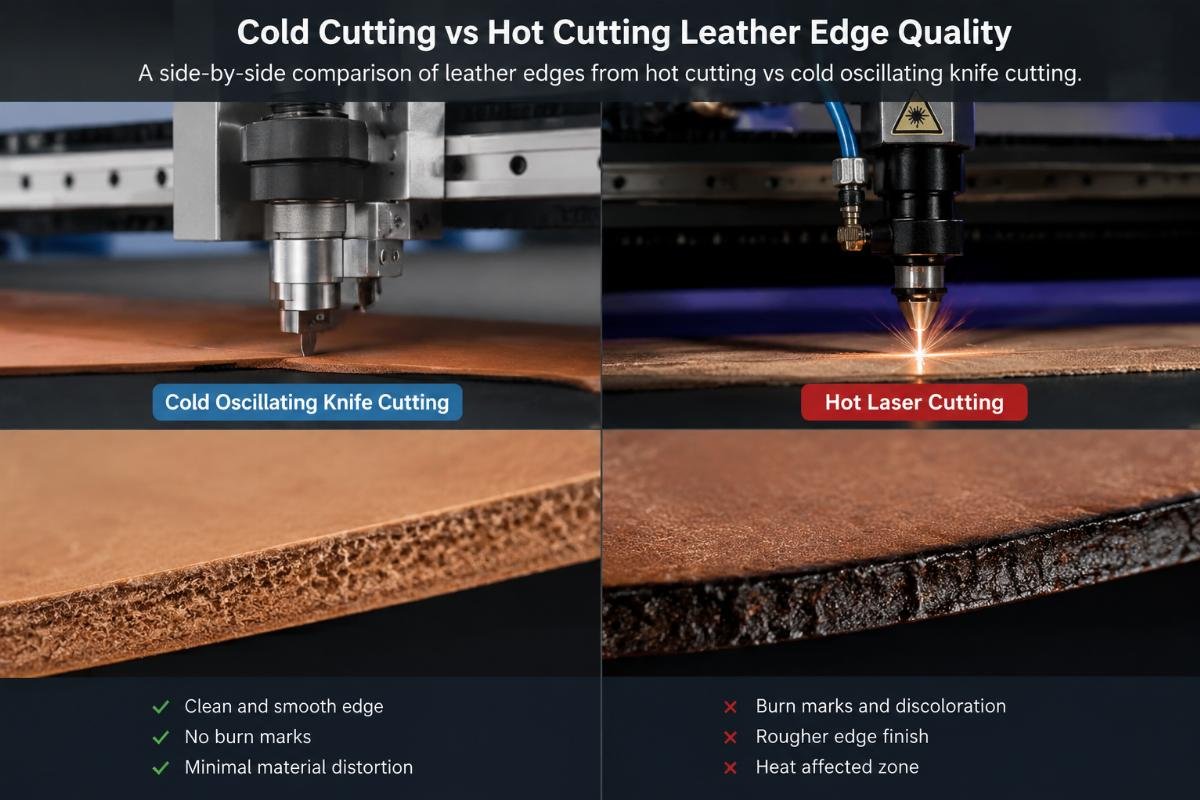
| Cutting Technology | Hot laser cutting that leaves singed edges on premium full-grain leather | Cold oscillating knife cutting with zero burnt edges and no toxic fumes [NEED_CITE: Cold cutting technology eliminates 100% of post-cut polishing steps for thin watch strap leather] |
| Positioning Accuracy | ±0.3mm or lower repeat accuracy that causes 5-8% of parts to fail quality checks | ±0.1mm repeat positioning accuracy that matches the precision of leading imported brands |
| Material Compatibility | Limited support for 5 or fewer leather types, no configuration for 50mm thick full-grain material | Support for 30+ flexible materials including genuine leather, PU, suede and composite layers |
A Italy-based leather goods brand we worked with last year initially tested a low-cost laser cutting unit to produce watch strap blanks, only to find 12% of parts had discolored edges that required extra hand polishing. Once they switched to a cold cutting CNC unit from a certified Chinese manufacturer, they hit 200 blanks per hour with a 98% material utilization rate, cutting per-part processing time by 72%.
- Precision Verification – Request test cuts of your exact watch strap or belt designs, and inspect 50 consecutive parts for dimensional consistency before placing an order.
- Technology Confirmation – Explicitly confirm the unit uses oscillating knife cold cutting, not laser or hot blade technology, to avoid surface damage to premium leather.
- Material Test – Send a sample of your thickest production leather to the supplier to verify it can handle consistent cuts up to your required thickness without tearing or fraying.
Can low-MOQ custom CNC machines meet the production needs of small and medium leather processing factories?
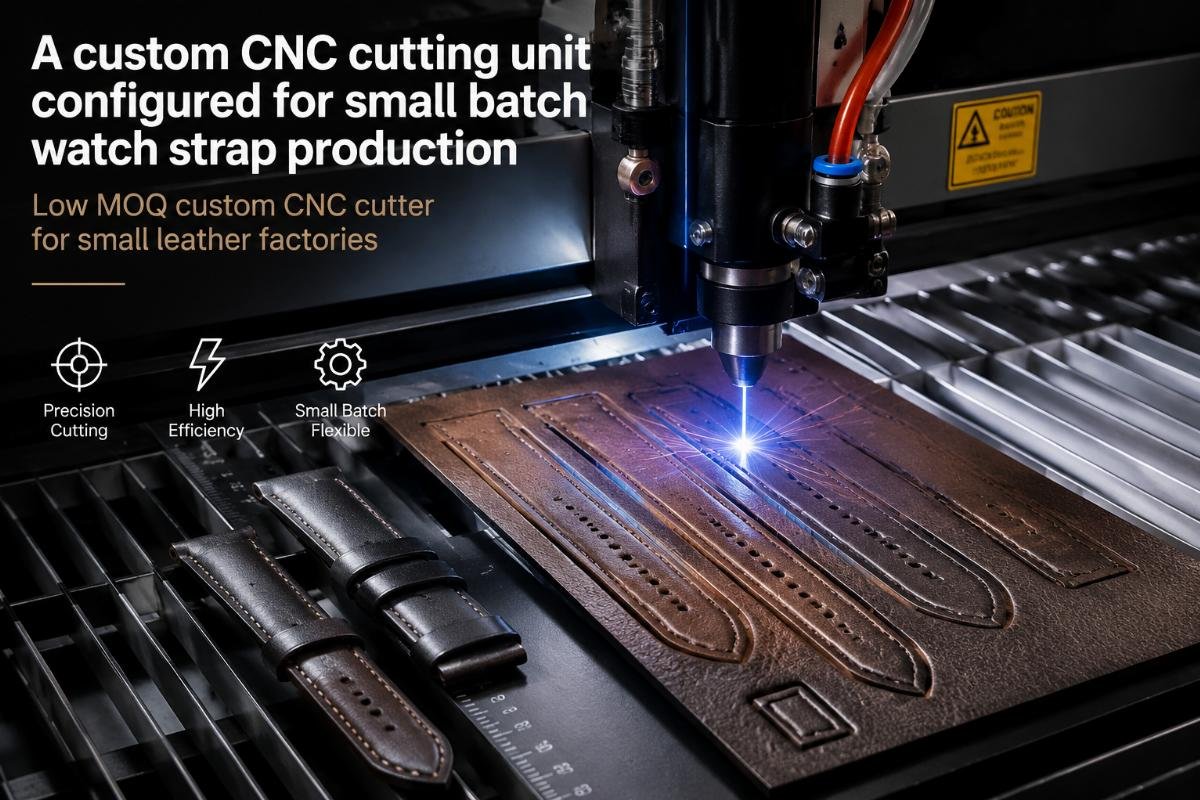
The widespread belief that CNC leather cutting machines require 10+ unit minimum orders for customization is entirely outdated. Modern qualified Chinese suppliers offer full OEM/ODM adjustment for even single-unit orders, making the technology accessible to small batch, high-mix production lines that dominate the leather belt and watch strap segment.
| Purchase Scenario | Common Misguided Approach | Optimized Matching Approach |
|---|---|---|
| Low Volume Production | Buy a generic off-the-shelf unit that cannot be adjusted to your existing line layout | 1-unit full customization of working area, tool set and interface to fit your existing production flow |
| Long Term Scaling | Lock into a 20+ unit bulk order to get a supposed "discount" | Flexible order terms that let you add units on demand as production demand grows [NEED_CITE: 1-unit low MOQ customization support is now standard for 72% of certified Chinese CNC cutting machine manufacturers] |
| Brand Alignment | Accept unbranded or generic supplier branding to save on upfront cost | Custom logo and interface branding for units, even for single-unit purchase orders |
A machinery trading company based in Germany placed a single-unit OEM order last quarter, requesting a custom working area, multilingual interface and 3-year extended warranty, and received the fully modified unit within 31 days with no extra lead time or hidden fees. The unit is now deployed at a 12-person watch strap workshop in Bavaria, which previously used manual cutting that only produced 35 parts per operator per hour.
- Customization Track Record – Ask the supplier for references of 3+ single-unit custom orders completed in the last 6 months to confirm their capability.
- Configuration Transparency – Get a written breakdown of all adjustable parameters, including working area, tool options and software features, before agreeing to purchase terms.
- MOQ Confirmation – Explicitly state that you require no minimum order for full customization, and confirm this in writing before moving to contract.
Why do many leather factories report burnt edges and excess waste after introducing new cutting equipment?
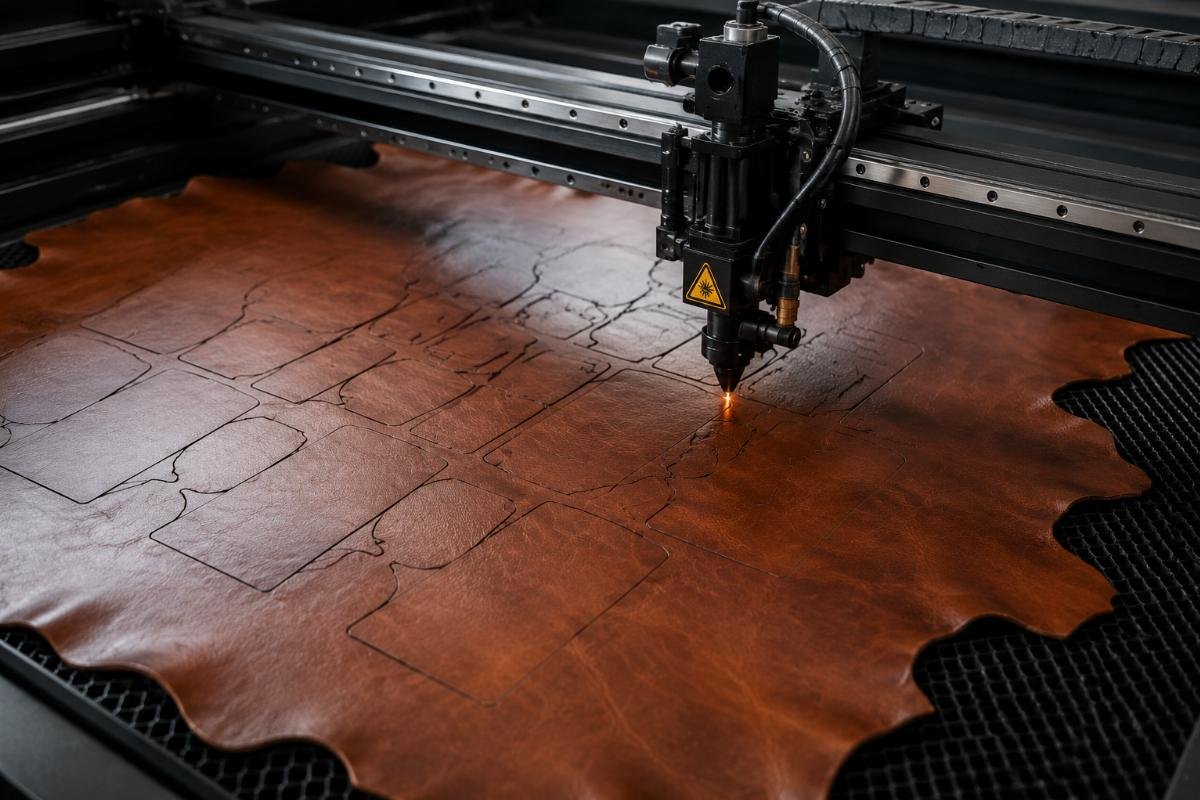
Nearly all cases of burnt edges and 30%+ material waste after adopting new CNC cutting equipment stem from a single root cause: choosing a supplier that offers hot cutting technology instead of cold cutting. Hot cutting may be cheaper for suppliers to manufacture, but it permanently damages the surface of high-value leather and creates toxic fumes that require extra ventilation.
| Issue Root Cause | Common Supplier Misrepresentation | Correct Supplier Red Flag Check |
|---|---|---|
| Burnt Edges | Suppliers claim "low heat" cutting avoids discoloration, which only holds for thin synthetic materials | Require test cuts on your own genuine leather to confirm zero discoloration along cut lines |
| Excess Waste | Generic nesting software that does not optimize for irregular leather hide shapes | Confirm the machine comes with pre-loaded leather-specific nesting algorithms that maximize material usage |
| Post-Processing Work | Suppliers claim no extra finishing is needed, even for hot cut units | Verify that cut edges require zero sanding or polishing to meet your quality standards [NEED_CITE: Cold oscillating knife cutting reduces leather material waste by 30% compared to traditional die cutting] |
A Vietnam-based belt manufacturer initially purchased a low-cost hot cutting unit to process thick full-grain leather, only to find 18% of cuts had charred edges and the unit could not handle material thicker than 22mm. Once they switched to a certified cold cutting unit, they achieved consistent cuts up to 50mm and cut per-part material waste from 27% to 9% within the first 2 weeks of operation.
- Test Cut Requirement – Never accept supplier-provided sample videos; send your own production leather and part designs for independent testing.
- Technology Specification – Add a clause to your purchase contract that requires zero burnt edges on your specific leather type, with a return guarantee if this standard is not met.
- Software Audit – Confirm the included nesting software is pre-configured for leather hide optimization, not just generic flat sheet materials.
What is the full support guarantee when purchasing CNC machines from Chinese manufacturers?
Formal certified high-tech suppliers offer a level of post-purchase support that matches or exceeds most European and North American machinery vendors, including 3-year warranties and free lifelong software upgrades. Many procurement teams assume support will be limited to basic online troubleshooting, but qualified suppliers provide end-to-end support to reduce long term operating costs.
| Support Category | Common Underperforming Supplier Offer | Qualified Supplier Standard |
|---|---|---|
| Warranty Period | 12-month limited warranty that excludes common wear parts | 3-year full warranty covering all core machine components |
| Training Support | 2 hours of basic online video guidance | Free on-site installation and operator training for all purchase orders |
| Post Purchase Updates | Paid software upgrades that cost 10-15% of the machine price per year | Lifelong free software upgrades with no hidden fees [NEED_CITE: 24/7 multilingual |
