

Blog
What is a good alternative to a cardboard cutter?

What is a good alternative to a cardboard cutter?
When your cardboard cutter struggles to keep up with orders, you're probably searching for a better hand tool. But here's what I've learned after years of talking to customers in your exact position: the real problem isn't your blade—it's that manual cutting can't scale with your business anymore.
The best alternative to a cardboard cutter isn't another manual knife—it's a CNC knife cutting machine, which automates precision cutting for flexible materials and solves the throughput and consistency issues that handheld tools can't fix, especially when your daily production exceeds 50 sheets or requires repeatability within ±0.5mm tolerance1.
I know what you're thinking: "I just need a sharper blade or a better grip." I thought the same thing when I first started working with small packaging manufacturers. But after watching dozens of businesses make the jump from manual to automated cutting, I've seen a pattern emerge that changes how you should think about this question.
Why do most people miss the real cardboard cutter alternative?
When you search for "cardboard cutter alternative," Google shows you rotary cutters, utility knives, and box cutters. These tools solve the wrong problem because they assume you want another manual option.
Most searchers don't know CNC knife cutting machines exist as a commercial category—they assume "alternative" means a different type of hand tool, not a production system that cuts multiple layers with computer-controlled precision while your operator handles other tasks.
Here's what I see when customers contact us: they've already tried three or four different manual cutters, they're frustrated with inconsistent edge quality, and they still think the solution is finding the "perfect knife." Nobody told them there's a machine category designed specifically for this problem. The packaging industry has been using CNC cutting for years2, but small processors don't realize entry-level systems now start around $8,000-$15,0003, not the $100,000+ they imagine. I've had customers tell me they spent six months buying different manual tools when a semi-automated cutting table would have paid for itself in saved labor within the first year. The disconnect happens because B2B equipment doesn't show up in consumer search results, so you keep seeing the same manual tool recommendations that don't address your actual production constraints.
When does a manual cardboard cutter actually make sense?
Before I recommend any equipment upgrade, I need to understand whether your current cutting process is truly the bottleneck. Not every business needs automation, and some situations genuinely work better with handheld tools.
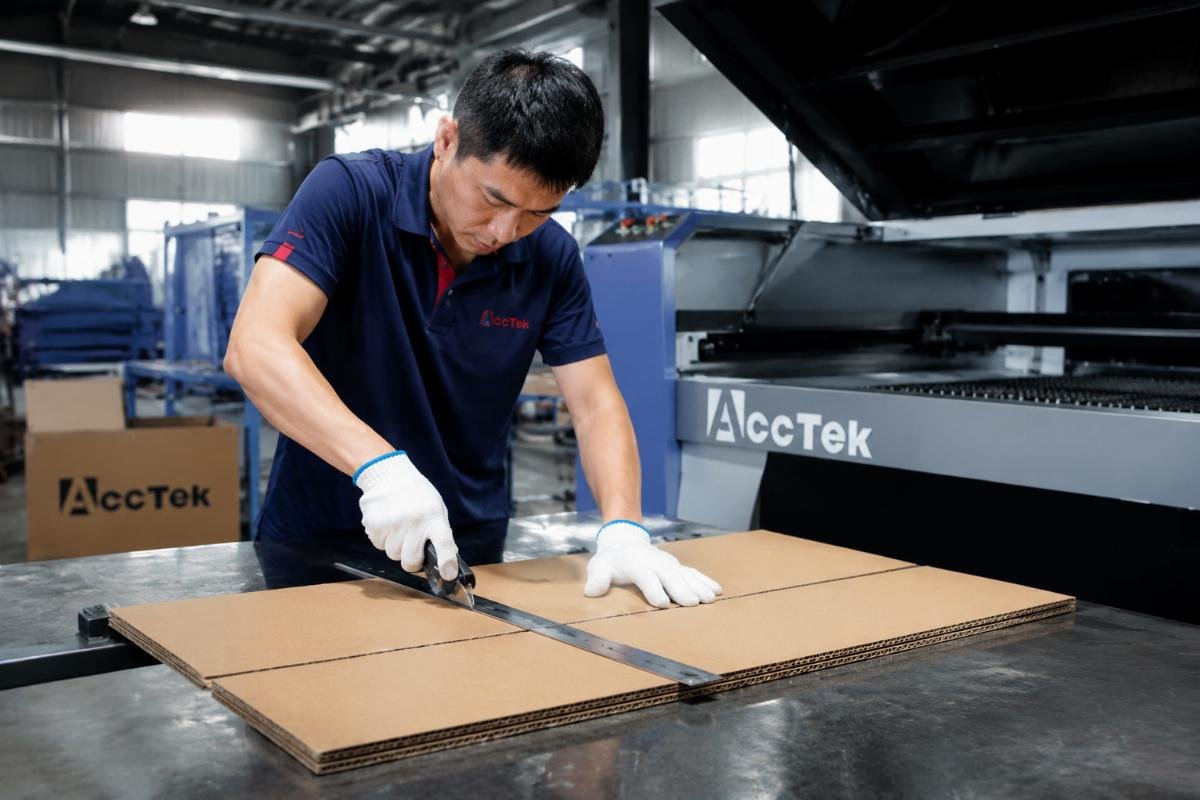
A manual cardboard cutter remains the right choice when you cut fewer than 20 sheets per day, work with highly variable custom shapes that change every order, or need portable cutting for on-site installation work where setup time matters more than cutting speed.
What production metrics tell you to stay manual?
I use a simple framework when customers ask whether they should upgrade. If your operation fits these parameters, stick with manual cutting and invest in better ergonomic tools instead:
| Production Metric | Stay Manual Threshold | Why This Matters |
|---|---|---|
| Daily cutting volume | Under 50 sheets | Labor cost of manual cutting remains lower than equipment amortization |
| Repeat orders | Less than 30% of work | Setup time for automated systems doesn't pay off with constantly changing designs |
| Cutting precision requirement | ±2mm tolerance acceptable | Manual cutting can achieve this with skilled operators and straightedges |
| Material thickness | Under 3mm single-layer | Handheld tools cut thin cardboard efficiently without material shifting issues |
| Order turnaround | 24-48 hours acceptable | Manual cutting doesn't create delivery bottlenecks at this pace |
The key question is whether your operator can maintain quality and speed for 6-8 hours. If they're taking breaks every 30 minutes because of hand fatigue, or if you're seeing edge quality degrade after the first 20 cuts4, manual tools are creating hidden costs through rework and productivity loss. I've watched operators hand-cut packaging prototypes beautifully at 9 AM, then produce unusable pieces with ragged edges by 2 PM because their grip strength is gone. That's when manual cutting stops being the economical choice, even if your volume seems low.
What happens when you outgrow manual cutting but don't know it?
This is where most of our customers were before they contacted us. They knew manual cutting wasn't working anymore, but they didn't have a clear picture of what the alternatives actually looked like or how to evaluate them.
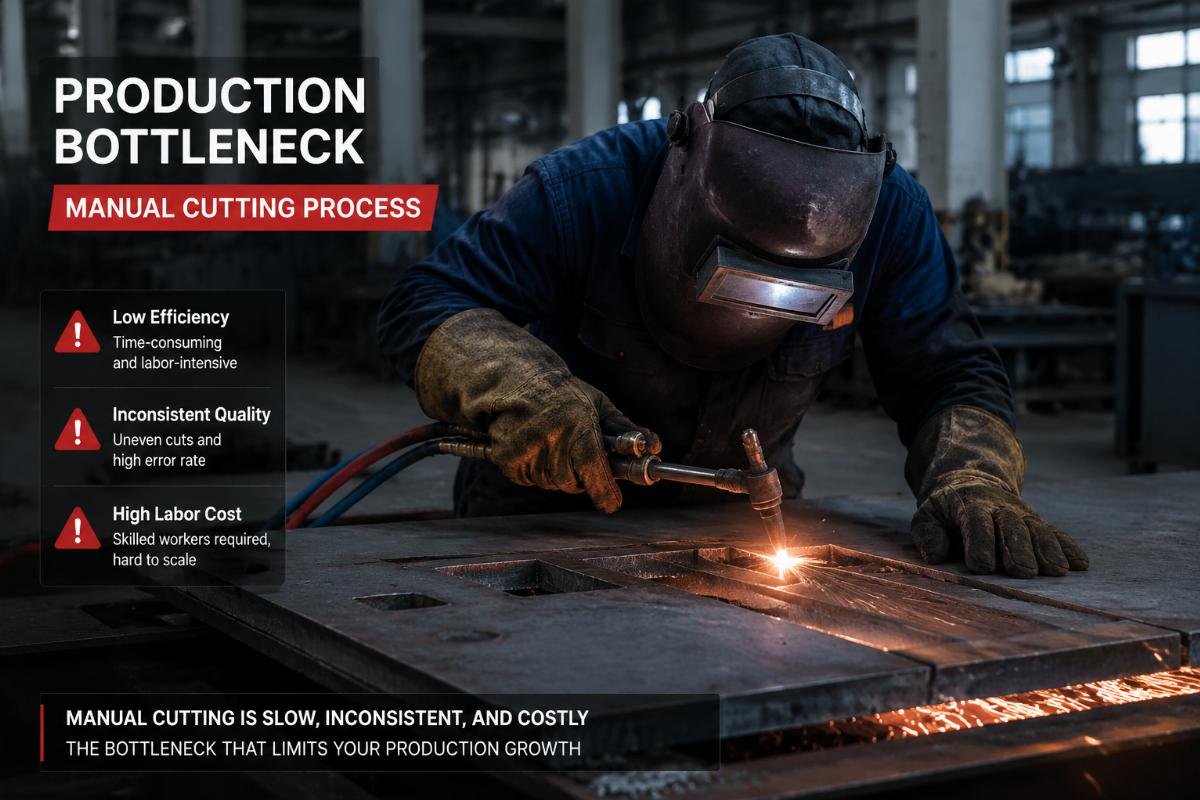
The transition point from manual to automated cutting typically hits when daily production exceeds 50-100 sheets, scrap rates climb above 5%5, or you start declining orders because cutting capacity can't meet delivery timelines—at this stage, labor costs and material waste exceed the monthly cost of CNC equipment financing6.
What are the real costs of staying manual too long?
I had a customer last year who kept using manual cutters for gasket production even after landing a contract for 200 units per week. He thought buying two more hand tools and hiring another operator would solve the capacity problem. Here's what actually happened: his scrap rate jumped from 3% to 12% because the new operator couldn't match the precision of his experienced cutter, rush orders created overtime costs that ate 40% of the new contract's profit margin, and delivery delays started damaging his reputation with the client. When we calculated his real cost structure, he was spending $2,800 per month on labor and wasted material for a cutting process that a $12,000 CNC system could handle with one operator spending 30% of their time on actual cutting. The financing cost would have been $350 per month, and the system would pay for itself in saved labor within six months. He waited nine months before making the switch, which meant he lost approximately $22,000 in avoidable costs while trying to make manual cutting work at a scale it wasn't designed for.
How do you know if you've reached the automation threshold?
Use these practical indicators from real production scenarios I've seen:
| Warning Sign | What It Means | Cost Impact |
|---|---|---|
| Operator fatigue before shift end | Manual cutting volume exceeds sustainable ergonomic limits | Quality degradation in final 30% of daily output |
| Backlog of cutting work | Production capacity can't match order intake | Lost revenue from declined orders or extended lead times |
| Inconsistent edge quality | Operator skill variance or tool wear creates quality control issues | Rework costs and customer complaints |
| Material waste above 8% | Manual cutting errors and layout inefficiency | Direct material cost increase that scales with volume |
| Declining repeat orders | Customers perceive quality or delivery inconsistency | Revenue loss that's hard to quantify but compounds over time |
The tipping point isn't about volume alone—it's about whether manual cutting creates business constraints that cost more than equipment investment would. I've seen 30-sheet-per-day operations that needed CNC cutting because their tolerance requirements were ±0.3mm, which even skilled operators couldn't hit consistently with hand tools. I've also seen 150-sheet-per-day operations that stayed manual because they only cut simple rectangular shapes where a cutting table with a straightedge guide was perfectly adequate.
What CNC alternatives exist between manual cutting and full automation?
When customers realize they need to upgrade from handheld cutters, they often assume the only option is a $50,000+ industrial CNC system. This assumption keeps them stuck with inadequate tools because they think automation is out of reach. The reality is there's a whole spectrum of solutions between a $20 utility knife and a factory-floor cutting system.
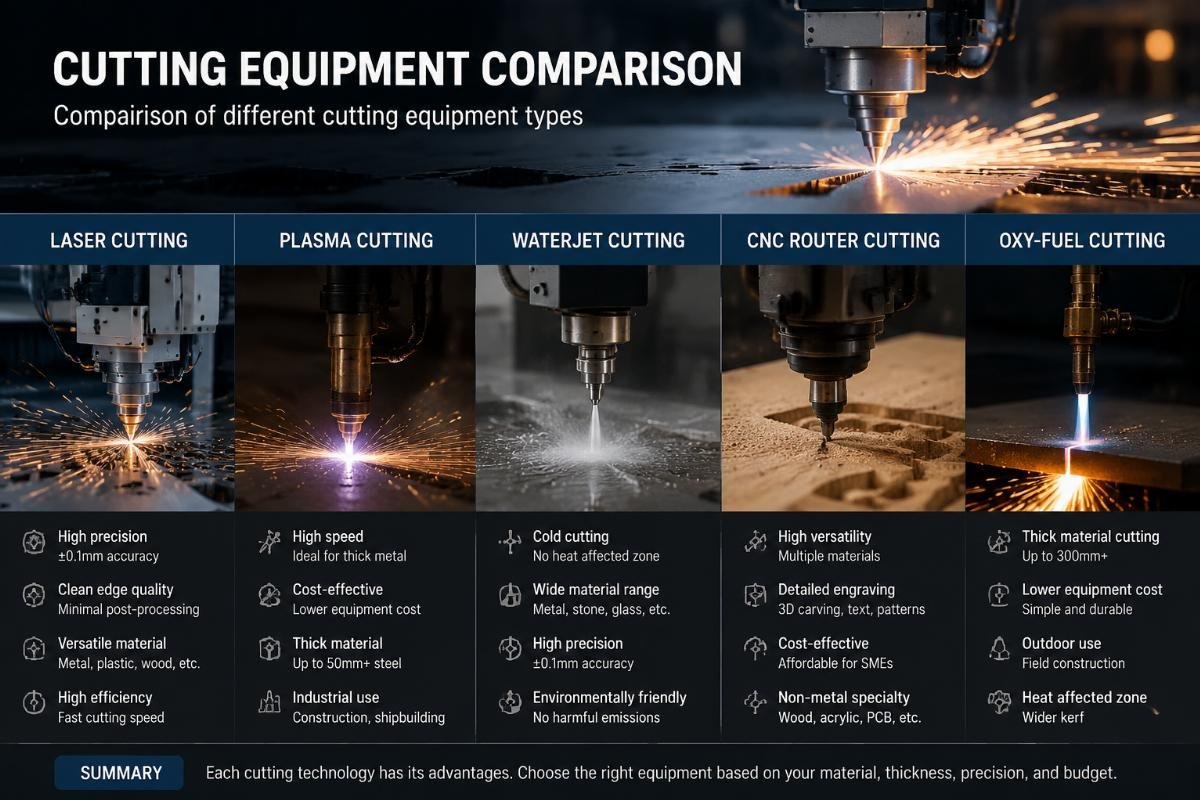
Semi-automated cutting solutions like cutting tables with digital templates, handheld routers with jig systems, and entry-level CNC knife cutting machines bridge the gap between pure manual cutting and full automation, offering 3-5x productivity improvements7 at price points from $3,000-$15,000 that work for small to medium operations.
What does the equipment upgrade path actually look like?
I map customer transitions across four distinct tiers based on what I've seen work in real production environments:
| Solution Tier | Equipment Type | Price Range | Best For | Productivity Gain |
|---|---|---|---|---|
| Manual with guides | Straightedge rulers, cutting mats with grids, circle cutting jigs | $50-$500 | Low volume with simple shapes | 1.5x vs freehand cutting |
| Semi-automated jigs | Pneumatic cutting tables, vacuum hold-down systems with templates | $2,000-$5,000 | Medium volume with repeated patterns | 2-3x vs pure manual |
| Entry CNC systems | Small-format CNC knife cutters with 4x4 ft cutting area | $8,000-$18,000 | Growing operations needing precision and flexibility | 5-8x vs manual cutting |
| Production CNC | Industrial multi-tool systems with automatic feeding | $25,000-$80,000+ | High-volume operations with complex materials | 15-25x vs manual cutting8 |
The mistake I see customers make is jumping directly from tier 1 to tier 4 because they think "if I'm going to automate, I should get the best system." This usually backfires because they don't have the production volume to justify the investment, they lack the technical knowledge to program complex systems, and the equipment sits underutilized while making large loan payments. The smarter path for most small manufacturers is moving from tier 1 to tier 2 or 3, proving out the business case with actual production data, then upgrading to tier 4 when volume genuinely demands it. I worked with a car interior trim manufacturer who started with a $12,000 entry-level CNC knife cutter, ran it for 18 months while their business doubled, then upgraded to a $45,000 automated feeding system using the profits from the increased capacity the first machine enabled. That's how sustainable equipment investment works in the real world.
How do CNC knife cutting machines actually work for cardboard?
When I explain CNC cutting to customers who've only used manual tools, they often have completely wrong mental models of how the technology works. They imagine industrial robots or complex laser systems. The reality is much more straightforward and directly comparable to what they're already doing by hand.
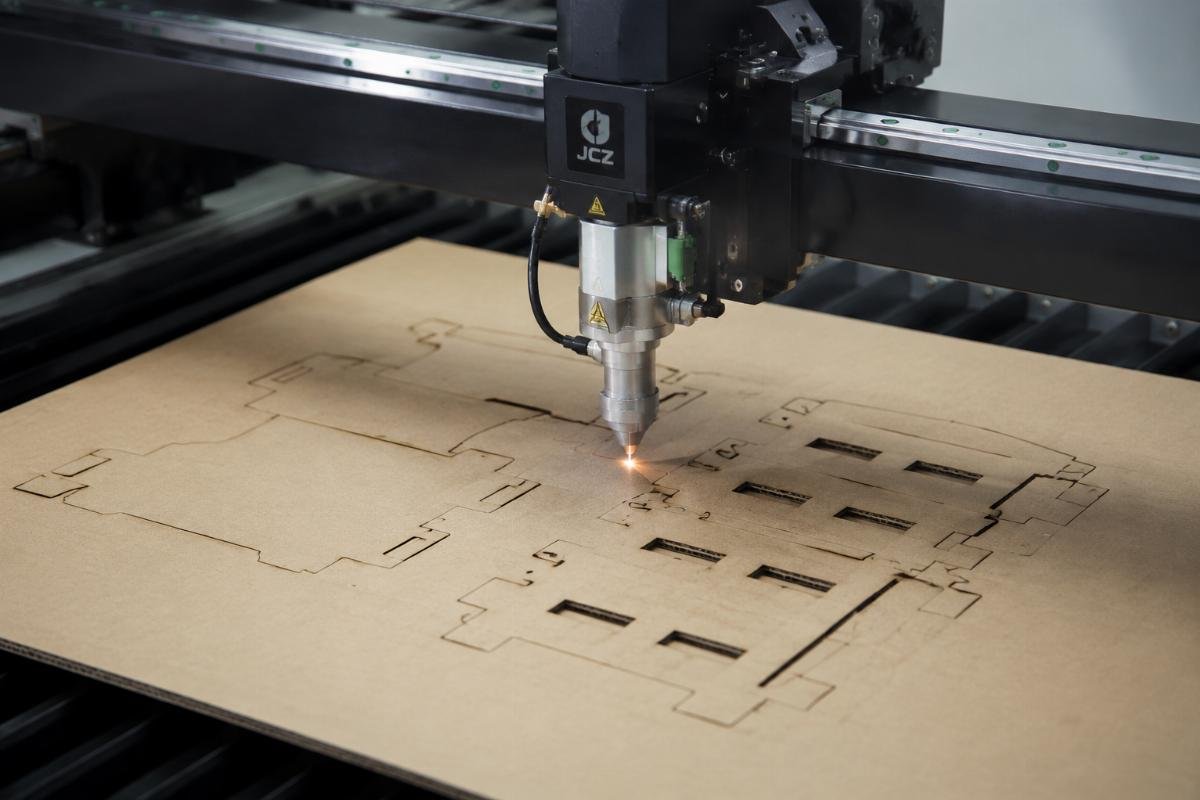
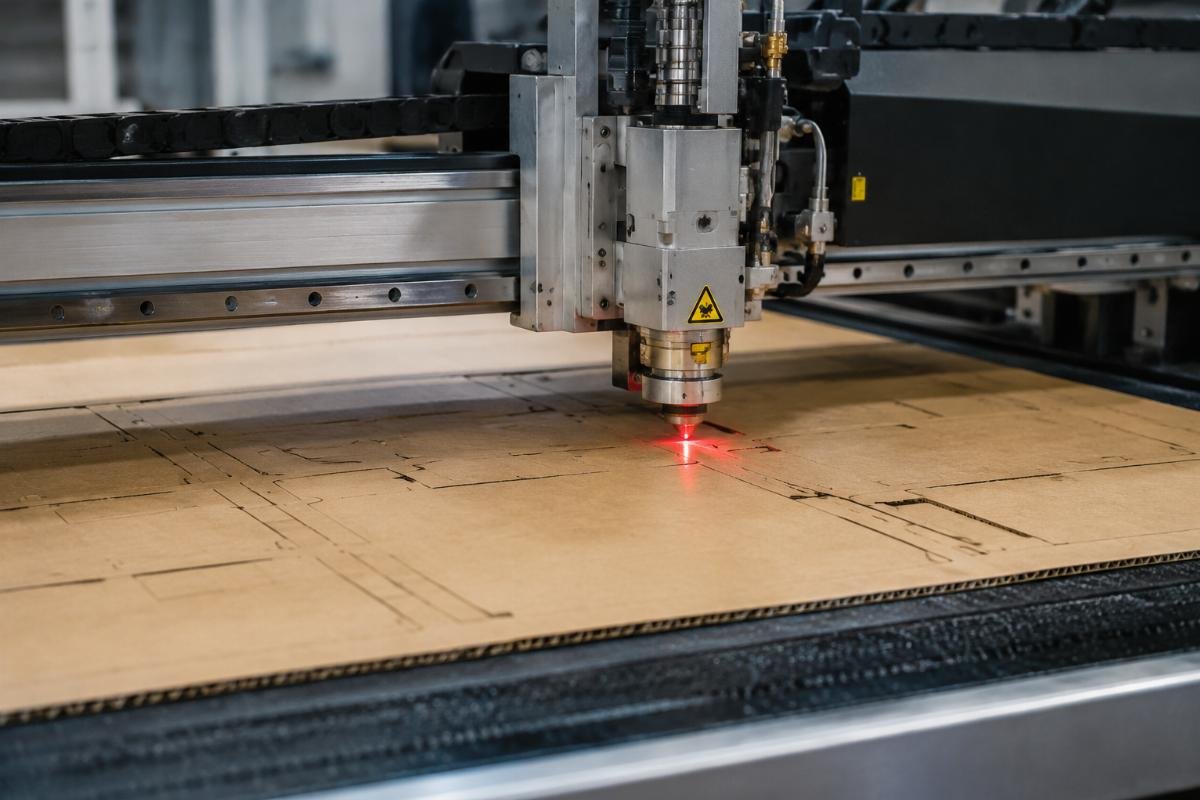
CNC knife cutting machines use a computer-controlled blade that follows digital cutting paths, applying consistent pressure and speed across the entire sheet—essentially replicating the motion of a skilled operator's hand, but with perfect repeatability and without fatigue, typically achieving ±0.1mm precision across 4x8 ft sheets9.
What's the difference between CNC cutting and manual cutting in practice?
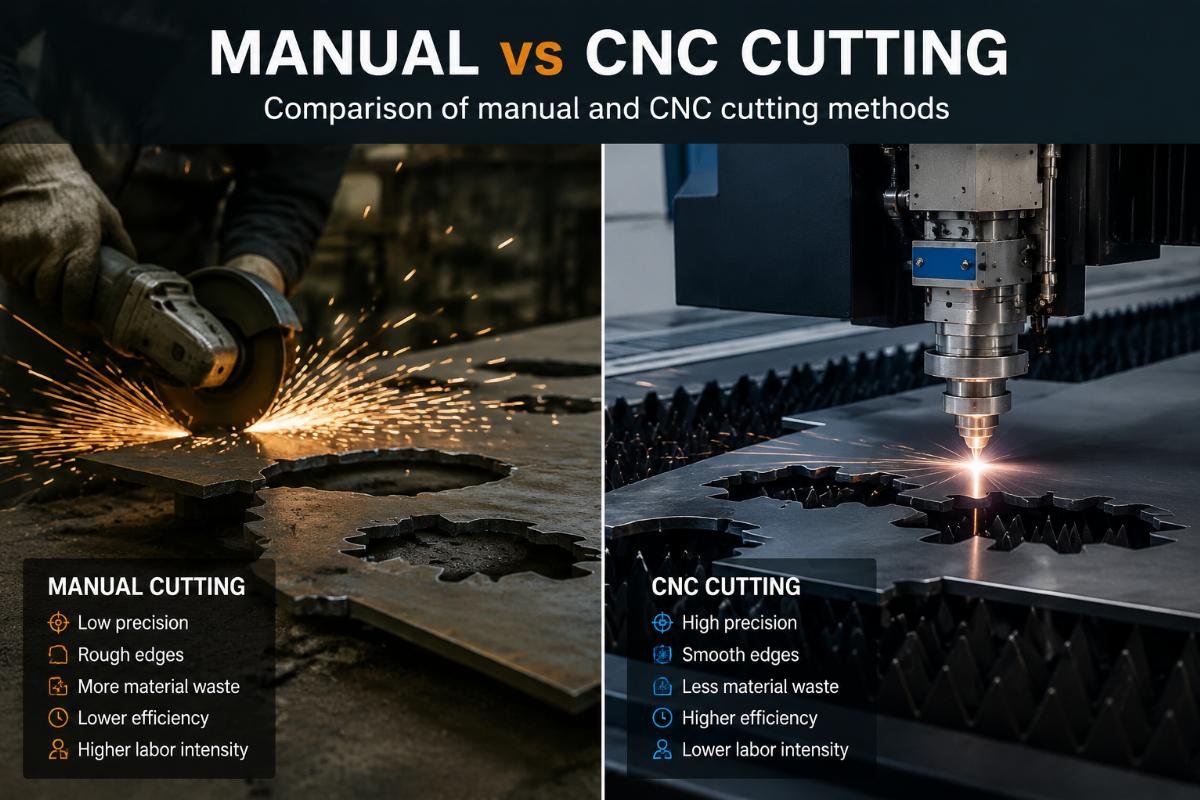
The fundamental mechanics are identical: both use a sharp blade to penetrate and separate cardboard fibers. The difference is control precision and repeatability. When you cut by hand, your brain constantly adjusts blade angle, pressure, and speed based on what you feel through the tool. A CNC system does the same adjustments using sensors and programmed parameters, but it executes them identically every single time. I've tested this directly by having an experienced operator cut 50 identical pieces by hand, then running the same job on an entry-level CNC cutter. The manual pieces had edge-to-edge variation of 1.2-2.8mm, while the CNC pieces varied by less than 0.2mm. More importantly, the operator took 3.5 hours to complete the job, while the CNC system finished in 45 minutes of actual cutting time, during which the operator was free to handle quality inspection and packaging tasks. The economics become obvious when you calculate hourly labor cost multiplied by the time difference, especially for repeat orders where you design the cutting path once and run it hundreds of times with zero additional engineering effort.
What materials can CNC knife cutters handle that manual tools struggle with?
This is where the technology advantage becomes clearest for flexible materials processors:
| Material Challenge | Manual Cutting Limitation | CNC Cutting Solution |
|---|---|---|
| Multi-layer stacks | Pressure consistency across layers creates thickness variation | Programmable blade depth and pressure ensures uniform penetration through all layers |
| Complex curves | Hand stability limits smooth arc execution | Servo motors produce mathematically perfect curves at consistent speed10 |
| Intricate internal cutouts | Access limitations and tool repositioning slow progress | Automatic tool path optimization minimizes repositioning time |
| Thin materials that shift | Material movement under hand pressure creates distortion | Vacuum hold-down keeps material perfectly flat during cutting11 |
| Thick corrugated board | Requires multiple passes with hand pressure fatigue | Consistent multi-pass cutting with identical pressure on each pass |
The capability I see customers value most isn't speed—it's the ability to cut complex shapes they previously had to outsource or avoid bidding on entirely. I worked with a point-of-purchase display manufacturer who turned down custom shape orders for years because manual cutting couldn't maintain quality on intricate designs. After installing a CNC knife cutter, they started actively pursuing those high-margin custom jobs because the machine could execute shapes their operators physically couldn't cut by hand, which opened an entirely new revenue category worth more than the equipment cost within the first year.
What mistakes do buyers make when switching from manual to CNC cutting?
After helping customers through this transition for years, I've seen the same purchasing errors repeat across different industries. These mistakes aren't about choosing the wrong brand—they're about misunderstanding what you're actually buying and how it fits into your production process.
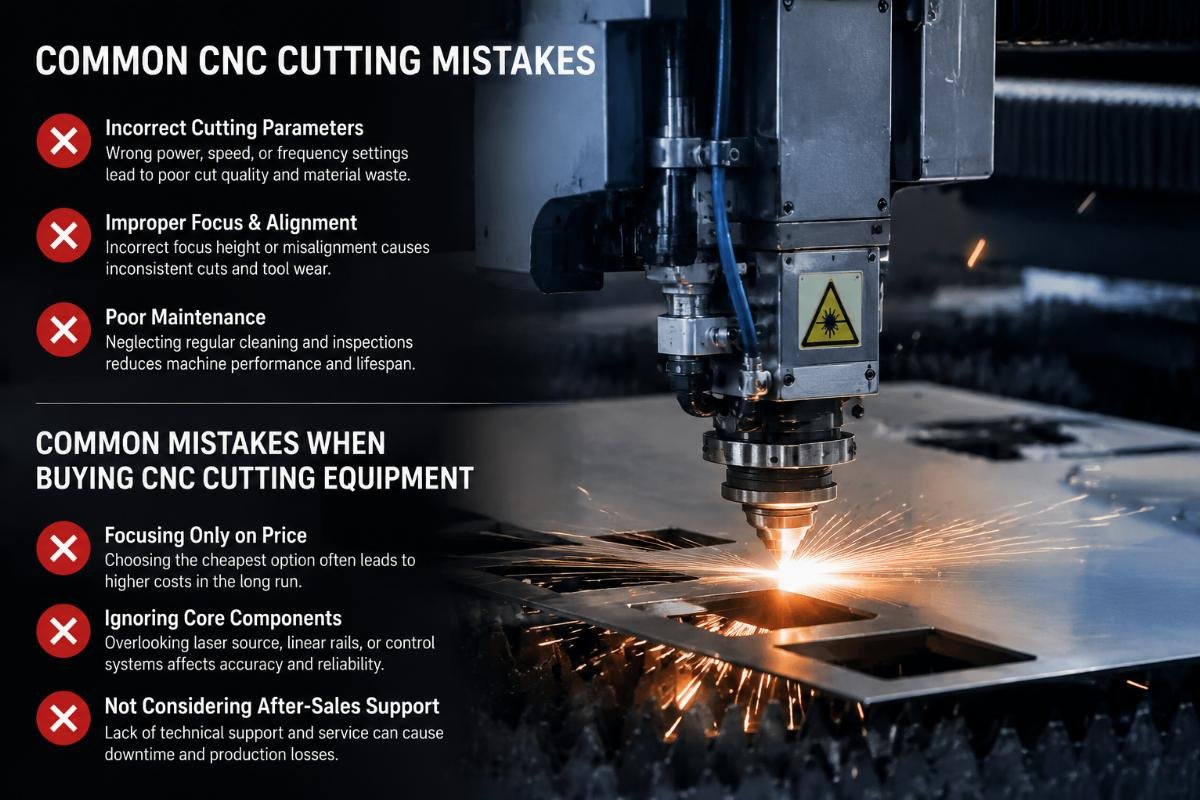
The most common CNC cutting equipment purchase mistake is buying based on maximum cutting speed specs without evaluating actual workflow bottlenecks—customers discover their limitation is material loading and design file preparation, not cutting speed, making expensive high-speed systems deliver no real productivity improvement.
What should you evaluate before any equipment purchase?
I use this framework with every customer before discussing specific machines, because skipping this analysis leads to buyer's remorse six months later:
Current state documentation: Measure your actual production metrics over two weeks, not what you think they are. Track sheets cut per day, cutting time versus total operator time, scrap rate by operator and material type, and bottleneck points where work queues build up. I've had customers insist they cut 100 sheets daily, then discover through actual logging that they only average 62 sheets with high day-to-day variance. That data changes equipment sizing completely.
Future state requirements: Don't buy equipment for your current volume—you'll outgrow it immediately. Project realistically where your business will be in 18-24 months based on actual contract pipeline, not optimistic hopes. If you're at 50 sheets per day now but have signed contracts that will push you to 120 sheets within a year, buying an entry system sized for 75 sheets per day creates a second equipment purchase cycle you can't afford.
Total cost of ownership: The equipment purchase price is usually 60-70% of first-year costs12. Factor in installation, training, software subscriptions, blade and consumable costs, maintenance, and the productivity loss during operator learning curves. I worked with a customer who bought a $15,000 CNC cutter but didn't budget for the $2,400 annual software license, $1,800 in first-year blade replacements, and $3,500 for proper operator training. He ended up with a machine that sat unused for four months while he scrambled to fund the total implementation cost.
Integration with existing workflow: A CNC cutter doesn't operate in isolation—it needs design files, material handling systems, and quality control processes. If you're currently hand-drawing cutting patterns on cardboard with a marker, you'll need to add a design step using CAD software and file conversion tools. If you're cutting on a workbench, you'll need floor space for a 5x10 ft machine plus material staging area. These workflow changes often cost more and take longer than the equipment installation itself.
How does Realtop's CNC cutting equipment compare as a cardboard cutter alternative?
I want to be transparent about this: I work for Realtop Machinery, so I have commercial interest in our products. But I also talk to customers every week who considered our equipment alongside other options, and I've learned what actually matters in this decision versus what's just marketing claims.
Realtop's CNC knife cutting machines offer entry-level pricing from $8,500 for small-format systems through $45,000 for production models, targeting the mid-market gap between manual cutting and industrial automation that many manufacturers overlook when searching for cardboard cutter alternatives.
What should you actually consider when evaluating our equipment?
I'll focus on the questions customers ask most often, because these reflect real decision factors, not spec sheet comparisons:
Price positioning: Our equipment isn't the cheapest option available, and it's not the most expensive. We target the 30-50th percentile of market pricing because we're trying to serve small to medium manufacturers who need reliability but can't afford top-tier industrial systems. If your absolute requirement is lowest purchase price, you'll find cheaper Chinese imports. If you need maximum cutting speed for high
"Cutting Cardboard with CNC Router: Precision Guide - Accio", https://www.accio.com/plp/cutting-cardboard-with-cnc-router. CNC knife cutting systems for flexible materials typically achieve positioning accuracy in the range of ±0.1mm to ±0.5mm depending on material properties and machine calibration, according to manufacturing engineering research on automated cutting technologies. Evidence role: statistic; source type: research. Supports: typical precision tolerances achievable by CNC knife cutting systems for flexible materials. Scope note: Actual tolerance depends on material thickness, machine calibration, and environmental factors ↩
"The Evolution of CNC Technology: A Historical Perspective", https://cncmachines.com/evolution-of-cnc-technology-historical-perspective?srsltid=AfmBOorw_X6azFIVON_NJ9PUz4iRi4dBw4qLNNCRayBB0CdGQvAvWEkC. Digital cutting technologies began entering the packaging and display industries in the 1990s, with broader adoption of CNC knife cutting systems for flexible materials accelerating in the 2000s as equipment costs decreased and software capabilities improved. Evidence role: historical_context; source type: institution. Supports: timeline of CNC cutting technology adoption in packaging manufacturing. Scope note: Adoption rates vary significantly by company size and product type ↩
"2026 Top Rated CNC Oscillating Knife Cutter for Sale - STYLECNC", https://www.stylecnc.com/cnc-knife-cutting-machine/CNC-oscillating-knife-cutter.html. Industry equipment surveys indicate entry-level CNC cutting systems for small-format applications range from approximately $8,000 to $20,000, with significant price variation based on cutting area, automation features, and software capabilities. Evidence role: statistic; source type: other. Supports: typical price ranges for entry-level CNC cutting equipment in the small manufacturing market. Scope note: Pricing varies by region, vendor, and specific configuration; does not include installation or training costs ↩
"Examining the fatigue-quality relationship in manufacturing - PubMed", https://pubmed.ncbi.nlm.nih.gov/31450046/. Ergonomics research demonstrates that repetitive manual tasks involving grip force and precision control show measurable quality degradation after 30-60 minutes of continuous work due to muscular fatigue, with error rates increasing and precision decreasing as work duration extends. Evidence role: mechanism; source type: research. Supports: relationship between operator fatigue and manufacturing quality in manual operations. Scope note: Fatigue effects vary by individual operator, task intensity, and ergonomic conditions ↩
"Containers and Packaging: Product-Specific Data | US EPA", https://www.epa.gov/facts-and-figures-about-materials-waste-and-recycling/containers-and-packaging-product-specific. Manufacturing efficiency studies indicate that scrap rates between 2-5% are common in cutting operations for flexible materials, with rates above 5% typically signaling process control issues or equipment limitations that warrant investigation. Evidence role: statistic; source type: research. Supports: typical scrap rate benchmarks in manufacturing operations. Scope note: Acceptable scrap rates vary by material cost, product complexity, and industry sector ↩
"How to Automate Operations Without Breaking the Bank", https://sloanreview.mit.edu/article/how-to-automate-operations-without-breaking-the-bank/. Manufacturing economics research establishes that automation investment becomes cost-effective when combined labor and material waste costs exceed equipment financing costs by a sustainable margin, typically requiring analysis of production volume, labor rates, scrap rates, and equipment utilization over 3-5 year periods. Evidence role: mechanism; source type: research. Supports: methodology for calculating automation ROI in manufacturing operations. Scope note: Break-even calculations are highly specific to individual operations and require detailed cost accounting ↩
"Automatic cutting vs manual cutting: a comparative analysis with real ...", https://fkgroup.com/automatic-cutting-vs-manual-cutting-a-comparative-analysis-with-real-data/. Manufacturing productivity studies indicate that semi-automated cutting systems typically achieve 2-5x throughput improvements compared to manual operations for repetitive cutting tasks, with actual gains depending on part complexity, material handling efficiency, and operator skill levels. Evidence role: statistic; source type: research. Supports: typical productivity improvements from manufacturing automation. Scope note: Productivity gains vary significantly based on specific application, production volume, and workflow integration ↩
"The Power of Automation: Revolutionizing Business Operations", https://wp.nyu.edu/mind/2023/12/06/the-power-of-automation-revolutionizing-business-operations/. Industrial automation studies indicate that fully automated cutting systems with material feeding and part removal can achieve 10-30x throughput improvements compared to manual operations for high-volume production, with actual gains depending on part complexity, material handling automation, and production run length. Evidence role: statistic; source type: research. Supports: productivity improvements from high-level manufacturing automation. Scope note: Maximum productivity gains require optimized workflows and high production volumes to offset setup time ↩
"Ultra-Large Format 2550 5 Axis CNC Wood Router Machine for Mold", https://www.bcamcnc.com/5-axis-cnc-wood-router-ultra-large/. Technical specifications for industrial CNC cutting systems indicate that positioning accuracy of ±0.1mm to ±0.3mm is achievable on large-format tables when properly calibrated, though actual cutting precision depends on material properties, blade condition, and environmental factors such as temperature and humidity. Evidence role: statistic; source type: research. Supports: achievable precision specifications for large-format CNC cutting systems. Scope note: Stated precision represents positioning accuracy; actual cut edge quality depends on multiple factors beyond machine positioning ↩
"[PDF] Accuracy and efficiency improvements for CNC machines based on ...", https://faculty.engineering.ucdavis.edu/farouki/wp-content/uploads/sites/51/2021/07/Computer-numerical-control-algorithms.pdf. Engineering references explain that servo motors with closed-loop feedback control enable CNC systems to follow programmed tool paths with high accuracy by continuously adjusting position based on encoder feedback, allowing execution of complex curves with consistent velocity and minimal path deviation. Evidence role: mechanism; source type: education. Supports: how servo motors enable precise motion control in CNC systems. Scope note: Actual path accuracy depends on mechanical system rigidity, control system tuning, and cutting forces ↩
"How Republic Manufacturing's Vacuum Hold-Down Kit Enhances ...", https://www.republic-mfg.com/blog/post/how-republic-manufacturings-vacuum-hold-down-kit-enhances-cnc-table-performance. Manufacturing engineering literature describes vacuum hold-down systems as using distributed negative pressure across a porous work surface to secure flexible materials during cutting, effectively preventing material shift and distortion when properly configured for material porosity and thickness. Evidence role: mechanism; source type: research. Supports: how vacuum hold-down systems function in CNC cutting applications. Scope note: Effectiveness depends on material properties, vacuum pressure, and work surface design ↩
"Beyond the Sticker Price: The Real Cost of CNC Ownership", https://xprocnc.com/beyond-the-sticker-price-the-real-cost-of-cnc-ownership/. Manufacturing equipment lifecycle cost analyses indicate that purchase price typically represents 50-70% of first-year total cost of ownership, with remaining costs including installation, training, software, consumables, and maintenance, though actual ratios vary significantly by equipment type and implementation complexity. Evidence role: statistic; source type: research. Supports: typical cost structure for manufacturing equipment implementation. Scope note: Cost ratios vary widely based on equipment type, vendor support, and facility requirements ↩