



-
 Courier delivery
-
 DHL Courier delivery
-
 Warranty 1 year
-
 Free 30-Day returns

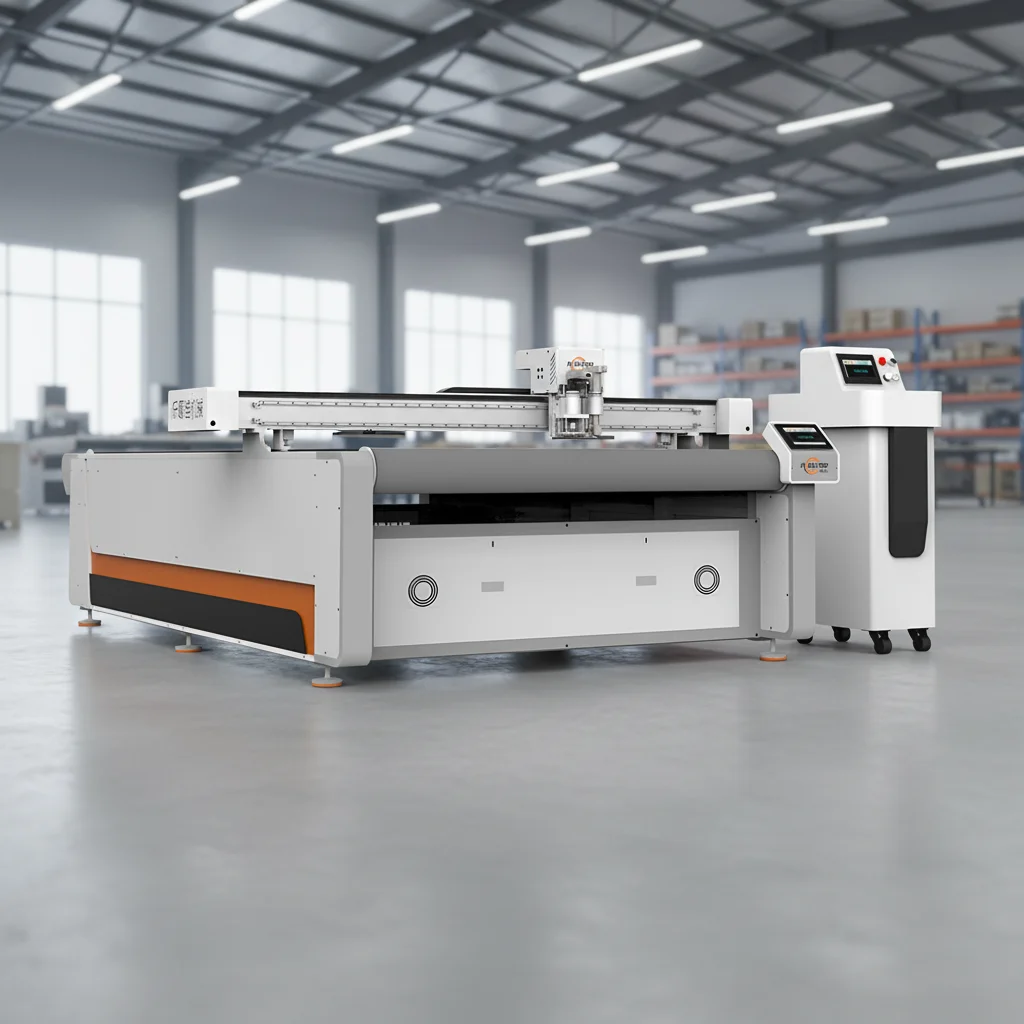
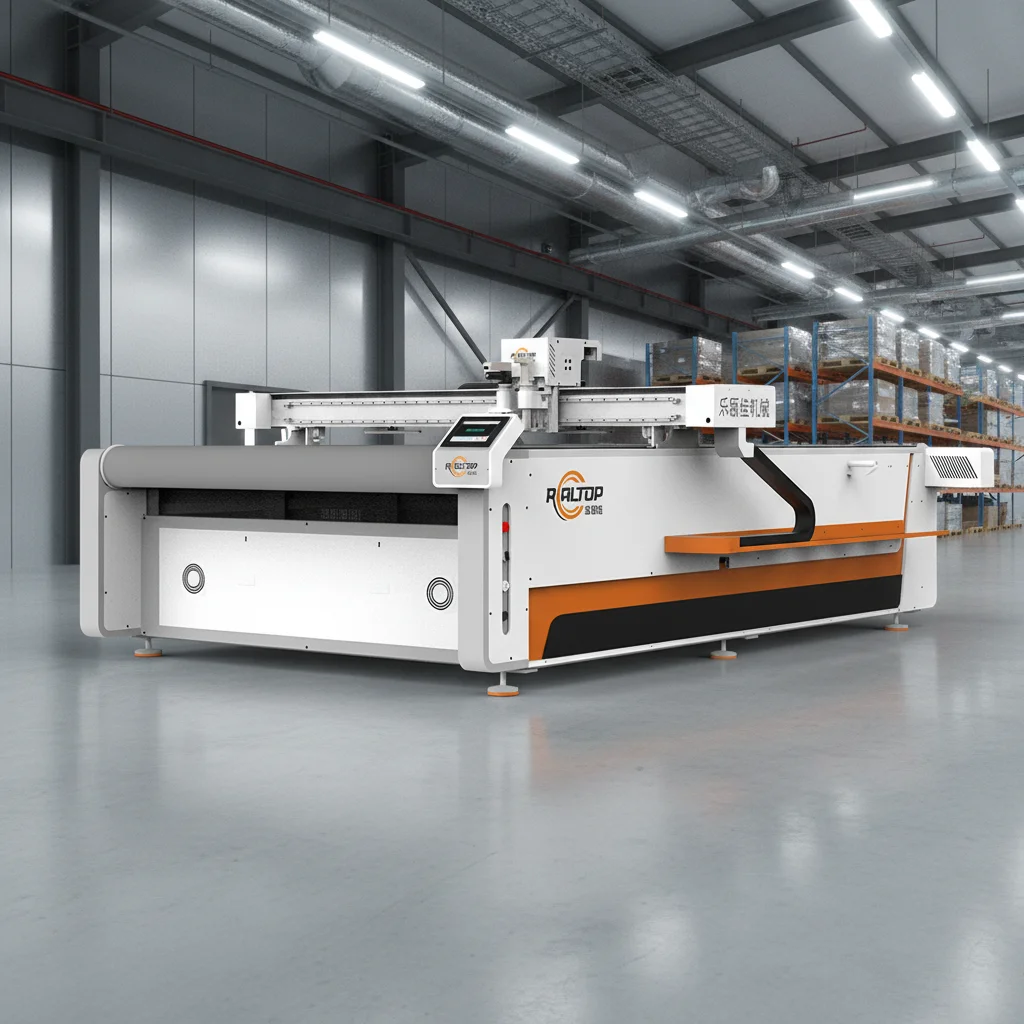
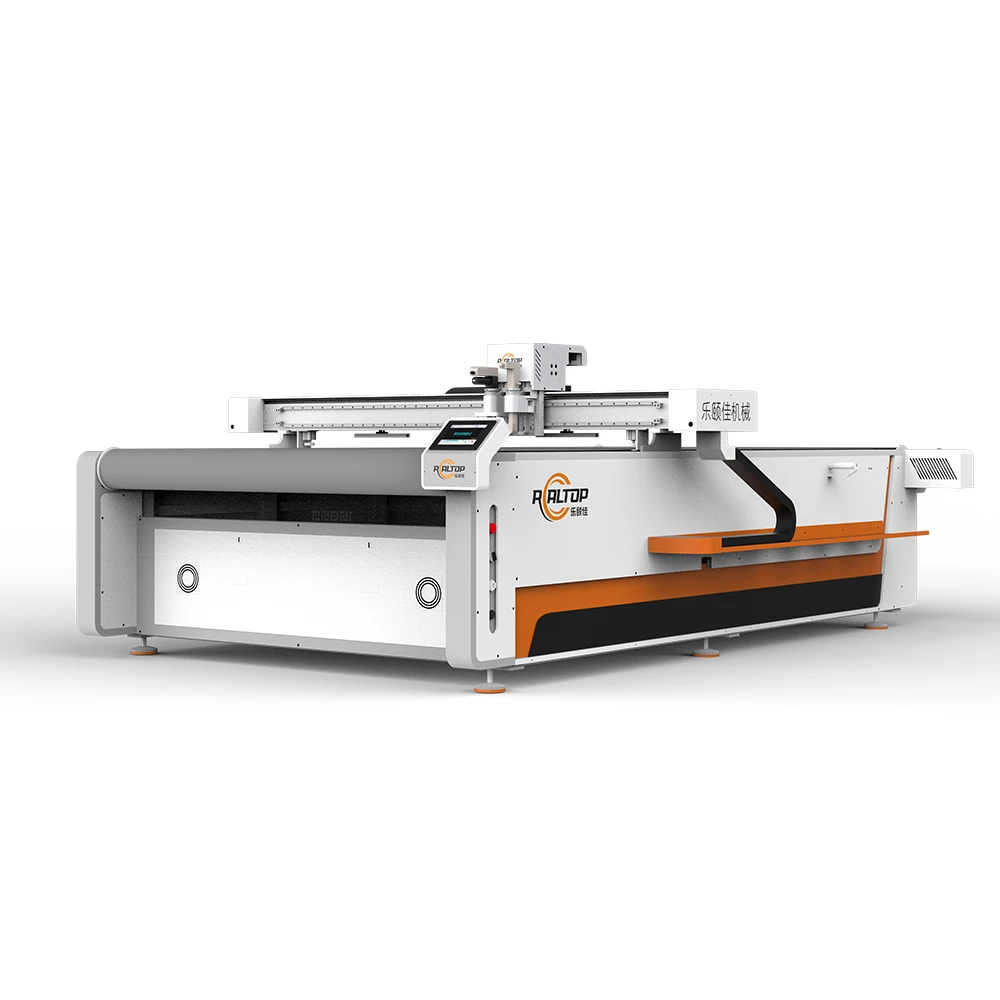
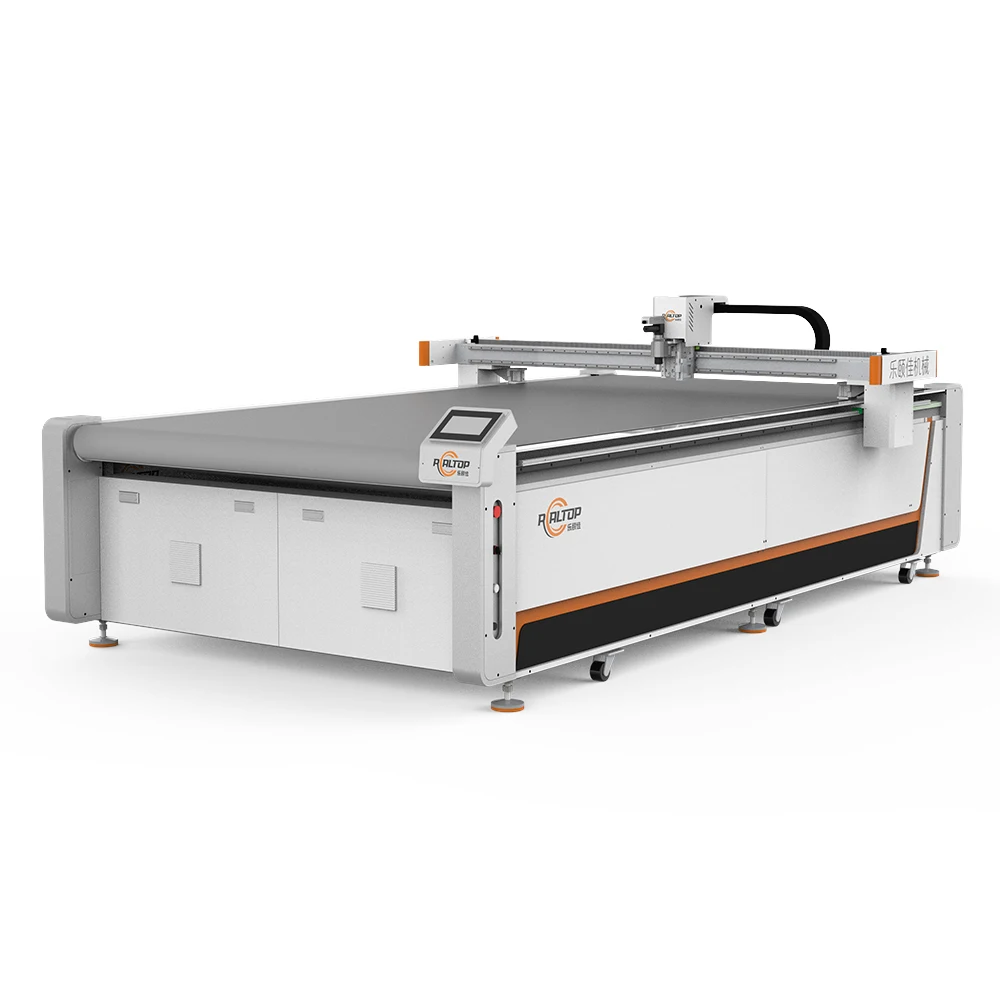
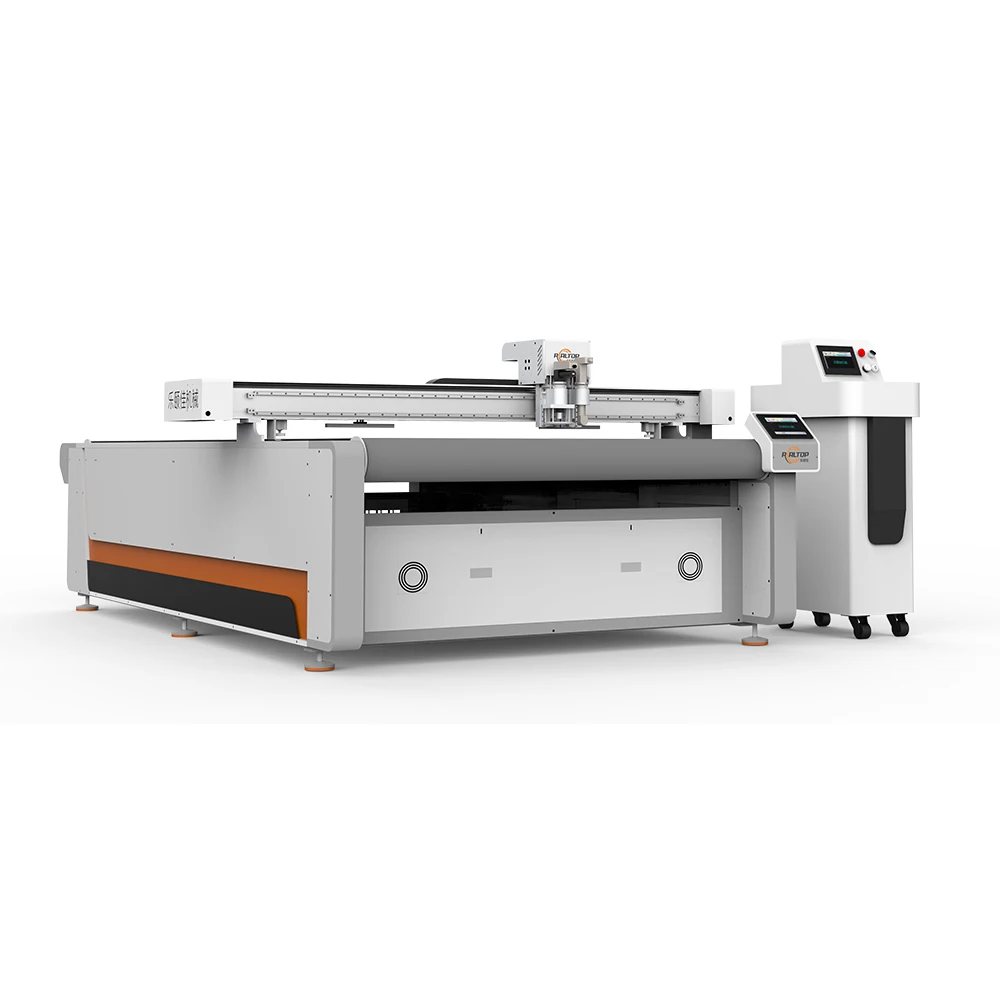
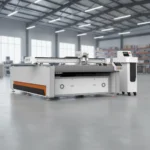
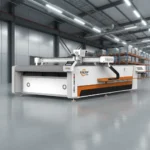
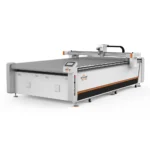
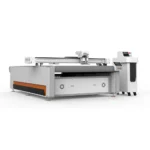
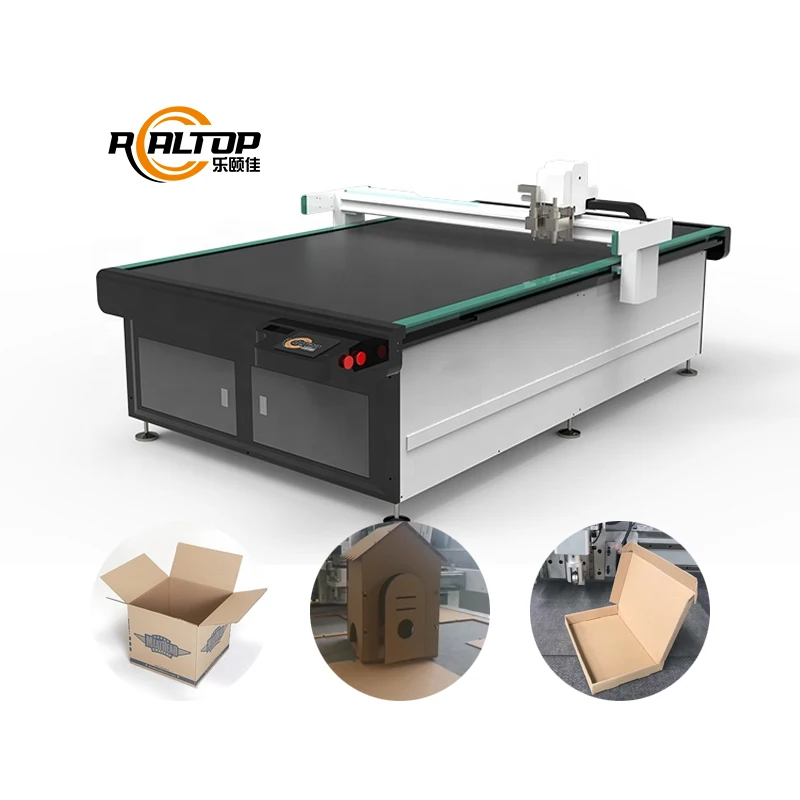
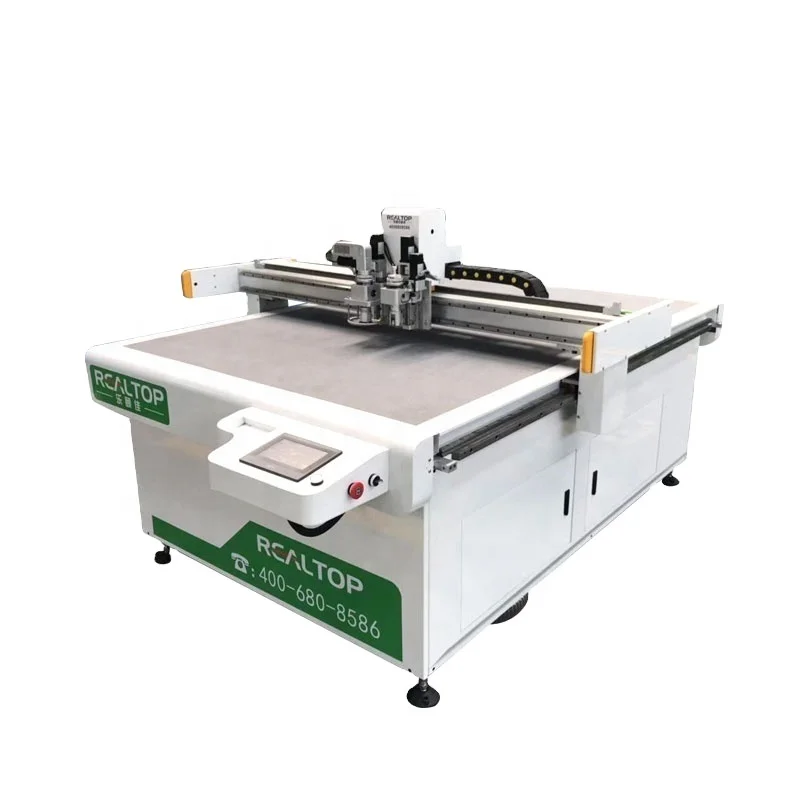
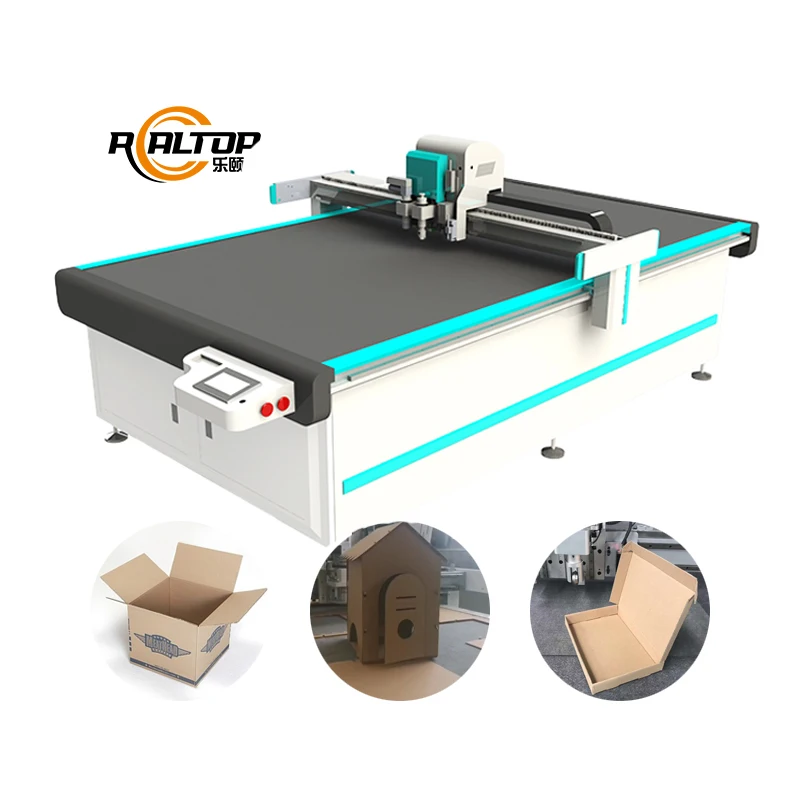
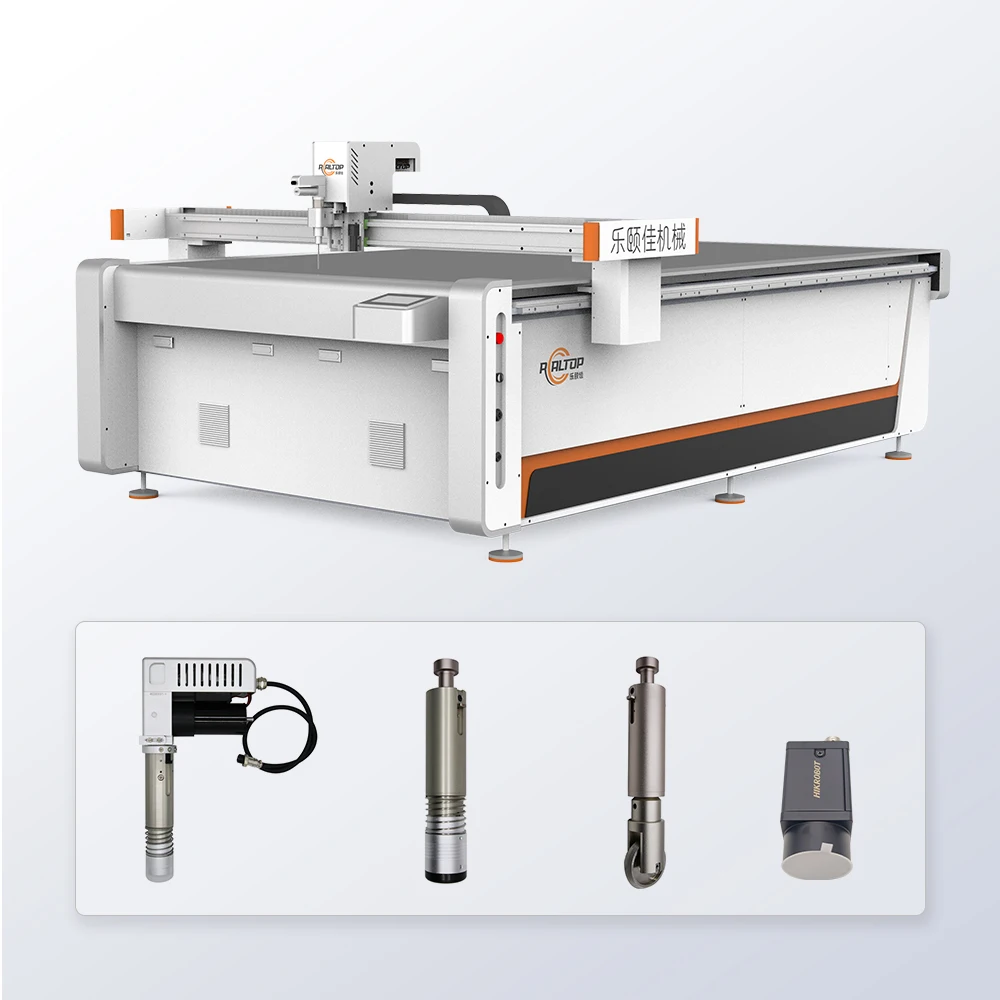
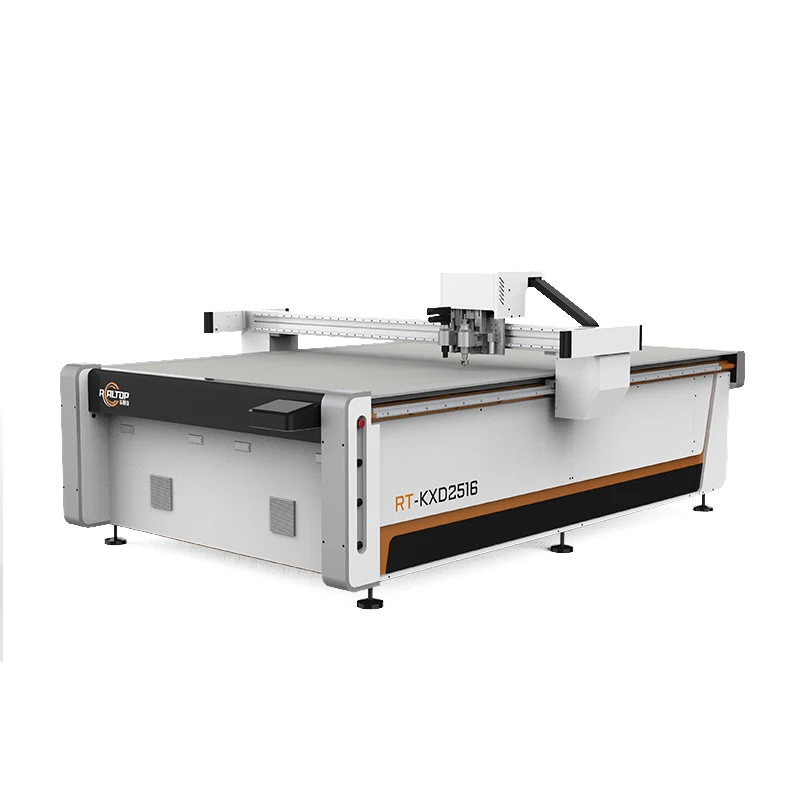
Core Build Quality — from welded steel frame through CNC machining center finishing to multi-tool head integration on the RT-D2516/RT-S2516, giving buyers a single accountable CNC cutting machine manufacturer for the entire machine.
Technical Specifications
| Parameter | Value |
|---|---|
| Model | RT-D2516/RT-S2516 |
| Product Type | CNC Oscillating Knife Cutting Machine with Auto-Feeding |
| Working Area | 1600×2500 mm |
| Overall Dimensions | 3450×2300×1250 mm |
| Rated Power | 9 kW |
| Voltage | 380V±10% |
| Control System | CNC with touch screen control panel, HP-GL compatible format |
| Table Type | Flat working table / Auto-feeding table (configurable) |
| Translational Velocity | 800–2000 mm/s |
| Cutting Speed | 200–800 mm/s (according to different cutting materials) |
| Cutting Thickness | ≤100 mm (varies with material) |
| Repeatability | ≤0.1 mm |
| Transmission System | Digital servo motor, linear guide, synchronous belt, ball screw |
| Servo Motor | Delta (optional Panasonic, made in Japan available) |
| Linear Guide | Taiwan Hiwin rail |
| Vacuum Table | Magnesium-aluminum alloy with PVDF coating, 7.5 kW pump with silencer |
| Tool Head Options | Oscillating knife, pneumatic knife, circular knife, drag knife, creasing wheel, punching |
| Visual Positioning | Small CCD camera, panoramic camera, projection positioning |
| Software | Auto nesting; supports PLT, DXF, AI formats |
| Language Options | English, Russian, Italian, Chinese (customizable) |
| Warranty | 1 year free warranty (domestic and overseas) |
Application Suitability
| Application | Material or Output |
|---|---|
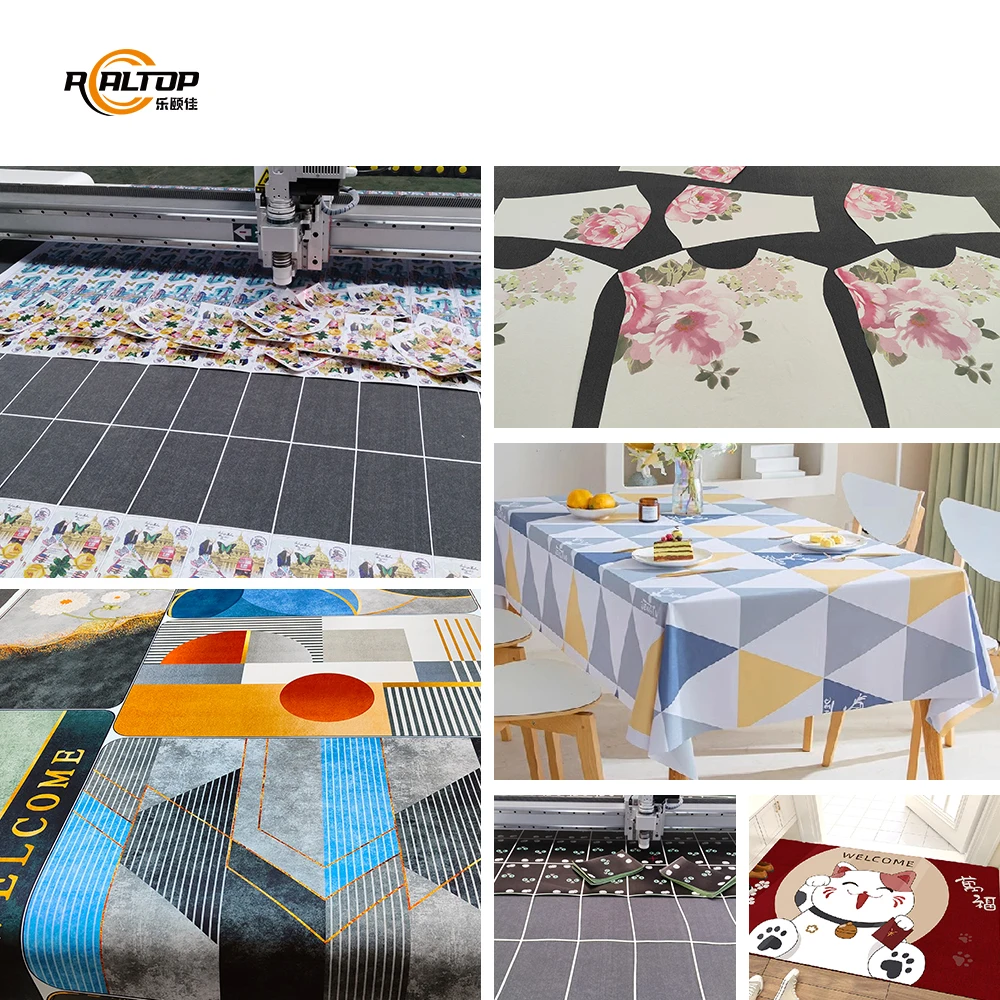
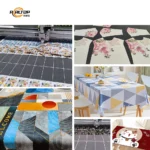
| Garment and footwear manufacturing | Single- and multi-layer fabric, textile, garment cloth, shoe material, non-woven fabric |
| Automotive interior production | Leather, sponge composite, PU, EVA, XPE for seats, door panels, and floor mats |
| Luggage and bag production | Synthetic leather, PVC, PP, PE, composite panels |
| Soft home furnishings | Sofa fabric, carpet, fur, sponge, curtain textiles |
| Gasket and sealing fabrication | PTFE, ETFE, rubber, fiberglass, silicone sheets |
| Packaging and graphic arts | Corrugated cardboard, sticker, film, foam board |
Why the Wrong Tool Head Costs More Than the Machine Itself
Buying a CNC cutting machine manufacturer’s equipment based on working area alone, then discovering the configured tool head cannot handle your material density, is a recurring industrial procurement failure. Tool head selection must be locked to your specific material and thickness before the purchase order is signed.
I recall a buyer who sourced an oscillating knife table for automotive EVA floor mats. The sample ran perfectly on low-density stock, but the production batch used a higher-density EVA compound. The original blade could not penetrate cleanly, leaving ragged edges and crushed foam across every cut contour. Four days on-site were required to swap the tool head and re-zone the vacuum table [NEED_CITE: material density impact on oscillating knife cutting performance]. This is why we require sample cutting on the buyer’s actual production material before any configuration is finalized.
Frame Construction and Dimensional Stability
The foundation of any precision cutting table is its frame. The RT-D2516/RT-S2516 is built on a welded thick-walled seamless steel structure that undergoes high-temperature tempering to relieve internal stresses. Following tempering, the frame is finished on a CNC machining center, which ensures the mounting surfaces for the linear guides and rack are flat and parallel. This build sequence prevents the gradual drift in cutting accuracy that occurs when frames are assembled on untreated weldments. For a CNC cutting machine manufacturer, controlling this process in-house means the buyer deals with one accountable source rather than separate frame and assembly vendors.
Vacuum Adsorption and Material Hold-Down
Holding flexible materials flat during high-speed knife travel requires consistent suction across the entire cutting bed. The vacuum table on this unit is machined from magnesium-aluminum alloy, finished with fluorocarbon PVDF powder spraying, and treated with both anodic and hard oxidation for surface flatness and corrosion resistance. The integrated 7.5 kW aviation aluminum vacuum pump includes a built-in silencer sponge to reduce operational noise. When cutting small gasket parts or narrow fabric strips, zoned vacuum control is available to concentrate suction exactly where the material needs it [NEED_CITE: vacuum zoning for small-part hold-down on CNC flatbed cutters].
Decoding the Specifications That Matter on the Production Floor
Translational velocity of 800–2000 mm/s defines how fast the gantry moves between cuts, while cutting speed of 200–800 mm/s is the actual blade travel rate through material. These two figures together determine the real cycle time. Repeatability of ≤0.1 mm is achieved through the combination of Delta digital servo motors and Taiwan Hiwin linear guides; this tolerance level is critical when cutting interlocking gasket profiles or multi-layer garment patterns where cumulative error ruins nesting yield. The Swiss imported oscillating knife head delivers high-frequency vibration for clean penetration of dense composites up to the stated thickness limit, whereas the drag knife suits thinner films and stickers. Selecting the correct tool head from the available options — oscillating, pneumatic, circular, drag, creasing wheel, or punching — directly determines edge quality and production speed for your specific material [NEED_CITE: oscillating versus drag knife selection criteria for flexible materials].
The Hidden Cost of Skipping Configuration Verification
When vacuum table zoning is not matched to the smallest part in your nesting layout, lightweight materials lift off the table during blade retraction. This produces miscut pieces and forces the operator to stop, reposition, and recut, eroding throughput across the shift. Similarly, if the CCD camera contour recognition is specified but the vision system is not calibrated to your print mark size and contrast, the machine cannot track registration marks at full cutting speed [NEED_CITE: CCD camera mark tracking limitations on printed textiles]. Software incompatibility is another frequent issue — if the nesting package cannot import your existing PLT, DXF, or AI files, operators waste time converting formats instead of cutting production orders.
Why Source This Machine from the Core Factory
The design team engineers the frame, motion system, and tool head integration under one roof, so configuration changes do not require cross-vendor negotiation. The in-house CNC machining center finishes all critical mounting surfaces, eliminating the tolerance stacking that occurs when frames are outsourced. Voltage and control language are confirmed against your facility’s supply and operator preference before production begins. Every unit is tested on the buyer’s own material with a documented sample cutting report before crating. The factory supports OEM branding and custom configuration for machinery distributors and importers, with consistent build quality across repeat orders.
Documentation & Verification
- Machine specification sheet with tool head and table configuration confirmed per your material
- Sample cutting report produced on your actual fabric, leather, or foam stock before commitment
- Electrical schematic and voltage confirmation matching your facility’s three-phase supply
- Factory test record documenting repeatability and cutting accuracy prior to shipment
- Software licence and file format compatibility note for PLT, DXF, and AI workflows
- CE declaration documentation provided per unit where applicable
Installation, Commissioning & Support
- Foundation must be level within tolerance to support the 3450×2300×1250 mm overall dimensions and cutting bed weight
- Dedicated 380V±10% three-phase circuit required to supply the 9 kW rated power and 7.5 kW vacuum pump
- Machine ships with auto-feeding conveyor belt pre-installed; final alignment verified during on-site commissioning
- Touch screen control panel configured to selected language (English, Russian, Italian, or Chinese) before operator training begins
- Tool head calibration performed across oscillating, pneumatic, drag, and creasing options during first production run
- Spare parts list covers Swiss imported knife blades, vacuum pump filters, and synchronous belt segments
Preparing Your Inquiry for Accurate Quotation
To receive a configuration and lead time that matches your production requirements, provide the material type, density, and maximum thickness you will cut daily. Include your standard sheet or roll width and the daily volume you need to sustain. Confirm your facility’s voltage, frequency, and the control language your operators prefer. If you have existing nesting files or an upstream printing workflow, share a sample so software compatibility can be verified before the order is placed.
Frequently Asked Questions
Q: How is the machine frame built and what ensures long-term dimensional accuracy?
A: The frame is fabricated from welded thick-walled seamless steel and subjected to high-temperature tempering to relieve stress. All mounting surfaces are then finished on an in-house CNC machining center, ensuring flatness and parallelism for the linear guides. This process prevents the gradual accuracy loss common in frames that skip tempering or rely on manual surface preparation.
Q: What OEM and customization range does the factory offer?
A: The factory accommodates custom working area sizes, tool head combinations, voltage ratings, and control panel languages. OEM branding on the machine body and software interface is available for distributors and importers. Each custom configuration is documented in the specification sheet and verified through factory testing before dispatch.
Q: Can I send my material for sample cutting before placing an order?
A: Yes, sample cutting on your actual production material is a standard step in the sales process. You send your fabric, leather, foam, or composite stock, and the factory tests the recommended tool head, cutting speed, and vacuum zoning. A detailed sample cutting report is returned with edge quality documentation before any purchase commitment.
Q: What quality control steps are performed at the factory before shipment?
A: Each unit undergoes a full factory test including frame flatness verification, servo motor tuning, repeatability measurement to the stated tolerance, and tool head calibration. The vacuum pump suction is tested across all zones with the configured table surface. Results are recorded in a factory test report that ships with the machine documentation package.
You may also like

商品评价
Clear filtersThere are no reviews yet.