






-
 Courier delivery
-
 DHL Courier delivery
-
 Warranty 1 year
-
 Free 30-Day returns

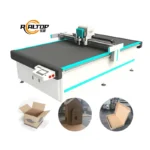
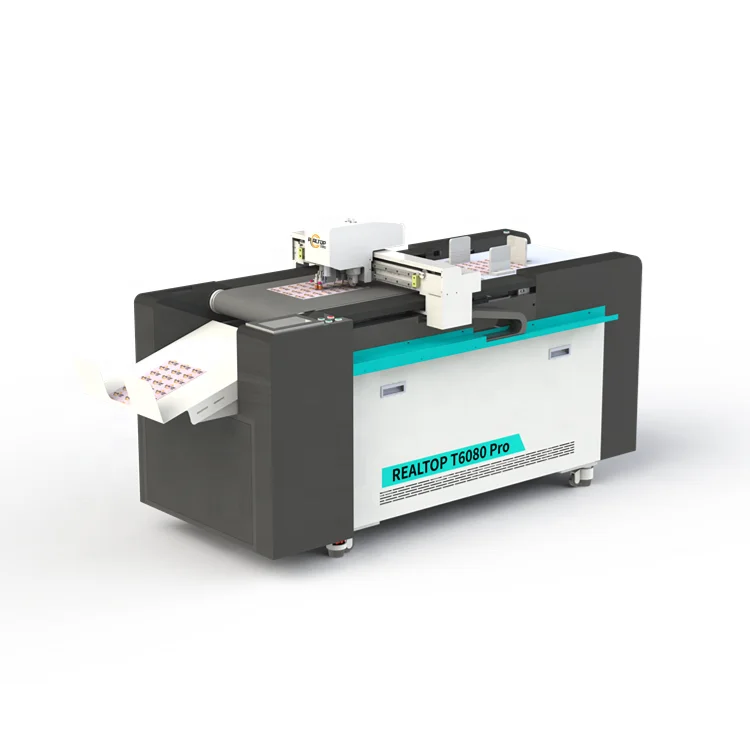
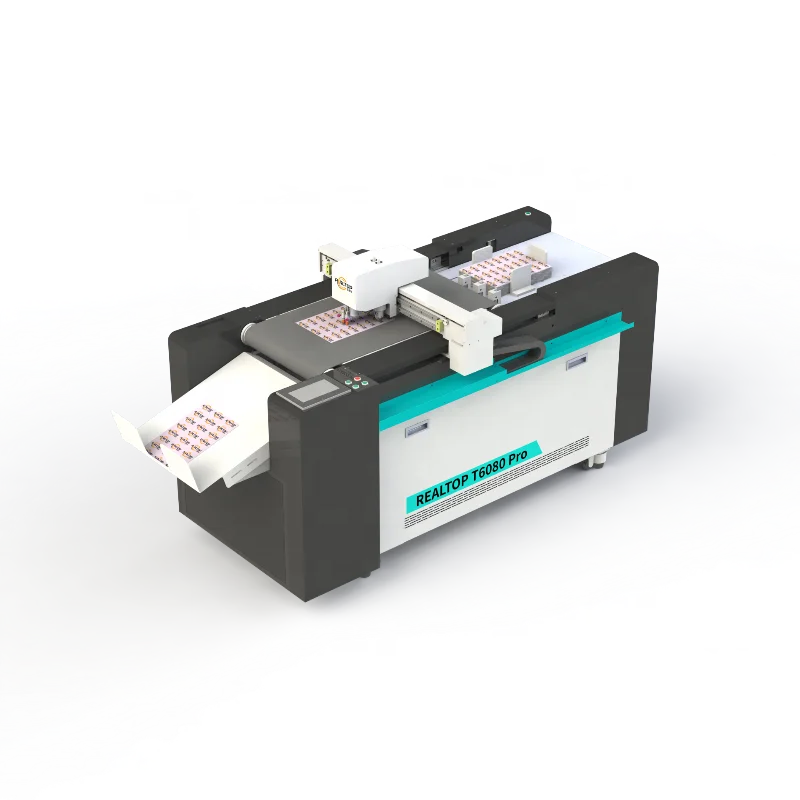
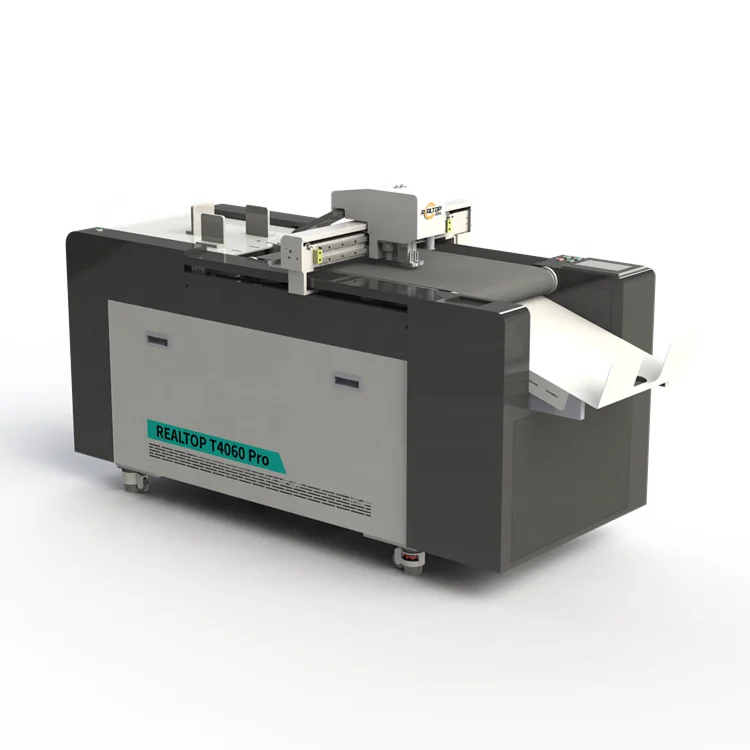
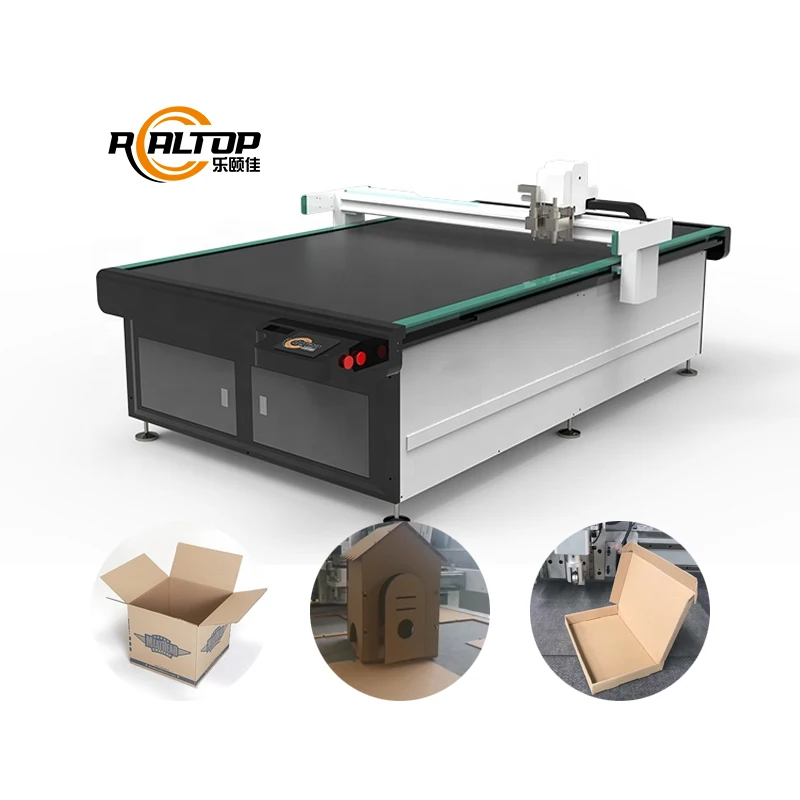
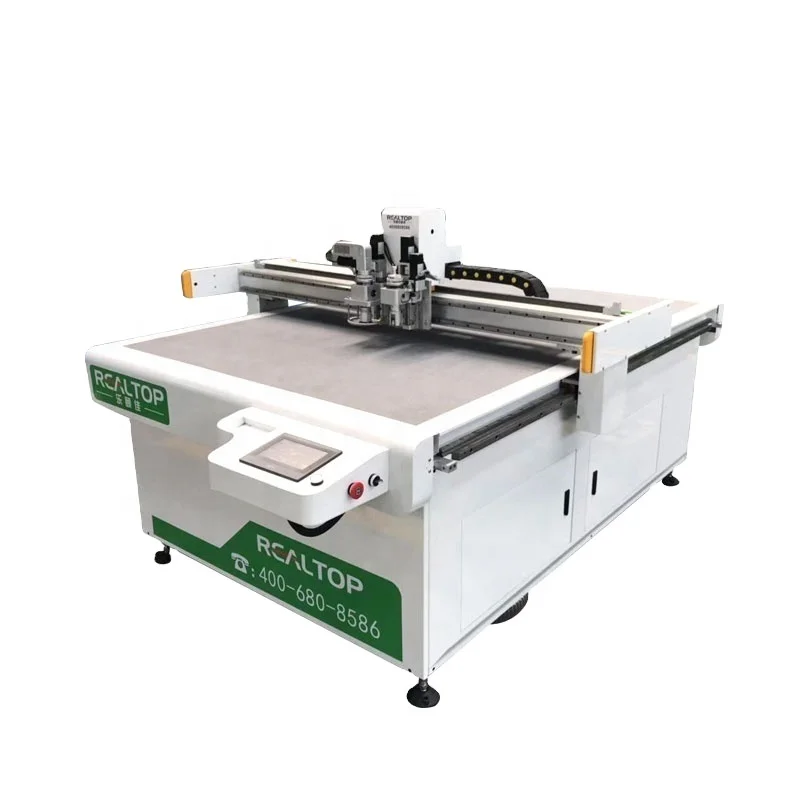
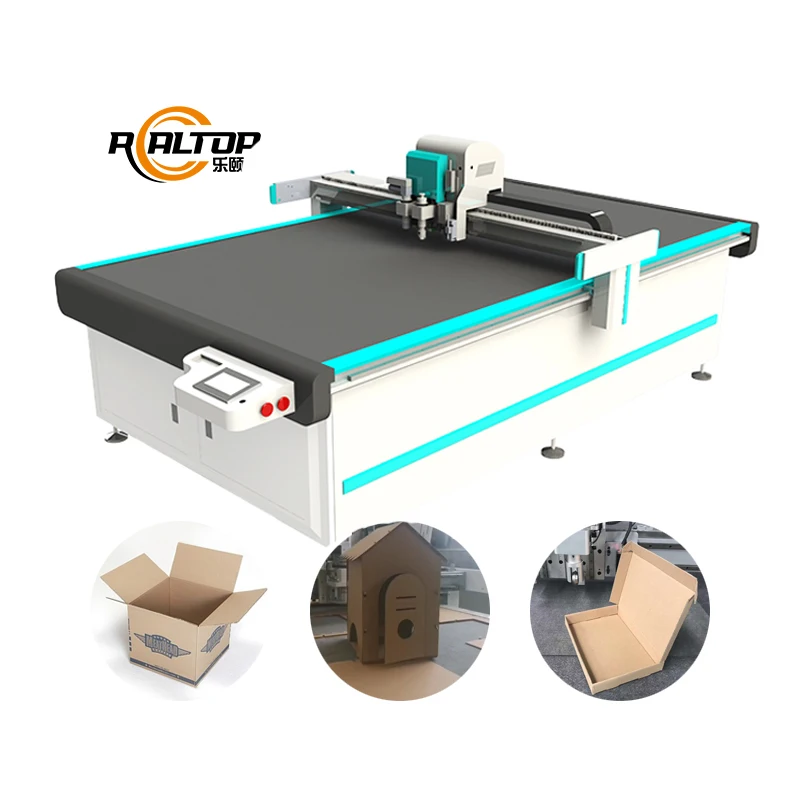
Integrated Design Control — Realtop engineers the RTT4060 frame, motion system, and tool head configuration together, eliminating the mismatch between structural rigidity and cutting performance common in assembled-from-sourced-parts machines.
Technical Specifications
| Parameter | Value |
|---|---|
| Model | RTT4060 / RTT4060 Pro |
| Product Type | CNC Oscillating Knife Cutting Machine |
| Max Working Area | 400mm × 600mm |
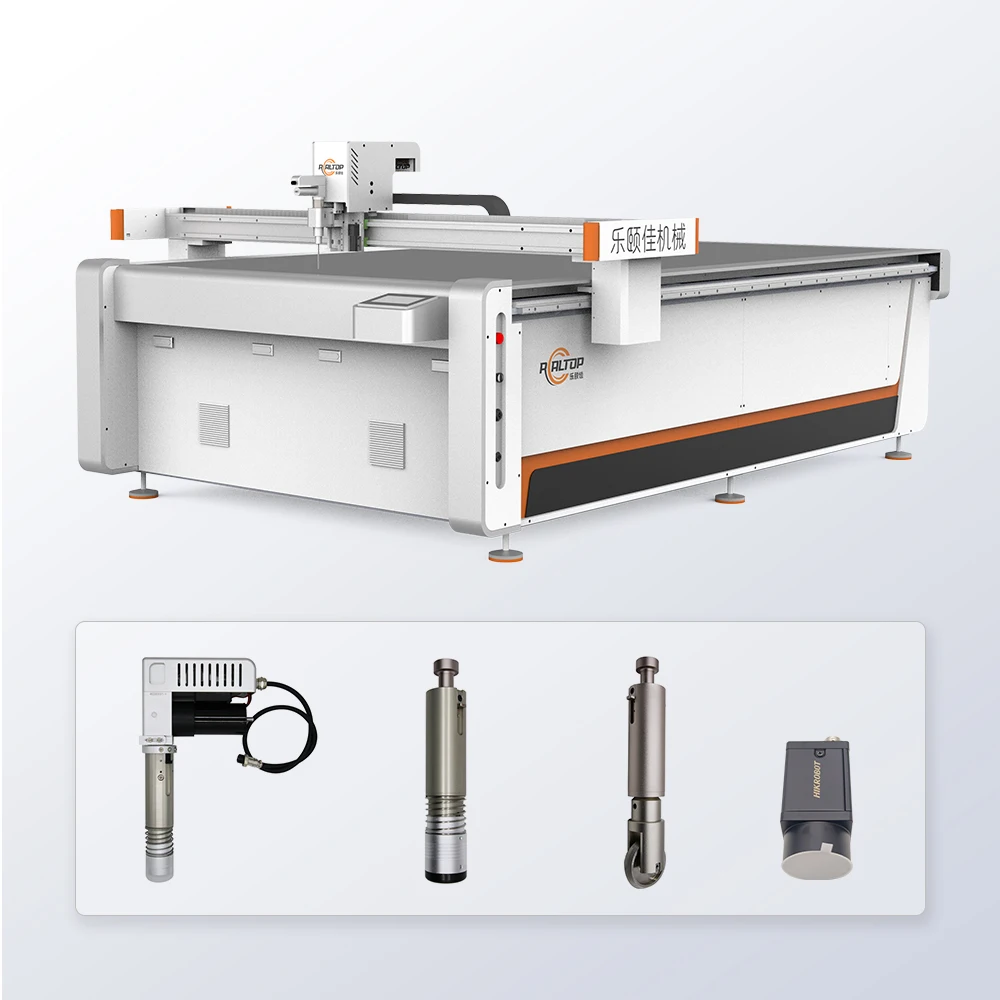
| Tools Group | Cutting Tool; Kiss-cutting Tool; Creasing Tool; CCD Camera; High Speed Oscillating Knife (Pro only) |
| Max Cutting Speed | 1500mm/s (according to the material) |
| Cutting Thickness (RTT4060) | <2mm (basis not stated in source — confirm material type / density) |
| Cutting Thickness (RTT4060 Pro) | <5mm (basis not stated in source — confirm material type / density) |
| Positioning Accuracy | 0.05mm |
| Profile Format | DXF, OLT, PDF, AI |
| Transmission Method | Ethernet port |
| Rated Power | 2.5kW |
Application Suitability
| Application | Material or Output |
|---|---|
| Packaging sample making and carton prototyping | Corrugated board, folding carton stock, grey board with kiss-cutting and creasing |
| Signage and label production | Self-adhesive vinyl, reflective film, magnetic sheet, printed contour cutting via CCD |
| Gasket and thin foam fabrication | Non-asbestos fiber, cork-rubber compound, closed-cell foam, PTFE sheet |
| Garment and leather accessory cutting | Genuine leather hides, synthetic PU, woven fabric, nonwoven interlining |
Why "Rated Thickness" Can Mislead Your Customers
Real cutting capacity depends on material density and layer construction, not a single millimeter number.
When a distributor quotes a CNC knife cutting machine based only on a headline thickness figure, the end-user often discovers on delivery that the machine struggles with their specific composite or foam density. I have watched production stalls happen this way in Shandong workshops — the spec sheet said the machine handles the thickness, but the actual laminate structure demanded a different tool head or slower feed rate. With the RTT4060 series, the cutting thickness rating must be validated against the buyer’s reference material before an order is confirmed. [NEED_CITE: material density variation and its effect on oscillating knife penetration]
This is exactly where the disconnect between catalog specifications and workshop reality causes the most friction. A material rated at 2mm might cut cleanly on a soft foam but leave ragged edges on a dense gasket sheet at the same thickness. Running a sample cut on the actual stock eliminates that guesswork.
Built From the Frame Up, Not Assembled From Catalog Parts
The RTT4060 is designed and manufactured in-house, which means the frame stiffness, linear motion components, and servo tuning are matched to the oscillating knife loads from the start. A CNC oscillating knife cutting table OEM approach that relies on third-party sub-assemblies often introduces compliance errors between the gantry and the cutting head. Realtop’s in-house engineering keeps those tolerances under one roof, and that matters when a distributor needs consistent cut quality across every unit they ship.
CCD Contour Recognition as a Standard Tool, Not an Afterthought
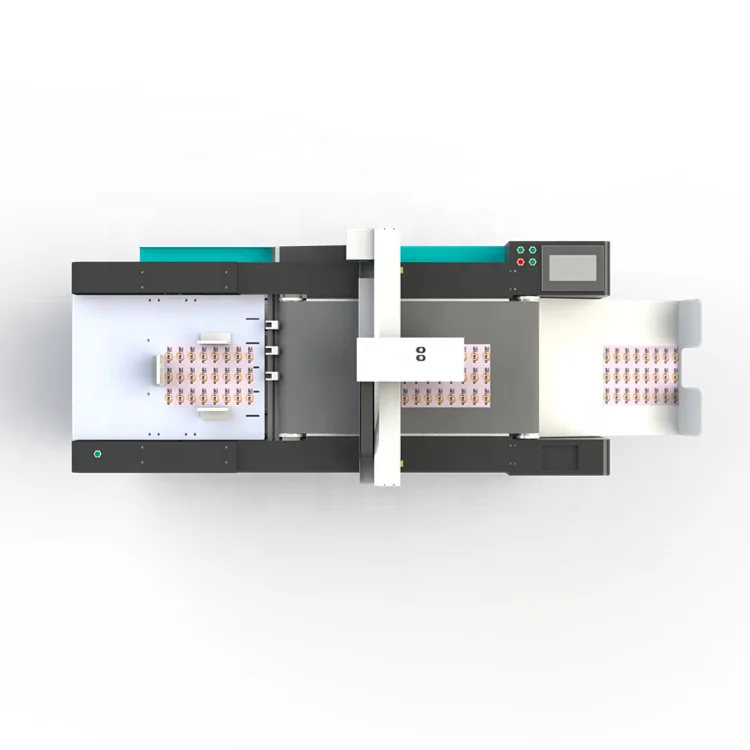
Printed contour cutting is part of the standard tools group on the RTT4060, not an optional upgrade bolted on later. The CCD camera tracks registration marks on pre-printed sheets, allowing the CNC knife cutting machine to follow distorted or skewed print layouts without operator intervention. For sign shops and packaging sample makers, this means less manual alignment and fewer wasted sheets when print-to-cut registration drifts. [NEED_CITE: CCD camera registration accuracy on digitally printed substrates]
What the Specs Actually Mean on the Shop Floor
The 0.05mm positioning accuracy across the 400×600mm working area sets the tolerance window for tight nesting layouts, where small label parts or gasket profiles sit close together on the sheet. Ethernet-based file transmission with DXF, OLT, PDF, and AI support means the machine fits into a workflow where designers send files directly from standard vector software without format conversion. The 2.5kW rated power covers the vacuum pump, servo drives, and oscillating knife motor simultaneously, so buyers do not need to provision an oversized circuit. The RTT4060 Pro adds a high-speed oscillating knife for denser materials up to the stated thickness range, while the base RTT4060 suits thinner substrates where edge finish matters more than raw depth.
The Cost of Skipping Material-Specific Configuration
When the tool head is chosen by default rather than matched to the material, the consequences show up at the customer’s site: crushed foam edges, incomplete kiss-cuts on adhesive vinyl, or creasing wheels that crack rather than score folding carton stock. These problems rarely surface during factory acceptance because the test material is generic. By the time the distributor discovers the mismatch, the machine is already overseas, and field retrofits cost far more than getting the configuration right before production. [NEED_CITE: post-shipment tooling replacement costs for CNC cutting equipment]
Why Source This CNC Knife Cutting Machine Manufacturer
Realtop controls both knife tooling selection and machine build quality under one facility, so a distributor evaluates the complete system rather than stitching together components from different vendors. Sample cutting on the end-user’s own material happens before the order is locked, not after delivery. Voltage, plug type, and control language are confirmed in writing during the specification stage, reducing customs and commissioning surprises. The in-house design team adjusts vacuum table zoning and tool group configurations per target application. Factory test records accompany every unit, giving distributors documented acceptance criteria they can share with their own customers.
Documentation & Verification
- Machine specification sheet listing confirmed tool head and table configuration per target material
- Electrical schematic with voltage, frequency, and plug type locked before production begins
- Sample cutting report produced on the distributor’s reference material stock
- Factory test record documenting positioning accuracy and cutting performance before dispatch
- Software licence note and file format compatibility checklist included with shipment
- Spare parts list identifying consumable blades and replaceable tool head components
Installation, Commissioning & Support
- 2.5kW rated power requires a dedicated circuit matching confirmed voltage and frequency at the installation site
- 400×600mm working area footprint allows placement in compact sample rooms without floor reinforcement
- Ethernet port connection enables direct file transfer from the design station during first-day commissioning
- CCD camera calibration performed on-site using the buyer’s printed reference sheets for contour accuracy
- Oscillating knife and creasing tool blades shipped as initial spare set with reorder lead times documented
- Vacuum table zoning tested with the buyer’s smallest part geometry to confirm hold-down before sign-off
What to Prepare Before Requesting a Quote
Share the specific material types your customers cut most often, including thickness ranges and whether the stock is single-layer or laminated composite. Specify the target market voltage and frequency, along with the preferred control interface language. If your customers run existing nesting software or use specific file formats daily, list those so compatibility is confirmed before production.
Frequently Asked Questions
Q: How does Realtop confirm cutting thickness on the distributor’s reference material before order?
A: The buyer sends representative material samples to the factory. Realtop runs cutting tests using the proposed tool head configuration, documents edge quality, cutting depth, and feed rate, and shares a sample cutting report. The tool group and machine settings are finalized based on these results before the order enters production.
Q: What voltage, plug, and control language options exist, and when are they locked?
A: Voltage and frequency are configurable to match the target market. Plug type and control interface language are specified during the quotation stage and confirmed in the electrical schematic before production starts. Changes after this point may affect lead time.
Q: What is the OEM and private-label scope for distributors importing the RTT4060 series?
A: Realtop supports OEM configuration including tool group selection, vacuum table zoning, control language, and cosmetic branding adjustments. The scope is defined during the specification review, and all customizations are documented in the machine specification sheet before manufacturing.
Q: How does the factory test record support the distributor’s acceptance procedure?
A: Each unit ships with a factory test record covering positioning accuracy verification, tool head function checks, and CCD camera registration tests. Distributors use this document as a baseline to run their own acceptance tests upon arrival and confirm the machine matches the shipped configuration.
Q: What spare parts ship with the machine, and what is the reorder lead time?
A: The initial shipment includes consumable oscillating knife blades, kiss-cutting blades, and creasing wheel components matched to the configured tool group. A spare parts list with part numbers and typical reorder lead times is included in the documentation package for the distributor’s inventory planning.
You may also like

商品评价
Clear filtersThere are no reviews yet.