





-
 Courier delivery
-
 DHL Courier delivery
-
 Warranty 1 year
-
 Free 30-Day returns

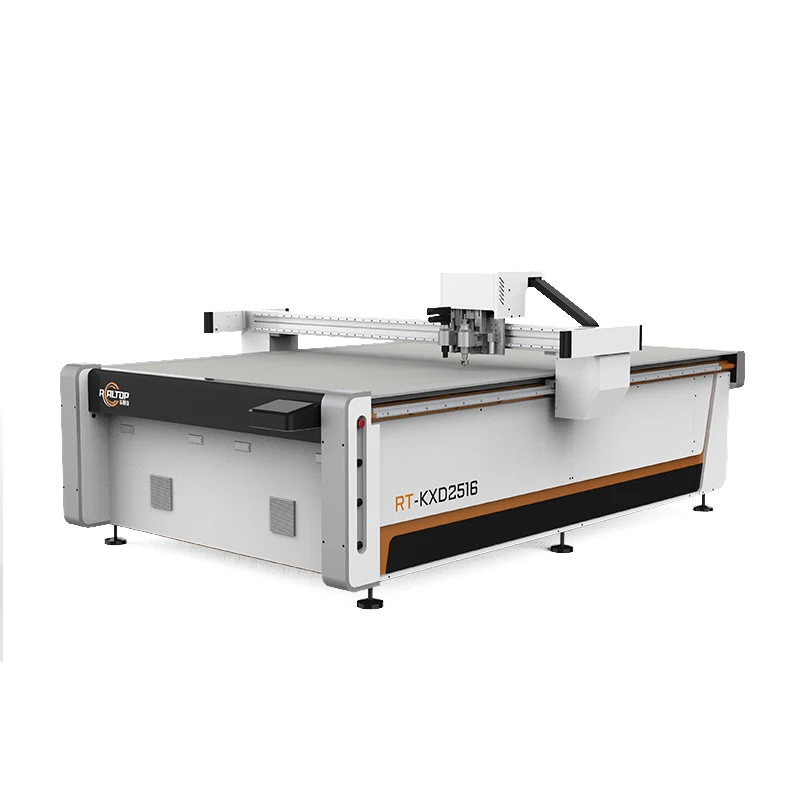
Build Quality Verified In-House — frame rigidity, motion accuracy and creasing wheel pressure are checked on our Jinan test bench before any RTT6080 ships to a packaging or carton sample maker.
Technical Specifications
| Parameter | Value |
|---|---|
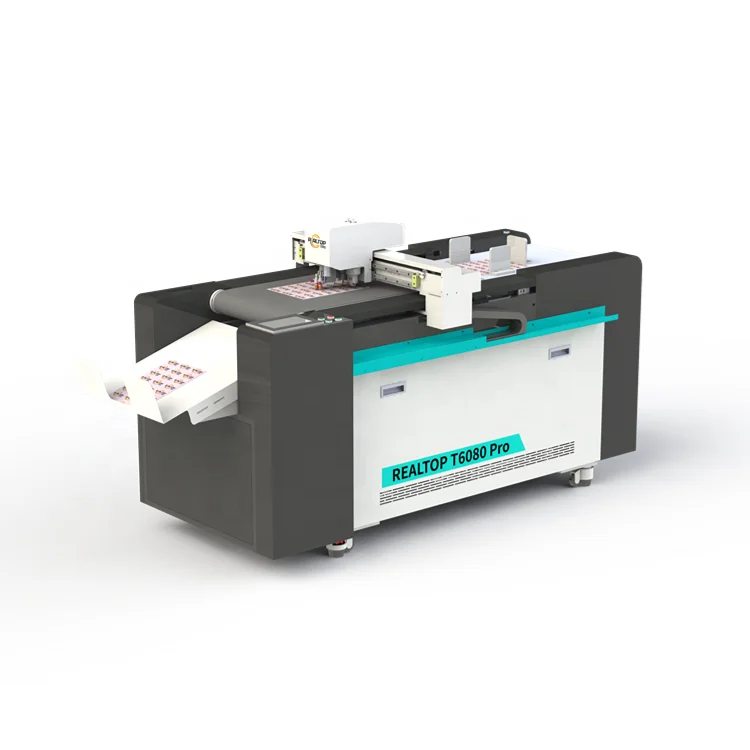
| Model | RTT6080 / RTT6080 Pro |
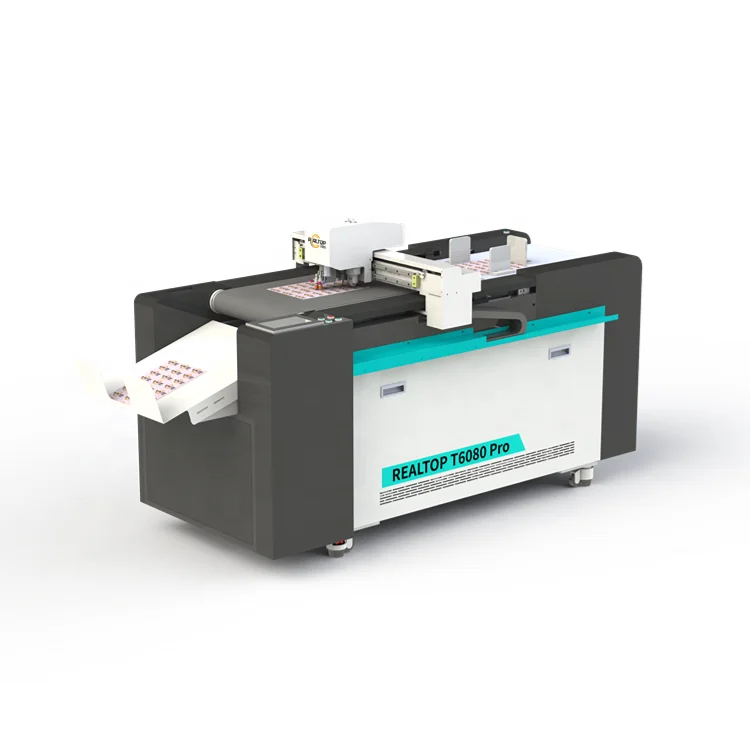
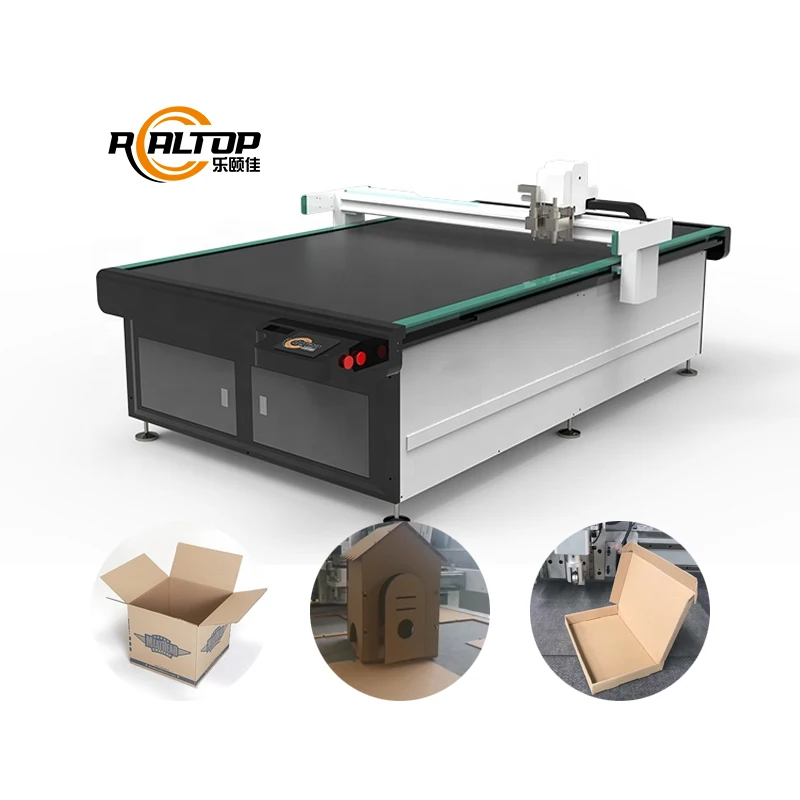
| Product Type | CNC Digital Creasing and Cutting Machine |
| Max Working Area | 600mm × 800mm |
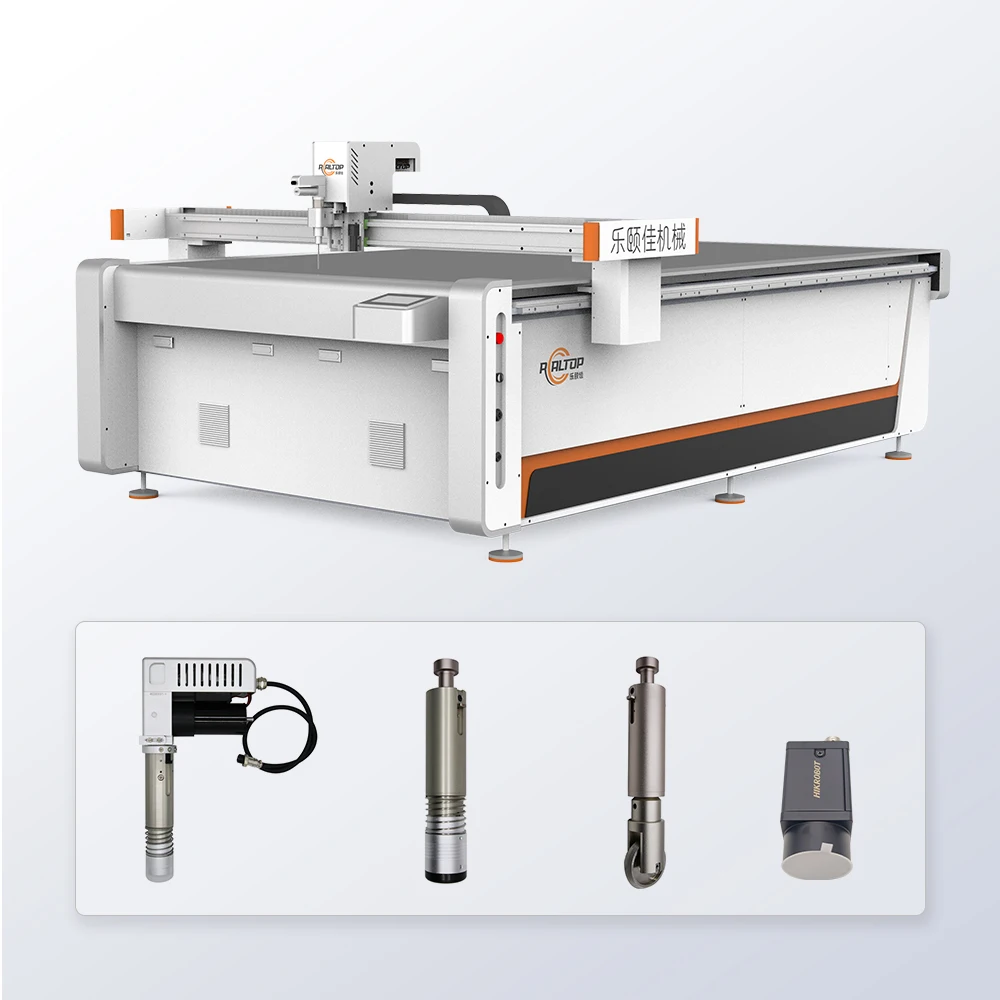
| Tool Group | Cutting tool, kiss cutting tool, creasing tool, CCD camera; high speed oscillating knife (RTT6080 Pro) |
| Max Cutting Speed | 1500mm/s (according to the material) |
| Cutting Thickness | ≤2mm (RTT6080); ≤5mm (RTT6080 Pro) |
| Positioning Accuracy | 0.05mm |
| File Format Compatibility | DXF, PLT, PDF, AI |
| Transfer Method | Ethernet port |
| Rated Power | 3.2KW |
| Voltage & Frequency | 220V/380V, 50Hz |
| Control System | CNC |
| CCD Camera | Yes (contour recognition) |
| Standards | CE declaration where applicable |
Application Suitability
| Application | Material or Output |
|---|---|
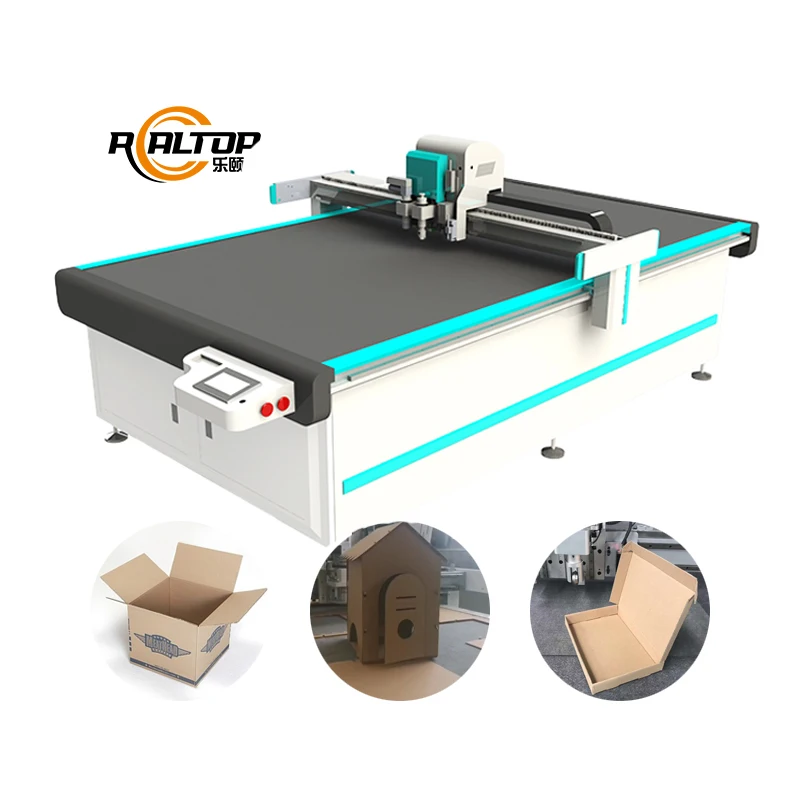
| Carton and packaging sample making | 300gsm and heavier card stock, E-flute corrugated, folding carton board |
| Short-run digital die cutting | Packaging prototypes, mock-ups and point-of-sale display components |
| Advertising and signage board processing | PVC foam board, lightweight composite sheets, self-adhesive vinyl on backing |
| Small-format paper converting | Corrugated inserts, gasket blanks, thin rubber and felt sheets up to rated thickness |
Why the Crease Line Cracks Before the Quote Is Signed
Every packaging sample maker has seen it — a creasing wheel set for 300gsm card stock is asked to fold E-flute corrugated without warning, and the entire batch cracks along every fold line. The tool head must be specified against the exact board weight and flute profile before production begins.
I learned this on our test bench in Jinan when a client ran corrugated on a machine configured for thin card. The creasing wheel pressure was wrong for the substrate, and their sample batch was scrapped. A CNC creasing and cutting machine manufacturer that does not lock material specs before tooling configuration is leaving your yield to chance. [NEED_CITE: creasing wheel pressure requirements by board grade]
Tool Head Selection by Board Weight
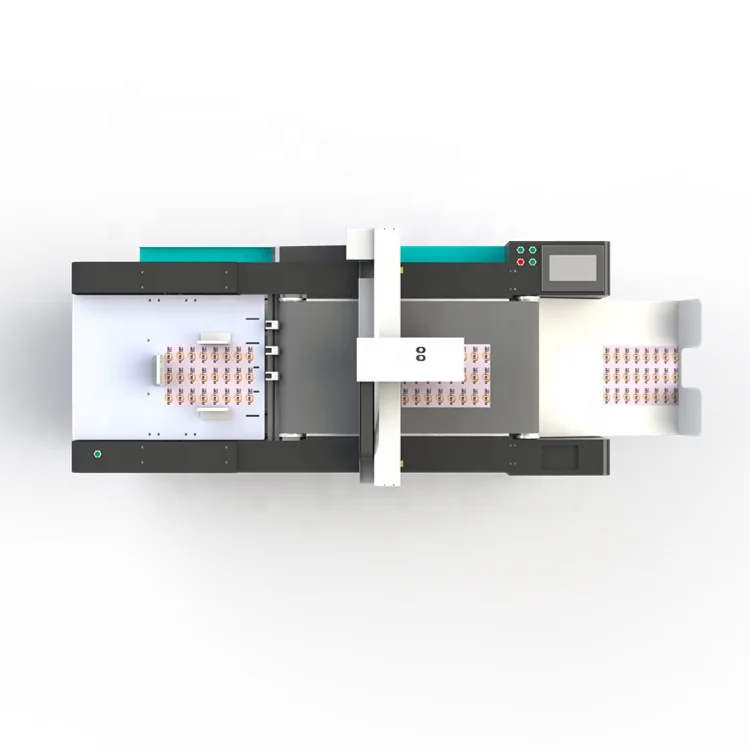
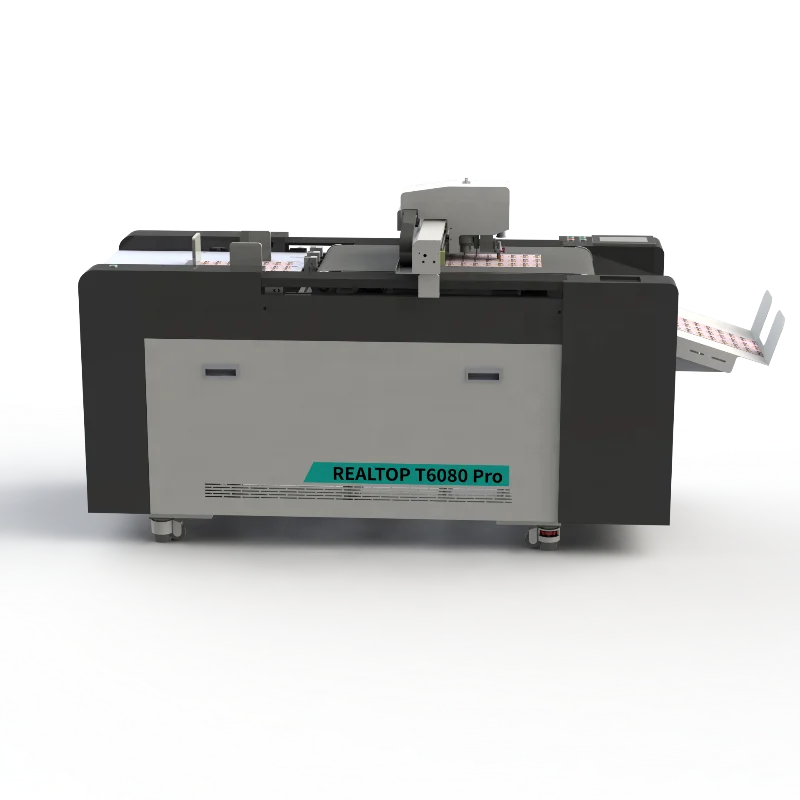
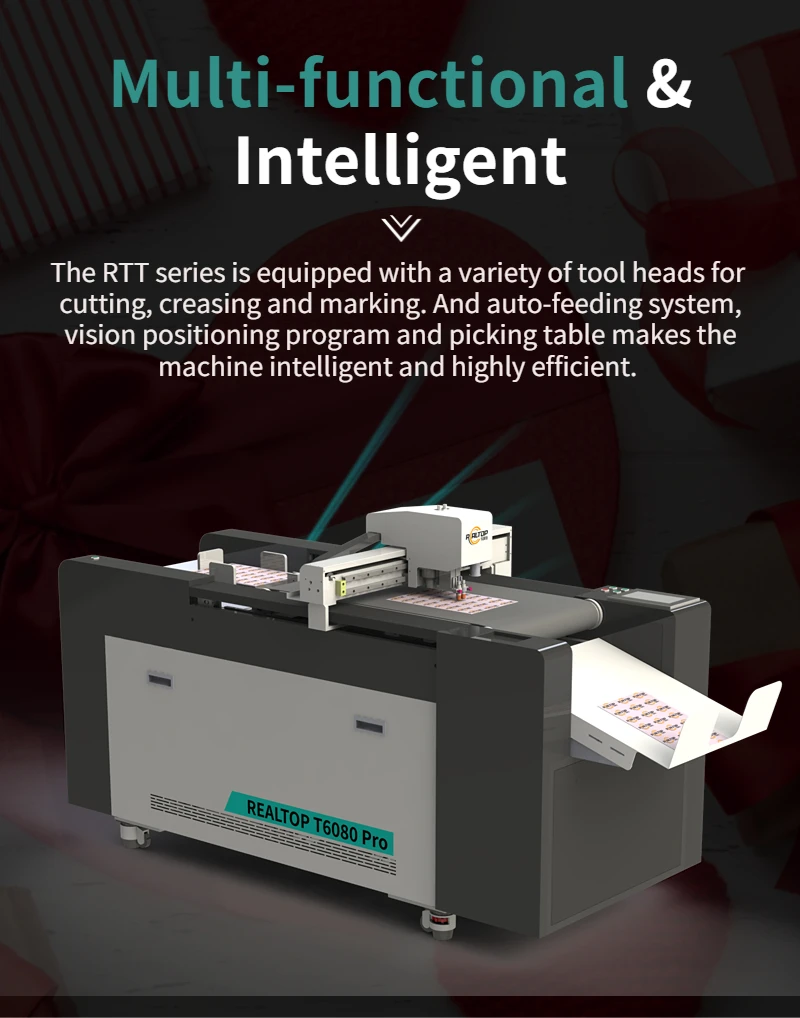
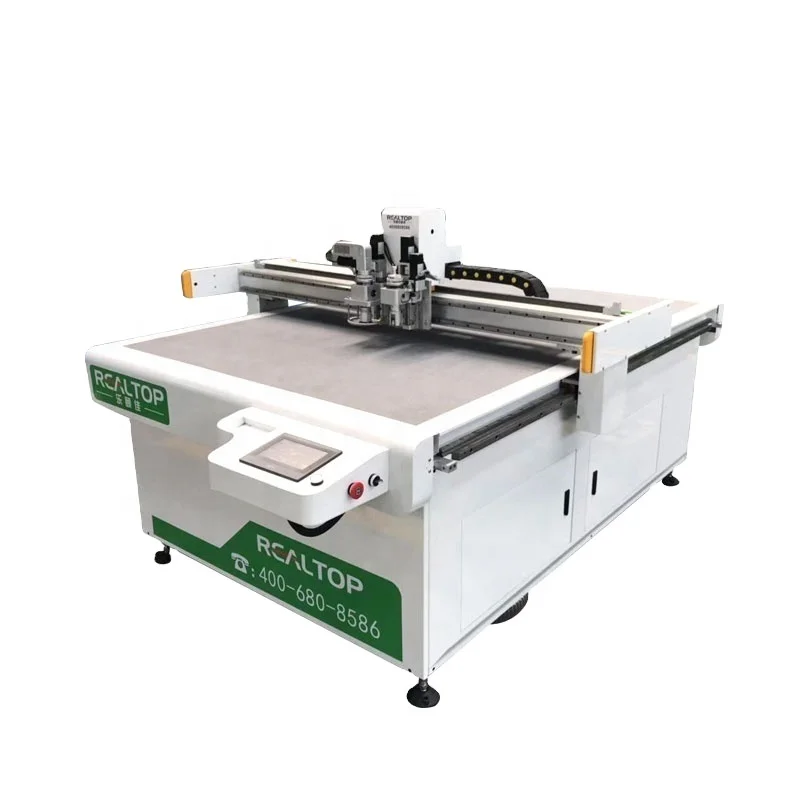
The RTT6080 platform carries a multi-tool group on a single table, meaning cutting, kiss cutting and creasing happen without moving the sheet to a second station. The standard model handles substrates up to 2mm with a creasing wheel and drag knife, while the RTT6080 Pro adds a high speed oscillating knife that extends cutting capacity to 5mm. As a CNC creasing and cutting machine manufacturer covering both knife and creasing methods, we match the tool head to your specific board grade rather than asking you to adapt your workflow to a fixed configuration.
CCD Contour Recognition for Pre-Printed Packaging
When your carton samples arrive pre-printed, the CCD camera reads printed registration marks and adjusts the cut path in real time. This matters for short-run packaging prototypes where the print run is already committed and misaligned cuts mean wasted sheets. The positioning accuracy of 0.05mm keeps contour cuts within tolerance across the 600mm × 800mm working area. [NEED_CITE: CCD camera contour recognition accuracy standards]
What the Specification Numbers Actually Mean in Production
The 1500mm/s maximum cutting speed is material-dependent — dense corrugated board will run slower than thin card stock, and the oscillating knife on the Pro model reaches higher speeds on foam and gasket materials than a drag knife could achieve. The 0.05mm positioning accuracy ensures that crease lines land precisely on printed fold marks, which is the difference between a sample that folds cleanly and one that tears. Ethernet transfer means your existing design files in DXF, PLT, PDF or AI format move directly from your workstation to the machine without an intermediate conversion step that could distort dimensions.
The Cost of Skipping the Material Lock-Down
When board weight and flute type are not confirmed before the tool head is chosen, the consequences show up on the first production run. Crushed flute along the crease line, ragged edges on kiss cuts, and small parts lifting off the vacuum table mid-cut all trace back to a configuration that was never matched to the actual substrate. [NEED_CITE: vacuum table zoning requirements for small-format cutting] These failures do not appear during a demonstration on sample material — they appear when your operator runs the board you actually buy.
Why Source from This CNC Creasing and Cutting Machine Manufacturer
The RTT6080 is designed and built under one roof in Jinan, so the same team that engineers the frame also runs the factory test on your material before the crate is sealed. Tool head and table configuration are specified per your board weight and flute, not pulled from a default build sheet. Software compatibility is verified against your existing DXF, PLT, PDF or AI files before the order is released. Voltage and frequency are confirmed against your local supply — 220V or 380V at 50Hz — so the machine powers up correctly on arrival. Sample cutting and creasing on your own board stock runs before you commit, giving you physical evidence of edge quality and fold integrity.
Documentation & Verification
- Machine specification sheet listing configured tool heads and table zones for your sheet size
- Electrical schematic with voltage and frequency matched to your local grid before dispatch
- Sample cutting and creasing report run on your board stock and flute profile
- Software licence and file format compatibility note for DXF, PLT, PDF and AI workflows
- Operation and maintenance manual with creasing wheel adjustment procedures by board grade
- Factory test record documenting positioning accuracy and cut quality before crating
Installation, Commissioning & Support
- 3.2KW rated power requires a dedicated circuit matched to your confirmed 220V or 380V supply
- 600mm × 800mm table footprint allows placement in standard workshop space without special floor loading
- Ethernet port connection to your existing design network with no proprietary cabling required
- First-run parameter setting includes creasing wheel pressure calibration for your specific board weight
- Operator training covers CCD camera mark registration and tool head changeover procedures
- Spare parts list includes consumable blades, creasing wheels and vacuum table seals
Send Us the Material Before the Inquiry
Tell us your board weight in gsm, flute type if corrugated, maximum sheet dimensions and the file formats your design team currently outputs. Confirm your local voltage and frequency so we configure the electrical system before build. If you can ship a sample of your actual board stock, we will run a creasing and cutting test and return the physical samples with a report before you place an order.
Frequently Asked Questions
Q: How does cutting thickness ≤2mm versus ≤5mm affect which model I need?
A: The RTT6080 handles substrates up to 2mm using the creasing tool, drag knife and CCD camera. If your work includes E-flute corrugated or denser board up to 5mm, the RTT6080 Pro adds a high speed oscillating knife to maintain edge quality at those thicknesses. We recommend running a sample on your actual material to confirm which model suits your range.
Q: Can the voltage and control language be customized before shipment?
A: Yes. The RTT6080 platform supports 220V or 380V at 50Hz, and we confirm the exact voltage, plug type and control interface language against your local standards before production begins. This is documented in the electrical schematic provided with your machine. [NEED_CITE: voltage and frequency standards by export market]
Q: Will my existing DXF and AI files import without conversion issues?
A: The control system accepts DXF, PLT, PDF and AI files directly via Ethernet transfer. Before your order is finalized, we verify file import against a sample of your actual design files and provide a compatibility note confirming that dimensions, layers and cut paths transfer correctly to the machine.
Q: Is the vacuum table adequate for small carton parts that tend to lift?
A: Vacuum zoning on the RTT6080 is configured based on your typical sheet size and part geometry. Small carton components require sufficient hold-down force across the cutting area to prevent lift at high speed. We specify the zone layout during the configuration stage and test it on your material during the sample cutting run.
Q: Can I send my own board stock for a test cut before ordering?
A: We encourage it. Ship us a representative sample of your board stock and flute type, and we will run both creasing and cutting tests on the RTT6080. You receive the physical samples along with a written report covering edge quality, crease integrity and recommended tool head settings.
You may also like

商品评价
Clear filtersThere are no reviews yet.