



-
 Courier delivery
-
 DHL Courier delivery
-
 Warranty 1 year
-
 Free 30-Day returns

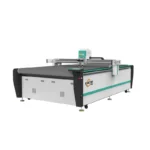
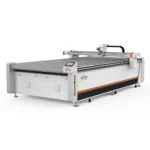
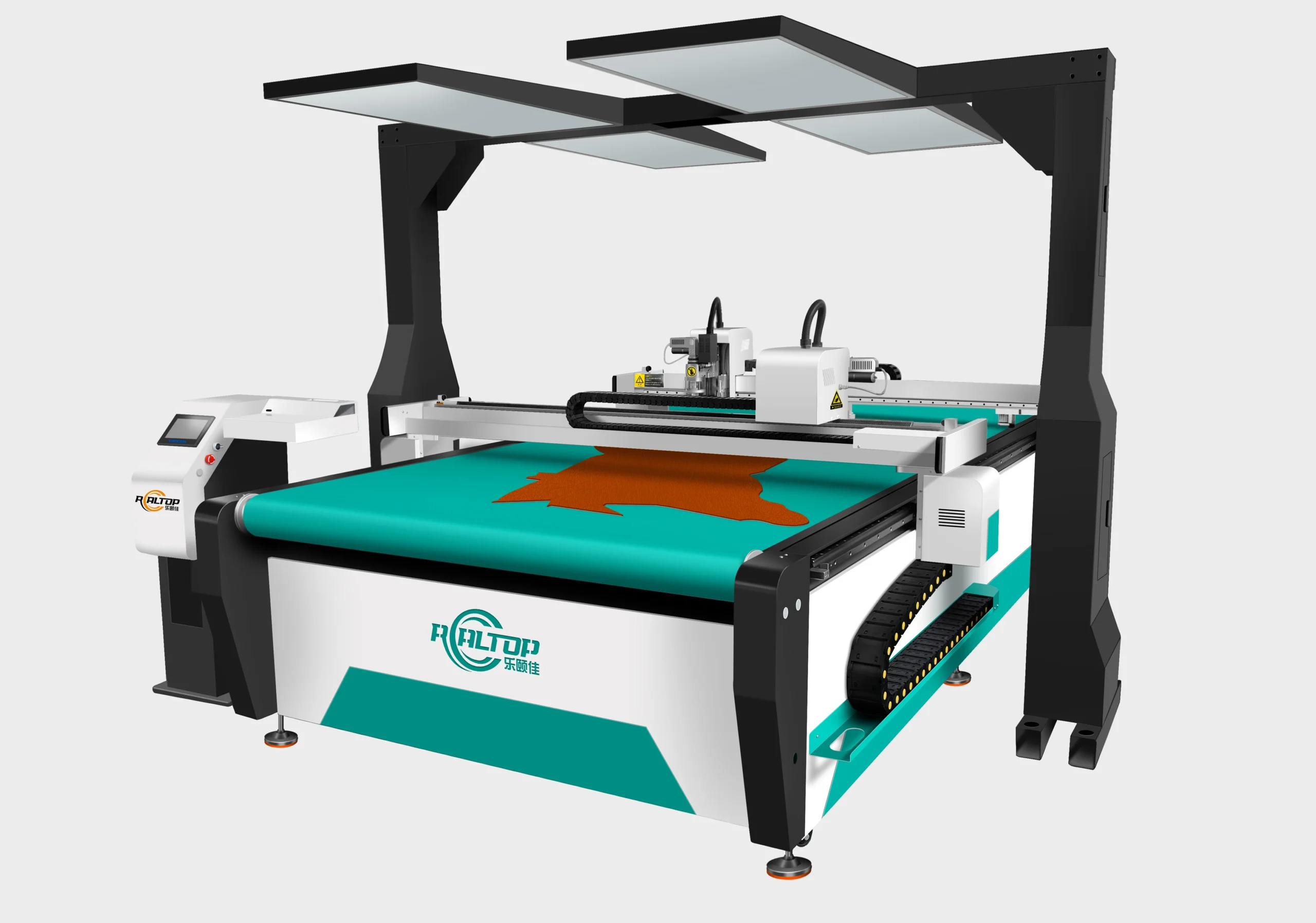
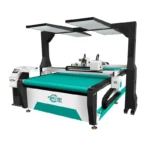
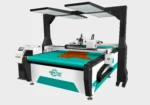
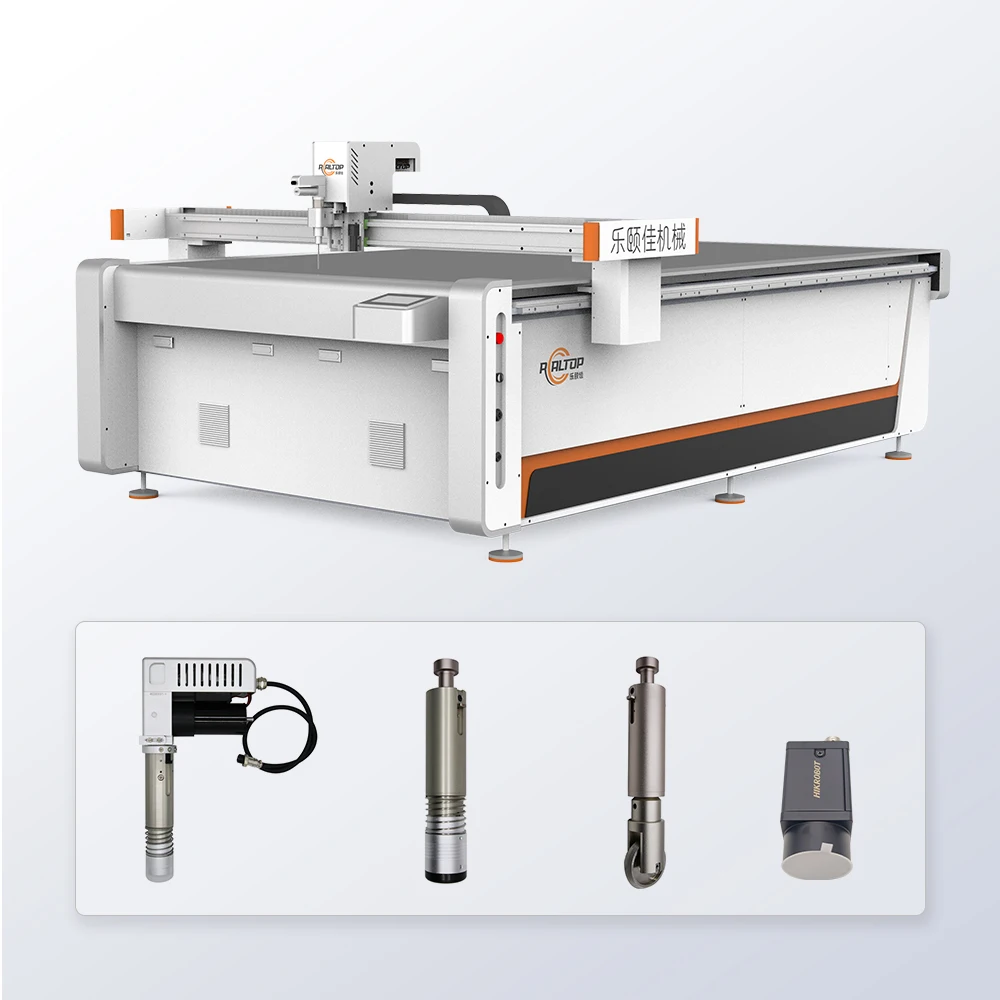
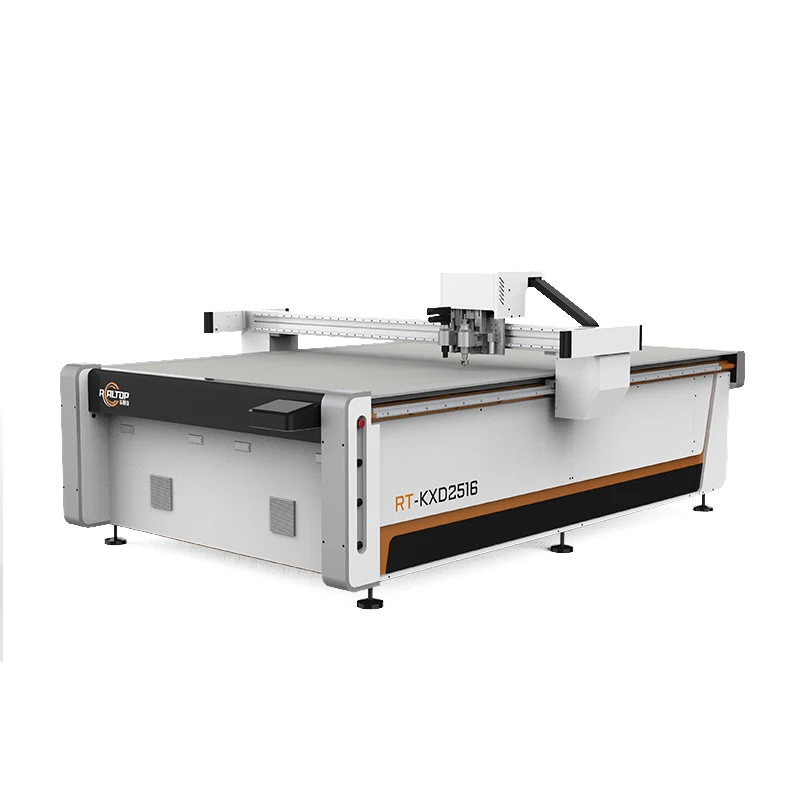
Hard Steel Frame with Reinforced Beam — The RT-D2516/RT-S2516 frame absorbs high-frequency oscillating knife vibration without deflection, keeping cut paths accurate across full 2500×1600mm hides.
Technical Specifications
| Parameter | Value |
|---|---|
| Model | RT-D2516/RT-S2516 |
| Product Type | CNC Oscillating Knife Cutting Machine for Leather |
| Working Area | 1600 × 2500 mm |
| Overall Dimensions | 3450 × 2300 × 1250 mm |
| Rated Power | 9 kW |
| Voltage | 380V ±10% |
| Transmission System | Delta servo motor, Taiwan Hiwin linear guide, ball screw, synchronous belt |
| Translational Velocity | 800–1200 mm/s |
| Repeated Accuracy | ≤0.1 mm |
| Positioning System | Panorama large visual intelligent recognition; CCD camera mark point positioning; projection positioning (optional) |
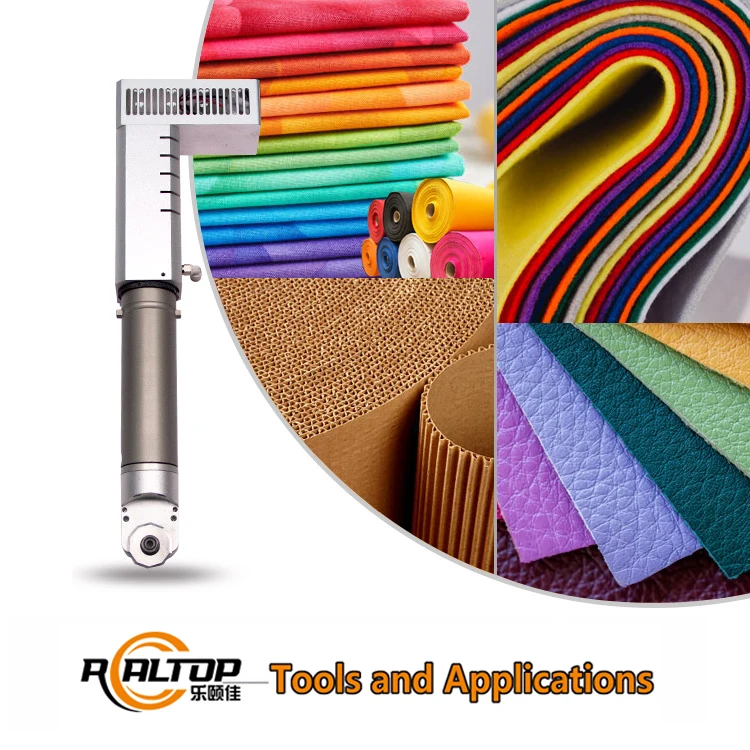
| Tool Head | Multifunctional — oscillating knife, pneumatic knife, high-power vibrating knife, circular knife, V-cutting knife, drag knife, creasing wheel, dotted line knife, punching, brush |
| Working Table | Flat vacuum table, aluminum alloy adsorption surface, 7.5 kW vacuum pump |
| Feeding System | Automatic pulling and receiving, Germany imported conveyor belt |
| Safety Device | Infrared sensors |
| Instruction System | HP-GL compatible format |
| Software | Realtop self-developed pattern cutting design software; language customizable (English, Russian, Italian, Chinese, etc.) |
| Frame | Hard steel frame structure with reinforced beam |
| Conveyor Belt Felt | Wear-resistant anti-pull composite fiber felt |
| Certification | 5 patents technology certification |
Application Suitability
| Application | Material or Output |
|---|---|
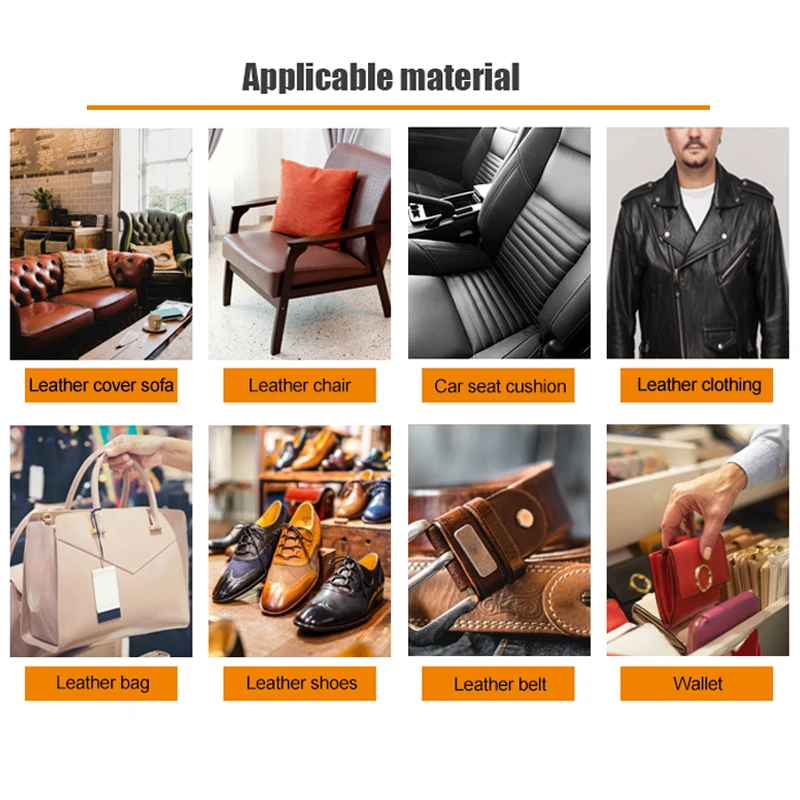
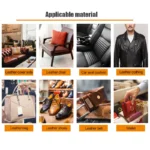
| Leather watch strap production | Genuine leather and PU leather, single or multi-layer, narrow precision contours |
| Footwear upper and insole cutting | Full hides, composite leather, sponge composite leather |
| Bag and luggage panel cutting | Thick leather, synthetic leather, PVC, soft glass |
| Automotive interior leather trim | Hide contour cutting with creasing and marking in one pass |
| Sofa and upholstery leather | Large-format hide cutting with flaw avoidance nesting |
| Gasket and non-metallic sheet | Rubber, silicon, EVA, XPE, PTFE, ETFE, fiberglass, non-woven fabric |
Why "Working Area Only" Specifying Ruins Leather Cutting Results
A buyer selects a flatbed cutting table based on 2500×1600mm working area, then discovers during production that small leather strap pieces lift off the table under high-speed oscillating knife passes. Vacuum zoning layout, tool head selection, and material-specific sample testing must be confirmed before the purchase order, not after delivery. [NEED_CITE:]
I have seen this mismatch play out with a watch strap manufacturer who received a generic CNC leather cutting machine manufacturer spec sheet that listed only table dimensions and motor power. Their 1.5mm genuine leather, stacked two layers deep, slid across the vacuum surface during full-speed contour cuts. The oscillating knife type specified for thin PU could not penetrate the denser hide, producing ragged edges and crushed grain surfaces. The entire first batch of strap blanks was scrapped. This kind of failure is entirely preventable when the cutting configuration is matched to the actual material before the machine leaves the factory floor.
Vision-Guided Contour Extraction from Natural Hides
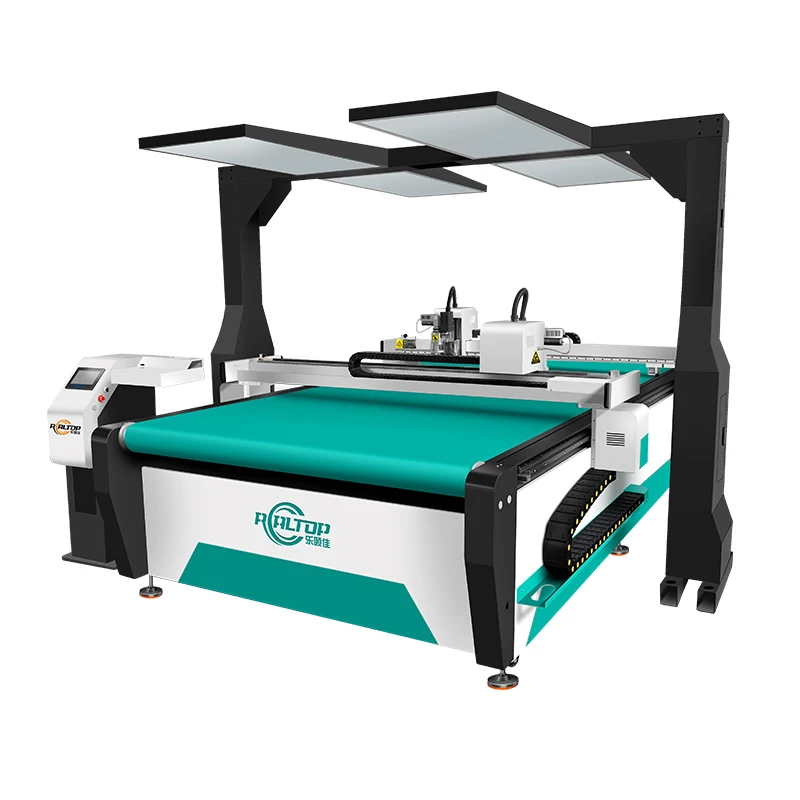
Leather hides arrive with irregular boundaries and natural flaws — scars, tick marks, and grain variations that must be avoided during nesting. The panorama large visual intelligent recognition system on the RT-D2516/RT-S2516 scans the full hide surface, identifies usable regions, and positions pattern pieces within clean zones. This is how a CNC leather cutting machine manufacturer delivers yield optimization on a material where every square centimeter costs money. The CCD camera mark point positioning adds a secondary layer for printed contour work on composite leather sheets.
Multifunctional Tool Head for Complete Leather Processing
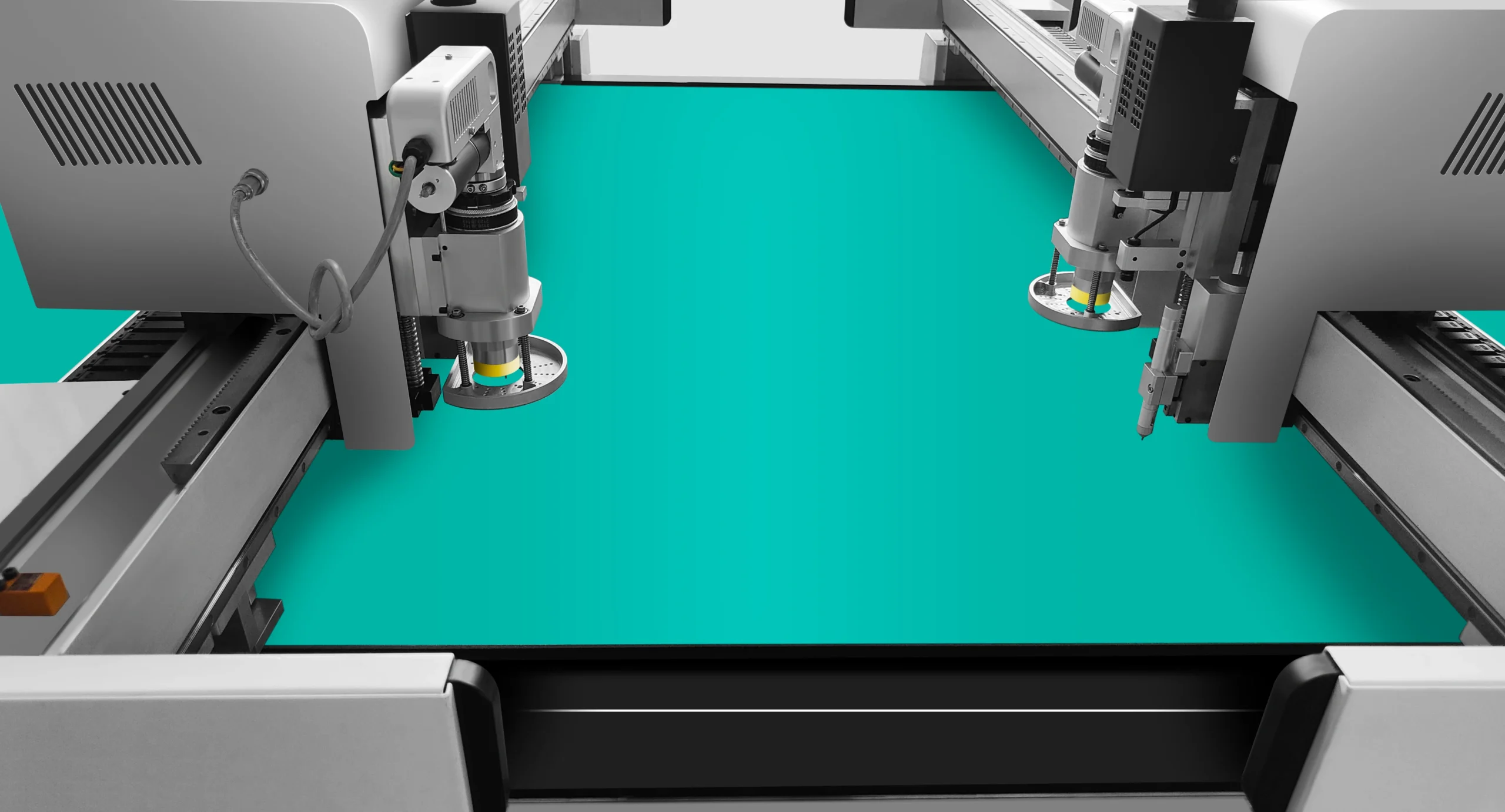
Leather goods production rarely involves cutting alone. Watch strap blanks need punch holes for buckle pins, crease lines for folding, and dot marks for stitch alignment. The multifunctional tool head accepts a Swiss imported knife for vibration full cutting and half cutting, alongside drag knife, creasing wheel, punching, and brush tools. One machine setup handles the complete leather processing sequence without moving the workpiece to a secondary station. This reduces handling damage on finished leather surfaces and keeps registration accurate across all processing steps. [NEED_CITE:]
Drive Train and Precision Holding for Watch-Strap Tolerances
Watch strap production demands edge-to-edge consistency across thousands of identical pieces. The Delta servo motor driving through Taiwan Hiwin linear guide rails and ball screws delivers ≤0.1mm repeated accuracy — tight enough that strap halves mate cleanly during assembly without manual trimming. The 800–1200 mm/s translational velocity range allows the operator to slow the head for tight-radius curves on small pieces and open it up for long straight cuts on bag panels. The 7.5 kW vacuum pump on the aluminum alloy flatbed table holds narrow strap blanks flat against the surface even during aggressive oscillating passes, which is where lower-capacity vacuum systems typically fail on small leather parts.
What Happens When the Wrong Knife Meets Dense Leather
An oscillating knife tuned for thin PU foam encounters 2mm full-grain leather and the blade deflects instead of cutting cleanly through the fiber structure. The result is a frayed edge that requires manual skiving before the piece can be used — adding labor time and introducing inconsistency across a production run. On small parts like watch strap keepers, a deflected blade can push the piece off the vacuum zone entirely, especially when the vacuum zoning is designed for full-hide coverage rather than small-part retention. I have watched this happen on production floors where the CNC leather cutting machine manufacturer did not run sample cuts on the buyer’s actual leather stock before finalizing the tool head configuration. [NEED_CITE:]
Why Sourcing Directly from the Build Floor Matters
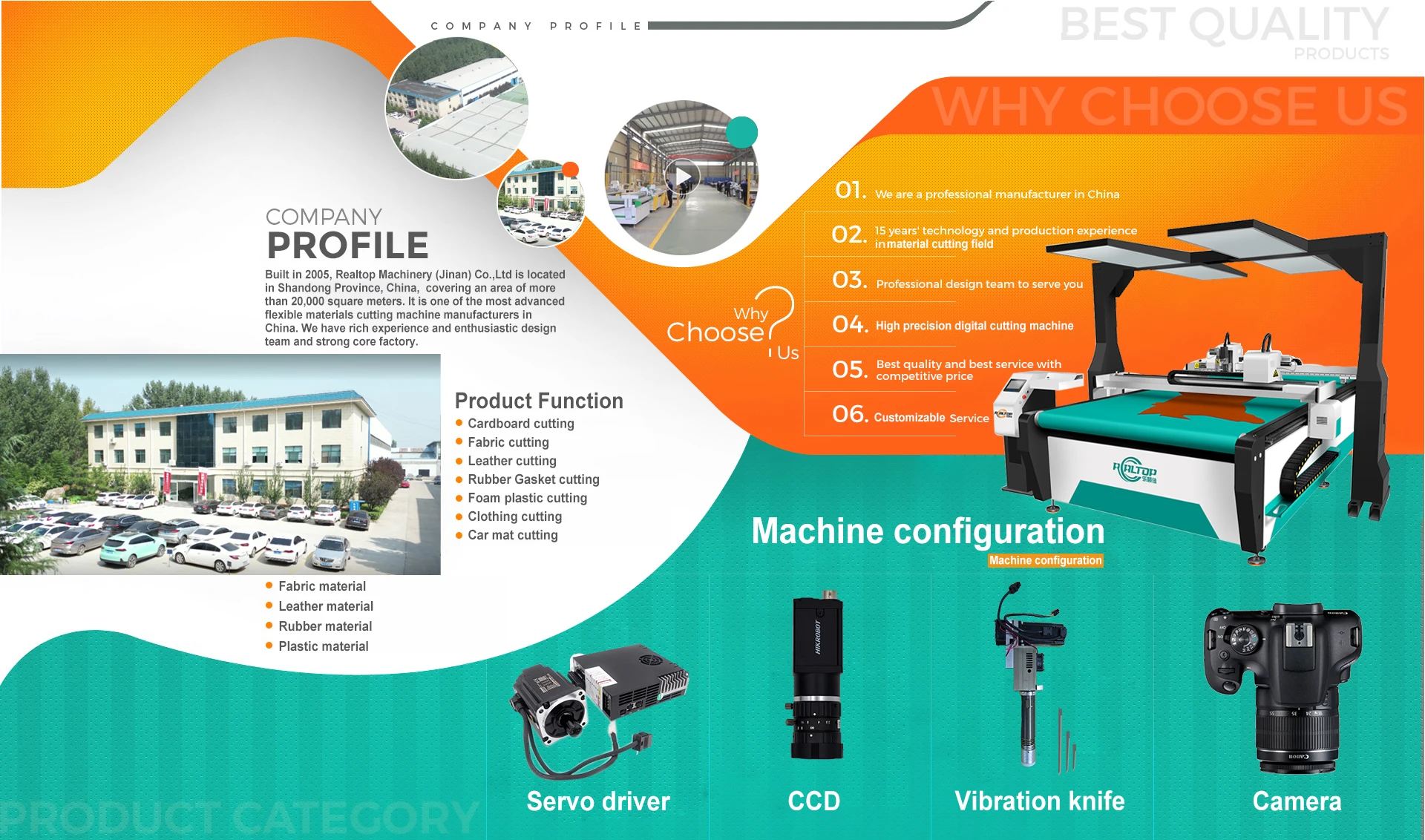
In-house design covering both the mechanical frame and the vision-guided cutting head means configuration decisions are made by the engineers who assemble the machine, not by a trading company matching keywords to a catalog. The hard steel frame with reinforced beam on the RT-D2516/RT-S2516 is engineered to absorb the specific vibration frequencies of the oscillating knife head, preventing resonance that would degrade edge quality on long production runs. Sample cutting on the buyer’s own leather stock runs on the factory floor before shipment, producing a documented cutting report that confirms edge quality, penetration depth, and vacuum hold-down at production speed. Voltage, plug standard, and control language are confirmed against the buyer’s local supply and operator preference, so the machine arrives ready to run rather than sitting idle waiting for an electrician or a language pack. The Realtop self-developed software reads HP-GL compatible formats and accepts nesting files from common leather industry CAD systems, eliminating file conversion problems that delay first production runs.
Documentation & Verification
- Machine specification sheet listing exact tool head and vacuum zoning configuration
- Electrical schematic with voltage confirmation matching buyer’s local 380V supply
- Sample cutting report on buyer’s own leather stock showing edge quality and depth
- Factory test record with photographs documenting machine state before crating
- Software licence and file format compatibility note for buyer’s existing CAD workflow
- Spare parts list identifying consumable blades, belts, and vacuum felt replacements
Installation, Commissioning & Support
- Foundation must support 3450×2300mm footprint with level tolerance for the aluminum alloy vacuum table surface
- Dedicated 380V ±10% circuit rated for 9kW continuous draw with proper grounding for the Delta servo system
- Machine ships partially assembled; final beam alignment and vacuum pump connection completed on-site
- First-run parameter setting includes oscillation frequency tuning matched to buyer’s leather thickness and density
- Operator training covers panorama vision system calibration, CCD mark point registration, and tool change procedures
- Wear-resistant composite fiber felt on the conveyor belt is the primary consumable with documented replacement intervals
Request a Configuration Recommendation
Provide your leather type, thickness range, and typical sheet dimensions so the tool head and vacuum zoning can be specified to your actual production requirements. Include your local voltage and frequency, preferred control language, and whether your nesting workflow originates from a specific CAD system. If you produce small precision parts like watch straps, note the minimum piece width and layer count so vacuum hold-down can be validated before order.
Frequently Asked Questions
Q: How is the oscillating knife type matched to leather thickness and density?
A: The knife selection depends on both the leather type and layer count in your production setup. Thin PU and synthetic leather use a standard oscillating knife at moderate frequency, while dense genuine leather at 1.5mm or thicker requires a high-power vibrating knife with adjusted stroke. We run sample cuts on your actual material to confirm clean penetration without edge fraying before finalizing the tool head configuration.
Q: How does vacuum table zoning handle small leather parts versus full hides?
A: Full-hide cutting uses broad vacuum zones that distribute suction evenly across the large surface. Small parts like watch strap blanks require concentrated zoning so suction is focused under each piece rather than wasted on empty table area. The 7.5 kW vacuum pump on the RT-D2516/RT-S2516 supports configurable zoning, and the layout is specified based on your smallest and largest production pieces.
Q: What voltage and language options are available before shipment?
A: The standard configuration is 380V ±10% with the control interface available in English, Russian, Italian, Chinese, and other languages on request. Voltage and plug standard must be confirmed against your facility supply before production begins. Electrical schematics are provided so your electrician can verify the dedicated circuit and grounding requirements match local codes. [NEED_CITE:]
Q: Can I test the machine on my own leather before committing to an order?
A: Yes. Send a representative sample of your production leather stock — including the exact thickness and layer count you run in daily production — and we perform sample cutting on the RT-D2516/RT-S2516 at the factory. You receive a cutting report documenting edge quality, penetration depth, and vacuum hold-down performance at production speed.
Q: Is custom frame sizing available for integration into an existing production line?
A: The RT-D2516/RT-S2516 is built on a hard steel frame with reinforced beam in our Jinan factory, and custom working area dimensions can be engineered for production-line integration. The design team evaluates your upstream and downstream equipment layout to ensure the cutting table fits the material flow without bottleneck or manual transfer points.
You may also like

商品评价
Clear filtersThere are no reviews yet.