



-
 Courier delivery
-
 DHL Courier delivery
-
 Warranty 1 year
-
 Free 30-Day returns

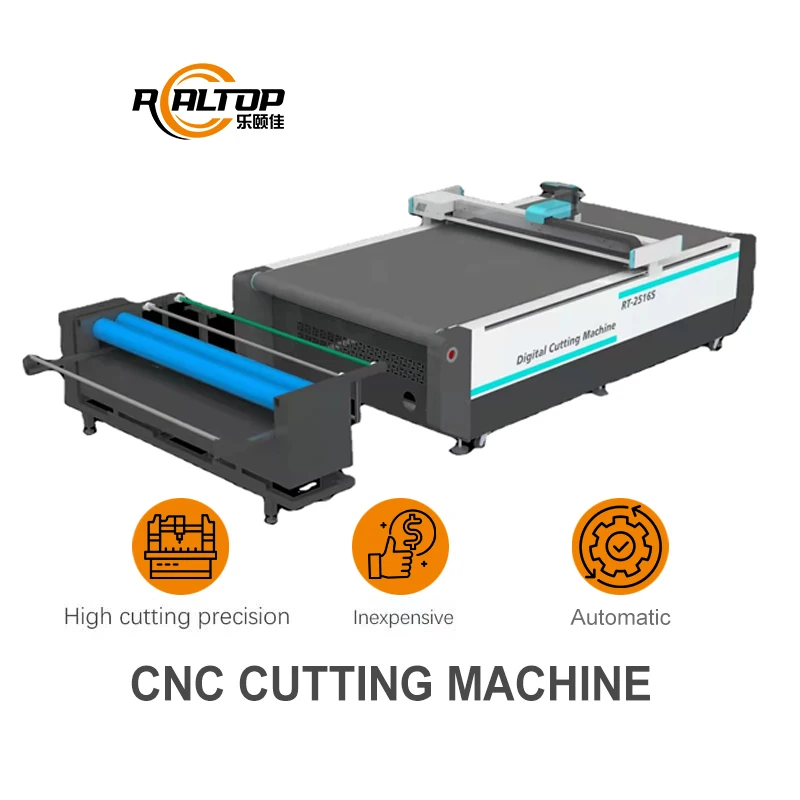
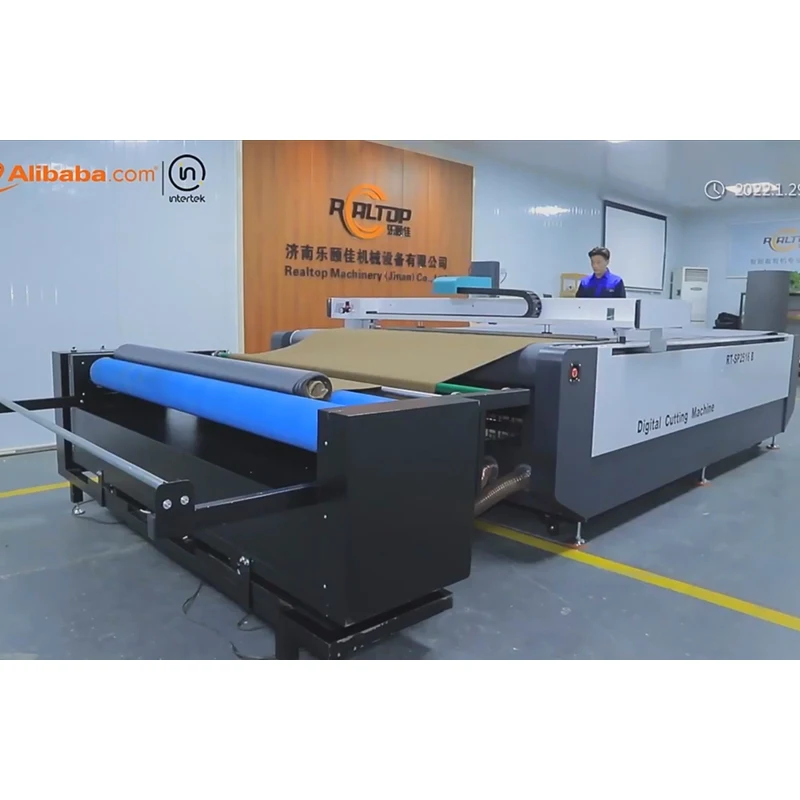
In-House Build Quality — Frame welding, motion assembly and tool head calibration completed on one factory floor, allowing us to trace every RT-D2516/RT-S2516 back to its production bench rather than a third-party integrator.
Technical Specifications
| Parameter | Value |
|---|---|
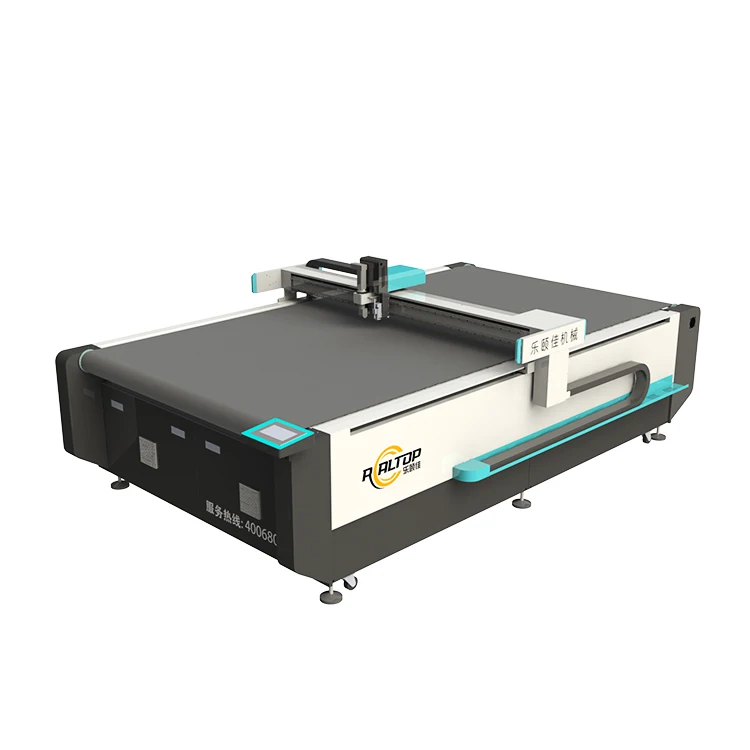
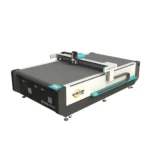
| Product Type | CNC Fabric Cutting Machine |
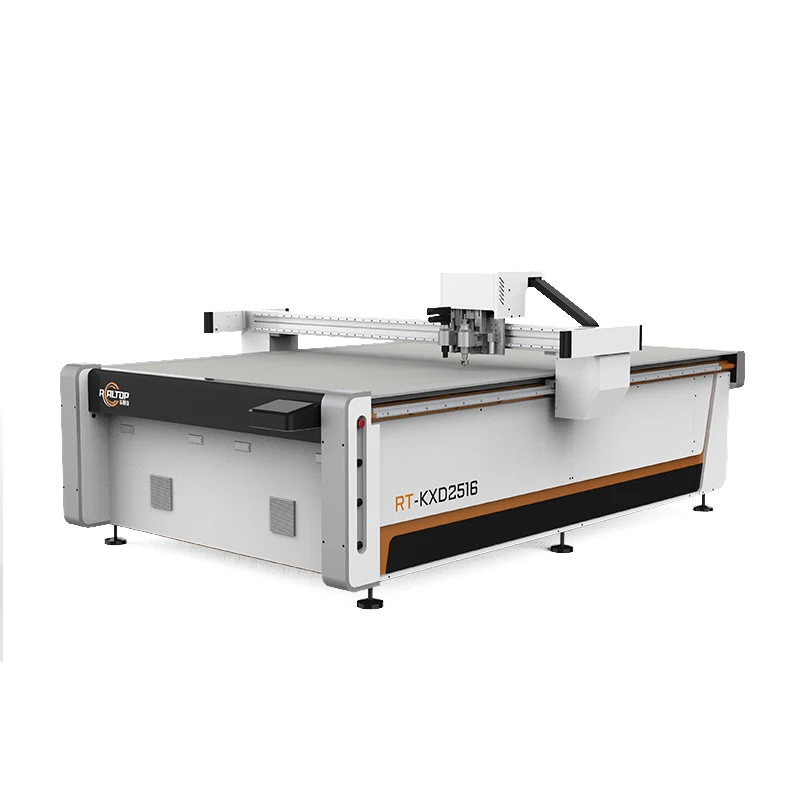
| Model | RT-D2516/RT-S2516 |
| Working Area | 1600 × 2500 mm |
| Machine Size | 3450 × 2300 × 1250 mm |
| Rated Power | 9 kW |
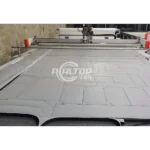
| Working Table | Flat working table with vacuum hold-down |
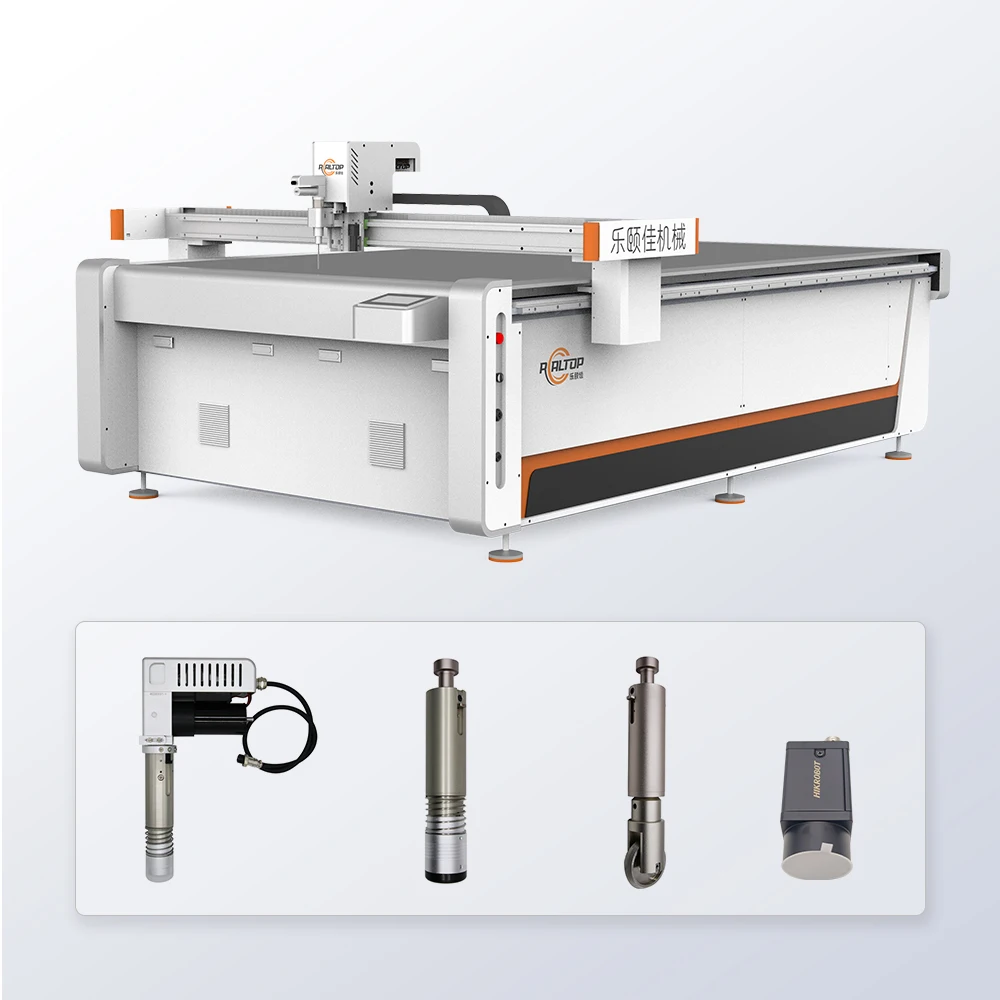
| Tool Head | Swiss-imported oscillating knife (full cut, half cut, cursor location) |
| Translational Velocity | 800–1200 mm/s |
| Maximum Cutting Thickness | ≤100 mm (varies with material density and layer count) |
| Repeated Accuracy | ≤0.1 mm |
| Transmission System | Digital servo motor, linear guide, synchronous belt, ball screw |
| Servo Motor | Panasonic or Delta (configurable) |
| Linear Guide | Taiwan Hiwin rail |
| Vacuum Pump | 7.5 kW |
| Conveyor Belt | Germany-imported belt material |
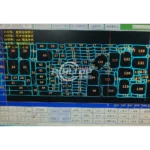
| Instruction System | HP-GL compatible format |
| Voltage | 380V ± 10% |
| Safety Device | Infrared sensors |
| Language Options | English, Russian, Italian, Chinese (customizable) |
| Standards | CE |
Application Suitability
| Application | Material or Output |
|---|---|
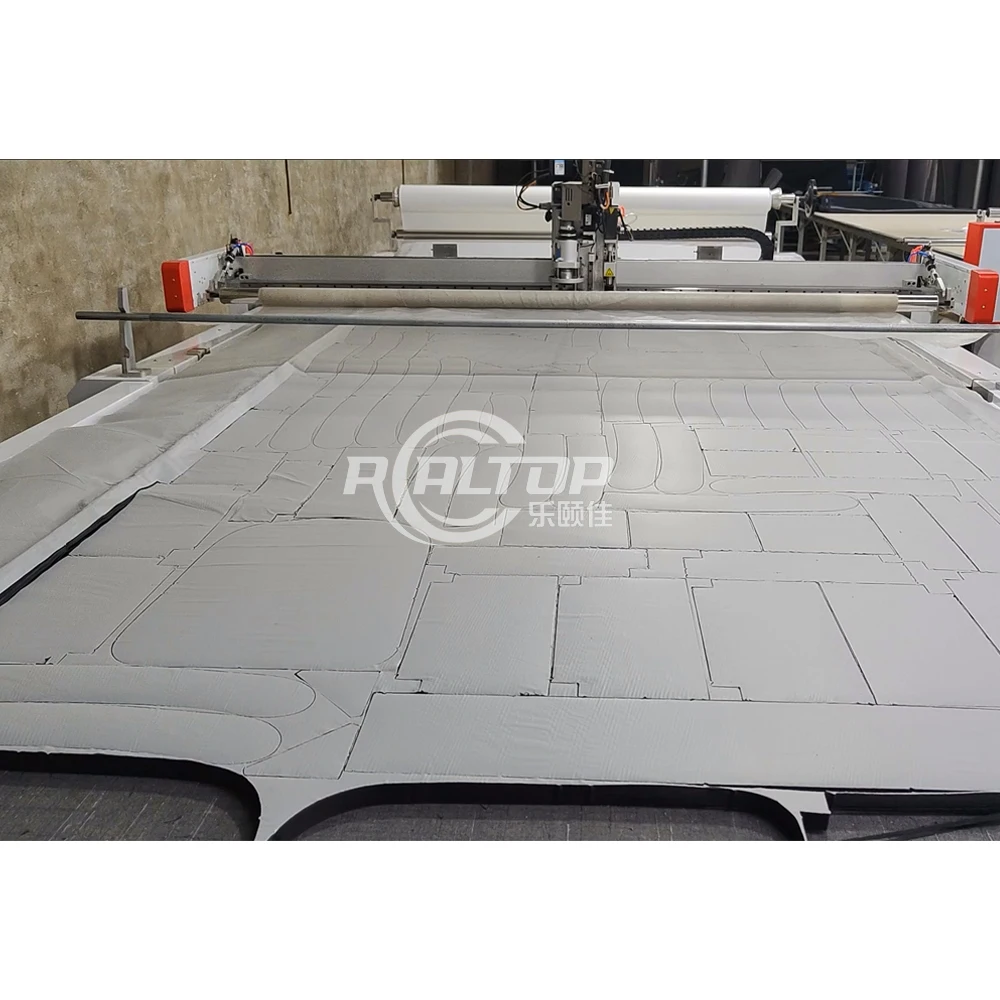
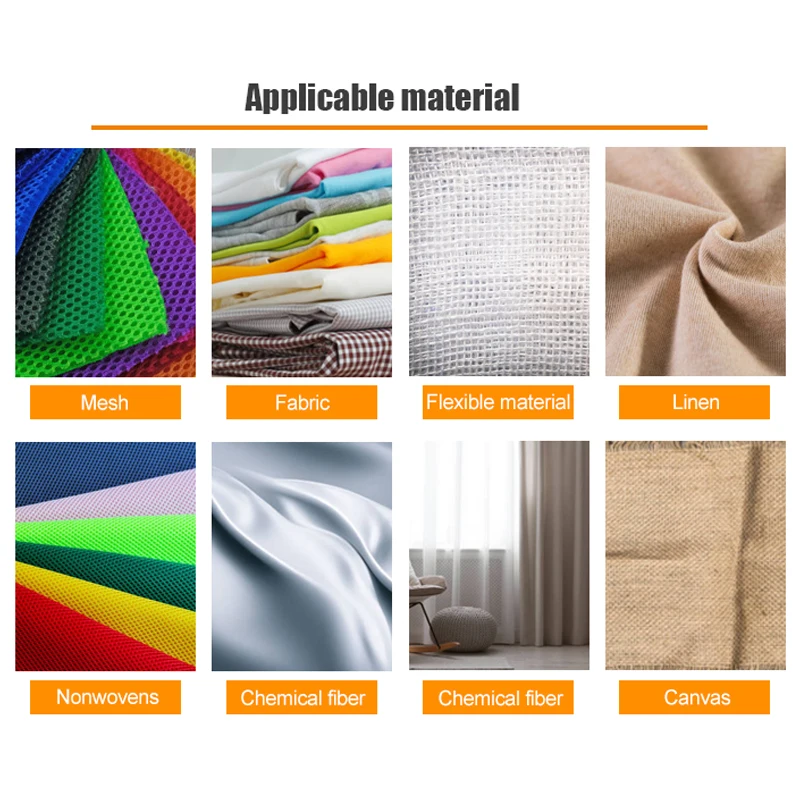
| Garment and footwear production | Multi-layer woven fabric, technical textile, lining material |
| Automotive interior manufacturing | Leather hide, synthetic leather, sponge composite, flexible foam |
| Textile and flexible material fabrication | PVC sheet, soft glass, silicon rubber, composite laminate |
| Upholstery and furniture covering | Heavy-duty fabric, coated textile, multi-layer composite |
Why Material Thickness Claims Cause Most Buyer Disputes
A CNC Fabric Cutting Machine manufacturer must confirm cutting depth against your exact material stack, not quote a single number pulled from a generic chart.
When a buyer specifies a cutting table based on working area alone and later discovers the knife cannot penetrate their actual material thickness, the machine is already crated. The gap between catalog thickness ratings and real production capability causes more rejected shipments than any other single factor [NEED_CITE: common causes of industrial cutting machine return and rejection]. Thickness capacity shifts depending on whether you cut single-layer silk, ten layers of denim, or a coated waterproof laminate. We run sample cuts on buyer-supplied fabric before the order is locked, documenting edge quality and achievable layer count on the specific material.
Frame Rigidity and Motion Component Selection
The RT-D2516/RT-S2516 frame is welded and stress-relieved in our Jinan facility before any motion components are mounted. This CNC Fabric Cutting Machine uses Taiwan Hiwin linear rails paired with Panasonic or Delta digital servo motors, selected to maintain ≤0.1 mm repeatability across the full 1600 × 2500 mm travel. The linear guide and ball screw combination resists deflection when the oscillating knife encounters dense composite layers at high traverse speed, keeping cut edges consistent from the first piece to the last in a multi-hour production run.
Assembly Discipline Across Knife and Table Integration
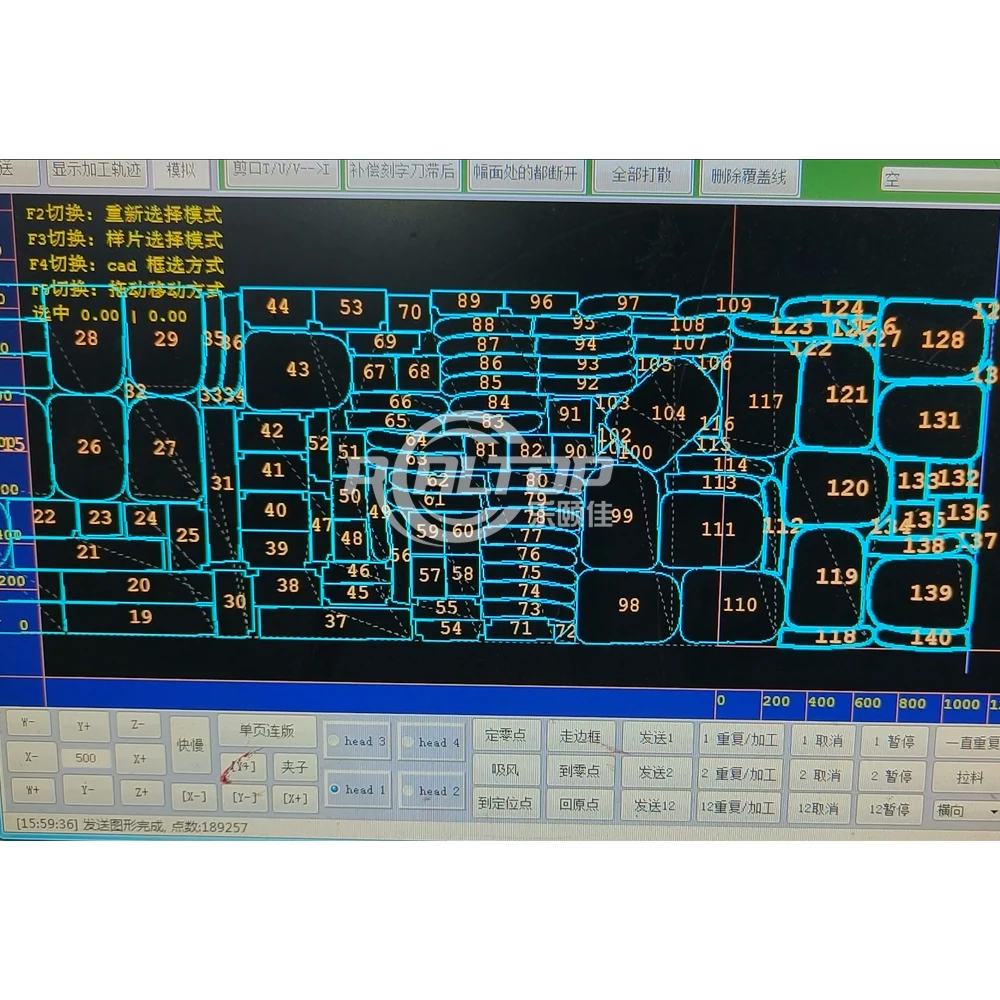
Every tool head is calibrated on the same table it ships with, eliminating the alignment drift that occurs when knife assemblies and cutting beds are built in separate workshops and joined at final assembly. The Swiss-imported oscillating knife module supports full cutting, half cutting and cursor location within one tool holder, and we verify all three functions against buyer material before the machine leaves the factory floor. Conveyor belt tensioning and vacuum zone mapping are completed during this stage, so the production workflow is validated as a single integrated system rather than a collection of sub-assemblies [NEED_CITE: industrial cutting machine factory integration and testing standards].
Reading the Spec Sheet Beyond Working Area
The 9 kW rated power covers the servo drives, oscillating knife motor and control system together, while the separate 7.5 kW vacuum pump operates on its own circuit — buyers should confirm their facility can supply both loads simultaneously at 380V ± 10%. Translational velocity of 800–1200 mm/s describes unloaded travel; actual cutting speed depends on material density, layer count and oscillation frequency required for a clean edge. The HP-GL compatible instruction system accepts standard CAD-generated cutting paths, but buyers should verify that their existing nesting software exports in a format the controller recognizes without manual translation. Maximum cutting thickness reaches up to 100 mm on low-density foam, but dense multi-layer leather stacks may reduce practical depth substantially — sample cutting on the actual material is the only reliable way to confirm capacity.
The Cost of Skipping Tool Head and Table Configuration
Importers who order a flatbed cutter without matching the tool head to their primary material end up replacing blades weekly and fighting ragged edges that require secondary trimming. A vacuum table with insufficient zone control lifts small pattern pieces during oscillating knife passes, producing dimensional drift that accumulates across a nesting layout. Voltage mismatch discovered after shipment means rewiring the control cabinet on-site, voiding warranty terms and delaying commissioning [NEED_CITE: risks of voltage mismatch in exported industrial machinery]. Language settings left unconfirmed force local operators to navigate an unfamiliar control interface, slowing changeover and increasing scrap during the critical first production weeks.
Why Sourcing This CNC Fabric Cutting Machine Directly from the Factory Matters
Our design team and core production floor operate in the same Jinan facility, so configuration changes requested during sample testing are implemented before the machine enters final assembly rather than relayed through a trading intermediary. We build both knife-cutting and laser-cutting platforms in-house, which means we recommend the cutting method that matches your material characteristics instead of forcing every fabric onto one technology. Each RT-D2516/RT-S2516 ships with a factory test record documenting performance on the buyer’s own material sample, not a generic demonstration on stock fabric. Electrical schematics and voltage confirmation documents are prepared per destination market before the control cabinet is wired. OEM branding and custom machine color are available for distributors who need their own identity on the equipment without sacrificing direct access to the production team.
Documentation & Verification
- Factory test record on buyer-supplied fabric demonstrating edge quality and layer capacity before dispatch
- Electrical schematic with voltage and frequency confirmed for destination market power supply
- Tool head and table configuration list matching specified material type and production volume
- Software license and HP-GL file format compatibility note for nesting workflow integration
- Spare parts list with part numbers for oscillating knife blades, vacuum seals and conveyor belt segments
Installation, Commissioning & Support
- Flat foundation with level tolerance sufficient for the 3450 × 2300 × 1250 mm machine footprint
- Dedicated 380V circuit supplying both 9 kW machine load and 7.5 kW vacuum pump independently
- Oscillating knife calibration and vacuum zone mapping verified on-site during first power-up
- Operator training on tool head changeover, nesting file import and HP-GL workflow in selected language
- Spare oscillating knife blades and vacuum seals included for initial production weeks
- Scheduled linear guide inspection and ball screw lubrication intervals documented in operation manual
Before You Request a Quote
Send us the exact fabric type, layer count and maximum thickness you plan to cut daily, along with your facility voltage and preferred control language. If you work with coated or composite materials, include a sample swatch so we can run a cutting test and confirm tool head selection before quoting. Specify whether your nesting workflow relies on HP-GL output or another file format so we verify software compatibility at the inquiry stage.
Frequently Asked Questions
Q: How do I confirm cutting thickness for my specific fabric type and layer count?
A: We cut your actual material sample on the RT-D2516/RT-S2516 before order commitment and provide a test report showing edge quality, achievable layer count and practical cutting speed. Maximum thickness varies significantly between low-density foam and dense multi-layer leather, so generic catalog numbers do not apply to your production.
Q: Can voltage and control language be customized for my market?
A: Yes. The standard 380V ± 10% configuration is adapted to your facility power supply, and the control interface is set to English, Russian, Italian, Chinese or another language before shipment. Electrical schematics are updated to reflect the confirmed voltage and delivered with the machine documentation package.
Q: How is the oscillating knife tool head selected for different materials?
A: Tool head selection depends on material density, layer count and edge quality requirements. The Swiss-imported oscillating knife module supports full cut, half cut and cursor location. We recommend the configuration after testing your specific fabric and document the selection in the tool head configuration list shipped with the machine.
Q: Is the control software compatible with my existing CAD and nesting files?
A: The instruction system accepts HP-GL compatible formats. Before order confirmation, we verify that your nesting software exports cutting paths the controller reads without manual conversion. A software license and file format compatibility note is included in the documentation package delivered with the machine.
Q: What are the installation requirements for floor space and power supply?
A: The machine occupies approximately 3450 × 2300 mm of floor space and requires a level concrete foundation. Two independent circuits are needed: one for the 9 kW machine load and one for the 7.5 kW vacuum pump, both at the confirmed operating voltage. Vacuum extraction routing should be planned before the machine arrives on-site.
You may also like

商品评价
Clear filtersThere are no reviews yet.