

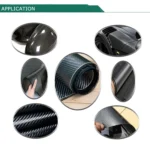


-
 Courier delivery
-
 DHL Courier delivery
-
 Warranty 1 year
-
 Free 30-Day returns

Material-First Configuration — Every RT-2026 CNC Rubber Gasket Cutter is validated on the buyer’s actual sealing compound before tool head and vacuum zoning are finalized.
Technical Specifications
| Parameter | Value |
|---|---|
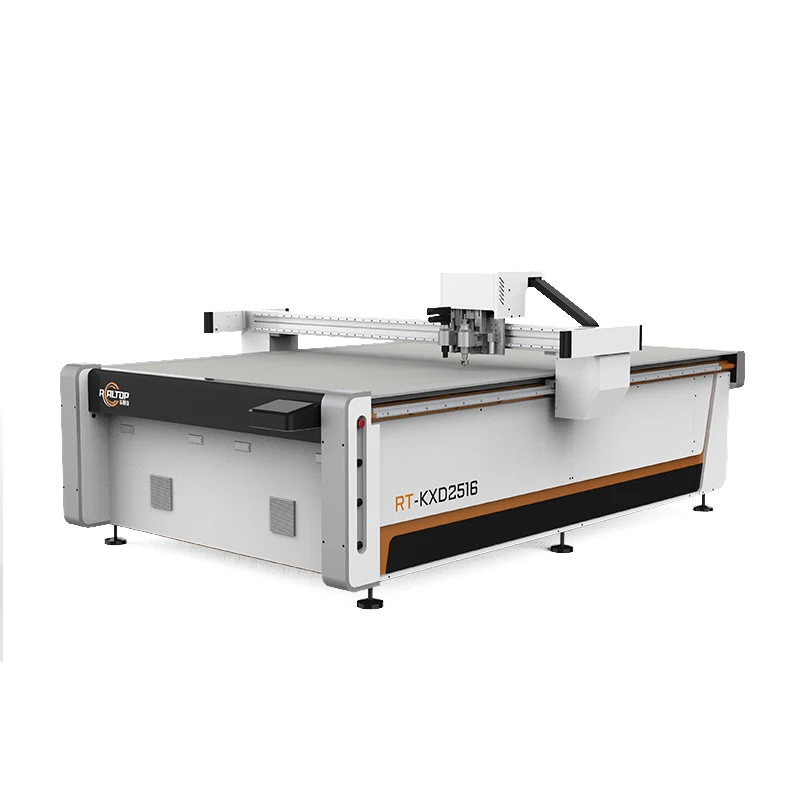
| Model | RT-D2516 / RT-S2516 |
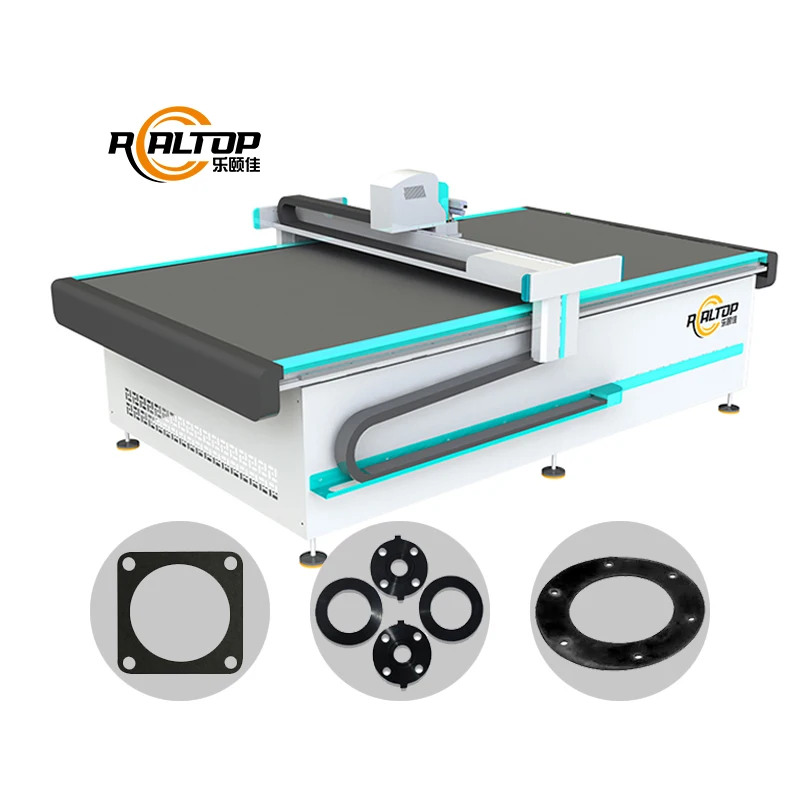
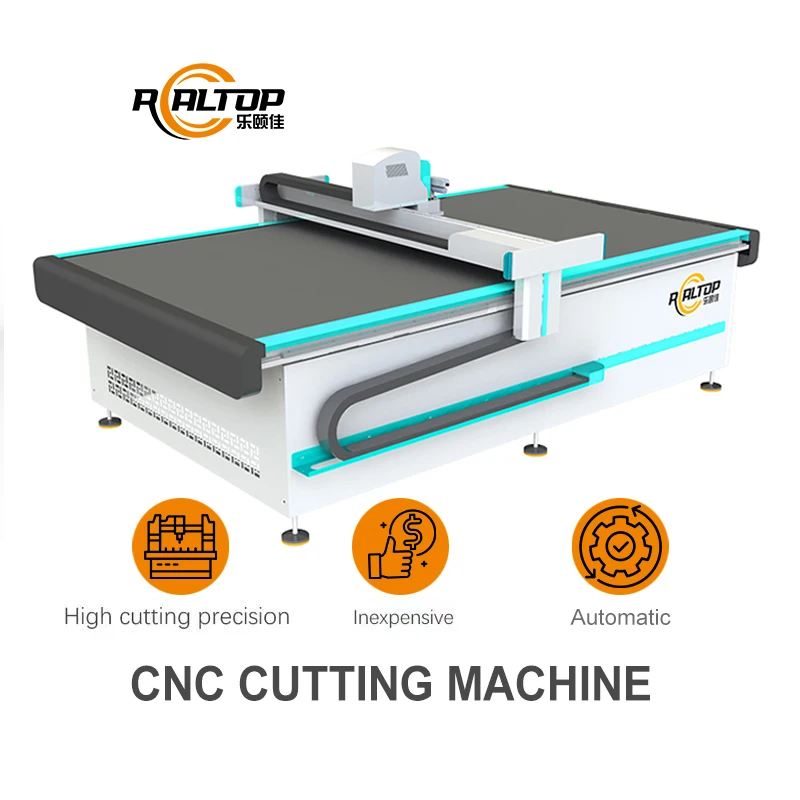
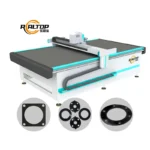
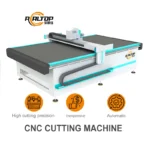
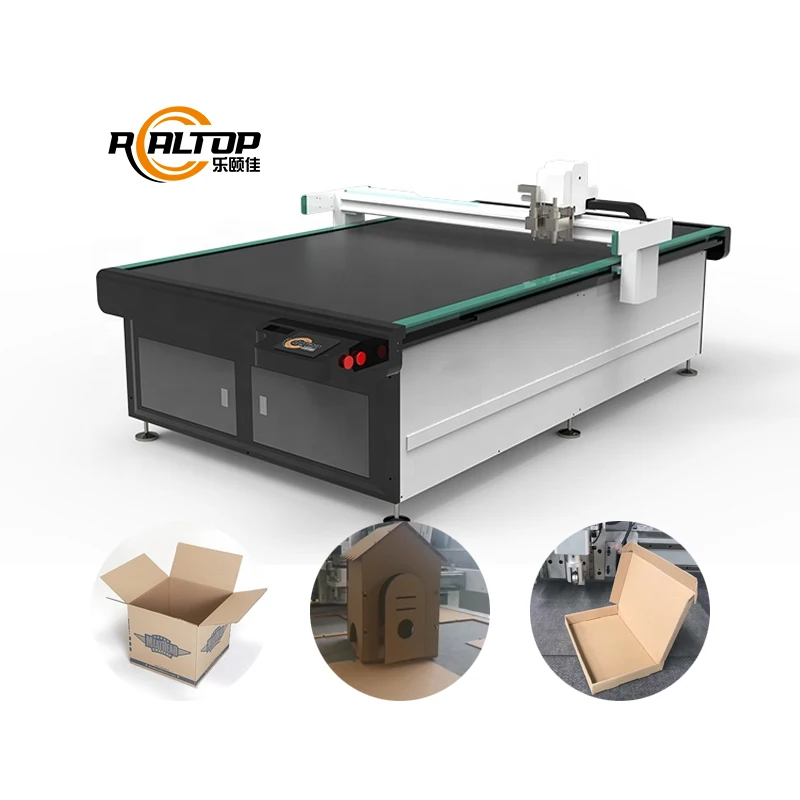
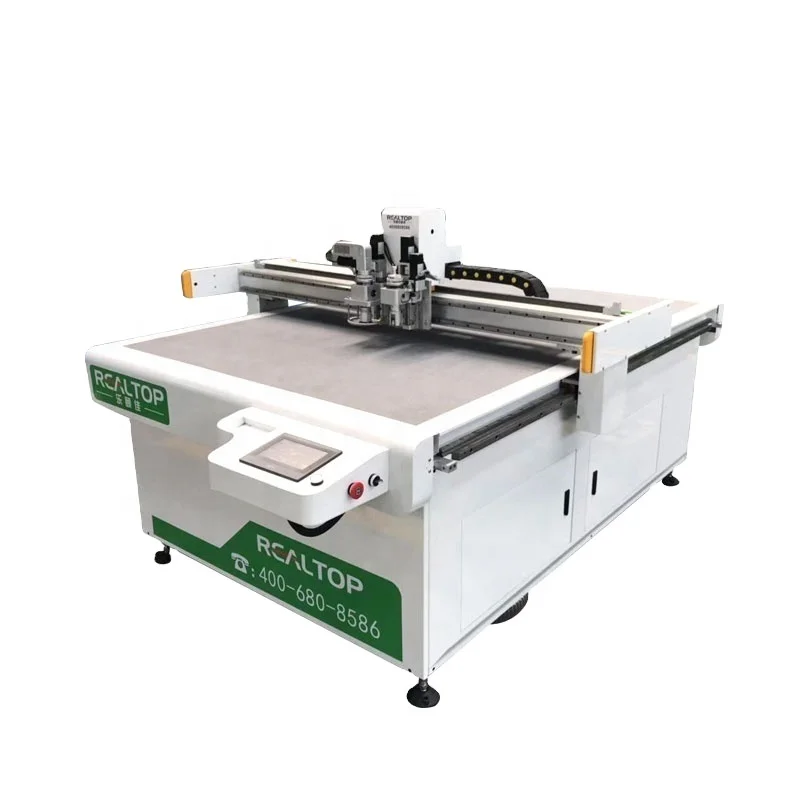
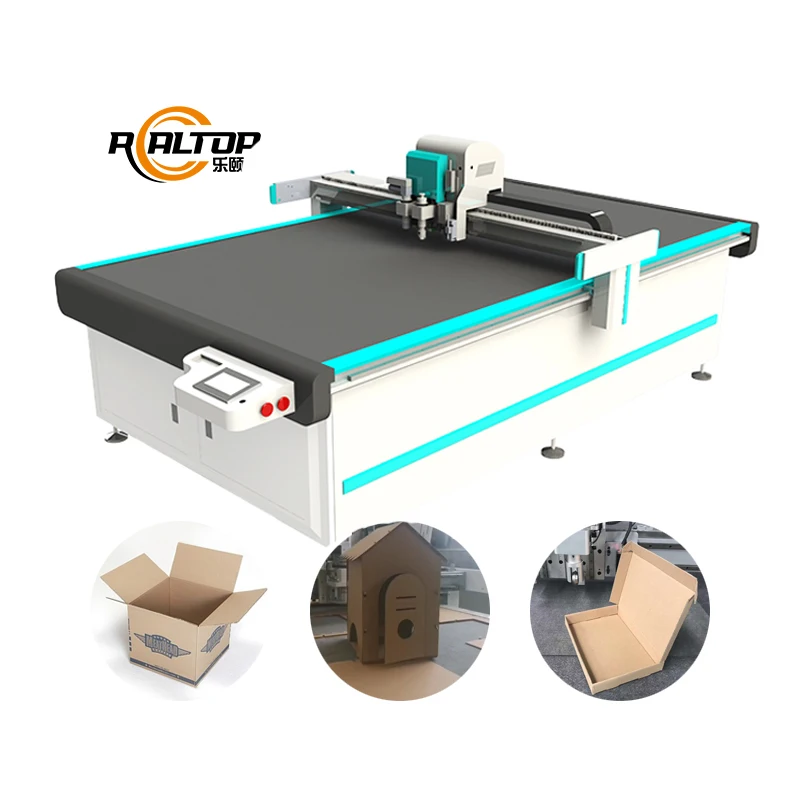
| Product Type | CNC Rubber Gasket Cutter |
| Working Area | 1600 × 2500 mm |
| Machine Size | 3450 × 2300 × 1250 mm |
| Rated Power | 9 kW |
| Voltage | 380V ± 10% |
| Table Type | Flat vacuum working table |
| Cutting Thickness | 20–80 mm (varies by material density and tool head selection) |
| Translational Velocity | 800–1200 mm/s |
| Repeated Accuracy | ≤ 0.1 mm |
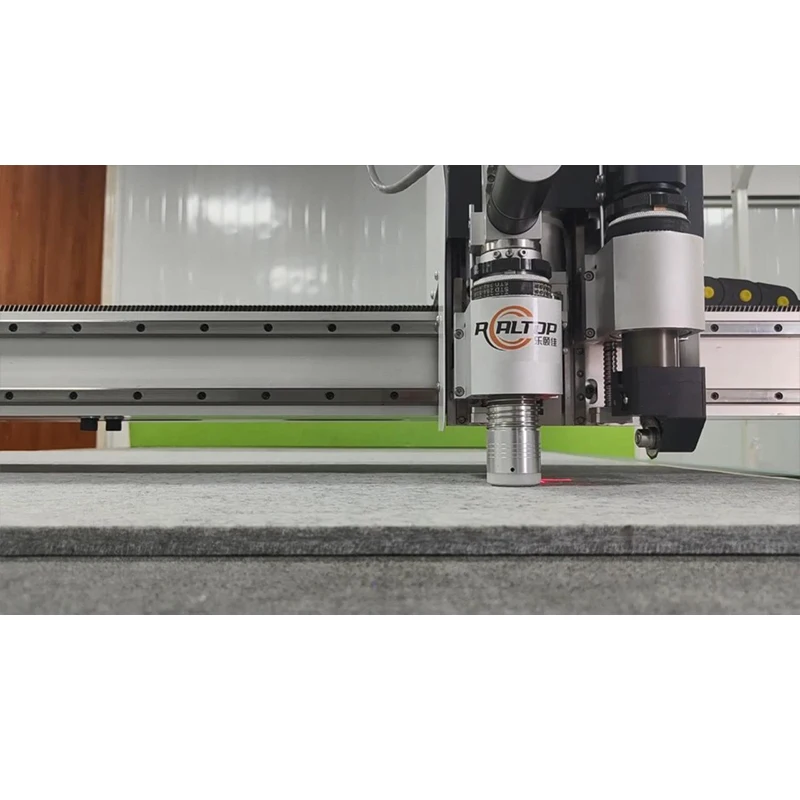
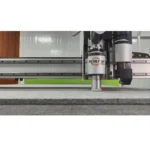
| Multifunctional Head | Swiss imported knife with vibration full cutting, half cutting and cursor location |
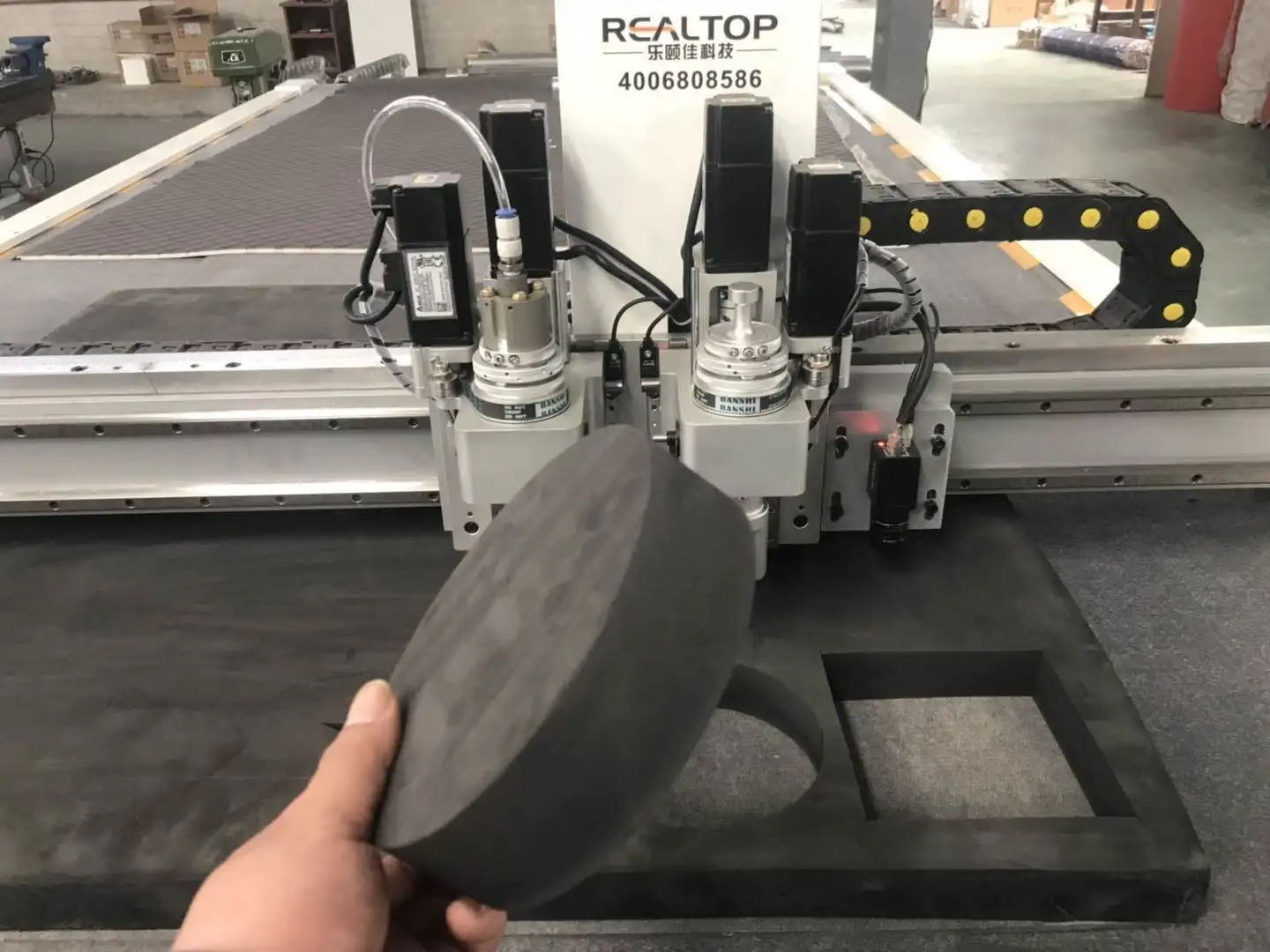
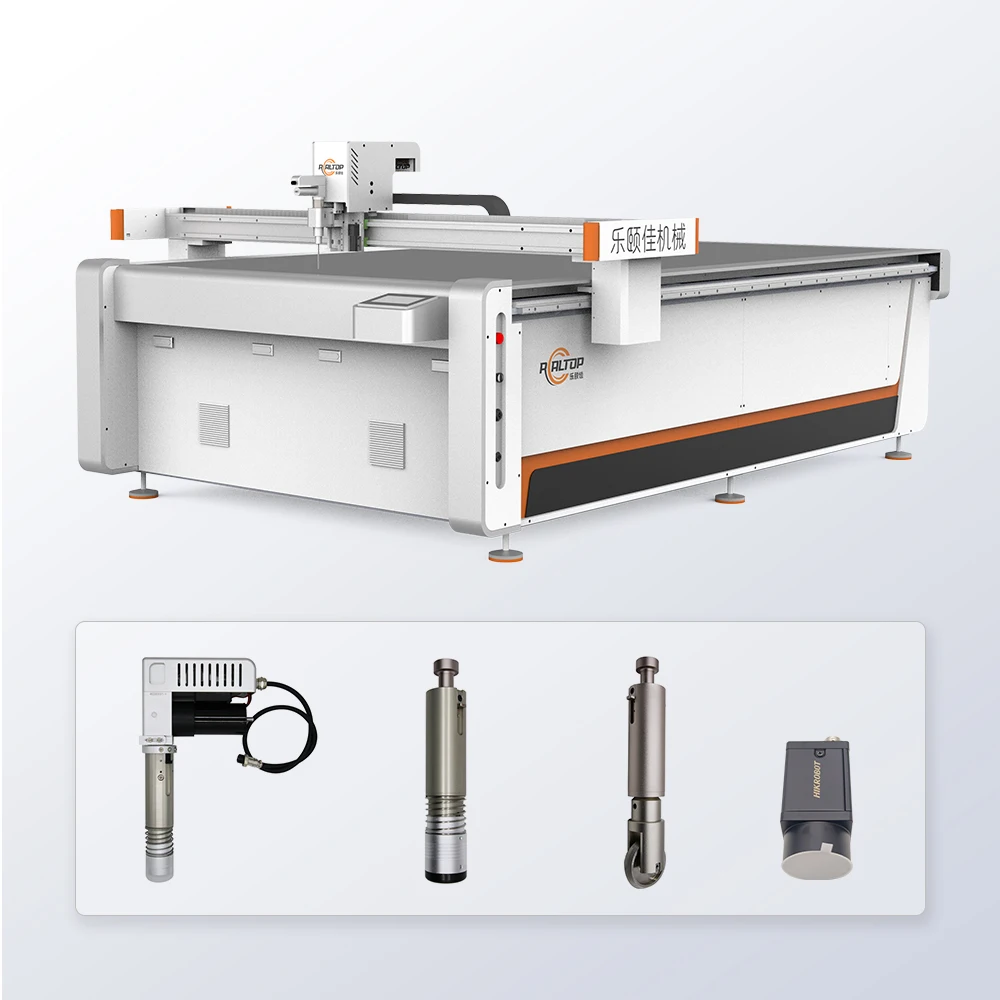
| Tool Head Options | Oscillating knife, pneumatic knife, high-power vibrating knife, circular knife, V-cutting knife, drag knife, creasing wheel, dotted line knife, punching, brush |
| Visual Positioning | Small CCD mark point positioning, panoramic camera recognition, projection positioning |
| Transmission System | Digital servo motor, linear guide, synchronous belt, ball screw (Delta servo, Taiwan Hiwin rail) |
| Vacuum System | 7.5 kW vacuum pump with German imported conveyor belt |
| Safety Device | Infrared sensors, responsive blocking, anti-collision, emergency stop |
| Instruction System | HP-GL compatible format |
| Standards | CE |
Application Suitability
| Application | Material or Output |
|---|---|
| Industrial sealing gaskets | Nitrile rubber, fluorocarbon rubber (FKM), silicone, EPDM, cork-rubber composites |
| Automotive interior components | Foam gaskets, door panel inserts, sound deadening composites, carpet underlays |
| Footwear and leather goods | Natural leather, synthetic PU/PVC, sponge composite leather, insole board |
| Packaging and sample making | Corrugated board, folding carton stock, foam inserts, protective padding |
| Signage and graphics | Vinyl films, self-adhesive board, flexible magnetic sheet, PVC display stock |
Why Specifying Only Working Area Leads to Gasket Cutting Failures
A cutting table sized for sheet dimensions alone will not guarantee clean edges on high-durometer rubber compounds.
Early in my career, a client ordered a machine based purely on a 1600 × 2500 mm working envelope, then ran high-hardness fluorocarbon rubber instead of the nitrile used during sampling. The oscillating knife parameters became useless overnight, and daily output collapsed. I spent four days on the shop floor recalibrating blade pressure and vibration frequency. When sourcing a CNC Knife Cutting Machine manufacturer, buyers who skip the material-to-tool-head conversation almost always face this exact scenario. Gasket fabricators running FKM, silicone, or multi-layer composites need every variable locked in — knife amplitude, blade geometry, vacuum hold-down zoning, and feed rate — before the machine leaves the factory floor [NEED_CITE: industrial gasket material hardness ranges and cutting parameters].
Matching Tool Heads to Gasket Compound Behavior
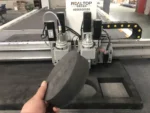
The RT-2026 platform supports a wide selection of interchangeable tool heads rather than a single fixed knife. High-power vibrating knives handle dense fluorocarbon and nitrile sheets where a standard oscillating blade would stall or produce ragged edges. Pneumatic knives manage softer silicone and foam-rubber blends without crushing the substrate. Drag knives and creasing wheels serve carton sample work on the same table. The CNC Knife Cutting Machine manufacturer configures each head according to the exact material durometer and thickness the buyer processes daily, rather than shipping a universal setup that compromises across compounds.
Vacuum Zoning That Holds Small Gaskets Flat
Gasket production generates many small, irregularly shaped parts that tend to lift off the table mid-cut when vacuum suction is distributed as a single zone. The RT-2026 uses a flat vacuum table paired with a 7.5 kW pump and a German imported conveyor belt surface, allowing the operator to activate only the zones directly beneath the material. This targeted hold-down prevents small O-rings and flange gaskets from shifting during high-speed passes at translational velocities reaching 1200 mm/s. Without zone-level control, scrap rates climb as parts drift and the knife tears through partially held stock [NEED_CITE: vacuum table zoning practices in digital flatbed cutting].
Understanding the Specs Behind Clean Gasket Edges
The repeated accuracy of ≤ 0.1 mm matters directly for gasket sealing performance — even a half-millimeter deviation on a flange gasket can compromise the seal under compression. The Delta servo motors and Taiwan Hiwin linear guides form the transmission backbone that maintains this tolerance across long production runs. Cutting thickness ranges from 20 mm to 80 mm depending on the material block format and selected knife; dense fluorocarbon rubber cuts cleanly at the lower end of that range while softer silicone and foam composites allow deeper single-pass cuts. The Swiss imported knife system provides both full-cut and half-cut vibration modes, giving operators control over kiss-cutting liner-backed gaskets versus through-cutting solid rubber sheets. HP-GL compatible instruction format means most existing gasket design files transfer without reformatting, reducing pre-production preparation time.
The Hidden Cost of Skipping Material Trials
When a gasket producer specifies a machine without running their actual compound through a test cut, several failures compound downstream. A knife chosen for medium-durometer nitrile will chatter on FKM, leaving micro-tears that fail pressure testing. Inadequate vacuum zoning causes thin PTFE-coated gaskets to flutter, producing oversize parts that leak at bolt holes. Software that cannot import the buyer’s nesting workflow forces operators to rebuild tool paths manually, adding hours to every job setup. These issues rarely surface during a factory demo running standard demo material — they appear weeks after installation when real production volumes expose every mismatch [NEED_CITE: common failure modes in CNC knife cutting of elastomers].
Why This Machine Gets Configured Before It Gets Built
The design team at REALTOP engineers both knife and laser cutting platforms in-house, which means gasket buyers are never pushed toward a cutting method that does not suit their compound. Every RT-2026 ships with a tool head and table configuration list built from the buyer’s sample cutting report, not from a default catalog entry. CCD camera positioning — available as small mark-point, panoramic recognition, or projection modes — is tested against the buyer’s printed contour files at full production speed before acceptance. Software compatibility with the buyer’s existing DXF, PLT, or proprietary nesting output is confirmed at order stage. Voltage, plug type, and control panel language are matched to the destination facility so the machine runs on day one without electrical adaptation.
Documentation & Verification
- Machine specification sheet listing every configured tool head and vacuum zone
- Sample cutting report produced on your supplied rubber compound before shipment
- Electrical schematic confirming 380V ± 10% wiring and Delta servo assignments
- Factory test record documenting repeated accuracy across full working area
- HP-GL and file format compatibility note signed off against your design software
- Spare parts list covering Swiss knife blades, vacuum seals, and conveyor belt sections
Installation, Commissioning & Support
- Foundation must support 3450 × 2300 mm footprint with level floor and no vibration sources
- Dedicated 380V circuit rated for 9 kW continuous draw with correct phase rotation
- Machine ships with table and gantry separated; reassembly and tramming done on-site
- First-run parameter tuning covers blade amplitude, vacuum zone mapping, and feed rate
- Operator training addresses tool head changeover and CCD calibration for printed contours
- Spare blade and vacuum seal kit included for initial production weeks
Sending the Right Inquiry
Provide the exact rubber compound name, Shore hardness, sheet thickness, and maximum gasket dimensions you produce daily. Share a sample DXF or PLT file so we can verify nesting and contour recognition compatibility. Confirm your facility voltage, frequency, and preferred control panel language so the RT-2026 arrives configured for your shop floor.
Frequently Asked Questions
Q: How do I choose between an oscillating knife and a high-power vibrating knife for gasket work?
A: Oscillating knives handle medium-durometer rubber and composite sheets with clean vertical edges. High-power vibrating knives deliver greater stroke force for dense fluorocarbon and thick nitrile compounds that resist standard oscillation. The correct choice depends on your specific material hardness and thickness, which we verify during sample cutting before finalizing the tool head configuration.
Q: Will the CCD camera track printed registration marks at full production speed?
A: The panoramic camera recognition system and small CCD mark-point mode both register printed contours on gasket material. We test recognition accuracy using your actual printed files at production translational velocity before shipment, ensuring the system maintains registration without slowing the cutting cycle.
Q: How does vacuum zoning prevent small gasket parts from lifting?
A: The 7.5 kW vacuum pump feeds multiple independently controlled zones across the flat working table. Operators activate only zones beneath the current sheet, concentrating suction on small parts that would otherwise drift on a full-table vacuum. This is critical for flange gaskets and O-ring profiles cut from thin rubber stock.
Q: Can the machine import files from my existing nesting software?
A: The instruction system accepts HP-GL compatible formats natively. We confirm compatibility with your specific nesting output — whether DXF, PLT, or proprietary — during the pre-order validation stage so no manual file rebuilding is required after installation.
Q: What voltage and language options are available for export markets?
A: The standard configuration runs on 380V ± 10%, and the electrical system can be adapted to match destination facility requirements. Control panel language and documentation are customized to the buyer’s market before dispatch, confirmed during the specification review step.
You may also like

商品评价
Clear filtersThere are no reviews yet.