


-
 Courier delivery
-
 DHL Courier delivery
-
 Warranty 1 year
-
 Free 30-Day returns

Precision tool head matching — Every fabric and composite cutting job starts with a sample test on your actual material, not a catalog assumption about thickness or density.
Technical Specifications
| Parameter | Value |
|---|---|
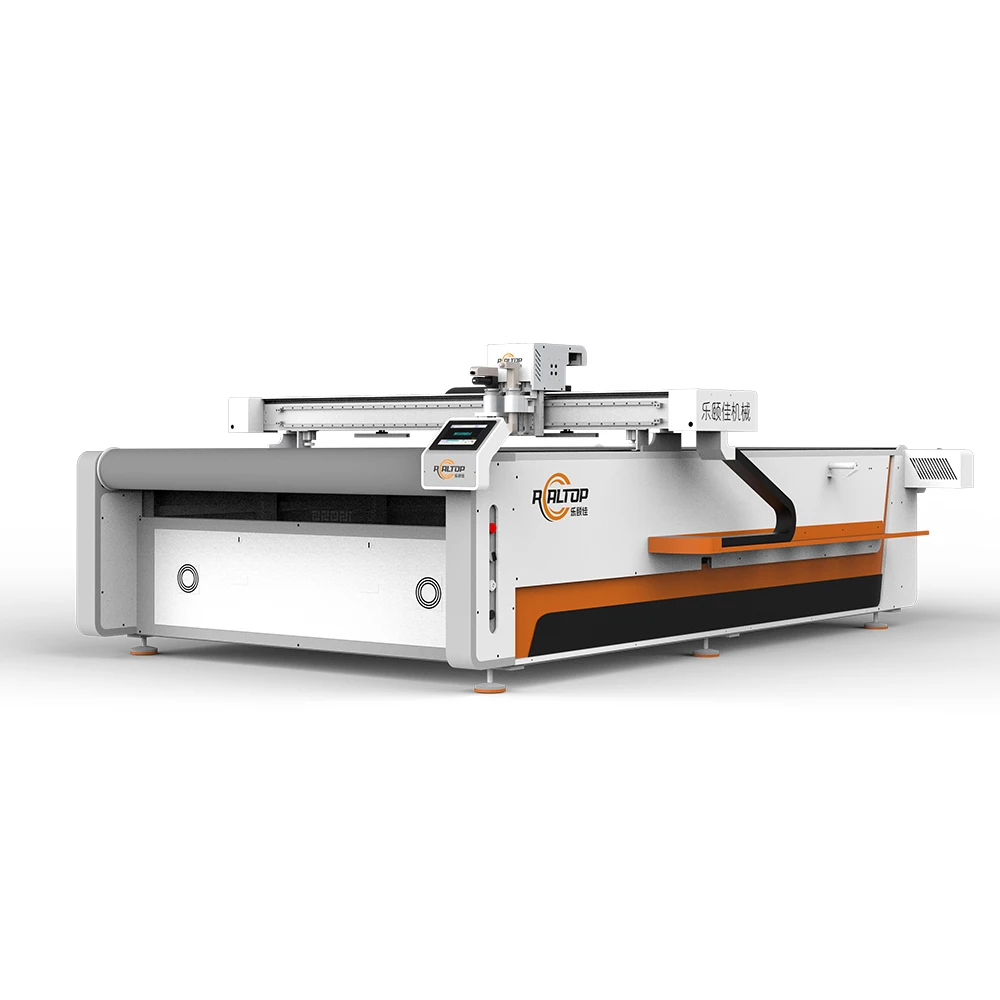
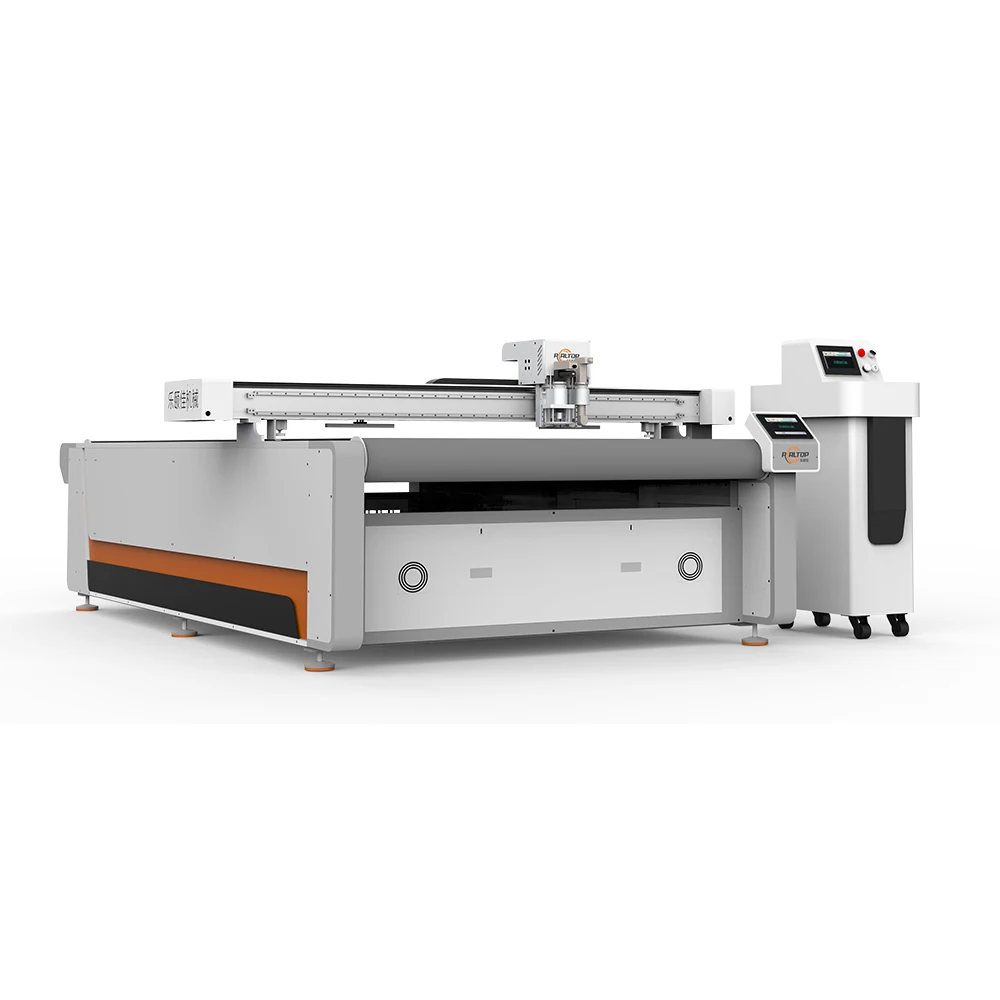
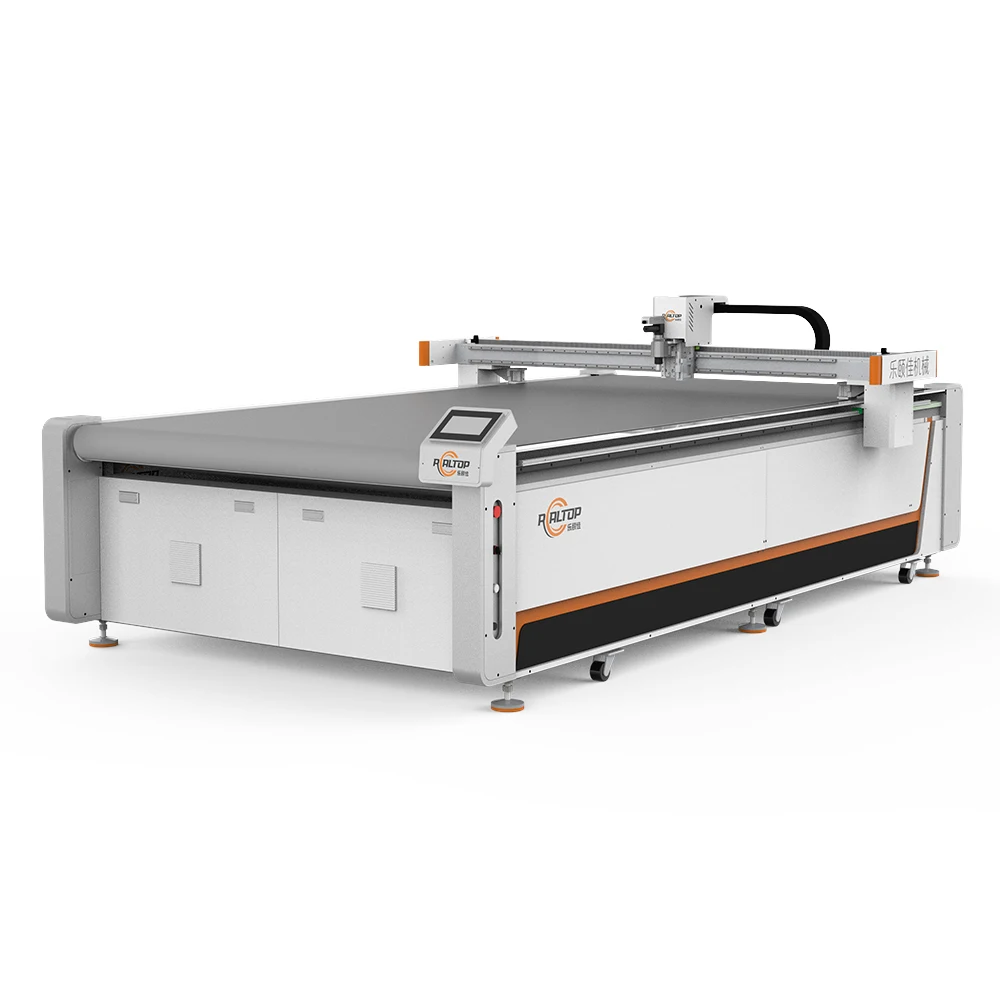
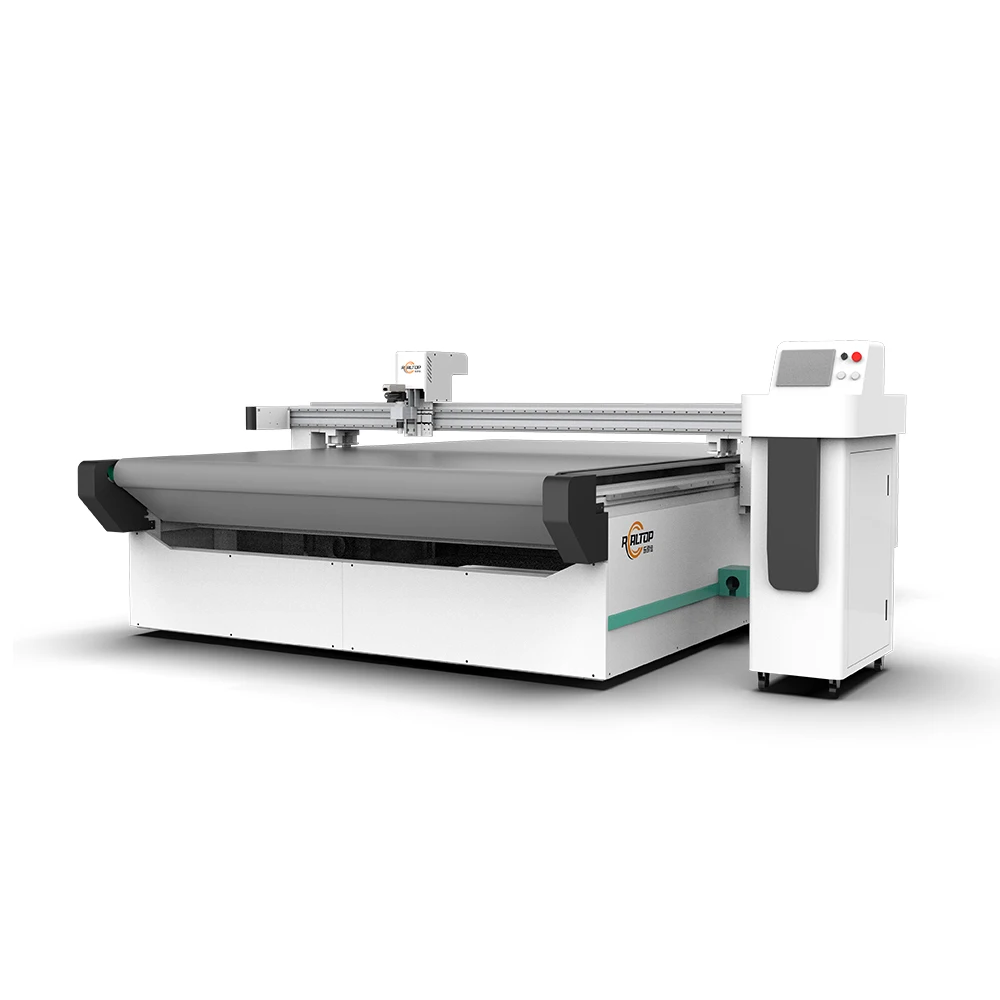
| Product Type | CNC Oscillating Knife Cutting Machine |
| Model | 1625 |
| Working Area | 1600 × 2500 mm |
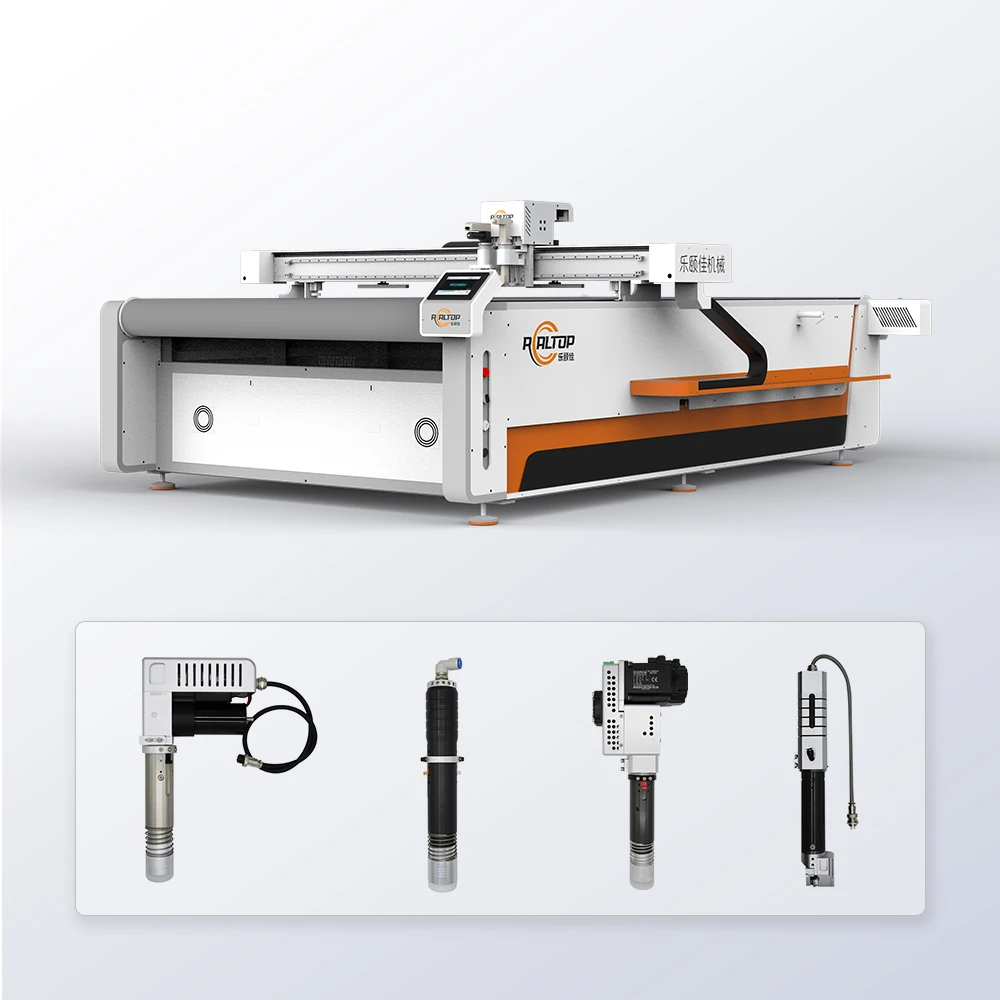
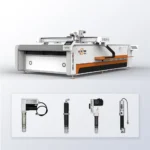
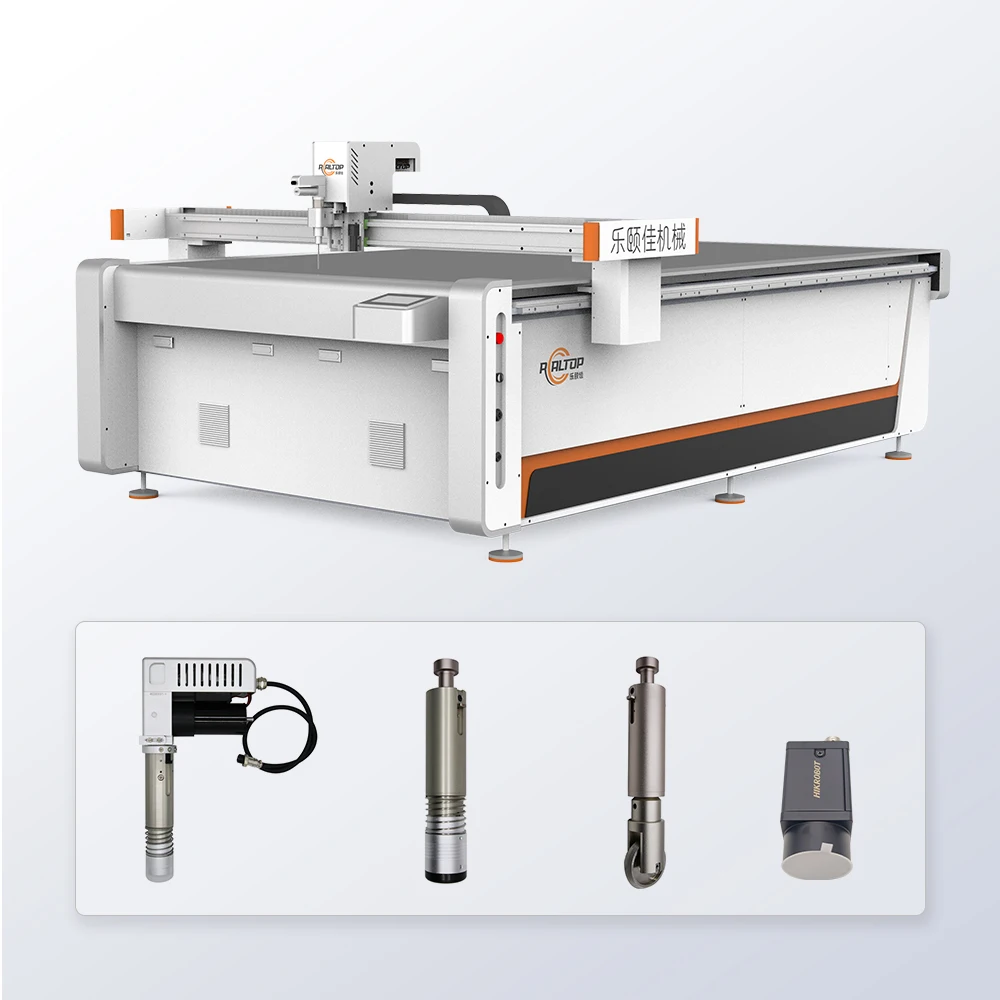
| Tool Head Options | Oscillating knife, Driven rotary knife, Creasing wheel, Kiss cutting tool, Pneumatic knife, Milling tool, V groove knife |
| Cutting Speed | 0–2000 mm/s |
| Cutting Thickness | ≤ 30 mm (basis not stated in source — confirm material type and density) |
| Positioning Accuracy | ±0.1 mm |
| Vacuum Pump | 9 kW |
| Vacuum Table Type | Aluminum bellows vacuum table |
| Control System | PLC control panel |
| Servo Drive Options | Panasonic, Delta, Dorna |
| Voltage Options | 110V, 220V, 380V |
| File Formats | PLT, DXF, AI, PDF |
| Software Language Options | English, Russian, Italian, Chinese (custom languages available) |
| Safety Devices | Infrared sensor device, emergency stop device |
| Machine Dimensions (L×W×H) | 3300 × 2100 × 1350 mm |
| Certification | CE |
Application Suitability
| Application | Material or Output |
|---|---|
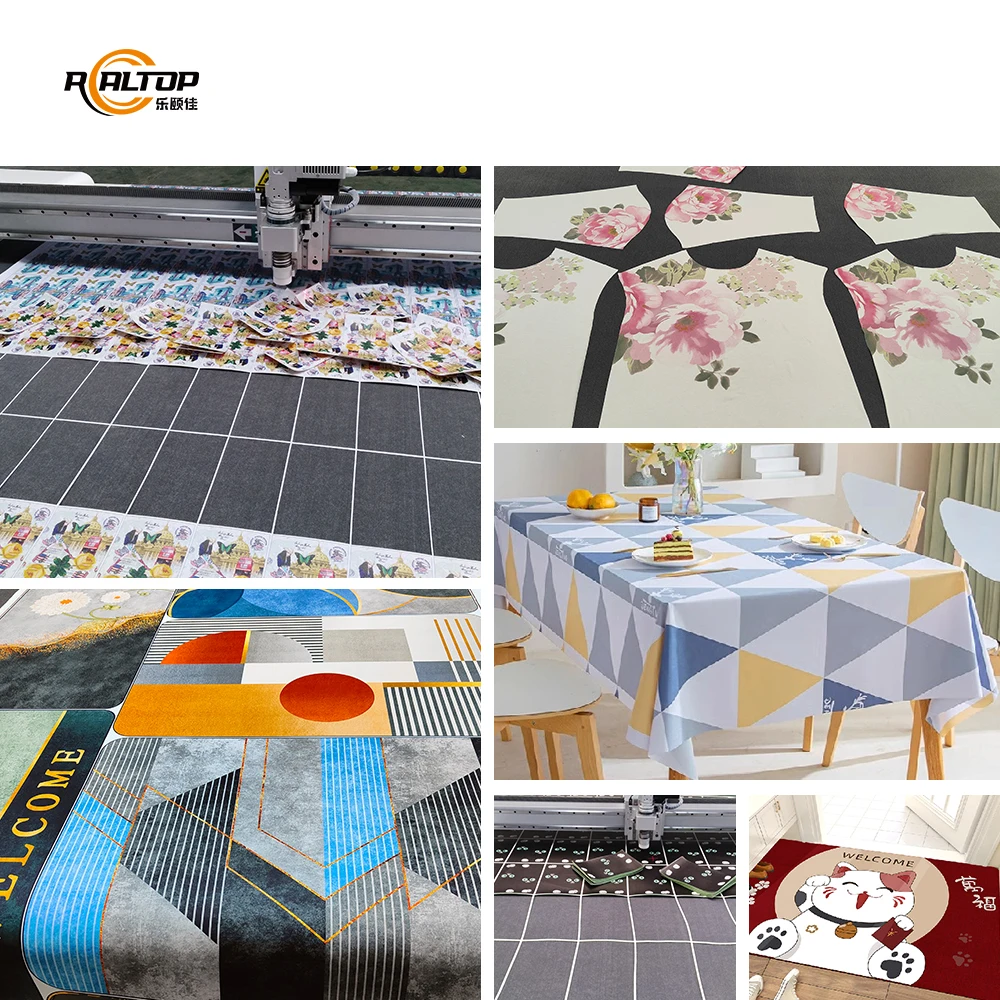
| Apparel manufacturing | Suits, knitwear, lace, complex layered fabrics |
| Automotive interiors | Seat fabrics, carpets, PVC floor mats |
| Home textiles | Sofa upholstery fabrics, curtains, area rugs |
| Composite material processing | Carbon fiber prepreg, aramid laminates |
| Gasket and seal production | PTFE, rubber, foam sheets |
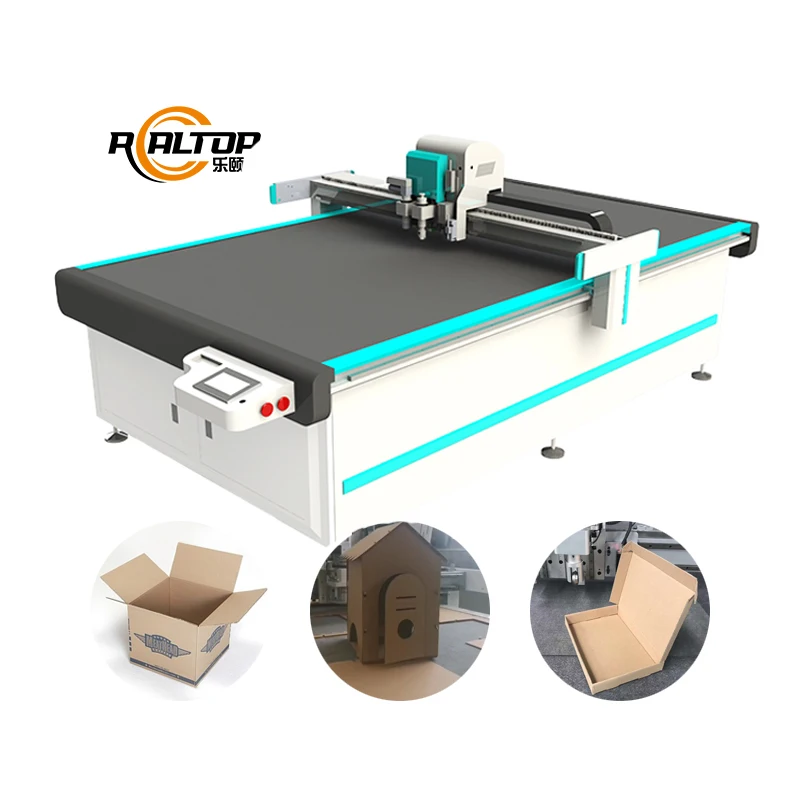
| Packaging sample making | Cardboard, corrugated carton |
Why the Tool Head Decision Matters More Than Working Area
Cutting quality is determined by tool head selection matched to material, not by table size alone.
Many buyers specify a machine based on working area and then discover the standard oscillating knife struggles with their coated composite or dense foam. I once spent two days and nights on-site re-tuning parameters for an automotive interior client whose production material had a surface coating the sample fabric never showed. A CNC Oscillating Knife Cutting Machine manufacturer must confirm the exact tool head before the order is placed. Different materials demand different cutting actions — a driven rotary knife for woven textiles, a pneumatic knife for thicker foam, a kiss cutting tool for adhesive-backed vinyl [NEED_CITE: tool head selection criteria by material type].
How the Aluminum Bellows Vacuum Table Holds Material Flat
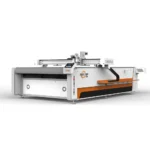
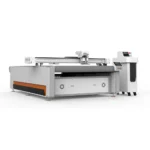
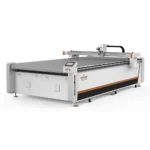
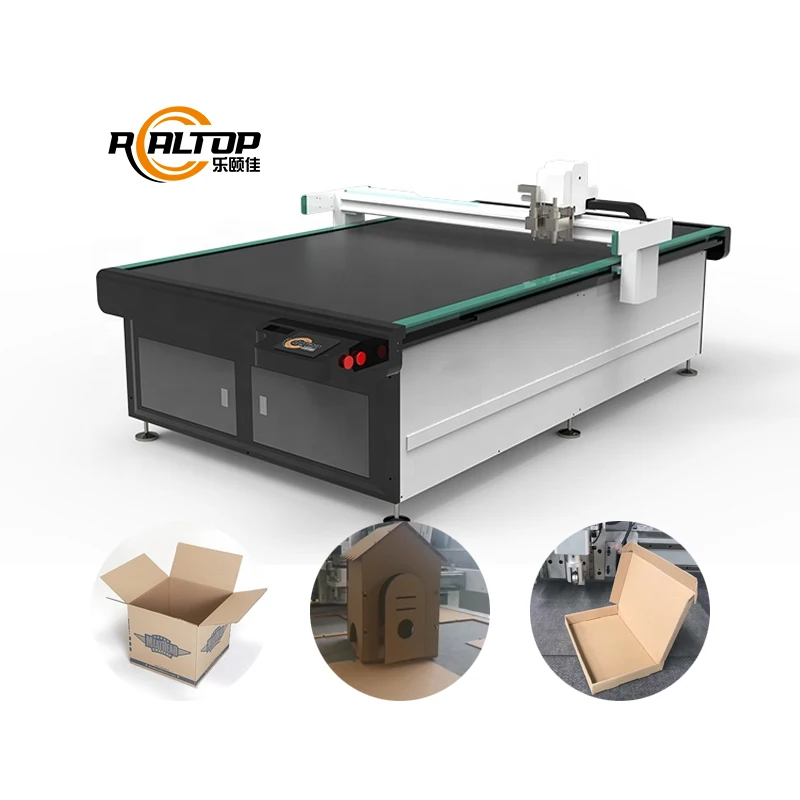
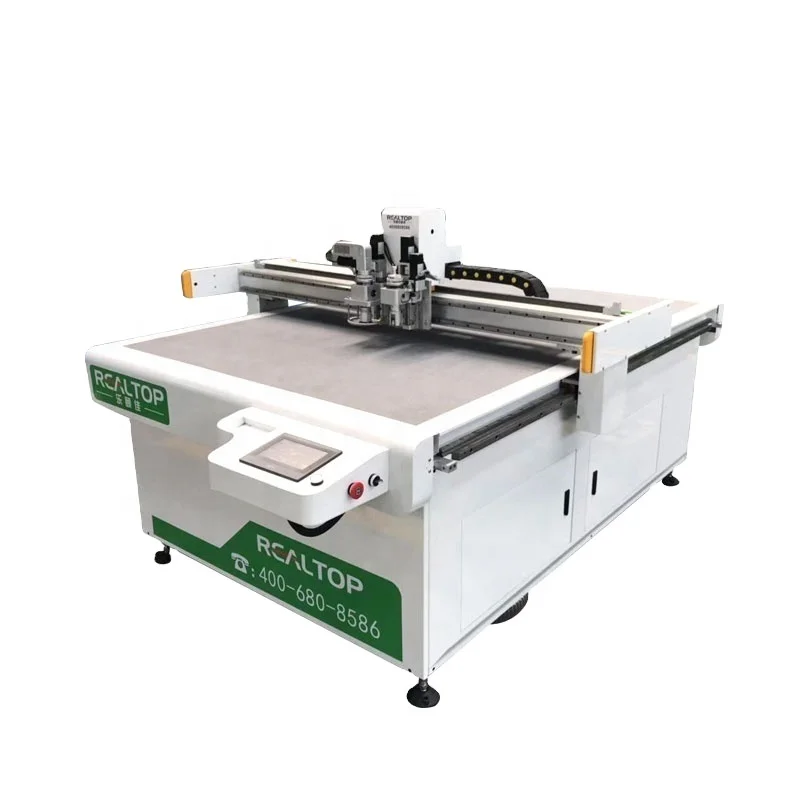
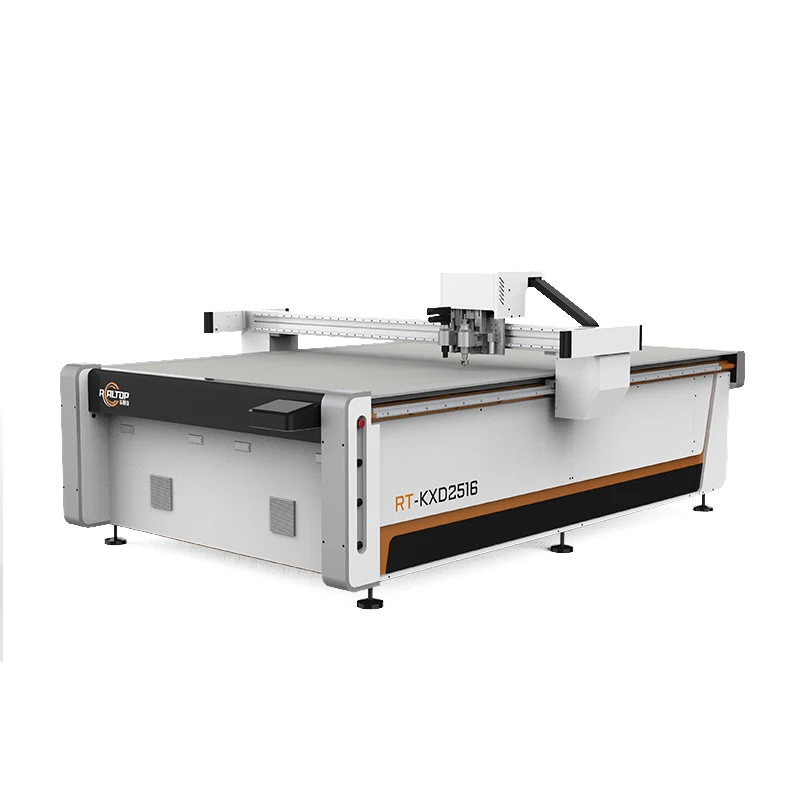
The aluminum bellows vacuum table on this 1625 flatbed provides a continuous seal across the full 1600 × 2500 mm cutting surface. Unlike segmented steel tables, the bellows design maintains even suction distribution, which prevents lightweight fabric from lifting during high-speed oscillating knife passes. The 9 kW vacuum pump generates sufficient negative pressure to hold multi-layer fabric stacks without additional mechanical clamping, so the cutting head moves without material shift or puckering at the edges.
Frame Stability and Motion Precision for Repeatable Cuts
The heavy-duty machine frame is precision-ground to maintain flatness across the entire cutting area. Combined with configurable servo drives from Panasonic, Delta, or Dorna, the system achieves ±0.1 mm positioning accuracy during continuous production runs. This level of repeatability matters when nesting dozens of garment pattern pieces on a single fabric lay — any drift accumulates across the sheet and produces miscut pieces at the far end [NEED_CITE: positioning accuracy standards for CNC flatbed cutters]. The PLC control panel manages all axis coordination through a dedicated packaging structure design software interface that supports PLT, DXF, AI, and PDF file imports.
Reading the Specifications That Actually Affect Your Output
The 0–2000 mm/s cutting speed range must be understood in context of material density and tool head choice. Oscillating knife cuts through woven fabric cleanly at higher speeds, but switching to a V groove knife for creasing carton requires a slower feed to avoid crushing the corrugation flute. The ≤ 30 mm cutting thickness figure depends entirely on what you are cutting — dense rubber at 10 mm may challenge the blade differently than soft foam at 25 mm. Always confirm this against your actual material sample. The seven available tool heads are not interchangeable accessories; each one solves a specific material problem, and choosing wrong produces ragged edges or delaminated layers rather than clean cuts.
The Hidden Cost of Skipping Material Testing
When a machine ships with a tool head chosen from a catalog chart rather than tested on your actual production material, the consequences appear on day one of installation. Ragged edges on leather mean every piece needs manual trimming. Crushed foam layers mean the automotive seat cover does not fit the mold. Delaminated composite sheets mean scrap rates climb and the nesting software yield calculation becomes meaningless [NEED_CITE: material testing protocols before equipment commissioning]. These problems trace back to a single skipped step in the specification process.
Why Source This CNC Oscillating Knife Cutting Machine Here
In-house design and production covers both knife and laser cutting technologies, so you match the method to your material rather than forcing one approach. The tool head and table configuration are specified per material type and production volume, not selected from a default package. CCD camera positioning is available for printed contour cutting work where registration marks must be tracked at production speed. Software compatibility is confirmed before order placement, ensuring your existing PLT, DXF, or AI files import correctly into the nesting workflow. Voltage, control language, and specification details are customized to your facility requirements before shipment. Sample cutting on your own material is performed and documented before any commitment is made.
Documentation & Verification
- Machine specification sheet confirming tool head and vacuum table configuration per your material
- Electrical schematic with voltage and frequency matched to your destination market
- Sample cutting report performed on your actual fabric or composite before order commitment
- Factory test record documenting positioning accuracy and edge quality on your material
- Operation and maintenance manual in your selected software language
- Software license with file format compatibility confirmation for PLT, DXF, AI, and PDF imports
Installation, Commissioning & Support
- Foundation requirements for the 3300 × 2100 × 1350 mm machine footprint with level floor tolerance
- Dedicated power circuit matching confirmed voltage option (110V, 220V, or 380V) with correct frequency
- Assembly and leveling of the aluminum bellows vacuum table on-site after delivery
- First-run parameter calibration using your production material and selected tool head
- Operator training on PLC control panel functions and nesting software in your language
- Spare parts list covering blades, vacuum seals, and wear components specific to your tool head configuration
What to Prepare Before Requesting a Quotation
Send material type, exact thickness, maximum sheet dimensions, and estimated daily cutting volume so the correct tool head and vacuum configuration can be determined. Specify your facility voltage and frequency, preferred control language, and any existing software or nesting workflow the machine must integrate with. If your material has coatings, laminations, or unusual density characteristics, ship a sample roll for testing before configuration is finalized.
Frequently Asked Questions
Q: How are tool head and vacuum zoning specified based on material type and thickness?
A: Each material type requires a specific tool head — oscillating knife for woven fabrics, driven rotary for knits, pneumatic for thick foam. The aluminum bellows vacuum table provides full-area hold-down, and zoning can be adjusted so small pattern pieces do not lift during cutting. Configuration is confirmed through sample testing on your actual material before the order is finalized.
Q: What voltage configurations and control language options are available before shipment?
A: The machine supports 110V, 220V, and 380V configurations matched to your local grid. The PLC control panel and nesting software are available in English, Russian, Italian, and Chinese, with custom language options confirmed before production. Electrical schematics are provided showing all connections in your specified voltage and frequency standard.
Q: How is sample cutting on the buyer’s own material arranged before commitment?
A: You send a representative sample of your production material, and we run cutting tests using multiple tool head options. A sample cutting report documents edge quality, cutting speed, and recommended parameters for your specific fabric or composite. This report accompanies the quotation so you can evaluate results before committing to the order.
Q: What does the factory quality control process cover on each machine before dispatch?
A: Every unit undergoes frame flatness measurement, motion axis calibration, and positioning accuracy verification across the full 1600 × 2500 mm working area. The selected tool head is test-run at production speed, vacuum hold-down is measured at multiple zones, and electrical systems are checked against the confirmed voltage specification. A factory test record ships with the machine.
Q: What OEM and custom configuration capabilities does the in-house design team support?
A: The design team handles custom working area dimensions, specialized tool head combinations, conveyor-fed systems for continuous roll material, and branded control panel interfaces for distributors. Servo drive selection from Panasonic, Delta, or Dorna can be specified per buyer preference. All custom configurations are documented in the specification sheet and verified during factory testing.
You may also like

商品评价
Clear filtersThere are no reviews yet.