





-
 Courier delivery
-
 DHL Courier delivery
-
 Warranty 1 year
-
 Free 30-Day returns

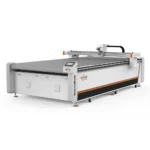
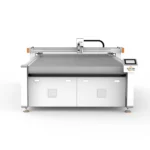
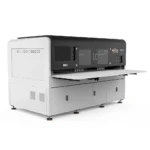
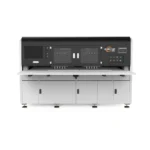
Precision jig configuration — In-house design matches punch tooling to the exact leather grade and thickness before production begins, preventing torn edges and crushed surfaces on the RT-A2 platform.
Technical Specifications
| Parameter | Value |
|---|---|
| Model | RT-A2 |
| Product Type | Leather CNC Punching Machine |
| Punching Area | 600 × 500 mm |
| Material Thickness Range | 1 – 6 mm |
| Hole Size Range | 0.8 – 12 mm |
| Optional Punch Jigs | 12 sizes |
| Punching Accuracy | ±0.1 mm |
| Equipment Tolerances | ±0.02 mm |
| Punching Speed | 900 punches/min (basis not stated in source) |
| Overall Dimensions (L×W×H) | 1800 × 1510 × 1600 mm |
| Machine Net Weight | 1000 kg |
| Power Supply Voltage | 220 V |
| Power Frequency | 50/60 Hz |
| Rated Power | 1.5 kW |
| Compressed Air Pressure | 5 – 6 bar |
| Control System | NC system with smart cutter function |
| Auxiliary Functions | Leather positioning and laying, break-point memory |
| Dust Collecting System | Independent unit |
| Standards | CE (verify applicability to this model) |
Application Suitability
| Application | Material or Output |
|---|---|
| Footwear upper and lining perforation | PU synthetic and genuine leather sheets, 1–6 mm |
| Automotive seat cover ventilation holes | Thick genuine leather and automotive-grade PU |
| Bag, belt, and upholstery decorative patterns | Medium-weight leather hides and split leather |
| Small leather goods functional perforation | Thin PU and soft genuine leather for wallets and straps |
Why "Punching Speed" Means Nothing Without the Material Context
A quoted stroke rate only matters when tied to the specific leather type, thickness, and hole pattern you actually run.
When buyers evaluate a Leather CNC Punching Machine manufacturer, the first number they ask about is speed. But 900 punches per minute on thin, soft PU tells you very little about how the same spindle behaves when punching 5 mm full-grain cowhide for automotive seat ventilation. The tool resistance, chip evacuation, and jig deflection all change dramatically as material density and thickness increase. I have seen perforating jobs spec’d purely on stroke rate where the buyer ended up running at half the quoted throughput because the jigs could not clear waste from thick genuine leather cleanly [NEED_CITE: material density effects on punching cycle time]. The consequence is ragged hole edges, excessive jig wear, and production bottlenecks that no catalogue number warned about.
How Jig Selection Dictates Edge Quality Across Leather Grades
Clean hole perforation depends less on motor speed and more on the geometry of the punch jig relative to the leather fibre structure. The RT-A2 ships with 12 optional punch jig sizes spanning 0.8 to 12 mm, which allows the Leather CNC Punching Machine manufacturer to match tooling to the buyer’s exact hide. A 2 mm hole in soft garment PU requires a different clearance angle and cutting edge profile than the same diameter in 4 mm automotive seat leather. Getting this wrong produces burrs, fibre pull-out, or a crushed hole rim that fails downstream quality inspection.
Break-Point Memory and Zero-Waste Resumption on Interrupted Runs
Genuine leather hides are expensive, and any interruption — power fluctuation, air pressure drop, or operator pause — can ruin a half-finished sheet if the machine cannot resume exactly where it stopped. The NC system on this platform stores the last completed coordinate, so when production restarts the punch head picks up at the next hole in the pattern rather than repeating already-punched positions. For operations running high-value hides, this eliminates the material waste that accumulates over months of interrupted cycles [NEED_CITE: leather hide cost and waste reduction in CNC punching operations].
Reading the Numbers That Actually Affect Your Output
The ±0.1 mm punching accuracy and ±0.02 mm equipment tolerance define how tightly hole patterns hold their position across a 600 × 500 mm work area. In footwear uppers, where perforation patterns must align with stitching lines and lasted shapes, even minor drift over a long run causes rejected panels. The 1–6 mm material thickness range covers most footwear, bag, and automotive interior leathers, but buyers processing very stiff belt leather or multi-layer bonded composites should confirm jig compatibility before ordering. Compressed air at 5–6 bar drives the punch actuation, so your shop air supply must sustain that pressure continuously — a drop to 4 bar mid-cycle causes incomplete penetration and half-formed holes that scrap the piece.
The Hidden Cost of Skipping Material-Matched Configuration
Choosing a punch jig without testing on your actual leather stock leads to problems that surface only after the machine is installed. Thick PU with a fabric backing requires a different punch entry speed and waste clearance than top-grain leather of the same nominal thickness. I recall a perforation project where the buyer specified jigs for genuine leather, then switched to reinforced PU for cost reasons — the result was delaminated hole edges and frequent jig blockages that took weeks of adjustment to resolve [NEED_CITE: tooling mismatch consequences in leather CNC punching]. Sending your material for pre-order sample testing catches these mismatches before the configuration is locked in.
Why Buyers Source This Leather CNC Punching Machine Manufacturer
The design team engineers both the punch mechanism and the jig tooling in-house, so configuration changes for different leather grades do not require third-party tooling suppliers. Every RT-A2 setup is specified against the buyer’s material sample, with punching force and jig clearance adjusted before the machine leaves the factory. Voltage and frequency are confirmed against the destination facility’s supply — the 220 V, 50/60 Hz platform accommodates most export markets, but plug type and control language are finalised per order. The independent dust collecting system is integrated at the factory rather than added as a field retrofit, keeping the punching bed clear of leather fibre debris during continuous shifts.
Documentation & Verification
- Machine specification sheet listing confirmed punch jig sizes and material thickness range
- Electrical schematic showing 220 V circuit layout and compressed air line connections
- Factory test record on buyer-supplied leather sample before dispatch
- Tool head and punch jig configuration list matched to the quoted material type
- Operation and maintenance manual covering jig replacement intervals and air pressure checks
- CE documentation package where applicable to the destination market
Installation, Commissioning & Support
- Requires level concrete floor rated for 1000 kg static load across the 1800 × 1510 mm footprint
- Dedicated 220 V circuit with appropriate breaker sizing for the 1.5 kW rated power draw
- Compressed air line at 5–6 bar with inline filter and regulator installed before first startup
- Punch jig alignment calibration performed on buyer’s leather stock during commissioning
- Operator training covers NC pattern loading, break-point memory reset, and jig changeover procedure
- Spare punch jigs and consumable wear parts listed with reorder part numbers
What to Include in Your Inquiry
To receive a configuration that matches your production needs, provide the leather type (genuine, PU, bonded), thickness range, and the hole diameter and pattern you run most frequently. Include your daily volume target and the compressed air capacity available in your workshop. If your facility operates on a voltage standard different from 220 V or requires a specific control language, note that in the initial inquiry so the electrical and software configuration can be quoted accordingly.
Frequently Asked Questions
Q: How is punching speed verified, and what conditions does the stated rate assume?
A: The 900 punches per minute figure is a mechanical cycle rate. Actual production speed depends on leather type, thickness, hole diameter, and pattern density. We run sample tests on your material to determine the sustainable throughput for your specific application before finalising the machine configuration.
Q: How do I select the correct punch jig for my leather material?
A: Send a sample of your leather stock — including type, thickness, and backing if applicable. We test multiple jig sizes from the 12 available options and provide a sample report showing hole edge quality, waste clearance, and achievable speed for each configuration.
Q: Can the voltage, frequency, and air specifications be customised for my market?
A: The standard platform runs on 220 V at 50/60 Hz, which covers most international markets. Plug type, cable length, and control panel language are confirmed per order. Compressed air requirements are 5–6 bar; we advise on air line sizing if your existing supply needs adjustment.
Q: What spare parts and consumable jigs are included with the machine?
A: Each RT-A2 ships with a spare parts list covering punch jigs, wear bushings, and air seals. The included consumable quantity depends on your confirmed production volume. Replacement jigs are manufactured in-house and available for reorder with standard lead times.
You may also like

商品评价
Clear filtersThere are no reviews yet.