







-
 Courier delivery
-
 DHL Courier delivery
-
 Warranty 1 year
-
 Free 30-Day returns

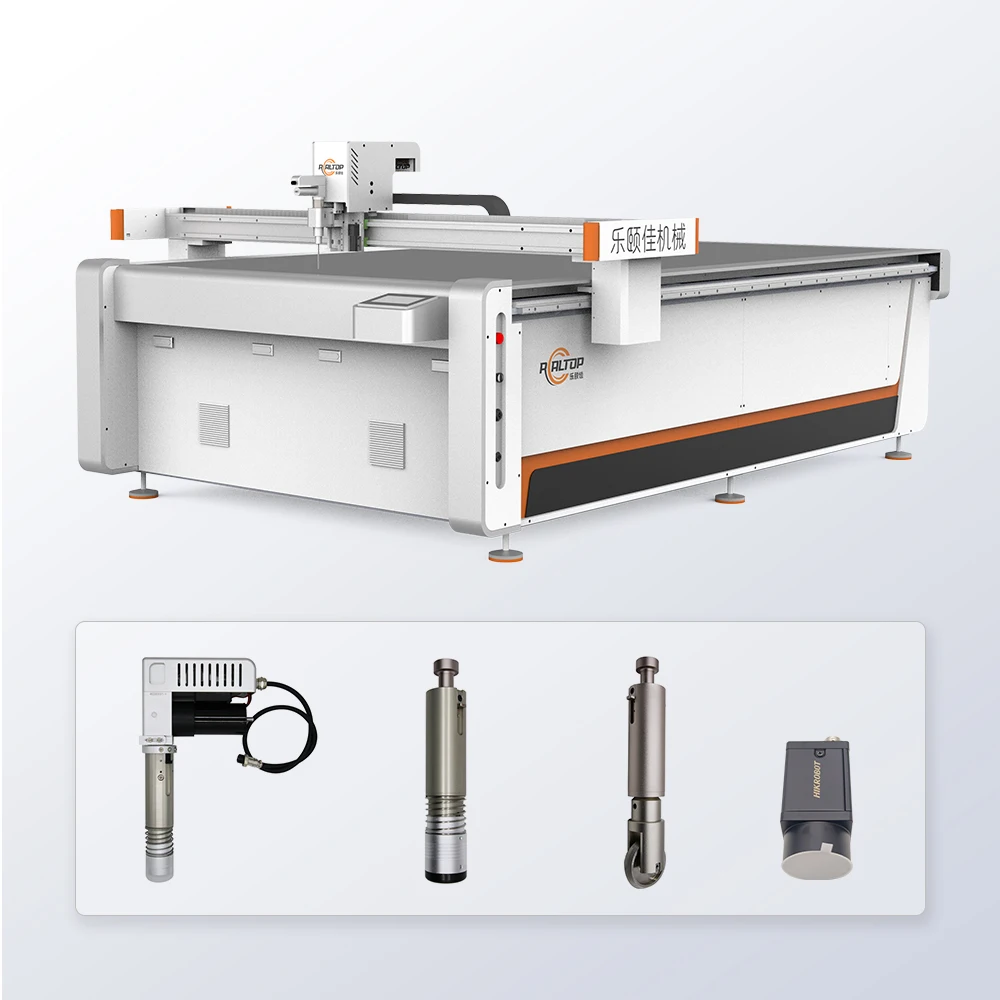
Design-Build Integration — A single facility handles the oscillating knife mechanics, vacuum table zoning and frame welding, allowing tool head selection to be revised during assembly if your board stock demands it.
Technical Specifications
| Parameter | Value |
|---|---|
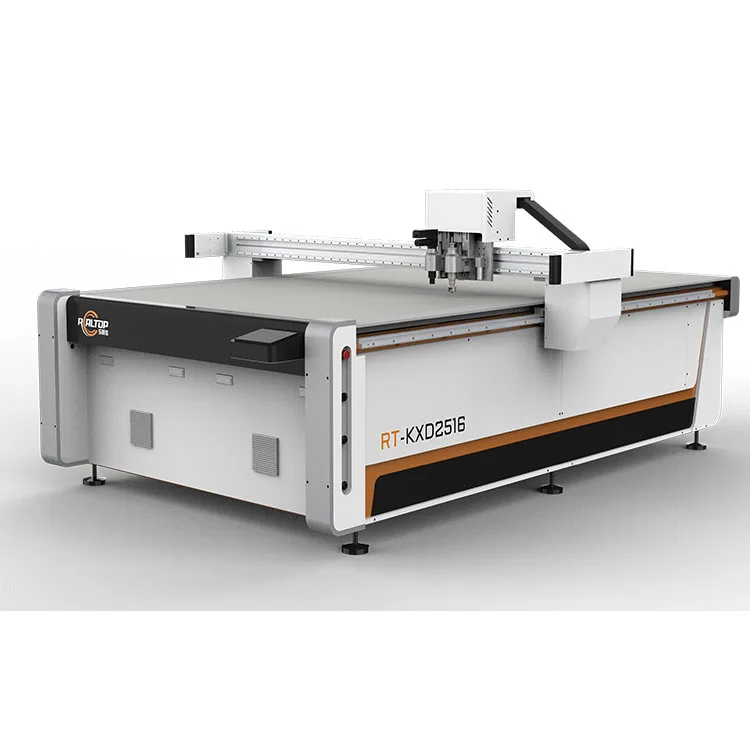
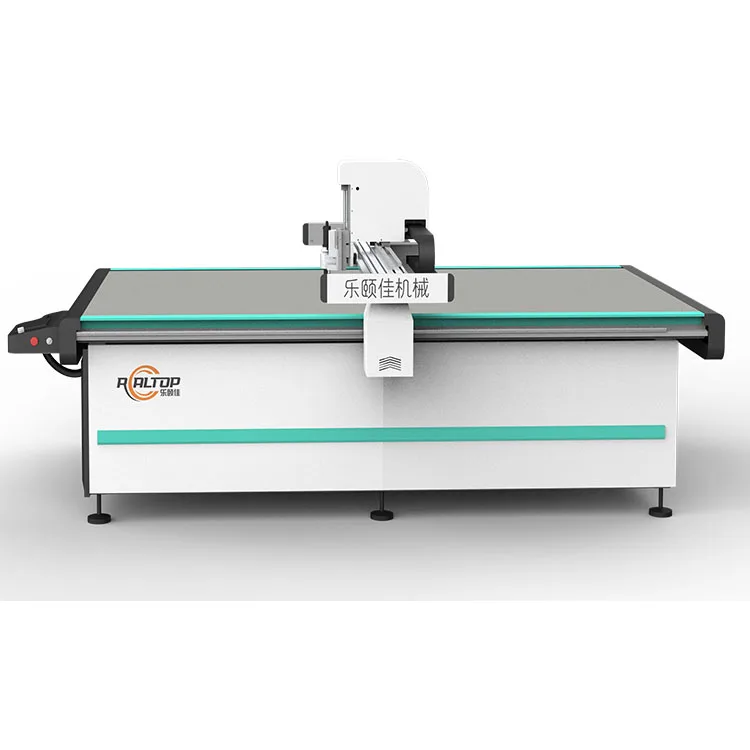
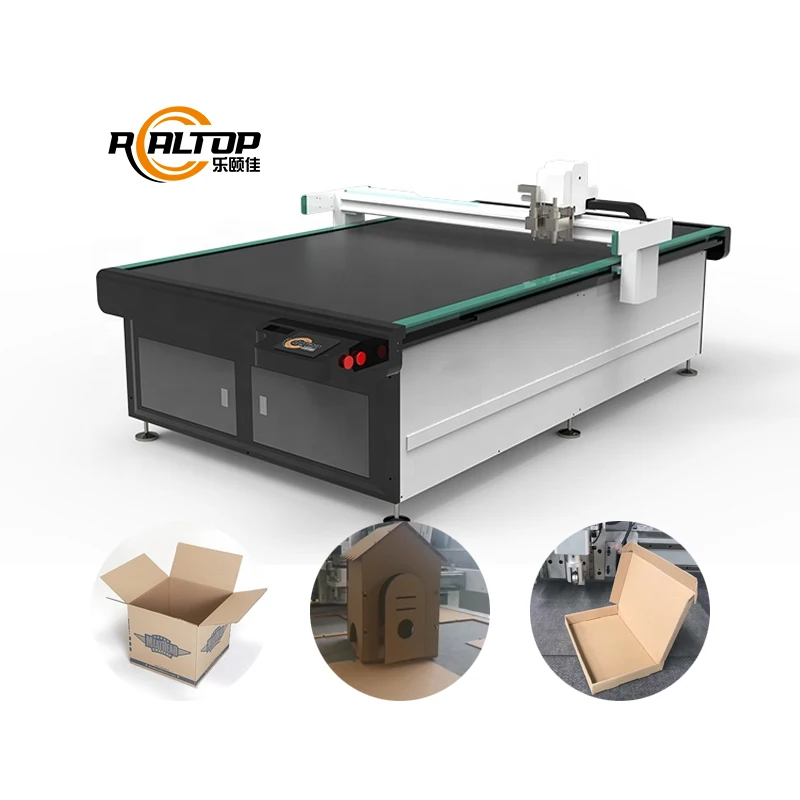
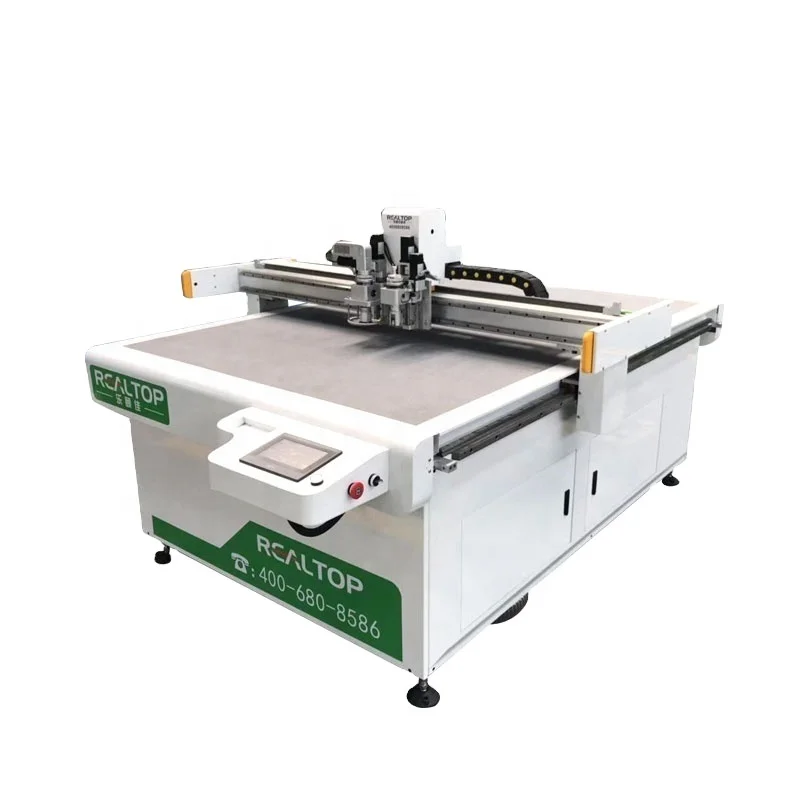
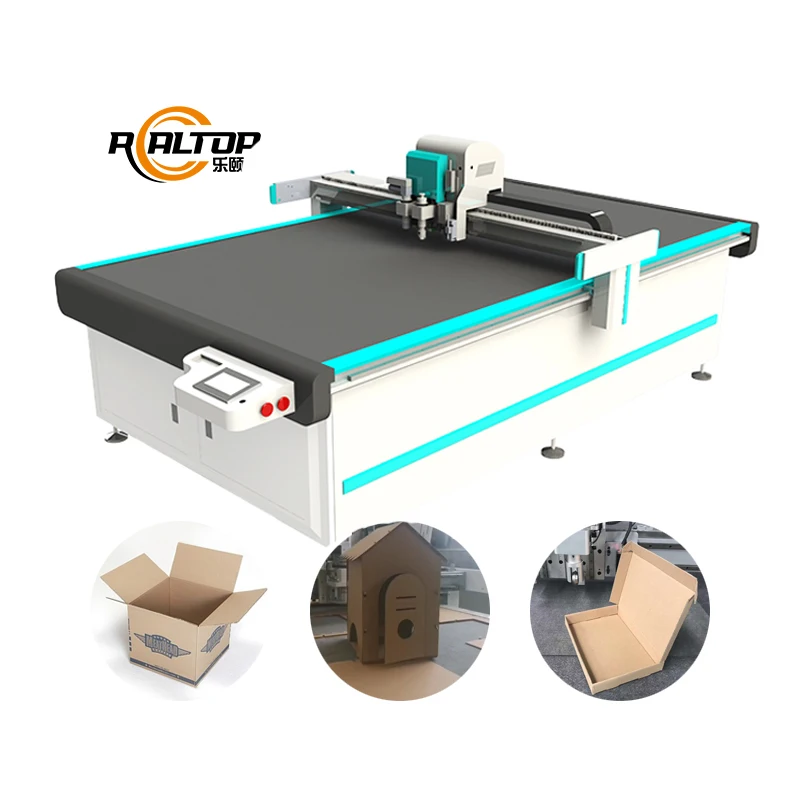
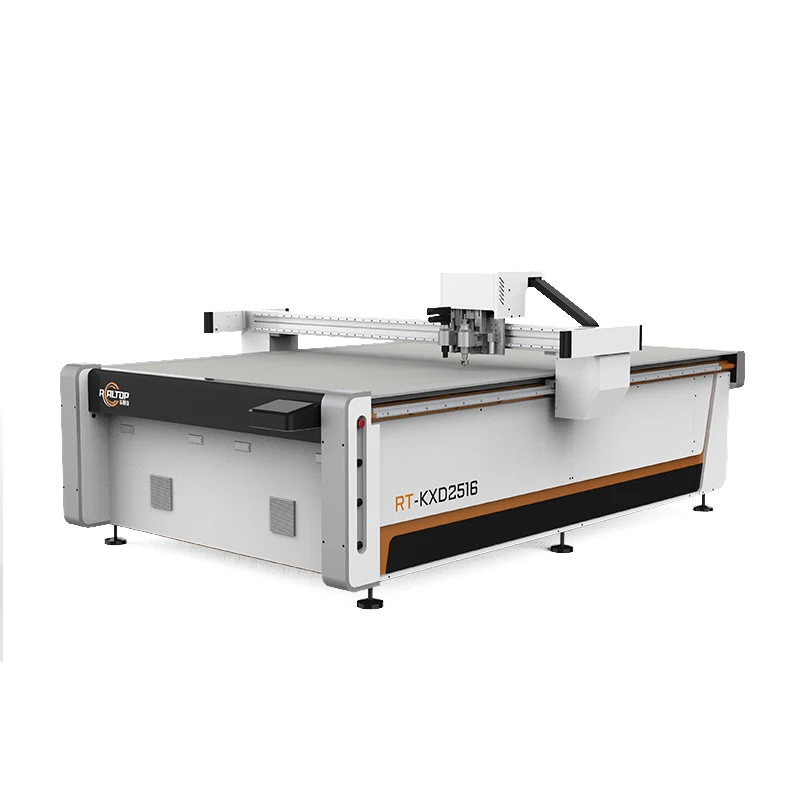
| Product Type | CNC Oscillating Knife Cutting Table for Packaging |
| Working Area | 1600 × 2500 mm |
| Overall Dimensions | 3450 × 2300 × 1250 mm |
| Rated Power | 9 kW |
| Voltage | 380V ±10% |
| Servo Drive | Taiwan Delta digital servo motor |
| Linear Motion | Taiwan Hiwin linear guide, synchronous belt, ball screw |
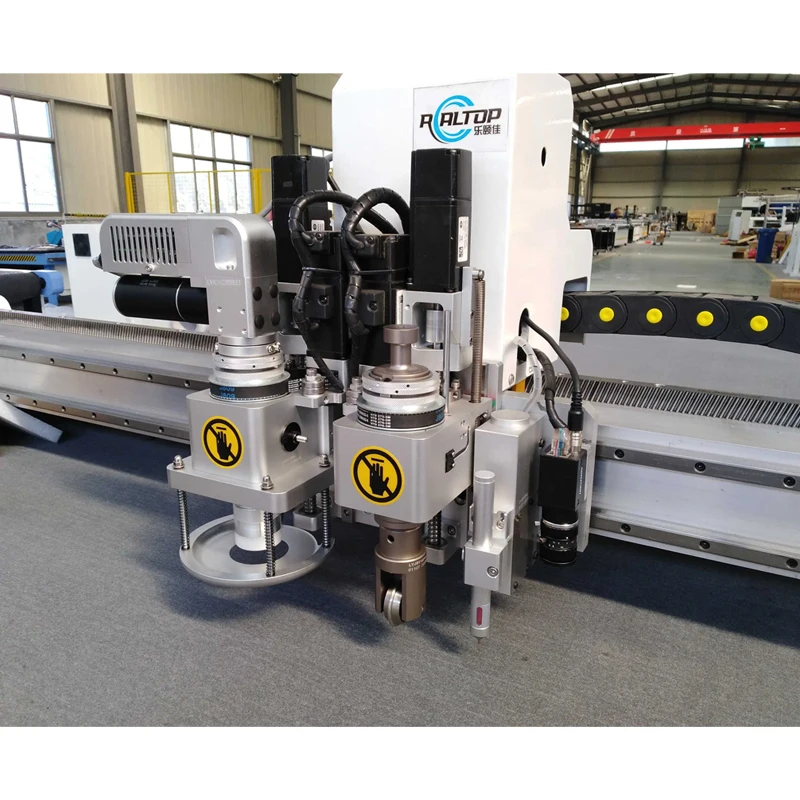
| Tool Head | Swiss imported oscillating knife — full cut, half cut, cursor location |
| Translational Velocity | 800–1200 mm/s |
| Cutting Thickness | Up to 100 mm (varies by board grade and flute profile) |
| Repeatability | ≤0.1 mm |
| Vacuum Table | Aluminum alloy honeycomb, automatic zone follow, 7.5 kW vacuum pump |
| Conveyor | Germany imported belt, auto-feeding option |
| Safety | Infrared sensors, emergency stop |
| Control Format | HP-GL compatible |
| Software | Professional carton nesting, multi-format import, custom language |
| Table Construction | Heavy welded steel frame, high-temperature stress relief |
| Language | English, Russian, Italian, Chinese; special languages configurable |
Application Suitability
| Application | Material or Output |
|---|---|
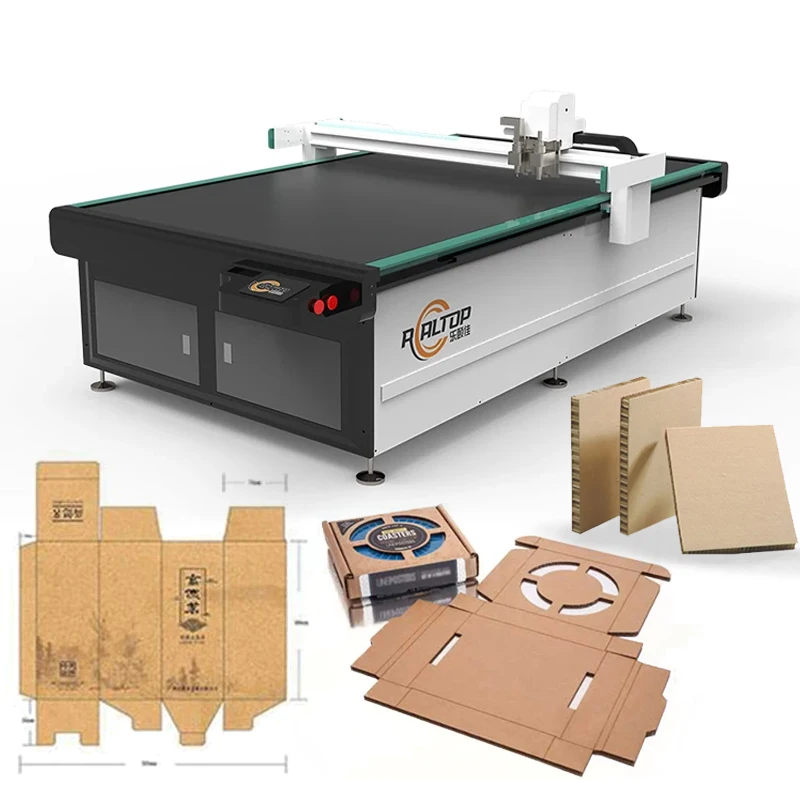
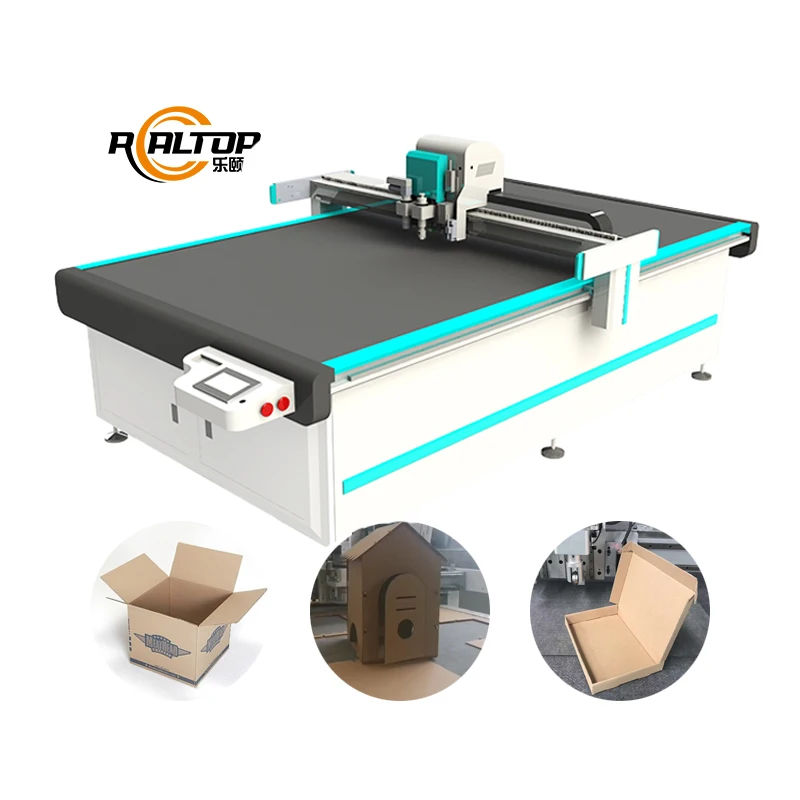
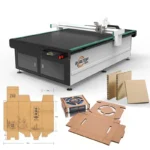
| Packaging sample making | Corrugated carton, grey board, kraft paper |
| Short-to-medium batch carton production | Single, double and triple-wall flute profiles |
| Creasing and marking | Folding boxboard, coated and uncoated board |
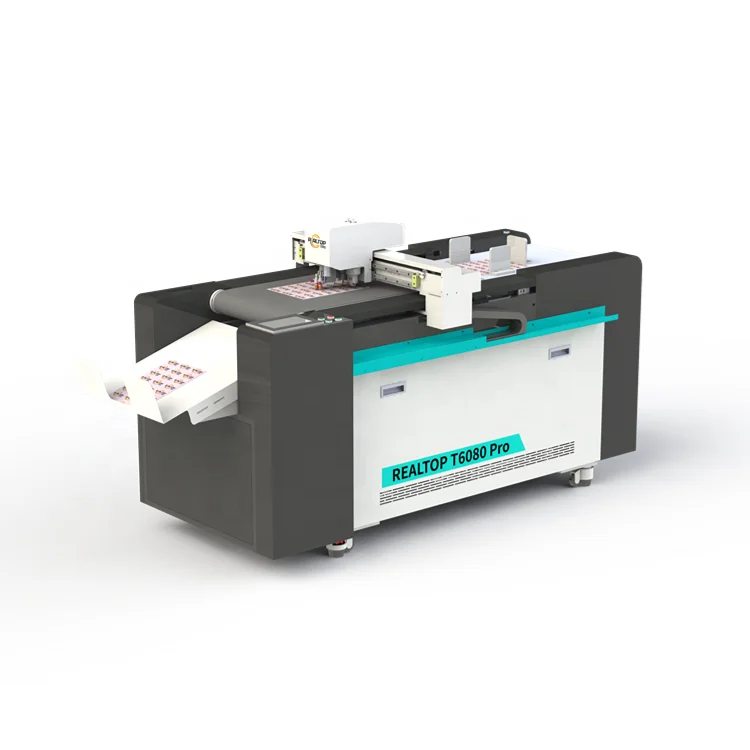
| Sticker and label contour cutting | Self-adhesive vinyl, synthetic paper |
| Non-packaging flexible cutting | Leather, PVC, sponge composite, rubber, fabric, soft glass, silicone |
Why Board Thickness Promises Fail in Production
Actual board density and flute crush resistance determine cutting depth far more than the manufacturer’s headline number.
I once watched a packaging line stall because the oscillating knife was set for standard B-flute, but the customer had switched to a dense double-wall laminate without telling the supplier. The tool head stalled mid-sheet, and the crease wheel left shallow, inconsistent scores. In carton converting, the gap between a quoted cutting capacity and what your real stock demands can shut down a shift. A CNC oscillating knife carton cutting machine manufacturer that tests only on virgin E-flute before quoting is leaving this variable unexamined. [NEED_CITE:]
How Tool Head Configuration Matches Your Board Grade
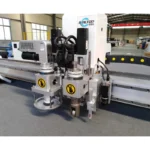
The Swiss oscillating knife fitted to this platform handles full-cut, half-cut and cursor positioning in a single head. For standard corrugated cartons, the high-frequency vibration slices cleanly through flute walls without crushing the structure. When the same line shifts to laminated grey board or dense composite packaging, the stroke frequency and blade geometry must be re-specified. Because the tool head, creasing wheel and drag knife are selected per material, the configuration is locked only after your actual board stock has been tested on the machine.
Build Quality That Survives Continuous Carton Runs
A CNC oscillating knife carton cutting machine manufacturer must address frame deflection before it shows up as drift on long production runs. The heavy welded steel frame on this table undergoes high-temperature stress relief, reducing residual internal tension that would otherwise distort the bed over months of vibration loading. Taiwan Hiwin linear rails paired with Delta servo motors maintain the ≤0.1 mm repeatability specification even when the head traverses the full 1600 × 2500 mm envelope at translational speeds reaching 1200 mm/s. The aluminum honeycomb vacuum table distributes suction across automatically selected zones, so a small carton blank in one corner receives the same hold-down force as a full-sheet layout. [NEED_CITE:]
Reading the Specifications Against Your Production Reality
The 9 kW rated power covers the servo drives, vacuum pump and control system together — the 7.5 kW vacuum pump alone accounts for most of the draw, which matters when sizing your workshop supply circuit. The 380V ±10% input is standard for industrial three-phase in most export markets, but plug format and frequency must match local grid conditions before the machine leaves the factory. Cutting thickness is listed at up to 100 mm, yet that ceiling applies to low-density foam and sponge composite rather than dense grey board. For corrugated and carton stock, realistic single-pass depth depends on flute profile, liner GSM and whether the board has been pre-creased or laminated. The HP-GL control format accepts files from mainstream carton CAD packages, and the professional nesting software handles multi-format import — but file compatibility should be confirmed with your existing design workflow before order.
The Hidden Cost of Misconfigured Vacuum Zoning
When vacuum zones are too broad, small carton blanks lift off the table as the knife exits the cut, producing ragged edges and dimensional error that only shows up during the gluing stage downstream. A poorly matched creasing wheel compounds the problem — shallow scores on heavy board cause cracking at the fold. I have seen converters scrap entire batches because the table zoning was specified for large-format layouts but the actual production run was short-run pharmaceutical cartons. The zone-follow system on this platform activates only the sections directly beneath the cutting path, addressing the lift problem without requiring manual dam placement. [NEED_CITE:]
What Separates This Build From an Assembled Machine
The design team and core factory sit in the same facility, so engineering changes to tool head mounts or vacuum manifold routing can be made during build rather than retrofitted after delivery. Oscillating knife mechanics and flatbed table fabrication are developed together rather than sourced from separate vendors and bolted together. OEM configuration is available for distributors — private-label control panels, custom software language packs and region-specific electrical schematics are handled in-house. Every unit undergoes factory testing on material supplied by or representative of the buyer’s actual production stock before release for shipment.
Documentation & Verification
- Machine specification sheet confirming voltage, plug type and control language for your market
- Sample cutting report run on your corrugated or grey board stock, noting edge and crease quality
- Tool head and vacuum zone configuration list matched to your typical carton format range
- Electrical schematic with circuit ratings and safety device layout
- Factory test record signed off before packing
- Operation and maintenance manual with software licence and file format compatibility notes
Installation, Commissioning & Support
- 380V three-phase dedicated circuit required, sized for the 9 kW total draw plus startup surge
- Level concrete floor needed to support the 3450 × 2300 mm footprint without shimming
- Flat-pack or assembled shipment option based on container gauge and site access constraints
- Vacuum pump commissioning includes zone calibration against your smallest carton blank size
- Operator training covers nesting software setup, blade change procedure and crease wheel adjustment
- Spare parts list covers oscillating blades, creasing wheels and vacuum seals with recommended reorder intervals
Before You Request a Quote
Share your typical board grades, flute profiles and the GSM range you run most often. Confirm the voltage, frequency and plug standard at your facility so the electrical package is built correctly the first time. If your design workflow uses a specific CAD format or nesting software, provide a sample file so compatibility is verified before the machine enters production.
Frequently Asked Questions
Q: What cutting thickness can I realistically expect on my corrugated board?
A: The published capacity reaches 100 mm on low-density materials, but corrugated and grey board behave differently due to flute structure and liner density. We run your actual board stock on the machine before order and document achievable single-pass depth, edge condition and crease quality in a sample cutting report.
Q: Can the machine be configured for my country’s voltage and language requirements?
A: Voltage, plug format, frequency and control panel language are all confirmed during the specification stage. The software supports English, Russian, Italian and Chinese as standard, with additional languages configurable. Electrical schematics reflect your local grid standard before the machine enters production.
Q: How does the vacuum table handle small carton blanks?
A: The aluminum honeycomb table uses automatic zone follow, activating suction only beneath the active cutting path. This prevents small blanks from lifting during knife exit without requiring manual dams, maintaining positional accuracy across the full 1600 × 2500 mm working area.
Q: What OEM options exist for distributors and importers?
A: Private-label control panels, custom software language packs, region-specific electrical packages and co-branded documentation are all configurable. The in-house design team handles OEM engineering changes during build rather than post-delivery modification, and factory test records are issued under the distributor’s specification requirements.
Q: How do I verify build quality before accepting delivery?
A: The welded steel frame undergoes high-temperature stress relief for long-term geometric stability. You receive the factory test record, electrical schematic and sample cutting report before shipment. Motion components — Delta servos on Hiwin rails — are documented in the configuration list with serial traceability.
You may also like

商品评价
Clear filtersThere are no reviews yet.