






-
 Courier delivery
-
 DHL Courier delivery
-
 Warranty 1 year
-
 Free 30-Day returns

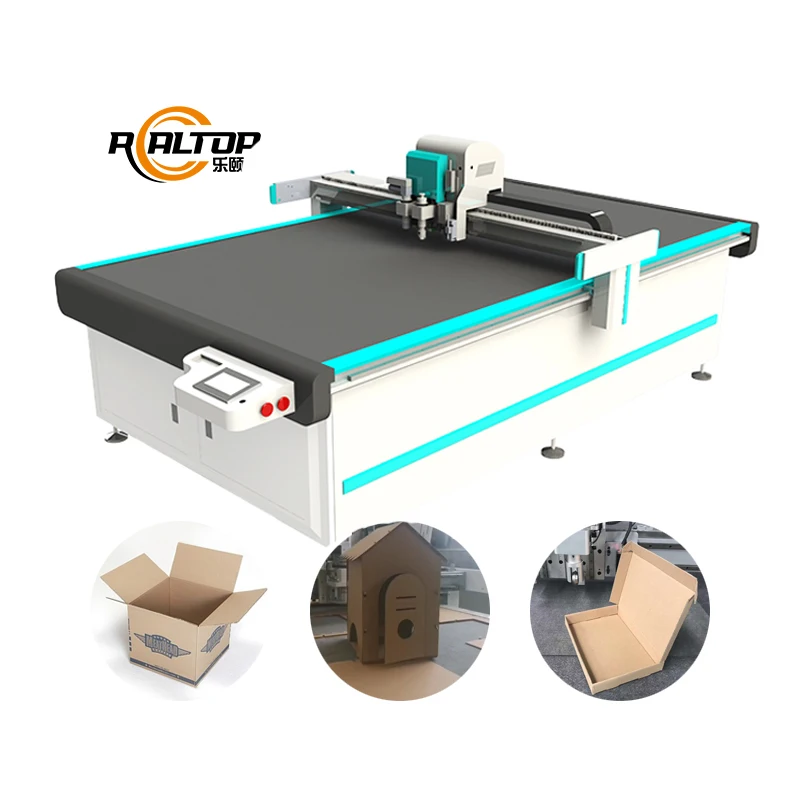
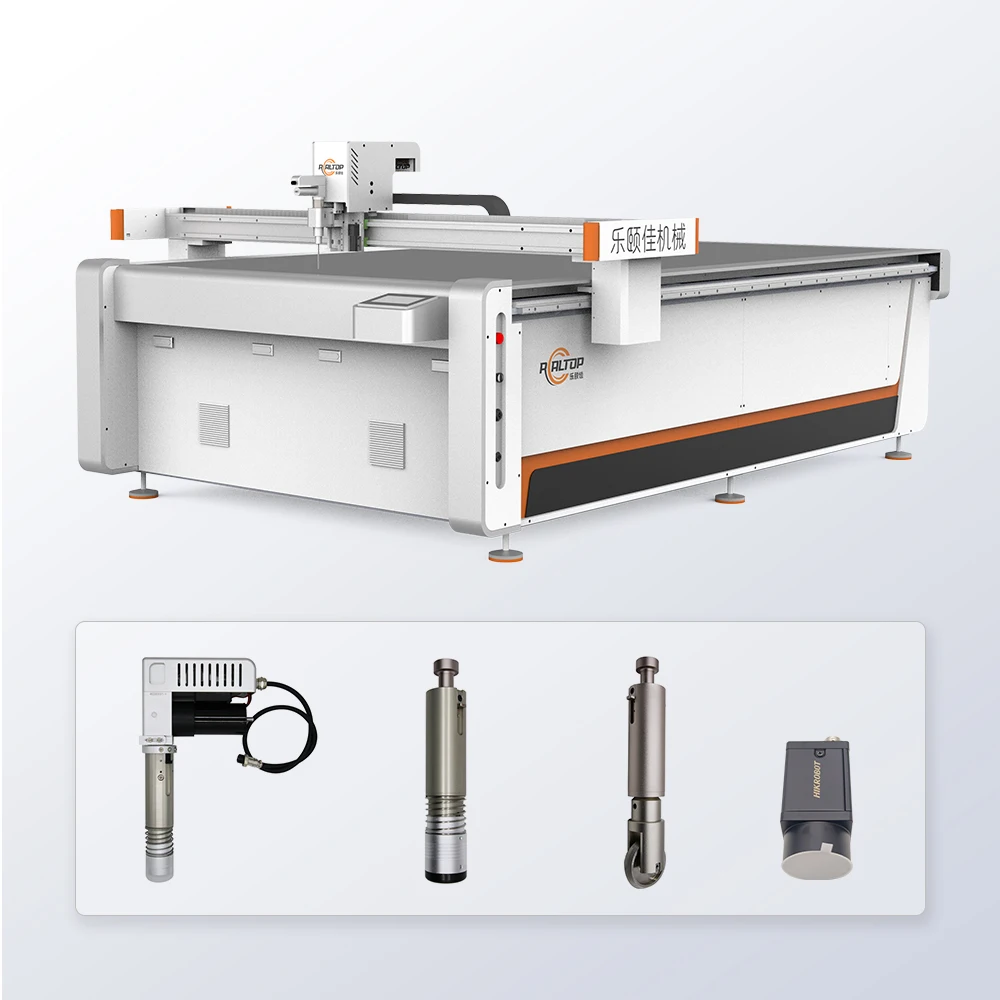
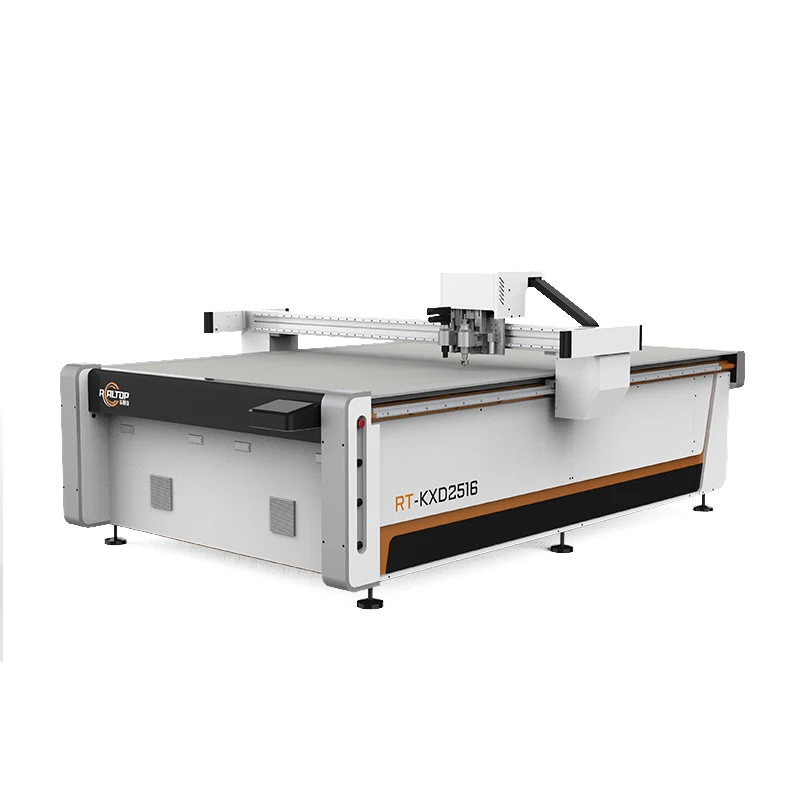
In-house knife and laser design — Our RT-D2516/RT-S2516 units are configured per material thickness and daily volume, verified with sample cuts on your exact stock before shipment.
Technical Specifications
| Parameter | Value |
|---|---|
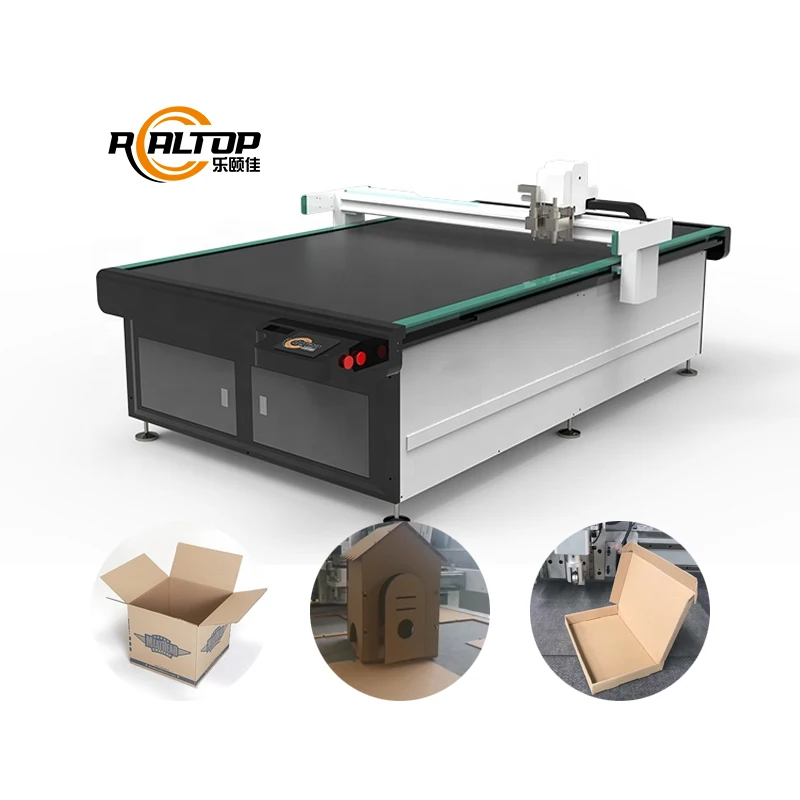
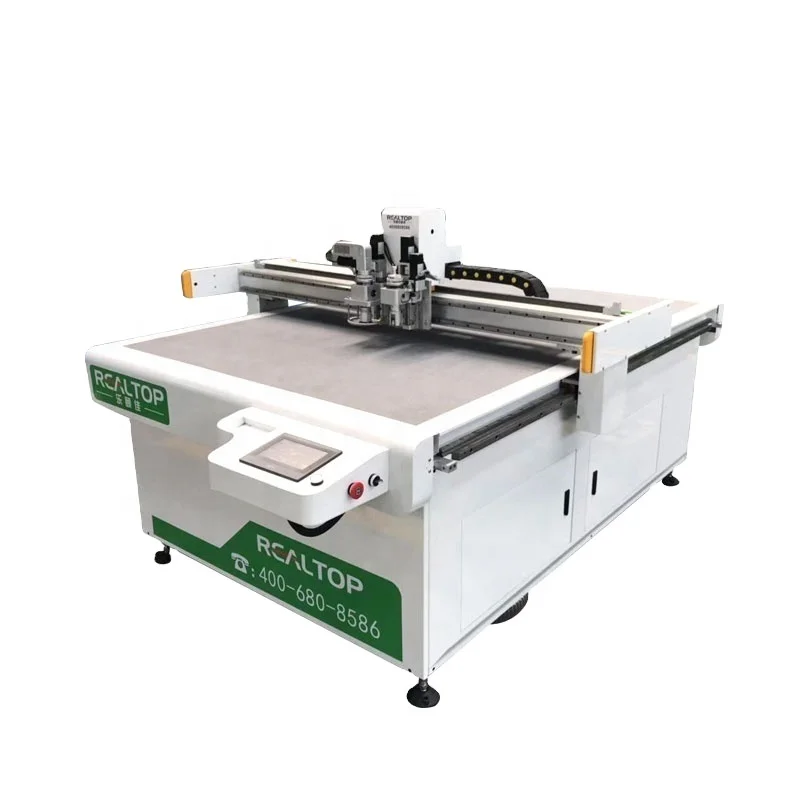
| Product Type | CNC Oscillating Knife Cutting Machine |
| Model | RT-D2516/RT-S2516 |
| Working Area | 1600×2500 mm |
| Machine Size | 3450×2300×1250 mm |
| Rated Power | 9 kW |
| Working Table | Flat vacuum table with 7.5 kW pump |
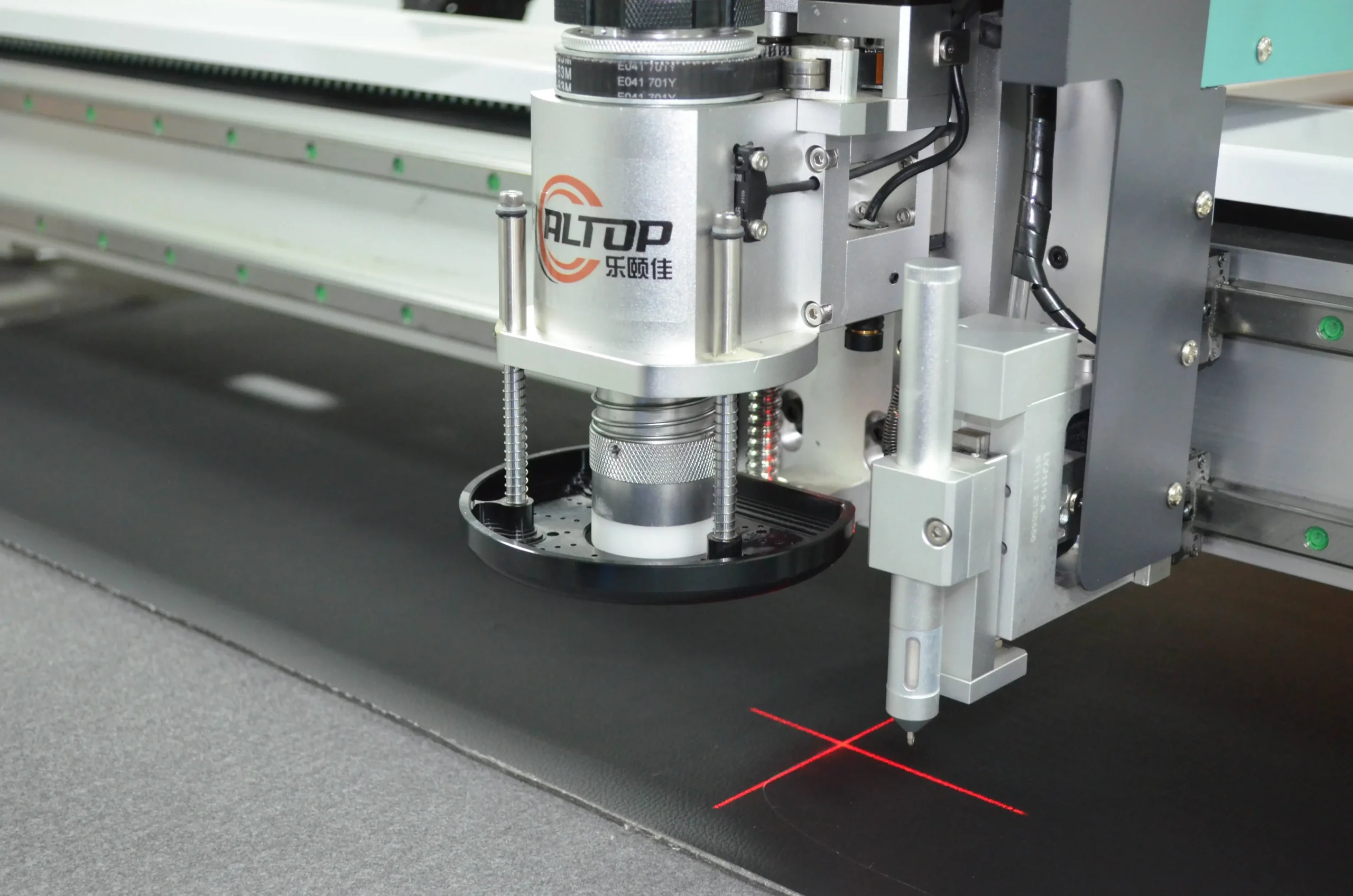
| Multifunctional Head | Swiss imported knife (vibration full cutting, half cutting, cursor location) |
| Safety Device | Infrared sensors |
| Translational Velocity | 800–1200 mm/s |
| Cutting Thickness | 20–80 mm (varies by material) |
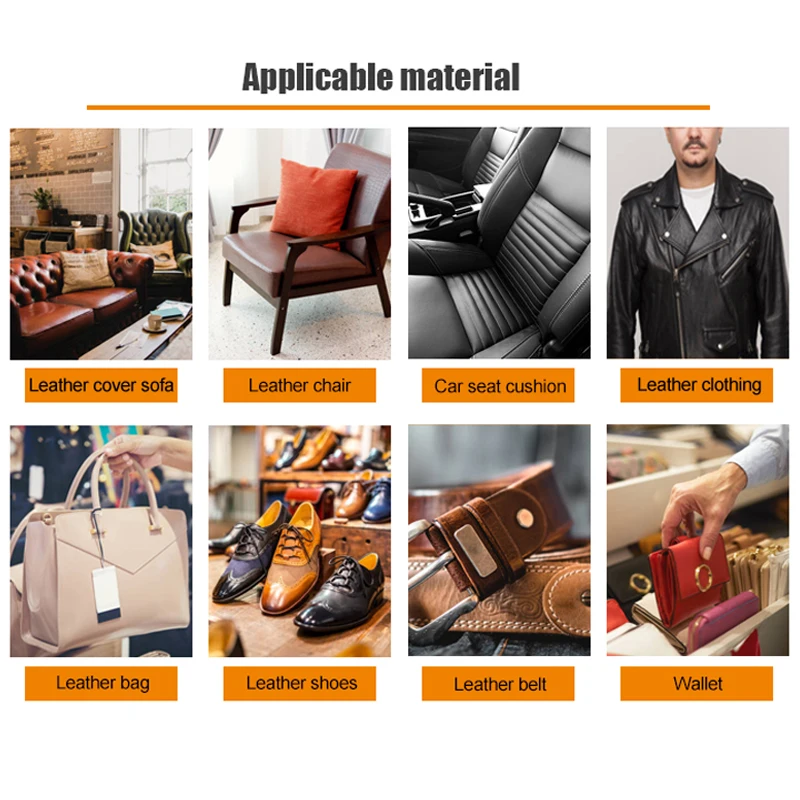
| Cutting Materials | Leather, clothing flexible material, sponge composite leather, PVC, soft glass, silicon, rubber |
| Repeated Accuracy | ≤0.1 mm |
| Transmission System | Delta digital servo motor, Taiwan Hiwin linear guide, synchronous belt, ball screw |
| Instruction System | HP-GL compatible format |
| Voltage | 380V±10% |
| Vision System | Independent R&D panoramic camera, CCD mark point positioning, projection positioning (optional) |
| Software | Self-developed, one-click import, multiple pattern design (carton, car foot pad, seat sleeve, clothing fabric) |
| Language Options | English, Russian, Italian, Chinese (customizable) |
| Feeding System | Automatic feeding with Germany imported conveyor belt |
| Assembly State | Fully assembled |
| Warranty | 1 year |
| Certification | 5 patents technology certification (domestic and abroad) |
Application Suitability
| Application | Material or Output |
|---|---|
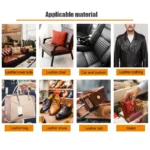
| Footwear and leather goods | Natural and synthetic leather, multi-layer microfiber, PU uppers |
| Garment and fabric production | Woven textiles, knitted fabrics, technical textiles in single or multi-layer lays |
| Automotive interiors | Composite leather, foam laminates, carpet, headliner material |
| Gasket and sealing pads | Rubber, silicon, soft glass, sponge composite sheets |
| Advertising and printing | PVC film, flexible banner, vinyl sheet, self-adhesive stock |
| Sports and outdoor products | Neoprene, EVA foam, composite panels for protective gear |
Why Material Thickness Alone Should Never Drive the Purchase
Cutting depth is only meaningful when matched to your actual material stack and tool head configuration.
Too many buyers specify a CNC oscillating knife cutting machine manufacturer based on working area and assume the knife will handle whatever they feed it. I once watched a line in Bogotá stall because the oscillation frequency could not keep up with a dense multi-layer microfiber lay — the supplier had only tested on single-ply PU. The edges came out feathered, and the operator had to hand-trim every piece [NEED_CITE: material density effect on oscillating knife edge quality]. Without a sample cut on your real production stock, the cutting thickness range printed on a brochure is just a starting point.
Panoramic Vision for Irregular Leather Hides
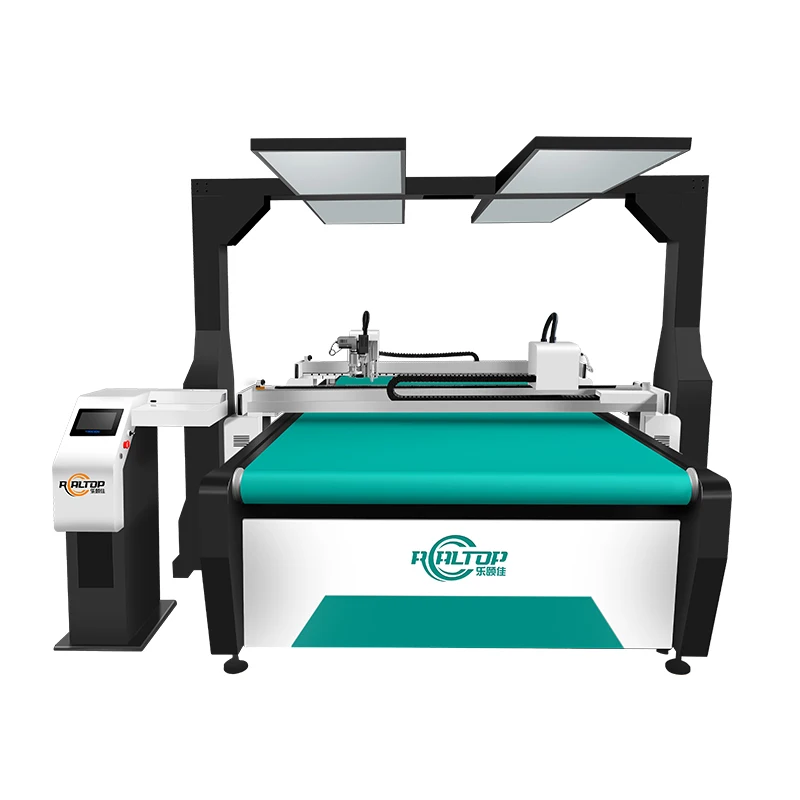
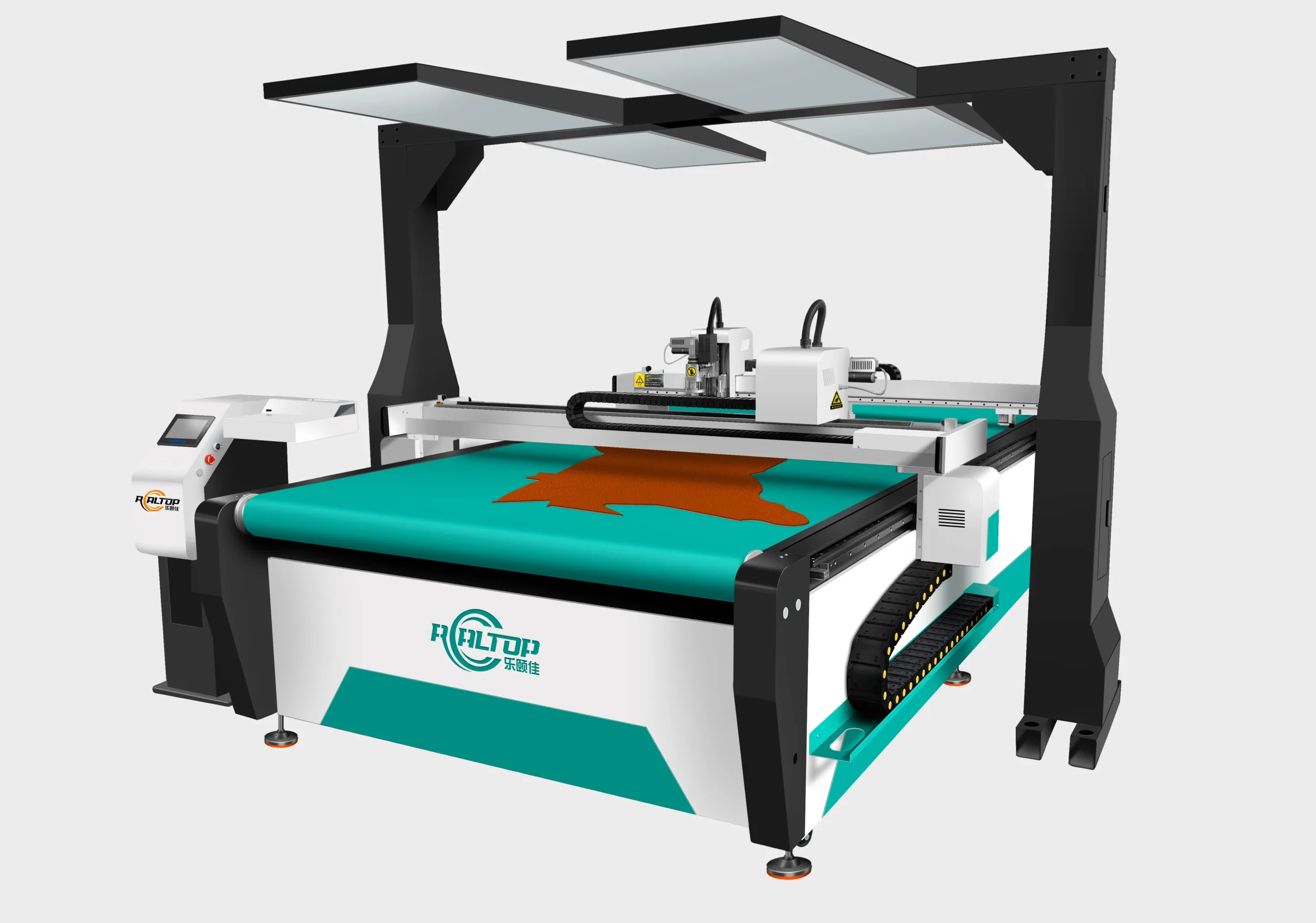
Every hide has scars, stretch marks, and thickness variations that waste material if ignored. The independent R&D industrial vision system on this CNC oscillating knife cutting machine captures the full hide surface, identifies flaws, and feeds that map into the nesting software. The panoramic camera works alongside CCD mark point positioning so printed contours on pre-printed textiles are tracked without slowing the head. For shoe uppers and leather bags where grain direction and defect avoidance matter, this cuts nesting time and lifts yield from each hide.
Swiss Knife Head and Servo Precision
The multifunctional Swiss imported knife head handles full cutting, half cutting, and cursor location within a single tool change cycle. Paired with Delta servo motors and Taiwan Hiwin linear guides, the system holds ≤0.1 mm repeatability across the 1600×2500 mm bed. This matters when you are cutting seat cover panels or shoe components where a fraction of a millimeter drift shows up as misaligned stitching downstream [NEED_CITE: repeatability tolerance requirements in automotive upholstery]. The 800–1200 mm/s translational velocity keeps throughput steady without sacrificing edge definition on thin vinyl or thick composite leather.
Reading the Specs That Actually Shape Your Output
Cutting thickness of 20–80 mm is material-dependent — dense rubber absorbs vibration differently than open-cell foam, so the effective depth shifts with each stock type. The 7.5 kW vacuum pump paired with the flat table must generate enough hold-down force to prevent small gasket parts from lifting mid-cut; zoning the table into sections keeps suction concentrated where the head is working. The 9 kW rated power covers the servo drives, vacuum pump, and conveyor feed together, so confirming your workshop supply matches 380V±10% avoids tripping breakers on startup. HP-GL compatible instruction format means most existing pattern files load without conversion, and the self-developed software imports carton, foot pad, seat sleeve, and clothing fabric patterns directly.
The Cost of Skipping the Sample Cut
Choosing a tool head by material category alone leaves gaps — a drag knife that works on single-layer PVC may crush three-layer sponge composite leather. When vacuum zoning is not matched to part size, small pieces shift during the final pass and produce scrap. Software that cannot read your existing nesting files forces operators to redraw patterns, adding hours per order [NEED_CITE: file format compatibility issues in digital cutting workflows]. These problems surface on day one of production, not during the factory demo.
Why Buyers Source This Line From Us
We design and build both knife and laser systems under one roof, so you select the cutting method that fits the material instead of forcing one technology to cover everything. Every tool head and table configuration is written into the order against your material spec and volume target. The panoramic vision system is developed in-house, not bolted on from a third party, which means calibration and software updates stay under our control. Sample cutting on your actual stock runs before the machine leaves Jinan, and the report travels with the shipment. Voltage, plug type, and control language are confirmed in writing before production starts [NEED_CITE: international voltage and plug standards for industrial machinery].
Documentation & Verification
- Factory test record cutting your leather or foam stock at specified thickness
- Electrical schematic confirming 380V±10% wiring and servo motor circuit
- Tool head and vacuum table configuration list matched to your material
- Software license with file format compatibility note for your nesting workflow
- Operation manual translated into your chosen control language
- Packing photographs showing fully assembled machine before crating
Installation, Commissioning & Support
- Verify workshop floor can support 3450×2300 mm footprint and 9 kW total draw
- Confirm 380V±10% dedicated circuit with correct breaker rating before arrival
- Machine ships fully assembled; position and level on prepared floor
- First power-on includes vacuum pump test, servo calibration, and knife depth setting
- Operator training covers nesting software, vision calibration, and tool changes
- Spare knife blades, conveyor belt segments, and vacuum seals included at delivery
What We Need to Quote Accurately
Send us the material type, thickness range, and maximum sheet size you process daily. Tell us your local voltage and frequency, the control language your operators prefer, and whether your patterns come from an existing nesting system or need to be created fresh. If your stock is layered or has a printed surface, share a sample so we can run a cutting test and confirm edge quality before you commit.
Frequently Asked Questions
Q: How is cutting thickness verified for my specific material before order?
A: We run a sample cut using the exact material you ship to our facility, testing at your required thickness and layer count. The cutting report documents edge quality, cycle time, and any tool head adjustments needed. You review and approve this report before production of your machine begins.
Q: What tool head configuration matches my material and production volume?
A: The Swiss imported multifunctional head covers full cutting, half cutting, and cursor location. We select the oscillation frequency and blade type based on your material density and the volume you run per shift. This configuration is written into your order specification and verified during the factory sample test.
Q: Can the vision system track printed marks at production speed?
A: The panoramic camera and CCD mark point positioning system are calibrated together to follow printed contours at the machine’s standard translational velocity. We test tracking accuracy on your printed material during the sample phase and document the results before shipment.
Q: How is software compatibility with my existing files confirmed?
A: We ask you to send representative pattern files in your current format before order. Our software team loads them into the self-developed system, confirms import success, and notes any conversion steps in the compatibility document shipped with your machine.
Q: What voltage and control language options are available?
A: The standard configuration is 380V±10%, and we confirm your local supply matches before production. Control language options include English, Russian, Italian, and Chinese, with other languages available on request. The chosen language is set on the interface and documented in the operation manual.
You may also like

商品评价
Clear filtersThere are no reviews yet.