




-
 Courier delivery
-
 DHL Courier delivery
-
 Warranty 1 year
-
 Free 30-Day returns

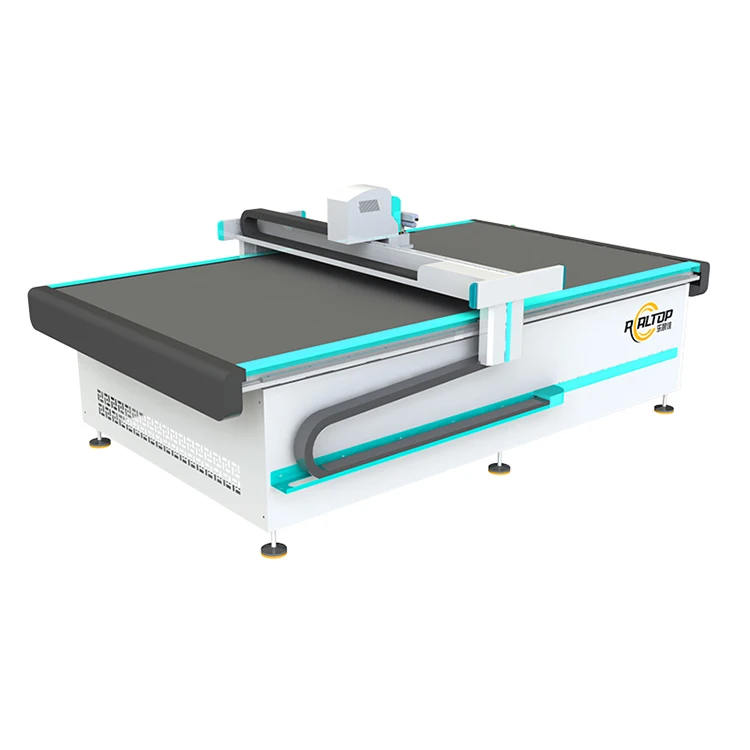
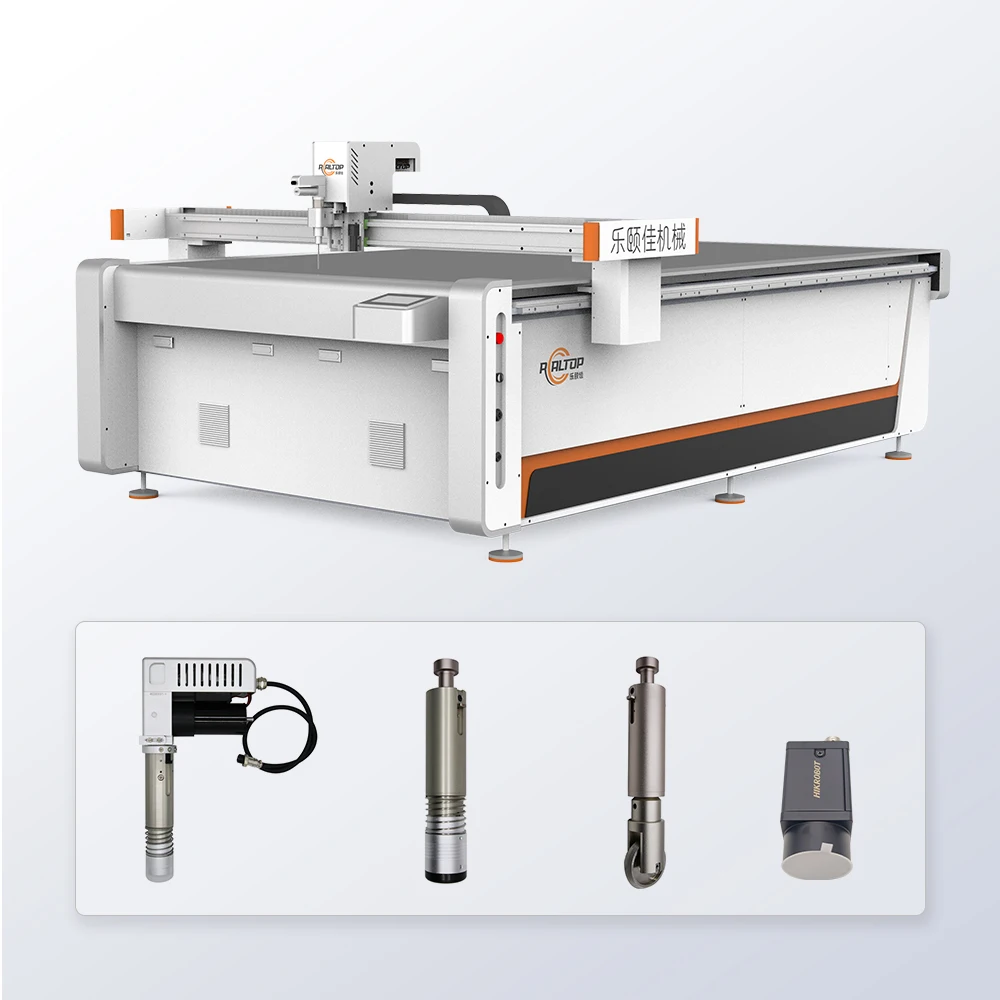
Material-matched configuration — Every leather CNC cutting machine is set up around the actual hide thickness and daily volume you cut, not a base-model brochure number.
Technical Specifications
| Parameter | Value |
|---|---|
| Product Type | Leather CNC Cutting Machine |
| Working Area | Configurable from 1600×1000 mm to 2500×1600 mm |
| Cutting Method | Oscillating knife, drag knife, punch tool (options) |
| Cutting Depth | Up to 30 mm depending on tool head and material density |
| Cutting Speed | Up to 1200 mm/s (varies by material and pattern complexity) |
| Drive System | Servo motor with rack and pinion transmission |
| Vacuum Table | Multi-zone segmented vacuum holding |
| Positioning Accuracy | ±0.1 mm repeatability |
| Control System | Industrial CNC controller with nesting software |
| Power Supply | 380V/50Hz (configurable for local voltage standards) |
| Machine Frame | Welded steel construction, stress-relieved and machined |
Application Suitability
| Application | Material or Output |
|---|---|
| Plus size garment cutting | Full-grain and corrected-grain leather, 1.0–4.0 mm thickness |
| Upholstery panel nesting | Bonded leather and synthetic leather hides, wide format |
| Footwear upper production | Split leather and suede, multi-ply layups |
| Automotive interior trim | Perforated leather and embossed hides for seat covers |
| Leather accessories | Small-format pieces from strap stock, wallet panels, belt blanks |
Why Leather Thickness Changes the Machine Spec You Need
A Leather CNC Cutting Machine rated for 2 mm garment leather will drift and stall when asked to cut 8 mm bonded hide all day.
I once watched a distributor sell a light-duty frame to a workshop cutting thick bonded leather for plus size outerwear. The carriage rails wore unevenly within months, and every piece drifted off tolerance. The problem was not the brand or the operator — the machine was simply undersized for the daily load. When the material gets denser and the cutting force increases, the frame rigidity, servo torque, and vacuum holding power all have to match. Otherwise, you are not buying a machine; you are buying a tolerance problem that shows up three months after installation. [NEED_CITE: relationship between cutting force and frame deflection in CNC knife cutting]
Frame Rigidity Under Heavy Leather Loads
Cutting thick leather for plus size garments means higher downward and lateral forces on the gantry. A Leather CNC Cutting Machine built on a light-duty frame will flex under these loads, producing edge deviation that compounds across a long cut path. The welded steel frame used here is stress-relieved after welding and then machined flat, so the cutting bed stays true even when the oscillating knife is pushing through dense 4 mm hides at full stroke. This matters most on large-format patterns where a fraction of a millimeter of deflection at the start of a cut translates into visible mismatch at the seam line.
Vacuum Zoning for Irregular Hide Shapes
Natural leather hides are irregular in outline, and plus size pattern pieces are large. A single-zone vacuum table leaves areas of the hide unsupported, allowing the material t*es or incomplete cuts. The multi-zone segmented vacuum table on this Leather CNC Cutting Machine lets you activate only the zones under the actual hide, concentrating holding force where it matters. This is critical when nesting smaller pieces from the same hide after the main panels are cut — without targeted vacuum, those smaller offcuts shift and ruin the remaining material. [NEED_CITE: vacuum table zoning practices for irregular natural materials]
What the Cutting Depth and Speed Numbers Actually Mean
The oscillating knife head delivers up to 30 mm of cutting depth, which covers most leather work including multi-ply bonded stacks for heavy outerwear. The stated cutting speed of 1200 mm/s applies to straight-line travel on thin material; real-world throughput on thick leather with complex curves is considerably lower because the knife must oscillate at high frequency while the gantry slows to track tight radii. The servo motor and rack-and-pinion drive provide the torque needed to maintain positional accuracy during these variable-speed cuts, and the ±0.1 mm repeatability ensures that left and right pattern pieces remain symmetrical across a production run.
The Hidden Cost of Choosing the Wrong Tool Head
Specifying a drag knife for thick bonded leather because it is cheaper upfront leads to crushed edges, delamination of the bonded layers, and frequent blade changes that stop production. An oscillating knife is the correct choice for most leather cutting above 2 mm, but the stroke frequency and blade geometry must also match the specific hide type. Workshops that skip the sample-cutting step and accept a generic tool head recommendation often discover the mismatch only when their first full production run comes off the table with unusable edge quality. [NEED_CITE: tool head selection criteria for natural and bonded leather]
Why This Machine Is Built the Way It Is
The in-house design team specifies the tool head and table configuration per material type and production volume, so you are not forced to cut leather on a machine designed primarily for fabric. Sample cutting on your own leather stock happens before any order is confirmed, giving you a physical report on edge quality and dimensional accuracy. Software compatibility with your existing nesting workflow and file formats is verified during this stage, not discovered after delivery. Voltage, plug type, and control language are confirmed before shipment so the machine runs on day one without adapter boxes or untranslated menus. The factory test record documents the actual cutting performance on your material before the machine leaves the floor.
Documentation & Verification
- Machine specification sheet listing your chosen working area and tool head configuration
- Electrical schematic confirming your local voltage and phase requirements before build
- Sample cutting report on your actual leather stock showing edge quality and tolerances
- Factory test record documenting cutting accuracy and vacuum holding before dispatch
- Operation and maintenance manual in your specified control language
- Software licence and file format compatibility note matching your nesting workflow
Installation, Commissioning & Support
- Floor space and leveling requirements based on your selected working area up to 2500×1600 mm
- Dedicated electrical circuit matched to the configured power supply and servo load
- Machine arrives on a welded steel frame requiring gantry and tool head assembly on site
- First-run commissioning includes vacuum zone calibration and knife stroke tuning for your leather
- Operator training covers nesting software, tool head changes, and daily rail maintenance
- Spare parts list identifies blades, vacuum seals, and drive components with reorder codes
What to Send With Your Inquiry
To size the machine correctly, share the type of leather you cut (full-grain, bonded, synthetic), the typical thickness range, your largest single pattern piece dimension, and the daily volume of hides you process. If you already use nesting software, send a sample file so format compatibility can be confirmed before quotation. Also advise your local voltage and frequency so the electrical system is built to match.
Frequently Asked Questions
Q: Can this machine cut both thin garment leather and thick bonded hides?
A: Yes, the oscillating knife head and servo drive handle a wide thickness range. The key is specifying the correct blade geometry and stroke frequency for each material type. We run a sample cut on your actual leather before confirming the tool head configuration, so the setup matches your thickest daily material, not just the average.
Q: How do I know the vacuum table will hold my hide flat during cutting?
A: The multi-zone segmented table lets you activate vacuum only where the hide sits, concentrating holding force. For irregularly shaped natural hides and large plus size panels, this targeted approach prevents lifting at the edges. We test holding performance on your specific leather during the sample cutting stage.
Q: Will my existing nesting files work with the control software?
A: Software compatibility is verified before you commit to an order. Send us a sample file in your current format, and we confirm import, nesting, and tool path generation on the actual controller. This avoids the common problem of discovering a format mismatch after the machine arrives on your floor.
Q: What happens if our local voltage differs from the standard 380V?
A: Voltage, frequency, and plug type are confirmed during the quotation stage and built into the electrical system before production. The machine ships with an electrical schematic matching your specifications, so no on-site transformer or rewiring is needed at commissioning.
You may also like

商品评价
Clear filtersThere are no reviews yet.