

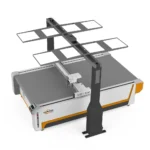
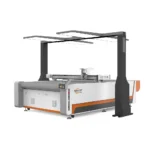
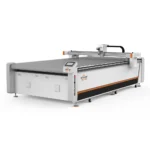
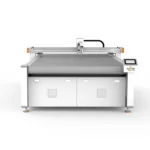

-
 Courier delivery
-
 DHL Courier delivery
-
 Warranty 1 year
-
 Free 30-Day returns

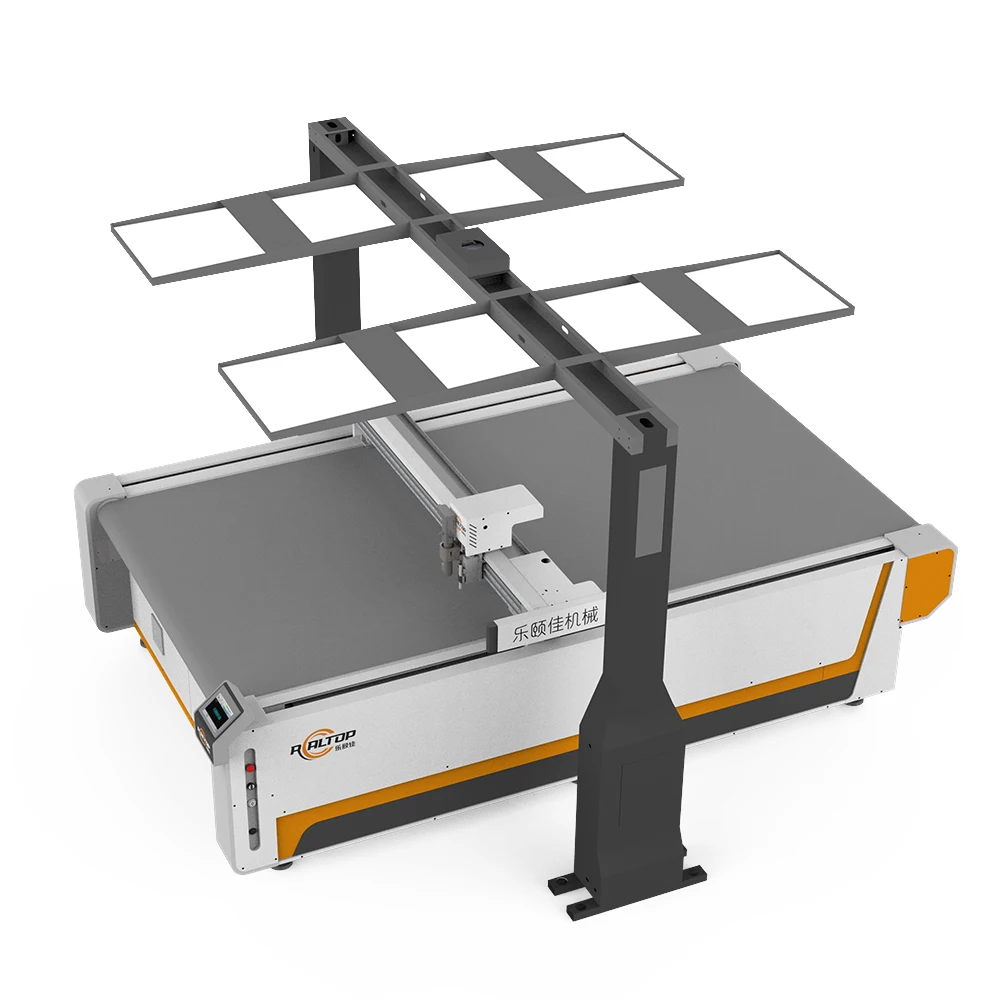
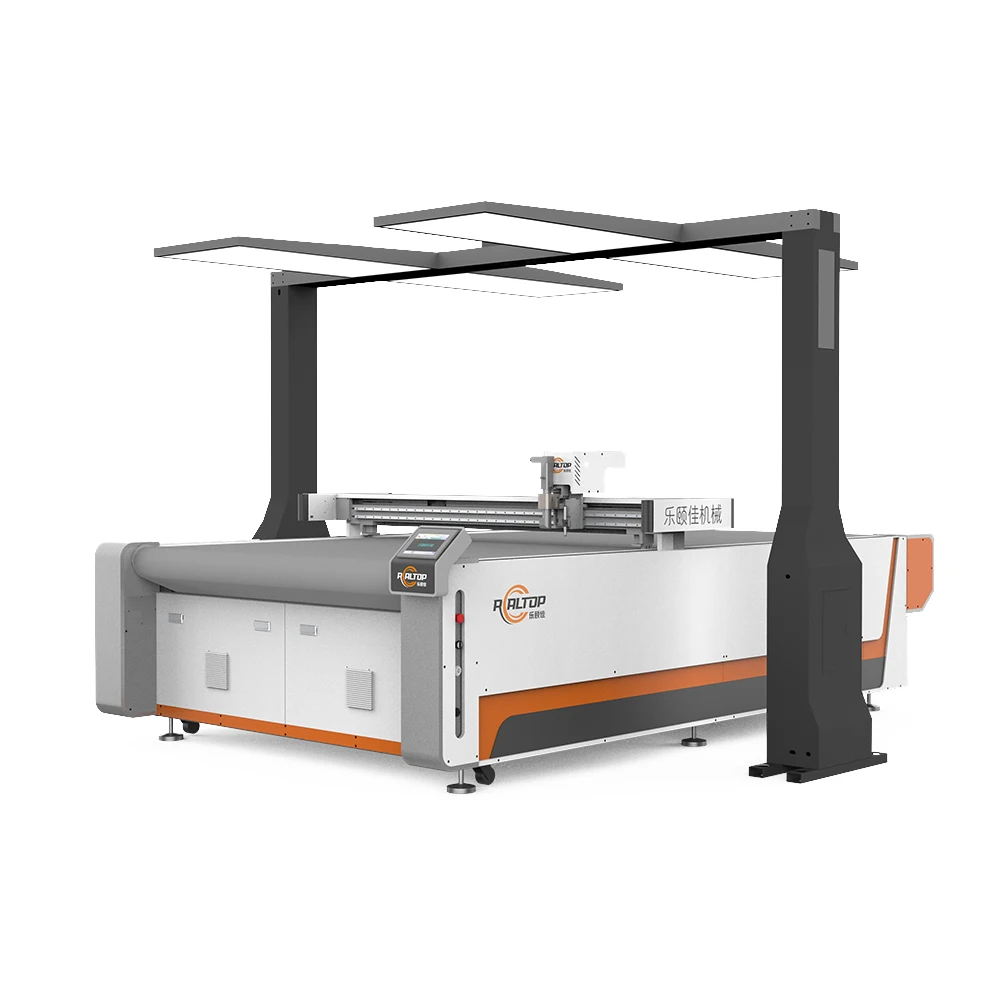
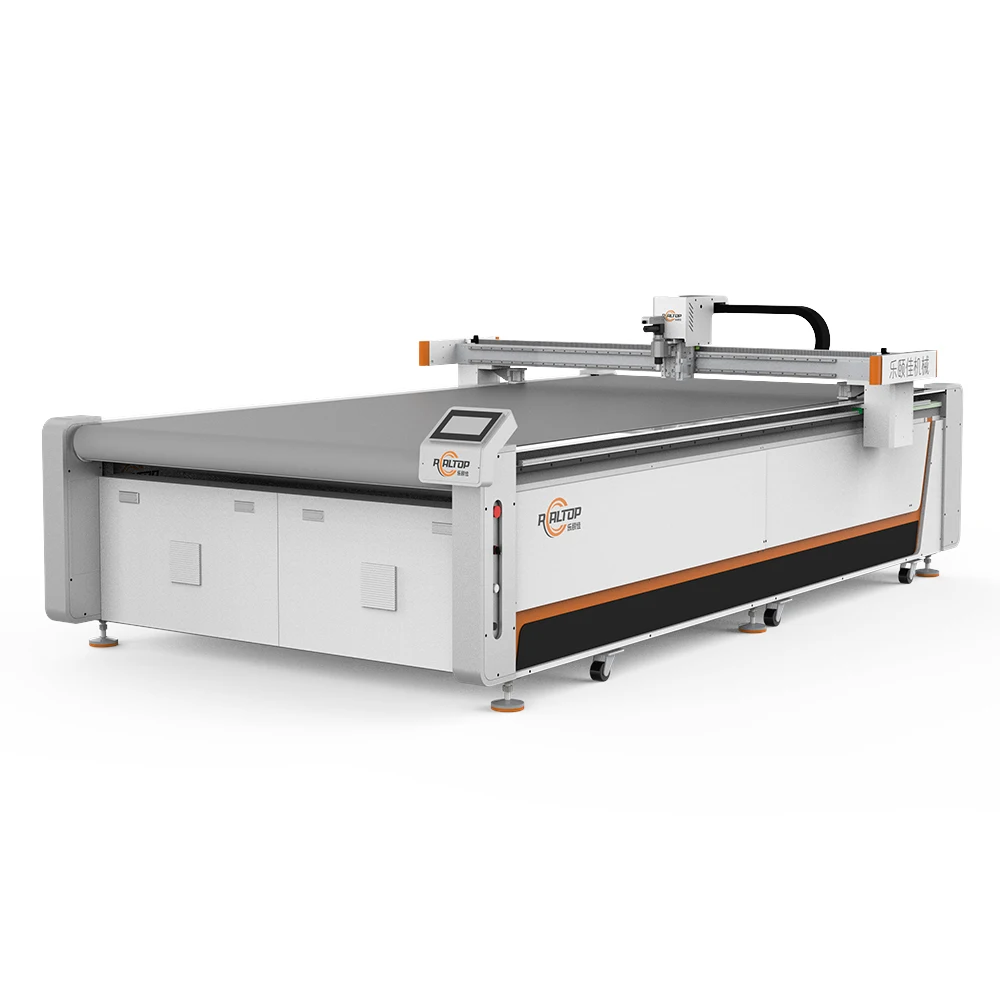
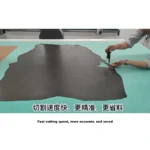
Precision Tooling Matched to Hide Density — Realtop specifies knife type, oscillation frequency, and vacuum zoning on each buyer’s actual leather sample before building the RT-D2516/RT-S2516, preventing the edge-quality failures common when machines are sold on working area alone.
Technical Specifications
| Parameter | Value |
|---|---|
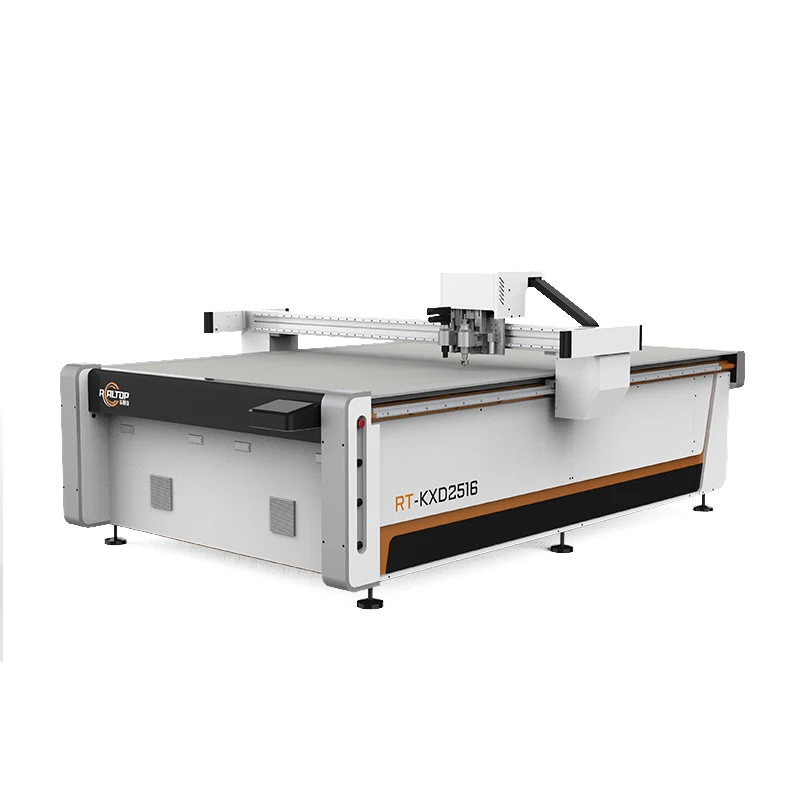
| Model | RT-D2516 / RT-S2516 |
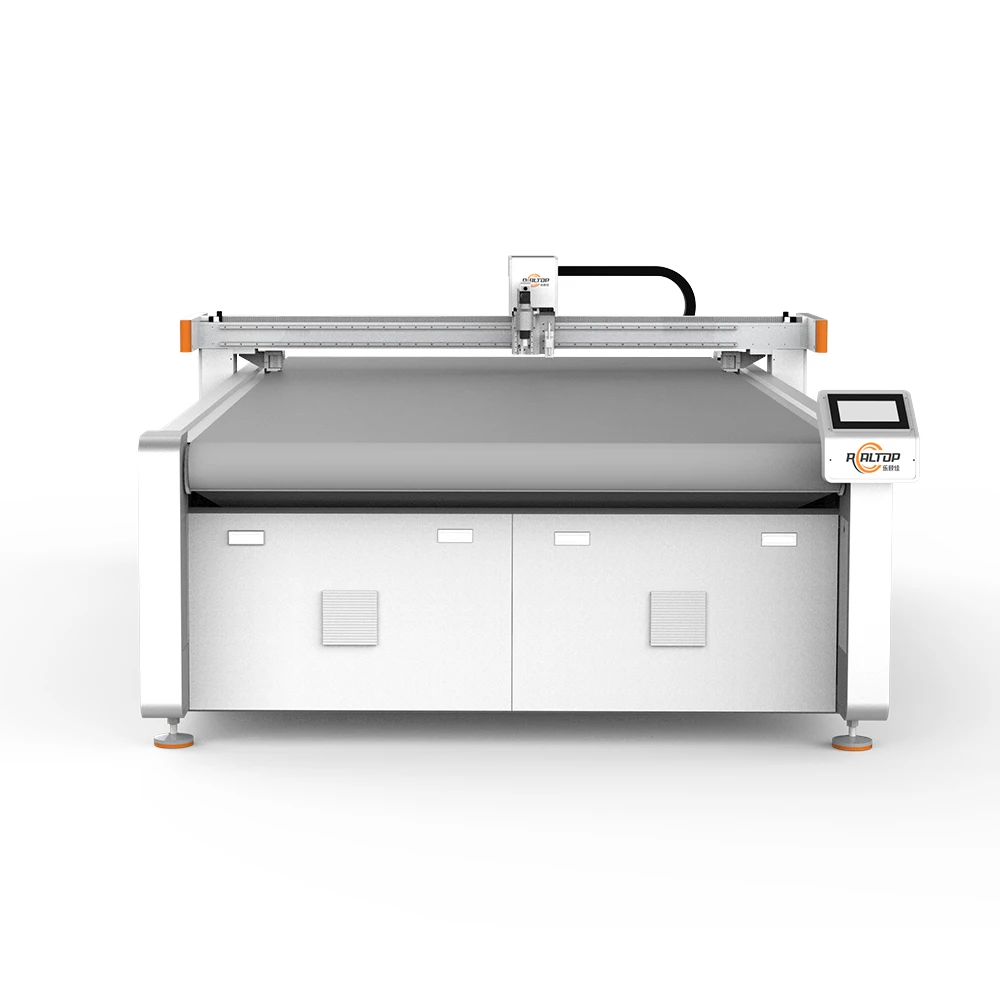
| Working Area | 1600 × 2500 mm |
| Machine Size | 3450 × 2300 × 1250 mm |
| Rated Power | 9 kW |
| Voltage | 380V ±10% (50/60 Hz to be confirmed per market) |
| Table Type | Magnesium-aluminum alloy vacuum adsorption table with PVDF fluorocarbon powder spray, anodic and hard oxidation treatment |
| Vacuum Pump | 7.5 kW integrated aviation aluminum shell with built-in silencer sponge |
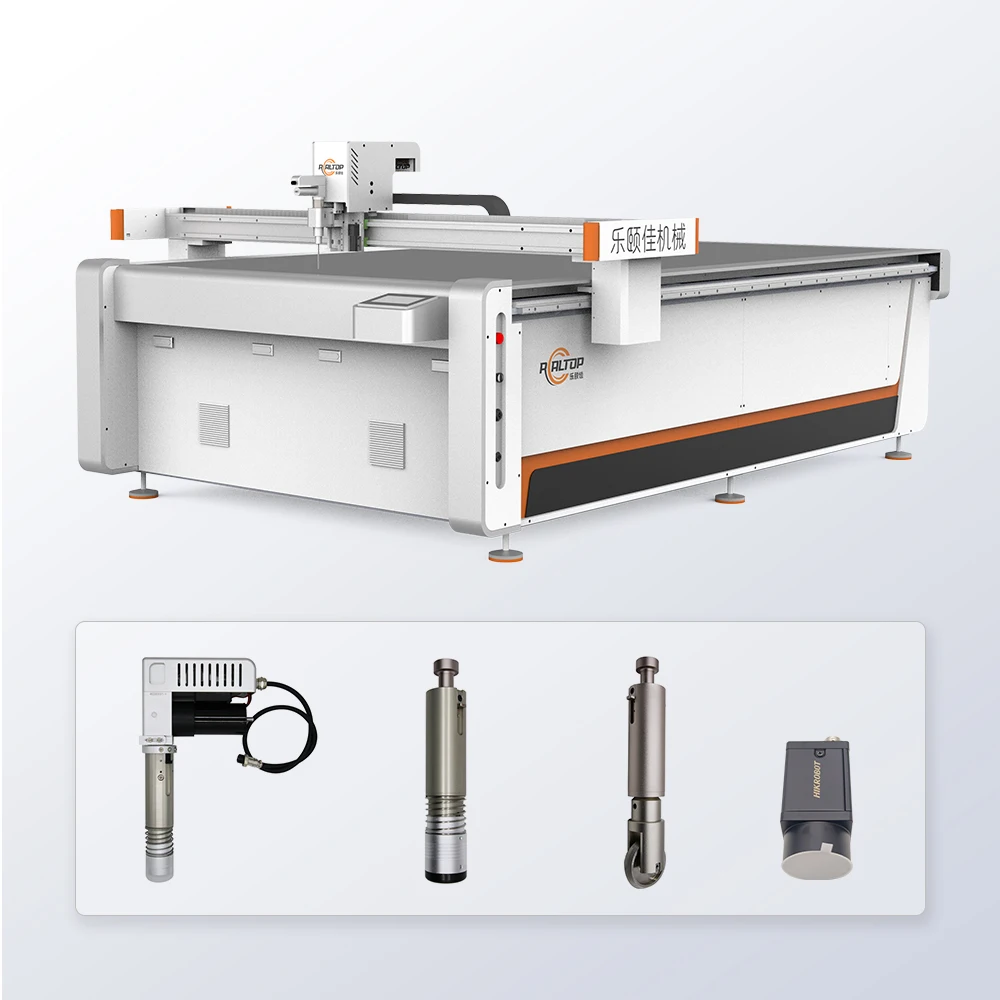
| Multifunctional Head | Swiss imported knife — vibration full cutting, vibration half cutting, cursor location |
| Tool Head Options | Oscillating knife, pneumatic knife, high-power vibrating knife, circular knife, V-cutting knife, drag knife, creasing wheel, dotted line knife, punching, brush |
| Visual Positioning | Small CCD camera mark-point positioning, panoramic camera recognition, projection positioning |
| Transmission System | Digital servo motor (Delta or Panasonic optional, IP67), linear guide, synchronous belt, ball screw; Taiwan Hiwin rail |
| Translational Velocity | 800–1200 mm/s |
| Cutting Thickness | 20–80 mm (varies by leather type and density — confirm specific material) |
| Repeatability | ≤0.1 mm |
| Instruction System | HP-GL compatible format |
| Safety Device | Infrared induction blocking, anti-collision beam sensors, emergency stop with in-situ resume |
| Feeding System | Germany imported conveyor belt, auto feeding |
| Language Options | English, Russian, Italian, Chinese; special languages customizable |
| Key Features | CCD contour recognition, multi-zone vacuum, multi-tool head switching, auto feeding with conveyor |
Application Suitability
| Application | Material or Output |
|---|---|
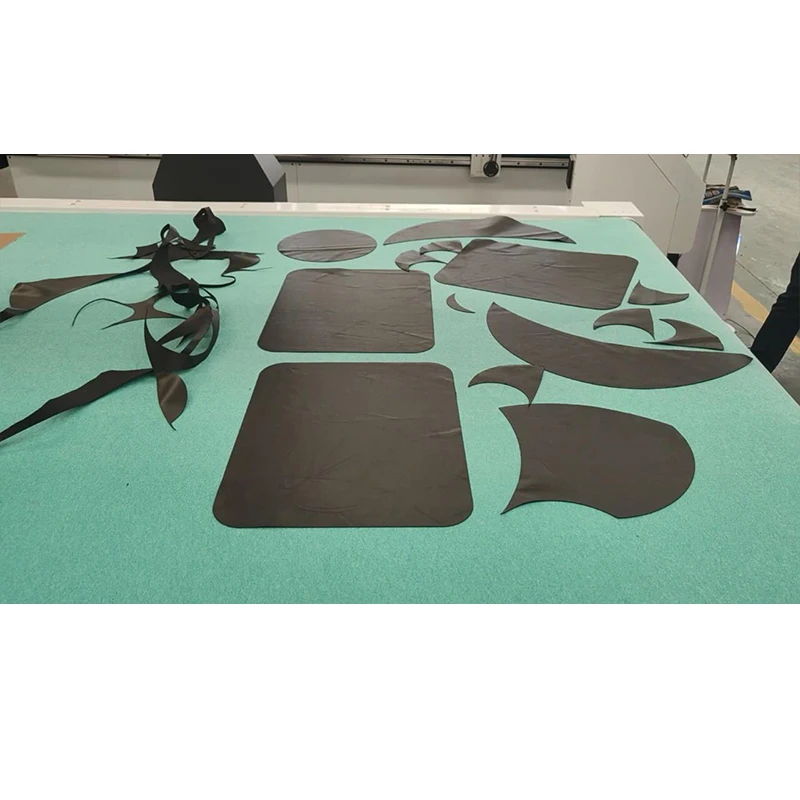
| Footwear upper and lining production | Natural leather hides, PU synthetic leather, sponge composite leather |
| Bag, luggage and leather goods manufacturing | Layered leather, PVC, soft glass, silicone sheets |
| Automotive interior and upholstery | Large-format hides with natural flaw zones, rubber, flexible clothing materials |
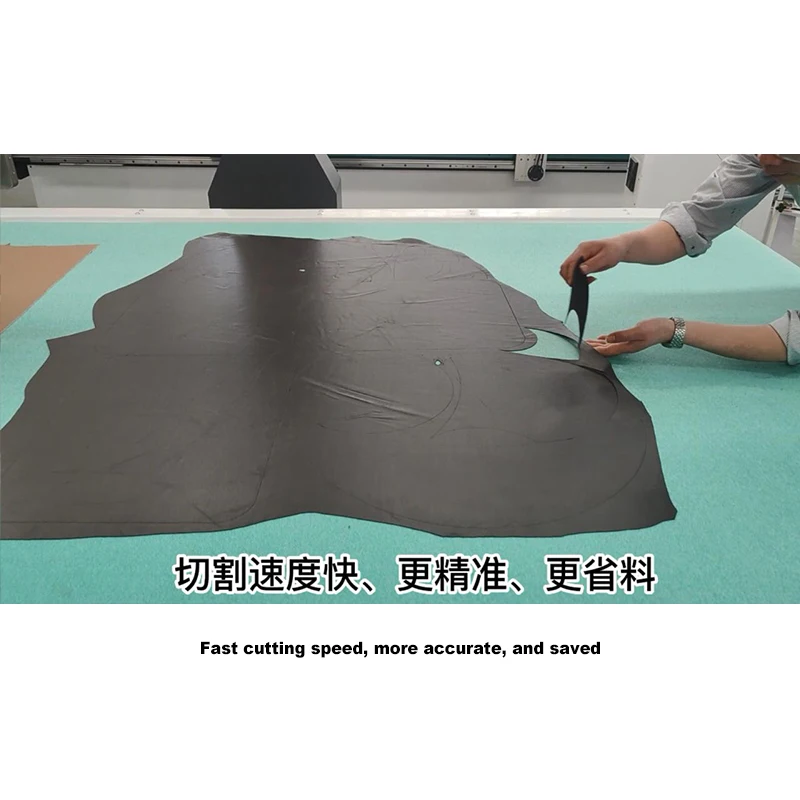
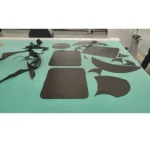
| Irregular hide nesting with flaw avoidance | All leather types via CCD vision contour extraction |
Why Cutting Depth Claims Fail on Real Leather
A CNC leather cutting machine manufacturer that quotes a thickness range without naming the leather type is quoting a number, not a capability. The 20–80 mm cutting range on the RT-D2516/RT-S2516 shifts depending on whether you run soft PU, dense natural cowhide, or multi-layer sponge composite. I learned this the hard way on a珠三角 line: a standard oscillating knife handled sample PU cleanly, then shredded when the customer switched to automotive-grade reinforced seat leather. We swapped three tool sets before finding the pneumatic knife with adjusted stroke that held the edge. [NEED_CITE: oscillating versus pneumatic knife behavior on layered automotive leather]
When the cutting head does not match hide density, the consequences show up downstream — ragged edges that reject at stitching, crushed foam layers that delaminate, or scoring marks that weaken the panel. These are not machine faults. They are specification gaps that surface only when real material meets the blade.
Frame Rigidity and Long-Term Dimensional Hold
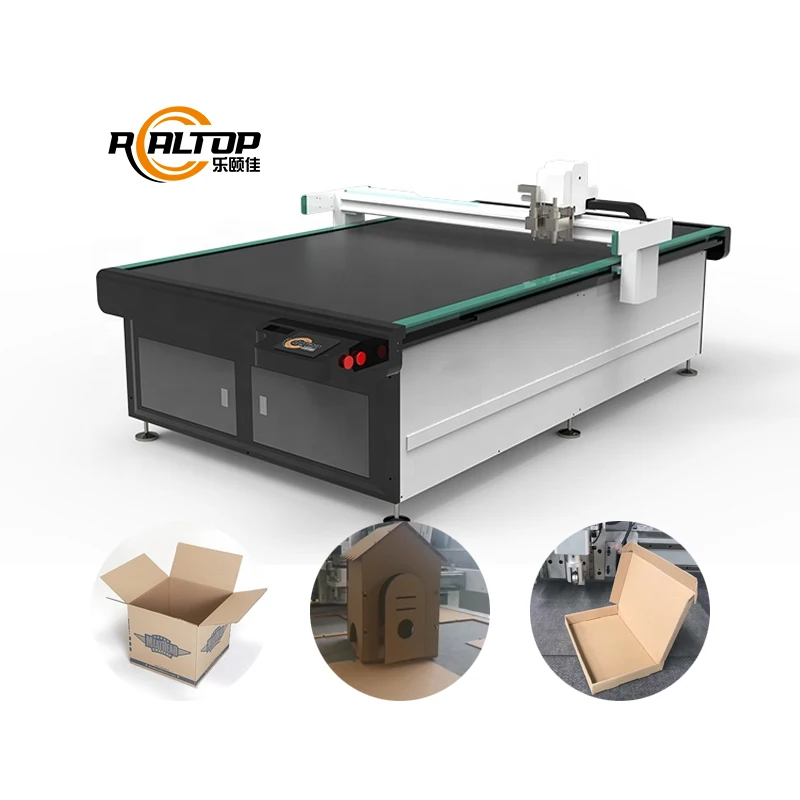
The RT-D2516/RT-S2516 frame is built from thick-walled seamless steel, welded and then put through high-temperature tempering before final CNC machining center finishing. This sequence matters because welding introduces internal stress; tempering relieves it, and precision machining then sets the reference surfaces true. On a 1600 × 2500 mm table, even minor frame distortion translates into blade drift at the far corners, producing panels that do not match the nesting file dimensions. For footwear and bag producers running repeatable short-run batches, this dimensional stability is what keeps cutting accuracy within the ≤0.1 mm repeatability specification over extended service.
Vacuum Zoning for Small Leather Pieces
Leather cutting generates offcuts of varying size, and small pieces tend to lift under knife drag if suction is uneven. The magnesium-aluminum alloy table on this CNC leather cutting machine manufacturer platform uses PVDF fluorocarbon coating with multi-zone vacuum control, allowing the operator to activate only the zones under the active cutting area. The 7.5 kW vacuum pump with integrated silencer sponge maintains consistent negative pressure without the noise levels typical of open-port pumps. [NEED_CITE: vacuum zoning effectiveness on irregular leather offcuts under oscillating knife drag] When cutting shoe uppers or small bag panels, targeted zoning prevents material shift that would otherwise produce mismatched pairs or rejected panels.
Reading the Specs That Matter for Leather
The cutting thickness of 20–80 mm listed for the RT-D2516/RT-S2516 is a range, not a guarantee across all materials. Soft PU foam composite cuts cleanly at the upper end with a standard oscillating knife, while dense vegetable-tanned cowhide requires a pneumatic knife with higher downforce and reduced travel speed. Translational velocity of 800–1200 mm/s is achievable on thin synthetics; thicker natural hides demand slower passes to prevent blade deflection and edge burnishing. The CCD vision system — available as mark-point, panoramic, or projection positioning — addresses a specific leather problem: natural hides have irregular outlines and internal flaw zones that must be mapped before nesting software lays out panels. Without this contour extraction, nesting yield drops as panels overlap defect areas. The HP-GL compatible instruction system accepts files from most mainstream nesting and CAD platforms used in footwear and leather goods design, reducing format conversion friction between design and production floors.
What Happens When Configuration Is Skipped
Specifying a CNC leather cutting machine on working area alone, then discovering the standard oscillating knife cannot penetrate your automotive seat leather, is a pattern I have seen repeat across multiple buyer visits. The machine arrives, the first test cut tears the material, and production stalls while the correct tool head is sourced and calibrated. [NEED_CITE: tool head mismatch consequences on composite leather cutting edge quality] Voltage assumptions create a parallel problem: a 380V machine shipped to a 220V market without frequency confirmation runs the servo motors outside rated parameters, degrading positioning accuracy and shortening drive component life. These failures are not random — they trace directly to specification steps skipped during inquiry.
Why Buyers Source This Build
Realtop operates knife and laser cutting platforms under one design and production roof, so the cutting method is selected based on the leather type rather than forced to fit a single technology. The RT-D2516/RT-S2516 tool head and table configuration is specified per material sample the buyer provides, not chosen from a default catalog. CCD camera positioning is confirmed against the buyer’s actual printed or marked hide contour before the vision system is locked into the build. Software file format compatibility is verified during the inquiry stage against the buyer’s existing nesting workflow, not assumed. Voltage, plug standard, and control language are confirmed in writing before production begins.
Documentation & Verification
- Machine specification sheet listing RT-D2516/RT-S2516 tool head and table configuration matched to your leather type
- Electrical schematic with voltage and frequency confirmed for your target market grid
- Sample cutting report on your own leather hide thickness and type before order commitment
- Factory test record documenting repeatability and edge quality on your submitted material
- CE declaration documentation for applicable market entry requirements
Installation, Commissioning & Support
- 3450 × 2300 mm machine footprint requires level concrete floor with clearance for the 1600 × 2500 mm conveyor auto-feed approach
- 380V ±10% dedicated circuit required for the 9 kW rated power plus 7.5 kW vacuum pump draw
- Machine ships fully assembled with in-situ emergency stop resume function for faster commissioning
- First-run parameter setting covers knife oscillation frequency, vacuum zone mapping, and CCD calibration on your leather
- Operator training includes multi-tool head switching procedures and HP-GL file import workflow
- Spare parts list covers Swiss knife blades, vacuum seals, and conveyor belt segments
What to Include in Your Inquiry
Send your leather type, typical hide thickness range, and whether you work with natural, PU, PVC, or sponge composite materials. Confirm your workshop voltage and frequency, preferred control language, and the nesting software you currently use. If your production involves irregular hide outlines or natural flaw avoidance, include a sample hide image so the CCD configuration can be scoped before quotation.
Frequently Asked Questions
Q: How is the 20–80 mm cutting thickness range verified for my specific leather?
A: The range shifts based on leather density and layer composition. We run a sample cutting test on your actual hide — natural cowhide, PU, PVC, or sponge composite — and document the tool head, stroke setting, and travel speed that produces a clean edge. The sample report accompanies the quotation so the capability is confirmed in writing before you commit.
Q: How does the CCD vision system handle irregular natural hide outlines during production?
A: The panoramic camera scans the hide perimeter and internal flaw zones before the nesting software lays out panels. Mark-point positioning handles printed contours on synthetic materials. At production speed, the system adjusts the cutting path in real time to route around defects, maintaining panel yield without manual hide repositioning.
Q: Which tool head should I specify for my leather type?
A: Oscillating knives handle thin to medium PU and synthetic leather. Pneumatic knives deliver higher downforce for dense natural hides and multi-layer composites. Creasing wheels and punching tools add marking and hole functions on the same platform. We recommend the head based on your sample cutting result, not a default configuration.
Q: What voltage and control language are confirmed before shipment?
A: The RT-D2516/RT-S2516 runs on 380V ±10% as standard, with 50 or 60 Hz confirmed per your market grid. Control language options include English, Russian, Italian, and Chinese, with special languages available on request. Plug standard and electrical schematic are confirmed in writing before production starts.
Q: Can I send my leather samples for test cutting before ordering?
A: Yes — sample cutting on your own material is a standard step in our sales process. The sample report documents cutting edge quality, tool head used, vacuum zone settings, and any CCD contour recognition results on your specific hide. This report forms part of the quotation package.
You may also like

商品评价
Clear filtersThere are no reviews yet.