

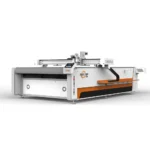
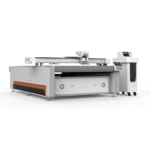
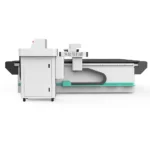
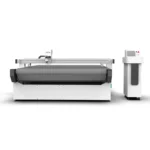

-
 Courier delivery
-
 DHL Courier delivery
-
 Warranty 1 year
-
 Free 30-Day returns

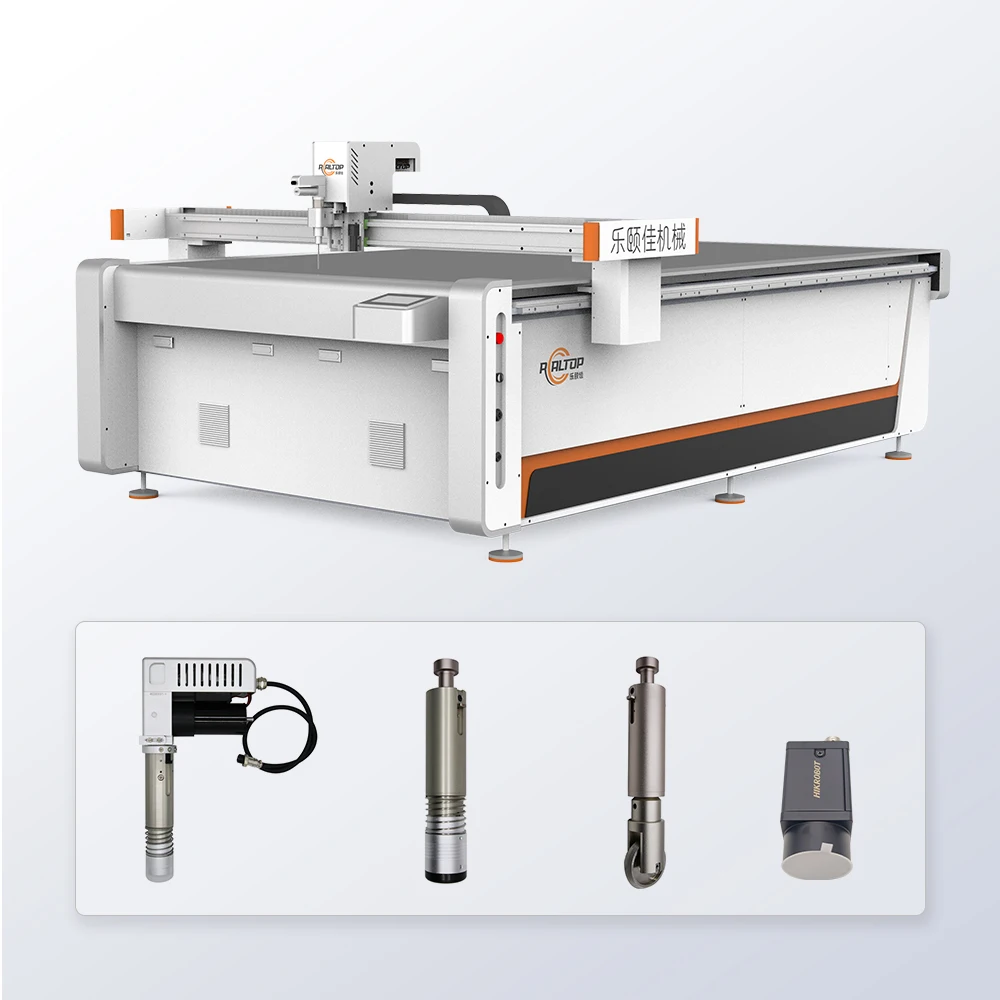
Tool Head Versatility — REALTOP matches oscillating, rotary, and creasing tool heads to your actual fabric layers and production volume, not just the working area.
Technical Specifications
| Parameter | Value |
|---|---|
| Model | 1625 |
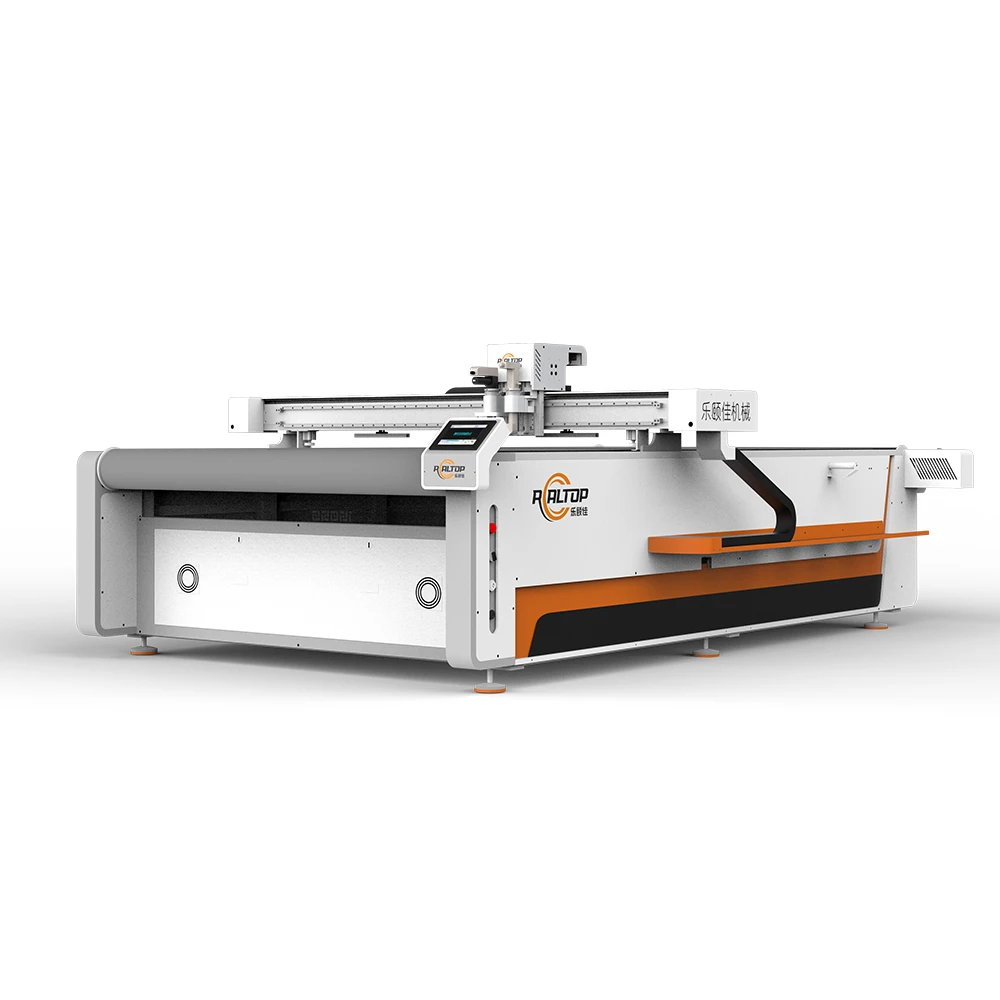
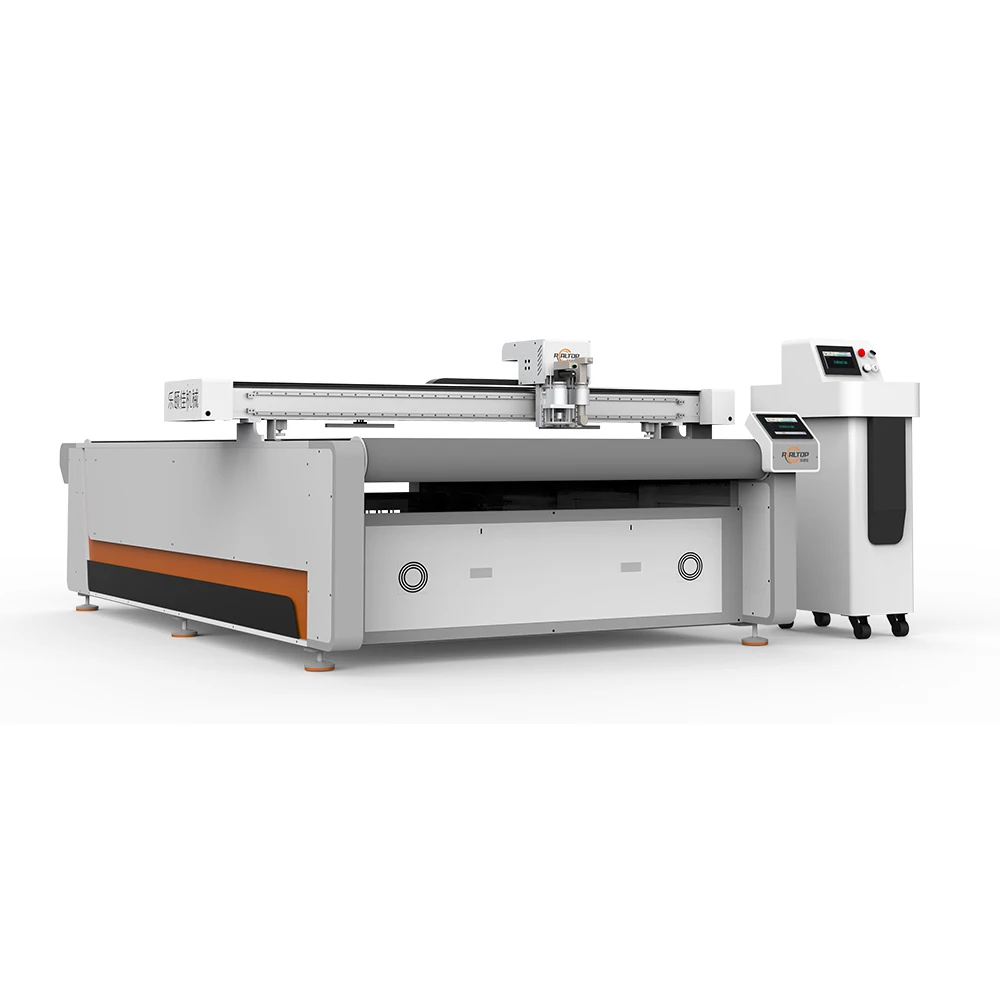
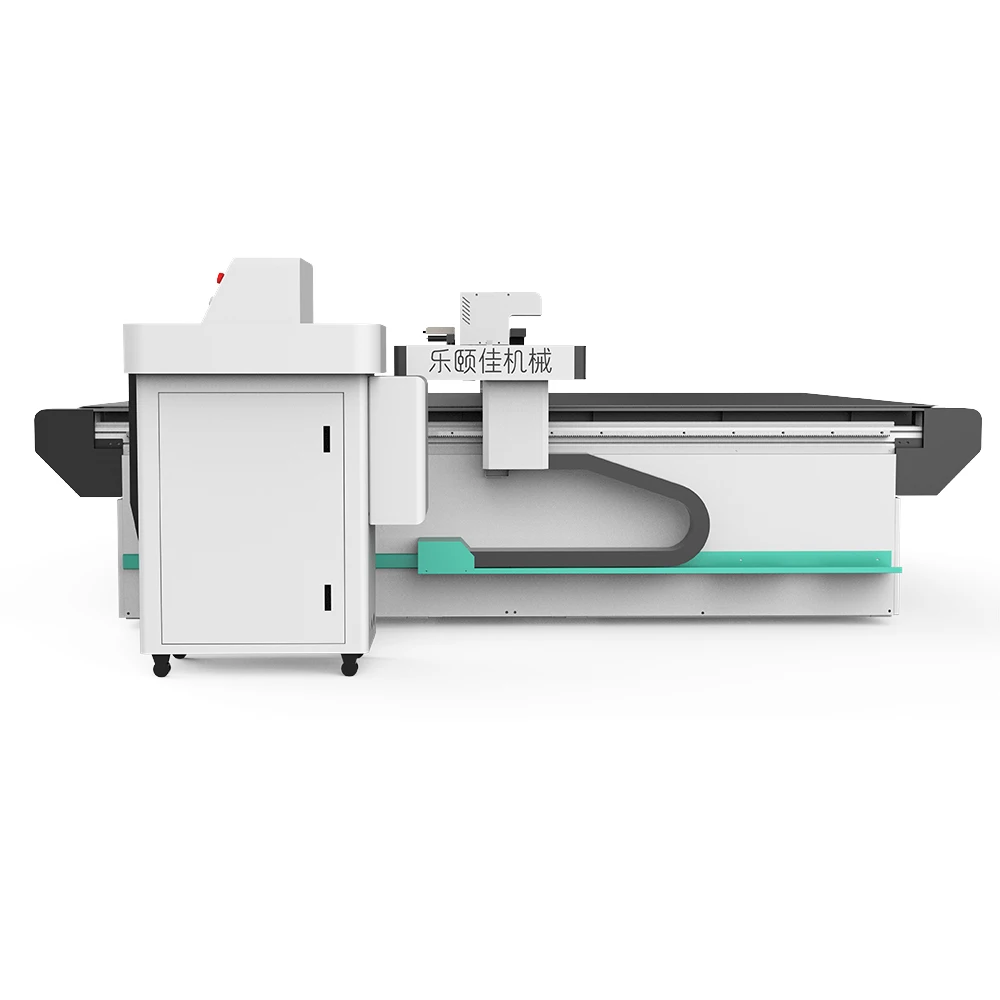
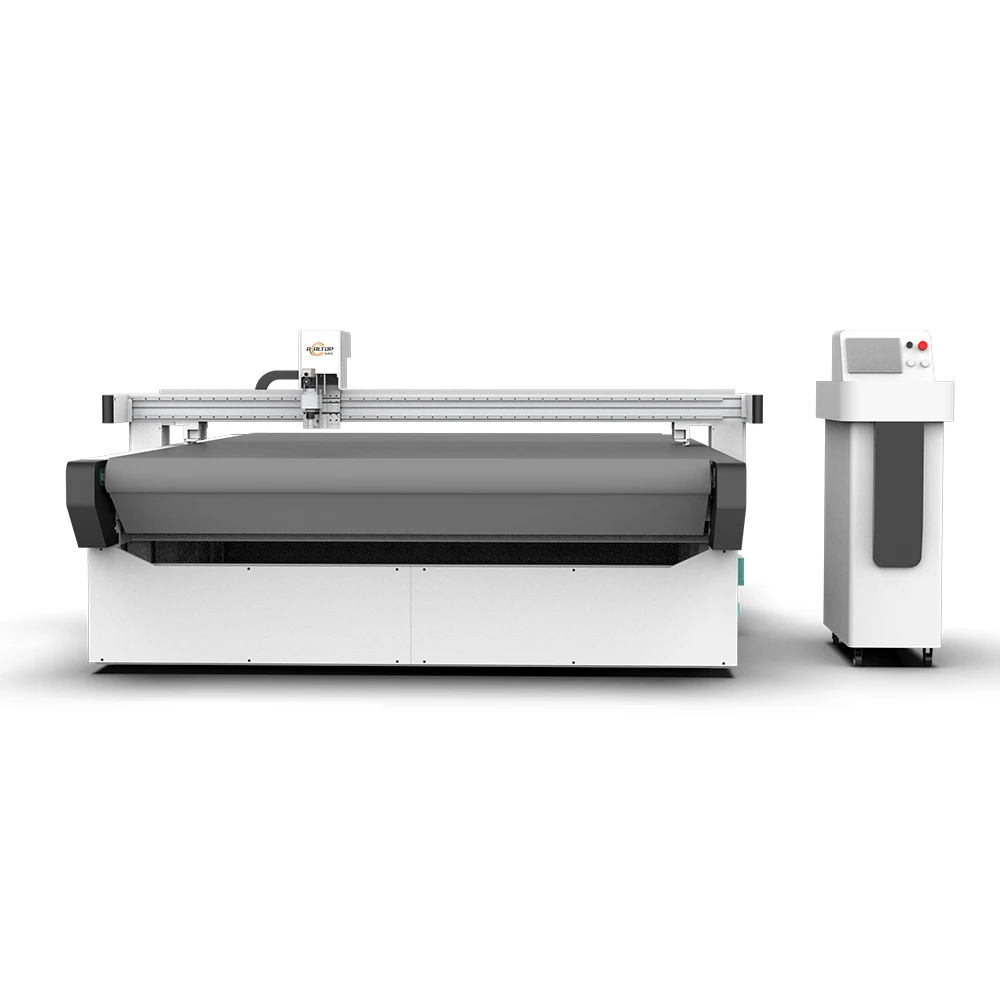
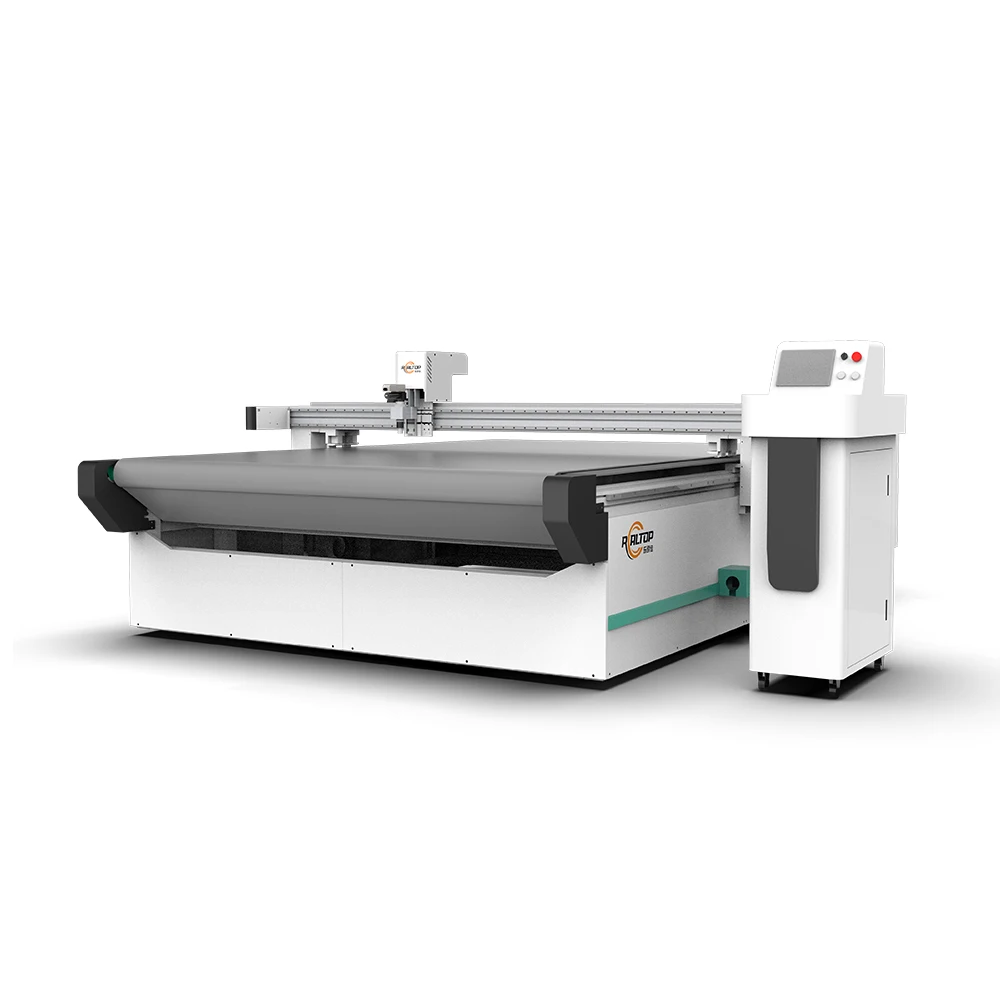
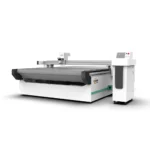
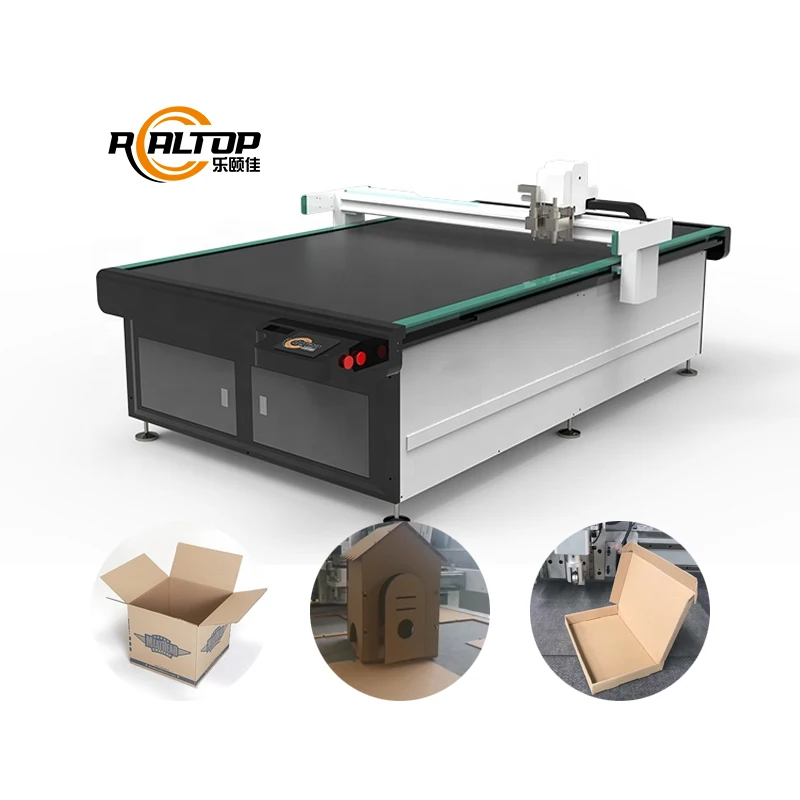
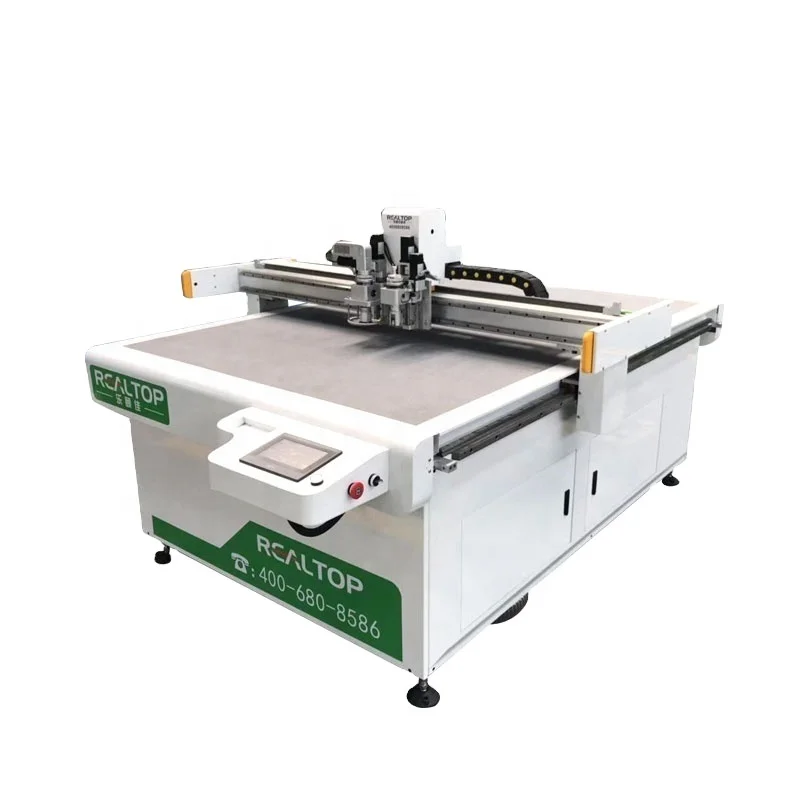
| Product Type | CNC Oscillating Knife Cutting Machine |
| Working Area | 1600 × 2500 mm |
| Cutting Speed | 0–2000 mm/s |
| Cutting Thickness | ≤ 30 mm |
| Cutting Accuracy | ±0.1 mm |
| Tools Available | Oscillating knife, Driven rotary knife, Creasing wheel, Kiss cutting tool, Pneumatic knife, Milling tool, V groove knife |
| Vacuum Table | Aluminum bellows vacuum table |
| Vacuum Pump | 9 kW |
| Servo Motors | Panasonic, Delta, Dorna options available |
| Control System | PLC control panel with optional display languages |
| Voltage Options | 110V, 220V, 380V (basis not stated in source — confirm frequency and phase) |
| Profile Formats | PLT, DXF, AI, PDF |
| Machine Size | 3300 × 2100 × 1350 mm |
| Safety Devices | Infrared sensor, Emergency stop |
| Language Options | English, Russian, Italian, Chinese, customizable |
| Standards | CE |
Application Suitability
| Application | Material or Output |
|---|---|
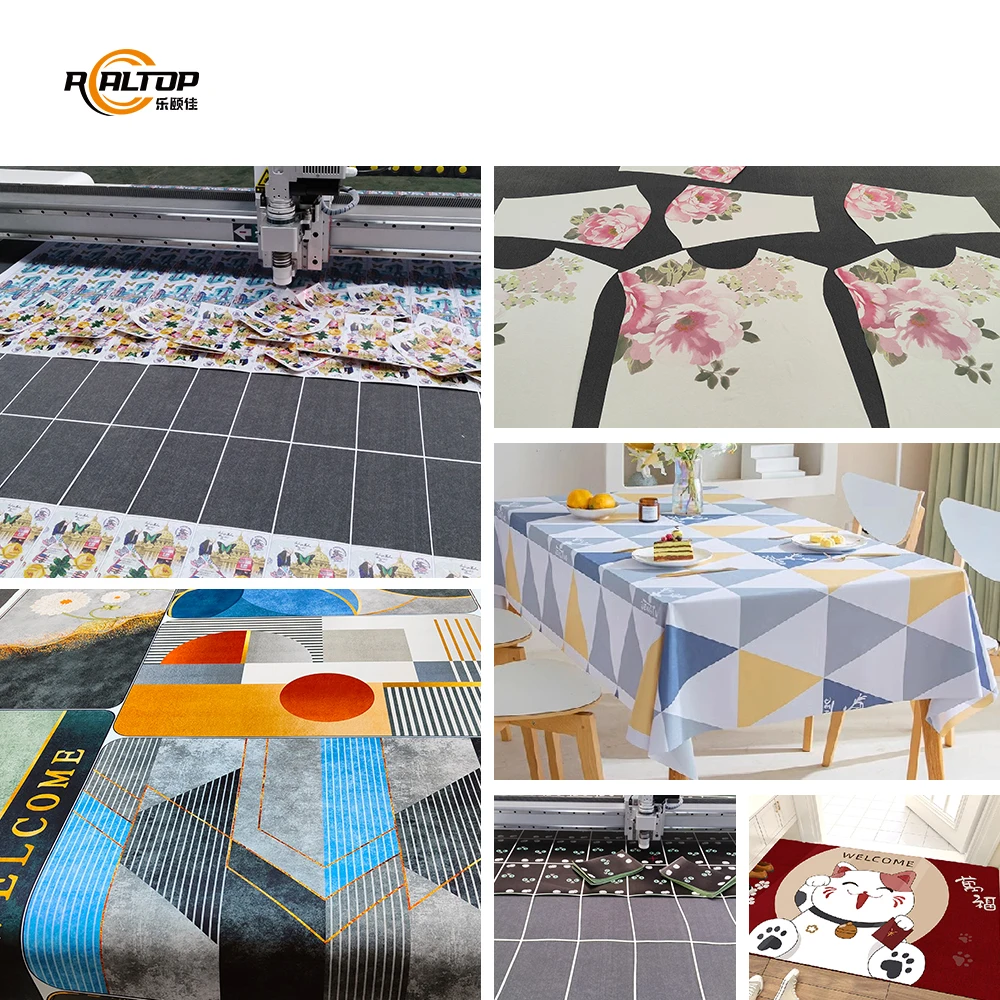
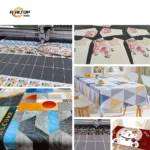
| Apparel manufacturing | Suits, knitwear, lace, complex woven and knitted fabrics |
| Automotive interiors | Seat fabrics, carpets, PVC mats, headliner textiles |
| Home textiles | Sofa fabrics, curtains, rugs, upholstery layers |
| Composite processing | Carbon fiber prepreg, aramid, specialty technical textiles |
Why "Working Area Only" Specifications Fail on the Shop Floor
A 1600×2500 table holds the sheet, but only the right tool head and vacuum zoning actually cut it cleanly.
I have walked into workshops where a machine was chosen purely because the bed size matched the roll width. Within the first week, operators noticed crushed edges on multi-layer knitwear and incomplete cuts on denser automotive carpet. The cutting method and tool selection must account for material density, layer count, and part geometry — not just sheet dimensions. When a buyer sources a CNC oscillating knife cutting machine manufacturer, the conversation should start with the material stack, not the table size [NEED_CITE: material density and tool head selection guidelines for industrial fabric cutting].
Matching the Oscillating Stroke to Fabric Behavior
Different textiles respond to blade frequency in distinct ways. Loose-weave lace requires a fast oscillation to sever fibers cleanly without pulling threads, while dense automotive carpet needs a slower, more forceful stroke to penetrate the full thickness. This 1625 CNC oscillating knife cutting machine offers multiple tool heads — oscillating knife, driven rotary knife, and pneumatic knife — so the cutting action can be matched to each textile’s structure. Selecting the correct tool head before production begins avoids mid-run stoppages and edge quality defects.
Vacuum Zoning and the Small-Part Problem
When cutting nesting layouts with many small pattern pieces, a single-zone vacuum table loses suction at the edges, and lightweight fabric lifts off the surface mid-cut. The aluminum bellows vacuum table on this system is divided into zones, allowing suction to concentrate only where material is present. This matters for garment producers cutting collar or cuff pieces, where even slight material shift ruins dimensional accuracy across hundreds of parts per shift [NEED_CITE: vacuum table zoning best practices for nested fabric cutting].
What the Spec Sheet Numbers Actually Mean on the Line
The ±0.1 mm cutting accuracy matters most when pattern pieces are sewn together downstream — a consistent tolerance across the entire 1600×2500 mm working area prevents cumulative fit errors in assembled garments or upholstered panels. The 0–2000 mm/s speed range is not a single usable speed; actual travel depends on the material’s resistance and the number of plies being cut simultaneously. The 9 kW vacuum pump provides the holding force needed for multi-layer stacks, but its effectiveness depends on table zone selection and the porosity of the fabric being processed. Servo motor options from Panasonic, Delta, and Dorna allow the system’s motion characteristics to align with the precision requirements and service infrastructure of the target market.
The Cost of Skipping the Material Test
A buyer once sent a single leather swatch for testing, approved the sample, and placed the order. When production started with a laminated composite that included a foam backing layer, the oscillating knife could not penetrate cleanly, and the driven rotary knife produced frayed edges. Reconfiguring the tool head and adjusting vacuum pressure took the line offline for several days. Every production material should be tested before the order is finalized, not just the easiest sample [NEED_CITE: composite material cutting failures due to incorrect tool selection].
Why Source This Machine From REALTOP
The design team and core factory are housed together in Jinan, so tool head selection and table configuration are engineered as one system rather than sourced separately. Sample cutting runs on your actual production materials — including multi-layer composites and technical textiles — are completed before any order is confirmed. Voltage, control language, and PLC interface are specified for the destination market, reducing commissioning delays on arrival. Software file format compatibility with PLT, DXF, AI, and PDF profiles is verified against your existing nesting workflow before production begins. Each machine ships with a factory test record documenting performance on your specified material range.
Documentation & Verification
- Machine specification sheet listing the confirmed tool head and vacuum table zone layout
- Electrical schematic with voltage, phase, and frequency matched to the installation site
- Sample cutting report produced on your fabric type, ply count, and pattern geometry
- PLC software license with confirmed file format and nesting compatibility notes
- Factory test record covering cutting accuracy and edge quality on your materials
- Packing photographs showing machine condition and tooling configuration before dispatch
Installation, Commissioning & Support
- Floor plan review confirming the 3300×2100 mm footprint and operator clearance zones
- Dedicated power circuit matching the confirmed voltage, including the 9 kW vacuum pump load
- Assembly of the aluminum bellows table sections and vacuum zone seal verification on site
- First-run parameter setting for cutting speed, oscillation frequency, and vacuum zone mapping
- Operator training on tool head changeover between fabric types and ply configurations
- Spare parts list covering blades, oscillation components, and vacuum seals for initial inventory
Preparing Your Inquiry
Share the specific fabric types, ply counts, and maximum material thickness you plan to cut daily. Confirm the local voltage, frequency, and preferred control panel language at the inquiry stage. If your workflow relies on a particular nesting software or file format, include a sample production file so compatibility can be verified before quotation.
Frequently Asked Questions
Q: How do I know which tool head to choose for my material?
A: Each textile behaves differently under blade pressure. Oscillating knives work well for woven and knitted fabrics up to the rated thickness, while driven rotary knives suit continuous-ply stacks. We run sample cuts on your actual production materials — including any laminated or coated layers — and document the tool head, blade type, and cutting parameters that produce clean edges before you commit to an order.
Q: Can the voltage and control language be matched to my facility?
A: Voltage is configurable across 110V, 220V, and 380V options, and the phase and frequency must be confirmed for your local supply before production. The PLC control panel display language is set to your preference — English, Russian, Italian, Chinese, or another language — so operators can navigate menus without translation delays during commissioning.
Q: What happens during the sample cutting process?
A: You send the exact materials you plan to cut in production, including any composite layers or backing materials. We test the configured tool heads across your specified ply counts, record cutting speed, edge quality, and dimensional accuracy, and share a sample cutting report. This confirms the configuration before the machine enters production.
Q: Will small pattern pieces stay flat during nested cutting?
A: The aluminum bellows vacuum table is divided into selectable zones, so suction concentrates where material is actually present on the bed. This prevents lightweight or narrow fabric pieces from lifting during cutting, maintaining the ±0.1 mm accuracy across intricate nesting layouts typical in garment and automotive interior production.
Q: Is my existing nesting software compatible with this system?
A: The control system accepts PLT, DXF, AI, and PDF profile formats. Before the order is finalized, we verify compatibility with your specific nesting software and workflow, including any layer naming conventions or toolpath requirements, and document the results in the software compatibility note included with your machine documentation.
You may also like

商品评价
Clear filtersThere are no reviews yet.