





-
 Courier delivery
-
 DHL Courier delivery
-
 Warranty 1 year
-
 Free 30-Day returns

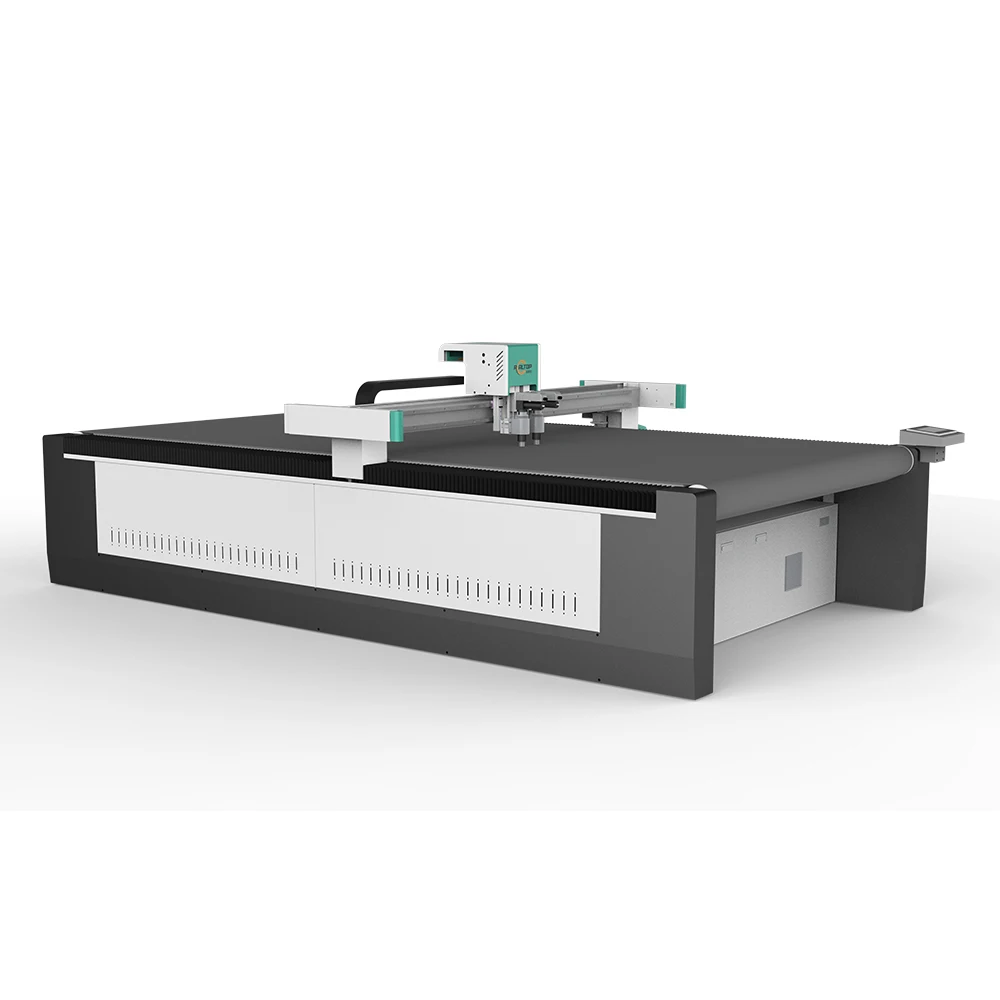
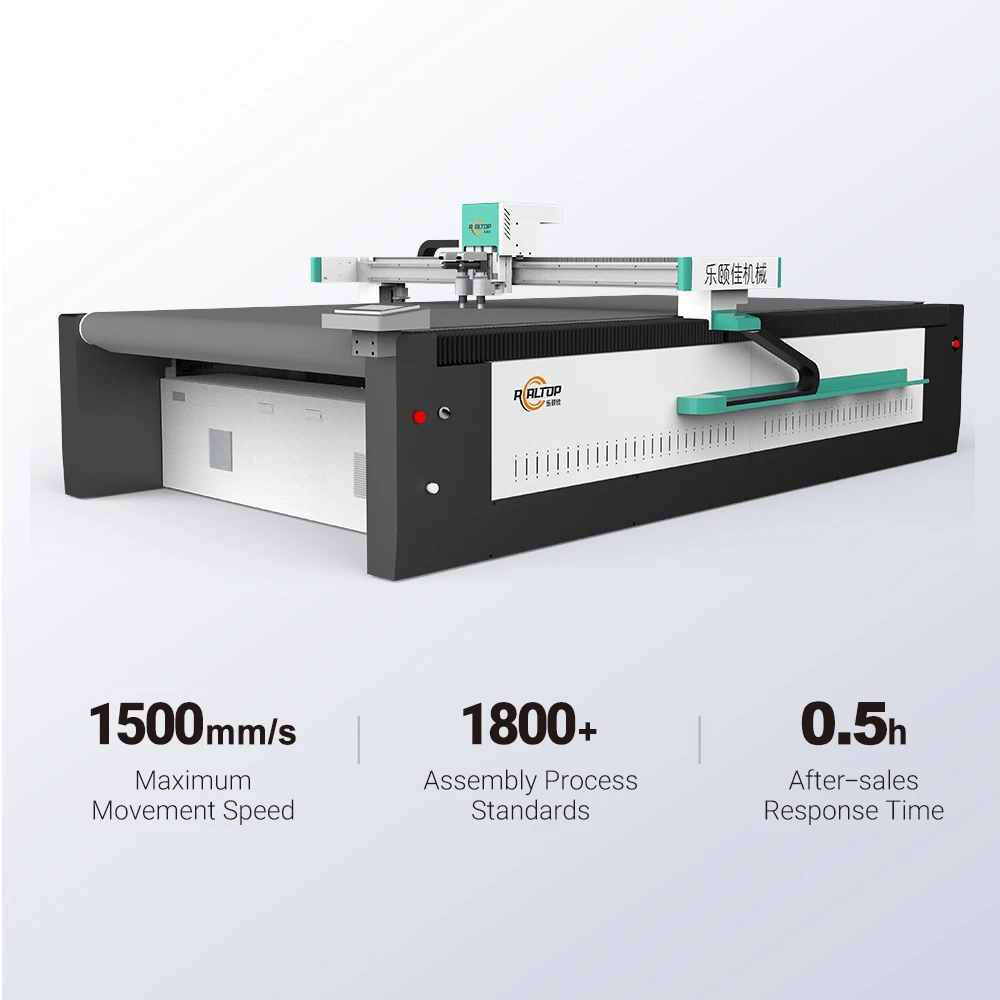
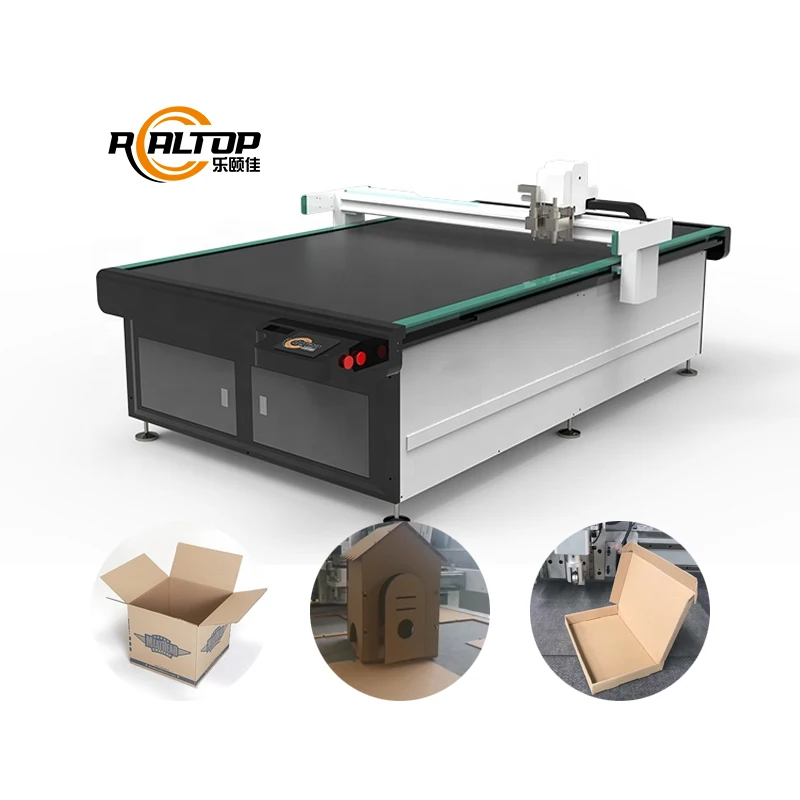
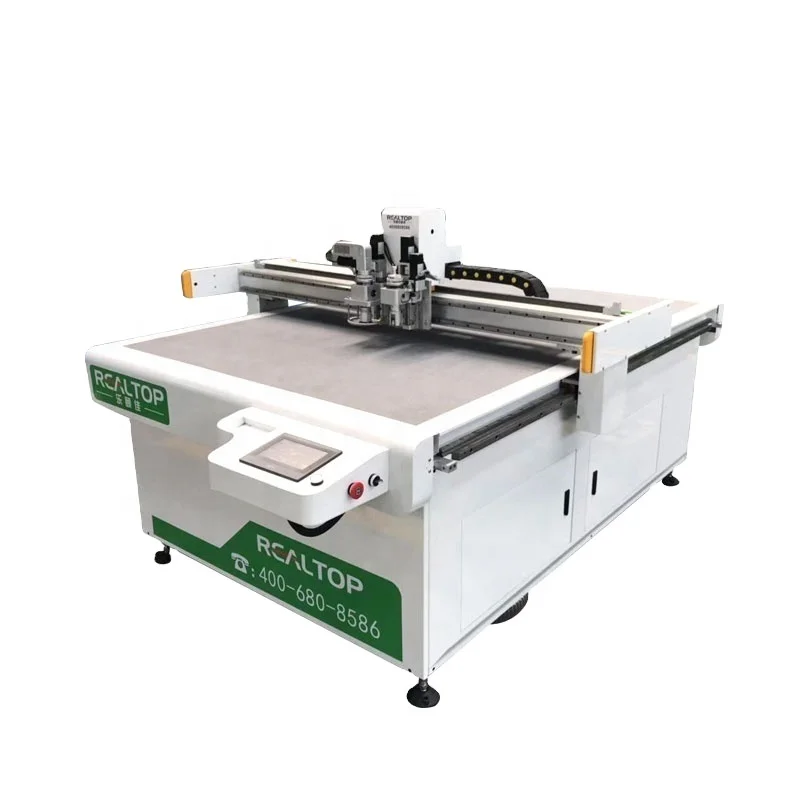
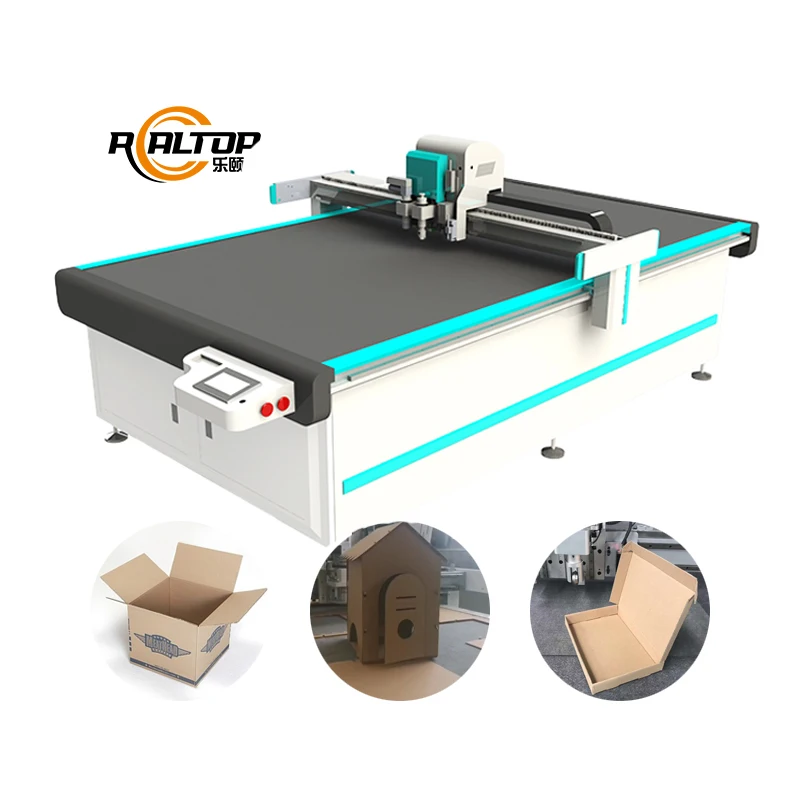
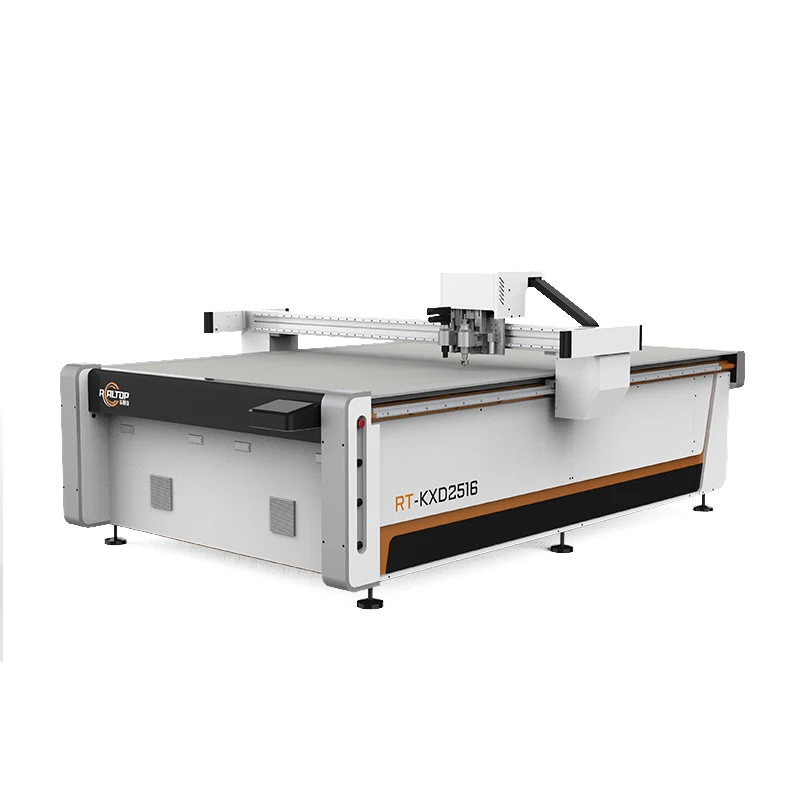
In-house build quality — Every CNC oscillating knife gasket cutting machine from Realtop is developed and manufactured in our own Jinan facility, covering frame welding, motion assembly, and electrical integration under one roof.
Technical Specifications
| Parameter | Value |
|---|---|
| Product Type | CNC Oscillating Knife Cutting Machine |
| Working Area | 1600 × 2500 mm |
| Cutting Speed | 0 – 2000 mm/s |
| Cutting Thickness | Up to 30 mm (basis not stated in source — confirm material type and density) |
| Cutting Accuracy | ±0.1 mm |
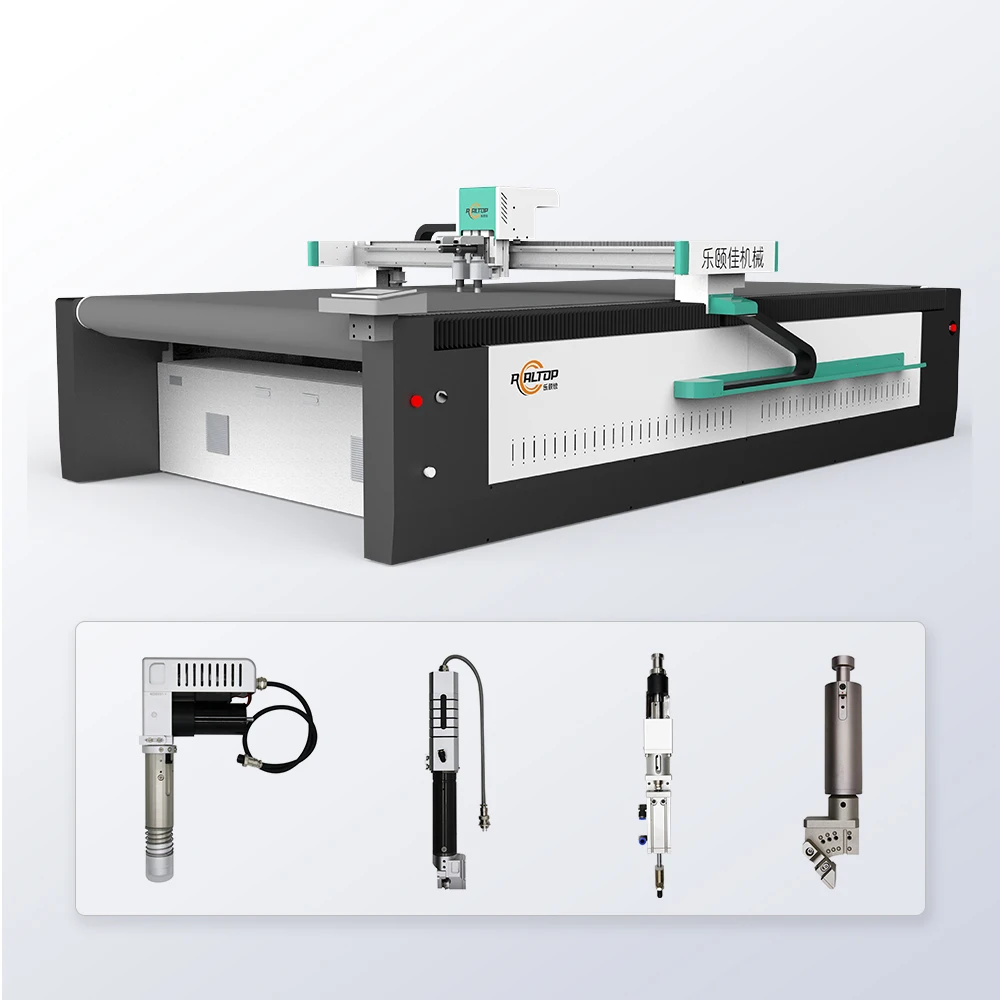
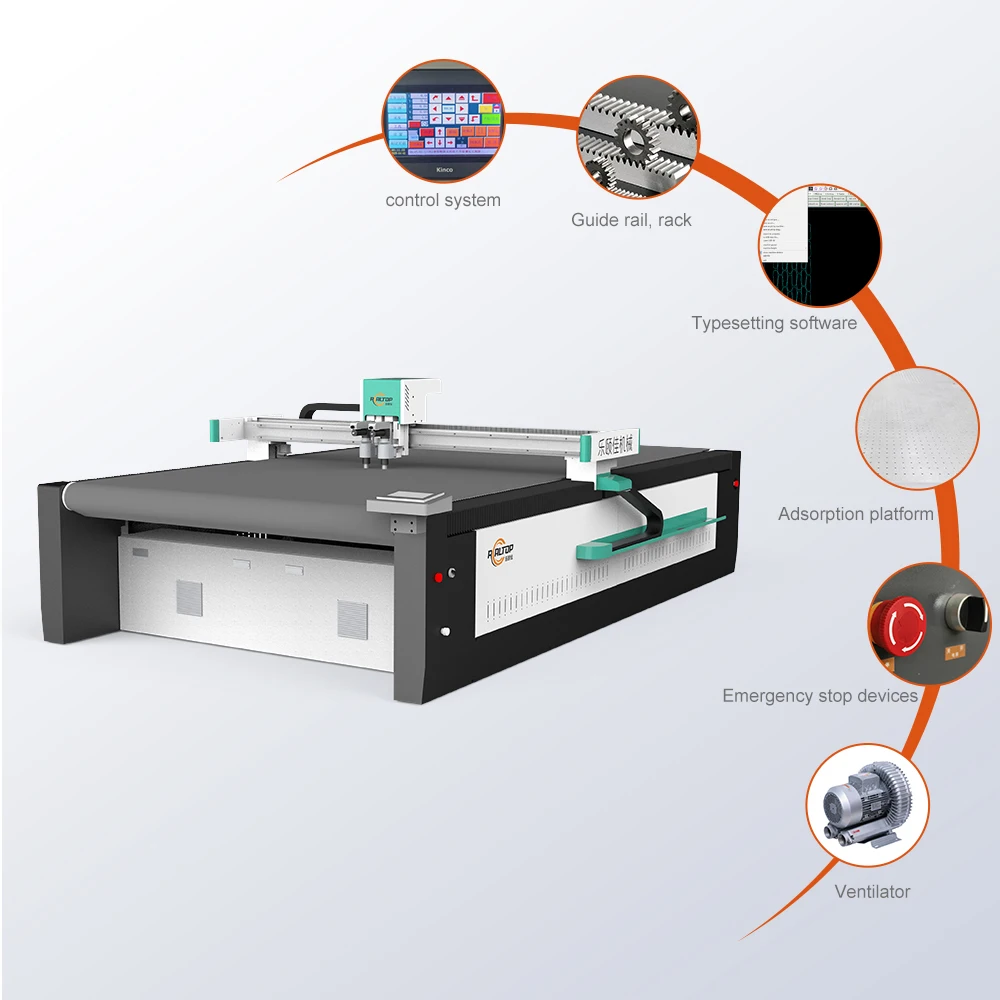
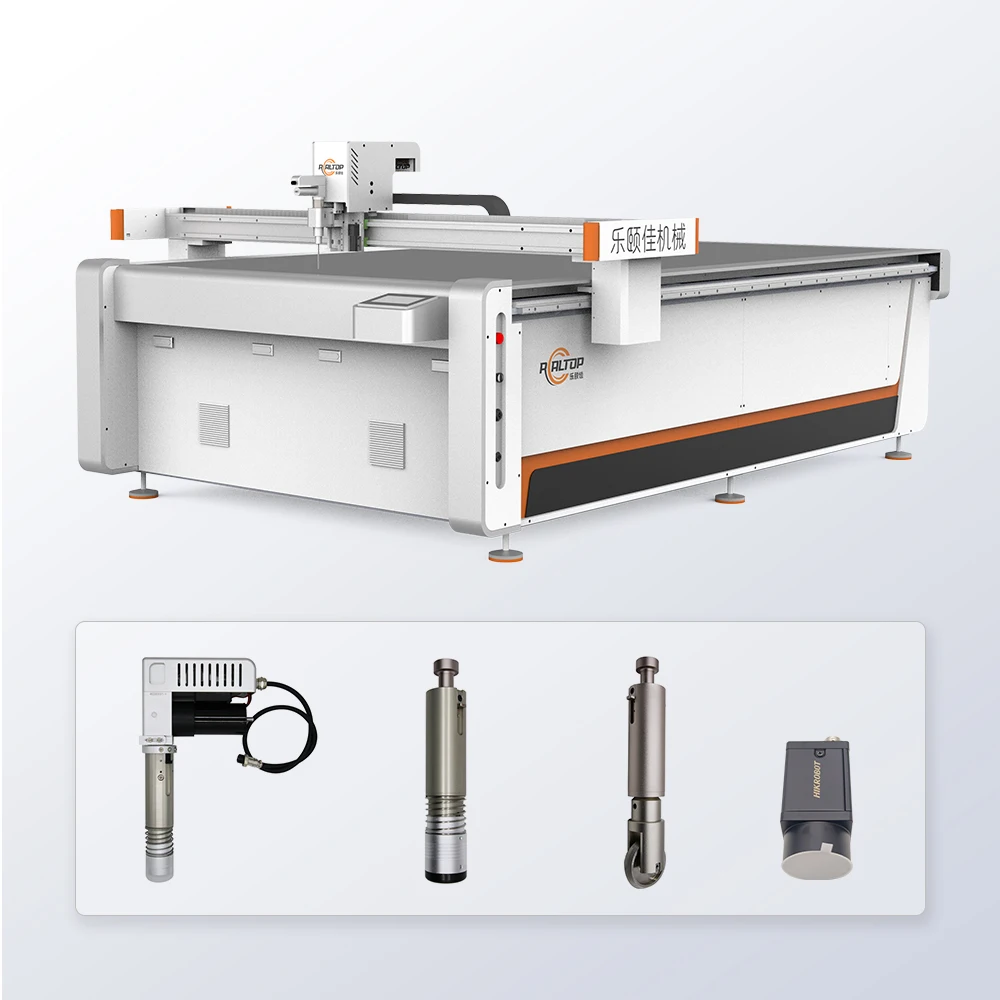
| Tool Heads Available | Oscillating knife, driven rotary knife, creasing wheel, kiss cutting tool, pneumatic knife, milling tool, V-groove knife |
| Vacuum Pump Power | 9 kW |
| Vacuum Table | Aluminum bellows vacuum table |
| Voltage Options | 110V / 220V / 380V (frequency to be confirmed per destination market) |
| Control System | PLC control panel |
| Servo Drive Options | Panasonic, Delta, Dorna (source value — verify against manufacturer catalog) |
| Profile Format Support | PLT, DXF, AI, PDF |
| Safety Devices | Infrared sensor device, emergency stop |
| Language Options | English, Russian, Italian, Chinese (additional languages customizable) |
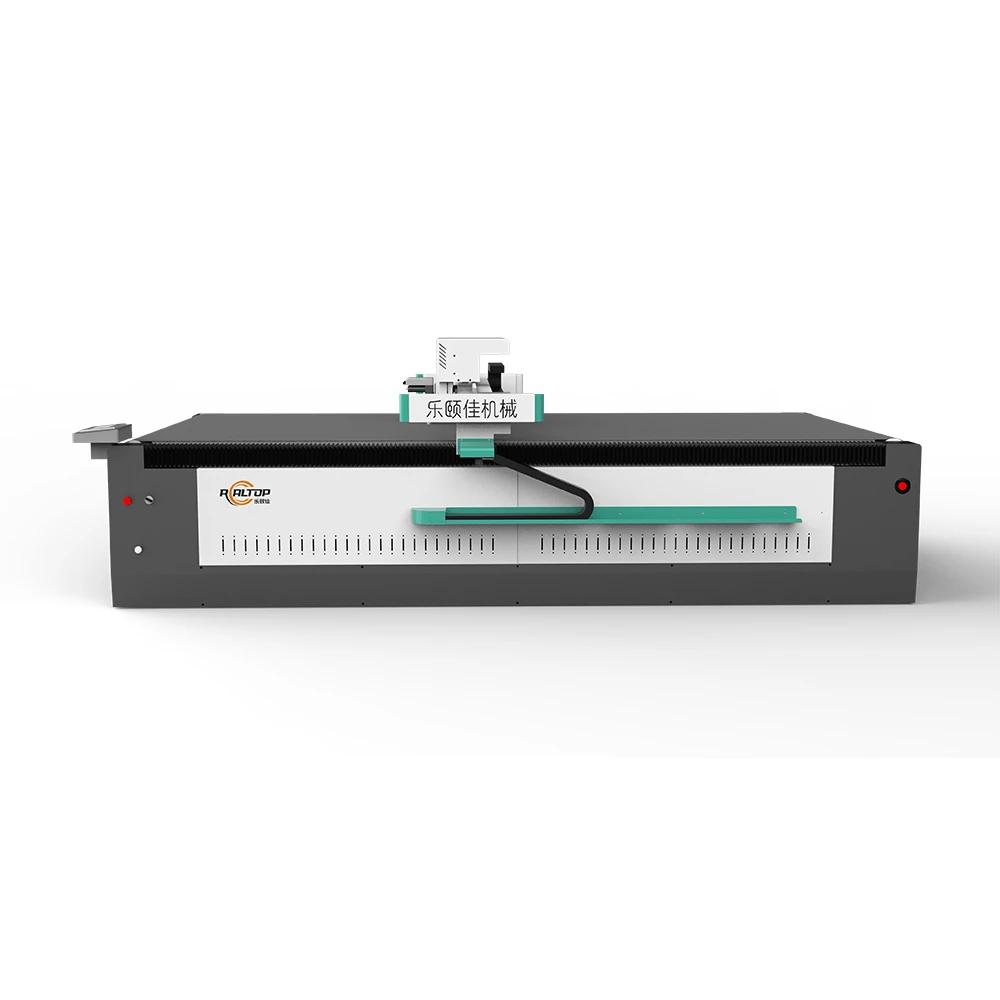
| Machine Size | 3300 × 2100 × 1350 mm |
| Compliance | CE (verify certificate availability) |
Application Suitability
| Application | Material or Output |
|---|---|
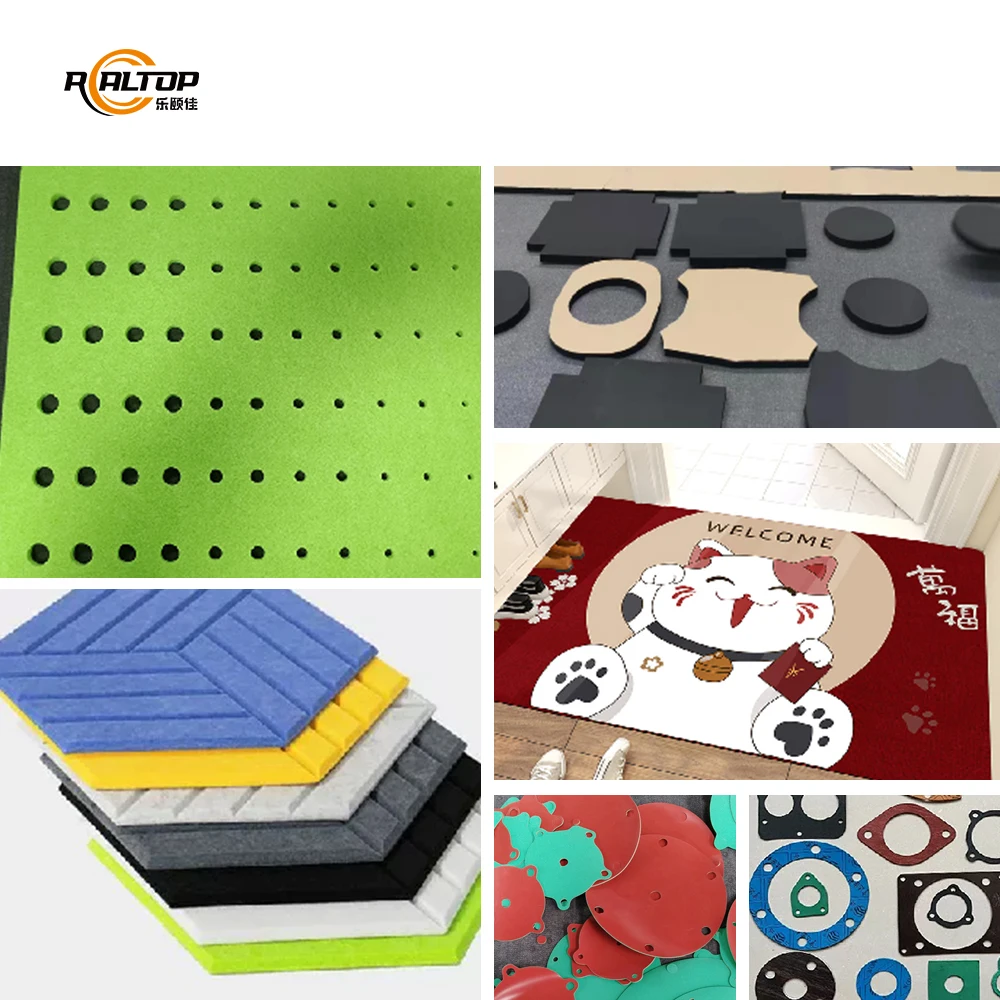
| Industrial gasket and seal production | PTFE, rubber, composite fiber, cork, graphite sheets |
| Automotive interior and NVH components | Acoustic felt, damping pads, sealing strips |
| Aerospace composite part cutting | Carbon fiber prepreg, aramid honeycomb, thermal insulation |
| Wind power blade material processing | Fiberglass cloth, carbon fiber cloth, foam core |
| Sporting goods composite fabrication | Carbon fiber sheets, Kevlar, high-performance foam |
Why Voltage Confirmation Must Happen Before the Purchase Order
A mis-matched voltage specification can shut down a gasket production line before it ever starts.
When a buyer specifies a CNC oscillating knife gasket cutting machine manufacturer on working area alone, the electrical question often gets buried under cutting speed and tool head options. The consequence is a machine that arrives at a facility with a different supply standard — a 380V unit plugged into a 480V line, for example — and the inverter trips immediately on energization. The resulting delay for transformer replacement or drive reconfiguration is measured in weeks, not days. I once saw a European distributor lose a scheduled end-user demonstration because the voltage mismatch was discovered at commissioning, not at order confirmation [NEED_CITE: voltage and frequency standards by export market]. That single oversight cost the dealer credibility with a buyer who had already committed floor space and operator time. The frequency — 50 Hz versus 60 Hz — compounds the problem, affecting servo behavior and vacuum pump performance in ways that are not always visible on a nameplate.
Cold-Cutting Process Eliminates Thermal Damage on Sensitive Gasket Materials
Thermal cutting methods leave a heat-affected zone that compromises the sealing integrity of PTFE, rubber, and composite fiber gaskets. The CNC oscillating knife gasket cutting machine from Realtop uses a high-frequency vibrating blade that slices through material without generating heat at the cut edge. This cold-cutting approach preserves the original material properties across the entire gasket profile, which matters when a seal must perform under temperature cycling and chemical exposure in service. The result is an edge that does not require secondary finishing before installation.
Tool Head Configuration Matched to Each Gasket Material Class
Different gasket materials demand fundamentally different cutting mechanics. Dense rubber sheets respond well to an oscillating knife with a specific stroke frequency, while composite fiber gaskets may require a driven rotary knife to prevent fraying at the cut boundary. The availability of multiple tool heads — oscillating knife, driven rotary knife, pneumatic knife, and V-groove knife — means the cutting method can be matched to the material rather than forcing all production through one tool. This is how a single machine covers automotive NVH felt cutting and aerospace aramid honeycomb processing without compromise.
Reading the Specifications Beyond the Nameplate
The ±0.1 mm cutting accuracy figure is meaningful only when paired with the servo-driven motion system that delivers it. On tight-tolerance aerospace gasket profiles, the difference between a servo system and a stepper-driven alternative shows up at corners and small radii, where stepping artifacts can push a profile outside tolerance. The 9 kW vacuum pump paired with an aluminum bellows vacuum table provides full-surface adsorption, which is critical when cutting small gasket parts that tend to lift under knife pressure. Voltage options spanning 110V, 220V, and 380V mean the electrical system must be confirmed against the buyer’s actual supply — frequency included — before the machine enters production [NEED_CITE: CE machinery directive requirements for industrial equipment]. The PLC control panel with multi-language support reduces commissioning time for operators who work in English, Russian, Italian, or Chinese, and the file format compatibility with PLT, DXF, AI, and PDF ensures existing design files import without manual redrawing.
The Cost of Skipping the Configuration Conversation
When a gasket producer orders a machine based on working area and cutting speed alone, the hidden costs surface at installation. A vacuum table without adequate zoning leaves small gasket parts lifting during the cut, producing dimensional errors that are only discovered during assembly at the customer’s plant. A tool head that was never tested on the buyer’s specific material density produces ragged edges, triggering rejection rates that erode the margin on every production run [NEED_CITE: material-specific tooling requirements for industrial gasket cutting]. Software that cannot import the buyer’s nesting workflow forces operators to rebuild files from scratch, consuming hours that were never budgeted. These are not machine defects — they are specification gaps that could have been closed during the pre-order configuration process.
Why Buyers Source This Machine from the Jinan Facility
The frame, motion system, and electrical cabinet of this CNC oscillating knife gasket cutting machine are designed and assembled in-house, giving buyers direct visibility into build quality and component sourcing. The configuration-first sales process starts with the buyer’s material type, thickness, and daily volume, and produces a tool head and table recommendation based on actual cutting requirements rather than generic catalog defaults. Sample cutting on the buyer’s own gasket material is completed before the order is confirmed, with edge quality and dimensional accuracy documented in a written report. Electrical schematics and voltage confirmation sheets are reviewed with both the factory engineering team and the buyer’s electrical contractor before production begins. The in-house design team can adjust vacuum table zoning, tool head selection, and software configuration to match the buyer’s specific production environment.
Documentation & Verification
- Sample cutting report on buyer’s own gasket material with edge and dimensional data
- Electrical schematic and voltage confirmation sheet matched to destination supply
- Tool head and vacuum table configuration list per material and production volume
- Software license and file format compatibility note covering PLT, DXF, AI, PDF
- Factory test record with motion accuracy and vacuum performance verified before dispatch
- Operation and maintenance manual in confirmed control language
Installation, Commissioning & Support
- Floor space planning based on 3300 × 2100 × 1350 mm machine footprint with access clearance
- Dedicated circuit specification for 9 kW vacuum pump and servo drive combination
- Machine arrives fully assembled on frame; leveling and vacuum table calibration on site
- First-run parameter setting for buyer’s gasket material thickness and cutting speed
- Operator training on PLC control panel in confirmed language with file import workflow
- Spare parts list covering oscillating knife blades, vacuum seals, and drive belts
Preparing Your Inquiry
To move from specification to quotation, provide your gasket material type, thickness range, and maximum sheet size. Include your facility’s voltage and frequency supply, the control language your operators require, and whether you need sample cutting on your own material before commitment. If your production involves printed contour work or multi-layer stacking, note those requirements so the tool head and table configuration can be scoped accordingly.
Frequently Asked Questions
Q: How do I choose between oscillating knife and driven rotary knife for my gasket material?
A: The choice depends on material structure. Homogeneous materials like rubber and PTFE cut cleanly with an oscillating knife, while woven or fibrous composites often need a driven rotary knife to prevent edge fraying. We run sample cuts on your actual material with both tool heads and document edge quality so the decision is based on observed results, not assumptions.
Q: How is cutting thickness capacity verified before I place an order?
A: Thickness capacity varies with material density and composition. A 30 mm rating on one foam may not apply to a dense rubber compound. We cut samples at your specified thickness and measure edge quality and dimensional accuracy, then confirm whether the standard configuration handles your material or requires a different stroke frequency or blade type.
Q: What happens if my facility voltage differs from the standard options listed?
A: Voltage and frequency must be confirmed before production begins. We provide an electrical confirmation sheet that your local electrician reviews alongside our engineering team. If your supply falls outside 110V/220V/380V, we specify the correct transformer or drive configuration and document it in the electrical schematic before the machine ships.
Q: Will the vacuum table hold small gasket parts flat during cutting?
A: Small parts are the most susceptible to lifting under knife pressure. The aluminum bellows vacuum table provides full-surface adsorption, and zoning can be configured so that vacuum is concentrated where the material is positioned. We review your typical part layout during the configuration stage to confirm adequate holding across your production mix.
Q: Can I import my existing gasket design files without conversion?
A: The control system supports PLT, DXF, AI, and PDF file formats. Before the order is finalized, we verify that your specific files import correctly and that nesting workflows function as expected. If your existing CAD output requires adjustment, we document the steps so your design team can prepare files without trial and error on the machine.
You may also like

商品评价
Clear filtersThere are no reviews yet.