

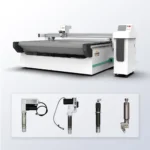
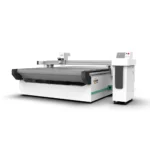
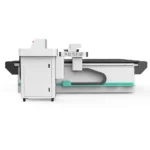
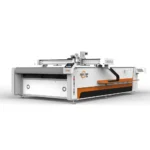

-
 Courier delivery
-
 DHL Courier delivery
-
 Warranty 1 year
-
 Free 30-Day returns

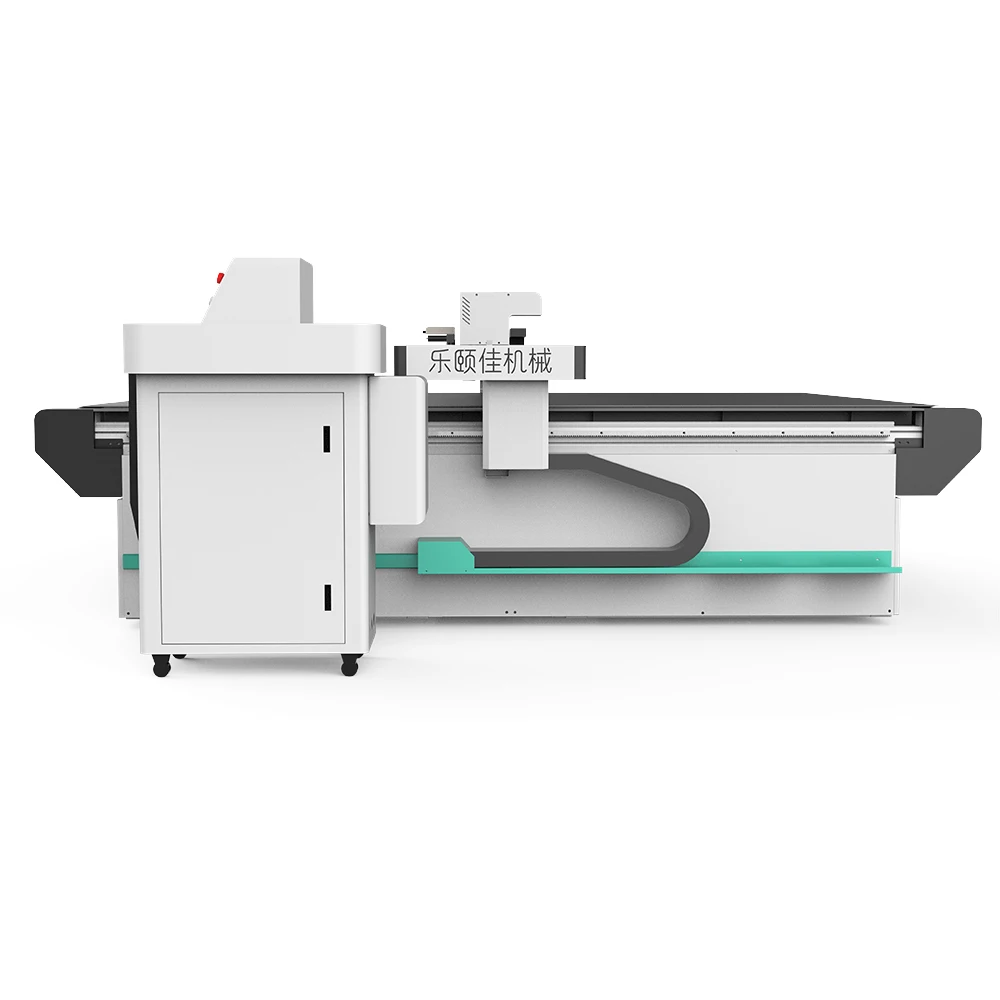
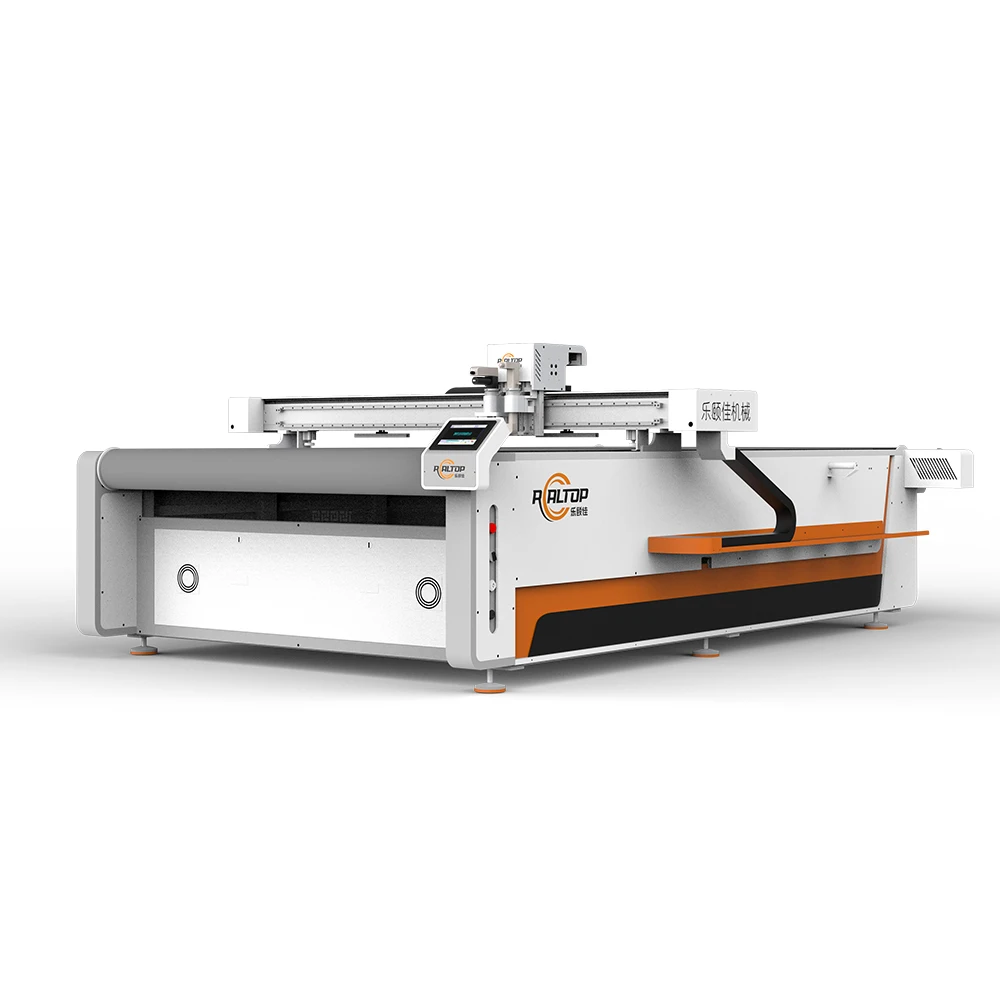
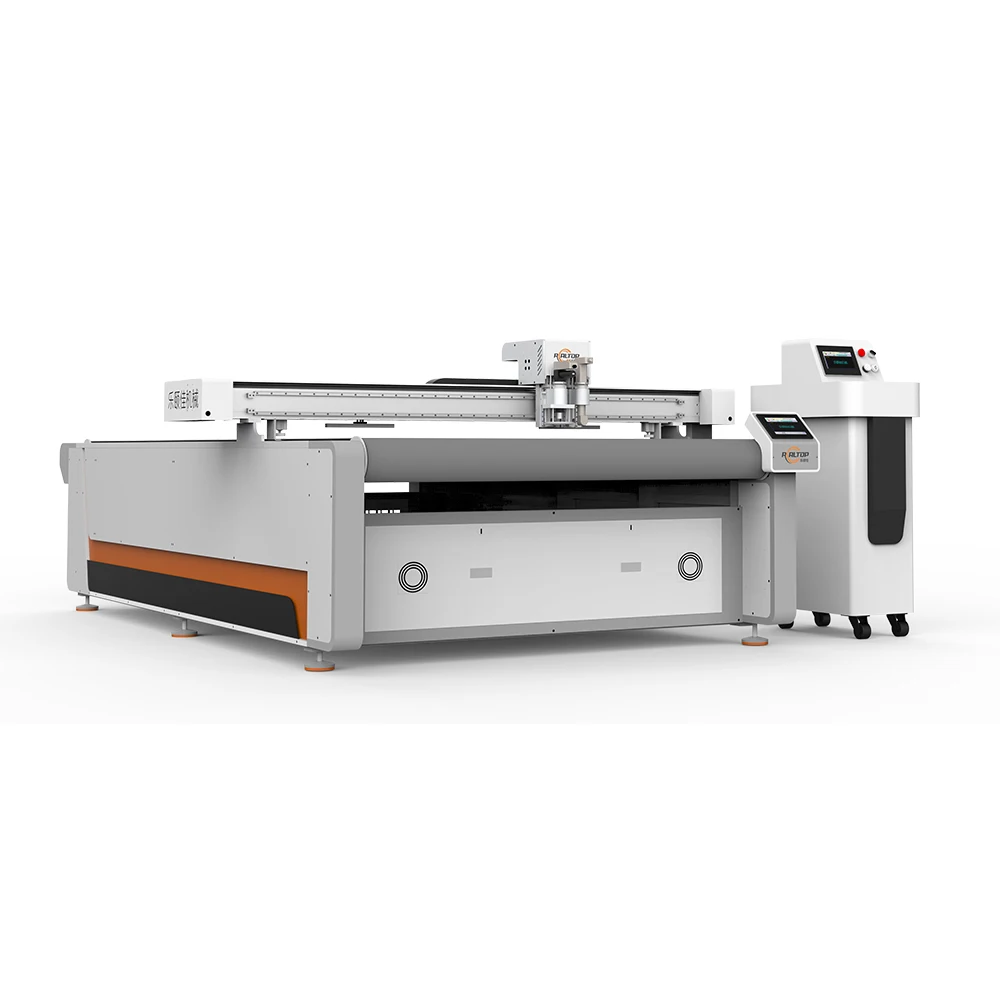
Material-Specific Configuration — Every Flatbed Oscillating Knife Cutting Machine we ship is tested on the buyer’s own fabric or leather roll before final tool head and vacuum zoning are locked in.
Technical Specifications
| Parameter | Value |
|---|---|
| Product Type | CNC Oscillating Knife Cutting Machine |
| Working Area | 1600×2500 mm |
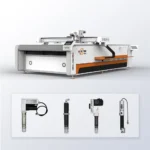
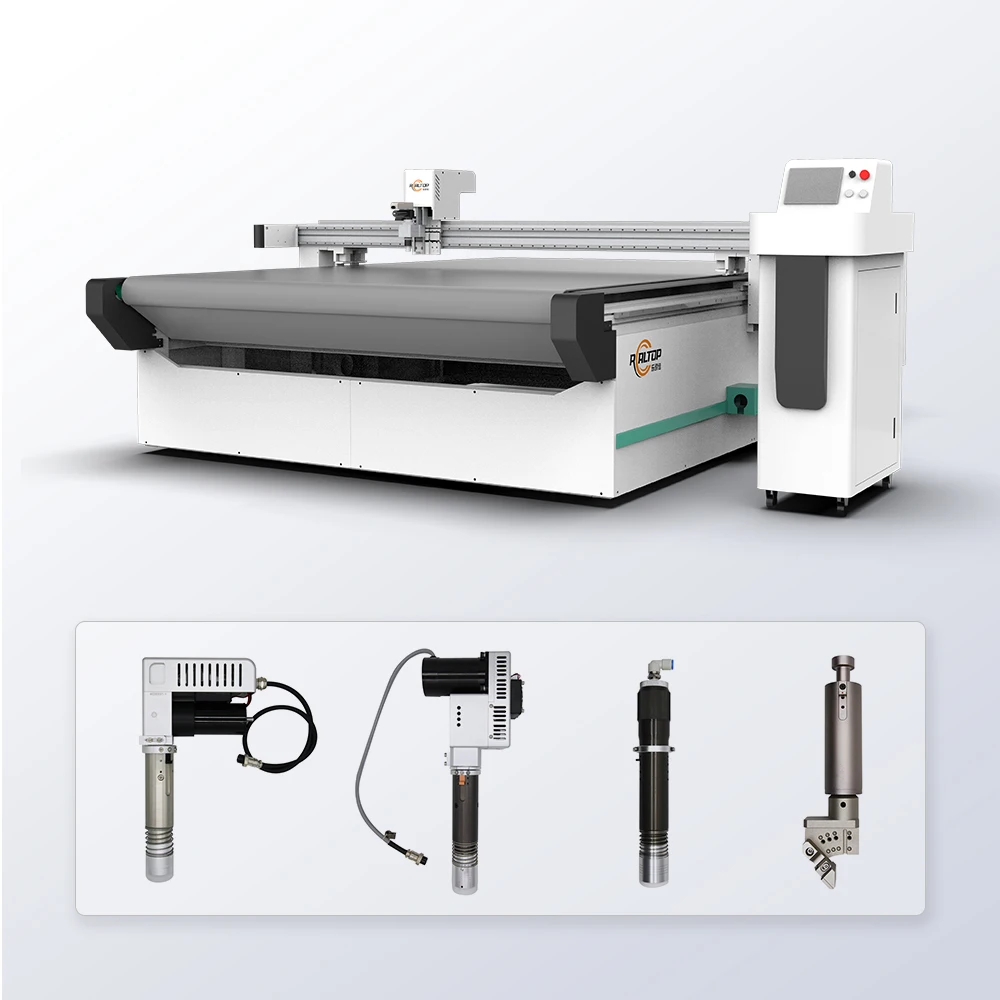
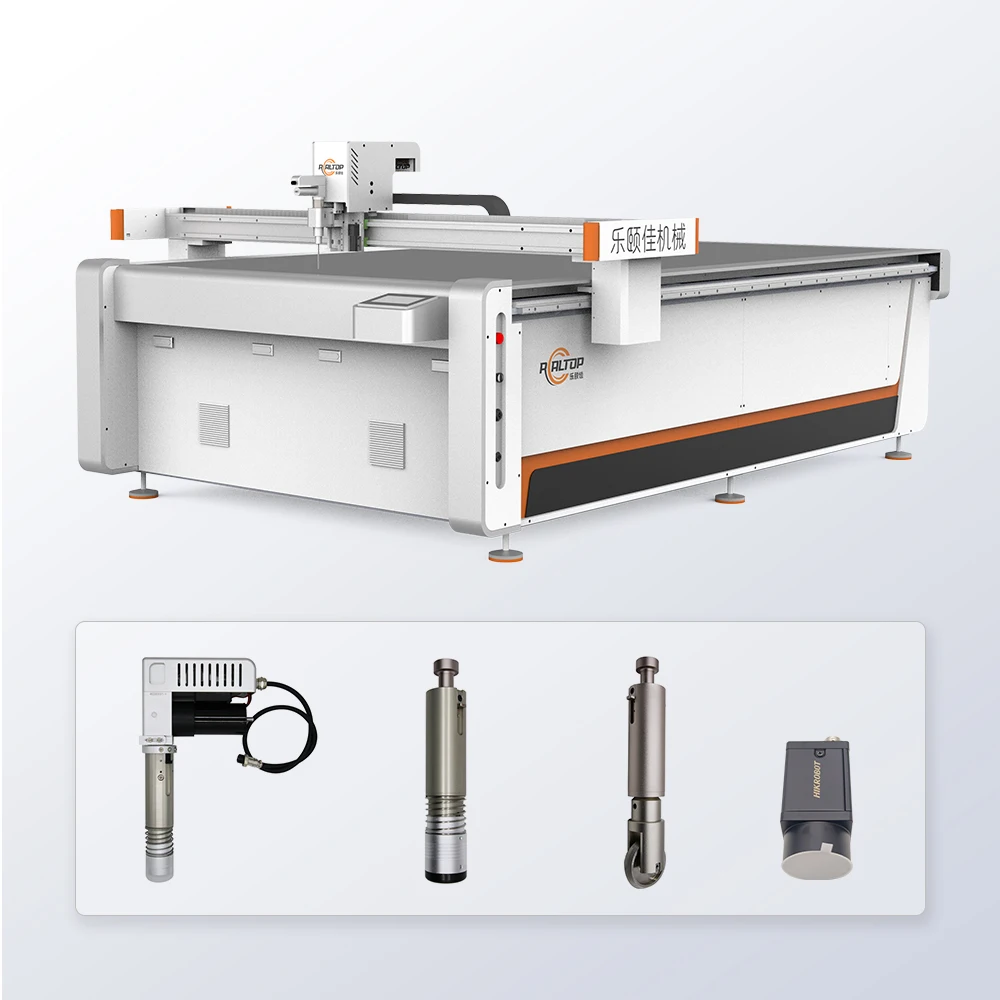
| Tool Head Options | Oscillating knife, Driven rotary knife, Creasing wheel, Kiss cutting tool, Pneumatic knife, Milling tool, V-groove knife |
| Cutting Speed | 0–2000 mm/s |
| Cutting Thickness | ≤ 30 mm (basis to be confirmed by material density) |
| Cutting Accuracy | ±0.1 mm |
| Vacuum Pump Power | 9 kW |
| Voltage Options | Configurable from 110V to 380V |
| Control System | PLC control panel with optional display languages |
| Software & File Formats | PLT, DXF, AI, PDF; dedicated packaging box structure design software |
| CCD Camera | Available for printed contour recognition and positioning |
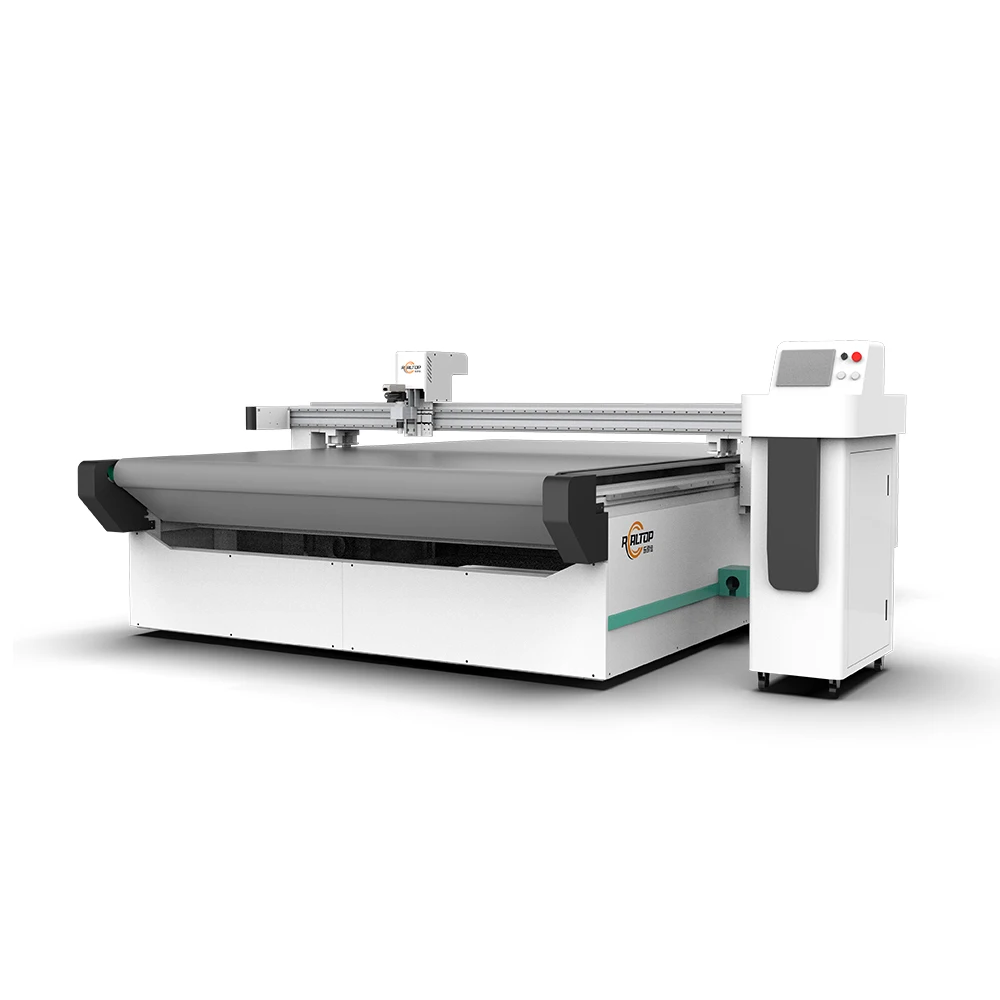
| Vacuum Table | Aluminum bellows vacuum table with full-surface adsorption |
| Servo Drive Options | Panasonic, Delta, or Dorna |
| Safety Device | Infrared sensor and emergency stop |
| Machine Dimensions (L×W×H) | 3300×2100×1350 mm |
| Nesting System | Auto-nesting with camera-based defect detection |
| Compliance | CE |
Application Suitability
| Application | Material or Output |
|---|---|
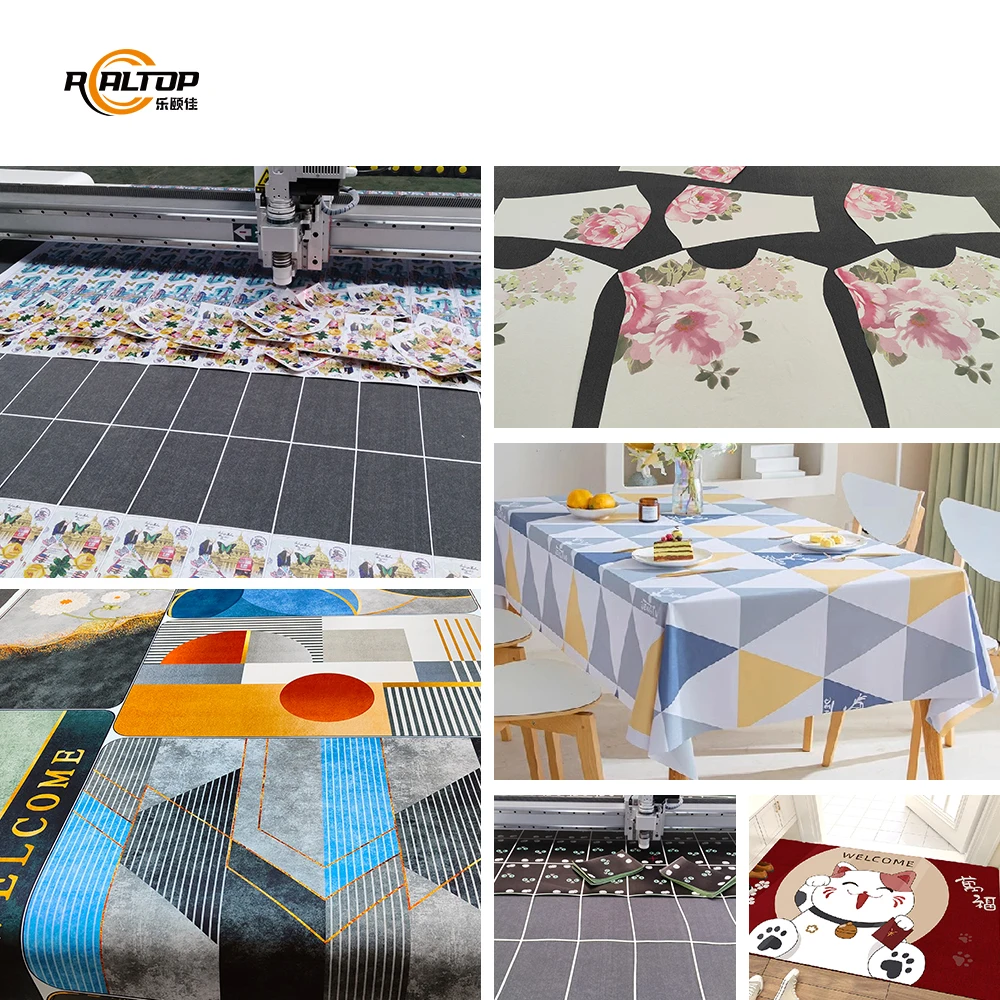
| Garment and footwear production | Shoe uppers, apparel patterns, and bag components from woven fabric, genuine leather, and synthetic textiles |
| Automotive interiors | Car mats, seat covers, and gaskets cut from foam, composite layers, and PVC |
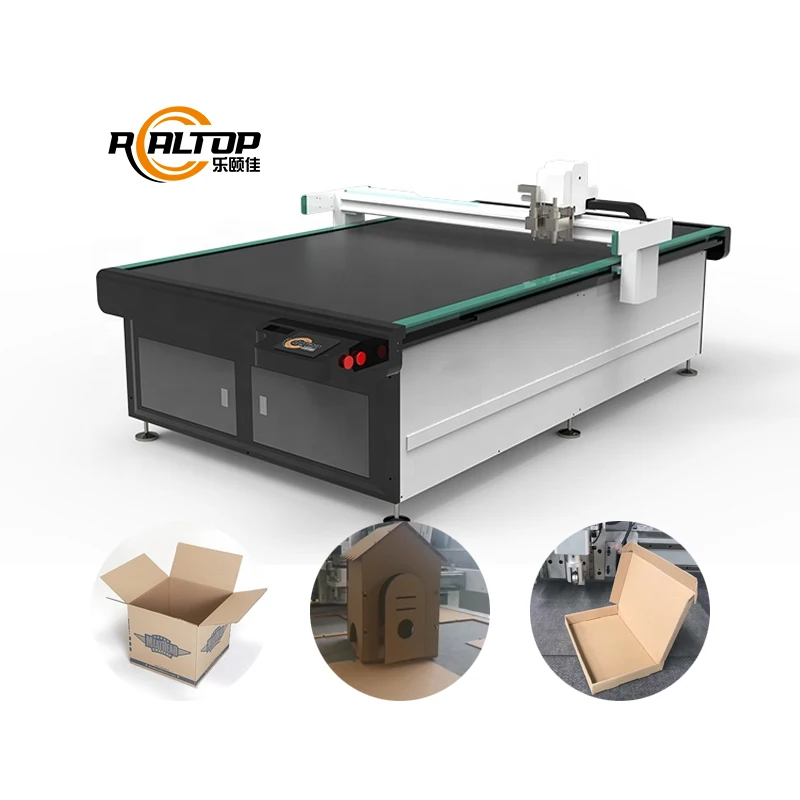
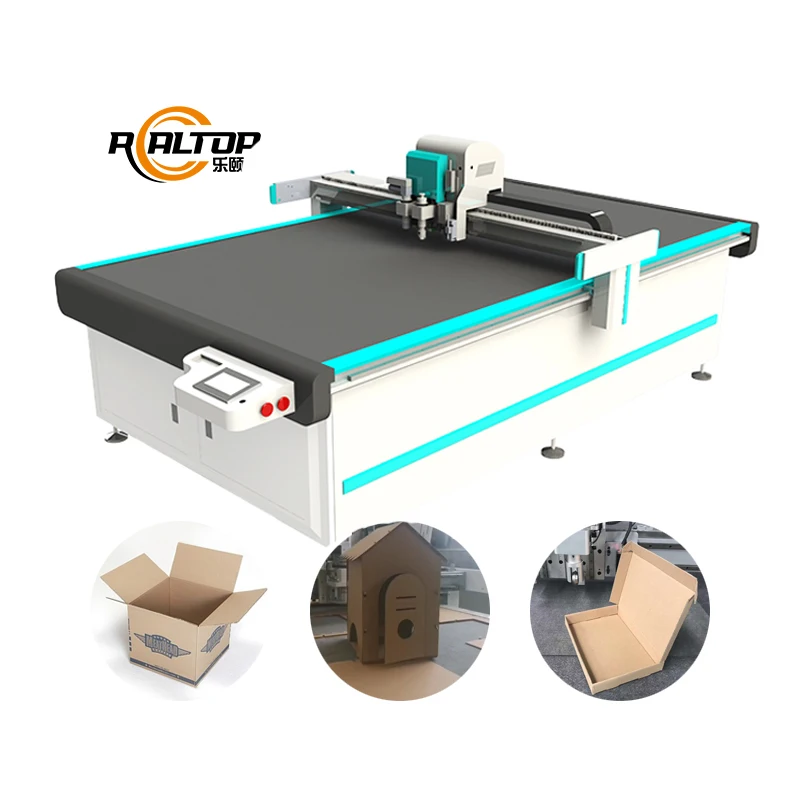
| Packaging and carton sample making | Short-run box prototypes and carton samples using creasing wheel and kiss-cutting tools on corrugated and cardboard stock |
| Advertising and signage | Foam boards, adhesive stickers, vehicle wraps, and contour-cut printed graphics |
| Home furnishings | Sofa fabrics, lampshades, and soft furniture components from upholstery textiles and composite materials |
Why a Stated Cutting Depth Can Fail on Your Material
A CNC Oscillating Knife Cutting Machine manufacturer quoting a maximum thickness without specifying material density is leaving out the variable that matters most. Cutting capacity depends on what you are actually slicing, not just how thick it is.
I once watched a batch of automotive interior foam tear at the edges because the machine was set up for standard-density EVA, but the production run used a denser compound. The oscillating knife could not penetrate cleanly, and the ragged edges meant the whole lot had to be scrapped. That failure had nothing to do with the working area or the servo motors — it came down to the knife stroke frequency meeting a material it was never tested against [NEED_CITE: material density effect on oscillating knife cutting quality].
Matching the Tool Head to the Textile
The choice between an oscillating knife, a driven rotary knife, and a pneumatic knife changes the edge quality on different cloth types. Woven fabrics with loose weaves tend to fray under a drag knife, while an oscillating knife at high stroke frequency cuts them cleanly. For layered genuine leather, a pneumatic knife with downward pressure control handles the density variation across the hide. We configure the tool head based on sample cuts of your actual roll material, not on generic material categories. This CNC Oscillating Knife Cutting Machine supports up to seven tool options on one carriage, so switching between a fabric run and a leather run does not require a machine changeover.
Contour Recognition at Production Speed
Printed fabrics and patterned rolls need the CCD camera to locate registration marks and adjust the cut path in real time. The camera-based defect detection system scans for print distortions or fabric flaws before the knife engages, and the auto-nesting software rearranges the layout to avoid wasted sections. When cutting striped or checked cloth for apparel, the system aligns the pattern across nested pieces so that seams match at the sewing stage. This level of contour tracking must hold at the machine’s working speed, not just during a slow demonstration pass [NEED_CITE: CCD contour recognition accuracy at production feed rates].
What the Numbers on the Spec Sheet Actually Mean
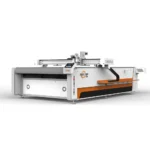
The 1600×2500 mm working area accommodates standard fabric roll widths laid flat, allowing full marker layouts without repositioning. The ±0.1 mm cutting accuracy keeps pattern pieces within tolerance for downstream sewing operations where misalignment shows up as mismatched seams. The 9 kW vacuum pump paired with the aluminum bellows table generates full-surface adsorption, which is critical when cutting small pieces like collar stays or pocket flaps that would otherwise lift off the table during the knife stroke. The PLC control panel with multi-language support means the operator interface can be set to English, Russian, Italian, or Chinese, with other languages configurable before shipment.
The Cost of Skipping the Sample Cut
When a buyer orders based on working area and price alone, the tool head configuration is often left to a default setting. The oscillating knife may be swapped for a cheaper drag knife, which works on vinyl but crushes foam and leaves a compressed edge on multi-layer fabric. Vacuum zoning may not be set up for the small nesting pieces in your pattern, causing material shift that ruins an entire lay. These problems surface during the first week of production, not during the factory acceptance test [NEED_CITE: vacuum table zoning requirements for small nested parts].
What You Get When You Source From the Factory
In-house design covers both knife cutting and laser cutting technologies, so the cutting method is matched to the material rather than forced into one process. Every tool head and table configuration is documented against your material specification before the order is confirmed. Voltage, plug type, and control language are verified against your facility supply before the machine leaves Jinan. Sample cutting on your own fabric or leather produces a recorded video and a written report so you see the edge quality before commitment. Software compatibility is checked by importing your existing DXF, PLT, AI, or PDF files into the nesting system to confirm the workflow transfers without manual re-drawing.
Documentation & Verification
- Sample cutting report on your specific cloth or leather with recorded video
- Tool head and vacuum table configuration list matched to your material spec
- Electrical schematic with voltage and frequency confirmed for your facility
- Software license note with file format compatibility for your existing workflow
- CE declaration covering the machine configuration as shipped
- Factory test record documenting cutting accuracy and vacuum hold on your material
Installation, Commissioning & Support
- Requires a level floor area of approximately 3300×2100 mm with clearance for material loading on two sides
- Dedicated power circuit matching confirmed voltage option (110V, 220V, or 380V) and the 9 kW vacuum pump draw
- Machine ships partially disassembled; table frame and gantry are bolted and leveled on site
- First-run parameter setting includes vacuum zone mapping and tool offset calibration for your material
- Operator training covers CCD camera calibration, nesting software import, and tool change procedure
- Spare parts list includes oscillating knife blades, vacuum table seals, and CCD camera lens covers
What to Include With Your Inquiry
Send a sample of the fabric, leather, or composite you plan to cut, along with the material density and the thickness range across your production runs. Specify the daily cutting volume and your target nesting efficiency so we can recommend the right tool head and vacuum zoning layout. Confirm the voltage and frequency at your facility, the preferred control panel language, and whether you need the CCD camera system for printed contour work.
Frequently Asked Questions
Q: How is cutting thickness confirmed for my specific fabric density?
A: We cut samples on your actual material roll before the order is finalized. The test records the knife stroke frequency, downward pressure, and edge quality at your required thickness. If the material density exceeds what the standard oscillating knife handles, we adjust the tool head recommendation or suggest a pneumatic knife option.
Q: Which tool head is right for my material?
A: Woven fabrics and thin synthetics typically use the oscillating knife for clean edges without fraying. Genuine leather with density variation across the hide benefits from a pneumatic knife with pressure control. Foam and corrugated stock may require a driven rotary knife. We determine this during the sample cutting stage.
Q: Can the CCD camera keep up with my production cutting speed?
A: The camera-based contour recognition system is calibrated to track printed registration marks at the machine’s working speed, not just at demonstration pace. During the sample test, we run your printed material at full speed and verify that the cut path stays within the ±0.1 mm tolerance.
Q: How do you verify my files will work with the software?
A: Before shipment, we import your production files in DXF, PLT, AI, or PDF format into the nesting software and run a simulation. The compatibility note in your documentation confirms which file types transfer correctly and whether any layer naming conventions need adjustment for the auto-nesting system.
You may also like

商品评价
Clear filtersThere are no reviews yet.