

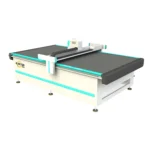
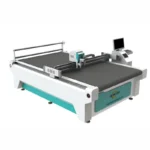
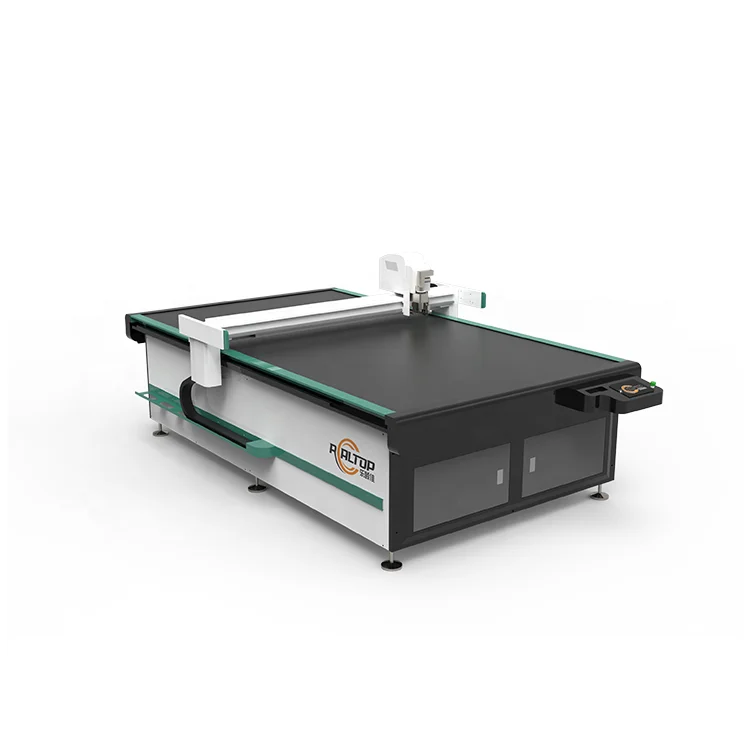
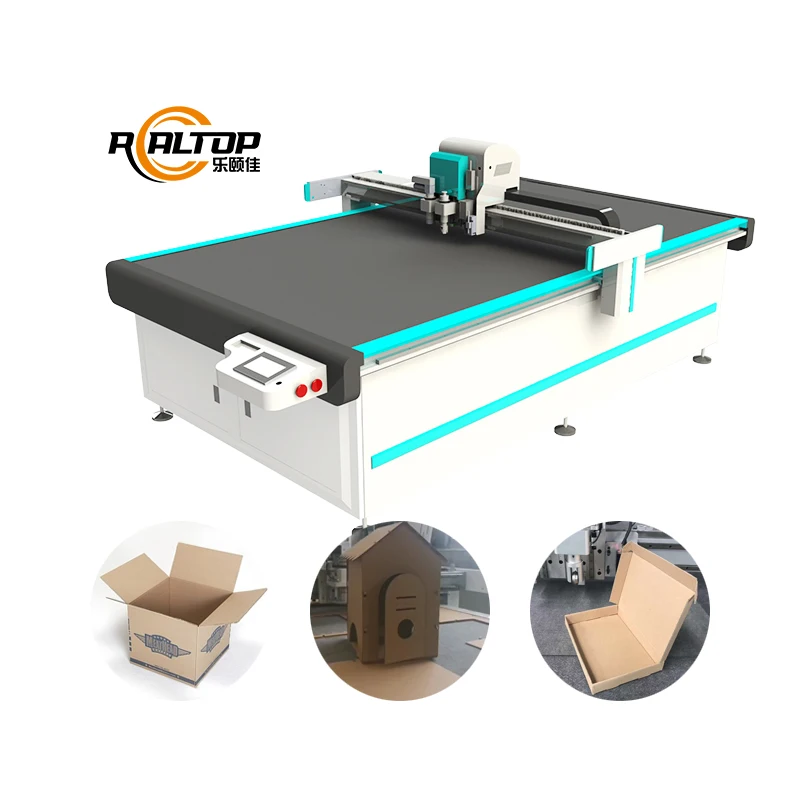
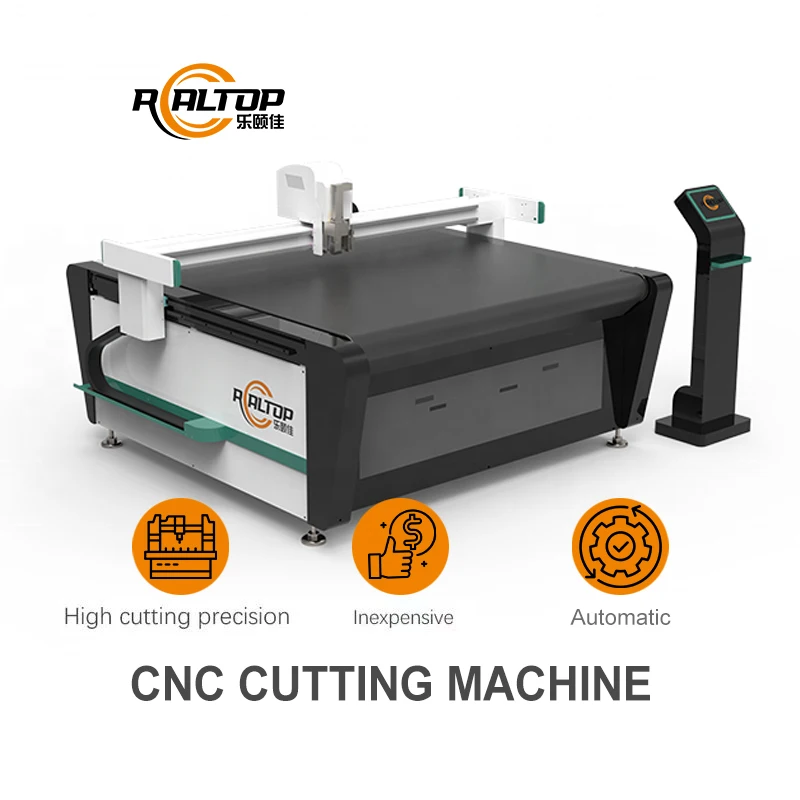
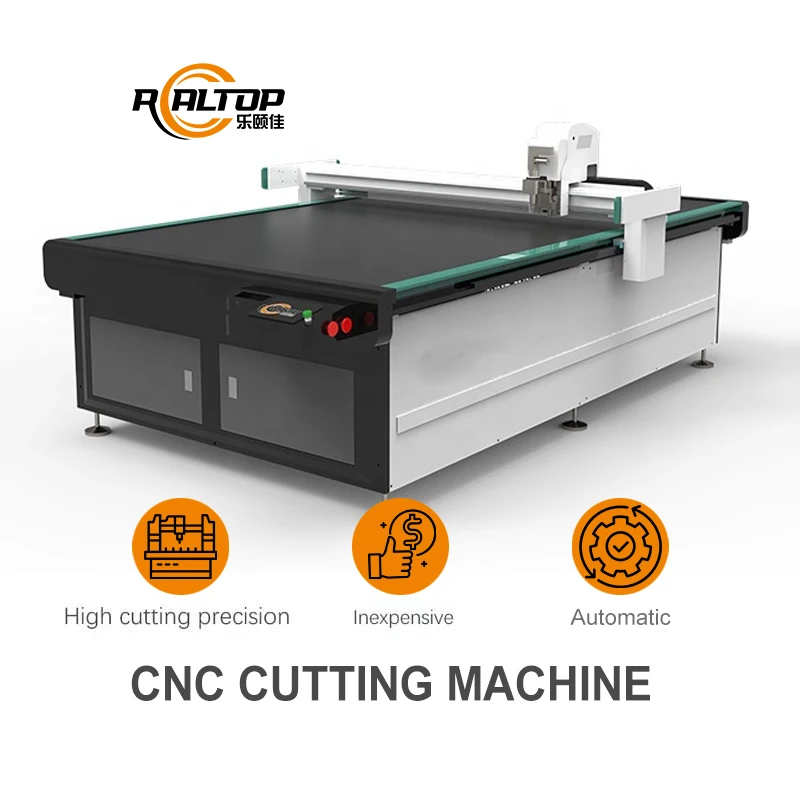
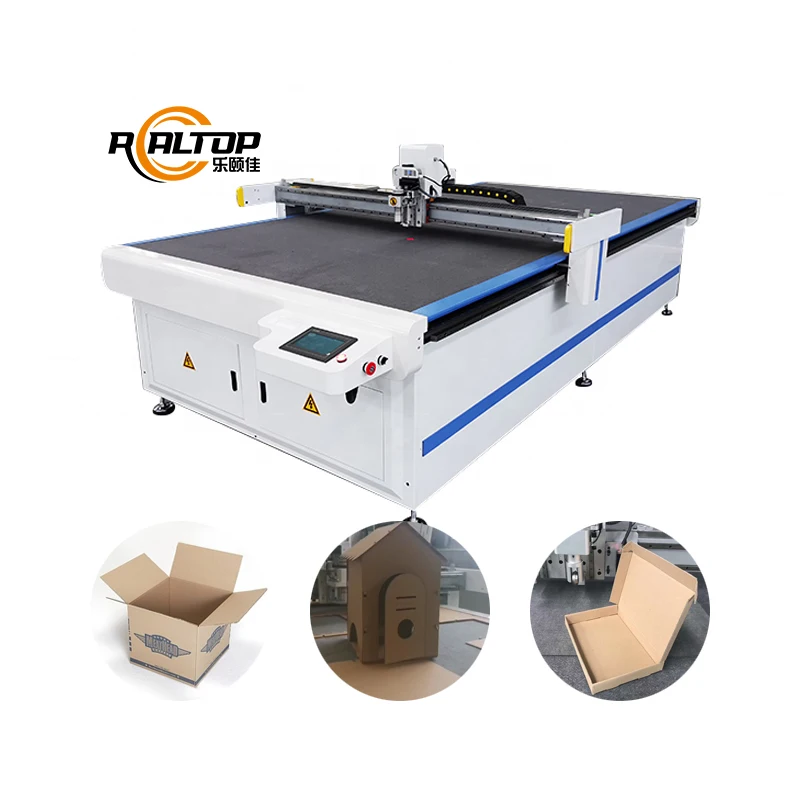


-
 Courier delivery
-
 DHL Courier delivery
-
 Warranty 1 year
-
 Free 30-Day returns

Specified per Material — Tool head, vacuum zoning and CCD positioning are matched to the buyer’s exact fabric type and layer count before any CNC Oscillating Knife Cutting Machine manufacturer commits to a build.
Technical Specifications
| Parameter | Value |
|---|---|
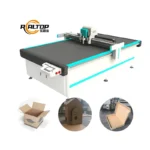
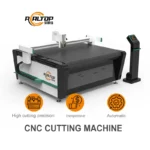
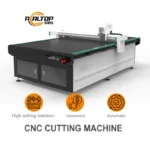
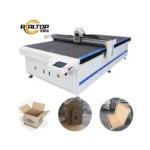
| Product Type | CNC Oscillating Knife Cutting Machine for Multi-Layer Fabric |
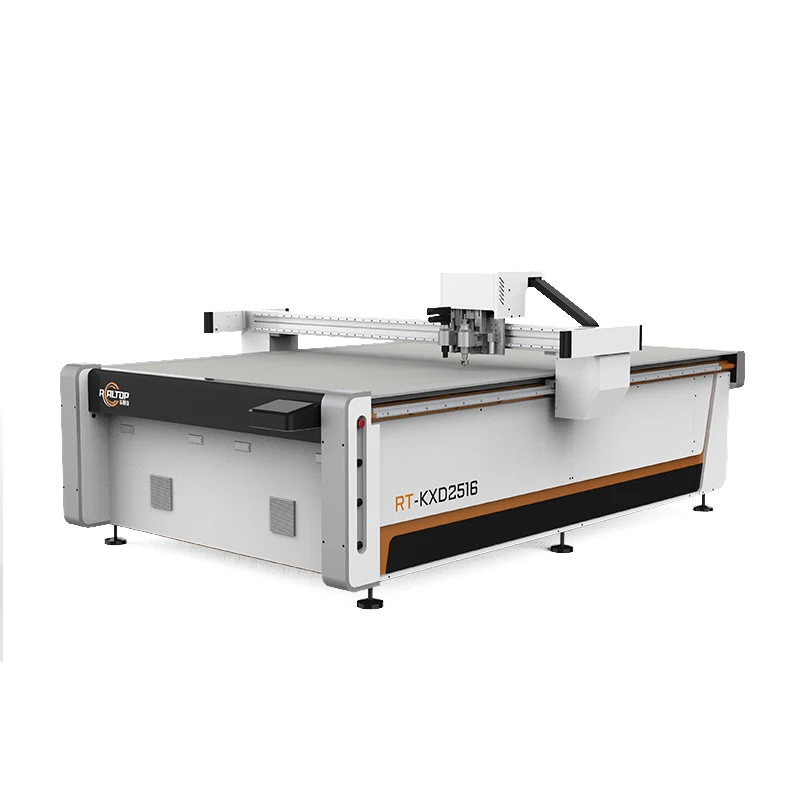
| Working Area | 1600×2500 mm |
| Overall Dimensions | 3450×2300×1250 mm |
| Rated Power | 9 kW |
| Voltage | 380V ±10% |
| Control System | CNC |
| Instruction System | HP-GL compatible format |
| Table Type | Flat vacuum adsorption table (magnesium-aluminum alloy, PVDF powder spraying, anodic oxidation) |
| Vacuum Pump | 7.5 kW (integrated aviation aluminum shell, built-in silencer sponge) |
| Translational Velocity | 800–1200 mm/s |
| Cutting Speed | 200–800 mm/s (according to different cutting materials) |
| Repeated Accuracy | ≤0.1 mm |
| Transmission System | Digital servo motor (Delta, optional Panasonic), linear guide, synchronous belt, ball screw (Taiwan Hiwin rail) |
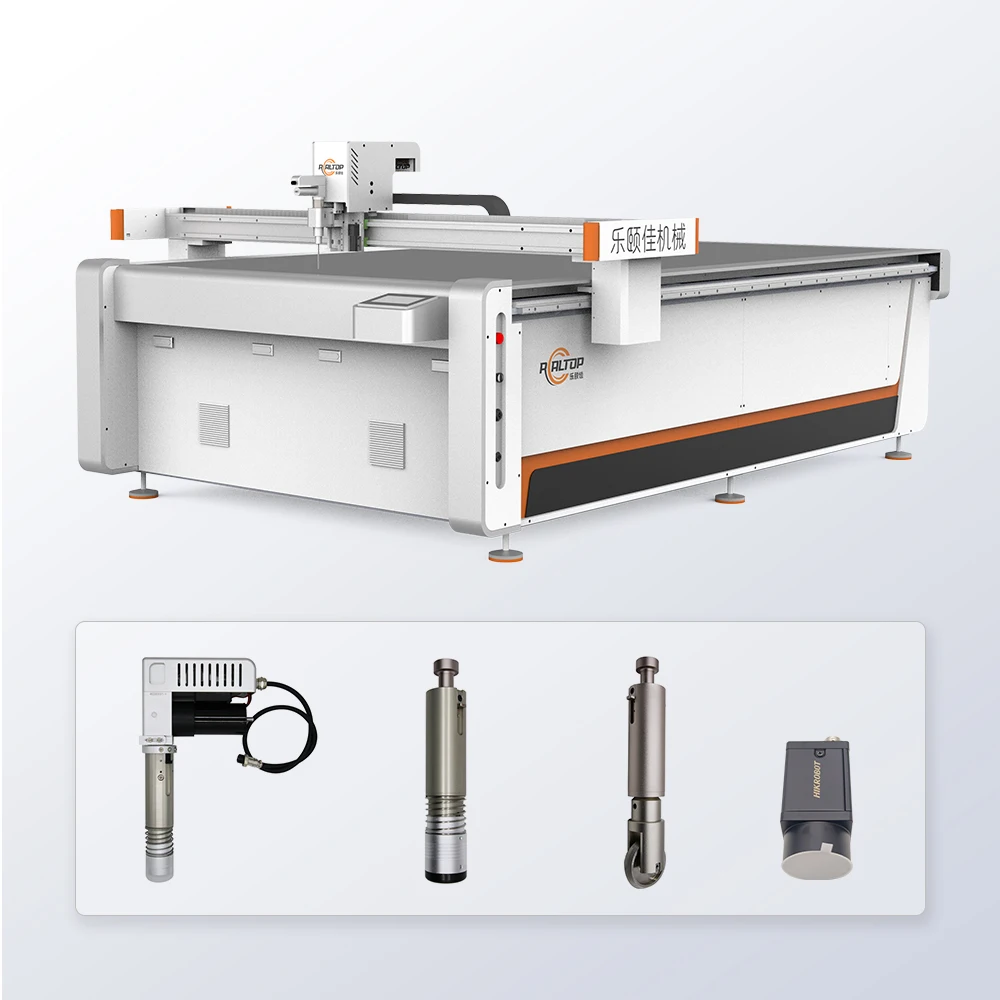
| Multifunctional Head | Swiss imported knife with vibration full cutting, vibration half cutting, and cursor location function |
| Tool Head Options | Oscillating knife, pneumatic knife, high-power vibrating knife, circular knife, V-cutting knife, drag knife, creasing wheel, dotted line knife, punching, brush |
| Visual Positioning Options | Small CCD camera mark point positioning, panoramic camera recognition positioning, projection positioning |
| Safety Devices | Infrared induction blocking, anti-collision on both sides of beam, emergency stop |
| Optional Features | Germany imported conveyor belt, auto feeding system |
| Language Options | English, Russian, Italian, Chinese (special languages customizable) |
| Assembly State | Fully assembled |
| Standards | CE |
Application Suitability
| Application | Material or Output |
|---|---|
| Garment and Footwear Manufacturing | Multi-layer knit fabric, woven textile, shoe material, luggage material |
| Automotive Interiors | Carpets, floor mats, soft trim components |
| Bags, Luggage and Soft Furnishings | Leather, PU, EVA, sponge composite, non-woven fabric |
| Gasket and Sealing Fabrication | Rubber, PTFE, ETFE |
| Composite Material Processing | Sponge composite leather, PU, EVA, XPE |
| Advertising and Graphic Printing | Sticker, film, PVC, soft glass |
Why "Just Give Me a 1600×2500" Is the Wrong Starting Point for a CNC Oscillating Knife Cutting Machine manufacturer
A machine sized only by working area will fail on the material that matters most to your production line.
I have watched buyers specify a flatbed cutter based purely on bed dimensions, only to discover the default tool head crushes their foam or leaves ragged edges on stretch knits. The cutting speed of 200–800 mm/s varies drastically depending on material density and layer count, and a vacuum table that holds rigid board flat will not necessarily grip small, lightweight fabric pieces at high translational speeds [NEED_CITE: vacuum adsorption requirements for flexible multi-layer textiles]. The configuration conversation must happen before the order, not after the machine arrives.
Matching the Knife Head to the Fabric Stack
The Swiss imported multifunctional head on this platform supports full cutting and half cutting modes, but selecting between an oscillating knife, a high-power vibrating knife, a circular knife or a drag knife depends entirely on the material behavior. A dense woven textile at high layer counts demands a different stroke frequency and blade geometry than a thin, elastic knit that tends to shift under lateral pressure. Choosing the CNC Oscillating Knife Cutting Machine manufacturer who asks about your fabric composition and layer stack before quoting the tool head avoids the most common cause of edge-quality rejection on delivery.
Vacuum Zoning That Actually Holds Small Pattern Pieces
A 7.5 kW vacuum pump with an integrated aviation aluminum shell and built-in silencer sponge provides the suction baseline, but the real test is whether the table zoning can isolate small pattern pieces without pulling air through gaps left by larger nested parts. The magnesium-aluminum alloy table with PVDF powder spraying and anodic oxidation resists wear from repeated knife contact while maintaining flatness. When cutting multi-layer knit fabric for sportswear, where elastic recovery causes each layer to shift slightly after release, consistent vacuum hold-down across the entire cutting zone is what keeps the stack aligned through the final piece [NEED_CITE: elastic recovery behavior in multi-layer knit fabric cutting].
Reading the Specifications That Matter on the Shop Floor
The Delta or optional Panasonic digital servo motors paired with Taiwan Hiwin linear guides deliver ≤0.1 mm repeated accuracy, which matters when a nesting layout places pattern pieces within millimeters of each other to maximize yield. The 380V ±10% power requirement must be confirmed against the buyer’s local supply; frequency mismatches between 50 Hz and 60 Hz markets affect both servo response and vacuum pump performance. The HP-GL compatible instruction system and auto layout nesting software mean existing design files can typically be imported without re-drawing, but confirming file format compatibility before the order prevents workflow disruption. Translational velocity of 800–1200 mm/s sets the head movement speed between cuts, while actual cutting speed drops to 200–800 mm/s depending on material resistance — a distinction that affects daily throughput calculations.
The Hidden Cost of a Generic Default Configuration
When a machine leaves the factory with a standard oscillating knife and undivided vacuum zone, the first production run on a buyer’s specific material often reveals problems that sample testing would have caught. Small garment pieces lift during high-speed cutting because the vacuum cannot be concentrated on isolated zones. Elastic knits shift between layers because the knife stroke was set for woven fabric. CCD camera mark point positioning may be listed as an option but was never calibrated to the buyer’s print registration marks, rendering contour recognition unreliable at production speed [NEED_CITE: CCD mark tracking failure rates at production speed on patterned textiles]. These issues are configuration failures, not machine defects, and they are entirely avoidable with a proper pre-order material test.
Why Source This CNC Oscillating Knife Cutting Machine manufacturer from REALTOP
The design and production of both knife and laser cutting systems happen under one roof, meaning the cutting method is matched to the material rather than forcing every job through a single technology. Tool head and table configurations are specified per material and production volume, not left as factory defaults. CCD camera positioning, panoramic camera recognition and projection positioning are all available options, selected based on whether the buyer works with printed contours, solid color fabrics or projection-guided manual alignment. Software compatibility and file format support are confirmed before the order is finalized. Sample cutting on the buyer’s own material is conducted before commitment, providing a physical reference for edge quality, cutting speed and vacuum hold-down performance.
Documentation & Verification
- Machine specification sheet listing confirmed tool head and vacuum table configuration for your material
- Electrical schematic with voltage and frequency matching your facility before dispatch
- Sample cutting report on your fabric type documenting edge quality and layer count tested
- Software licence and file format compatibility note confirming your existing design workflow
- Factory test record capturing repeated accuracy and cutting speed on your specified material
- Spare parts list matched to your selected knife head and transmission components
Installation, Commissioning & Support
- Requires a level floor with adequate clearance around the 3450×2300×1250 mm overall dimensions for material loading and maintenance access
- Dedicated 380V ±10% circuit with correct amperage for the 9 kW rated power and 7.5 kW vacuum pump combined draw
- Machine ships fully assembled; positioning and utility connections are the primary on-site tasks
- First-run parameter setting includes vacuum zone mapping and knife stroke calibration for your specific fabric stack
- Operator training covers HP-GL file import, nesting software layout and tool head changeover procedures
- Spare knife blades and wear parts for the selected multifunctional head included with initial shipment
What to Include in Your Inquiry
To receive a configuration that matches your production floor, provide the fabric type, layer count per cut and maximum sheet dimensions you run daily. Note your local voltage and frequency, preferred control language, and whether your existing design files use HP-GL or another format. If you work with printed textiles requiring contour recognition, confirm your mark-point style so the correct CCD or panoramic camera option is specified.
Frequently Asked Questions
Q: How do I confirm the right tool head and cutting depth for my specific fabric type and layer count?
A: The tool head selection depends on material density, elasticity and stack height. An oscillating knife suits many woven textiles, while high-power vibrating or pneumatic knives handle thicker composites. We run a sample cutting test on your actual material to verify edge quality, layer integrity and cutting speed before the configuration is locked in for production.
Q: What voltage, frequency and control language options are available for my target market?
A: The standard configuration is 380V ±10%, but voltage and plug type must be confirmed against your local supply before shipment. Frequency differences between 50 Hz and 60 Hz markets affect servo and vacuum pump behavior. Control language options include English, Russian, Italian and Chinese, with special languages available on request.
Q: Can you run a sample cutting test on my actual material before I place the order?
A: Yes. Send your fabric sample with the exact layer count and thickness you plan to run in production. We cut it on the configured machine, document edge quality, vacuum hold-down performance and achievable cutting speed, and share the sample cutting report along with physical pieces for your review before commitment.
Q: What file formats and nesting workflows does the software support, and is it compatible with my existing design files?
A: The system supports HP-GL compatible formats and includes a nesting and layout calculation module for auto layout. Before order confirmation, we verify that your current design files import correctly and that the nesting workflow integrates with your existing pattern-making process to avoid production disruption.
Q: What does the warranty cover, and how are spare parts supplied after the warranty period?
A: Warranty coverage details are provided in the machine specification sheet before order. Spare parts lists are matched to your specific tool head and transmission configuration, and replacement blades and wear components remain available through direct supply channels after the warranty period concludes.
You may also like

商品评价
Clear filtersThere are no reviews yet.